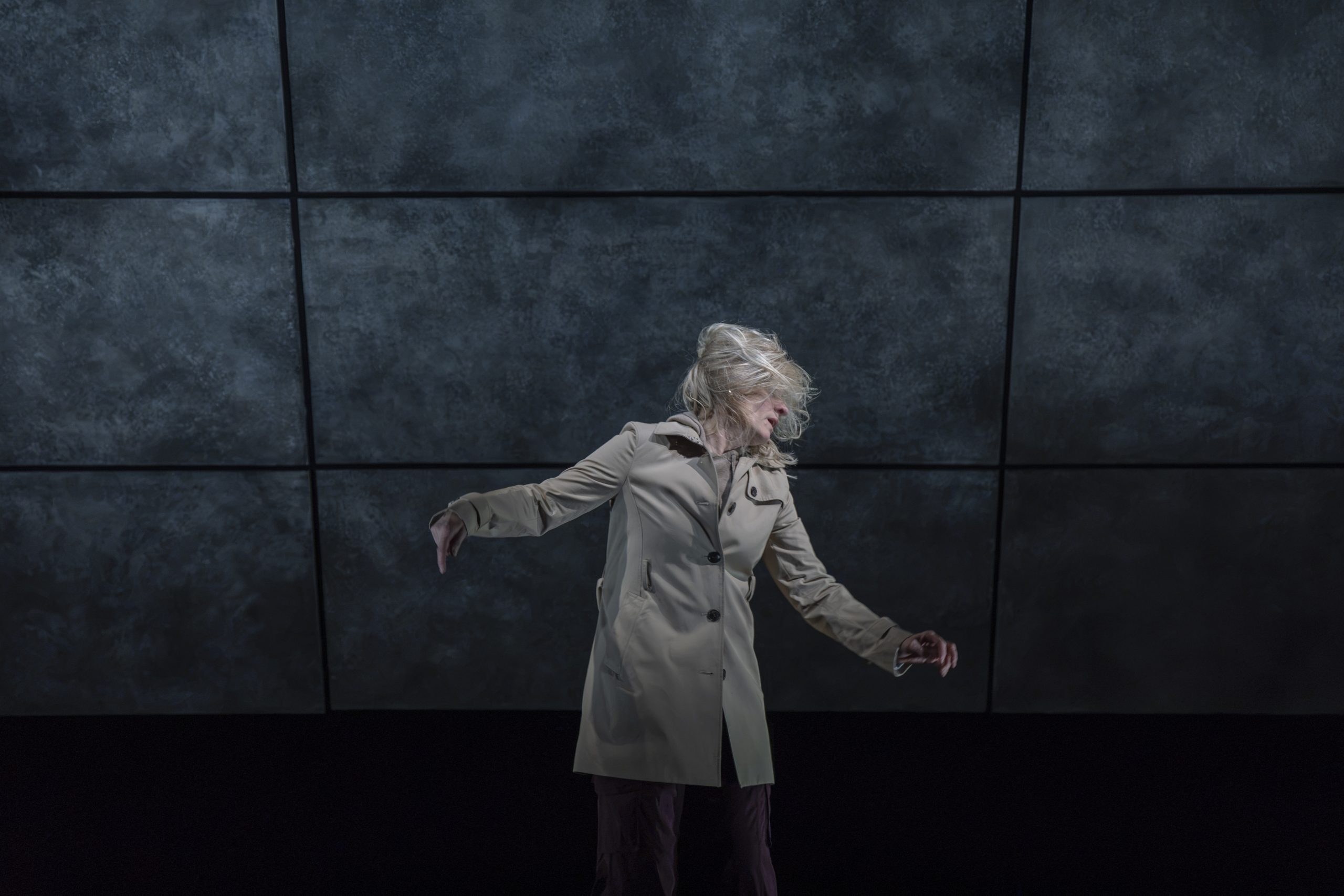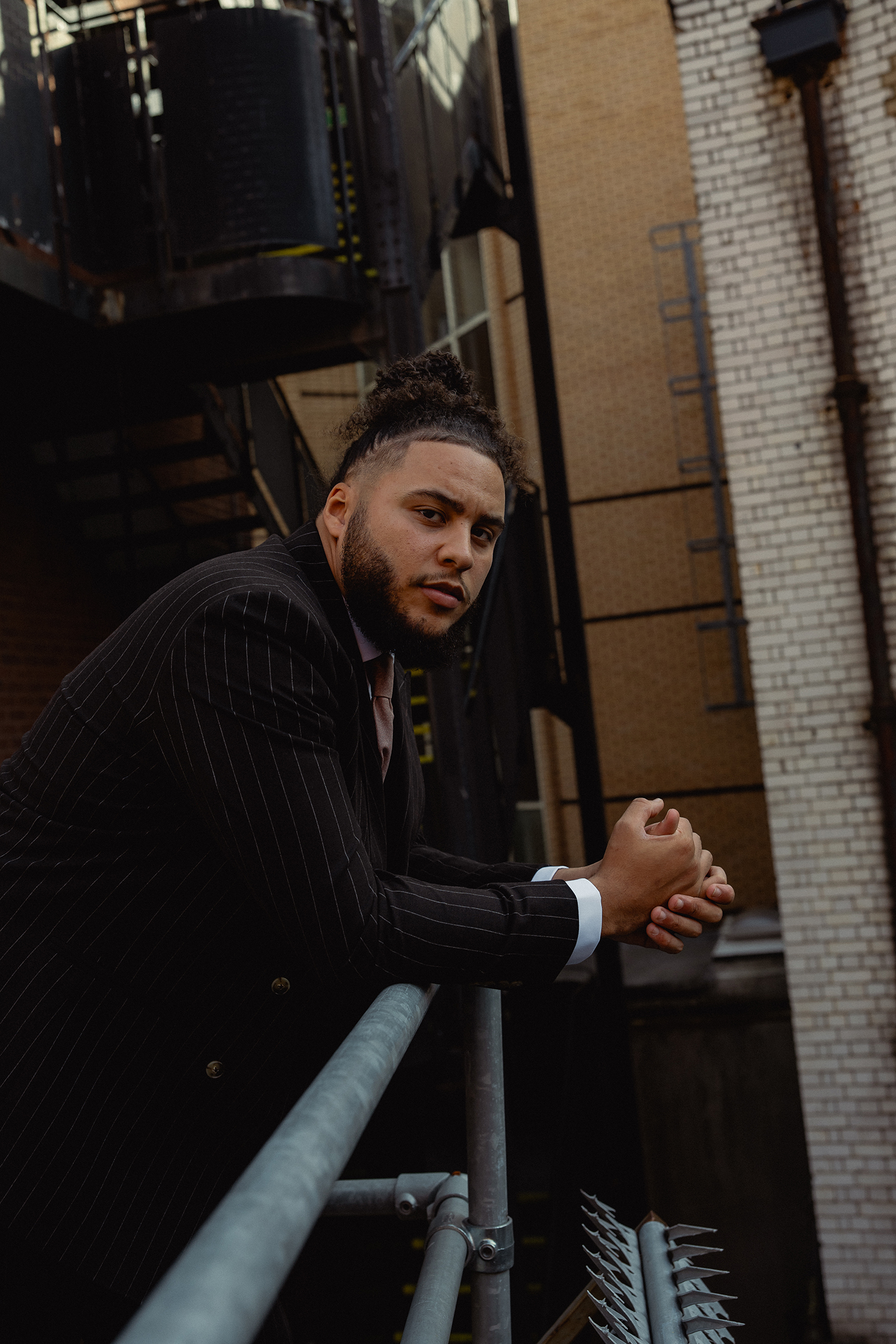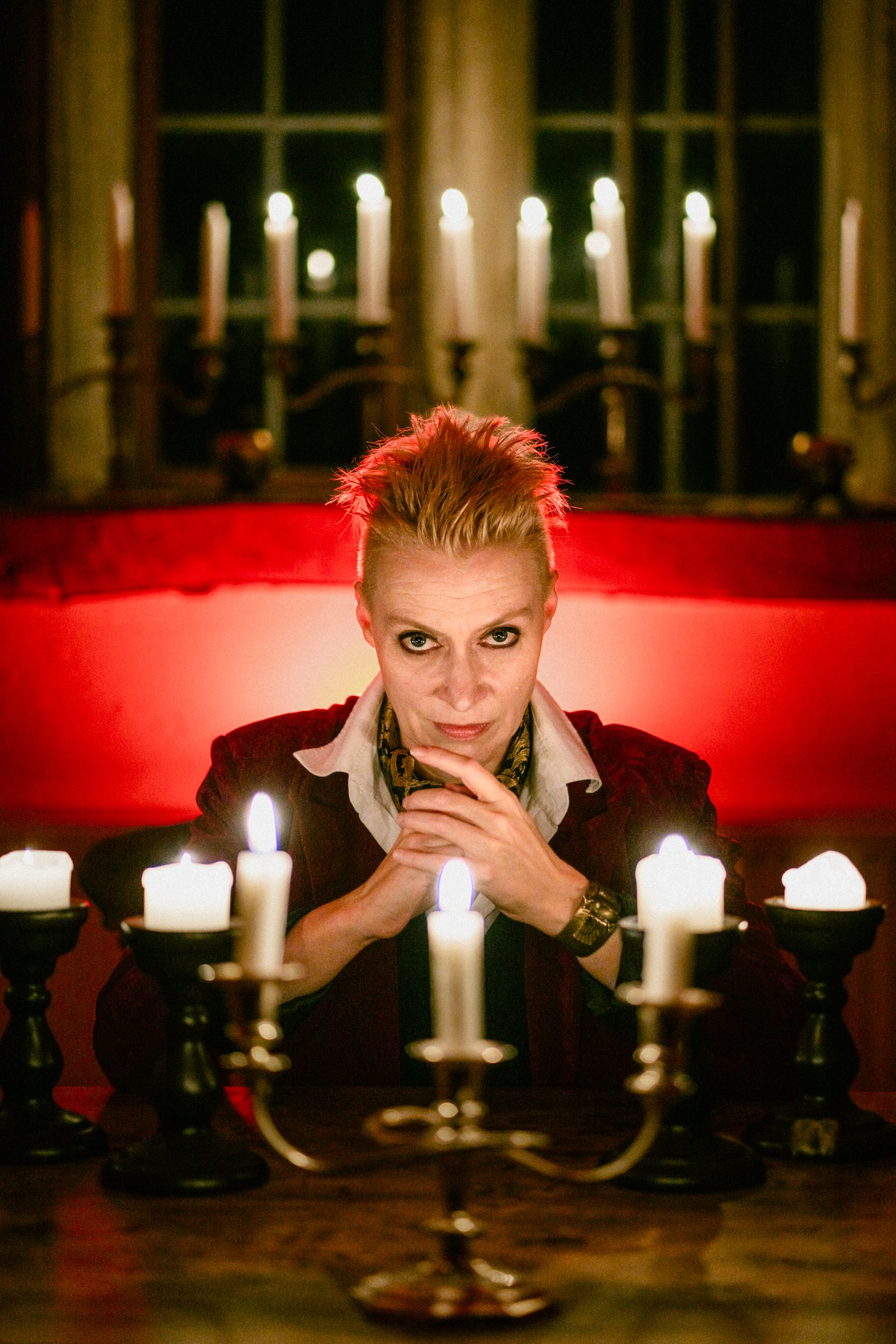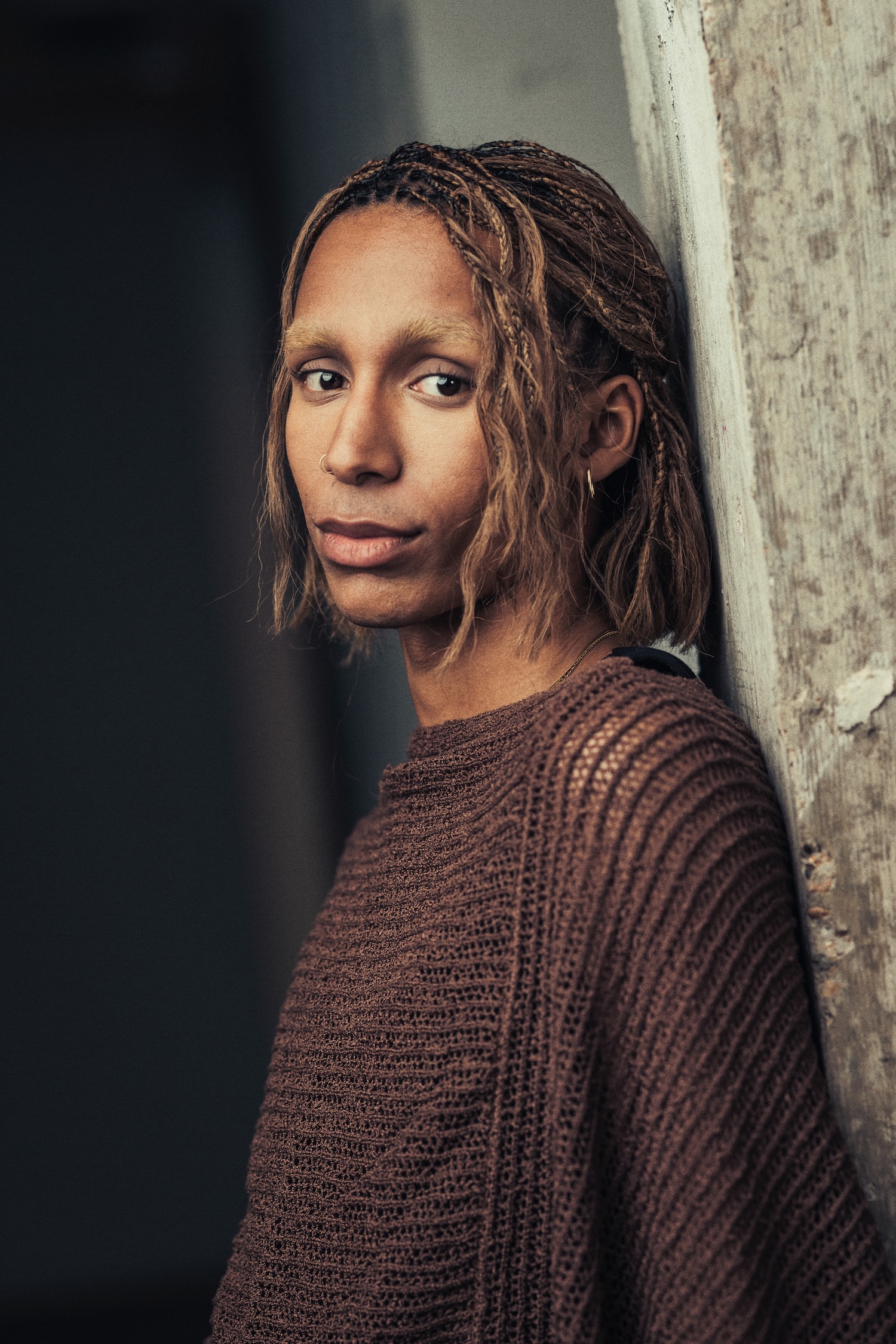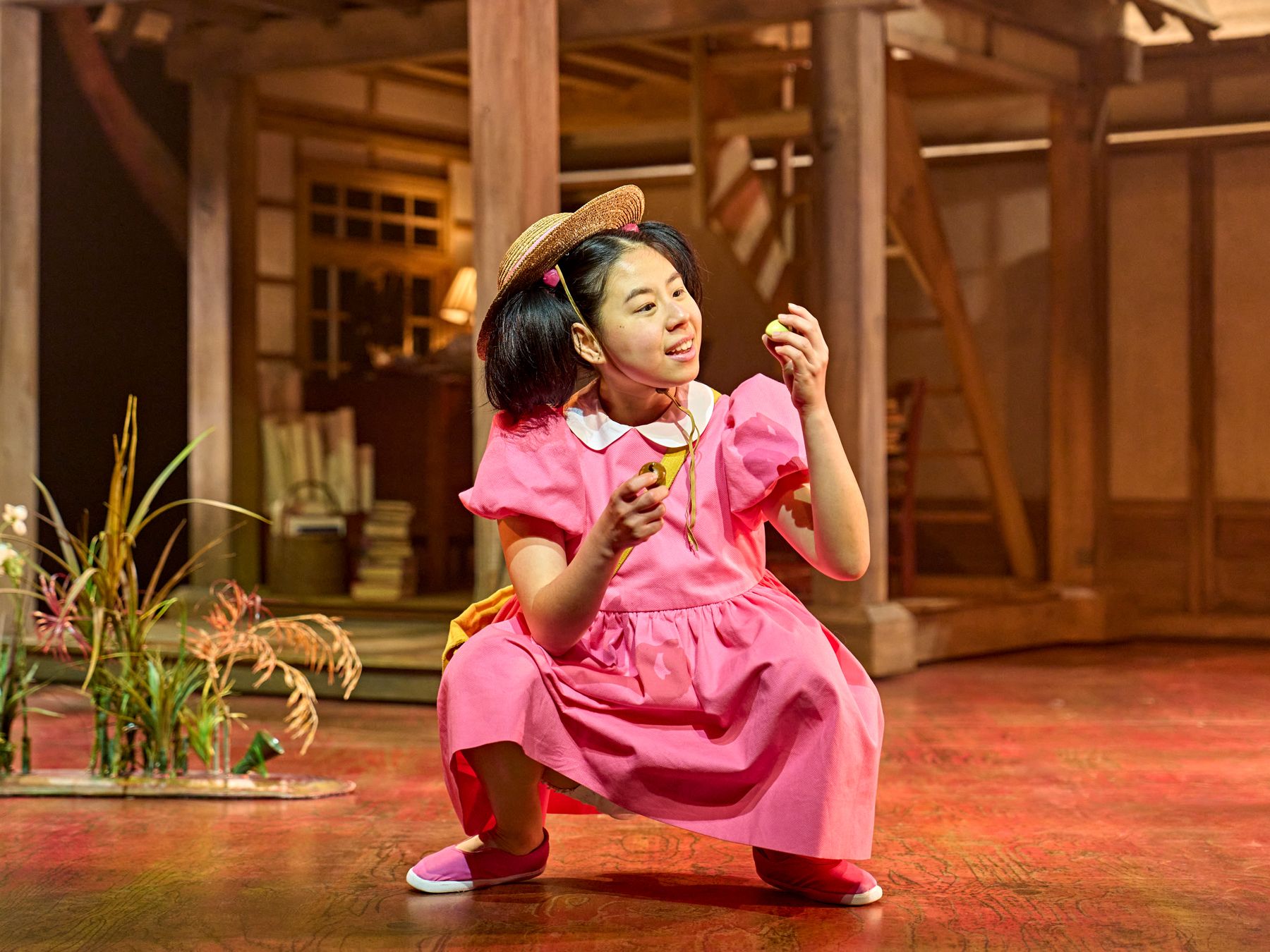
When I first saw My Neighbor Totoro, the 1988 Hayao Miyazaki film about a little girl and her magical spirit friend, I was enchanted. But seeing it on stage, coming to life in front of you, is something else entirely. The magic isn’t just in the spectacle, it’s in the detail, the stillness, and how the story unfolds through the eyes of a child.
That child is called Mei, she’s four years old, and she’s played by Victoria Chen. Chen’s performance feels so natural and instinctive that it barely registers as acting. She captures the curiosity, intensity, and emotional immediacy of a four-year-old with remarkable precision, finding truth in the smallest gestures.
When we sat down to talk, that sense of instinct carried through. We discussed her journey into the role, the challenge of staying present as Mei, the magic of working with the puppetry, and why this story continues to resonate so deeply with audiences of all ages.
What first drew you to acting and performance? Was there a particular moment growing up where you thought, “this is what I want to do”?
When I was about four – so around Mei’s age – I had my first theatre experience. I can’t remember where or when, just that I was tiny and they put me in a booster seat by the aisle. It was Joseph and the Amazing Technicolor Dreamcoat. There’s that moment where children run from the audience onto the stage. Obviously they’re actors, but I didn’t know that. It was my first time at the theatre and I was so excited. I loved it. My mum turned to me and said, ‘Did you like that?’ and I said, ‘Yeah.’ And she said, ‘Do you want to do that?’ I said, ‘Yeah, yeah, yeah.’ And she said, ‘Well, someday you will.’ I think that planted something in my brain that I would be an actor one day.
What’s funny is I never actually thought I would be an actor. I grew up in a very traditional Asian household where acting was for fun, and you were expected to become a lawyer, a doctor, a banker – something stable. My parents didn’t have that growing up, so they wanted it for me. But I believed my mum. Completely. That’s what you do as a child.
Years later, I took a gap year and just kept doing show after show in Singapore. That’s when I started thinking about drama school. I auditioned for a couple, got into two, and both offered scholarships. I chose the one with the biggest scholarship because there was no other way I could go – and that took me to Scotland. I thought, if people who’ve only seen fifteen minutes of me believe in me enough to give me that opportunity, I have to take it. I even asked for more money, and they gave it to me. I had nothing to lose. So I went, got stuck in, and that’s been my life ever since.
And it’s strange – four-year-old me, sitting in that theatre, would never have imagined that years later I’d be on a revolving stage myself, playing a four-year-old and bringing that same kind of joy to other children in the audience. It feels like everything’s come full circle.
What was your training like, and how did it shape the kind of performer you are now?
I started training in Singapore at SOTA – the School of the Arts – and that was quite academic. It was more like theatre studies than practical acting, but we trained in Eastern art forms, which was amazing. I did Butoh, Suzuki, Viewpoints, Noh theatre, and some Southeast Asian forms like Wayang, so it was a real mix of Japanese and Southeast Asian traditions. We also did Grotowski, plus puppetry and mask work, so a lot of it was very physical and instinctive.
Then at drama school in Scotland, it became much more classical. Shakespeare, Stanislavski, Lecoq, voice work – it all feels like a bit of a blur now, but it was a good mix. I also noticed quite quickly the kinds of roles I was being cast in – child, servant, ‘person of colour’ – and I thought, okay, maybe I should lean into playing children. So for a lot of my career, I’ve ended up playing two things: children and animals. They’re actually quite similar. Very instinctive, very physical. You just respond to what’s happening around you.
And honestly, everything feeds into what I do now. My training, my life experience, even recent work – it all comes with me. The biggest thing is presence. Acting is about being completely in the moment, and playing a child really tests that. Children don’t filter things in the same way, everything is immediate. So if something unexpected happens on stage, you have to respond truthfully and safely, in a way that still serves the story. The audience should never feel like anything’s gone wrong.
So for me, it’s about preparation and presence. Do your homework, be ready, and then just stay completely in the moment. And you can really see that in someone like Steven Nguyen, who plays Kanta. His work is very Meisner-based and incredibly reactive.
‘Playing a child really tests you, because everything has to feel immediate and completely instinctive.’
After a year of playing Mei, has your understanding of her changed?
I think it’s grown and shifted in ways I’m probably not even fully aware of.
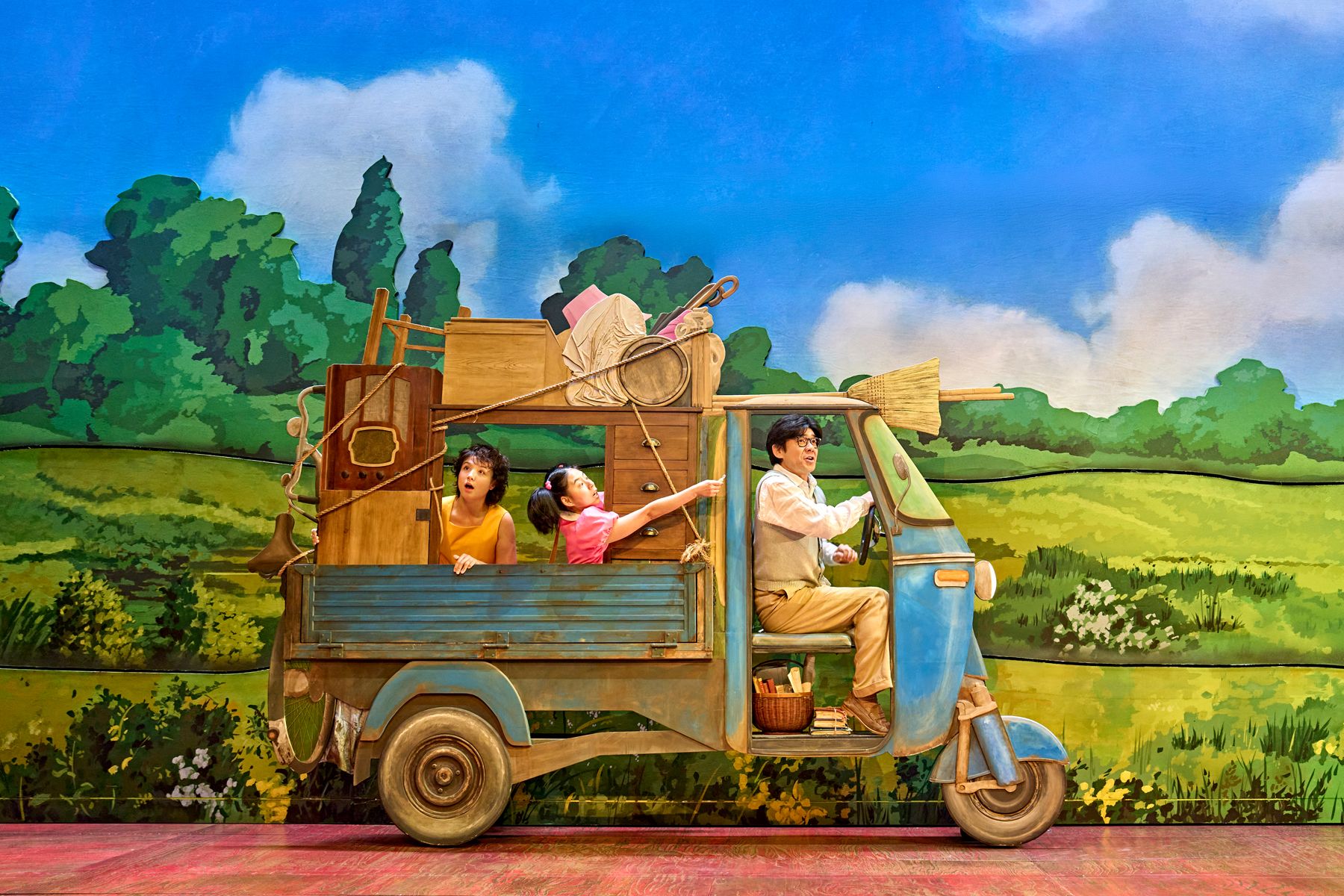
We recently had a cast change, and Phelim, our director, came back in to check everything was still working. At the start of the process, I had so many notes. So many. But after we opened with the new Satsuki, Helen, he came into the dressing room, gave us both a huge hug, and just said, ‘You’ve done it. It’s yours now.’ That meant a lot. Not having a list of notes, not being told to adjust this or fix that, but being trusted with it. It felt like I’d finally settled into the role.
I don’t know exactly what changed, but I think it’s just time. Letting it sink in, enjoying it more, and allowing it to become instinctive rather than something I’m trying to get right. And it’s interesting hearing how audiences respond differently over time as well. There are small details that seem to land more – things that feel completely natural to me now. Moments that might have passed before suddenly connect in a deeper way.
I think that’s the joy of doing a long run. You’re not just repeating something – you’re living with it, and it keeps evolving without you even realising.
Do you ever catch yourself doing Mei things off stage?
I think I am quite Mei in real life. I’m very curious, and I don’t really have a filter, so I say things without thinking. It’s endearing when you’re four, but less so as an adult.
It’s never malicious, it just comes out wrong sometimes. I’ll mean something one way and it gets taken completely differently. That happens a lot.
Mei feels incredibly real – did you spend time around children that age to study them?
Not specifically for the role, just through life. I’ve got a big family, loads of cousins, a younger brother, and I’ve worked a lot with children, including teaching and theatre for young audiences.
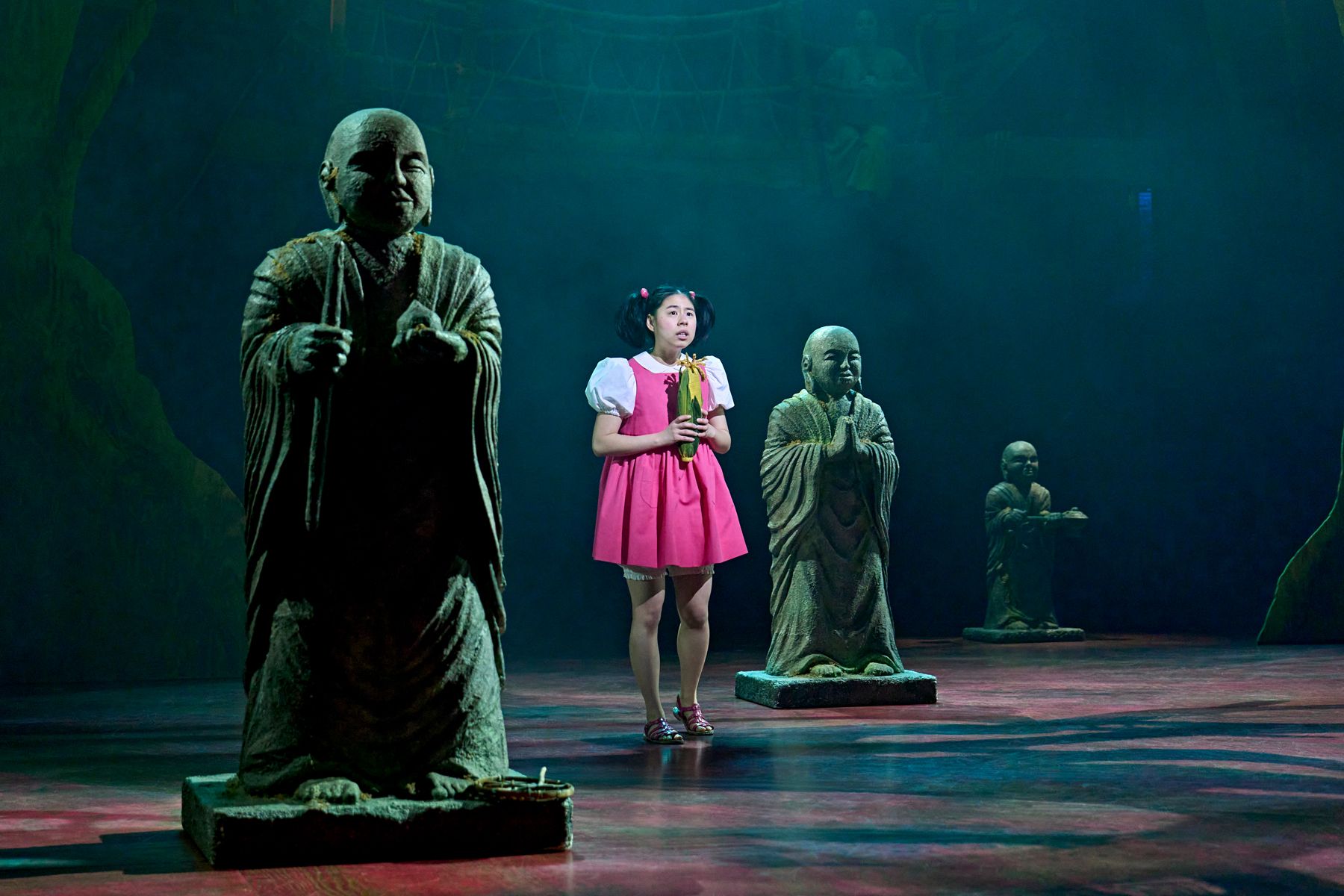
What I’ve noticed is that children don’t react in the way adults expect. When Mei first sees Totoro or the Catbus, it would be easy to go ‘wow’, but actually children don’t know what they’re looking at yet. They don’t know if it’s safe or dangerous, so they just look. That’s something I’ve leaned into more over time, letting the response come from observation rather than playing the reaction.
Children also look to adults for cues. If something happens, they’ll check how others react before deciding what to feel. Those small details make the performance feel more truthful.
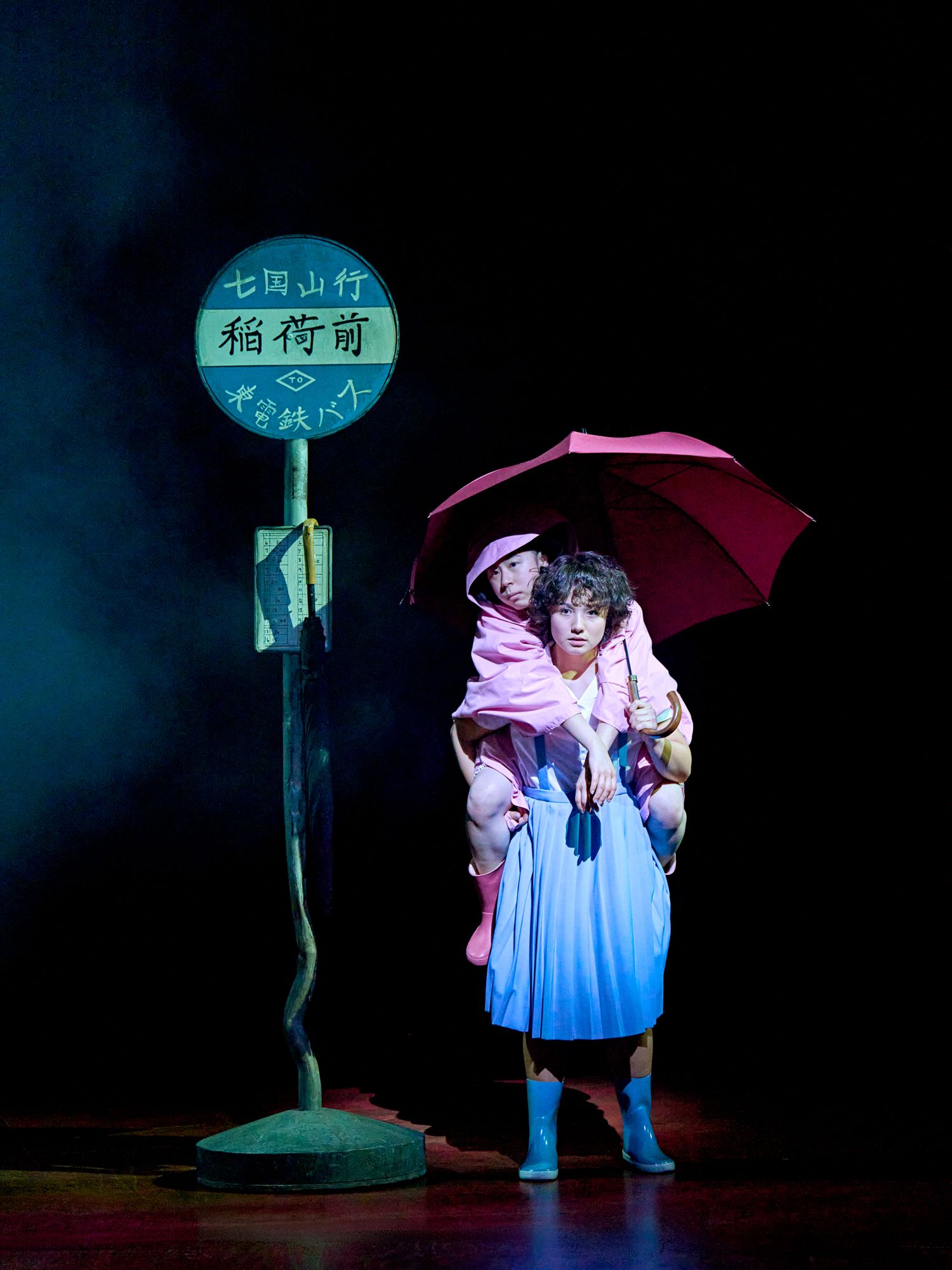
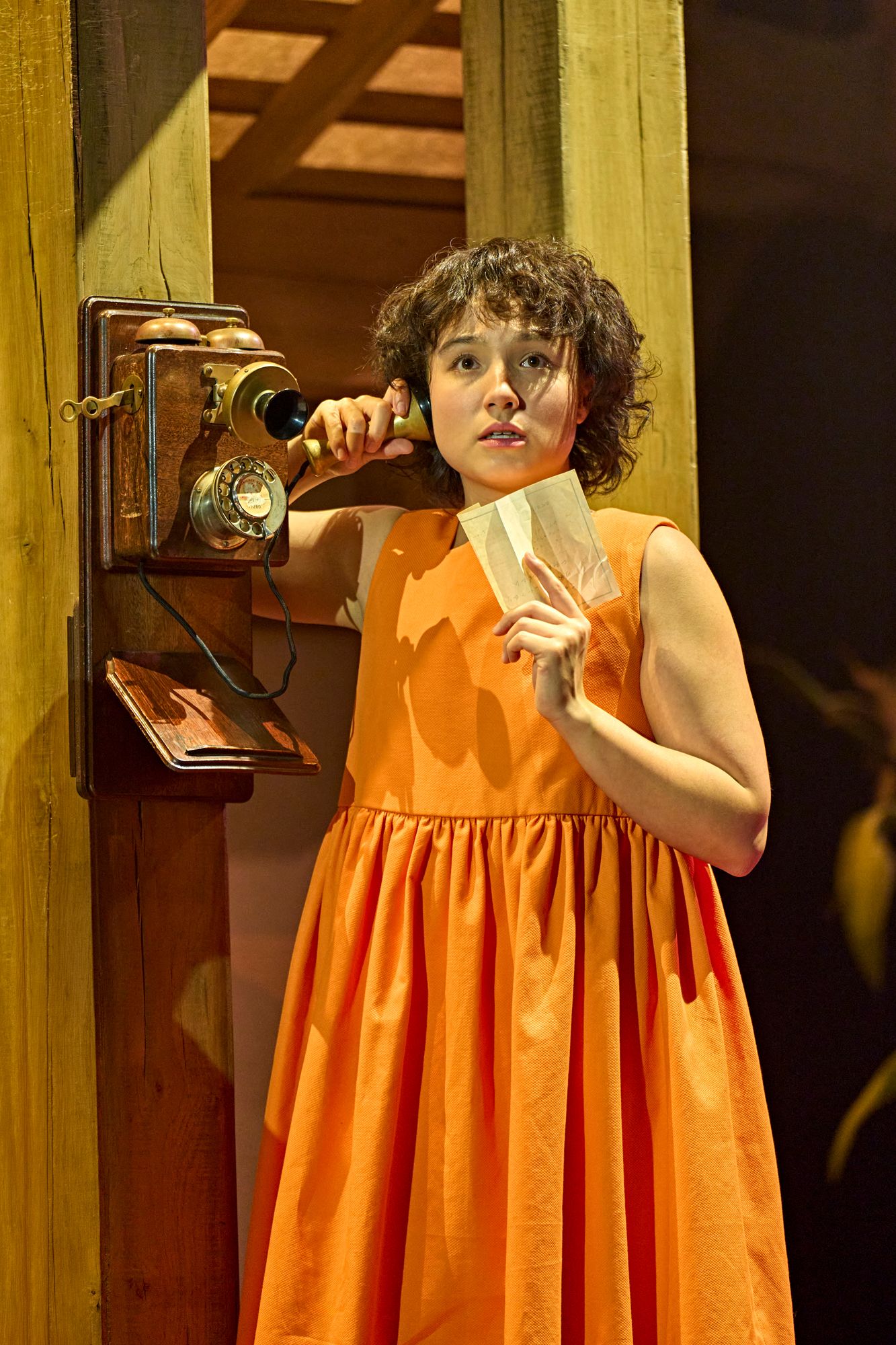
So much of Mei feels reactive rather than planned
Exactly. She doesn’t have to offer much, she just responds to the world around her. She absorbs everything and then throws it back out.
Are there any moments where the audience’s reaction, like laughter or silence, has changed how you play her in that moment?
I wouldn’t say I ever play it for laughs, that would be a disservice to the story. But it does affect the pace. If the audience is laughing and you talk over it, you lose the moment.
So it’s about listening. If I feel a reaction, I’ll give it space and then continue. You have to have a relationship with the audience while still staying truthful to the character.
I’ve heard that backstage and in rehearsals you sometimes stay in character, and people treat you like a four-year-old. Is that true?
That’s one way of putting it, but I think it’s more that people forget I’m an adult.
I’m naturally quite bubbly, and once I’m in costume it really changes my physicality. It’s subconscious, but I move differently, I react differently, and I probably do come across a bit like a child. I giggle a lot, I say things without thinking, and I ask slightly odd questions at random times.
There was also a dynamic when I first joined the show. I was the first new principal coming into a company where everyone else had already done hundreds of performances together. So they all knew the show inside out, and I was the one learning.
Because of that, everyone was very protective and quite motherly towards me. I just accepted all the help – why wouldn’t you? – but I think it created this dynamic where I was seen as the younger one in the group, a bit like Mei in the story. It carried on throughout the run. People would see me out of costume and be genuinely surprised, like, ‘Oh, you exist like this as well?’
But with the newer cast now, it’s shifted. I came into this version knowing the show, so that dynamic isn’t really there anymore. I’m definitely seen as more of an adult this time around, which is quite nice.
Working with Helen Chong as Satsuki, has the dynamic between the two sisters shifted?
It’s very different on stage.
With Ami Okumura Jones, especially in the later version, she leaned into Satsuki’s maturity. She had everything together. She knew what Dad needed, what Mei needed, how to cook, how to get ready for school. She was a real caretaker. Even when she lost it, you still felt that sense of responsibility.
With Helen, it feels different. It’s early days, but she brings a much more wide-eyed, open energy. There’s more discovery in her Satsuki. It feels like both sisters are going through a similar emotional journey, rather than one leading the other.
It changes the dynamic quite a lot. The relationship feels more shared, more equal in a way. And I’m sure it will keep evolving as we do more shows together.
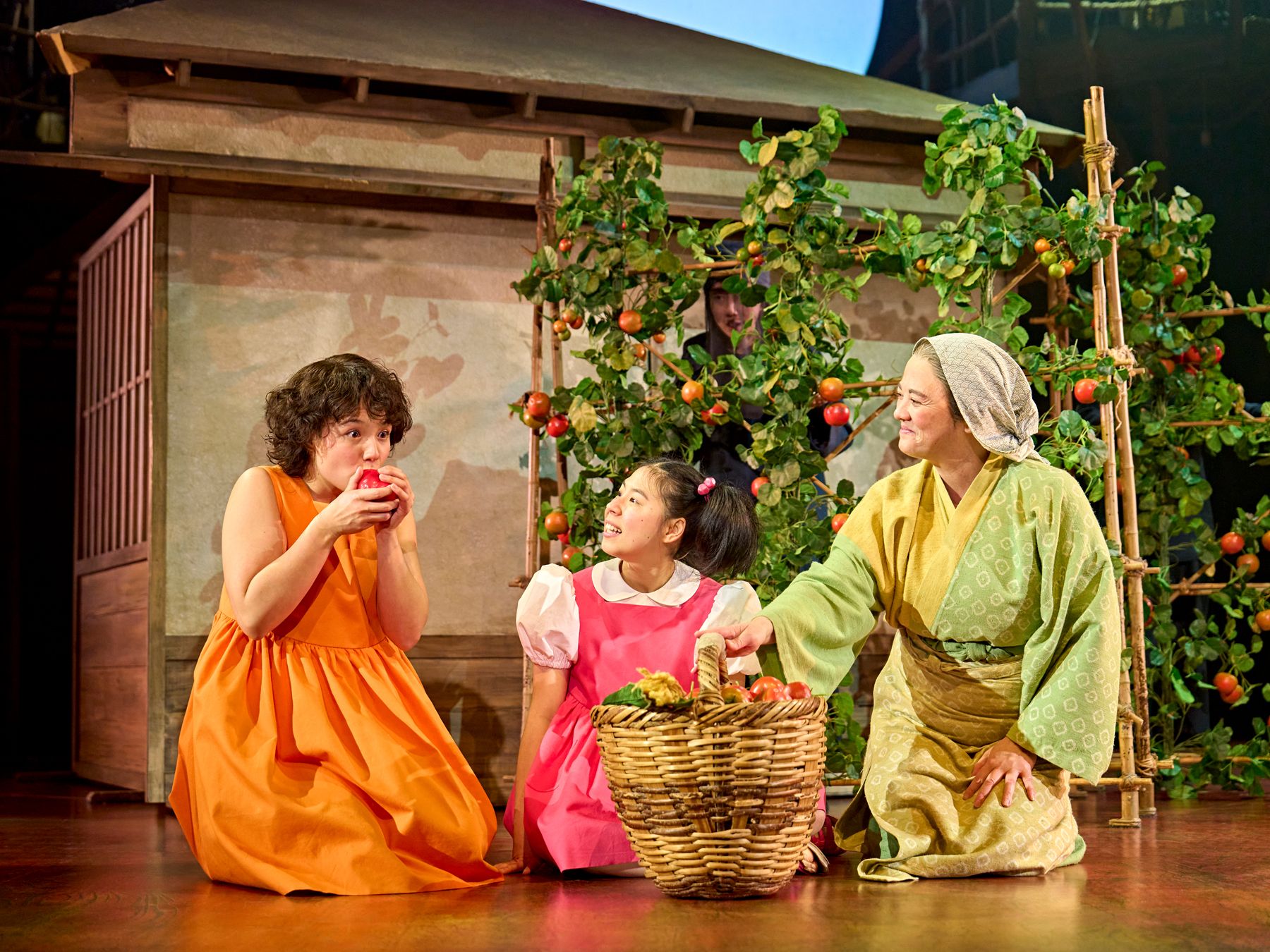
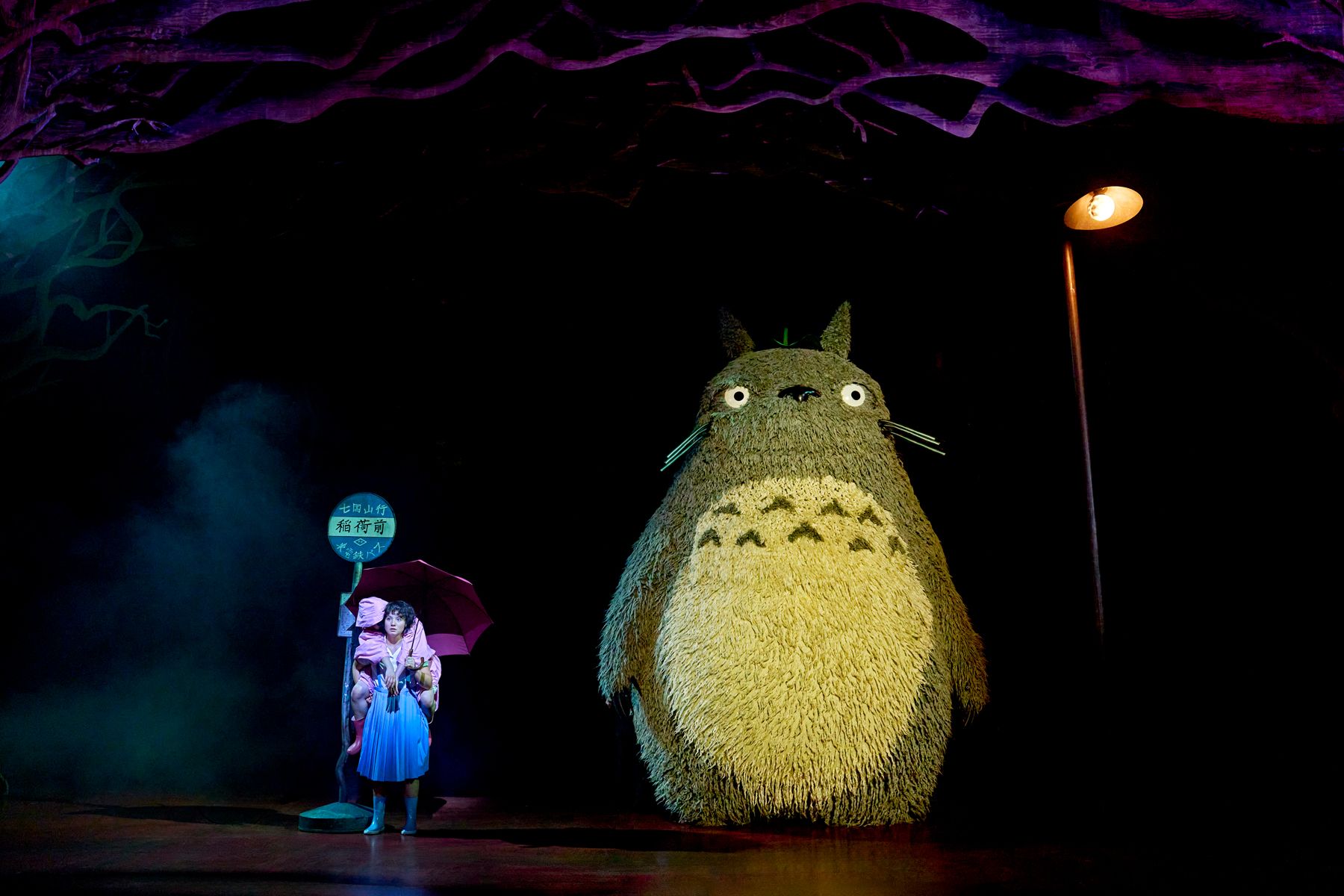
I interviewed Basil Twist, the puppetry director, before this run started, and he told me the cast’s reaction the first time you all saw the puppets was incredible. Can you tell me about that moment and what it’s like interacting with them, especially Totoro?
That first moment was mad. Completely mad.
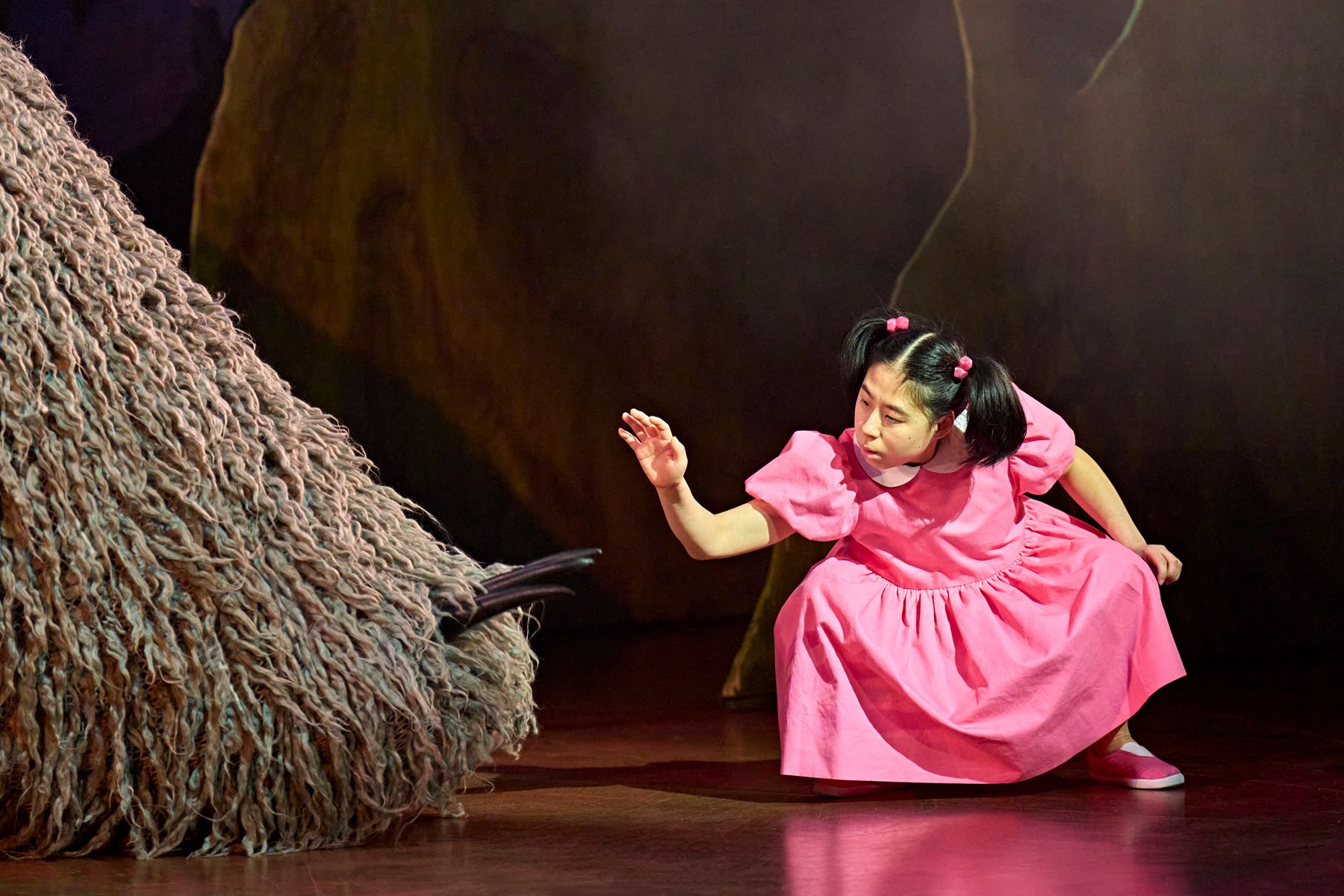
We were brought into this huge studio, and as we walked in, he was just there, sleeping. And everyone reacted differently – people cried, people screamed. I just lost it. I ran straight up to him, touching him, hugging him, running around. I completely forgot I was meant to be a professional in a rehearsal room and had to be pulled back.
Even though I’d seen the show at the Barbican and knew it was coming, nothing prepares you for that first moment. And honestly, even now, after doing it hundreds of times, it still gives me chills.
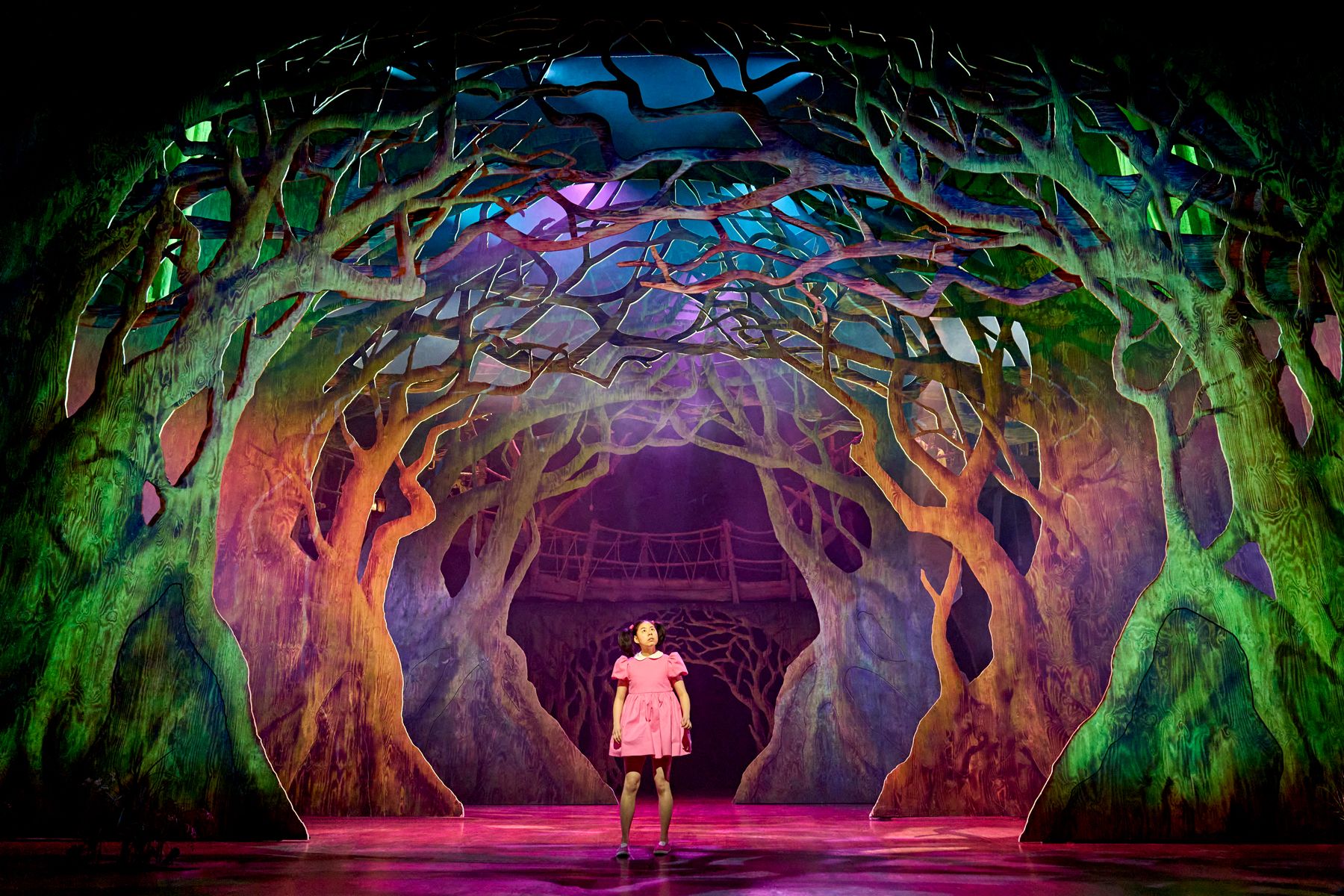
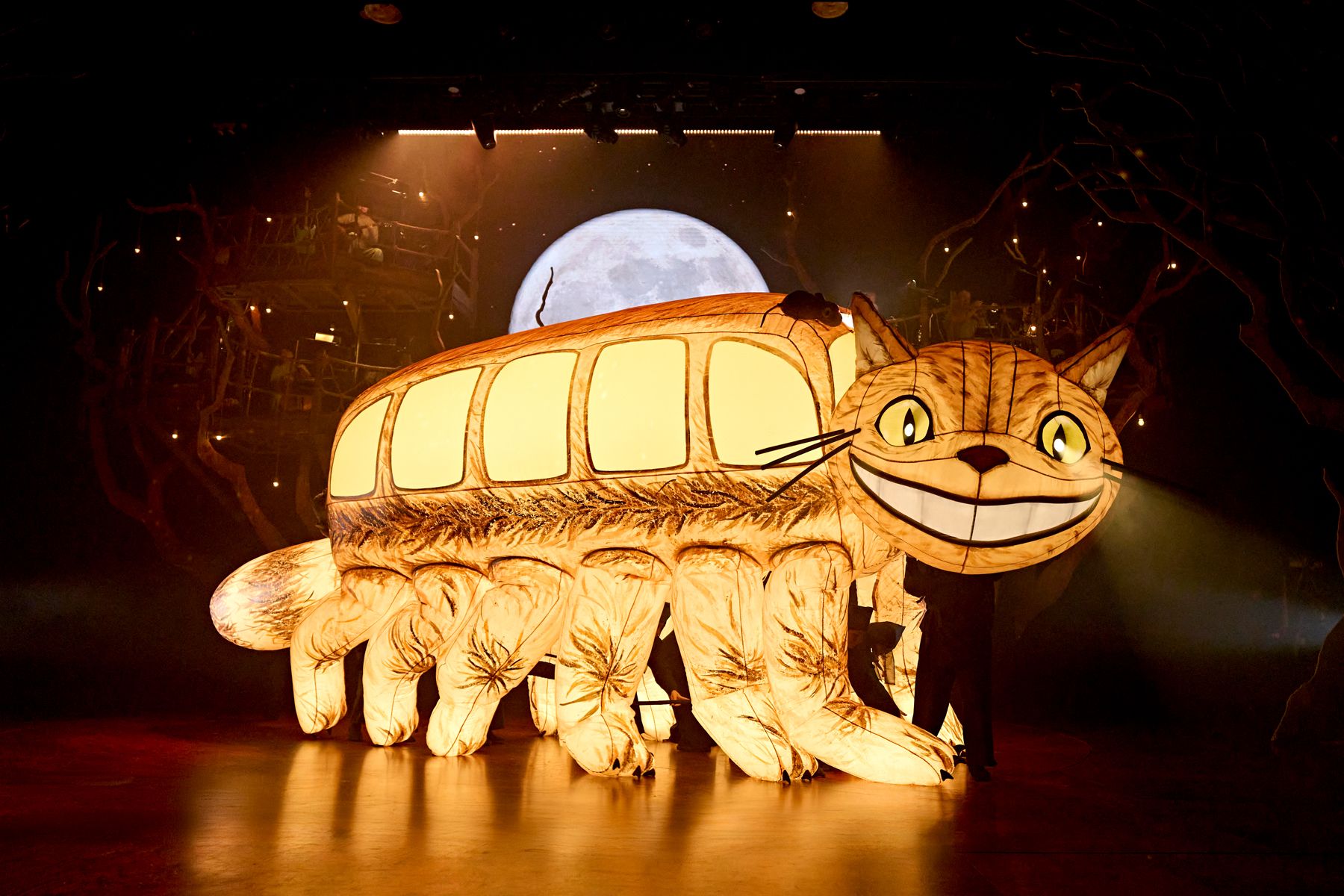
A lot of the show is designed through the eyes of a four-year-old, so everything is scaled to that perspective. Totoro feels huge, the world feels bigger, more overwhelming, more magical.
And then being on stage with him is just so fun, it’s the best feeling. But that magic only works because of the puppeteers. There are so many people making that moment happen, working incredibly hard to bring him to life.
I get to have fun with it, but it’s their work that makes it magical. Without them, it wouldn’t be anything close to what it is. And yes, it still feels magical every single time.
Did you grow up watching Miyazaki films? What did Totoro mean to you before you were part of the production?
I don’t remember the first time I watched My Neighbour Totoro, but I remember the last time. It was a couple of years ago with my sister, lying on my mum’s bed watching it on Netflix. It was really poignant, but also quite painful.
We’d spent a long time living apart, and it was one of those rare moments where we were together again. I was about to leave for London, so it felt significant. The film just hit differently.
There’s something in it about the presence of absence, that feeling of missing someone while they’re still part of your life. When we were kids, our mum was in hospital for a while, and I remember having those same thoughts as Satsuki, trying to be responsible but not really knowing what to do.
Watching it again brought all of that back, but also made us realise how much we’d grown. It was very emotional.
What I love about this stage version is that it doesn’t try to replicate the film. It finds its own language, asking how you make something that only works in theatre. That’s what makes it so special.
I’m not allowed to watch the film while working on the role. Phelim says if I do, I’ll inevitably copy it, and he wants me to find my own version. So when people say it feels similar, I just have to take their word for it. It’s about capturing the spirit rather than copying it.
You and I first connected on a post where you shared about your parents seeing you play a lead in the West End and still suggesting another career path – how do you navigate that kind of cultural and familial expectation while building a career in the arts?
It’s quite easy for me. I’m the middle child, and we’ve openly acknowledged in my family that my older sister is my dad’s favourite and my younger brother is my mum’s favourite. I’m the black sheep. It sounds awful, but it made things easier. I realised I didn’t have to please anyone. I could just do what I wanted.
I’d already disappointed them by choosing acting before drama school. When I got a scholarship, they still didn’t want me to go. I had to convince them to let me try it for a year, saying, people who’ve only seen fifteen minutes of me believe in me enough to give me this opportunity, so why don’t you?
Then I graduated with the Principal’s Award, and the first thing my dad said was, ‘Now you can open your tuition centre.’ That’s quite a big thing in Asia – extra academic schooling after school to get top grades. That’s the world they come from, so acting still doesn’t feel like a secure path to them.
But it’s not the same for everyone. There’s a stereotype around Asian families and creative careers, but I know people whose parents have supported them from the start. For me, it just meant accepting that I was going to do this anyway.
Do you think there’s still a big issue with representation for Asian people in theatre?
I don’t know if I’d call it an issue, but as an actor you want to be seen for more than just the ‘Asian role’. I’ve been lucky, but I know others feel limited by that. That said, things are changing. We’re seeing more stories that are both meaningful and commercially successful, and that helps shift perception.
What’s interesting about Totoro is that it finds magic in everyday moments – brushing hair, picking up grains of rice, just being. There’s a philosophy behind that, where stillness and space matter as much as action, and if you can hold an audience in those quiet moments, that’s when something really special happens.
I know My Neighbour Totoro has been making real efforts around accessibility, with relaxed and accessible performances designed for audiences who might not feel comfortable in a traditional theatre setting – can you tell me a bit about those?
We have what we call ‘chilled’ performances, where the environment is adapted so people can fully enjoy the show. The lights are kept slightly on, people can move around, make noise, leave and come back in – it’s completely welcomed.
And honestly, they’re some of the most special performances we do. As actors, you get to actually see the audience responding in real time. You see them leaning forward, smiling, holding onto each other. It’s not distracting at all – it just becomes part of the relationship between us and them.
We’ve had parents come up to us and say it’s the first time their child has sat through a full show. We’ve had people tell us their non-verbal child started making sounds, even singing. Those moments stay with you.
Access is such a huge part of what theatre should be, and this show really embraces that.
When people leave the theatre after seeing My Neighbour Totoro, what do you hope they carry with them?
I hope they take care of the child within them.
When I first saw the show at the Barbican, I cried the whole way through. There was something in me that lit up again, something I’d forgotten I even had. And I think I was grieving that I’d let it go for so long, but also so grateful that the show brought it back.
If I had to describe it, it’s about remembering that love and curiosity are really powerful forces, and we already have them. If we can keep approaching the world with that, with kindness towards others and towards ourselves, then we can hold on to it.
We can all be that for each other. We can all be someone’s Totoro.
My Neighbour Totoro is playing at the Gillian Lynne Theatre, currently booking until 30th August 2026.
Book your tickets to this magical show at totoroshow.com
Words Nick Barr
Photography Manuel Harlan