Prague offers the perfect city break: great food, heaps of landmarks, the most beautiful, scenic views, and an atmosphere of ease. If you have a weekend to spare, the “City of a Hundred Spires” might just be the place for you. The historical capital of Bohemia and the current capital of the Czech Republic, the city was home to several Holy Roman Emperors throughout history. Its Czech name Praha is derived from the Czech word práh, meaning “threshold”. So, join me in crossing the threshold into the Golden City.
Day One: Art Deco Dreams and Old Town Tales
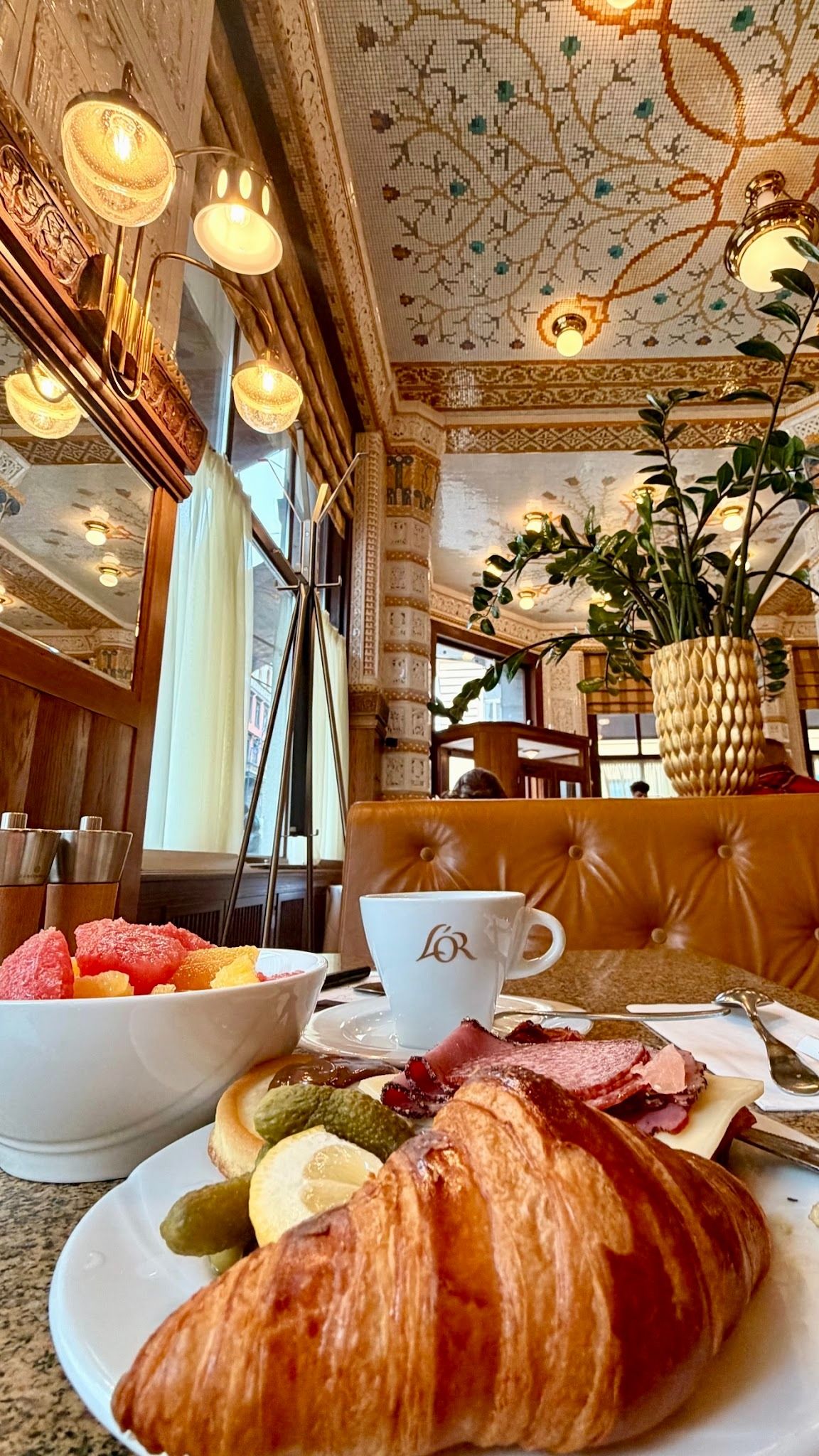
My 48 hours in Prague began at the Art Deco Imperial Hotel, a 1914 masterpiece. The lobby is a riot of colourfully tiled walls and Egyptian-inspired decorations, but the real showstopper is Café Imperial. The original Art Nouveau ceramic wall tiling, designed by Jan Beneš, and the intricate mosaic ceiling with ornamentation by Josef Drahoňovský, are so lavish they almost distract you from the excellent breakfast spread. Almost.
Suitably caffeinated, I set off on foot. Walking is the only way to truly see Prague; every corner has another detail trying to catch your eye. I started at the Powder Gate, a towering 15th-century Gothic structure that once stored gunpowder and marks the beginning of the Royal Route. From there, I wandered down Celetná Street, one of the city’s oldest thoroughfares, passing the House at the Black Madonna – Prague’s first Cubist building – before spilling out into the magnificent Old Town Square.
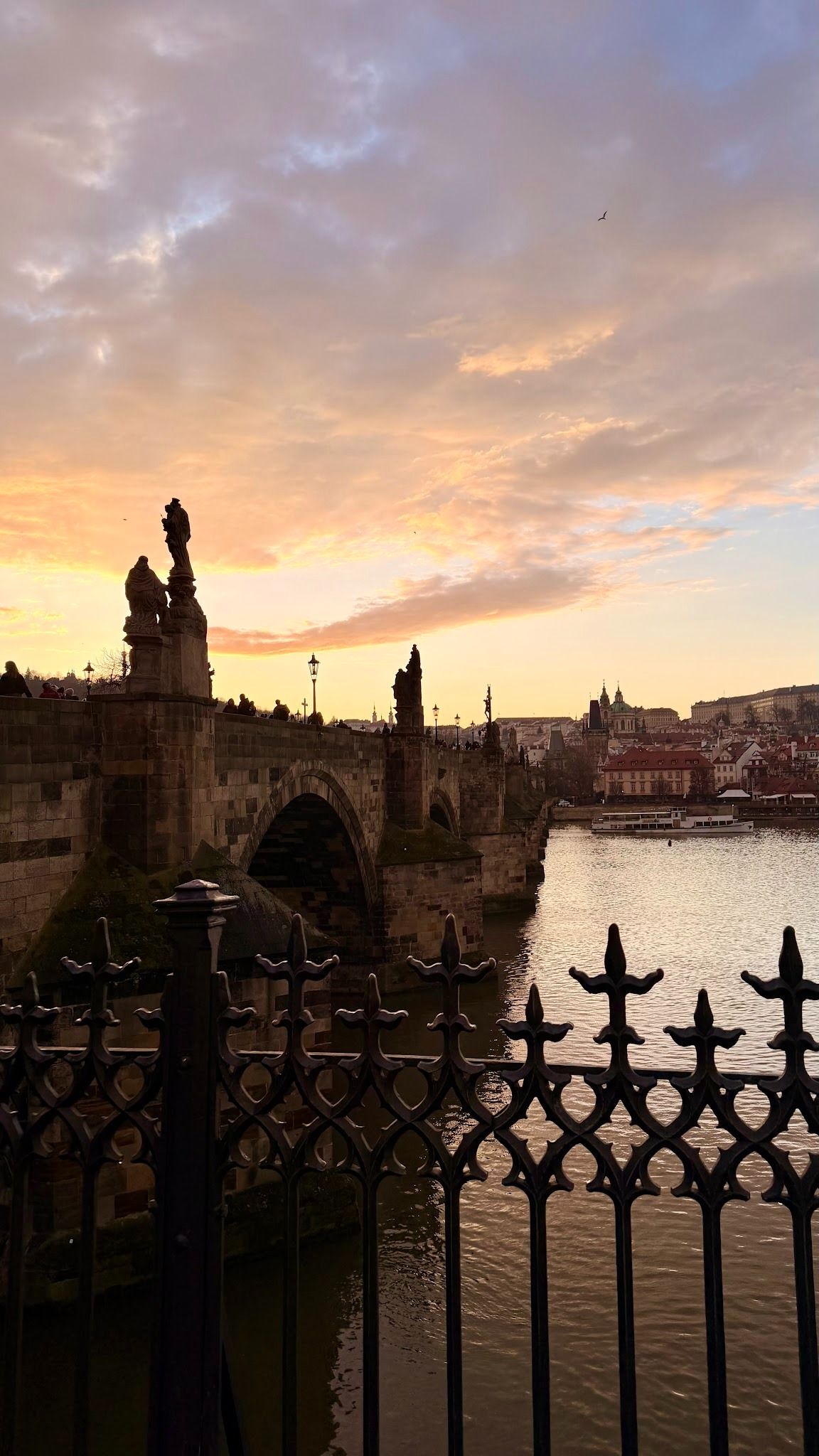
The square is a masterclass in architectural diversity. The twin Gothic spires of the Týn Church dominate the skyline, while the 1410 Astronomical Clock draws crowds waiting for the hourly procession of apostles. I zigzagged through the narrow, atmospheric Karlova Street until the Vltava River opened up before me, framed by the iconic Charles Bridge.
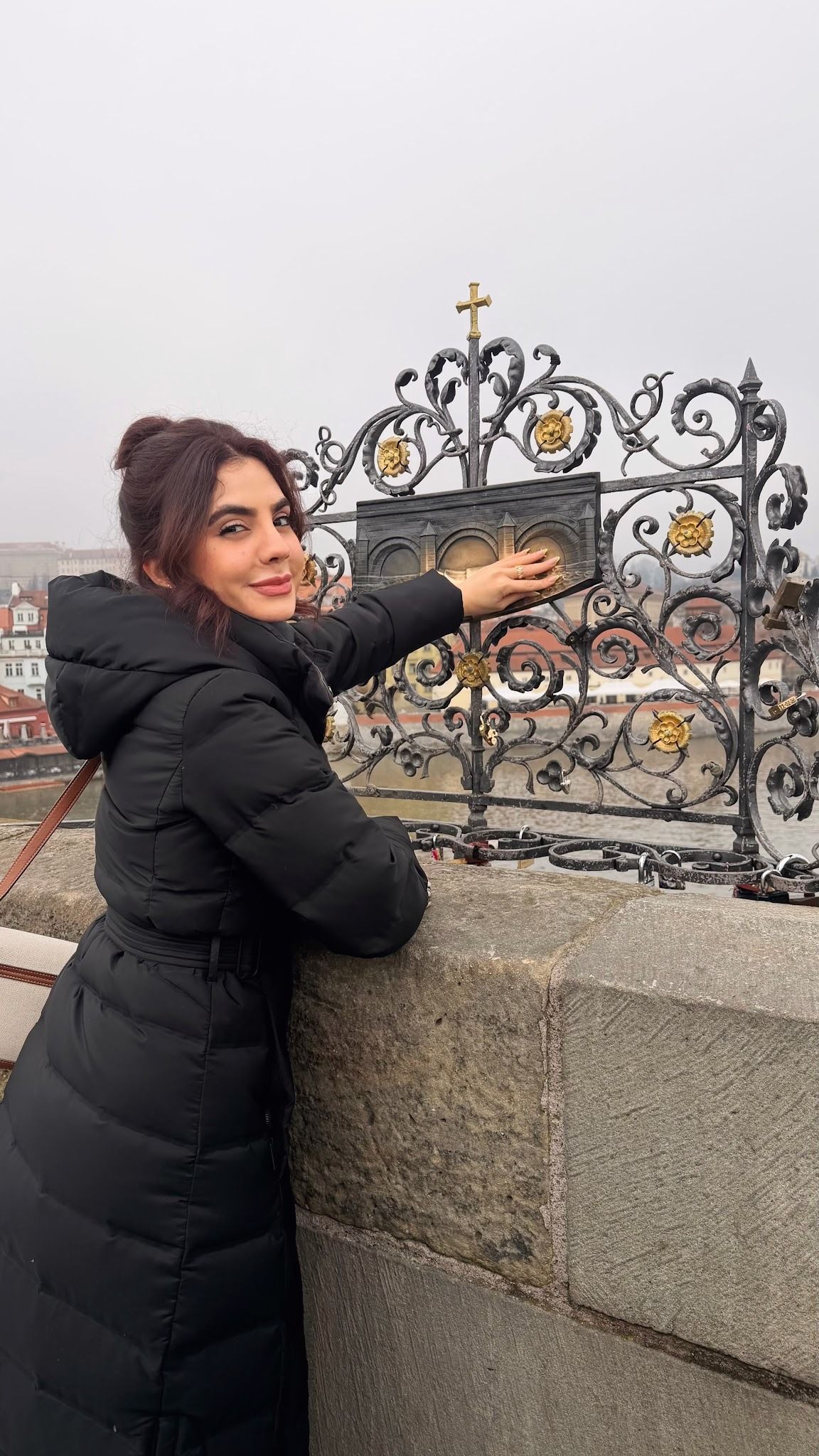
Commissioned by King Charles IV in 1357, the pedestrian-only bridge is lined with 30 Baroque statues. I made sure to touch the bronze relief beneath the statue of St. John of Nepomuk: legend says rubbing the falling priest and the shiny dog brings luck and guarantees a return to Prague. The view from the bridge, with the river below and the castle looming above, is the kind of scene that makes you feel like you’re in the middle of an epic tale being told.
To tick a major item off my bucket list, I found a spot nearby for some traditional Czech sausage (klobása) and a pint of Pilsner Urquell. I ended up at Lokál Dlouhááá, a gastropub that serves as an inside joke for Czechs with its deliberate nods to 1970s communist-era pubs – think cheap wood paneling and plastic bread baskets. But the food is top-notch pub grub, and the unpasteurised beer, poured fresh from massive refrigerated tanks, is a revelation.
Dinner called for a change of pace. I headed back to the hotel to change, then made my way to Marina Ristorante. Situated on a converted riverboat near the Mánes Bridge, it offers arguably the best views of Prague Castle and the Charles Bridge in the city. The Italian menu, heavily focused on fresh seafood and homemade pasta, was exceptional. Eating perfectly al dente pasta while the castle lights reflected on the Vltava was a moment I won’t soon forget.
Day Two: Climbing Towards the Skyline
Day two started with another breakfast under the Imperial’s mosaic ceiling before I retraced my steps through Old Town and across the Charles Bridge. This time, I kept going, crossing into the charming Lesser Town (Malá Strana) and climbing the steep, cobbled Nerudova Street towards Prague Castle.
The castle complex is the largest ancient castle in the world, spanning a thousand years of history. I prioritised the heavy hitters: St. Vitus Cathedral, a Gothic behemoth that took nearly 600 years to complete; the Old Royal Palace, home to the massive, vaulted Vladislav Hall where knights once jousted indoors; and St. George’s Basilica, a stunningly preserved 10th-century Romanesque church with a striking 17th-century red-and-white Baroque facade.
I skipped a sit-down lunch in favour of more sightseeing, but if you have the time, the area around the castle has some excellent options. Lokál offers great value Czech classics, Kuchyň provides a simple menu with fantastic views right by the castle, and Café Savoy in Malá Strana offers a calmer, more refined experience under a soaring Neo-Renaissance ceiling.
Instead, I headed back across the river to Josefov, the Jewish Quarter. The area survived the Nazi occupation and is now one of the most important Jewish heritage sites in Europe. A single ticket grants access to multiple sites, including the hauntingly beautiful Old Jewish Cemetery, where over 12,000 tombstones lean at precarious angles.
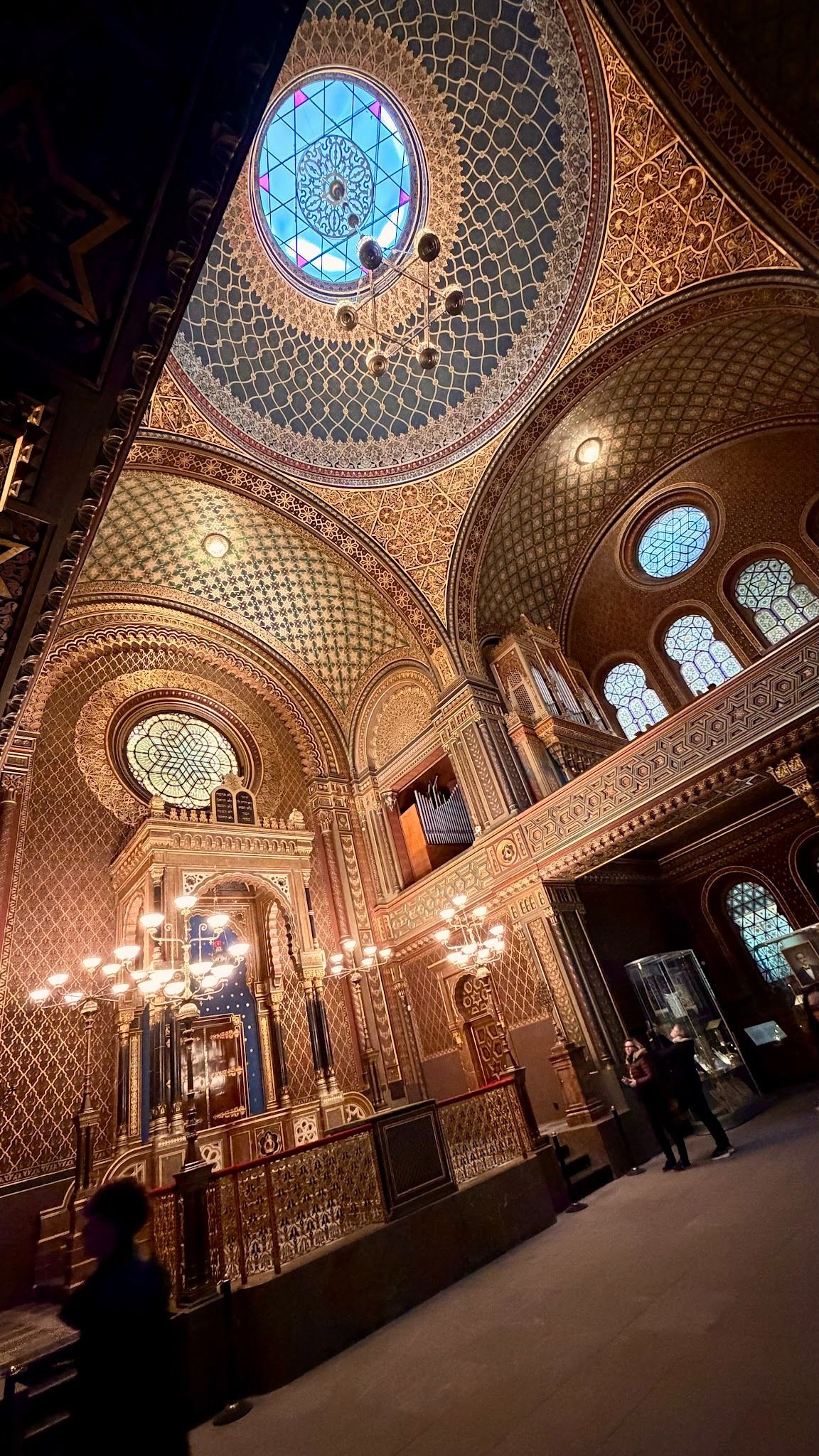
But the absolute highlight was the Spanish Synagogue. Built in 1868 on the site of Prague’s oldest synagogue, it gets its name from its breathtaking Moorish Revival architecture, inspired by the Alhambra in Spain. The interior is a dazzling combination of rich green, blue, and red hues, with low stucco arabesques, gilt motifs, and a magnificent central dome. It is, without exaggeration, one of the most beautiful buildings I have ever stood inside.
My evening was booked for a concert at the O2 Arena, so I grabbed drinks at the hotel before heading out, opting for the modern fast-food bites at the venue. For those not heading to a gig, I highly recommend staying central for dinner. You can’t go wrong returning to Lokál Dlouhááá for an efficient, authentic Czech feast, or taking a short trip to Karlín to visit Eska. Housed in a former fabric factory, Eska is a Michelin Bib Gourmand-awarded restaurant and bakery that redefines modern Czech cuisine with a focus on fermentation, sourdough, and local ingredients.
The Final Morning: Domes and Panoramas
With a few hours left before my flight, I squeezed in two final stops. First was the St. Nicholas Church in Malá Strana, a High Baroque masterpiece with a massive dome and a lavish interior where Mozart once played the organ in 1787. Then, I headed to the top of Wenceslas Square to see the National Museum. The grand Neo-Renaissance building, recently reopened after a massive seven-year reconstruction, is an iconic symbol of the city.
For those with more time, Prague has plenty more to offer. The Letná Park viewpoint is famed for having the best panorama of the city’s bridges, while Petřín Hill offers great views, pleasant walking trails, and a funicular railway to the top.
But honestly? The best thing to do in Prague is just to walk. Every street, every square, and every bridge has a story to tell. You just have to be there to listen.