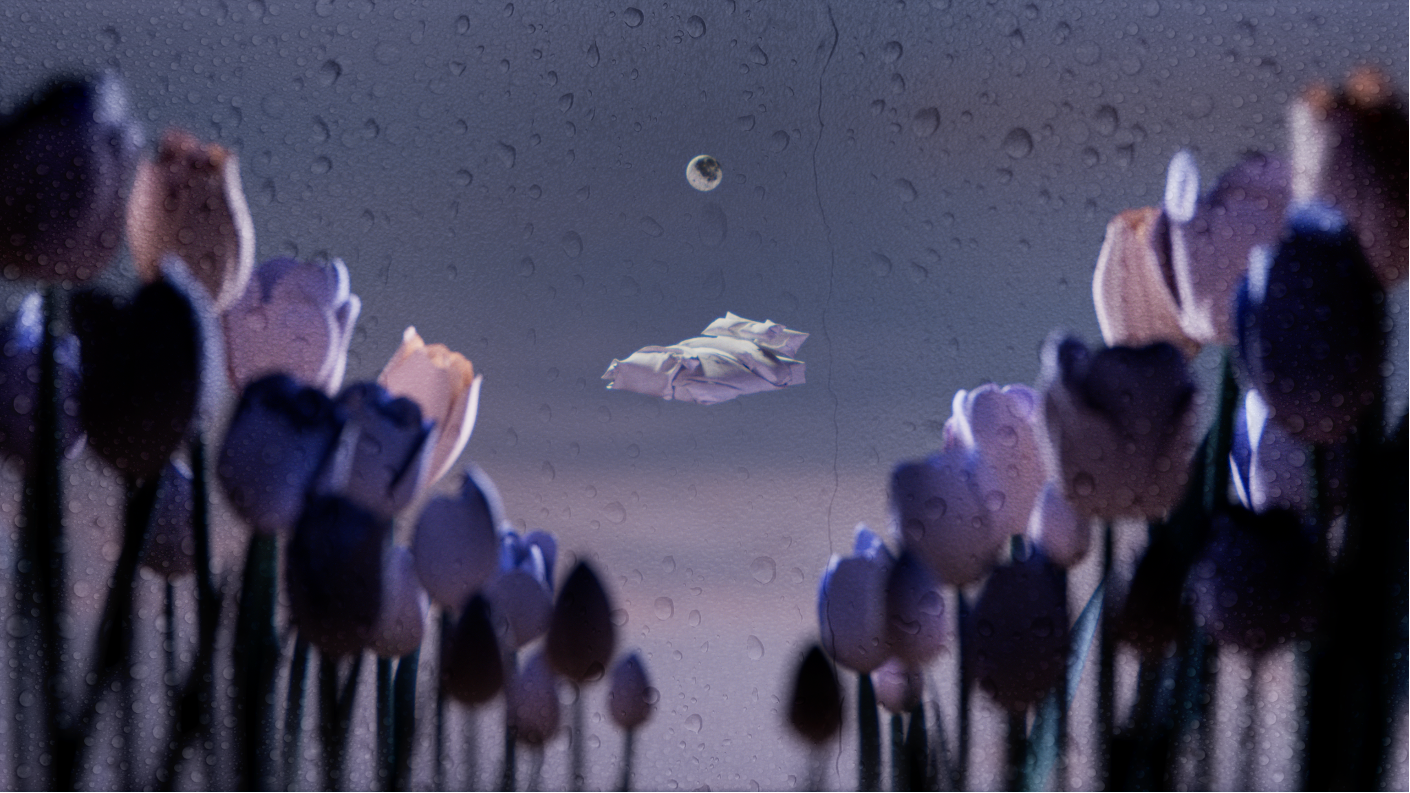
There’s more to streaming services than just TV shows and movies. Now, a new trend called “ambient TV” is coming to Amazon Fire TV, showing calming images and meditative videos. In fact, the Fire TV Ambient Experience turns idle TVs into smart displays featuring an array of over 1,500 art images, photos and looped videos.
A new visual loop titled “REM” is being developed for Fire TV. It is designed by New York City-based motion designer Zilan Lin. This high-resolution 4K loop aims to transform living spaces into places of tranquility, offering a non-narrative visual journey designed to be felt, rather than actively watched. It sits in the background of a living space as a calming, relaxing antidote to the bustling day-to-day life.
Lin describes “REM” as a calming addition to your home. “It’s like a digital tapestry that breathes with the room,” she said. “And it’s designed to translate the subconscious mind into a visual journey.” As the title suggests, “REM” alludes to the sleep state, and the visuals she uses are dreamlike and surreal in nature. The primary goal of the looped visual is to provide something subtle. “It’s a serene backdrop that enhances the living space without demanding cognitive attention,” she said, in a contrast to traditional screen content.
Work created for background screens reflects a growing interest in ambient design. It’s part of a larger industry shift towards wellness-focused, non-narrative visual experiences across streaming platforms. Lin notes a personal connection to this evolution, citing periods of difficulty falling asleep that heightened her awareness of how media can affect mental and emotional states.
“What stood out to me is that our media habits are splitting into two extremes,” Lin explains. “On one side, fast-paced, high-stimulation short-form content built for instant gratification; on the other, a growing desire for something quieter, more inward, almost meditative.”
This tension, Lin believes, has helped shape the current trend, with platforms realizing the potential for visual content to foster calm, focus, and emotional balance rather than simply competing for attention. “For me, this isn’t just a trend; it’s a shift in how we relate to images,” said Lin. “Motion design is no longer only about storytelling, but about shaping atmosphere and internal experience.”
To bring “REM” to life, Lin used a sophisticated 3D workflow. She visualized the experience as what she calls “a visual translation of what deep rest feels like,” focusing on sensory details like softness, weightlessness, and slow, continuous motion.
The process involved shaping environments, materials, and camera perspectives, then meticulously refining them through lighting and timing. Lin emphasizes the importance of subtle details, like the density of clouds, the rhythm of a flower’s movement, the way fabric catches light, and more, to create a profound, yet understated emotional effect.
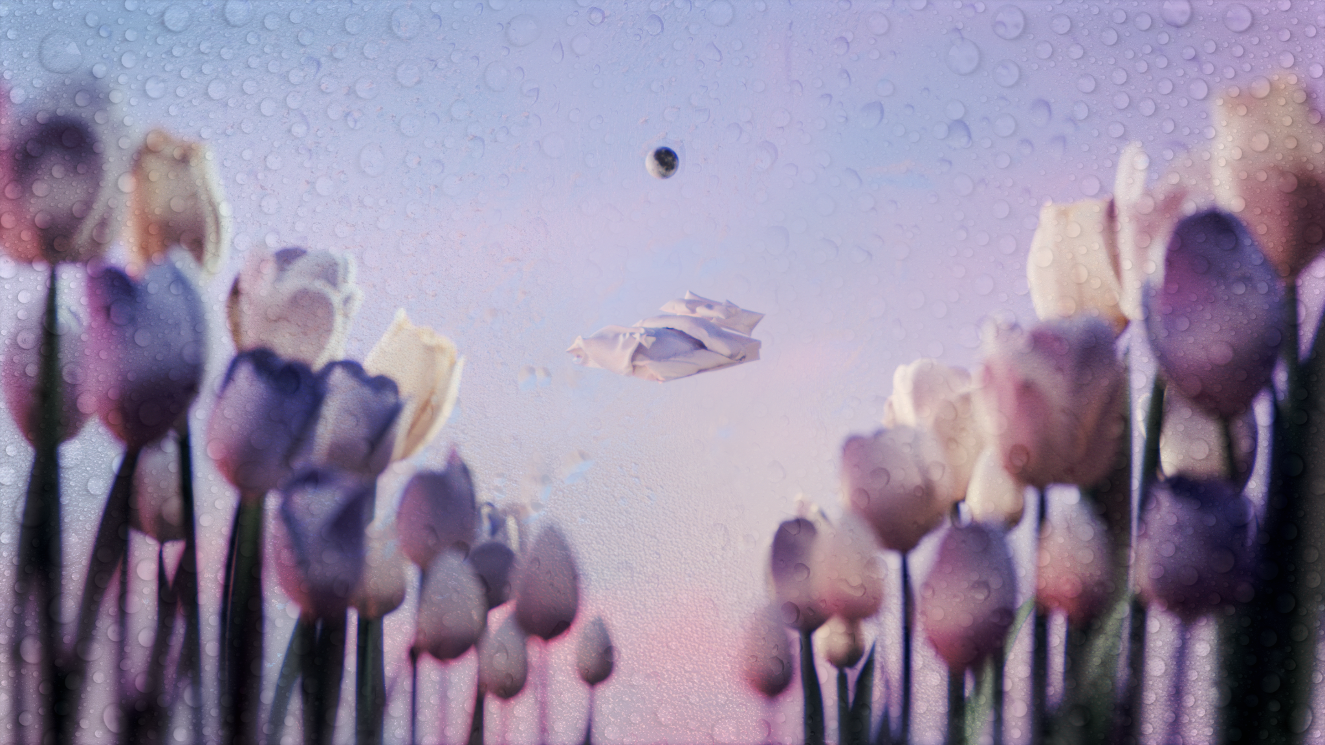
Her aesthetic draws inspiration from natural textures that evoke tranquility. “I love slightly overcast skies with a soft violet tone, the light diffusion of mist and rain, and the openness of a wide sky,” said Lin.
Together, these elements create a sense of simplicity. “They suggest ease, like slowly drifting into sleep,” she said.
Tulips also appear throughout the composition as a key visual reference, embodying a gentle, free-flowing beauty.
Lighting, according to Lin, is paramount, as it carries most of the emotional shift in the REM visual piece. “I used soft, diffused light language; lavender-toned, slightly overcast, and never too contrast-heavy, to keep everything calm and immersive,” said Lin. These subtle shifts in light and shadow mimic the phases of REM sleep, creating a sense of “breathing and suspension” that acts as the narrative in this non-traditional, non-narrative visual work.
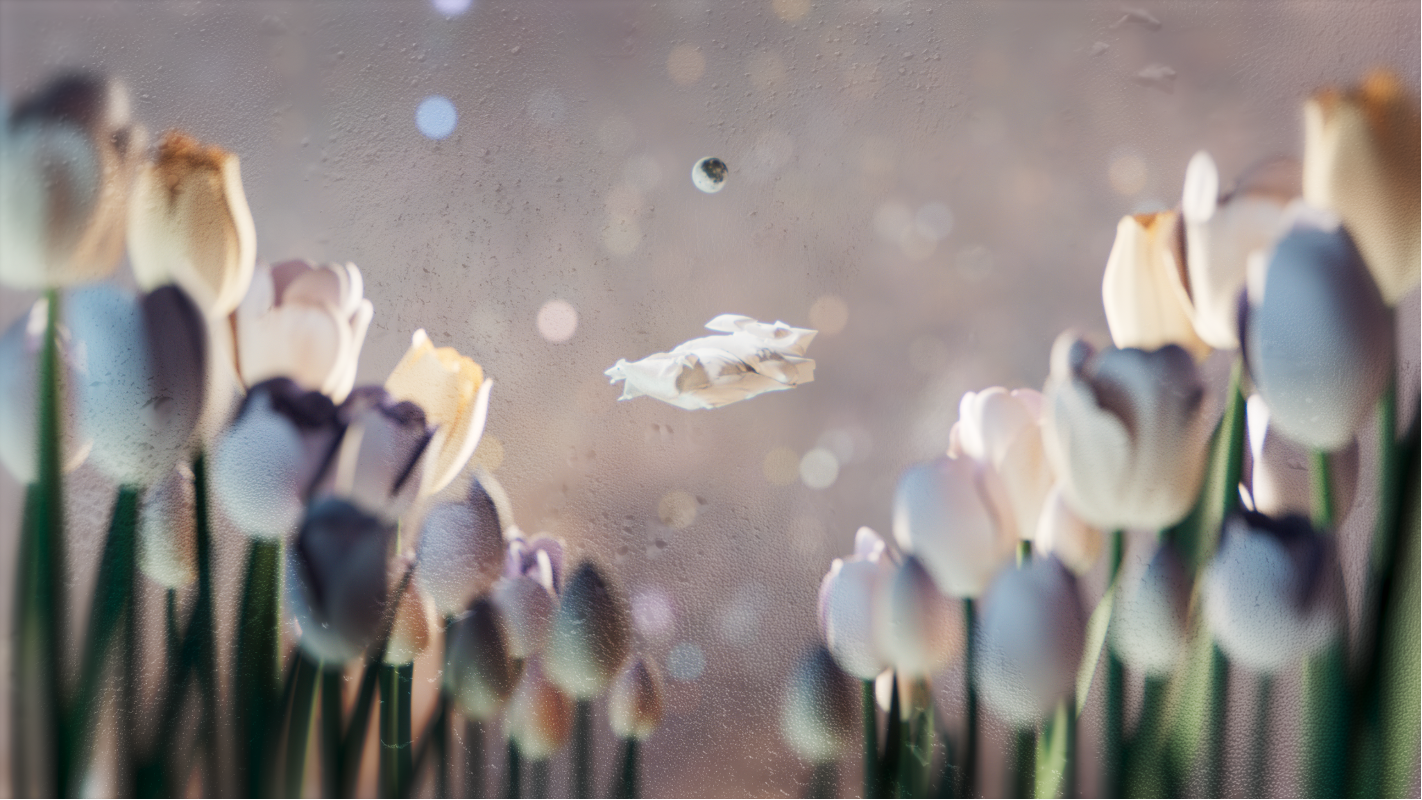
TVs are becoming more than devices for watching shows and movies. In fact, Lin sees home screens evolving into what she calls “a canvas for shaping the atmosphere.” In this context, subtle visuals, slow motion, and flowing light create immersive environments rather than demand active viewership. “I see motion design becoming part of everyday life, rather than something separate from it,” she said. As screens become larger and more seamlessly integrated into living spaces, wellness-focused and meditative programming will likely continue to grow.
Looking ahead, Lin is confident that non-narrative video experiences will continue to gain popularity. “They will exist as a parallel to traditional media,” said Lin. “Not every moment at home calls for a story or intensity; there’s increasing space for visuals that function as atmosphere or mood.”
The potential for immersive, spatial video, particularly with advancements in VR and projection devices, excites her, as Lin sees a future where motion design’s goal expands. “It not only captures attention, but shapes how a space feels,” she explains.
Zilan Lin’s expertise in motion and CGI design, animation, and art direction, honed through roles at Chantecaille Beaute Inc., PETERARNELL, and internships at DreamWorks Animation and Dress Code Studio, gives her a distinct perspective on this evolving frontier. With a Bachelor of Arts in Computer Art from the School of Visual Arts and a foundation in experimental animation, Lin brings a rich blend of technical skill and artistic vision to projects that push the boundaries of digital experience.
Her portfolio can be viewed online at lanlanlab.co
Words by Tom Oakley