Every few years, a new ingredient arrives in skincare with enough scientific vocabulary attached to it that it sounds bulletproof. Stem cells. Growth factors. Peptides. And now: exosomes.
You’ve probably started seeing the word on serums, at your aesthetician’s clinic, or in the kind of skincare content that uses phrases like “cellular communication” and “regenerative technology” without ever quite explaining what those things mean. So let’s actually explain them — and more importantly, let’s look at what the research says, not what the marketing copy says.
What Exosomes Actually Are
Exosomes are extracellular vesicles — tiny membrane-bound sacs secreted by cells. They’re not cells themselves, and they don’t contain DNA. What they do contain is a cargo: proteins, lipids, and various types of RNA (most notably microRNA), which they carry from one cell to another.
Think of them as the body’s internal messaging system. When a cell wants to send instructions to a neighboring cell — or a distant one — it packages those instructions into an exosome and releases it. The receiving cell takes up the exosome, reads the message, and adjusts its behavior accordingly.
This happens constantly, throughout every tissue in your body. In the skin specifically, exosomes play a role in coordinating wound healing, regulating inflammation, stimulating collagen production, and communicating between keratinocytes (skin surface cells), fibroblasts (the cells that make collagen and elastin), and immune cells.
So biology is genuinely interesting. The question is whether putting exosomes in a serum and applying them to your face actually translates to any of that.
How Exosomes Differ from Growth Factors and Peptides
Before we get to the evidence, it’s worth clearing up a confusion that shows up constantly in skincare content: exosomes, growth factors, and peptides are not the same thing, and they don’t work the same way.
Growth factors are proteins — signaling molecules that bind to receptors on cell surfaces and trigger specific responses like proliferation or collagen synthesis. In skincare, they’re typically derived from plant sources, human cell cultures, or fermentation processes. The problem is that growth factor molecules are large, which raises legitimate questions about skin penetration.
Peptides are short chains of amino acids. Some are signaling peptides (they mimic growth factor activity), some are carrier peptides (they deliver minerals like copper to the skin), and some are neurotransmitter-inhibiting peptides (think Argireline). Peptides are generally well-researched with solid penetration data.
Exosomes are different from both because they’re not a single molecule — they’re a delivery vehicle. The value proposition is that they carry multiple bioactive signals simultaneously, potentially communicating with skin cells in a more physiologically coherent way than a single growth factor or peptide could. Whether that complexity is an advantage or just marketing framing depends on the evidence.
What the Research Actually Shows
Here’s where it gets honest.
The exosome research that exists is genuinely promising — but most of it comes from wound healing and regenerative medicine contexts, not cosmetic skincare. Several studies published in journals indexed on PubMed have examined exosome applications in skin repair:
A 2021 study in the Journal of Extracellular Vesicles found that stem cell-derived exosomes accelerated wound closure and increased collagen deposition in preclinical models. A 2022 review in Biomedicines documented exosome activity in reducing post-inflammatory hyperpigmentation and supporting fibroblast proliferation. Clinical work out of dermatology settings — particularly around post-procedure recovery — has shown reductions in downtime, redness, and transepidermal water loss when exosome preparations are applied immediately after microneedling or laser treatments.
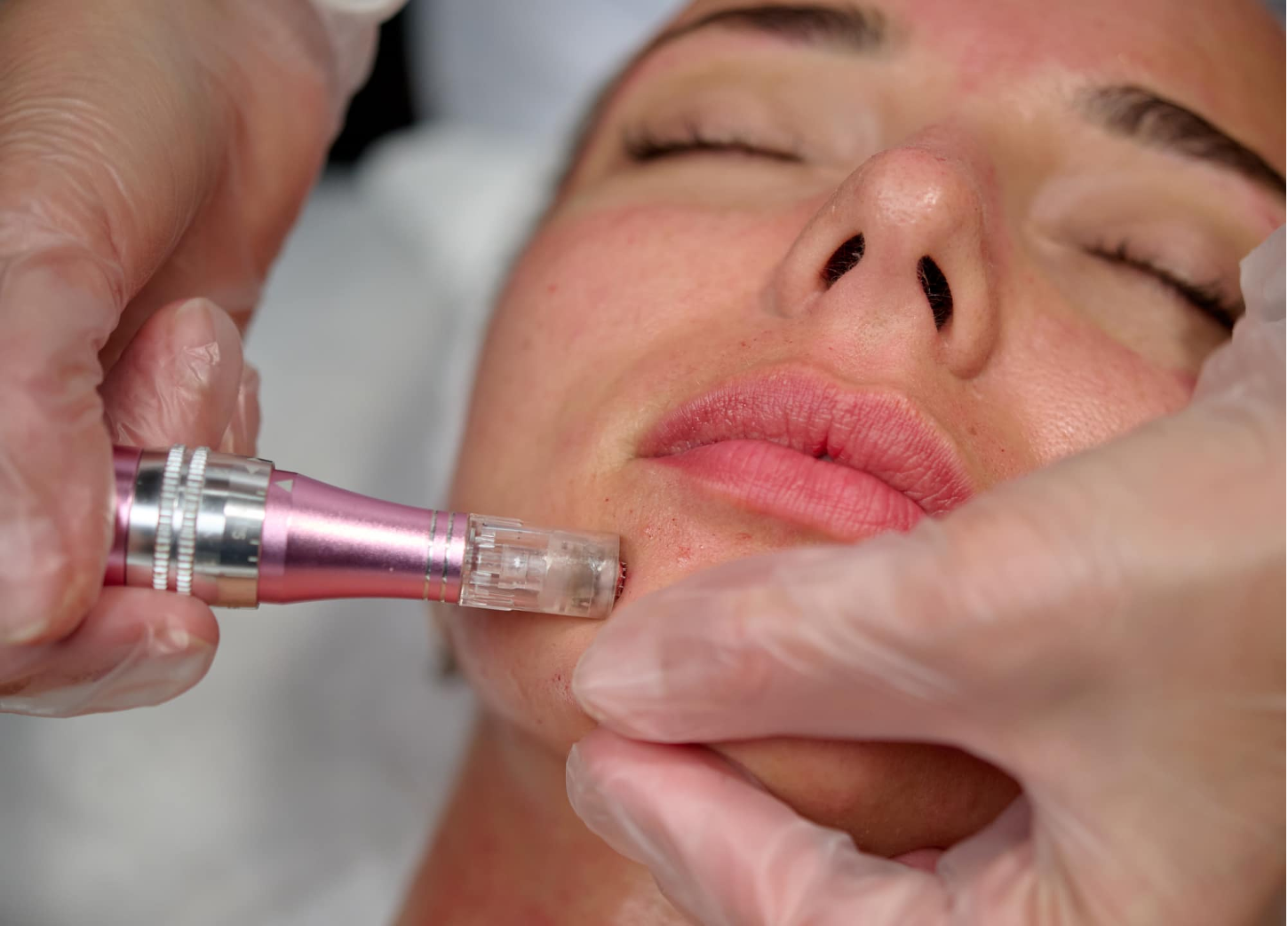
That last application is arguably the strongest use case. Microneedling creates controlled micro-injuries that temporarily open channels in the skin. Applied in that window, exosome preparations appear to enhance the skin’s natural repair signaling rather than trying to penetrate intact barrier tissue — which sidesteps the penetration problem that limits so many topical actives.
The caveats are real though. Most studies use cell cultures or animal models. Human clinical trial data is limited in scale. Standardization is a problem — exosomes derived from different cell sources (plant-derived, adipose-derived stem cells, bone marrow stem cells) have significantly different cargo profiles, and the field hasn’t settled on which source is most relevant to skin. Concentration and stability in finished cosmetic formulas are also variables that aren’t transparently disclosed by most brands.
Should You Use an Exosome Product?
If you’re someone who gets regular microneedling, laser, or other resurfacing treatments, the post-procedure application case is genuinely supported by the literature. That’s where exosome serums make the most biological sense — applied during the recovery window when the skin’s absorption is temporarily enhanced and the cellular repair machinery is already activated.
A well-formulated exosome serum used in that context — like Exosthetics‘ Exosome Serum, developed specifically for post-procedure recovery — is a reasonable evidence-informed choice. It’s not magic, and no single ingredient is. But the underlying science is real, the mechanism is plausible, and the post-procedure use case has better research backing than most trending ingredients manage.
For everyday use on undamaged skin with no active procedure context? The research doesn’t yet make a compelling case either way. Wait for more human clinical data before paying premium prices on that promise alone.
The Bottom Line
Exosomes are one of the more genuinely exciting ingredients to enter skincare in years — and that’s not a statement made lightly. The biology is real, the mechanism is coherent, and the research trajectory is pointing in a direction that makes continued attention worthwhile.
The strongest use case right now is post-procedure recovery, where the evidence is most concentrated and the biological rationale is cleanest. If you’re investing in microneedling or laser treatments, pairing that with an exosome serum during the recovery window is one of the more evidence-informed decisions you can make for your skin in 2024. The clinical literature on reduced downtime, improved collagen stimulation, and enhanced repair signaling is consistent enough to take seriously.
The broader everyday skincare application? That’s where the science is still building its case — and it’s building it fast. Exosome research is one of the most active areas in dermatology right now, with new human clinical data emerging regularly. The foundation being laid in regenerative medicine is translating into cosmetic applications with increasing precision.
What this ingredient deserves is informed enthusiasm — the kind that reads the research, understands the mechanism, and makes decisions based on where the evidence is strongest today, while staying curious about where it’s heading tomorrow. That’s not skepticism for its own sake. That’s just smart skincare.