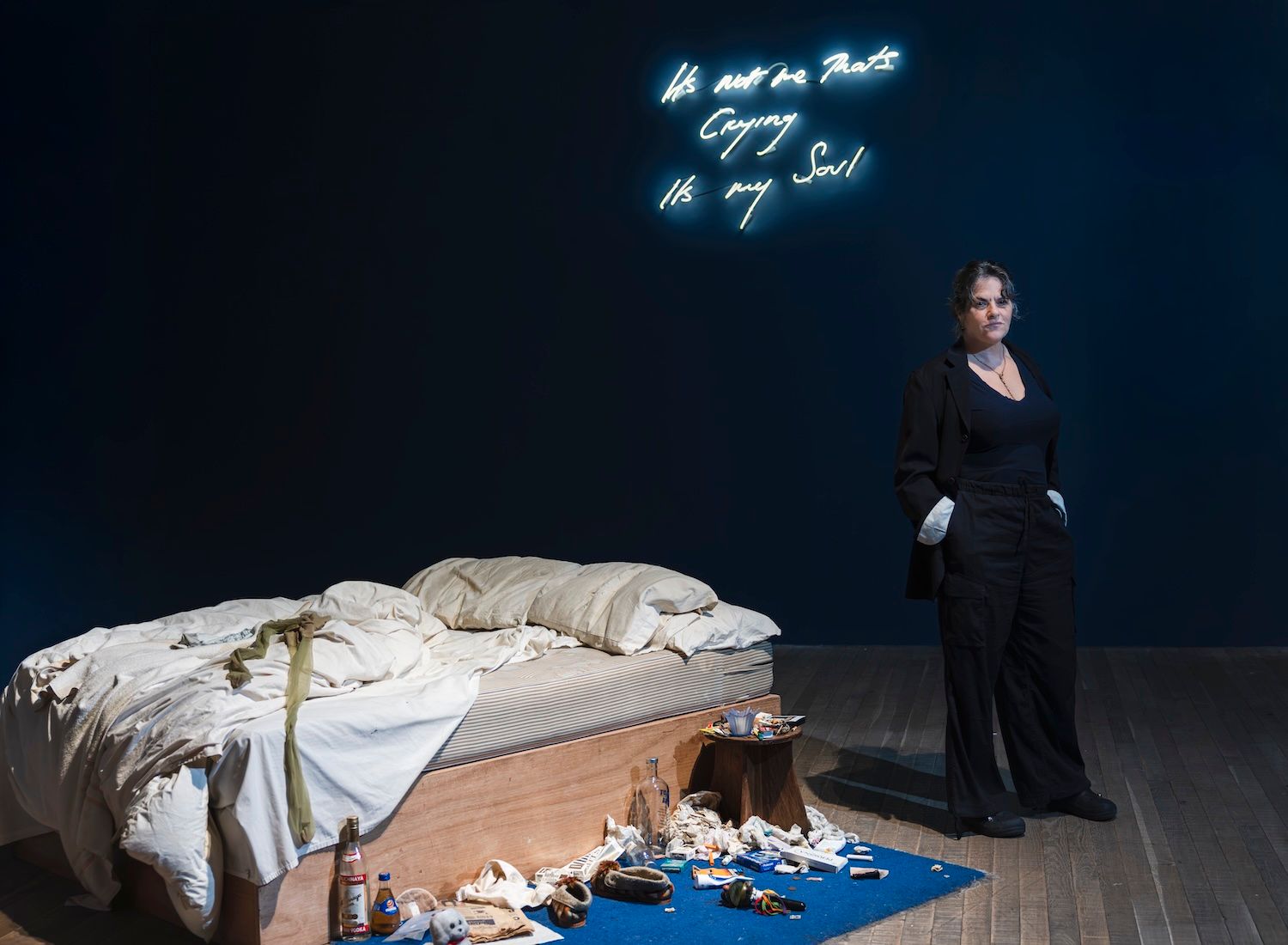
Her name synonymous with art of blunt, disarming honesty – so emotionally unguarded and visceral it can be as unsettling as it is moving, Tracey Emin has spent decades channelling her own life into work that speaks to audiences across generations with an unvarnished urgency and intensity.
Born in London in 1963, Emin rose to prominence in the 1990s as the enfant terrible of a generation of artists defined by rebellion and conceptual audacity. Yet, within a peer group often associated with detached irony, her work stood out for its uniquely, even excruciatingly, confessional directness.
In keeping with the unflinching candour of her practice, a new exhibition at Tate Modern – Tracey Emin: A Second Life – traces the artist’s journey through loss, trauma, ill health and recovery, while blurring the boundary between personal and collective experience. From iconic early confrontational works to the more meditative paintings and sculptures of her recent years, Tracey Emin: A Second Life offers a closer look at the artist’s evolution over a forty-year career defined by radical self-exposure.
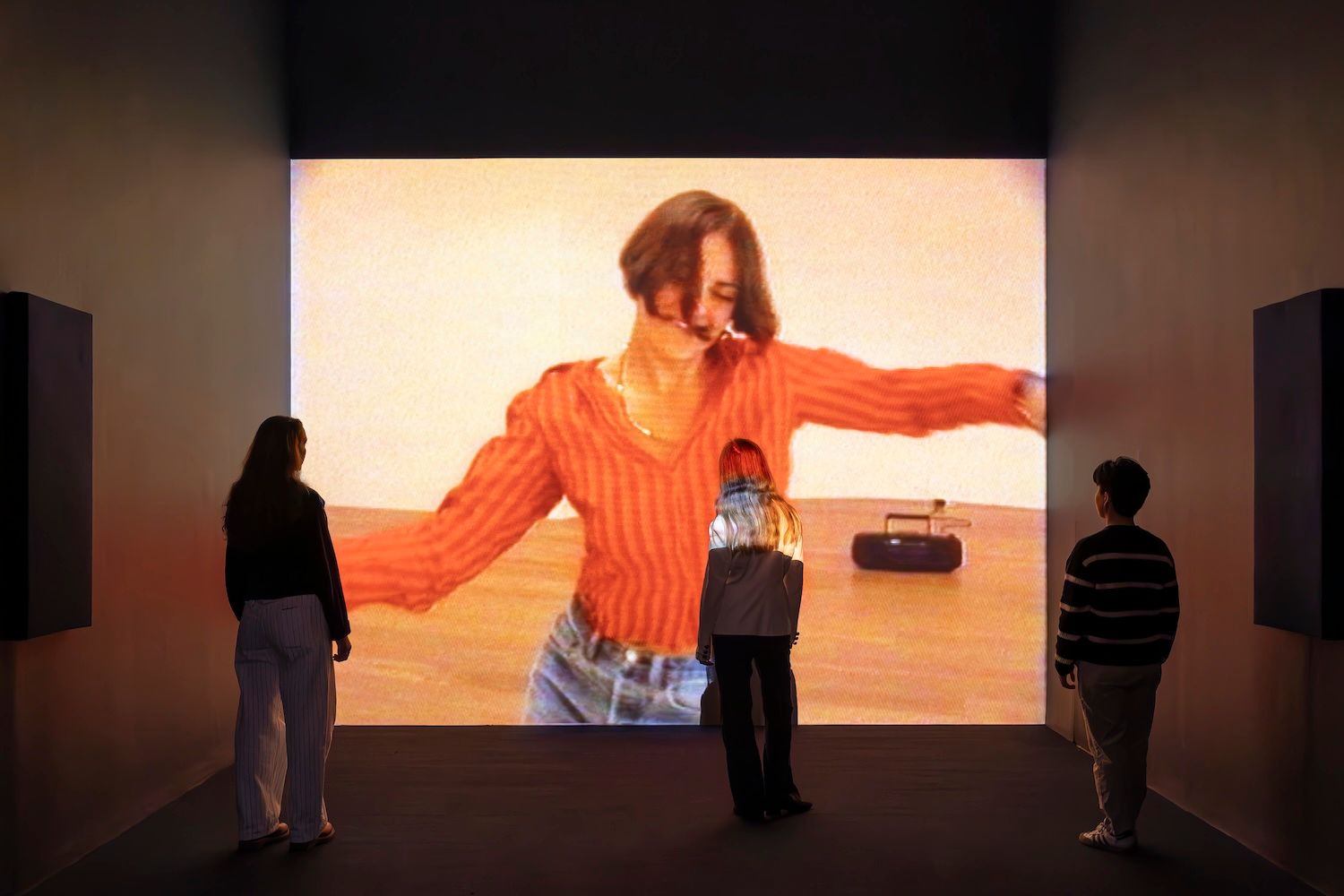
Among the works included is Why I Never Became a Dancer (1995), in which Emin recounts formative teenage experiences in Margate – leaving school at 13, her sexual encounters with older men, and being publicly taunted as she walked through the town. Also included is Mad Tracey from Margate: Everybody’s Been There (1997), a large-scale textile work referencing the artist’s reputation and turbulent upbringing.
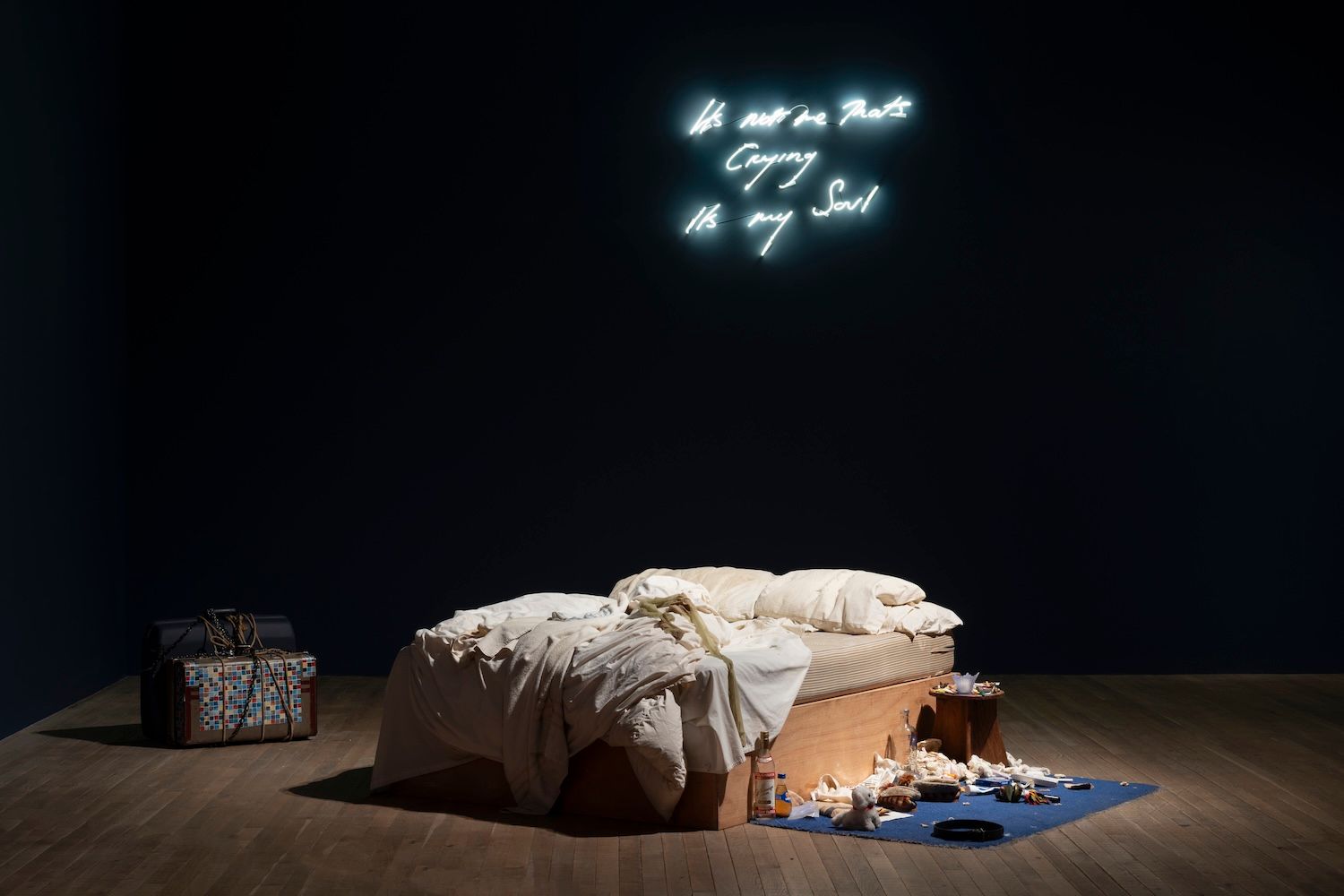
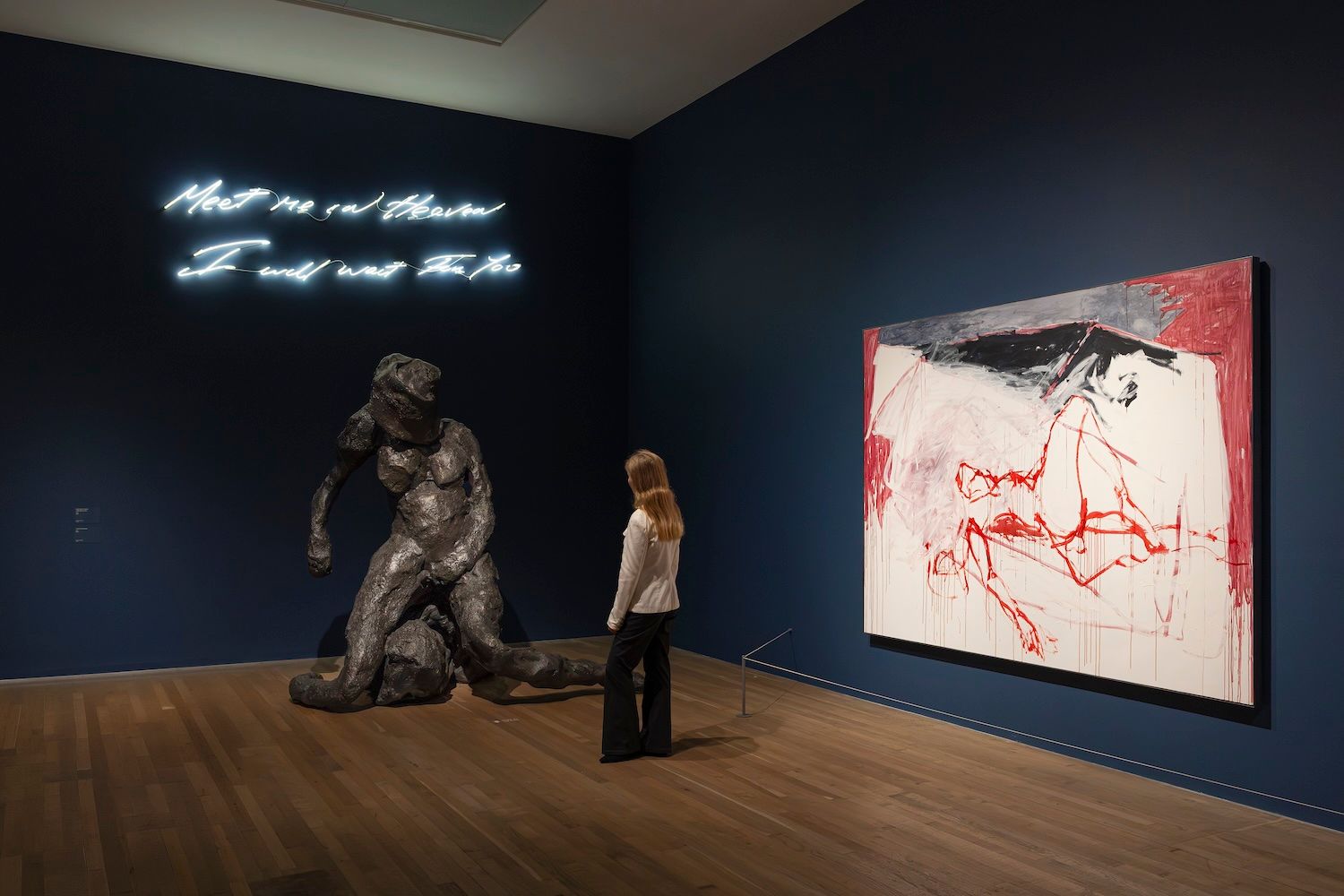
Another key work on display is My Bed (1998), Emin’s seminal turner Prize-nominated installation comprising her own disheveled bed surrounded by cigarette butts, used condoms, and stained underwear, and serving as a reflection of her recovery from a depressive breakdown following a traumatic relationship. Elsewhere in the gallery are paintings and bronzes conceived after the artist’s battle with bladder cancer – the “second life” to which the exhibition’s title alludes. Addressing themes of pain, disability and recovery with remarkable openness, these unabashedly personal and life-affirming works reflect a renewed determination to embrace the present, contributing to a more nuanced understanding of both Tracey Emin herself and her oeuvre.
1883 Arts Editor reached out to Tate’s curator Alvin Li to learn more about Tracey Emin’s artistic evolution, the resilience that informs her recent work, and her continued faith in the emotional force of art.
Thank you, Mr Li, for making space for this conversation with 1883 Magazine. Tracey Emin: A Second Life offers an expansive survey of over forty years of the artist’s practice. I am curious to ask: with a project of this scale, what proved most challenging, and ultimately most rewarding, in shaping the exhibition?
With a career as expansive as Tracey Emin’s, marked by constant transformation, narrowing down the works is no easy task. It is also what makes shaping a compelling story so challenging. At the same time, it is also one of the most rewarding aspects of the process.
Every curator on the team had favourite works in mind, while also remaining mindful of the institution’s art-historical mission. And of course, the artist had her own personal highlights as well.
Bringing these different perspectives and narratives together is immensely rewarding in itself. Seeing how strongly they resonate with audiences has made the experience even more meaningful.
Emin’s cancer treatment and recovery are woven into the exhibition, from Ascension to her photographic work. In curating these pieces, how do you feel this personal journey has shaped her artistic vision?
More than anything else, I believe that cancer treatment and recovery gave Tracey Emin a renewed sense of purpose. It compelled her to confront her legacy and channel her considerable influence into shaping the world around her for the better. This influence extends from her hometown of Margate to the wider art ecosystem she is part of.
Emin has been concentrating on painting recently. She’s been creating works that carry a meditative, uplifting quality and a determined engagement with the present. From a curatorial perspective, what do these pieces reveal about the directions she is exploring formally and conceptually?
Formally, Tracey Emin’s recent paintings stand in continuity with the body of work she’s developed over the past several decades. This continuity extends across her practice over time. Their roots can be traced back to the 1980s. She has always been deeply rooted in Romanticism and Expressionism, and those influences remain strongly present in her recent work.
At the same time, despite her physical condition, these late paintings testify to her remarkable strength and determination. They also reflect her continuing evolution in the medium.
Across four decades of practice, what do you think has remained constant in Emin’s work? And what has shifted?
As mentioned earlier, the influence of Romanticism remains a constant in Tracey Emin’s work. So too does her belief in art’s emotional power. What has shifted, however, is her emotional state.
In this second chapter of her life, Emin has endured profound trauma, pain, and heartbreak. She now appears more content, determined, and at peace with herself and her past.
This might be a tough one. If you had to choose a favourite work from the exhibition, which would stand out most to you?
It would be Why I Never Became a Dancer from 1995. The work encapsulates the power and affective strategy of Tracey Emin’s art. It turns past trauma into catharsis through artistic expression.
When people walk away from this exhibition, what do you hope lingers with them?
Emin’s humour, perseverance, and her immense contribution to public understandings of contemporary art and femininity.
Tracey Emin: A Second Life will be on display at Tate Modern until 31st August 2026.
For further information about the exhibition go to tate.org.uk.
Interview Jacopo Nuvolari
Top image credit: Portrait of Tracey Emin Tate Modern 2026. Photo © Tate (Sonal Bakrania)