Known for his expansive, room-filling artworks hovering between abstraction and representation, Sacha Jafri is among the highest-valued living artists working today.
His monumental work The Journey of Humanity, widely regarded as the largest painting on canvas at 17,176 square feet, achieved a landmark sale of $62 million (£45 million) at auction in Dubai in 2021. In 2025, Jafri further demonstrated his market appeal with the private sale of a painting celebrating the career of David Beckham, reportedly fetching $1.4 million. His work is held in prominent private collections, including those of Barack Obama, George Clooney, Bill Gates, and Madonna.
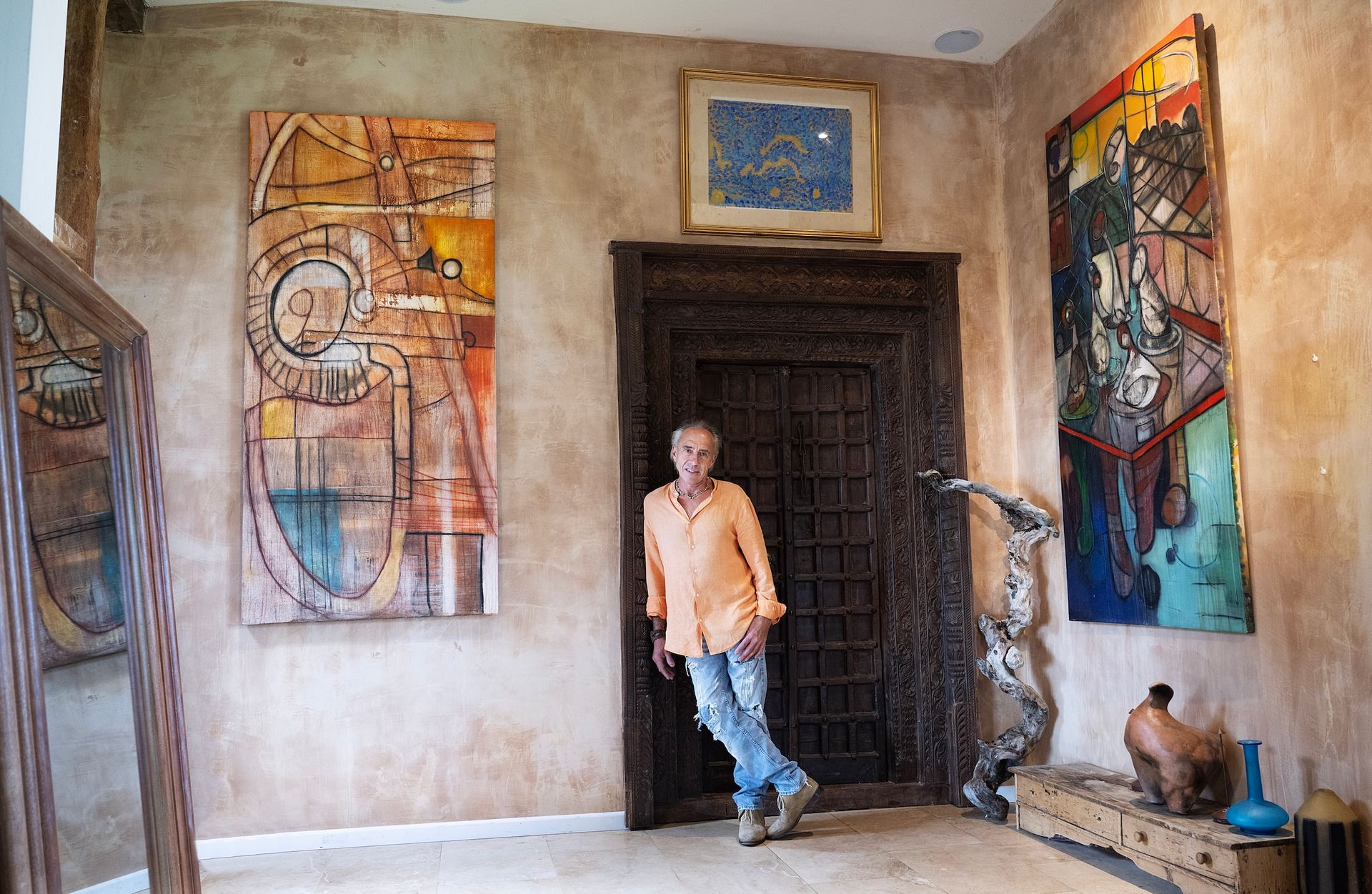
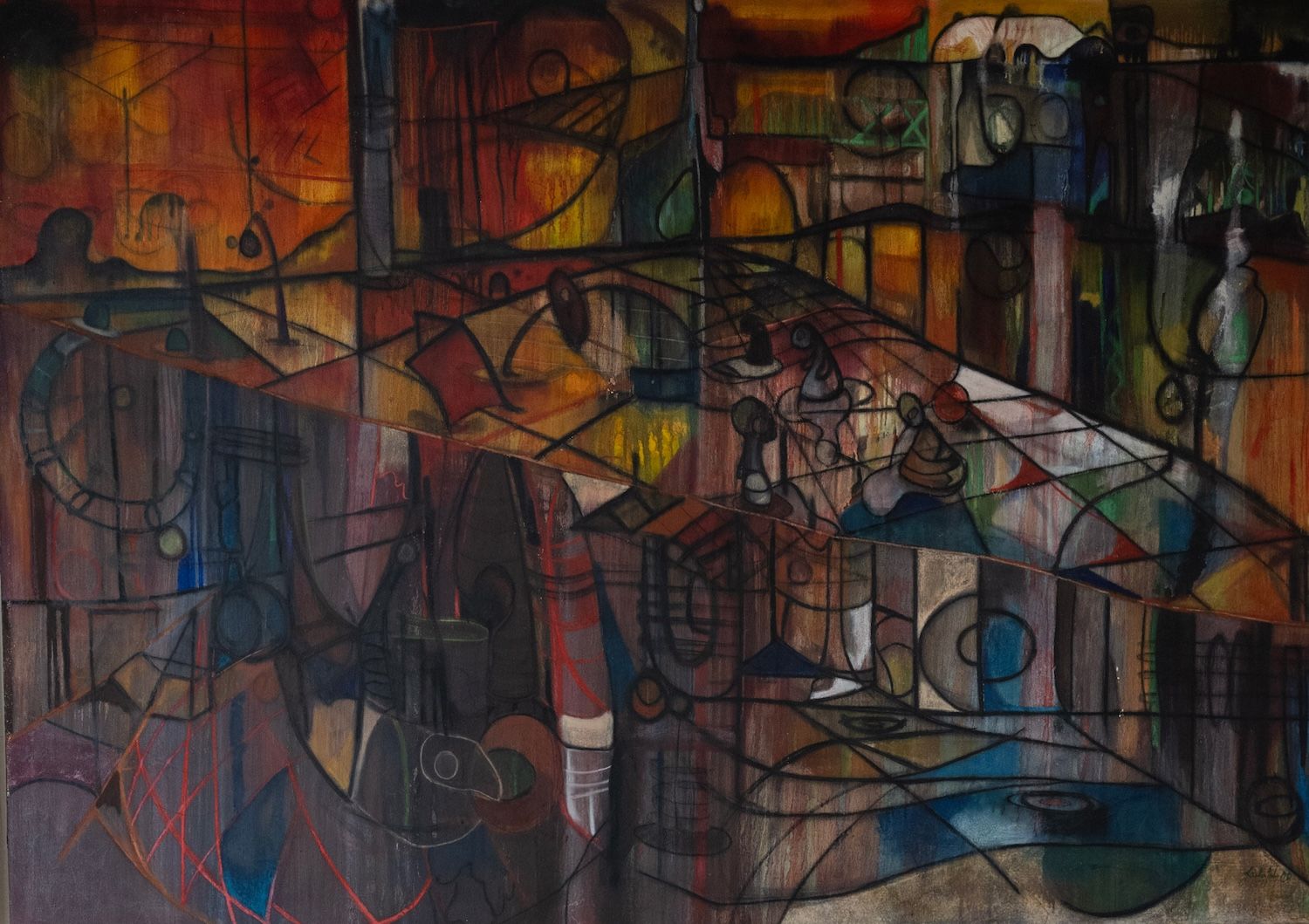
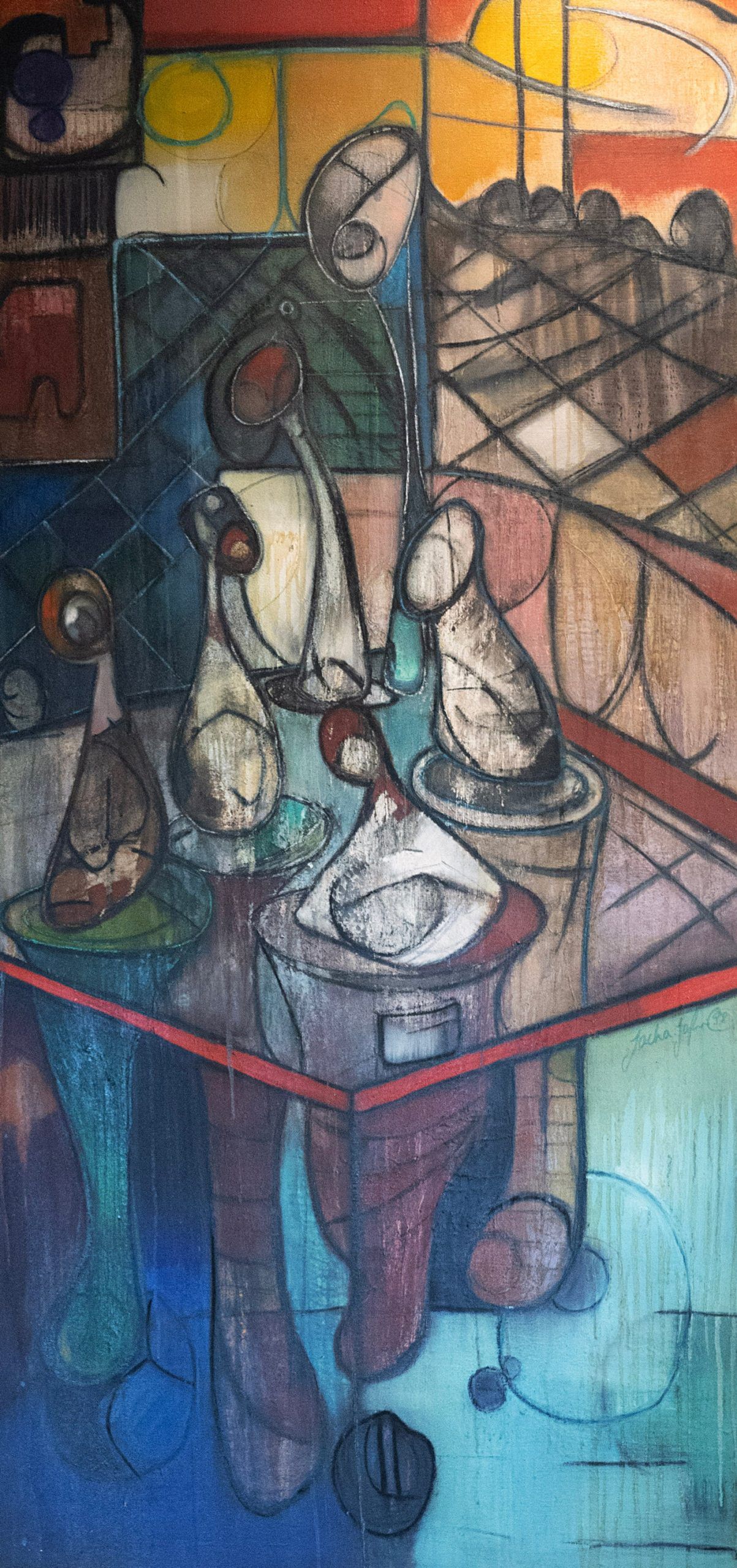
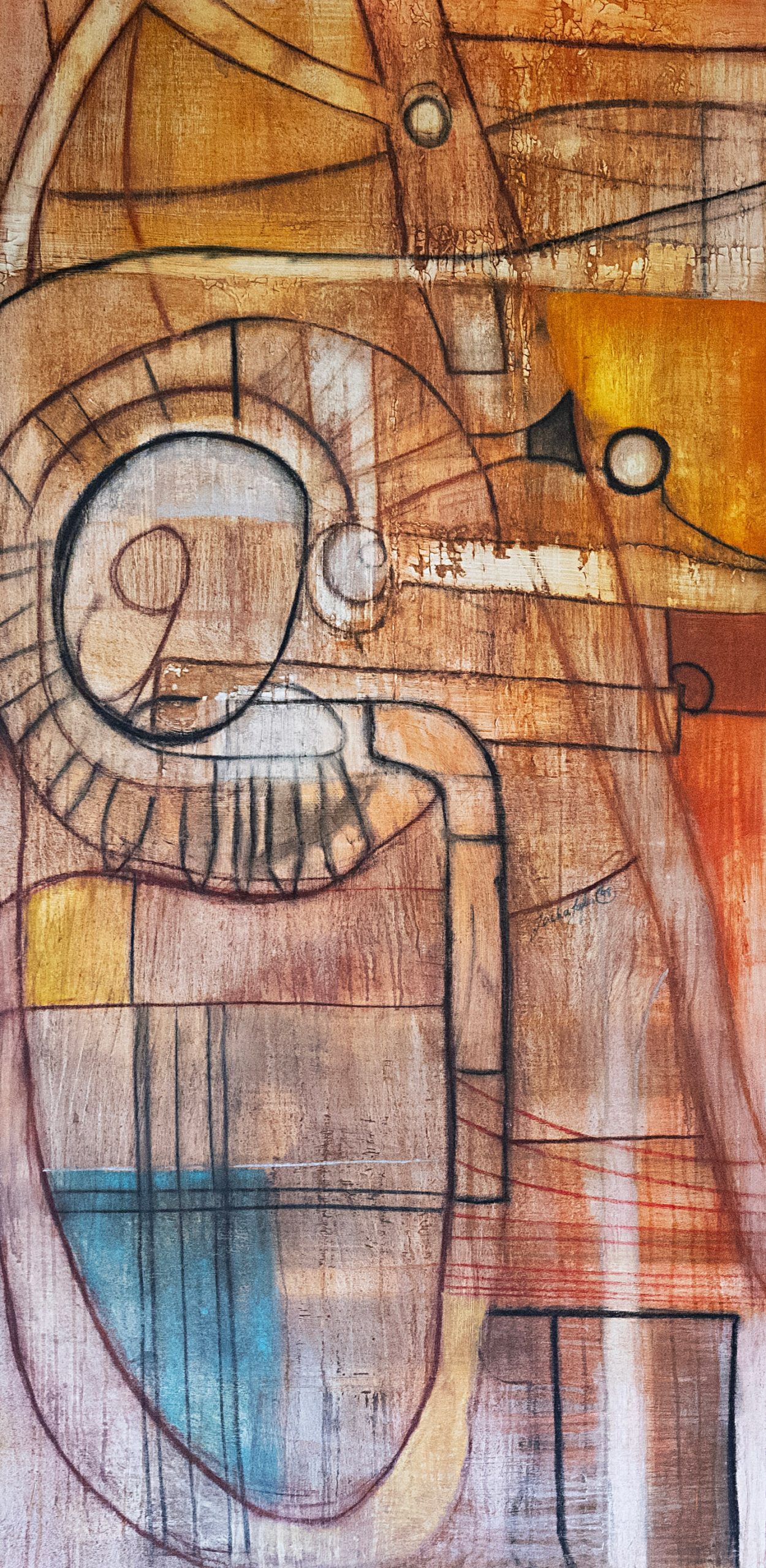
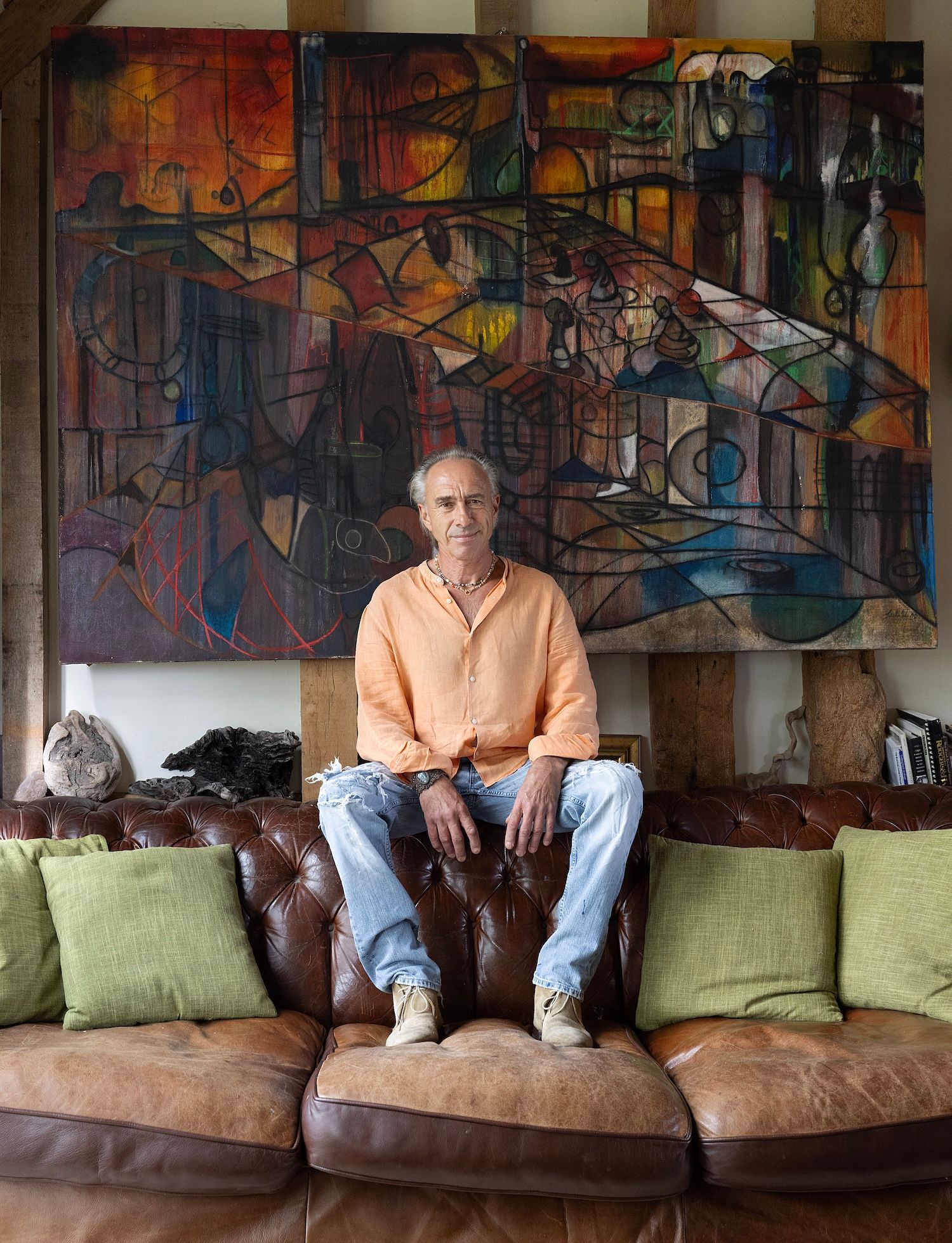
Among Jafri’s earliest collectors was 3D designer and restaurateur Clinton Pugh, father of actress Florence Pugh, who in 1998 purchased three works from the then-unknown artist shortly after his graduation from the Ruskin School of Art. Regarded among collectors as an important example from Jafri’s early formative period, the triptych draws on the artist’s readings of Franz Kafka, depicting a figure passing through a vortex into a transitional realm in pursuit of connection with a higher frequency of energy.
The works will be presented by Chiaroscuro, a new purpose-led gallery and cultural initiative established to raise vital funds for UK-based addiction recovery centres, in its inaugural four-day exhibition at London’s The Marylebone Gallery from 23rd – 26th April, before being released for wider acquisition through its digital platform. Proceeds from the initiative will initially support The Dynamo Project, a peer-led rehabilitation organisation, expanding access to its treatment and long-term recovery programmes. Alongside the works by Jafri, artists including Anthony Lister, Aiden Phelan, and Banksy are contributing new and original pieces to support Chiaroscuro’s mission.
1883 Arts Editor spoke with Clinton Pugh about his initial backing of Sacha Jafri, the release of early works from his collection, and how his approach to collecting has evolved over time.
Mr. Pugh, thank you very much for taking the time to speak with 1883 Magazine. Could you share how your interest in art collecting first developed? And what initially inspired you to begin building your collection?
I was first inspired for my love of art and creativity by my amazing teacher, Mr James Golightly, when I was seven years old. He would get me painting and creating with clay instead of doing academic class work. It was a way of building my confidence to overcome dyslexia. Having honed these skills early on, I was fortunate to develop an instinct for appreciating others’ vision and spend my life being creative too. I am a bit of a magpie and like beautiful things!
You were an early supporter of Sacha Jafri at the outset of his career. What first drew you to his work, and what gave you the conviction to support him at that stage?
I first met Sacha Jafri in May 1998. We met outside the Grand Café on Oxford High Street, which I was in the process of designing and developing. He immediately struck me as an exceptionally bright and engaging young man, with a quiet confidence and real clarity about his work.
At the time, he was looking to exhibit three paintings, which he’d created as part of his degree show at the Ruskin School of Art, just a few doors away. He took me to see them, and I was completely captivated. These were works he had spent three years developing. At the time I had no idea what they were about. I just fell in love with them. They had a sense of movement, tension and emotional intensity, which is rare for an artist at that early stage.
It wasn’t until I met Sacha many years later at his studio in Dubai that he told me what the paintings are actually about. They were influenced by his reading of Franz Kafka. They explored the idea of a human figure passing through a kind of vortex into a transitional, almost metaphysical world. In this space, the figure searches for connection with something beyond the physical realm. But the concept never mattered to me. I just enjoyed looking at them. For me, that is what art is all about.
They were too large for the Grand Café. So I suggested we install them in another of my restaurants, The Lemon Tree in North Oxford. It had a much larger space. I drove him there that same day. He immediately connected with the venue, so we agreed to exhibit them there. A few weeks later, he called to ask whether I might consider buying the paintings, as he needed the funds. I didn’t hesitate. My conviction came from a combination of instinct and emotional response. I had already fallen in love with the works. There was an authenticity and depth to what he was doing that stayed with me.
How important do you consider it to establish a personal dialogue with artists whose work you collect? And in what ways can that relationship influence or deepen the direction of a collection?
I don’t believe a personal dialogue with the artist is essential. The work should ultimately speak for itself. In many ways, the artist has already shared something deeply personal through the painting; that is where the real connection lies.
It’s also not always possible. In Sacha’s case, our relationship came about because he approached me directly. Otherwise, I may not have encountered his work until much later in his career. That said, there are situations where a relationship can be meaningful. Particularly when commissioning a piece or when collecting extensively from a single artist, where an ongoing dialogue can offer deeper insight into their process and direction.
The artists I do collect and remain in contact with, Jane Human, who I met whilst I was doing my Cambridge Art Foundation, and Jon Jones and his son Joey Jones, are all exceptional painters. Joey dated my daughter and introduced me to his dad, Jon. Those relationships have developed more organically, but they are not what initially drew me to the work.
Could you elaborate on your decision to release early paintings by Jafri from your collection at this particular moment? What factors, whether personal, artistic, or market-driven, have influenced the timing?
The decision to release these early works by Sacha Jafri is both personal and timely. As we prepare to sell our family home and downsize, I felt it was important to reconsider how others could continue to appreciate these paintings.. They are large, exceptional pieces that deserve to be seen and experienced, not kept in storage. For nearly three decades, they have brought immense joy to my family and me. And it feels right that they now have the opportunity to be shared more widely.
Over the years, getting to know Sacha personally has only deepened my admiration. Not just for his extraordinary artistic talent, but for his unwavering commitment to charitable causes. He is a truly remarkable individual. In that spirit, this moment feels like a natural point of transition. An opportunity not only to pass these works on, but to contribute to something meaningful. I can think of no better platform than Chiaroscuro, particularly in support of The Dynamo Project, to ensure that both the works and their legacy continue to have a positive impact.
How have longer-term considerations, cultural, generational, or philanthropic, shaped your approach to collecting and how your collection has evolved?
For me, collecting has always been deeply personal, very much in the eye of the beholder. I have never approached art as an investment, but rather as something to live with and take genuine pleasure from over time. The evolution of my collection has therefore followed instinct and emotional connection rather than any formal strategy. Each piece has had to resonate on a personal level. Something I would want to return to and engage with daily.
Over time, however, longer-term considerations have naturally come into play. Living with these works for many years and seeing their impact within my family has reinforced this perspective. It has deepened the idea that art carries a broader cultural and generational value. It becomes part of a shared experience and memory. More recently, I have also been influenced by Sacha’s example. In particular, his extraordinary commitment to using his work to support charitable causes has stood out. That has encouraged me to think more philanthropically about my own collection. It has also prompted me to consider how it might contribute to something beyond personal enjoyment.
Chiaroscuro will launch with a four-day exhibition from Thursday 23rd – 26th April at 3 Paddington Street, Marylebone, London.
For further information about Chiaroscuro go to chiaroscuroart.gallery. Follow Chiaroscuro on Instagram.
Interview Jacopo Nuvolari
Top image credit: Clinton Pugh. Photo by Murray Sanders