Knee pain changes everything. Stairs feel harder. Long walks feel risky. Even a basic squat can feel wrong. Many people then stop training. That usually makes things worse over time.
A better path exists. It focuses on control, alignment, and smart resistance. It builds strong legs and a stable core. It also reduces the “joint pounding” that often triggers flare-ups.
This is not a magic fix. Knee pain has many causes. A clinician should guide persistent pain. Still, training style matters. The right approach can make movement feel safer again.
Why Knees Hurt During Common Workouts
The knee is a hardworking joint. It sits between the hip and ankle. If either area moves poorly, the knee often pays.
These are common training problems that irritate the knees.
- Fast squats with knees collapsing inward
- Deep lunges with poor hip control
- Jump-heavy workouts with tired form
- Running volume rising too quickly
- Weak glutes forcing the knees to stabilise
Many people also skip warm-ups. That makes joints feel stiff. It also makes the form harder to hold.
The goal is not avoiding leg training. The goal is choosing leg training that respects joints.
The Core Connection Most People Miss
The core is not only abs. It is the trunk’s control system. It helps keep the pelvis steady. It also helps the hips produce force cleanly.
When core control is poor, the pelvis can tip or twist. Then, knees often track poorly. That is why knee discomfort can show up during leg days. The knee is reacting to unstable movement upstream.
Good knee-friendly training builds the hips and core together. It improves alignment under effort. That is where the “new way” starts.
What Knee-Friendly Strength Training Looks Like
Knee-friendly does not mean easy. It means controlled load. It means clean movement. It also means fewer high-impact landings.
Look for these features in a training style.
- Slow tempo, especially on the lowering phase
- Stable foot position and steady knee tracking
- Hip-driven patterns that recruit glutes and hamstrings
- Core engagement that prevents pelvis wobble
- Gradual progression, not weekly ego jumps
This approach builds muscle while reducing joint stress. NHS inform shares practical knee-friendly exercise ideas for sore or sensitive knees.
Why Slow Resistance Works So Well
Slow resistance training creates time under tension. Muscles work longer per rep. That makes sets challenging without heavy weights. It also reduces momentum cheating.
A slow squat is not the same as a fast squat. A slow split squat exposes weak points fast. It also gives time to correct form.
For knee comfort, that matters. Slow reps give the body time to stack joints well. The knee stays aligned. The hip stays active. The foot stays stable.
This is why many people feel strong without feeling “beat up.”
Where Reformers Fit Into Knee-Friendly Training
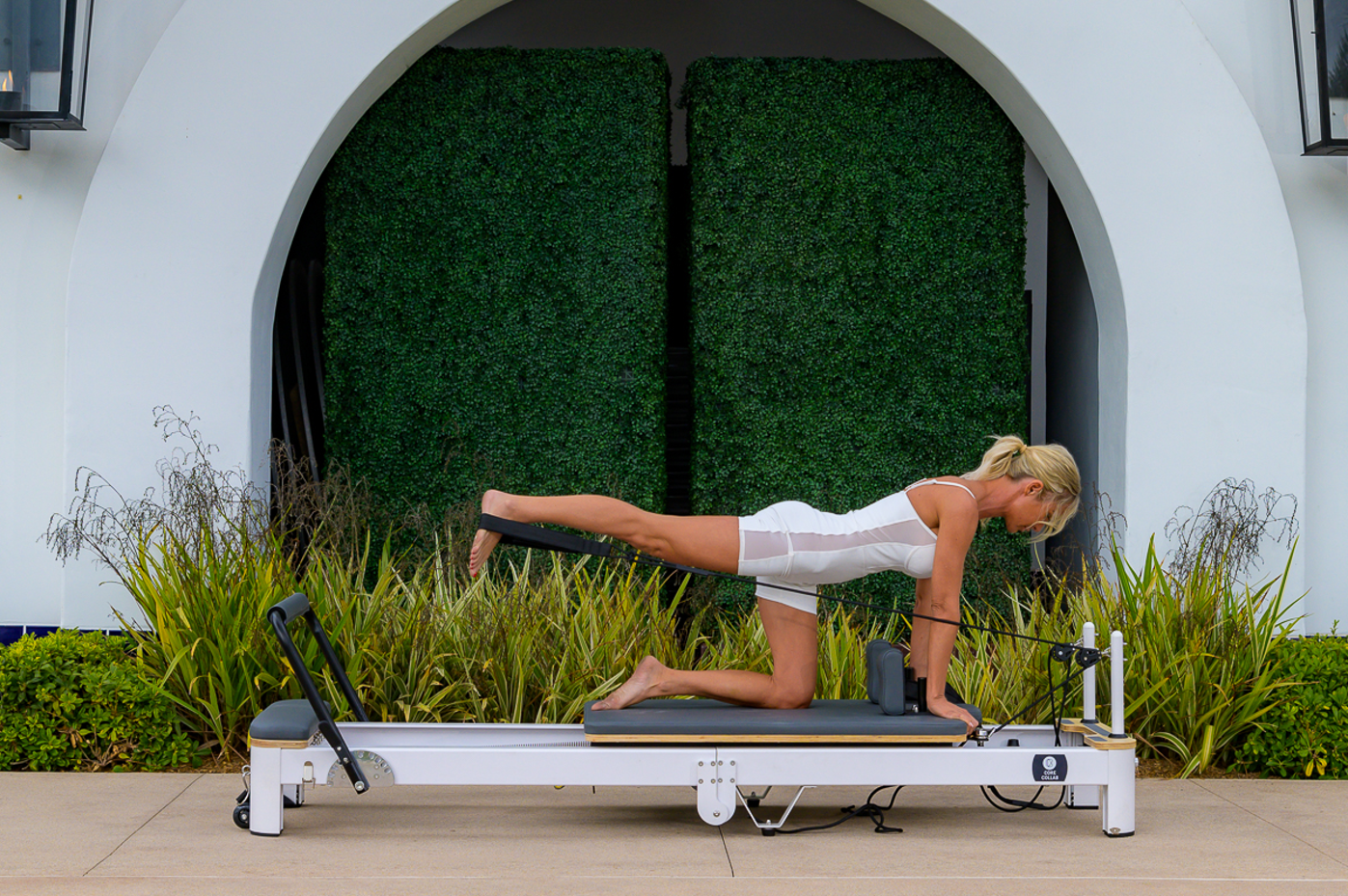
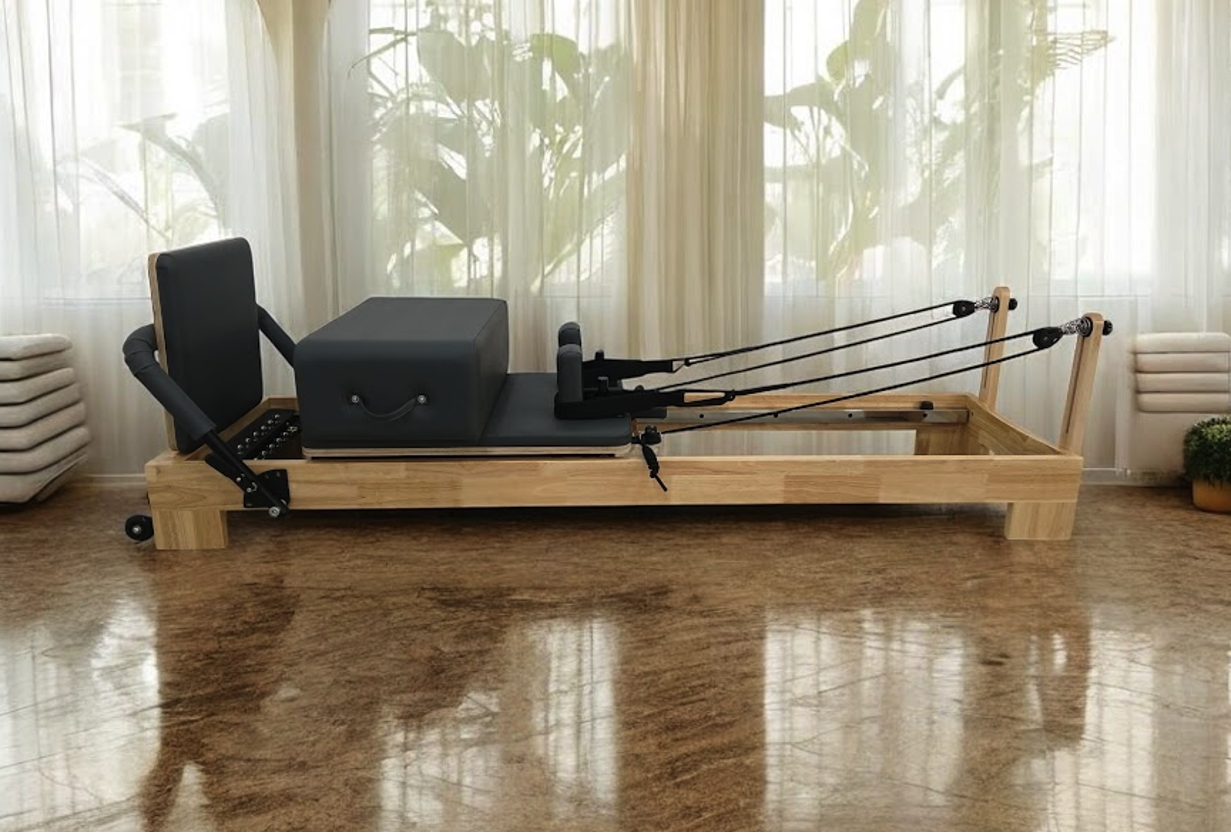
Mat work can help, but machines add structure. A reformer uses spring resistance. It guides movement along a track. That can reduce wobble and improve control.
A reformer session often includes:
- Leg presses with controlled range
- Glute work without heavy spinal loading
- Core training that avoids aggressive flexion
- Hip stability work through slow patterns
- Mobility work paired with strength
This structure can be useful for knee-sensitive people. It makes the form easier to repeat. It also helps build strength through range.
For people building a home routine, choosing the right Pilates machine for home can make consistent, low-impact training much easier.
How To Train Legs Without Irritating Knees
Not every leg exercise is equal. The best choices depend on pain triggers. Still, some patterns are usually safer for knee comfort. AAOS publishes a step-by-step knee conditioning program that builds strength around the joint for better support.
Use Hip-Dominant Moves First
Hip-dominant patterns shift load away from the knees. They also build strong glutes and hamstrings.
Good options include:
- Glute bridges and hip thrusts
- Romanian deadlift patterns with light load
- Hamstring curls or sliders
- Step-backs instead of forward lunges
Keep Range of Motion Honest
Deep range is not always the issue. Poor control is the issue. If depth causes pain, reduce depth first. Earn it back later.
Use a box squat height that feels smooth. Use split squat ranges that stay stable. Keep the foot tripod strong. That means heel, big toe, and little toe.
Slow the Lowering Phase
Lowering slowly improves control. It also reduces joint shock. Use a 3-second lowering count. Pause briefly at the bottom. Then drive up with steady force.
This builds muscle and control together.
How To Train Core Strength That Protects Knees
Core training should support better alignment. That means resisting unwanted motion. It also means improving endurance.
These core styles carry over well.
- Dead bug variations with slow breathing
- Side plank progressions for hip and trunk stability
- Anti-rotation presses that resist twisting
- Loaded carries that teach upright control
Avoid chasing a burn at any cost. The goal is control. The goal is staying stacked while moving.
A stronger trunk usually makes leg work feel cleaner. That can reduce knee irritation over time.
Red Flags That Need Attention
Knee pain is not always training-related. Some signals should not be ignored.
- Swelling that persists
- Locking or giving way
- Sharp pain during normal walking
- Pain that worsens each week
- Night pain that disrupts sleep
A qualified professional should guide these cases. Training should support health, not gamble with it.
Common Mistakes That Keep Knee Pain Around
Most setbacks come from a few predictable habits.
- Returning to jumps too quickly
- Increasing volume and intensity together
- Ignoring foot and ankle control
- Letting knees collapse inward under fatigue
- Skipping warm-ups and mobility work
Small fixes can change how the knee feels. Start with tempo. Then adjust the range. Then progress loads slowly.
Final Thoughts
Leg and core training does not need to hurt knees. The best approach is controlled, low-impact resistance. It builds muscle through time under tension. It improves alignment through repetition. It also supports consistency, which is where results come from.
If knee pain has been the barrier, start with control first. Slow the reps. Train hips and core together. Keep the plan simple. Then build strength in a way that feels sustainable.