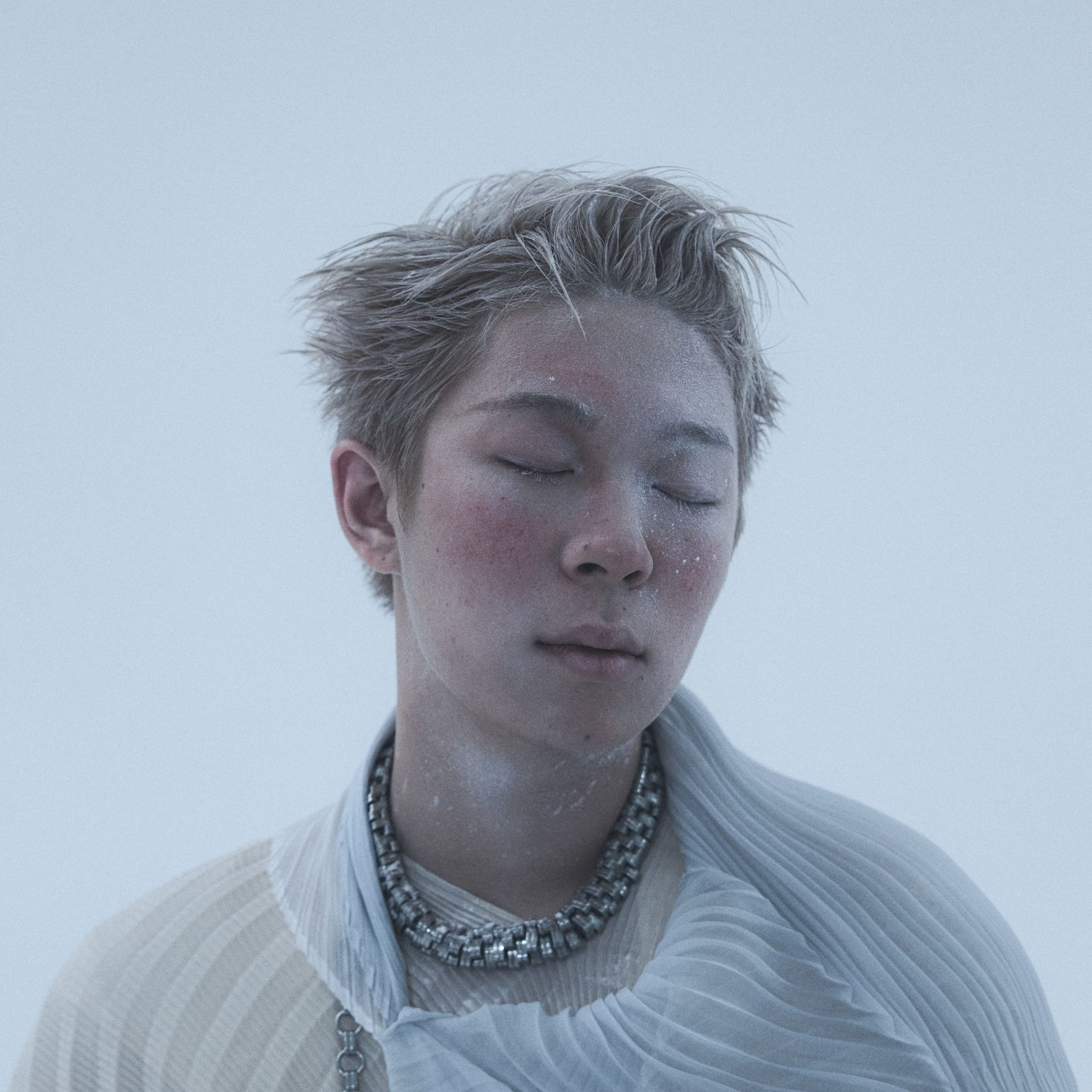
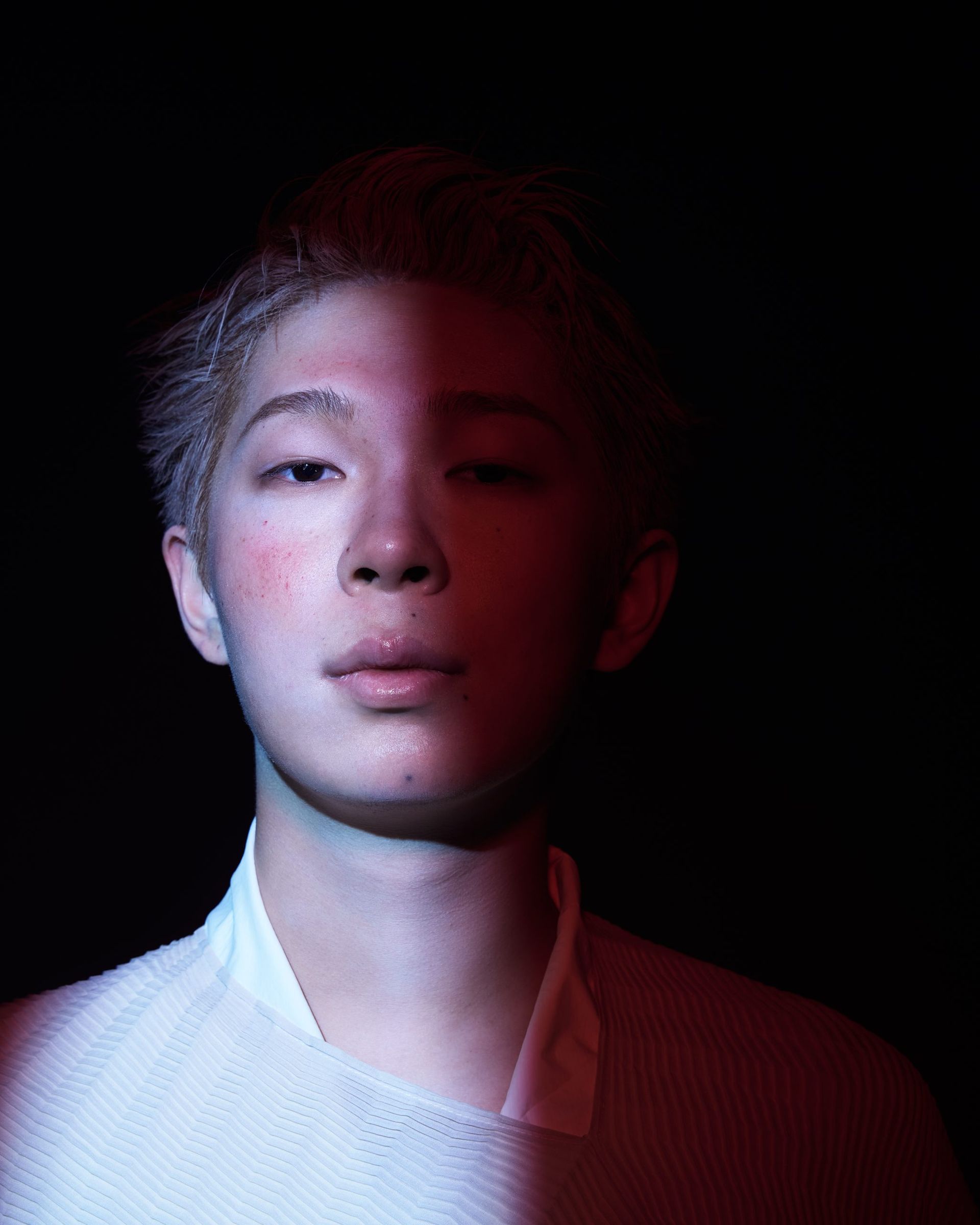
Beijing-based producer, songwriter, and sound designer RVRIE is an artist preoccupied with memory. Real name Zefan Gao, the musician crafts expansive sonic worlds that blur the lines between ambient pop, alternative rock, and cinematic sound design, creating music that feels as immersive as it is emotionally raw. His debut album Reverie serves as both a personal excavation and a reckoning with identity, nostalgia, and displacement.
Formally trained in classical piano from the age of four, Gao’s meticulous musical foundation remains embedded within his work, even as his compositions stretch into vast, atmospheric territory. While his background in sound design informs the album’s richly textured production, Reverie is ultimately rooted in songwriting and emotional honesty. “The album is about getting over a sense of loss and nostalgia by fully immersing yourself in it one last time,” he explains.
Much of that emotional complexity stems from Gao’s upbringing between two contrasting worlds: the rapidly evolving cultural landscape of Y2K-era China and the structured environment of a Quaker school in the United States. Moving abroad at fifteen left little room to process the upheaval, an experience that now forms the emotional backbone of the record. Across Reverie, Gao confronts those unresolved feelings head-on, transforming fragmented memories into sweeping, cinematic compositions.
To celebrate the release of the album, RVRIE has penned a track-by-track article for 1883, delving into each of the songs on the LP.
‘Reverie (Prelude)’
Debussy’s Rêverie felt like the only way to open the door to this album. It’s a piece I first heard as a child, forever tied to the feeling of laying in bed on a quiet afternoon. To me, it’s like a frozen memory crystal. I wanted to use this track as the entrance to my sonic world, so I reimagined the original composition, weaving in my own synthesizers and recomposing parts to bridge it seamlessly into the next track. As you listen, you weave in and out of that crystal, until finally, you are fully inside the dream and the journey begins.
‘Winter Sun’
The chorus melody for ”wWinter Sun“ lived in my head for a year before I finally wrote it down. This song is a dedication to my late grandfather, who raised me and passed away while I was studying abroad. Not being able to say goodbye has been my heaviest regret. Because he passed in the winter, he is forever frozen in that season in my mind. The song is a calling to him, a hope that he becomes the winter sun, melting the feelings I’ve kept frozen for a decade.
Production-wise, I treated this track like a movie scene I was trying to recreate. I used heavily saturated analog synths to emulate the feeling of thick, heavy snow, and the guitar solo in the final chorus acts as my chosen ritual instrument to call out to him. It’s the emotional anchor of the album, and I would often break down while diving deep into its production. Fittingly, I released it as the lead single on December 12th, the anniversary of his passing.
‘Million Miles’
Ever since I was young, I’ve looked at the sky and felt a strange, inexplicable homesickness, even when I was sitting right at home with my family. Over time, I came across the concept of ‘starseeds’, which is the idea that some souls originate from distant galaxies and incarnate on Earth with a specific mission.
When I wrote ‘Million Miles,’ I was grappling with a profound sense of feeling trapped and powerless, as if I was stranded far from where I truly belonged. I wrote this song as a distress signal to a home that might be millions of light-years away. It is a sonic monument, just to prove that I lived here on Earth, and longed for the stars.
To build this world, I wanted to evoke the feeling of traveling through space, but I deliberately avoided cliché sci-fi synths. Instead, I leaned heavily into reversed pianos to create an untethered, floating sensation. The track builds toward a massive burst of sonic energy at the end. In my vision, that is the exact moment the signal is finally fired into the void. It is a violent, beautiful collision of desperation and hope.
‘Prelapse’
I actually invented the word ‘Prelapse’ for this track by combining “pre” and “relapse”. This instrumental piece serves as a dedicated interlude that connects the end of ‘Million Miles’ directly into “Bubble House”. Since I originally released ‘Bubble House’ a few years ago, I wanted this moment to serve as a hidden surprise for my earlier listeners.
To achieve this, I took the familiar chorus of that older song and completely remixed it through a much more experimental electronic lens. I wanted to use this space to manipulate the original stems and explore entirely new textures. It creates a necessary sonic bridge for the album. It takes the grand, expansive power left over from “Million Miles” and carefully deconstructs it, guiding the listener softly into the gentle fragility of “Bubble House”.
‘Bubble House’
I wrote “Bubble House” a few years ago with my great friend Agnes Kong. We were in a band together at the time, but I was also starting to explore my own writing. I was heavily inspired by the collaborative album from Sufjan Stevens and Angelo De Augustine. I started with a simple guitar riff and a melody, and I sent it to Agnes to see if she wanted to do a duet. The concept resonated with both of us immediately.
Beyond just the music, we were both going through relationships that felt incredibly fragile at that time. We felt like things could fall apart at any moment. All we could do was cherish the present and accept the inevitable end, exactly like living in a house made of bubbles.
For the production, I wanted to blend the alternative and folk worlds. The vocal arrangement was a big focus for me. I drew a lot of inspiration from the classic harmonies of Simon and Garfunkel, but I also wanted the modern, ethereal vocal production you hear from artists like RY X. It is a mix of modern and classic, perfectly matching that feeling of a beautiful but fragile space.
‘Watch the Moon Grow’
This is the earliest song I finished for the whole album. I wrote it back in 2022 when I was traveling alone in Iceland during COVID. That trip and the landscapes completely blew my mind and sets up the sound of this album, deepening the Icelandic influence on my music. I dedicated this song to someone I missed deeply at the time. It was meant to be a lullaby she could listen to every night, so even though we were far apart, she could still feel me close. Although there is a sense of melancholy to it, it is definitely the gentlest moment on the entire album.
The original production was actually very different from the final version. Because I produced it years ago, it felt a bit outdated when I finally tried to place it on this record. The original arrangement had a much more vintage vibe, but I ultimately decided to rework it entirely to fit my current sound, blending ambient, alternative, and pop elements. To ground the song in that original memory, the foundation of the track is built on actual field recordings of ocean waves that I captured myself on the Icelandic coast. There is nothing overly complicated about the production. Because it is a lullaby, I just wanted it to soothe your heart and calm your mind. It serves absolutely no other purpose
‘Anchored’
This is the most vulnerable song I have ever written. I wrote it in tears three years ago and kept it hidden away until now. It sounds gentle on the surface, but it is actually about watching someone you deeply love suffer from a terrible illness. After trying everything and feeling completely powerless, that love became a heavy anchor dragging us both down. I felt that if I could not save her, we might as well drown together.
To capture the physical feeling of being submerged, I made the production incredibly intimate. Just like how sounds behave underwater, the details are close and subtle. Small piano melodies scatter throughout to represent rising bubbles and fragmented memories. The falsetto vocals act as sirens, but rather than luring you into a trap, they commemorate falling willingly into the deep for love.
Releasing this track is my way of finally surfacing from the pain and liberating myself from the weight of those memories. But within the narrative of the album, this is exactly where the light fades. From here, we dive even deeper into the water and move straight into the nightmares
‘In the Arms of My Nightmare’
The inspiration for this track stems from my very first nightmare about death. At twelve, I dreamed I was drowning in a massive tsunami. But when I finally woke up, my initial panic dissolved into profound gratitude. I realized then that nightmares are actually life’s greatest lessons. They force you to confront your darkest fears, yet you still wake up with your life intact. Sweet dreams, conversely, only leave you with a sense of loss. I wrote this song to give listeners a sense of power and hope when confronting their own fears.
To capture that redemption, I built the production around stark contrasts. The time signature shifts unpredictably between 4/4 and 6/8. The verses rely on deep, moody pianos to create a dark cinematic atmosphere, while the choruses unexpectedly open up with folky acoustic guitars and festive percussion. The final interlude acts as the aftermath of the dreams and nightmares, leading directly into the penultimate track, ‘Dark Waters’.
‘Dark Waters’
This track was heavily inspired by the video game Death Stranding and its shapeless monsters known as Beached Things. To me, those creatures are a literal representation of my own deep nostalgia. Every night as I try to sleep, those memories surface to drag me down into the abyss. You try to run away from the monster of your past, but you eventually realize that giving in and letting it pull you under is the only way to lessen the pain.
The song starts with a moody Rhodes and bass riff, drawing heavy inspiration from David Bowie’s final album Blackstar. I was incredibly honored to have Tim Lefebvre, the actual bassist from that record, play on this song, alongside Beijing jazz saxophonist Nathan Gao. Together, they helped build a wet, dark, and suffocating atmosphere. The ending erupts into a massive clash between myself and my past as we fight for control over my life. I created an intense wall of sound by layering electric guitars, the tenor saxophone, and a moving synth. It pulls you deeper and deeper until there is nowhere left to go, and everything finally fades away.
‘Unbind’
This is the finale. The song acts as a meditation where I am drifting in an ocean of my memories, moving slowly toward the sunrise. I am just breathing in and out, trying to reach the end of this journey with the simplest accompaniment possible. Interestingly, the track is written in a 5/4 time signature, but it never feels odd or forced. It was simply the most natural way for me to play the riff, creating a feeling that is incredibly healing and reassuring.
While writing this, I envisioned myself sailing out onto the open sea with the sun rising on the horizon. Along the way, I see a figure waving from afar. As I sail closer, I realize it is my past self. He is finally free, and so am I. This song represents a massive moment of release and unbinding. The heavy pressure of those memories finally lifts. They are still a part of me, but they are no longer a burden. I am finally ready for the present and for whatever comes next.