Vikings have had a pretty good run in popular culture. Between Assassin’s Creed Valhalla, Marvel’s Thor films, and the enduring popularity of Viking mythology on screen, the Norsemen have never really gone out of fashion. So when I heard that Vikings: The Immersive Experience had arrived at Dock X in Canada Water, complete with a full-size longboat, AI-powered characters, VR, and a giant 360-degree projection room, I halifed to check it out for myself.
I went along with my daughters Charlotte and Juliette (11 and 8), who have accompanied me to several immersive exhibitions over the last couple of years and were excited to learn about the Vikings. Viking ships, battles, mythology, VR, and giant projection rooms sounded like a pretty safe bet for a fun afternoon.
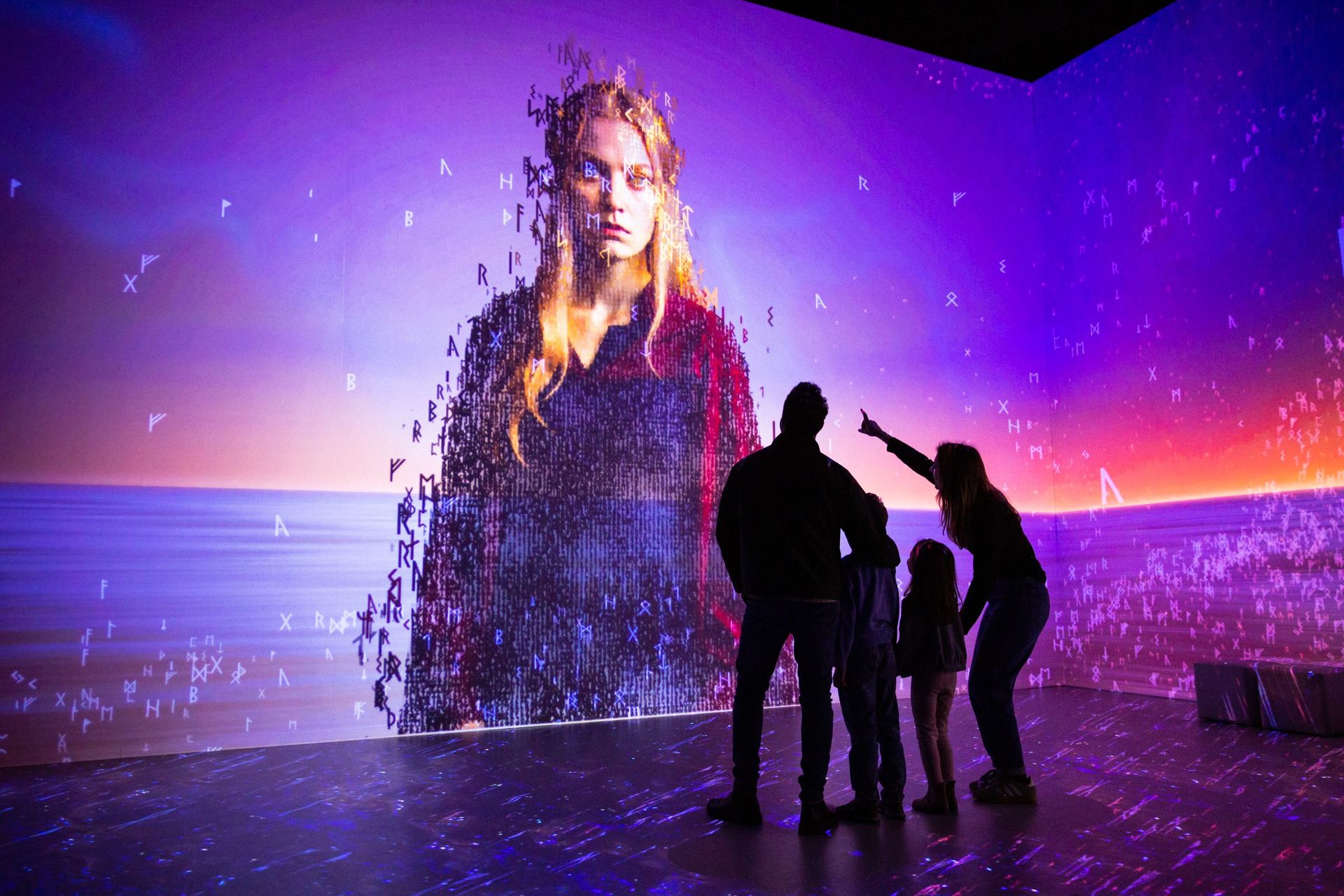
The experience begins with a short introductory film projected onto a huge artificial rock formation before introducing us to Kraka, the legendary Norse figure around whom the entire exhibition has been built.
Unlike some of the other immersive exhibitions we’ve seen recently, Viking history doesn’t present an obvious protagonist. Tutankhamun: The Immersive Exhibition had Tutankhamun. Cleopatra: The Exhibition has Cleopatra. Titanic: The Legend of the Titanic, which was the last exhibition I visited at Dock X, had one of the most famous maritime disasters in history.
Vikings, meanwhile, are an entire civilisation rather than a single person or event.
The exhibition’s answer to this challenge is Kraka. She provides the narrative thread running through the experience and gives us somebody through whose eyes we can explore this world of mythology, exploration, and conquest.
Whether that idea fully works is another question.
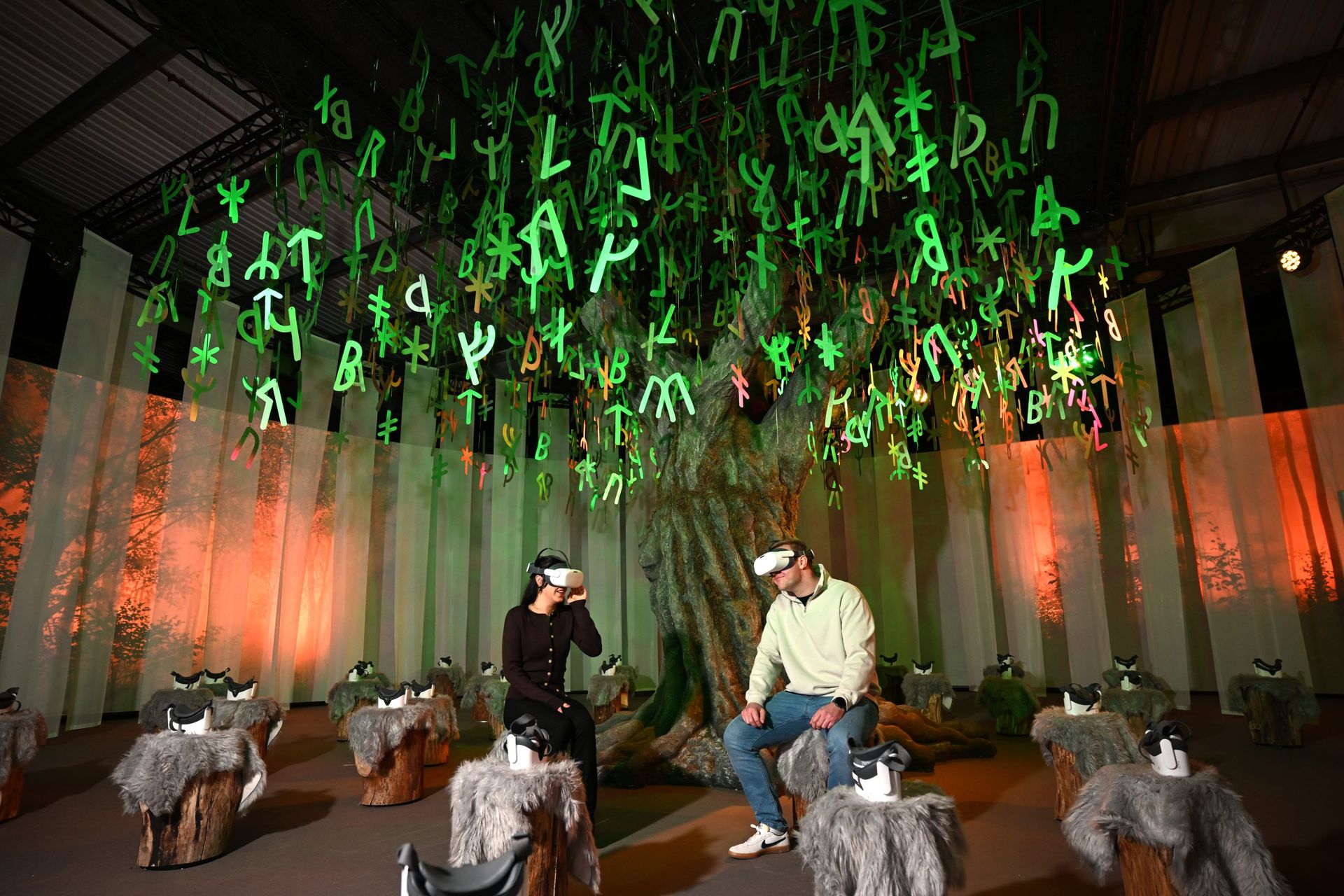
Our next stop was Yggdrasil, the great World Tree of Norse mythology, and one of the exhibition’s most impressive visual features. The enormous sculpted tree towers above the room, with Nordic runes hanging from its branches. It’s beautiful, atmospheric, and immediately creates the feeling that you’ve stepped into a world of myth and legend rather than simply another museum exhibition.
Beneath the tree, we put on VR headsets for a short introduction to Kraka and her pet wolf. It does a decent job of establishing the mythology and characters that follow, but if you’ve visited many immersive exhibitions recently, particularly those featuring the larger-scale walkthrough VR experiences developed by Madrid Artes Digitales, this section may feel a little modest by comparison. There’s nothing wrong with it, but I’ve been fortunate enough to visit a lot of these shows and perhaps become a little spoiled by how ambitious immersive technology has become.
After the VR, we wandered into the Forest of Time, which is the largest area of the exhibition.
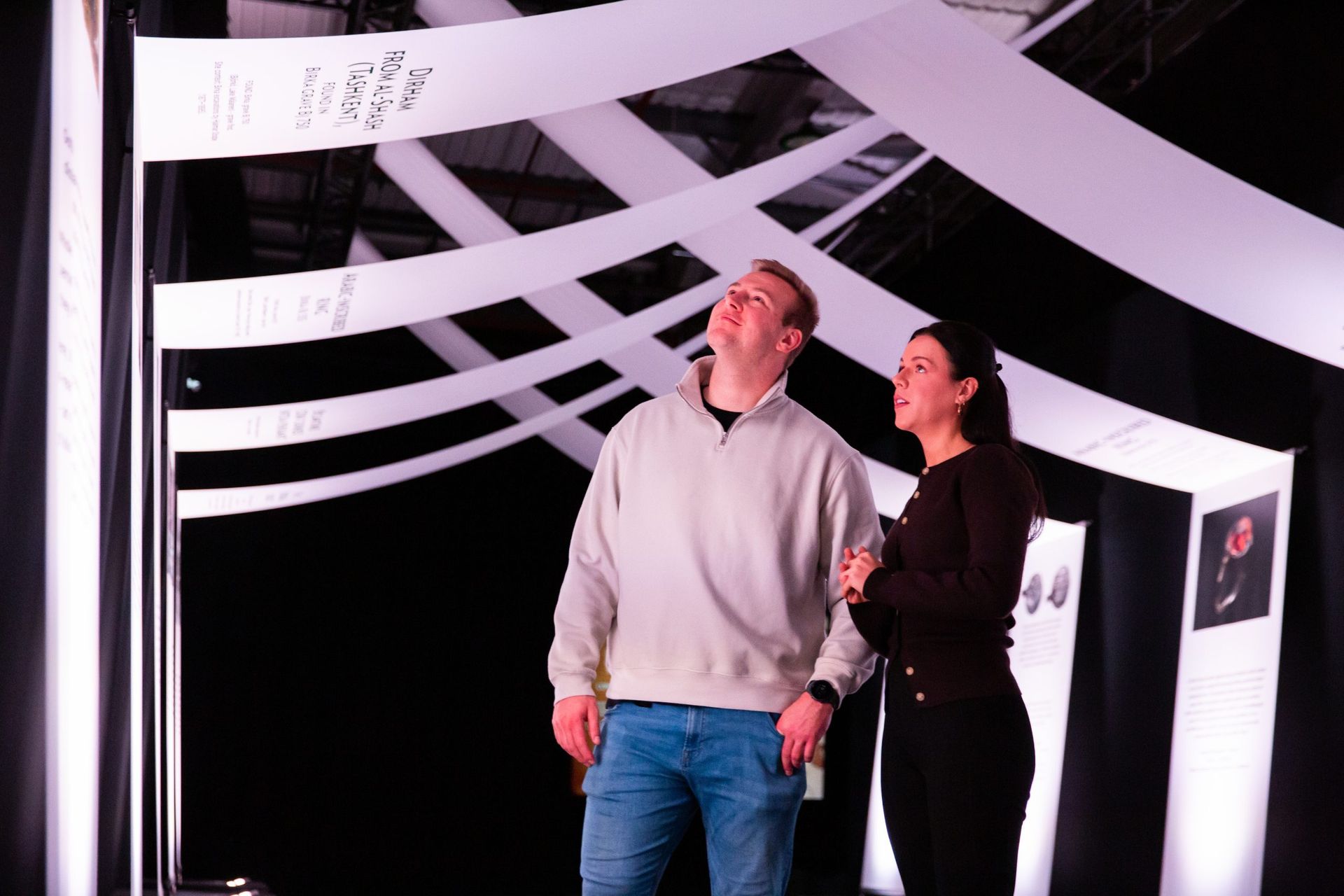
The space feels very calm and atmospheric, filled with projections, artefacts, fascinating display cases, lighting effects, and information about Viking life and culture. It’s the sort of place that encourages you to slow down and explore rather than rush through to the next thing.
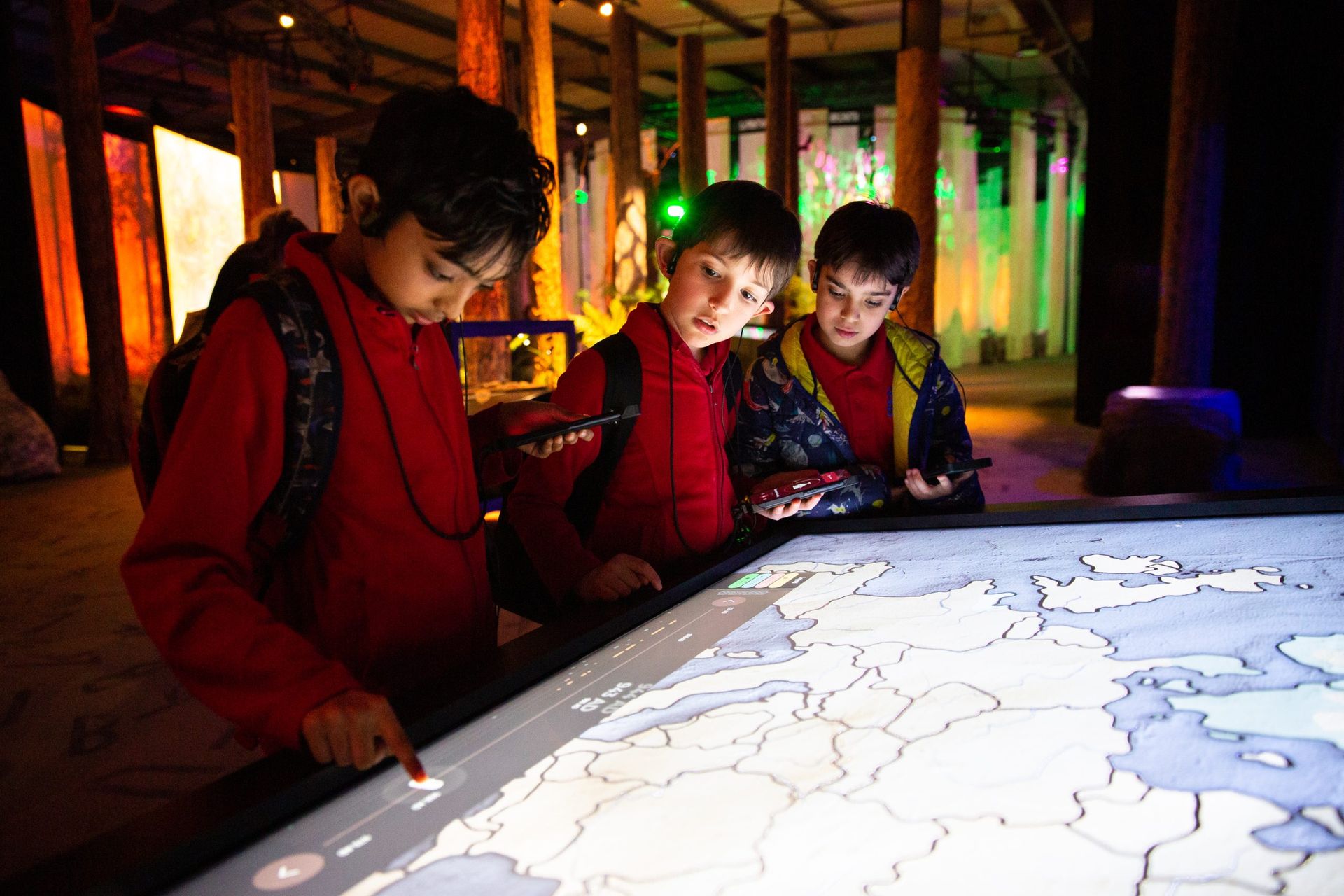
The exhibition uses bone-conduction audio guides, which are a clever idea. Rather than covering your ears, they sit just in front of them, allowing you to hear both the narration and the people around you. It meant I could still chat to the girls while listening to the commentary, which felt far more natural than traditional audio guides.
Unfortunately, the narration itself didn’t quite work for us.
As someone with ADHD, and visiting with two neurodivergent children, I found the delivery painfully slow. The information was interesting enough, but maintaining focus proved difficult and the girls largely disengaged from it altogether. A simple playback speed option would make a huge difference. Most podcasts and audiobooks now offer 1.25x, 1.5x, or 2x playback, and I suspect many neurodivergent visitors would find that dramatically improves accessibility.
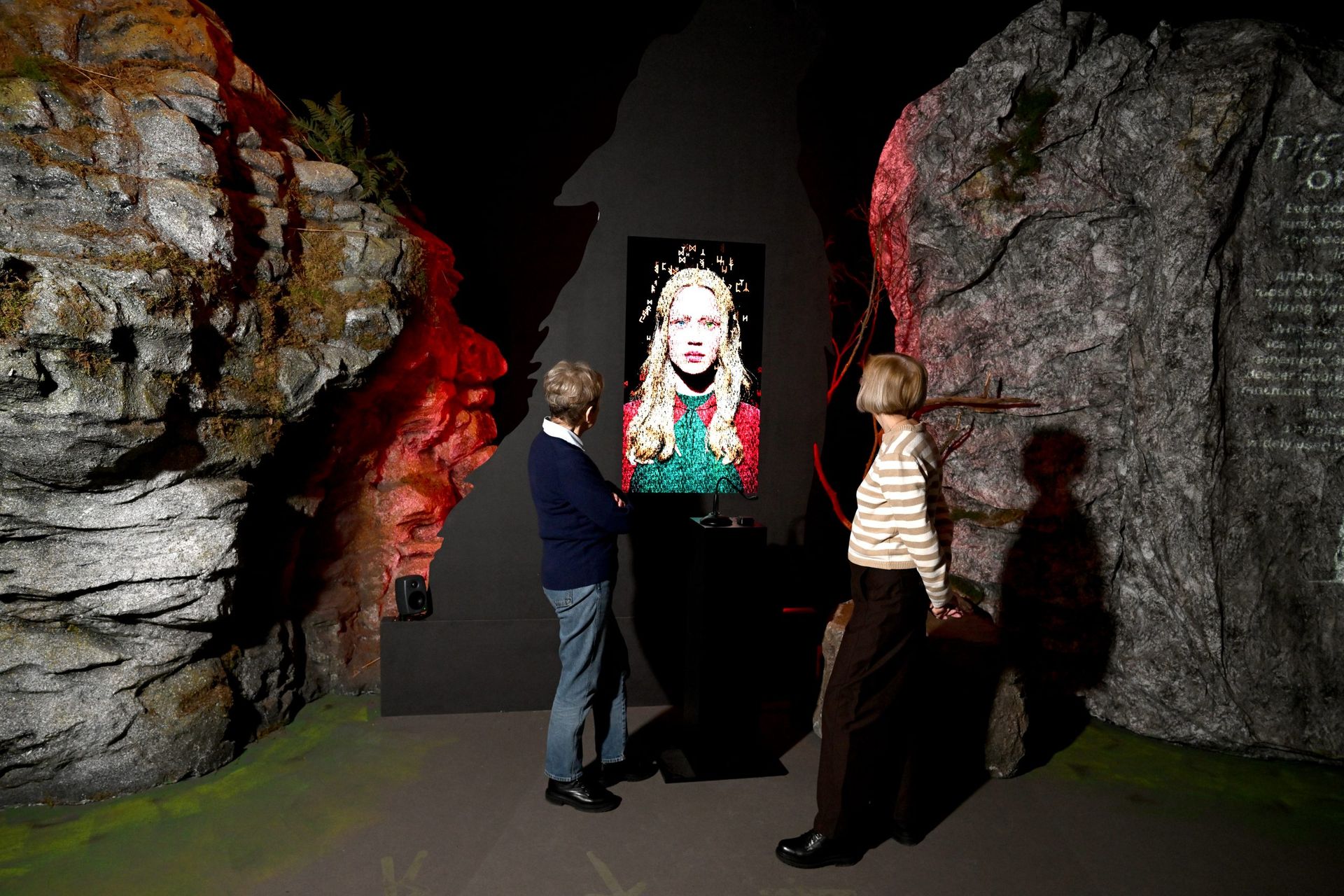
What absolutely did capture our attention, however, were the AI versions of Kraka positioned around the forest.
These were fascinating.
Using conversational AI, they allow visitors to ask questions directly and receive answers in real time. Naturally, I immediately abandoned any serious historical inquiry and instead spent several minutes attempting to trick Kraka into saying things she wasn’t supposed to. Did I manage to get her to review modern films? That’s between me and Kraka. Also yes.
Meanwhile, Charlotte and Juliette spent ages asking genuine questions about Viking life, mythology, and daily routines. It was easily the most successful interactive element in the exhibition and felt like a glimpse into the future of museums and educational attractions. The technology is still clearly in its infancy, but it was a very cool use of AI and I can’t wait to see where it leads.
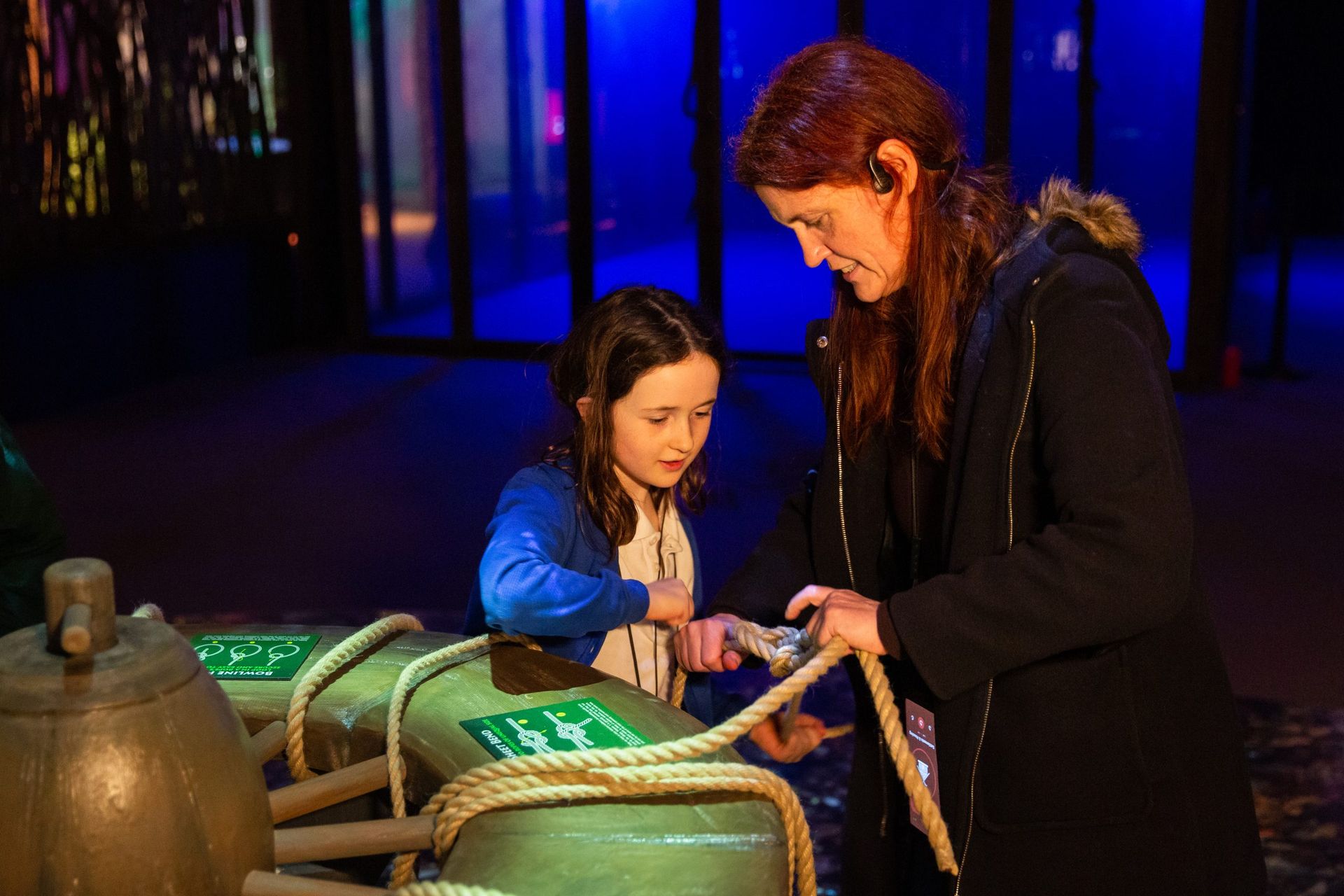
Also in the large Forest of Time there are interactive maps, timelines, artefacts, and a knot-tying station where I got to practise skills I haven’t used since my Cub Scout days. The knot station was fun, and kept us occupied for far longer than my cynical first impression of it expected. The large touchscreen timelines peppered around were less diverting. They felt rather text-heavy and we moved on from them pretty quickly.
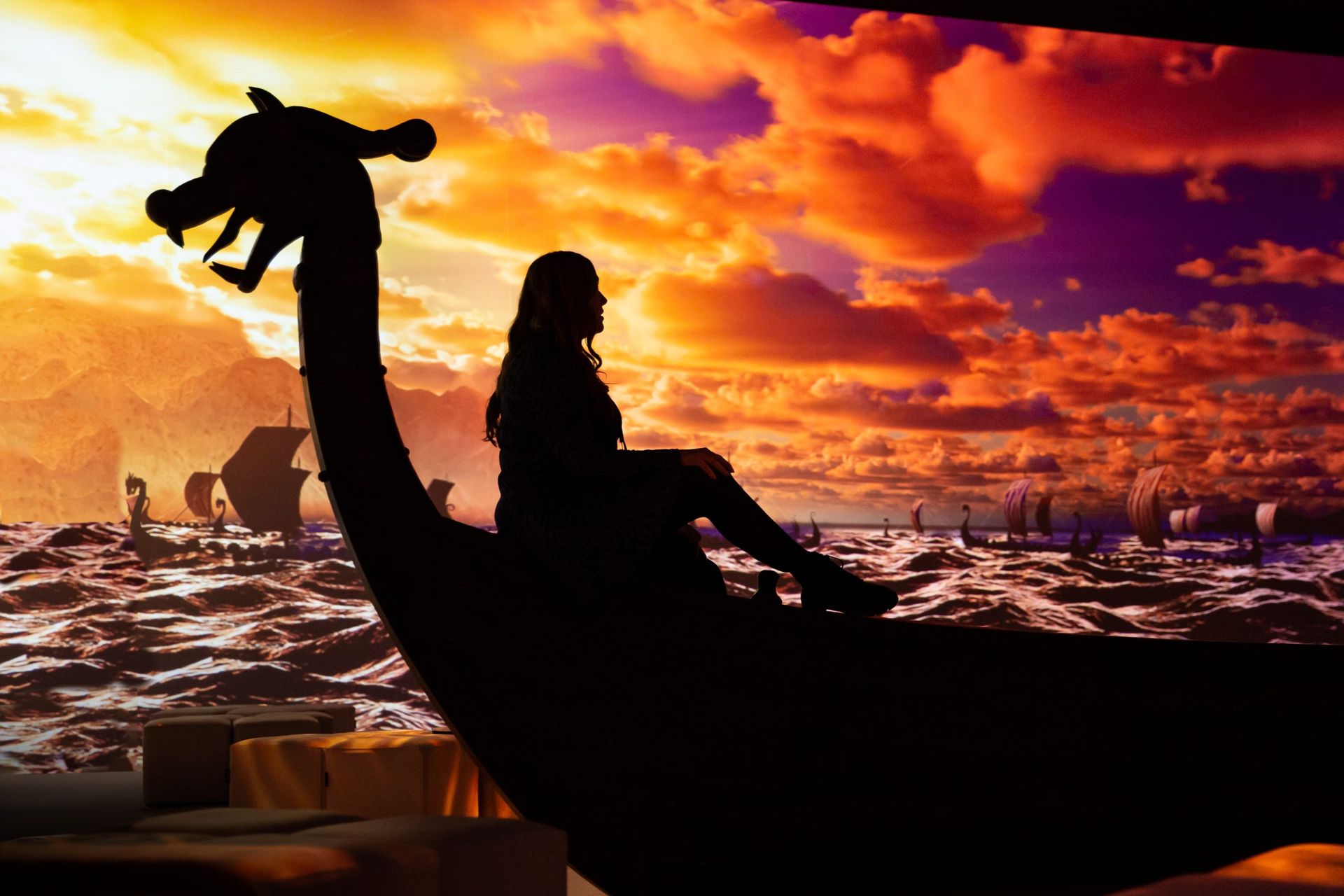
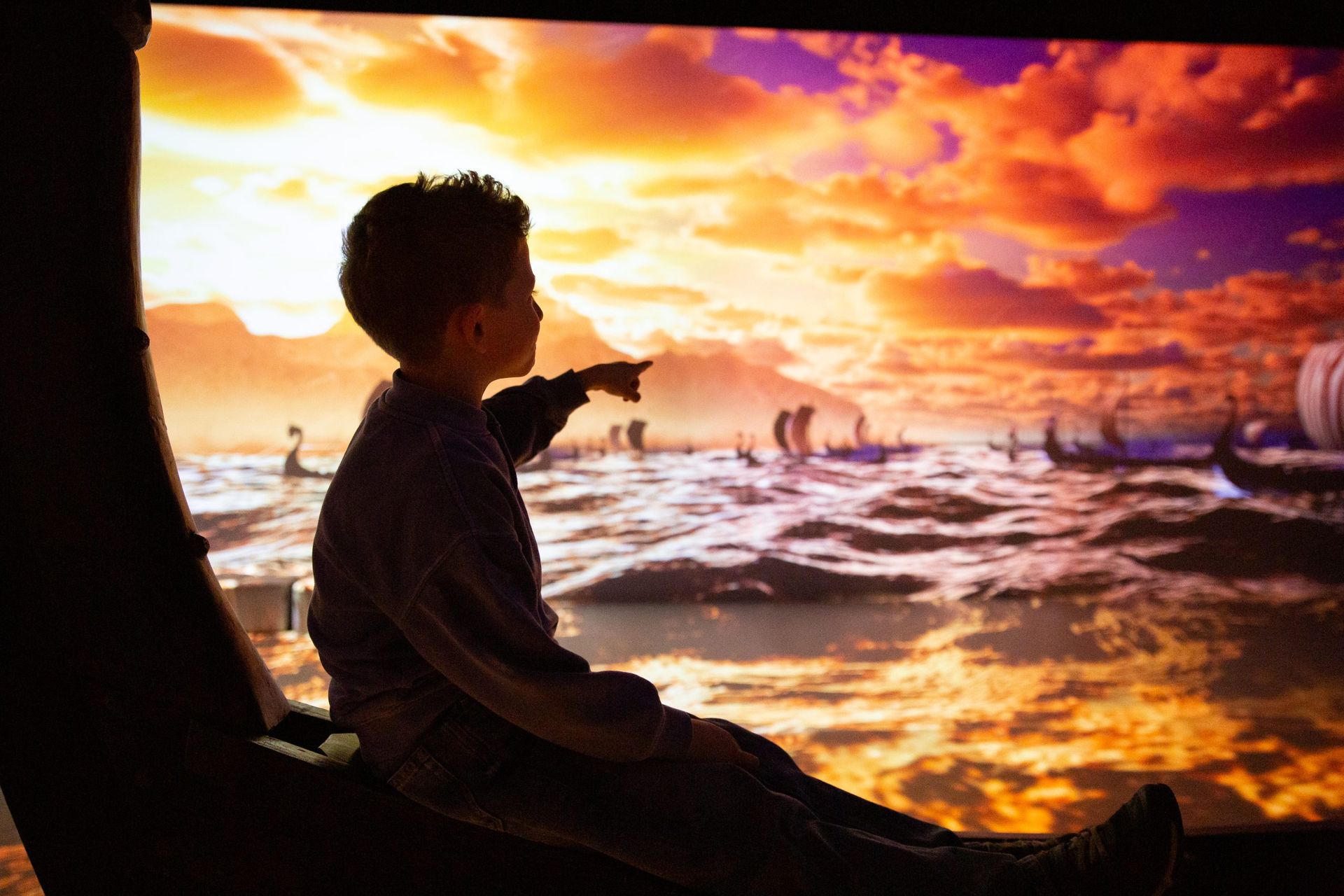
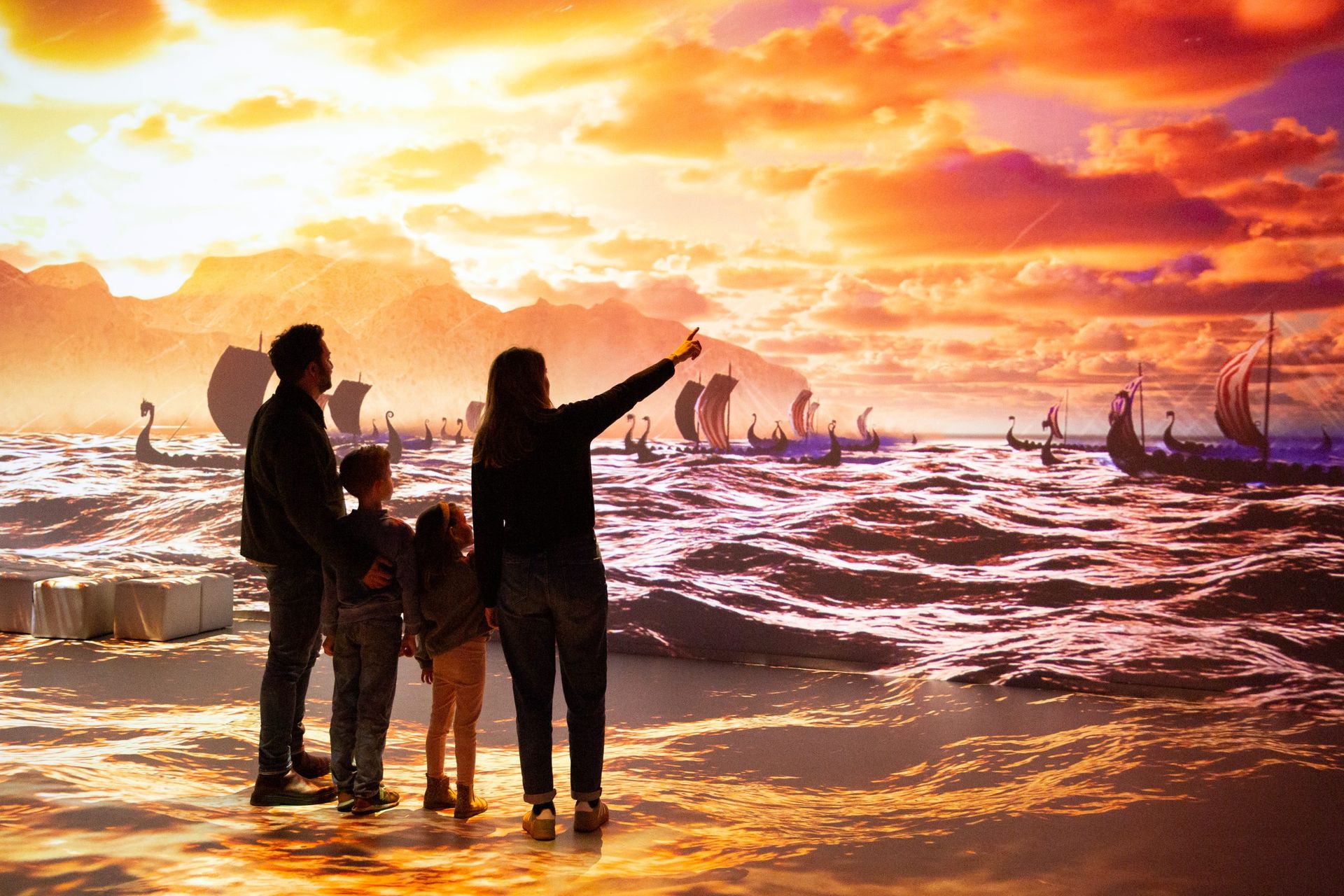
Now one thing that all the immersive exhibitions have featured, since my first – The Van Gogh Experience in 2021 – is an impressive 360-degree projection room. There’s projection on four walls and the floor, immersing the audience in a 30-minute-or-so film that is like a shared VR experience with no headset. However, this is the first time that one of these rooms has featured a full-sized Viking longboat as its centrepiece.
The kids were OBSESSED with the boat and I spent much of my time trying to stop them from standing on the ends of it and making like Kate Winslet in Titanic. Charlotte declared that the longboat was her favourite thing in the exhibition.
Visually, it’s impressive. Waves crash around the walls and floor, colours sweep through the room, and there are moments where the projections create the convincing illusion that the ship itself is moving through rough seas. Personally, I preferred standing outside the boat because it allowed me to appreciate the projections spreading across the entire space, including the floor beneath my feet.
At times, the visual effects are particularly stunning, and the clever use of the longboat sail is a lot of fun… but… This is where I found myself returning to the question of Kraka.
I completely understand why the exhibition needed a central character. The challenge is that while most people arrive already emotionally invested in figures like Cleopatra or famous events like the sinking of the Titanic, Kraka doesn’t carry that same cultural significance. By the time we reached the climactic 360-degree film, I understood what was happening, but I wasn’t particularly invested in it.
The result was that I found myself admiring the visuals more than engaging with the narrative.
The girls seemed to feel similarly. At one point they became far more interested in constructing increasingly elaborate structures from the movable white cube stools than following the story unfolding around them. I did have to apologise to the staff for the 56-stool structure they made, and we did help put all the cube stools back into groups of four before leaving the projection room.
That probably says it all, to be honest. It was interesting, but not gripping.
Another thing I couldn’t quite shake was the feeling that there was simply less here than some of the other exhibitions I’ve visited. Apparently it occupies roughly the same footprint as Titanic: The Legend of the Titanic, but it somehow felt smaller. Whether that’s because there are fewer interactive elements or because the narrative wasn’t pulling me through the space as strongly, I’m not entirely sure. It simply felt like there was a little less to discover.
One very simple thing that we absolutely loved, however, was the photo area in the café space. Now, this may in some part be because the event had given us the digital photo pass as part of our press visit and we knew we could get all the photos for free, but still, we really enjoyed that photo area.
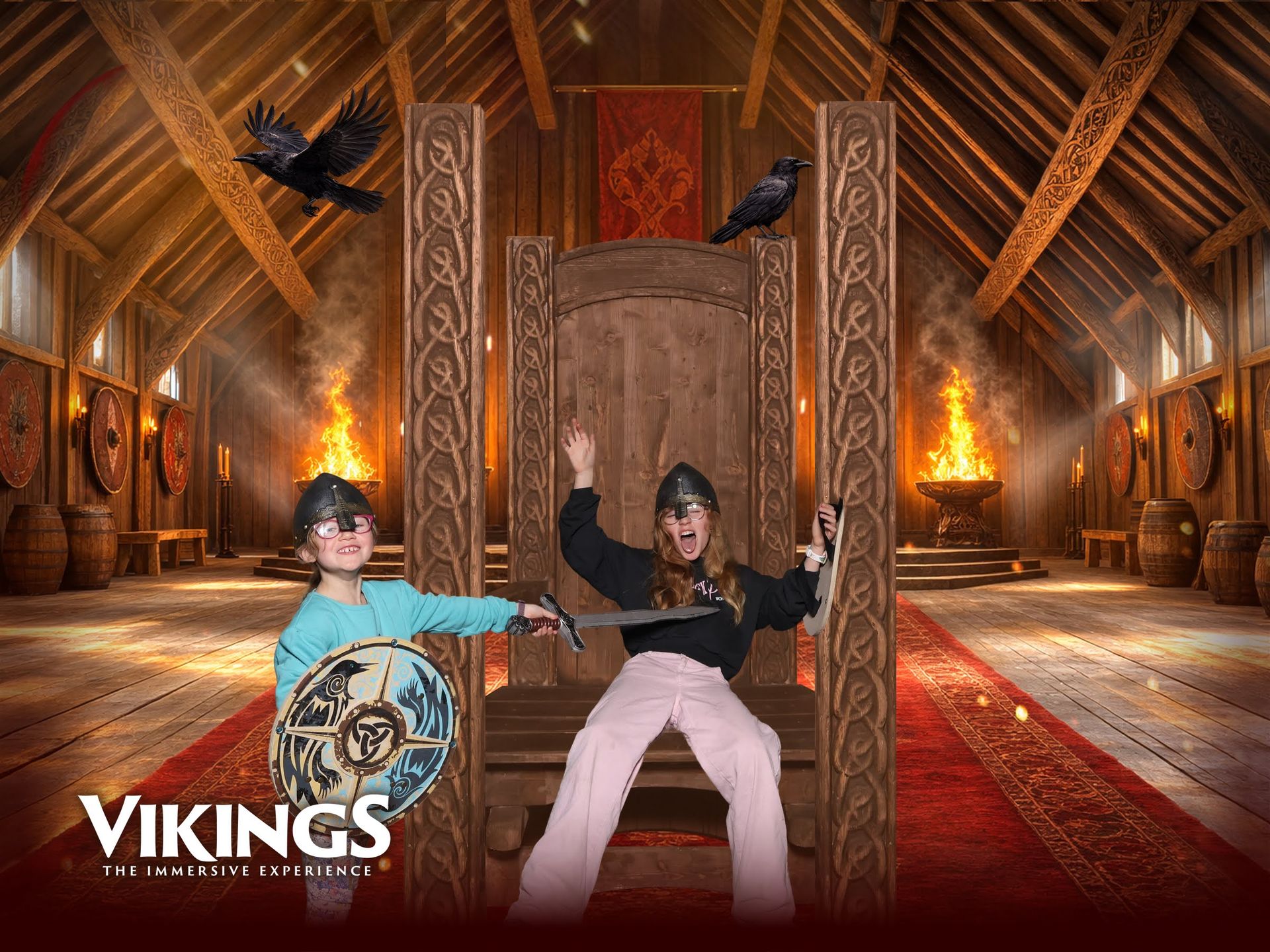
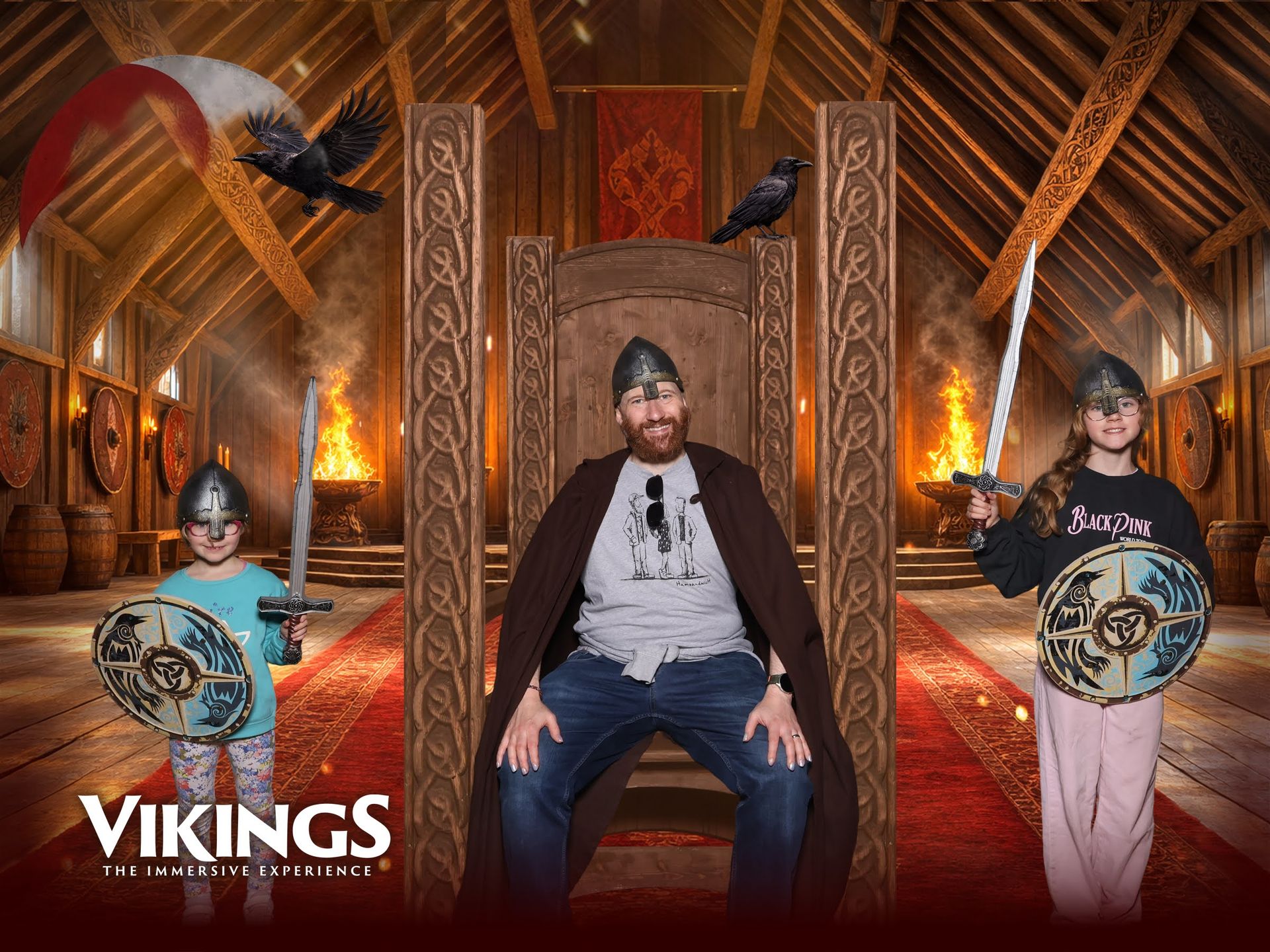
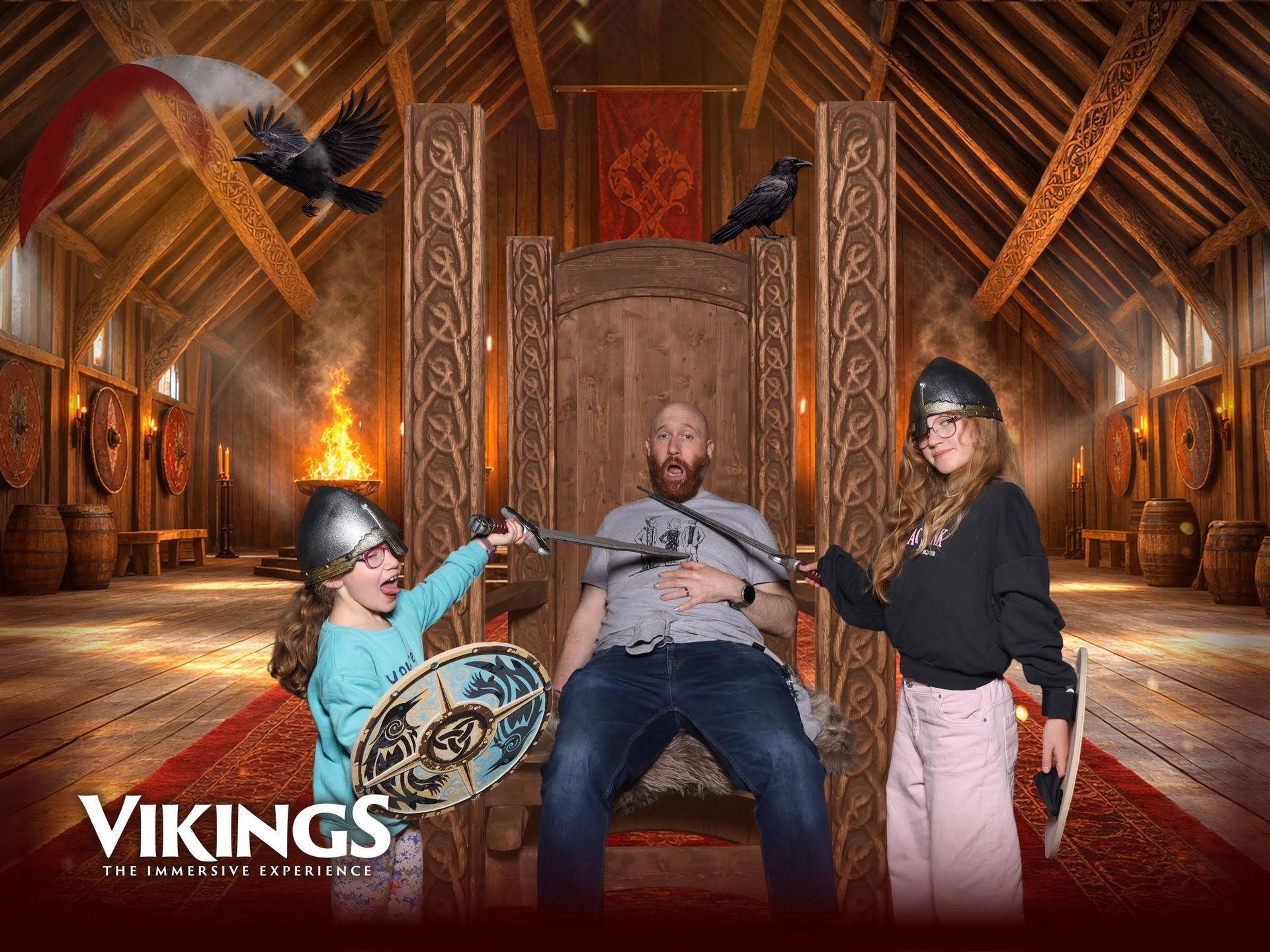
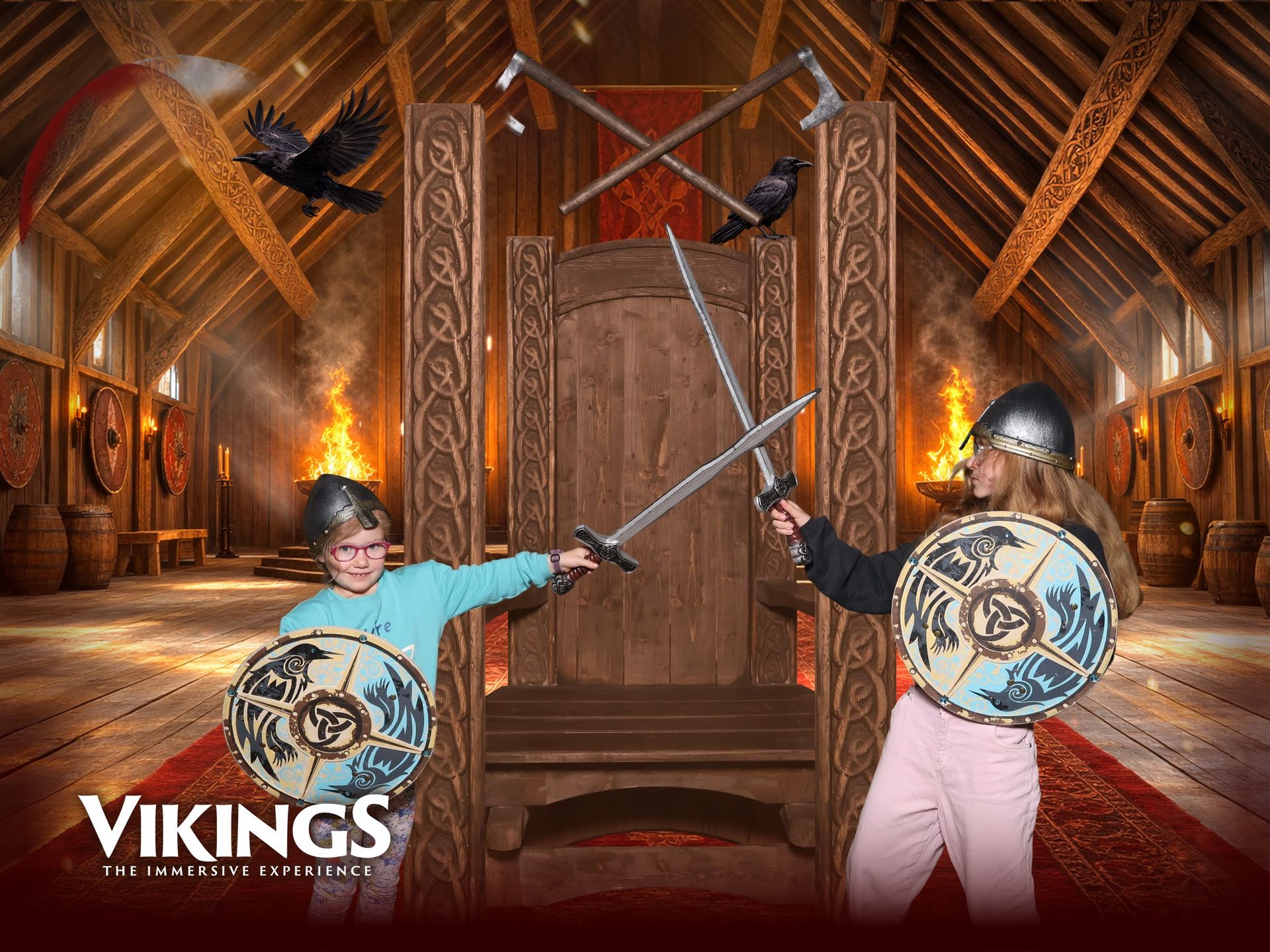
These are just a few of the fun photos we took!
We happened to visit on a particularly quiet day and ended up spending ages there. Visitors can dress up in Viking-inspired costume pieces and pose for photographs on a wooden throne, and the three of us had an absurd amount of fun doing exactly that. In fact, I suspect we spent longer there than the designers intended. I’ll include some of the resulting photos so you can judge our Viking credentials for yourselves.
Ultimately, Vikings: The Immersive Experience is a good exhibition and there is a lot of fun to be had. Between the longboat and the AI, the girls said it was one of their favourites. The Forest of Time is beautiful, the AI interactions are innovative and really cool, the longboat 360 sequence delivers some stunning imagery, and the production values throughout are consistently high.
It didn’t captivate me in quite the same way as some of the best immersive exhibitions currently in London, but it does experiment with some really exciting ideas, particularly around AI-powered storytelling. If nothing else, it offers an intriguing glimpse into where exhibitions like these may be heading in the future.
Ultimately, what I enjoyed most were the moments where the exhibition simply allowed us to play, explore, chat with an ancient woman, and imagine ourselves stepping into another world. Whether we were standing beneath Yggdrasil, climbing aboard the longboat, or taking entirely too many photos in Viking costumes, those were the moments that felt most memorable. For an afternoon spent wandering through myth, history, and legend, you can’t really ask for anything more.
VIKINGS: The Immersive Experience is running until 31st August 2026 at at Dock X (Canada Water).
Book your tickets now at vikings-immersive.co.uk
Words by Nick Barr
Photography VIKINGS: The Immersive Experience