There is something perfect about Joel Harper-Jackson playing Frank Sinatra at this point in his career.
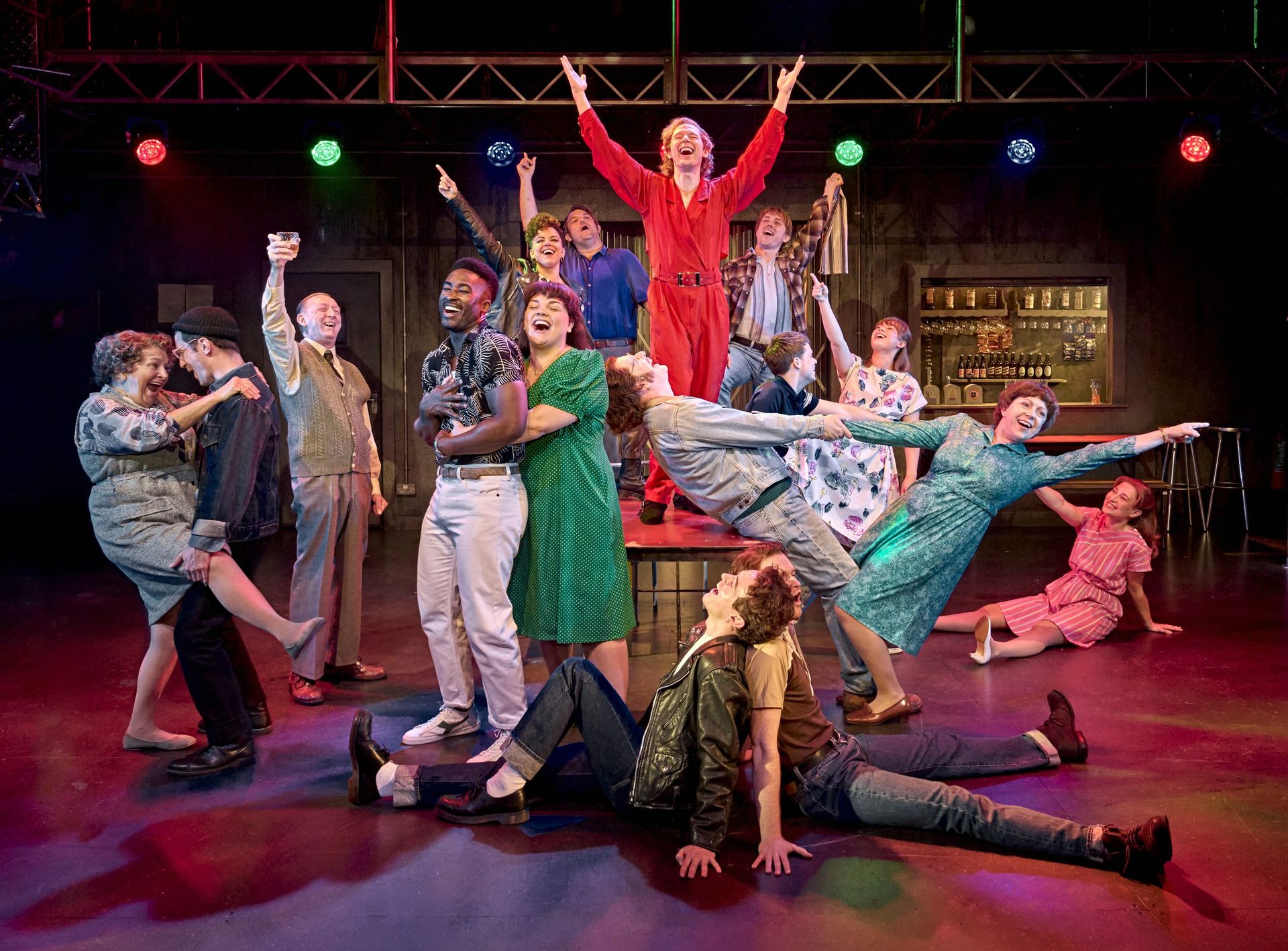
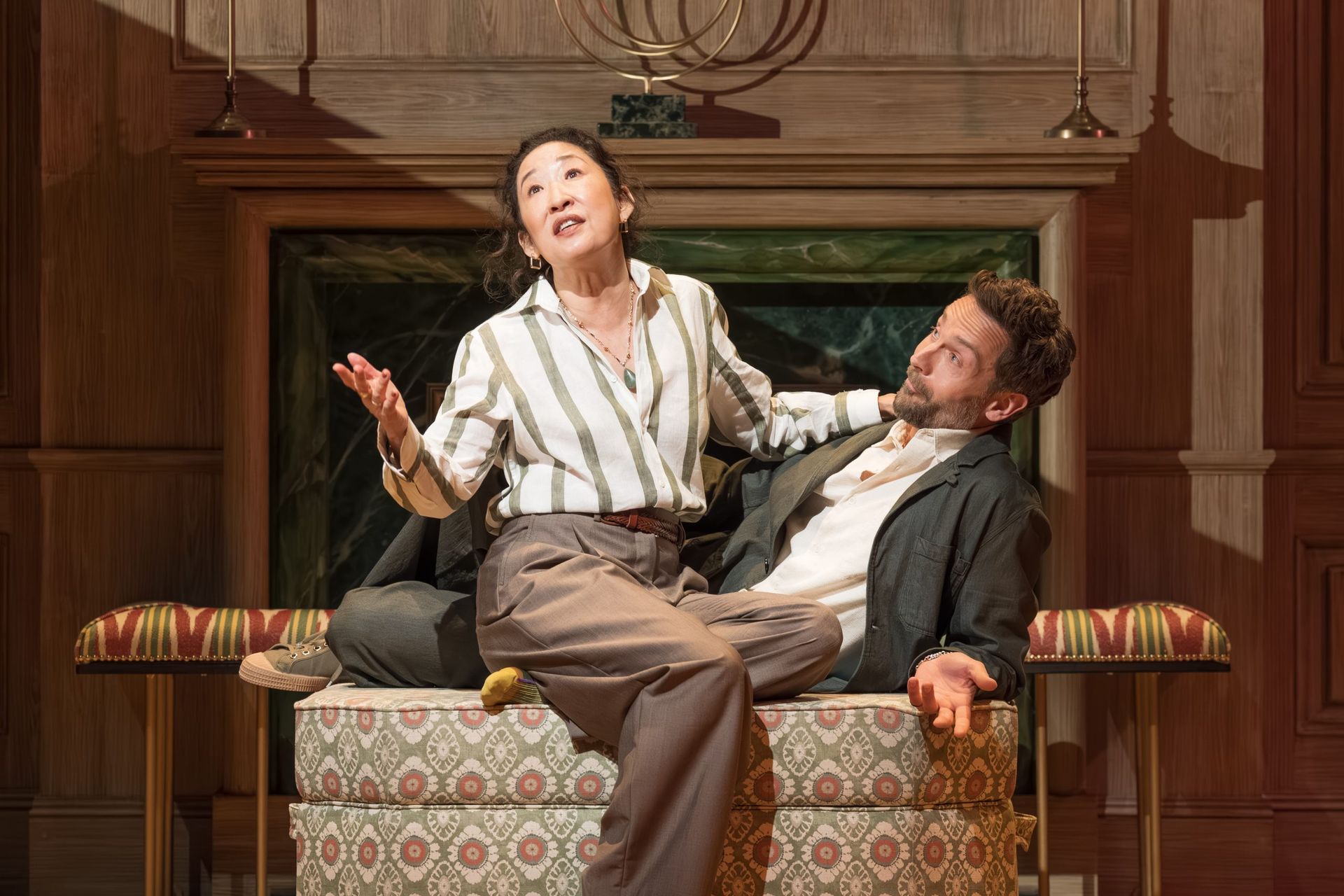
The Cheshire-born performer has spent years building a reputation across musical theatre and drama, from Kinky Boots and Standing at the Sky’s Edge to the acclaimed West End revival of Cock. It has been, in his words, a ‘slow burn’ rather than an overnight success, one built on persistence, hard work, and a refusal to put limits on what’s possible.
Those themes resonate strongly with Sinatra: The Musical, which focuses not on the legendary entertainer at the height of his powers, but on a man whose career appeared to be slipping away. Before the Oscar wins, the sold-out concerts, and the global fame, Sinatra was fighting to prove he still mattered.
While we spoke, Joel reflected on the teacher who first believed in him, the role that changed the trajectory of his career, the beautiful flawed human he discovered while researching Sinatra, and why Frank’s real story is ultimately one of perseverance against all odds.
You’ve built a career across musicals, straight drama, and some screen work as well. Where did it all begin? When did you catch the acting bug and decide this was what you wanted to do?
I went to an engineering school in Cheshire and chose drama and music almost by accident. I’d never shown much interest before, but a drama teacher called Mrs Davis spotted something in me and took a small group of us on an arts weekend. It was the first time I’d been somewhere that celebrated creativity rather than mocked it.
At the end of the weekend, she told my parents, ‘After what I’ve seen this weekend, your son is going to be a star.’ It was the first time anyone had really believed I could do this.
She changed everything. She’s retired now, but she’s seen every show I’ve done and is coming to see Sinatra in a couple of weeks.
It’s also why I’m so passionate about arts education. I owe my career to teachers who gave me opportunities and believed in me, which is why I find cuts to arts funding so frustrating. I think theatre is having a resurgence with younger people, but schools still need to take the arts more seriously.
Were there any particular shows, performers, or experiences that made you think, “I want to do what they’re doing”?
Blood Brothers. Absolutely.
It’s a very northern, working-class story, so I connected with it immediately. My school organised a trip to see the show and take part in a workshop with some of the cast. One of them was Nicky Davis-Jones, who played Linda. A few years later, my first professional job was working with her, which felt like a full-circle moment.
What struck me about Blood Brothers was how raw it was. Musicals can be joyful and escapist, but this felt messy, emotional, and visceral. I remember watching Nicky completely break down on stage and thinking, this is what theatre can do.
That became my blueprint. I realised I was drawn to stories that really affect people. I love characters who are flawed and complicated because that’s what makes them feel real.
And when you look back at that young Joel entering the industry, what do you think he’d make of where you are now, about to play Frank Sinatra?
I think he’d be completely blown away.
I’ve far surpassed anything I thought I’d achieve. The goalposts keep moving, but a few years ago I realised I had to stop putting limits on myself. In this industry, if you don’t believe something is possible, nobody else will either.
I always wanted to be a leading man telling great stories, but I thought I’d need something else to get me there, a soap role, a bit of fame, whatever it might be. Eventually I realised I just had to do it on my own merit.
I’m from a very realistic, working-class northern family, and that mindset can sometimes make you put a ceiling on what’s possible. I’ve had to unpick a lot of that and learn to think bigger.
The biggest lesson has been getting out of my own way. We’re often our own worst enemy. The moment I stopped deciding what was realistic and started believing more was possible, everything changed.
You’ve gone from ensemble and supporting roles into leading parts. Was there a point where you felt the industry started seeing you differently?
My career has been a gradual slow burn, but a real turning point was Cock. I was understudying Taron Egerton opposite Jonathan Bailey, and when Taron had to leave the production, I ended up taking over the role.
It was a chance to challenge the perception that musical theatre actors can’t act. Standing on stage in a straight play and proving I could carry that kind of material definitely changed things for me. That’s when it felt like people started taking notice, and it wasn’t long before television opportunities started appearing.
Kinky Boots also feels like a pivotal role in your journey.
Absolutely. At the time it was the biggest commercial job I’d done, and it was based on one of my favourite films growing up.
What made it particularly special was how much the story mirrored parts of my own life. My dad had always wanted me to take over the family building business, which felt very Charlie Price. Although I was playing Charlie, there were aspects of Lola’s journey that resonated with me as an openly gay man.
My parents saw the show 17 times. I think it helped my dad understand certain things about me, and to this day it’s probably still his favourite thing I’ve ever done.
Looking across roles like Charlie in Kinky Boots, Harry in Standing at the Sky’s Edge, M in Cock, and now Sinatra, there seems to be a thread of men wrestling with identity, expectations, and image. Is that something you’ve consciously pursued?
The characters I seem to play often have a lot of conflict beneath the surface. I don’t think I’ve consciously pursued those roles, but they do seem to find me.
I’ve always been drawn to flawed, complicated people. As an actor, the challenge is helping an audience understand someone, even when they’re making mistakes or doing the wrong thing. Humans are messy and contradictory, and those are always the characters I find most interesting.
And playing that role in Cock, did it change how you approach acting?
Absolutely. Marianne Elliott directed it, and she’s incredibly specific. Every word was unpacked, every intention examined. It made me approach text with far more detail because every single word had to be doing something.
The irony is that, just before the audition, I was applying to drama schools because I felt I still had so much to learn. I told Marianne that, and she said, ‘Forget drama school, this will be your drama school.’
She was true to her word. She challenged me constantly, gave me endless notes, and pushed me to improve every night. It was a real baptism of fire, but it changed me as an actor.
Let’s talk about Sinatra. What was your first reaction when this opportunity came along?
Honestly? ‘Really? Me?’
When I started looking into the period of Sinatra’s life that the show covers, I became fascinated. This was a man who had lost almost everything. He’d lost his record deal, his film contract, his television work, and people were writing him off as a washed-up crooner.
As an actor, I could relate to that. We’d all experienced rejection, but I’d just come through a particularly difficult period where I kept getting close to huge jobs and missing out. After hearing ‘no’ so many times, you inevitably start questioning yourself.
What struck me was how much Frank was fighting for another chance. There’s a scene in the show where he’s desperately trying to convince people not to give up on him, and I really connected with that.
By the time I got into the audition room, I felt completely ready. For the first time in a long time, I wasn’t questioning whether I was good enough. I knew I could do it, and I went in determined to fight for it. In a strange way, the journey I was going through and the journey Frank was going through felt very similar.
Everyone feels like they know Frank Sinatra, but usually only on a superficial level. Was there anything that really surprised you when you started researching him?
So much. One thing that really surprised me was his political influence. I hadn’t realised quite how powerful he was, or how involved he was in helping JFK reach the White House.
But what fascinated me most was how close we came to never getting the Frank Sinatra we know today. There was a period where he’d lost almost everything and was struggling enormously. He was a man who had experienced huge success and then found himself fighting to stay relevant.
The more I researched him, the more surprising he became. He packed more into a single year than most people do in a lifetime.
What I love as an actor is that he wasn’t perfect. He made mistakes. He could be messy and complicated. That’s what makes him interesting to play because it’s so human.
I’ve come away with a far greater respect for him than I ever expected. And the remarkable thing is that he still feels present. His music is still being streamed and discovered by new generations. He once said he hoped people wouldn’t forget his music, and they haven’t.
There must be a danger of drifting into impersonation when you’re doing something like this. Was the challenge learning to sound like Sinatra, or learning when not to?
It’s a really difficult line to walk. The creative team have been very clear that they don’t want an impersonation or a tribute act, and I don’t think Frank would have wanted that either.
At the same time, if I went to see a Sinatra musical and there wasn’t at least a hint of him in the performance, I’d probably feel a bit short-changed. So you have to find the essence of him without simply copying him.
For me, that’s often in the phrasing and some of the smaller details. I’ve always had a good ear for picking up someone’s style and energy, so that part has come quite naturally.
But I can’t try to be Frank Sinatra for an entire evening because it would feel false. There was only one Frank Sinatra. My job is to tell his story, not imitate him.
And you know, if people like it, they like it. And if they don’t, they don’t. What audiences will see is my interpretation of Frank. It’s him filtered through my experience and my perspective, and hopefully that feels truthful.
Tina Sinatra has been involved in the production. Have there been moments, speaking with Tina, where Frank stopped feeling like an icon and started feeling more like a person? And how much of an influence has she been on your portrayal of him?
Tina has been hugely important. She’s incredibly warm and welcoming. I always describe her as motherly, although she’d probably laugh at that because she’s the one who calls me ‘Pop’.
From the moment I met her, Frank stopped being an icon and became a father. She always talks about him as ‘Dad’, which immediately shifts your perspective. You stop thinking about the legend and start thinking about the man.
I’ve done a huge amount of research, watched documentaries, and read books from people with very different views of him, but Tina has been my greatest resource. She’s shared so many little details about what he was like behind closed doors, and those insights are invaluable.
Ultimately, we’re telling the story of a family man who makes mistakes and, in some cases, hurts the people closest to him. That’s why focusing on the human side of Frank is so important. For all his fame and influence, he was still just a person, and Tina has helped me understand that more than anyone.
Sinatra carried this very specific image of masculinity. Do you think audiences see masculinity differently now than they did in his era, and how do you approach that as an actor?
I think they probably do. Society has spent a long time re-examining ideas about masculinity, and that’s still ongoing.
What’s been interesting for me is playing someone who was seen as the embodiment of a certain kind of masculine ideal. As an openly gay actor, there was a part of me that wondered how that would be perceived, but ultimately my job is to tell the truth of the character.
One thing I’ve really valued during this process is the relationship with my co-stars. It’s a very intimate piece, and we’ve been able to have incredibly open conversations about boundaries, trust, and what we need from each other in those moments. That has created a really safe environment, which in turn allows us to commit fully to the work.
What I’ve loved is that we’re now at a point where actors are increasingly judged on whether they’re right for the role rather than being limited by assumptions about who they are off stage. That’s always felt important to me. At the end of the day, we’re actors. Our job is to step into someone else’s shoes and tell their story as honestly as we can.
When audiences leave Sinatra: The Musical, what do you hope stays with them after they’ve gone home?
I hope they leave with a different perspective on Frank. I think people will see a side of him they didn’t know before and realise that, for all the fame and success, he was still human. He made mistakes, just like the rest of us.
I also hope they leave inspired by his perseverance. This is a story about someone who refused to give up when people had written him off. He kept fighting for what he wanted, and there’s something incredibly powerful about that.
Alongside that, I think audiences are going to have a spectacular night at the theatre. The music is extraordinary, there’s a 17-piece jazz orchestra on stage, and it really does transport you back to that era.
But if there’s one thing I’d want people to take away, it’s the idea that you shouldn’t give up on your dreams. Keep going, keep fighting, and don’t stop until you get where you want to be.
Sinatra: The Musical plays at the Aldwych Theatre until 10 April 2027.
Book tickets now at sinatramusical.com
Interview Nick Barr
Photography David Reiss