Wellness has become one of hospitality’s defining conversations. Across the industry, hotels and retreats are expanding beyond traditional spas to include thermal circuits, meditation programs, preventative healthcare, and nutrition-focused dining. Yet as wellness becomes increasingly specialized, physical, mental, and social wellbeing are often treated as separate pursuits. We strengthen the body in fitness studios, care for the mind in clinical settings, and seek connection somewhere else. While each serves an important purpose, few environments acknowledge that these dimensions of wellbeing are deeply interconnected. Increasingly, restoration itself has become an individual pursuit – experienced in isolation rather than in community.
Alchemy 38 was developed in response to this fragmentation.
Nestled within Manhattan’s Carnegie Hill on the Upper East Side, this wellness retreat proposes a new architectural model in which therapeutic care, movement, sensory immersion, intellectual engagement, and meaningful human connection coexist within a single experience. Rather than simply expanding the conventional wellness model, the project reimagines its very structure, suggesting that lasting wellbeing emerges not only through caring for the mind and body together, but through shared ritual, conversation, and interpersonal connection. .
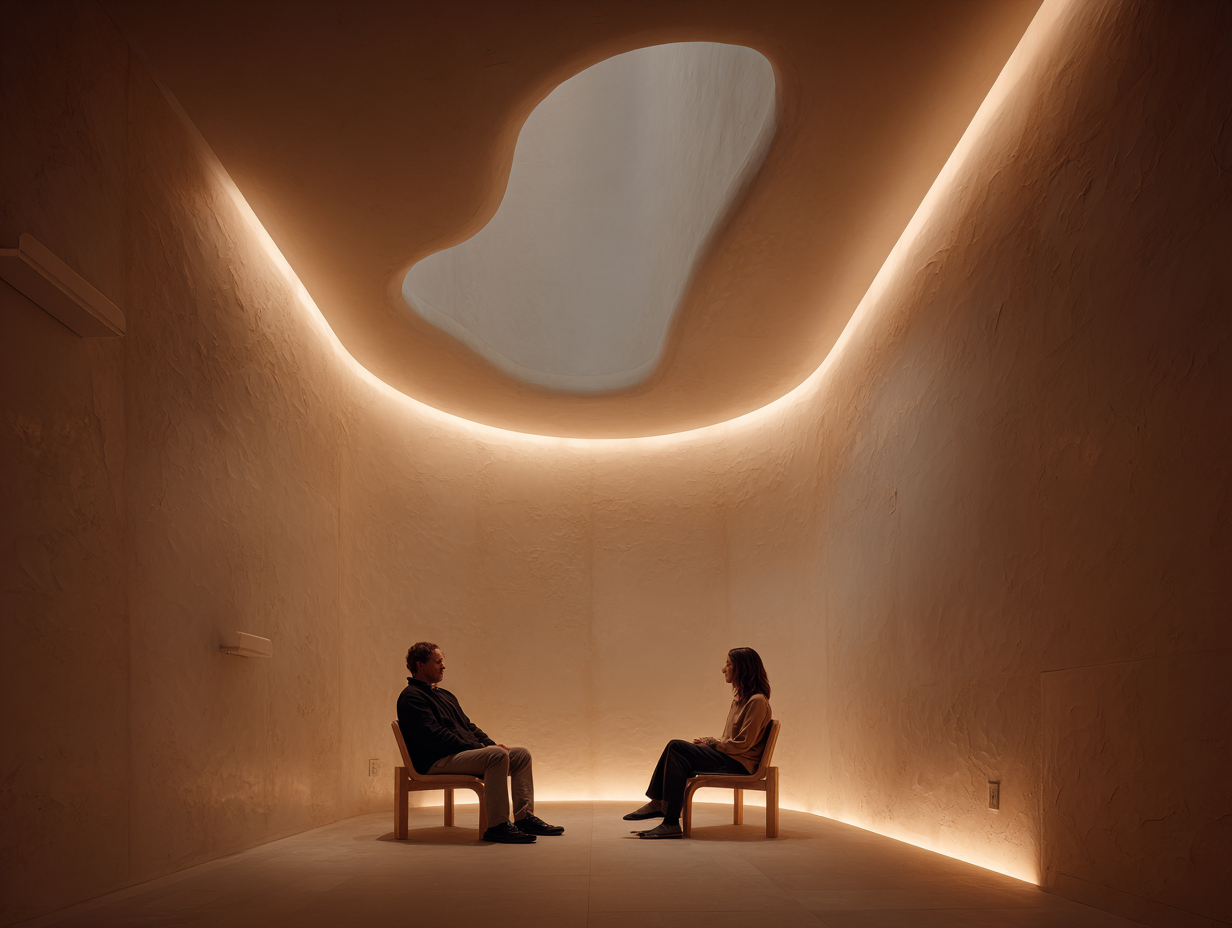
The retreat spans approximately 20,000 square feet across three levels, bringing together spaces dedicated to both physical and cognitive restoration. Massage therapies, thermal wellness, hydrotherapy, fitness, and Pilates are complemented by cognitive behavioral therapy suites, a library, and communal environments that encourage reflection, conversation, and shared ritual. Together, they challenge the notion that wellness is either an individual or purely physical pursuit, proposing instead that restoration emerges through the integration of mind, body, and meaningful human connection.
The project is built around three conceptual pillars that shaped every design decision.
The first is the Manhattan Grid.
Established in 1811, the Manhattan Grid transformed the city into a framework of order, movement, and exchange. Within the Upper East Side, this ordered system fostered a tightly interconnected urban fabric where researchers, physicians, artists, and thinkers continue to shape one of New York’s most influential cultural and institutional districts. Within Alchemy 38, the grid is reinterpreted as an architectural and therapeutic system of orientation and structure. Its disciplined geometry organizes circulation, thresholds, and spatial sequencing, creating a sense of clarity that anchors the guest experience. Rather than functioning as a purely formal device, the grid becomes the rational foundation upon which the retreat’s emotional and sensory experiences unfold.
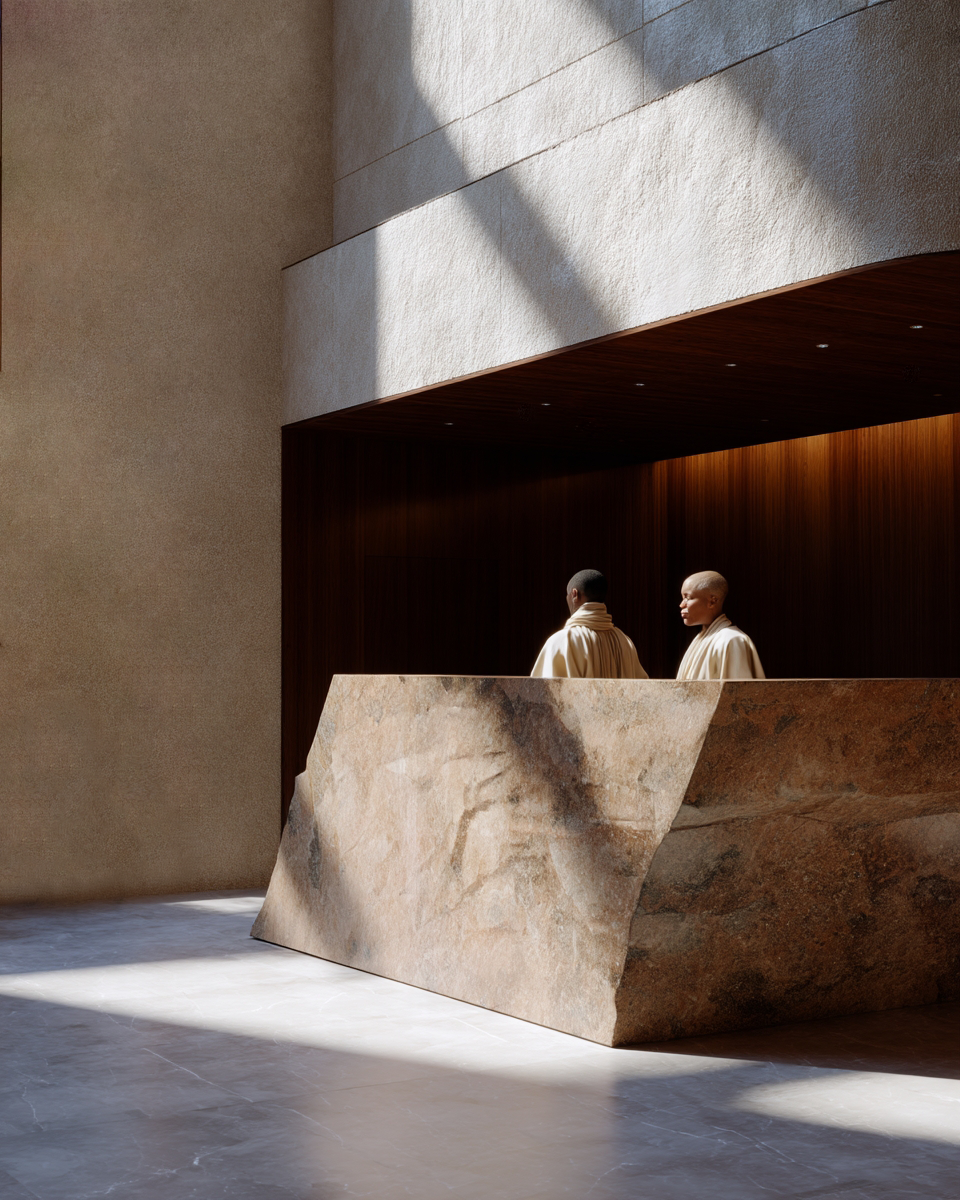
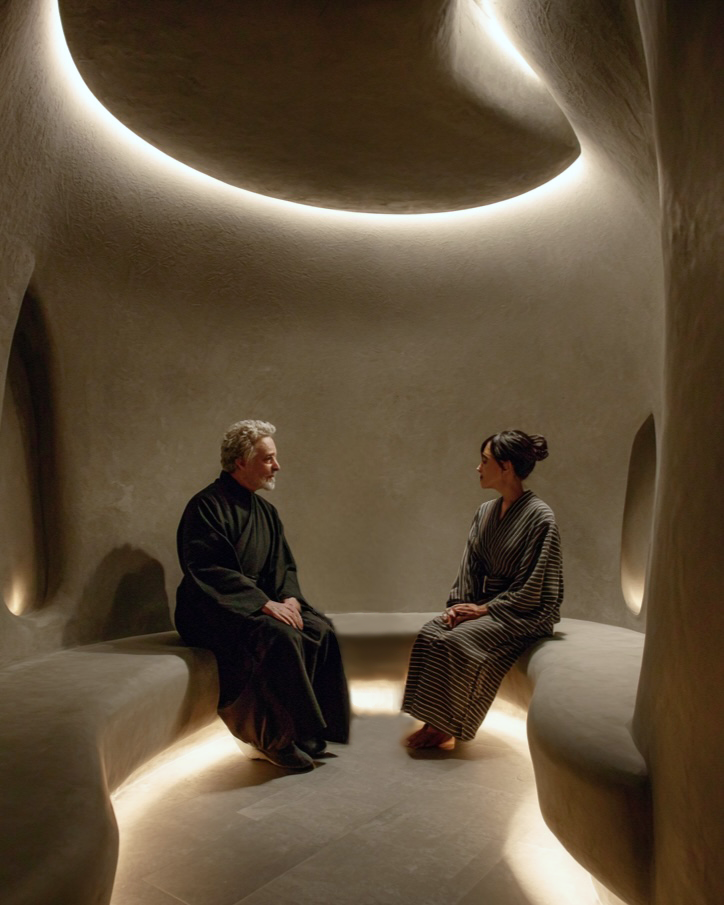
The second pillar draws inspiration from neurogenesis, the brain’s capacity to form new neural pathways through environmental stimuli.
Inspired by the neighborhood’s long-standing legacy of medical innovation and the pioneering neuroscience research conducted at the nearby Friedman Brain Institute, neurogenesis symbolizes renewal, transformation, and connection through both space and shared experience. While architecture cannot generate this biological process, the concept became a powerful metaphor for transformation and renewal. Throughout the retreat, spaces are carefully sequenced to encourage gradual movement between introspection and engagement, while shared rituals and communal environments create opportunities for meaningful interpersonal exchange. In this way, wellbeing is understood not only as an individual journey, but also as one shaped by relationships and shared experience.
The third pillar is Shinrin-yoku, the Japanese practice of forest bathing.
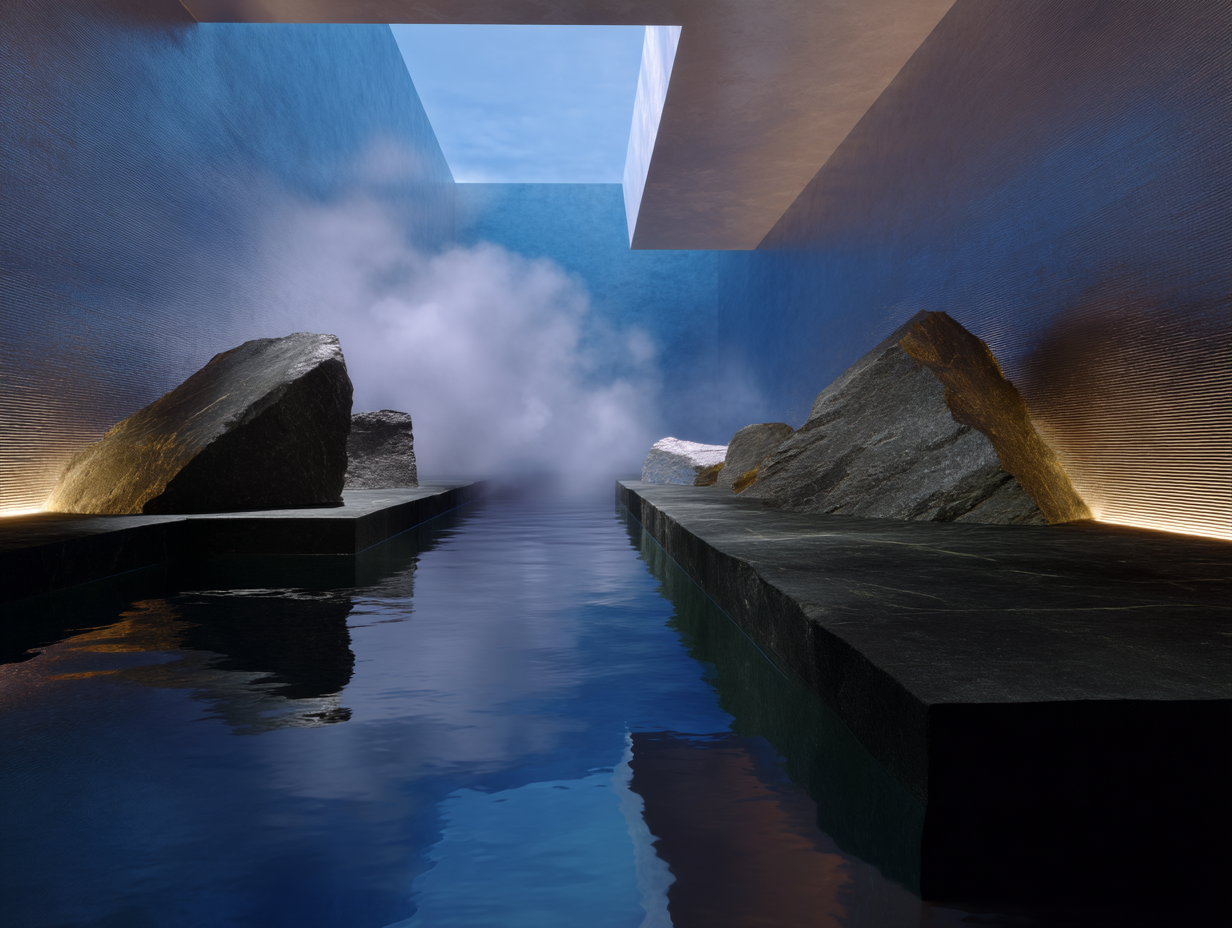
Bordered by Central Park to the west, Carnegie Hill offers a rare dialogue between urban life and nature, making it an ideal setting to weave these restorative qualities throughout the retreat. Rather than recreating nature literally, the project seeks to translate its restorative qualities into architecture. Sculptural forms inspired by geological landscapes, filtered daylight reminiscent of sunlight passing through tree canopies, layered natural materials, and restrained sensory environments cultivate an atmosphere of quiet immersion. The objective is not to imitate the forest, but to evoke the sense of calm and presence that accompanies time spent within it.
Natural materials are complemented by discreet smart technologies that quietly shape the retreat’s atmosphere. Integrated circadian lighting, responsive environmental controls, and adaptable thermal conditions support mood, cognitive wellbeing, and sensory comfort, allowing the architecture itself to become an active participant in the wellness experience.
Together, these ideas shaped a retreat organized around a carefully choreographed sequence of therapeutic and communal experiences.
Guests begin their journey within a double-height arrival hall illuminated by circadian lighting before progressing through a series of carefully choreographed threshold moments inspired by the gradual unfolding of a walk through a forest. Spaces alternate between compression and openness, shadow and light, intimacy and release, encouraging guests to slow down and become more present with each transition.
The retreat’s therapeutic program includes Terra and Lumen, two cognitive therapy suites designed to support reflection and emotional recalibration; Soma, a massage suite dedicated to somatic release; Pulse, a fitness center; and Aurea, a Reformer Pilates studio centered on mindful movement. Thermal experiences unfold within Grotto, a sculpted thermal sanctuary, Pensieve, a contemplative hydrotherapy pool, and Grove, a multisensory restoration chamber that combines immersive soundscapes, vibroacoustic therapy, and forest-derived aromatics to encourage sensory renewal.
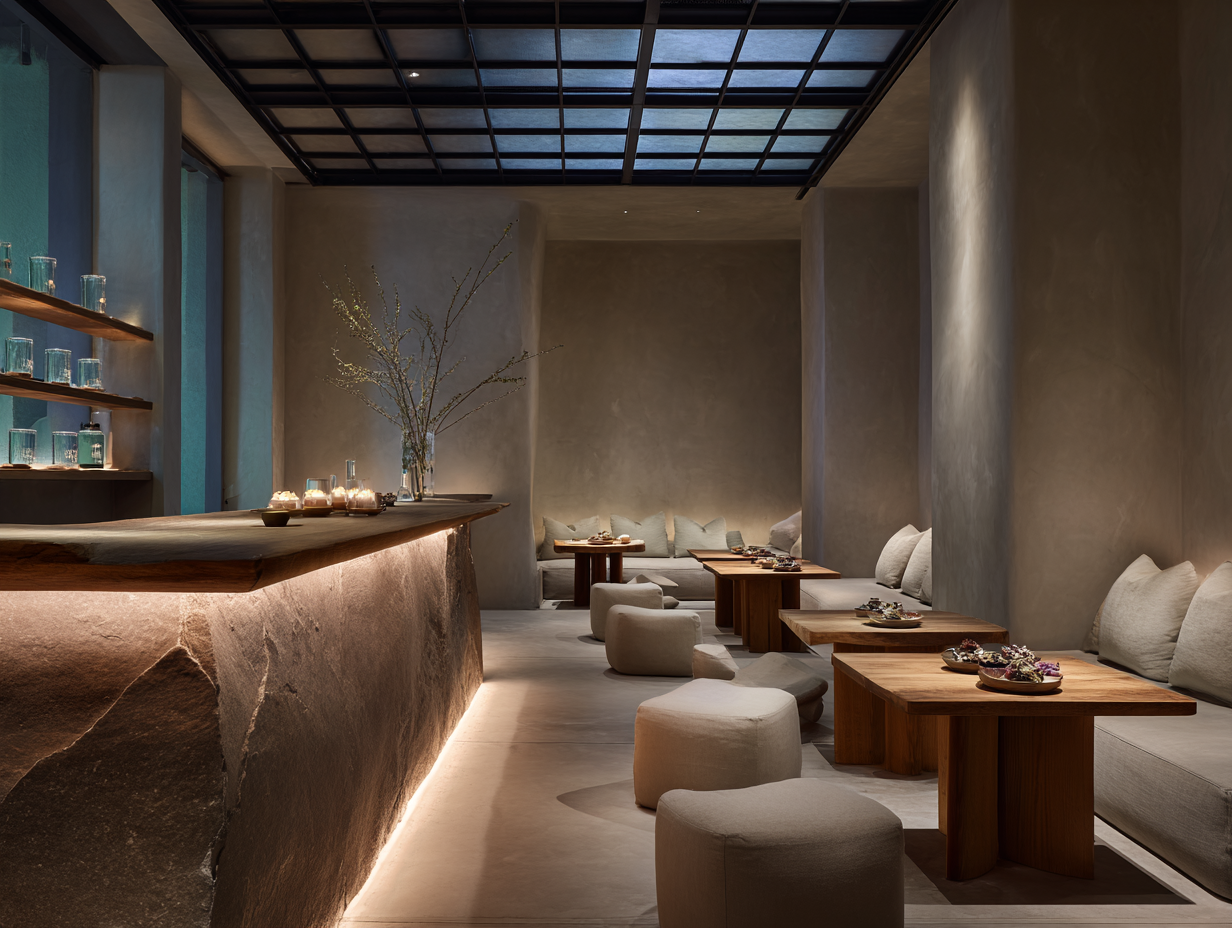
Equally important are the spaces dedicated to connection.
Too often, wellness is framed as a solitary pursuit. Yet some of our most meaningful moments of restoration happen in conversation, through shared rituals, or simply in the presence of others. The Elixir Bar & Tea Lounge draws inspiration from the intimacy of traditional Japanese tea rooms, creating a setting where conversation becomes part of the wellness experience. Nexus, the retreat’s library and reading room, offers space for quiet reflection and intellectual discovery, while Salon provides a welcoming living and gathering space where guests can connect, unwind, and cultivate a sense of community.
Ultimately, Alchemy 38 is not intended as a vision of luxury defined by excess, but by intention. Every material, transition, and spatial sequence is designed to support a slower, more mindful way of experiencing the built environment.
As conversations surrounding mental health, longevity, and preventative care continue to shape hospitality, I believe architecture has an opportunity to move beyond serving as a backdrop to wellness. The environments we create cannot replace healthcare, but they can profoundly influence how we think, feel, connect, and restore. If architecture has the capacity to shape human experience, then perhaps its greatest luxury lies not in what it offers, but in how it makes us feel – and what it makes us remember.
Words by Yasmine Ammar