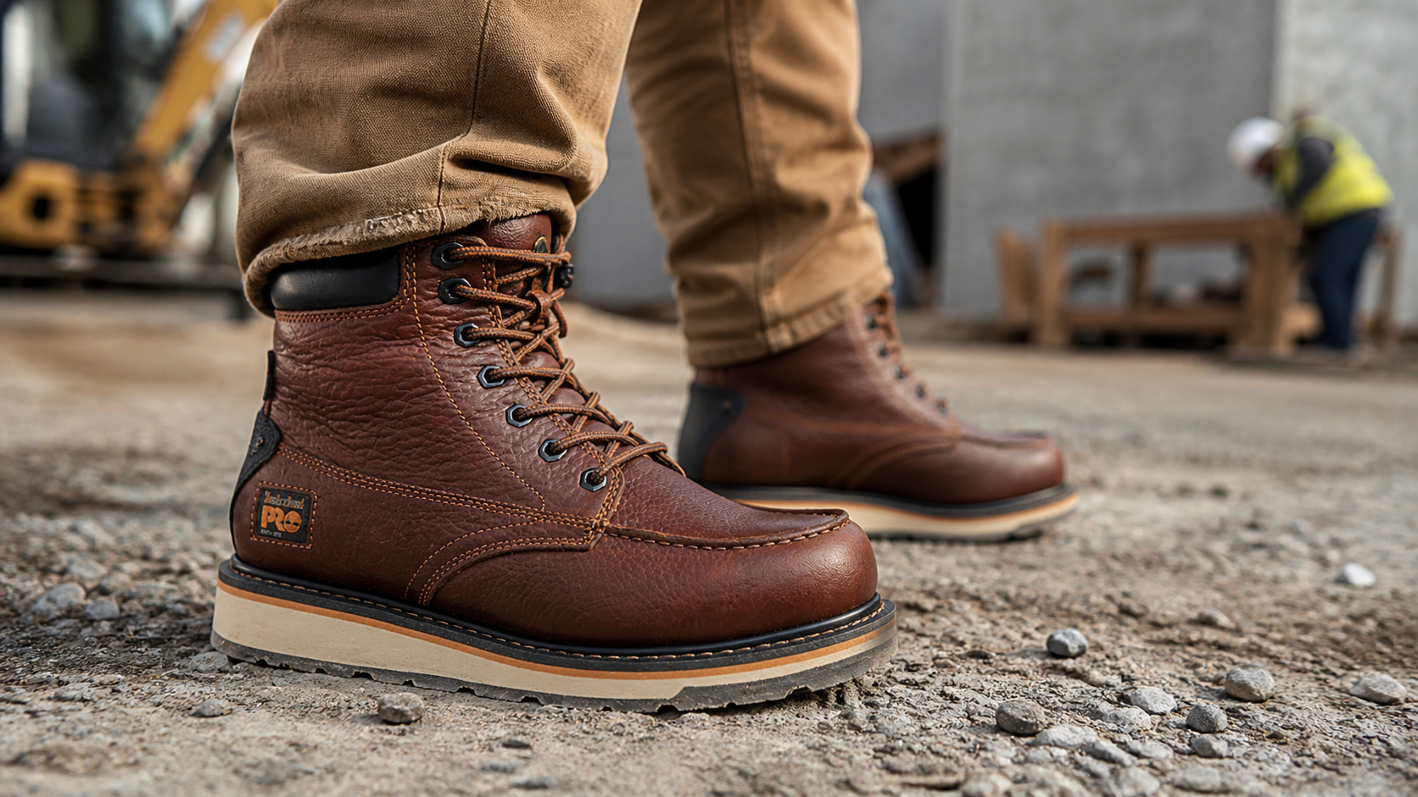
Choosing the right Timberland PRO boots starts with one practical question: what will the workday put them through? A warehouse floor, muddy site, utility route, ranch field, and concrete slab all demand different levels of traction, support, protection, and comfort.
That is why workers comparing Timberland Pro Boots should look past appearance first and focus on jobsite hazards, shift length, climate, safety requirements, and fit. A good pair should support the work instead of becoming another problem halfway through the day.
Start With the Jobsite Before Choosing a Work Boot
Timberland PRO has a strong reputation in work footwear, but reputation should not replace a proper hazard check. A boot that works well for a delivery driver may not be enough for a welder, electrician, roofer, mechanic, ranch hand, or construction worker.
Start by listing the conditions your boots face most often. Do you stand on concrete for ten hours? Walk through mud and gravel? Climb ladders? Work around oil, water, electrical hazards, sharp debris, or falling materials? Those details should guide the purchase.
The U.S. Bureau of Labor Statistics reported 2.5 million nonfatal workplace injuries and illnesses among private industry employers in 2024. Work boots will not solve every safety issue, but poor footwear can make a difficult job harder where slips, impacts, fatigue, and uneven ground are part of the shift.
For workers comparing durable work boots for construction, warehouse work, ranching, utilities, or industrial jobs, the best starting point is not color or style. It is the surface underfoot, the hazards nearby, and the number of hours the boots need to perform.
Choose the Right Safety Toe for the Hazard
Safety toe selection should follow the actual impact and compression risks on the job. Steel toe boots are often chosen for heavy-duty work where dropped tools, materials, equipment parts, or rolling hazards are common. Construction, manufacturing, warehouse, oil and gas, and industrial maintenance workers may need that level of protection depending on the employer’s PPE policy.
OSHA’s foot protection standard requires protective footwear where employees face hazards such as falling or rolling objects, objects piercing the sole, or electrical hazards. That does not mean every work boot qualifies for every workplace. Select styles may meet specific standards, but buyers should still confirm the marking, employer requirement, and hazard match before purchasing.
Match Traction to the Surface Underfoot
Traction is not a bonus feature when the job involves wet concrete, smooth warehouse floors, loading docks, gravel, mud, oil, snow, or ladder work. The outsole pattern and rubber compound matter because different surfaces create different risks.
Slip-resistant work boots also matter in industries where workers move quickly across wet or greasy surfaces. NIOSH research found that school districts provided with highly rated slip-resistant shoes saw a 67% reduction in workers’ compensation claims for slip injuries, while the comparison group saw no decline.
For Timberland PRO work boots, do not stop at “slip-resistant” in the product copy. Check the outsole design, tread depth, intended surface, and whether the boot is built for indoor shop floors, outdoor mud, or mixed site use.
Think About Comfort After Hour Eight
A boot can feel fine in the first ten minutes and still be wrong by the end of a full shift. Long-shift comfort depends on weight, cushioning, arch support, ankle support, toe box room, break-in period, and how the outsole handles repeated impact.
Some Timberland PRO styles include comfort-focused features such as cushioned footbeds, padded collars, moisture-managing linings, waterproof membranes, and supportive midsoles. The exact features vary by model, so buyers should confirm the product specifications before ordering.
Fit is just as important as cushioning. A cramped toe box can cause pressure during downhill movement, kneeling, or ladder work. A boot that is too loose can create heel slip and rubbing. Workers with wide feet should confirm width availability rather than hoping leather will stretch enough to fix a poor fit.
Waterproofing, Insulation, and Breathability Should Match the Climate
Waterproof work boots make sense for rain, mud, washdowns, landscaping, agriculture, ranch work, utility work, and outdoor jobs where wet feet can turn a shift miserable fast. A waterproof membrane can help keep water out, but breathability still matters. If the boot traps too much heat during summer work, comfort drops and fatigue rises.
Insulation should be chosen carefully. Cold-weather crews may need insulated Timberland PRO boots for snow, freezing mornings, or outdoor winter work. But insulated boots can be too warm for indoor shops, mild climates, or high-movement jobs. The worker who stands still in freezing weather has different needs from the worker hauling materials all day.
A waterproof insulated work boot may be useful for cold, wet outdoor jobs, while a lighter non-insulated boot may make more sense for shop floors, deliveries, and warm-weather construction.
Check Electrical Hazard, Puncture, and Specialty Features Carefully
Electrical hazard rated footwear can be relevant for electricians, utility workers, maintenance crews, and others who may face certain underfoot electrical risks. However, EH protection has limits and should be understood according to the boot’s rating, condition, and manufacturer specifications. It is not a substitute for proper electrical safety procedures.
Puncture-resistant plates may matter for demolition, construction debris, recycling environments, scrap yards, roofing sites, and industrial yards where nails, metal fragments, or sharp materials may be underfoot. Metguard protection can be useful where heavy objects may strike the top of the foot, such as welding, foundry, manufacturing, and industrial material handling.
This is where careful product reading pays off. Do not assume a safety toe also means puncture resistance, metguard protection, waterproofing, insulation, or EH rating. Each feature should be verified separately.
The BLS Census of Fatal Occupational Injuries reported that construction and extraction workers experienced 1,032 fatalities in 2024, with fatal falls, slips, and trips remaining a serious concern in that occupational group. That data does not mean footwear alone prevents serious incidents, but it does reinforce why PPE choices should be part of a larger safety conversation.
Balance Durability With Real-World Value
Durability is not just about thick leather. It is about how the boot handles the work environment. For mechanics, oil resistance and outsole wear may matter most. For landscapers, waterproofing and mud traction may be the priority. For warehouse workers, cushioning and tread life on concrete may drive value. For ranchers and outdoor crews, upper construction, outsole bite, and weather resistance may matter more than a sleek profile.
A cheaper boot that fails early is not cheap. A more expensive boot with the wrong features is not smart either. Value sits in the middle: the correct safety rating, dependable outsole, suitable materials, proper fit, and comfort that lasts beyond the first week.
Final Takeaway
The best Timberland PRO boots are not the same for every worker. The right choice depends on the job, the hazard, the ground underfoot, the weather, and how the boot feels after a full shift.
Before buying Timberland PRO boots, compare the safety toe type, ASTM marking where required, outsole pattern, waterproofing, insulation, EH rating, puncture resistance, width options, expected break-in, weight, cushioning, and long-shift support. Match the boot to real work conditions. Confirm the product specs, check the safety markings, choose the outsole for the surface, and take fit seriously. A good work boot should protect, support, and move with the worker, not fight the workday from the ground up.