There’s a particular sense of anticipation and stillness in a Parmigiano Reggiano aging room – thousands of wheels stacked floor to ceiling, quietly doing nothing and everything all at once. It’s the sound of patience. Standing in Latteria Santo Stefano hidden within the quaint Emilian countryside with the scent of warm milk, I found myself thinking: this is what happens when an entire region decides to make one thing and make it flawlessly for a thousand years. That region is Emilia-Romagna – and it is just a quick flight away from London.
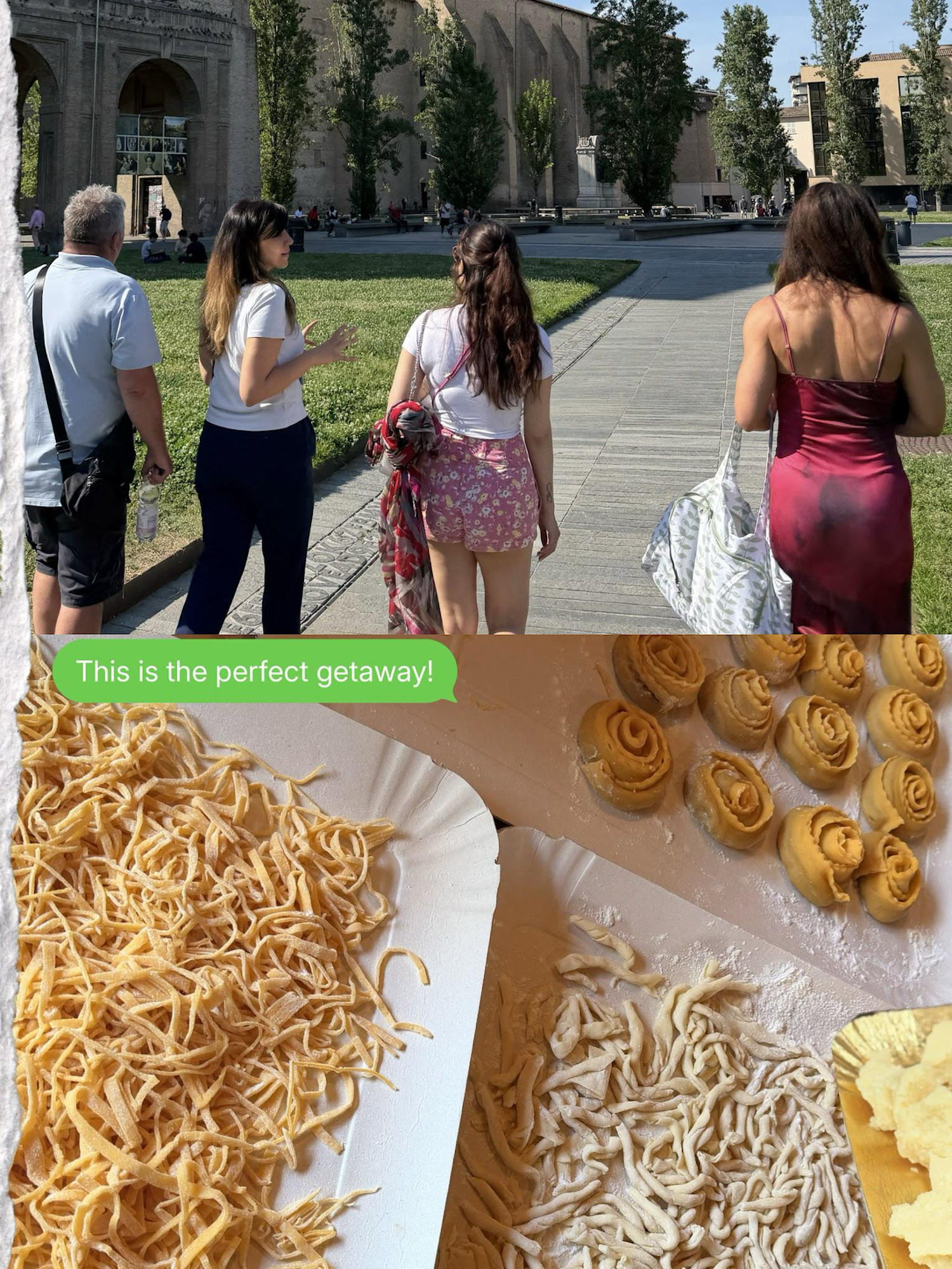
Best for aficionados of culinary wonders and culture, the trip suits all: from mindful solo trips and romantic getaways, to a group adventure. For those who have a few days to spare, 3 days will be sufficient to give you a perfect vacation but there is certainly enough to do (and taste) should you want to dedicate a week.
Emilia-Romagna’s Parma doesn’t do food casually. This is the first Italian city designated a UNESCO Creative City of Gastronomy. The land that gave us Parmigiano Reggiano, Prosciutto di Parma, and Traditional Balsamic Vinegar of Modena: three products so fiercely protected that producing them anywhere else isn’t just frowned upon, but legally impossible. A stay here isn’t a trip; it’s an education in provenance served with a heavenly amount of cheese.
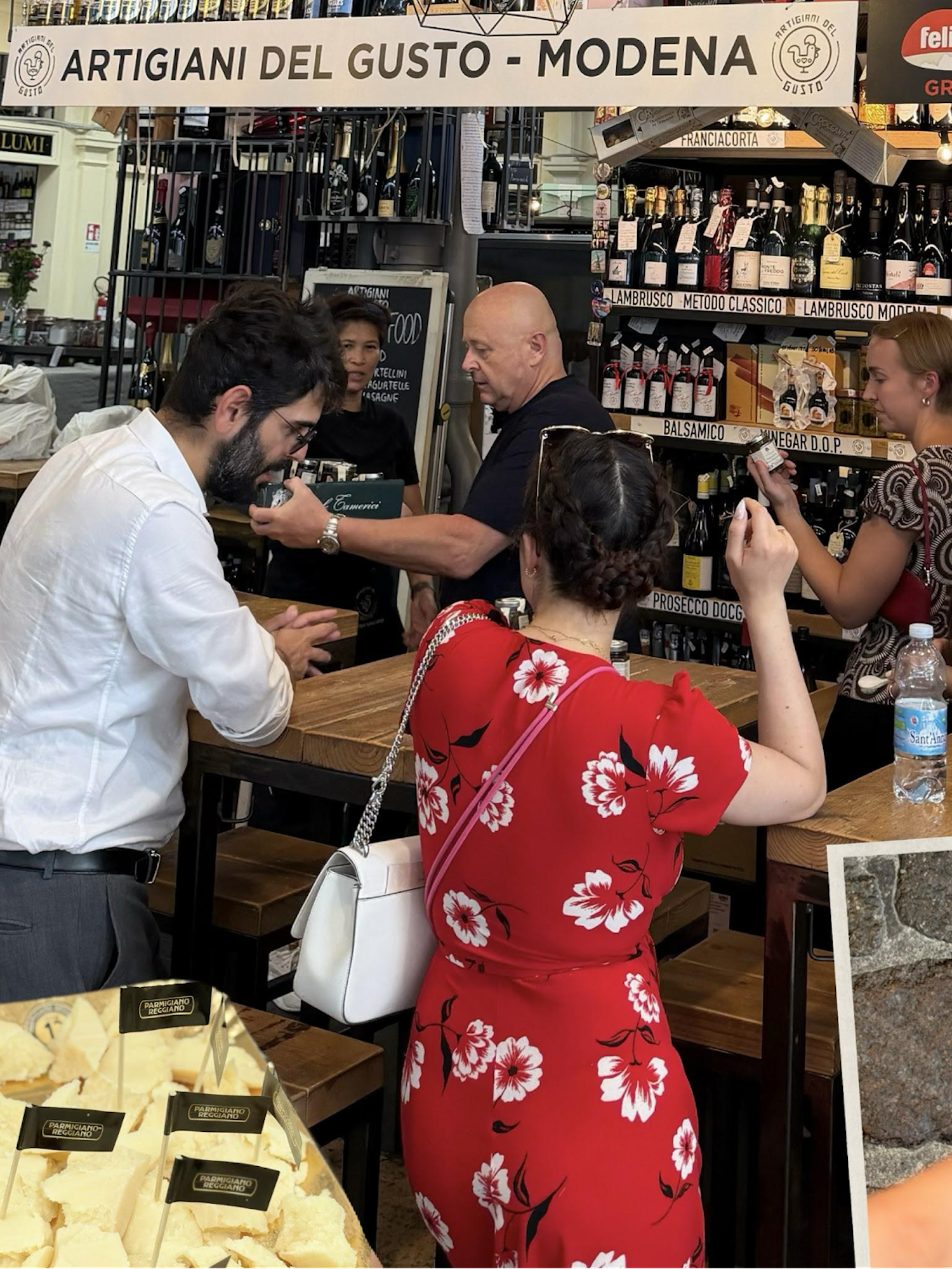
With Parma and Modena both on the itinerary, getting between the region’s culinary highlights is worth considering too. Private transfers can be a convenient way to travel between cities and spend more time enjoying the food, producers, and countryside along the way.
Day One: Parma, On Foot and Very Well Fed
Parma is smaller than Bologna, less tourist-trampled than Florence, and all the more charming for it. After dropping my bags at the Starhotel Du Parc (a modern, well-located hotel), lunch at Alfione set the tone immediately: local cured meats, fresh pasta, and Parmigiano in various ages scattered across courses like punctuation. This is the perfect starting point for a city-break to remember.
The afternoon should belong to Parma’s historic centre, as the city has as much to offer culturally as it does culinarily, all packed within a pleasingly compact radius. The natural starting point is the Piazza Duomo complex, where the Cathedral, Baptistery, and surrounding monuments sit in close proximity – a concentrated feast for the eyes that rewards an unhurried afternoon.
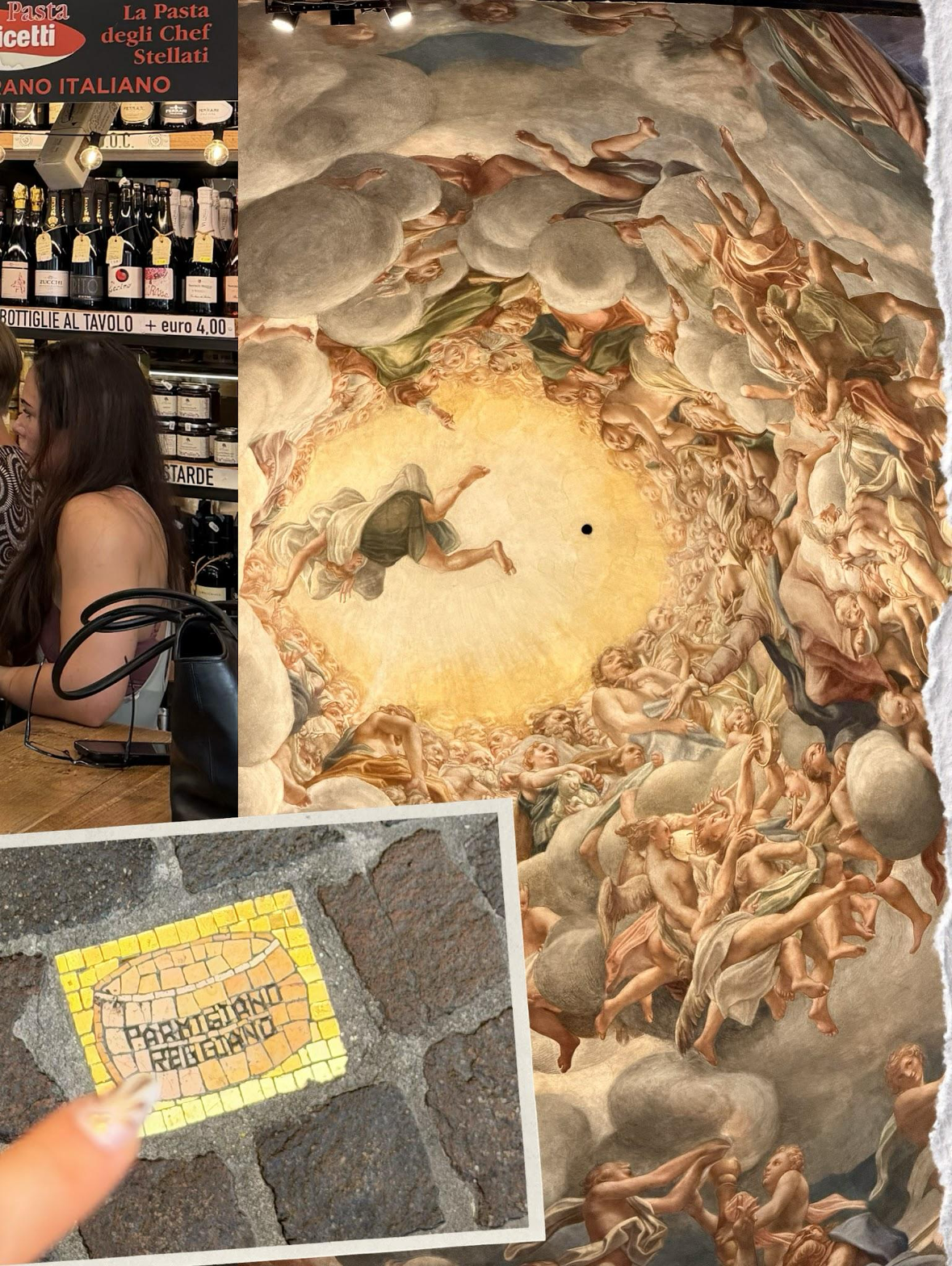
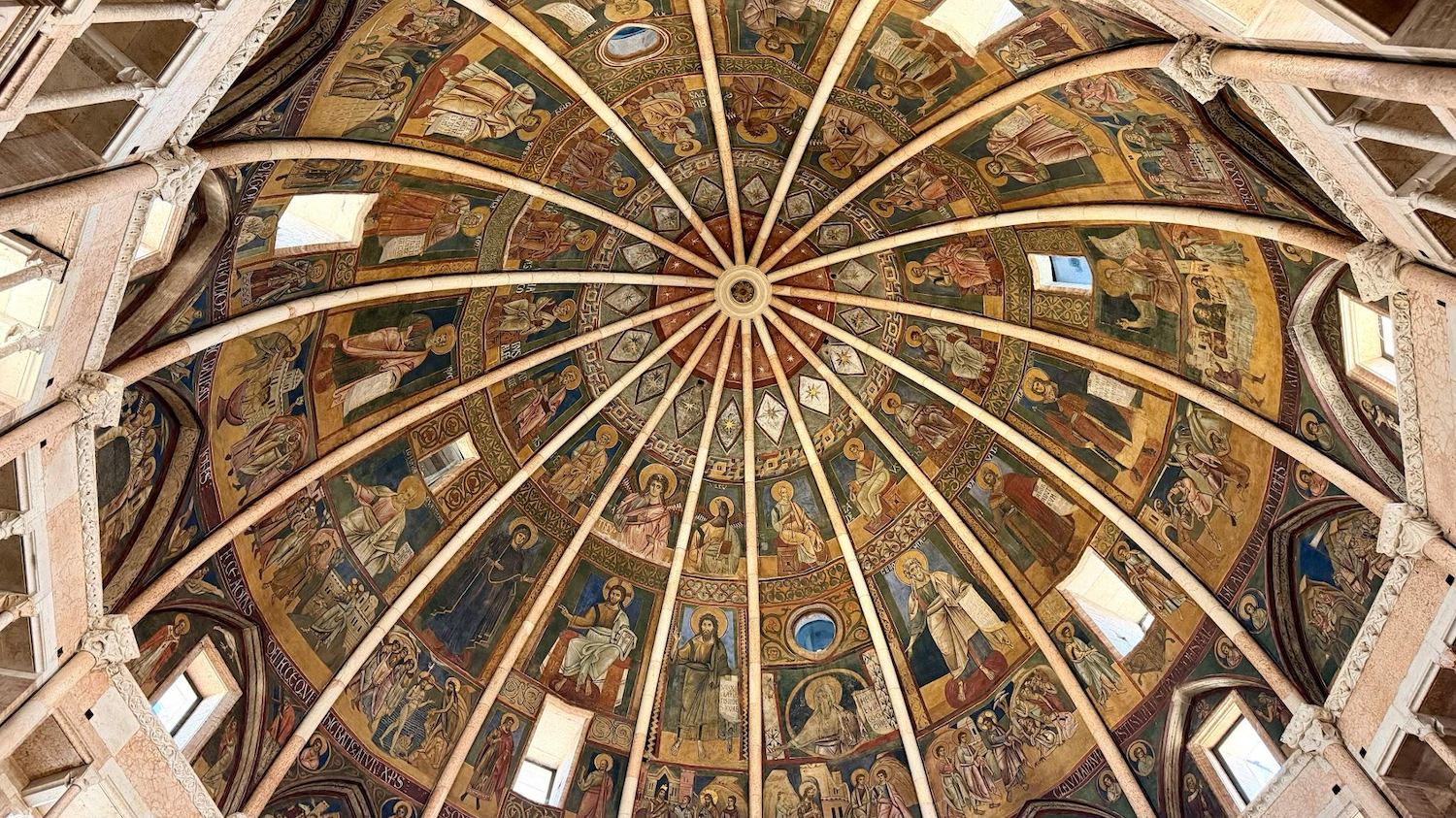
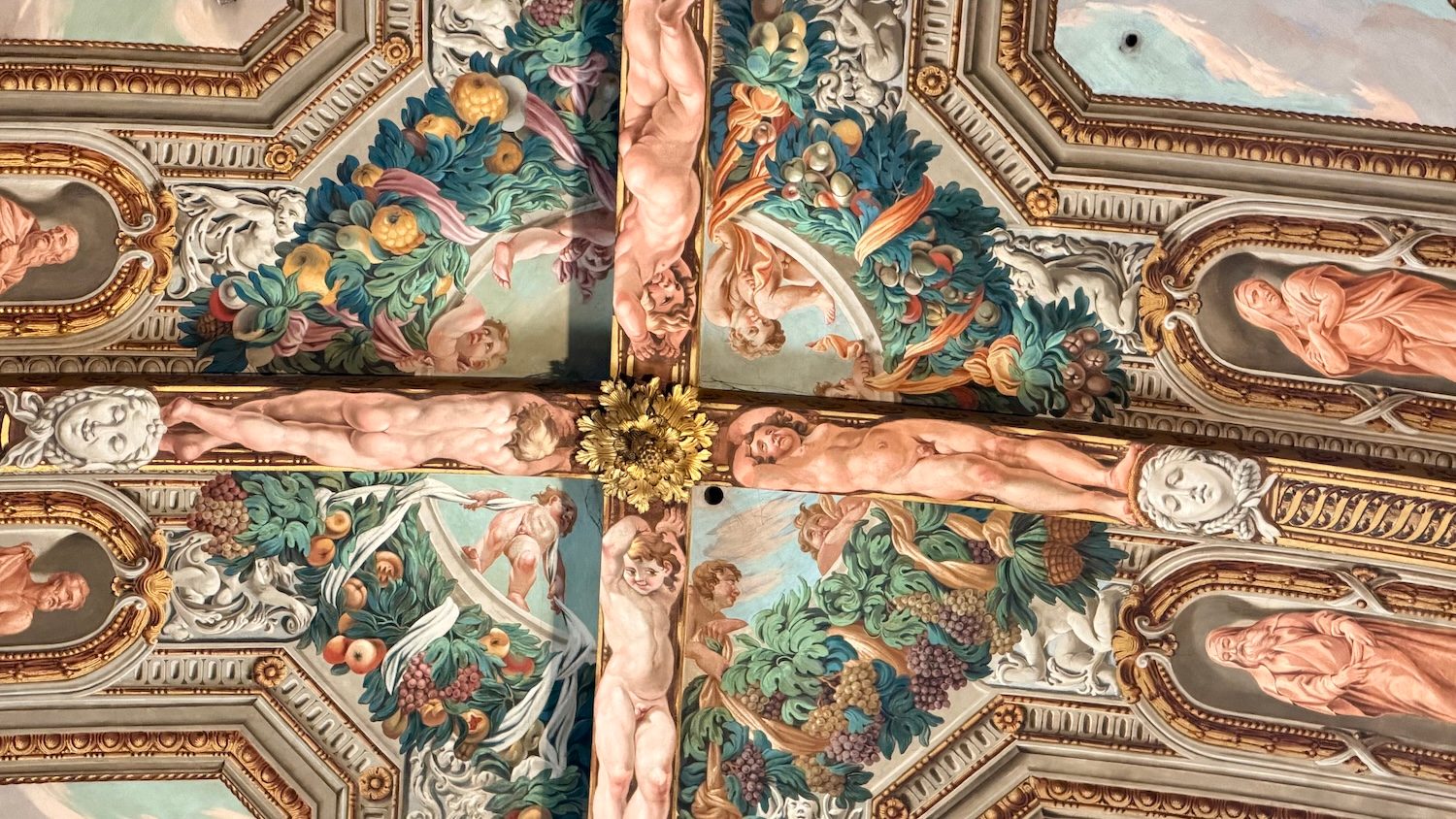
The Duomo, officially the Cattedrale di Santa Maria Assunta, is the first stop. This masterpiece that was built from 1074 is the city’s main Roman Catholic cathedral and a masterpiece of Italian Romanesque art. It is most famous for its stunning interior, highlighted by Renaissance master Antonio da Correggio’s illusionistic fresco of the Assumption of the Virgin depicting figures tumbling toward heaven in a swirling vortex of golden light. Next door, the Baptistery is an octagonal tower clad entirely in pink Verona marble, designed and sculpted by Antelami in the 12th century.
The vast Palazzo della Pilotta, a 16th-century Farnese palace, holds the extraordinary Teatro Farnese – a 3,000-seat, all-wooden baroque theatre that survived WWII bombing and feels like stepping into a Renaissance fever dream.
Between sights, the streets between Piazza Garibaldi and the Duomo are lined with food shops that double as cultural institutions. Salumeria Garibaldi stocks the full range of DOP products with the seriousness of a wine cellar. If you pass anywhere serving torta fritta – golden fried-dough pillows served with paper-thin prosciutto – stop immediately. It’s Parma’s most beloved street food. And, a gelato pit-stop at Ciacco is highly recommended.
After a day of complete cultural immersion, I suggest you end the day with a dinner at Croce di Malta: a neighbourhood spot with honest Emilian cooking and the kind of atmosphere where locals linger past the last course. The tortelli d’erbetta alone should justify the flight.
Day Two: Where the Magic Happens
Think of Parmigiano as the champagne of cheese: produced only in a controlled zone, governed by standardised procedures and local law. That means, any cheese that isn’t produced in the provinces of Parma, Reggio Emilia, Modena, Bologna, and Mantua is not Parmigiano – making this trip your perfect chance to see the home of the golden wheel.
An early alarm is non-negotiable. Parmigiano Reggiano production begins at dawn, and visitors have the chance see the process – milk to mould – at a dairy tour of their choosing. For me, this was Latteria Santo Stefano. Inside, it was warm, humid, and smelled extraordinary – like standing inside a giant cup of hot milk. Which, one could say, you effectively are.
Every wheel begins with 500 litres of milk, heated to 50°C in copper-lined vats before rennet triggers coagulation. The cheese was invented not as a luxury but as a solution to preserve vast quantities of milk that would otherwise spoil. Genius born of pragmatism; the Italian way. Production happens once daily. The skimmed fat feeds pigs destined for Prosciutto di Parma or is churned into butter. Nothing is wasted; every byproduct likely has its own PDO certification.
You get to see every stage of the process: moulding, resting, rind stamping, quality checks, and aging… The thread that runs through it all is expertise and dedication to tradition and excellence. Each wheel is checked for air bubbles and any that houses multiple of these gets disowned, losing its rind and becoming “simple cheese”.
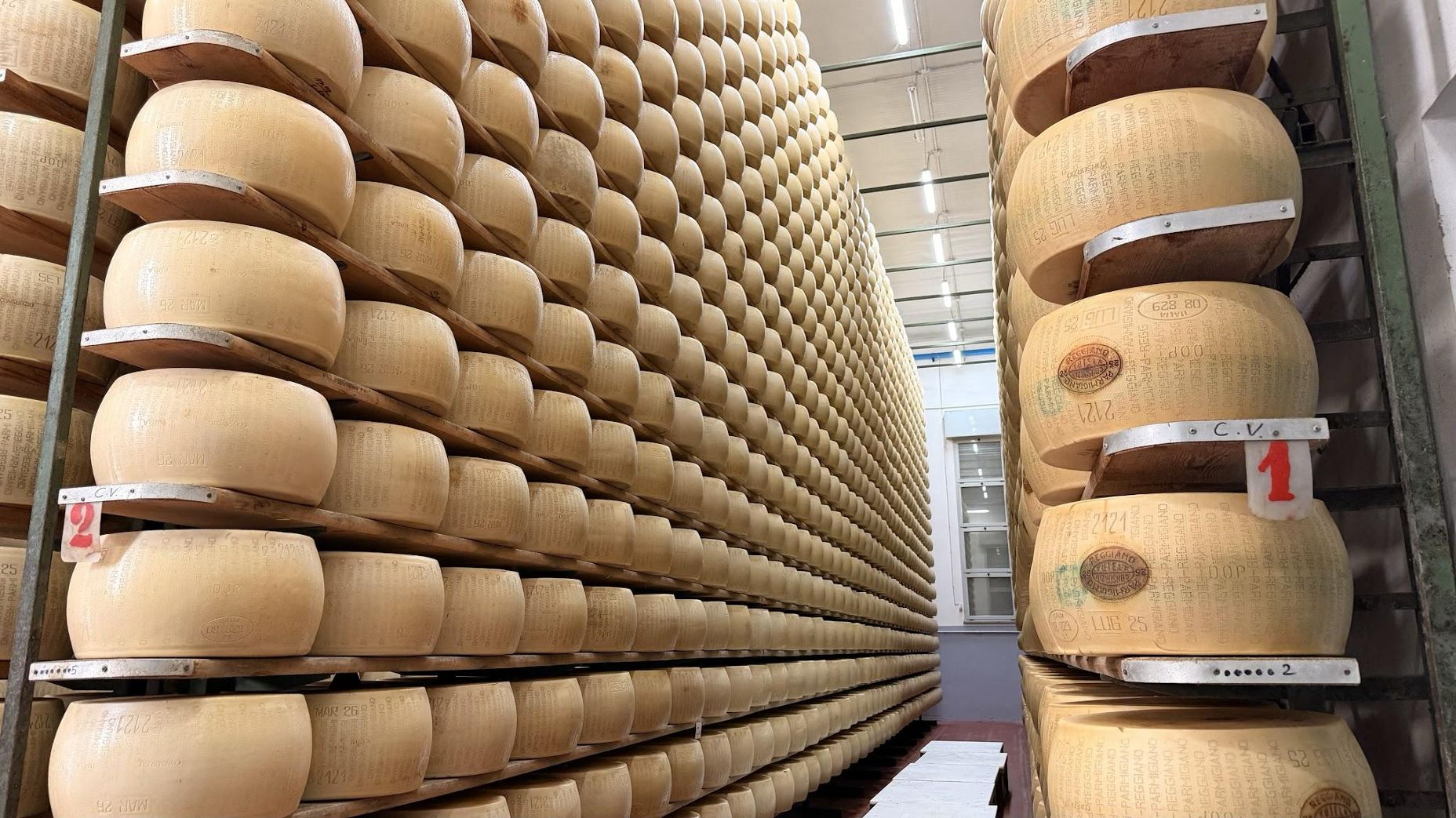
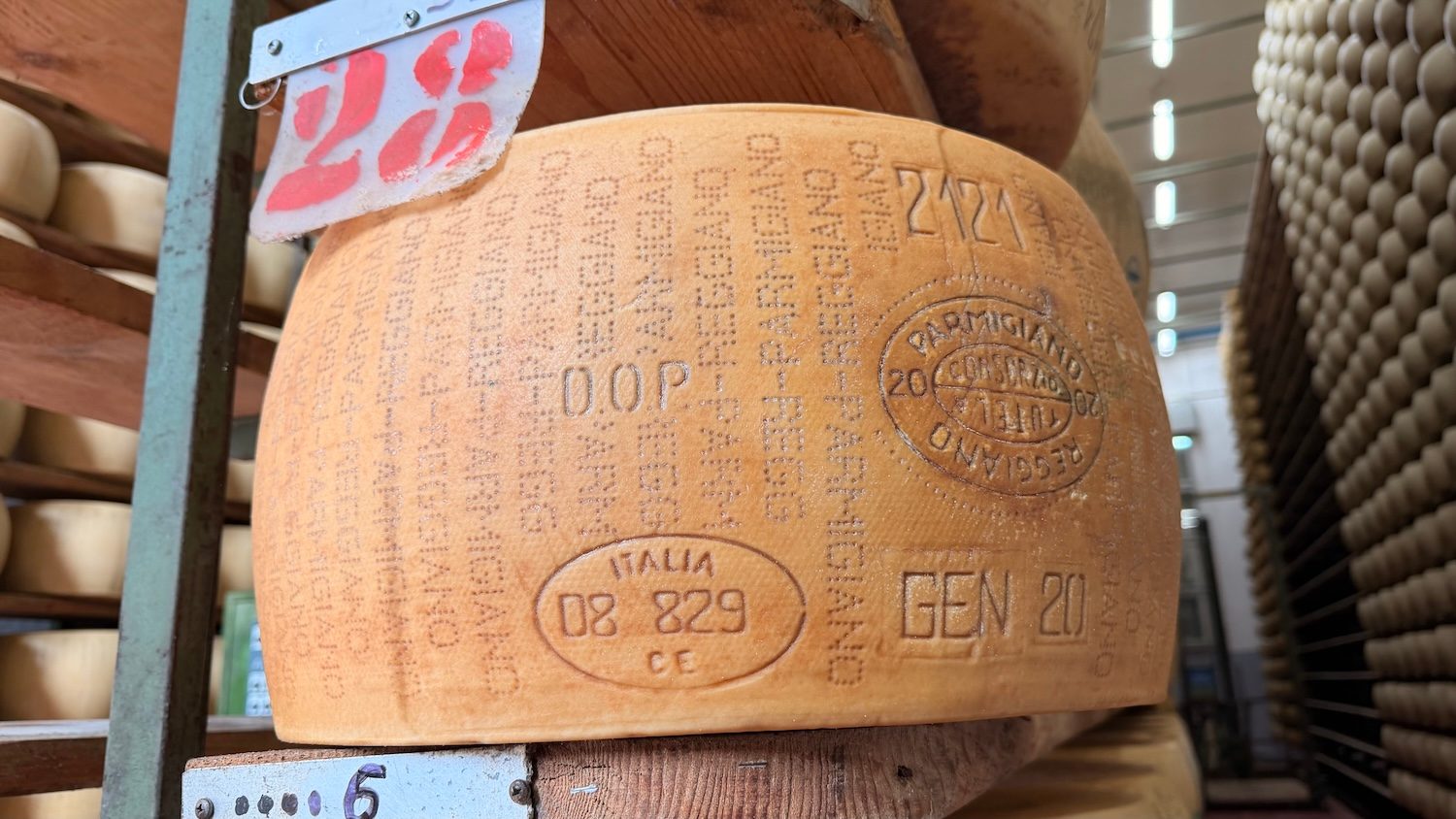
At the end of a tour, your attendance is rewarded with a tasting session and a chance to compare the flavour profiles of Parmigiano at different aging stages. At 12 months: it’s pale, soft, almost sweet – gentle enough for anyone who thinks they don’t like Parmesan. At 24 months: crunchier, saltier, complex. This is when the famous crystals form – natural amino acid deposits, tiny crunchy jewels signalling proper ageing. Half of all Parmigiano Reggiano is exported. Given what I tasted, I understand Italy’s reluctance to share.
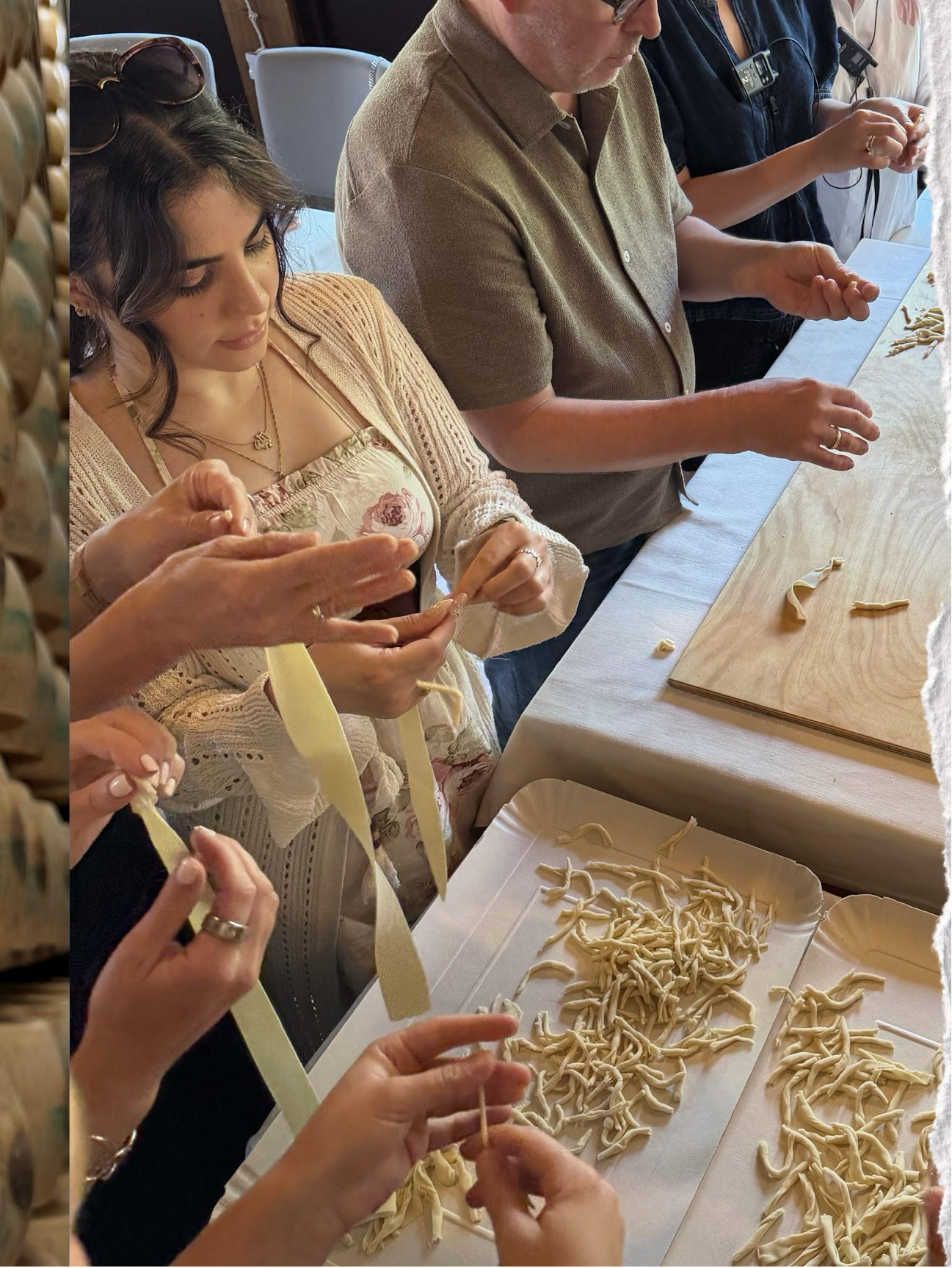
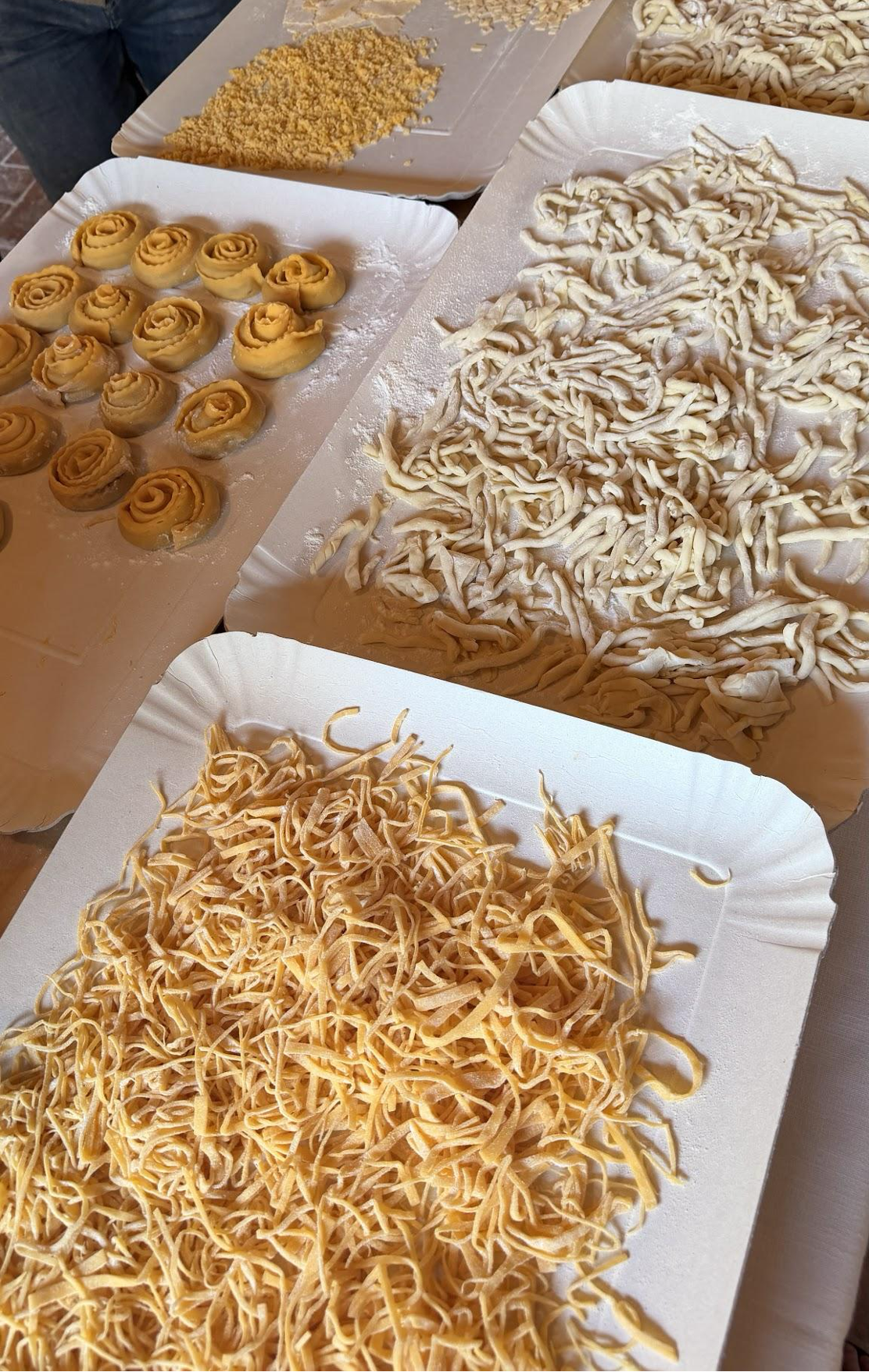
The morning leaves you educated, well-fed, and – let’s be honest – in need of movement. After a morning of learning and cheese-eating, I recommend a pasta-making class. There are numerous cooking classes available in central Parma, with varying costs, so picking the one that suits your budget will be easy.
Once the pasta is made and the apron is off, Parco Ducale offers the perfect antidote to all that richness. The city’s primary green lung, filled with neoclassical statues, monumental trees, and long avenues, is the kind of place where you walk slowly and take the peace in.
For dinner, Cortex Bistrot was the contemporary and playful spot I was looking for – symbolizing the living, evolving city Parma is.
Day Three: Liquid Gold in Modena
Day three will fittingly start with the exploration of traditional balsamic vinegar of Modena – another regional gem that can only be produced within Modena or Reggio Emilia to meet the certification laws.
Acetaia di Giorgio is not a factory. It’s a family home – lived in since 1860 and with an attic full of barrels. Traditional Balsamic Vinegar (the real kind, with PDO status) is a world away from the supermarket bottle. Only local grapes. Only local wood. A minimum of 12 years of maturation. The batteria – ageing barrels of cherry, juniper, ash, mulberry, oak, or chestnut – are never replaced. And, a romantic fun fact that I love is: historically, a batteria was a dowry gift to the groom.
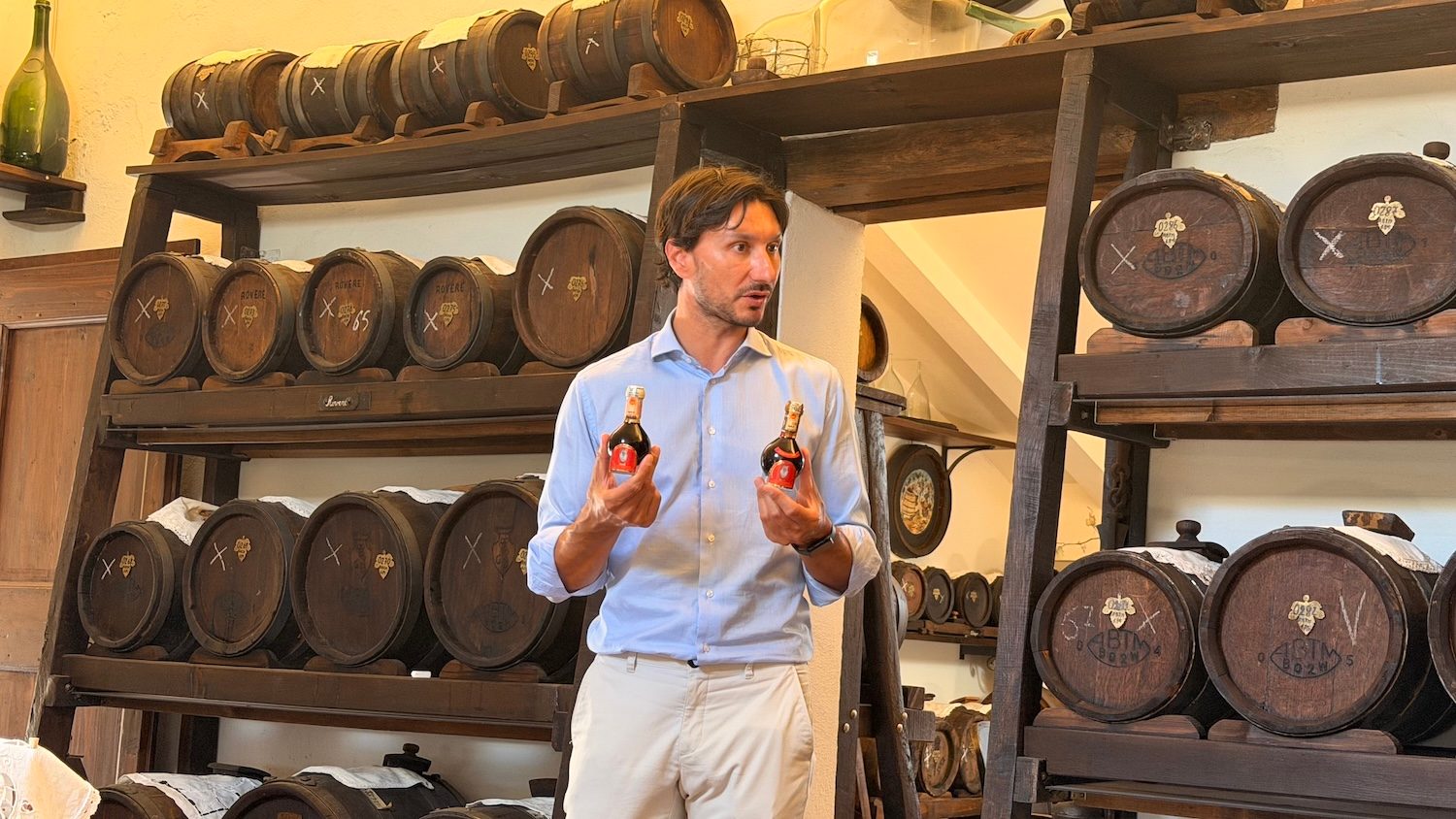
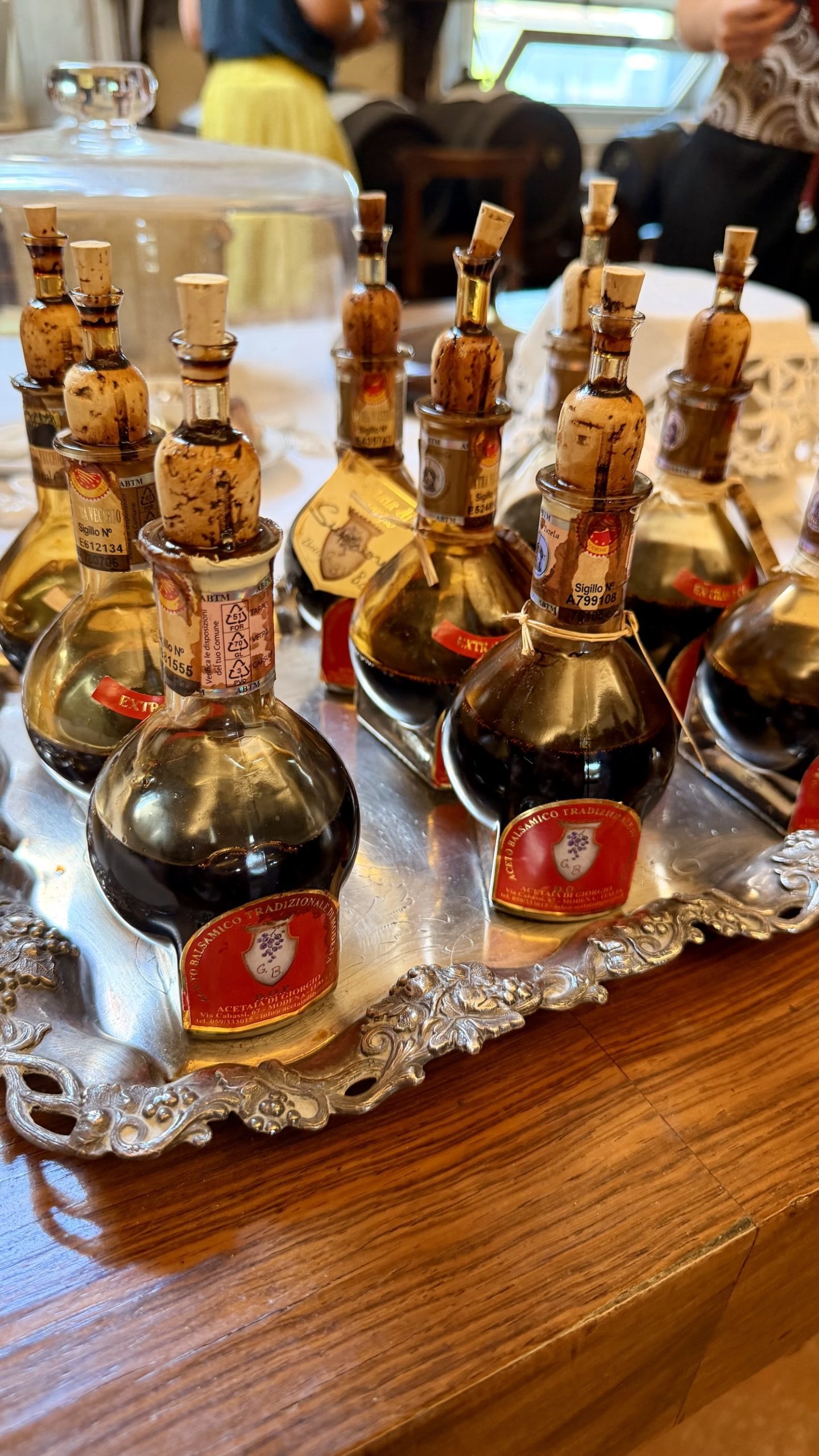
The barrels sit open-topped, covered with cloth, allowing water to evaporate naturally over years – no additives, just time building viscosity. The family processes 400 litres per year across their quaint location, and the tour sees the family walk you through the production process as you taste-test different versions. Another thing that makes me recommend this spot is the framed letter one spots amid the barrels of vinegar: a thoughtful thank you from former US president Barack Obama and his first lady.
At this point in the trip you might wonder why our supermarket shelves are lined with illegitimate parmesan and balsamic vinegar products. Unlike what France did with champagne, Italy never purchased exclusive naming rights to its products. So, technically, anyone can call their product “Balsamic Vinegar of Modena” but it only meets the standard if it has the DOP (Denominazione di Origine Protetta aka Protected Designation of Origin) mark. It is a strict legal certification granted by the European Union to protect authentic, traditionally made regional foods.
With the getaway coming to a close, I’d recommend a final Italian lunch – at Hosteria Giusti in Modena, perhaps? It’s one of the city’s most storied restaurants: intimate and elegant. The ultra-exclusive, historic eatery is famous for having a limited number of tables tucked behind Europe’s oldest delicatessen, the Salumeria Giusti. It is globally renowned for serving exceptional, traditional Emilian cuisine in a highly intimate setting and only opens its doors for lunch.
Our final activity will be Mercato Storico Albinelli: a stunning, covered 1930s Art Nouveau marketplace just a short walk away. It is where locals and top chefs source Modena’s finest ingredients. The marketplace is open from Monday to Saturday, typically until mid-afternoon on weekdays, with extended hours on Saturday evenings.
Emilia-Romagna is not a destination that asks much of you. It doesn’t demand a packed itinerary or a guidebook held at arm’s length. It asks only that you show up hungry – for food, yes, but also for the kind of travel that leaves a mark. You will board the flight home with a wedge of aged Parmigiano wrapped in your luggage, a small bottle of delicious balsamic, and a nagging suspicion that everything you’ve been eating at home has been a polite approximation.
Word by Beril Naz Hassan