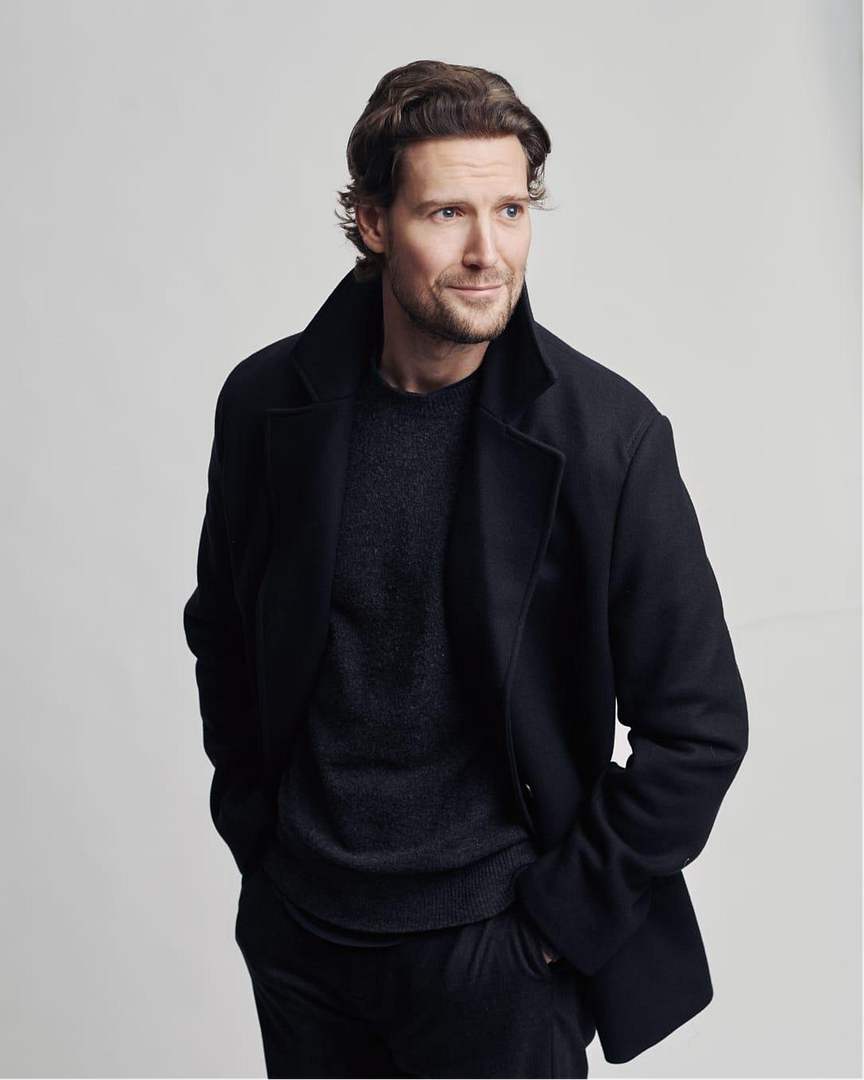
Every generation of cinema produces actors who seem perfectly suited to their moment. But occasionally, a performer appears who feels like they belong to several eras at once, someone who carries the unmistakable magnetism of classic Hollywood while moving with the intensity and complexity audiences expect from modern performers.
Alexander Johnson is increasingly being spoken about in those terms.
Over the past year, the actor has quietly emerged in films connected to some of the world’s most influential festivals, including projects orbiting Cannes and Venice. While his appearances have not yet made him a household name, they have placed him firmly on the radar of filmmakers and producers who recognize the kind of screen presence that is becoming increasingly rare: the true leading man.
Those who have worked with Johnson often point to something difficult to quantify but immediately recognizable when you see it; presence. The ability to command a frame without seeming to try. The kind of charisma that once defined the great stars of Hollywood’s golden age.
In Johnson’s case, the comparisons come naturally. There is the easy confidence and understated charm that recall someone like Cary Grant, combined with the physicality and edge of contemporary actors such as Alexander Skarsgård. It is a blend of elegance and intensity that feels both classic and modern.
In an era when movie stars are often manufactured through marketing campaigns and social media followings, Johnson’s emergence feels refreshingly organic. His career has developed not through overnight fame, but through years of preparation, patience, and an unwavering fascination with cinema itself.
“I’ve always loved films,” Johnson says. “I was a total movie geek growing up.”
His obsession began early and in the most practical way possible. “The first thing I learned to do as a kid was operate the VHS machine so I could put films on myself,” he recalls. Watching movies quickly became more than entertainment, it became ritual.
“To this day I still watch a movie a day,” he says.
That habit has shaped how he approaches acting. Johnson speaks about film the way musicians talk about music or painters talk about light, as something that requires constant exposure and study.
“I think you absorb things without realizing it,” he says. “You watch great performances and great films, and it builds an instinct for storytelling.”
His path into acting itself was less calculated than one might expect. Johnson originally attended a school his sister had once gone to, but by the time he enrolled the institution had evolved into a performing arts-focused environment. At the time, he was still finding his confidence.
“I was a quiet kid,” he says. “I hadn’t really grown into myself yet.”
The atmosphere of the school changed that. Being surrounded by performers opened up a new way of expressing himself. “Being around performing arts opened a door,” Johnson explains. “It made me realize that storytelling could be something you actually do, not just watch.”
But life outside school was already teaching him lessons about resilience.
“My dad’s career went up and down like a yo-yo,” Johnson recalls. “We went from doing really well to losing the house.”
Experiences like that have a way of clarifying reality early. Johnson describes the period without dramatics, but its impact is clear.
“You learn very quickly that nothing is guaranteed,” he says. “You learn to adapt and keep moving forward.”
That outlook would become one of the defining elements of his career. Breaking into film is notoriously unpredictable, and Johnson did not experience the kind of early breakthrough many actors imagine.
“It’s a very hard industry to break into,” he says. “I didn’t get my opportunity at 22. It came later.”
During those years, he worked relentlessly to support himself while continuing to pursue acting. His jobs ranged across industries, including time spent working as a stockbroker when he was younger.
“I had bills to pay, so I grafted,” he says matter-of-factly.
Those experiences, he believes, ultimately strengthened him as an actor.
“Working in environments like that teaches you discipline and pressure,” Johnson explains. “You learn how to stay calm when things are intense, and that translates directly onto a film set.”
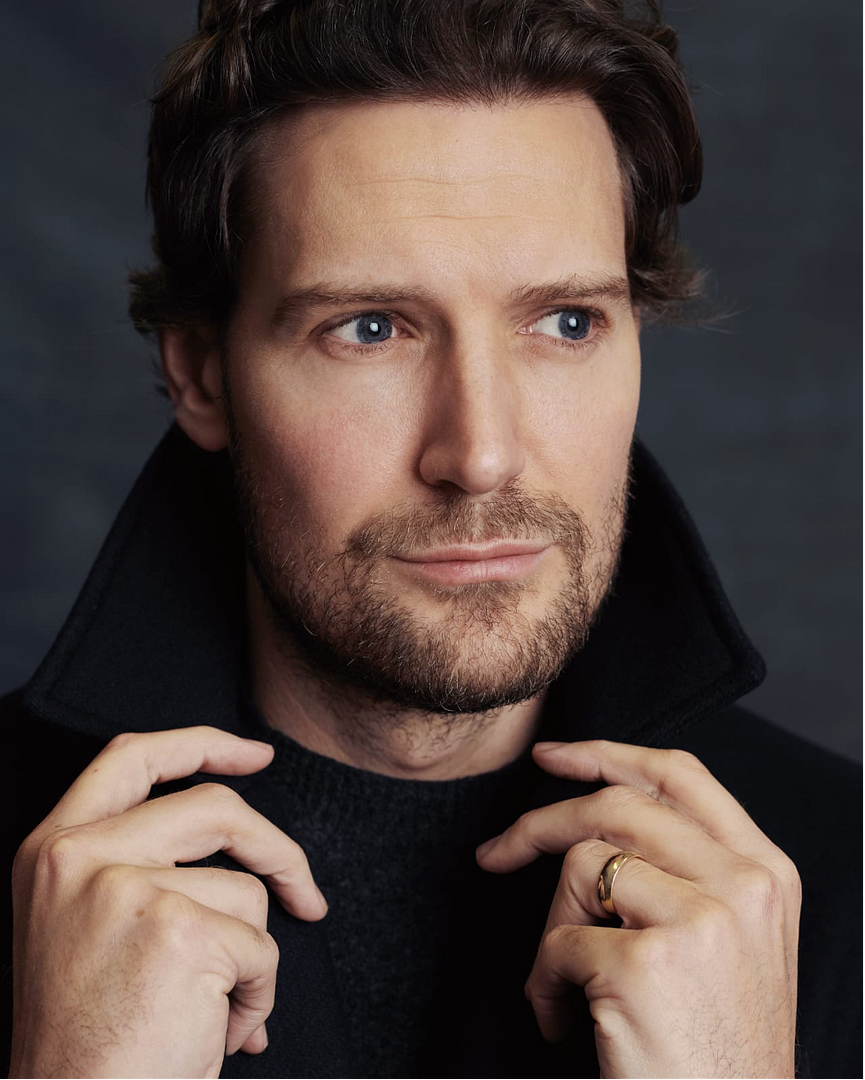
When opportunities finally began to appear in film, Johnson felt ready for them. His recent work has included projects such as The Chronology of Water, Wizard of the Kremlin, and a more significant role in Albert Serra’s Out of This World. For Johnson, the value of these projects lies not only in the roles themselves, but in the people surrounding them.
“The biggest learning is being around great actors and great crews,” he says. “It raises your level.”
On set, Johnson approaches the process with the focus of someone who has waited for the opportunity.
“Practical experience like that is priceless,” he explains. “Every day you’re learning something.”
His ambitions are not limited to acting alone. Over the past several years, Johnson has increasingly begun developing projects of his own.
“I’ve always wanted to make films,” he says. “But for a long time survival had to come first.”
Eventually he realized that building the right partnerships was the key to making that transition.
“You find your flow through collaboration,” he says. “It’s about finding people who share the same ambition and work ethic.”
That drive has manifested in unexpected ways outside the film industry as well. Johnson is also the founder of Johnson Reserve Whisky, a passion project that unexpectedly led to a Guinness World Record for producing the greatest variety of whisky flavours.
“I wasn’t chasing a record,” he says with a shrug. “I just wanted to create a great product.”
He tends to downplay achievements that others might emphasize.
“A lot of what people call entrepreneurship is really just graft,” he says. “Hard work over time.”
For the past seven to eight years, Johnson has also served as a visiting lecturer at Oxford University, teaching leadership and entrepreneurship. The role reflects another side of his personality, a willingness to discuss both success and failure openly.
“Oxford didn’t take me on because I was some hotshot businessman,” he says. “They took me on because I’d be honest about the mistakes and setbacks.”
That same composure has carried over into moments outside professional life. After intervening to protect a woman during a real-life theft incident, Johnson later received a mention in the House of Lords for bravery.
“Your fight or flight kicks in,” he says simply. “I realized I’m a fighter.”
The quality is visible in his work as well. Johnson gravitates toward characters who possess calm authority — people who remain steady under pressure.
“I’m drawn to grounded characters,” he says. “People with competence and composure.”
If the past year has quietly introduced Alexander Johnson to the film industry, the next may introduce him to a much wider audience. Producers and directors are already taking note of his unique combination of classic star quality and modern intensity.
In a time when the concept of the traditional movie star sometimes feels like a relic of the past, Johnson represents something rare: a performer who seems equally comfortable inhabiting the elegance of old Hollywood and the complexity of contemporary storytelling.
For Johnson, however, the focus remains simple.
“The dream is to do this for decades,” he says. “To keep getting better with every film.”
If that ambition holds true, audiences may soon discover what filmmakers are already beginning to see, that Alexander Johnson is not simply another actor arriving in the industry, but a new kind of leading man, one who brings the spirit of classic cinema into a modern world.