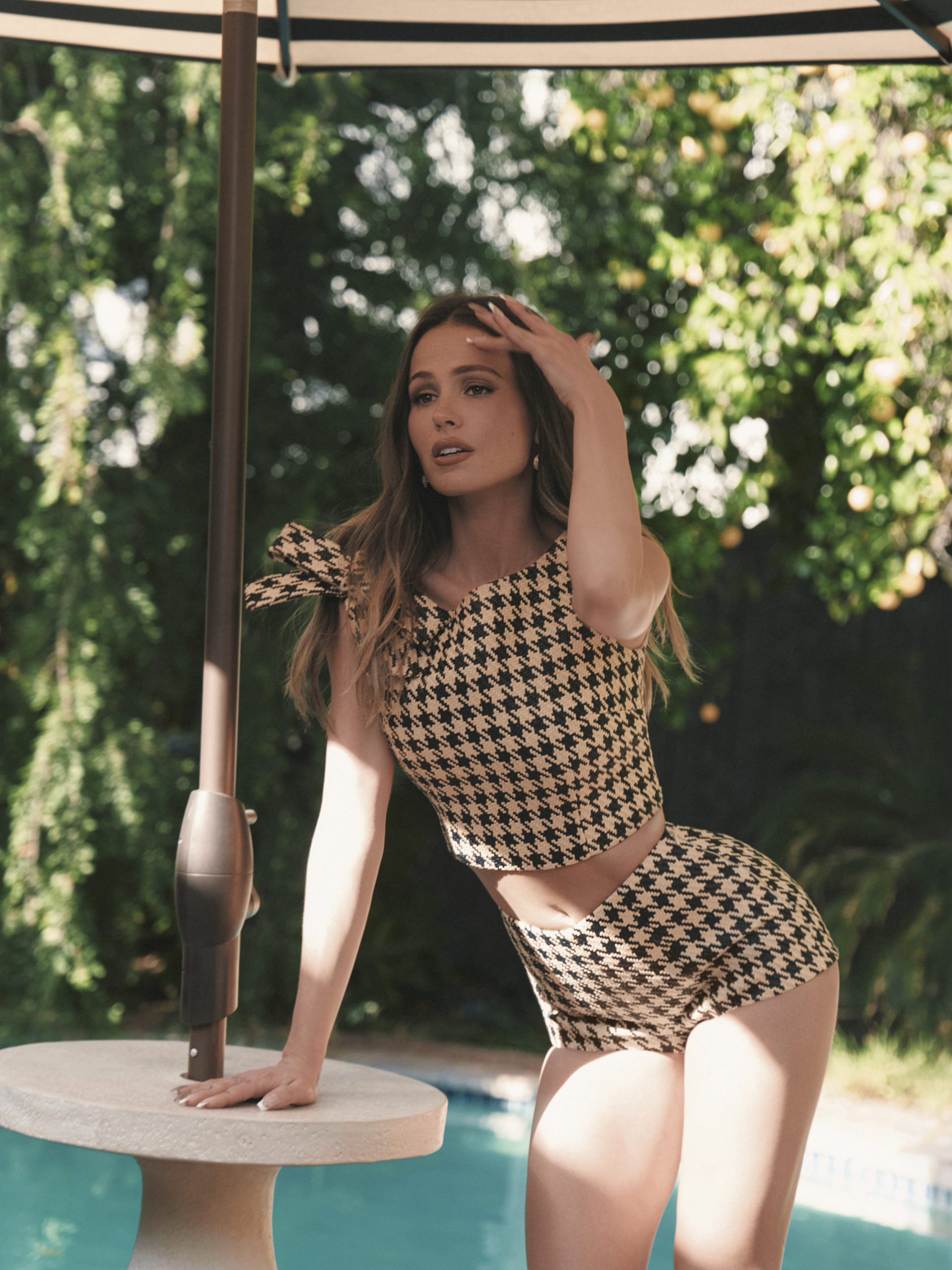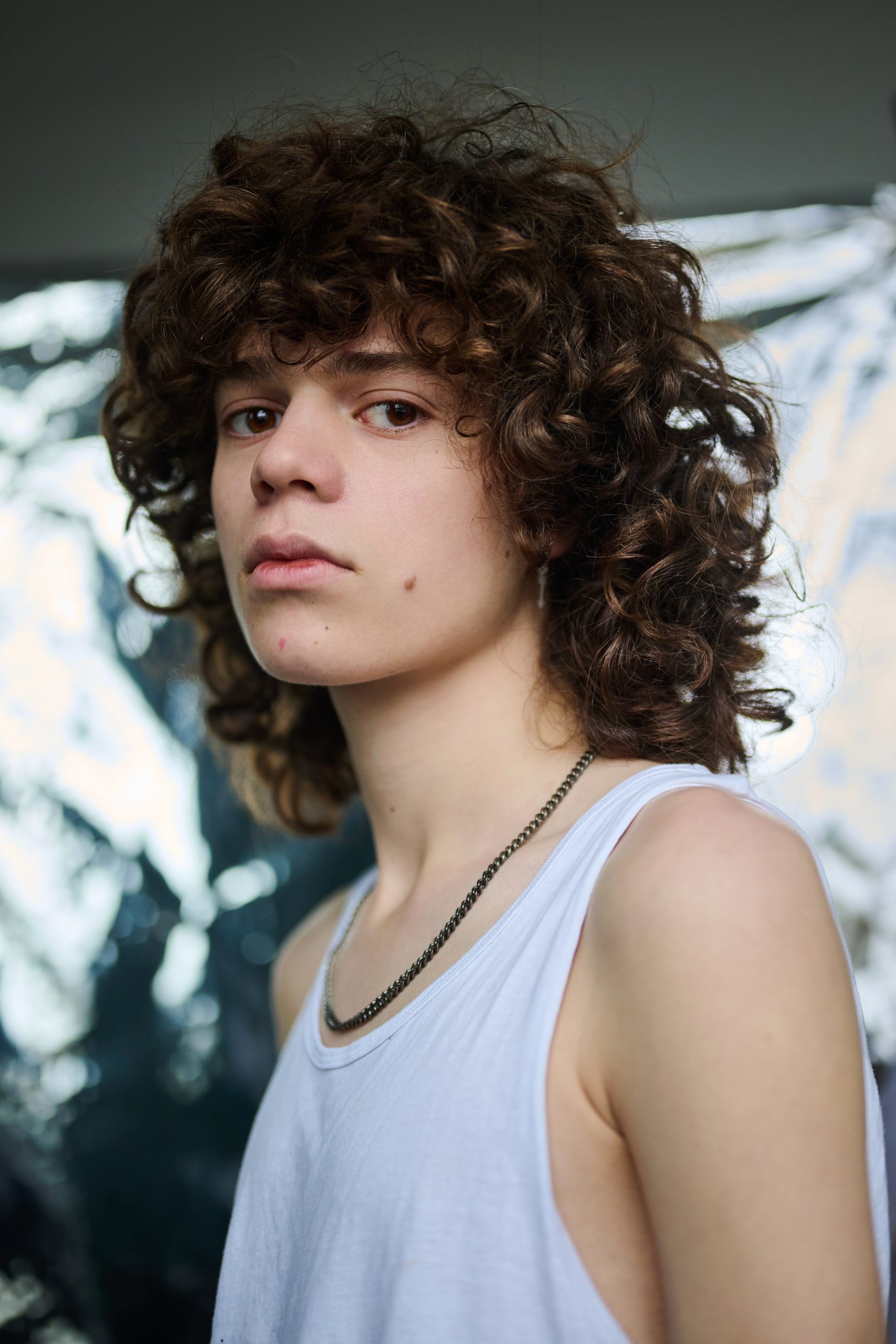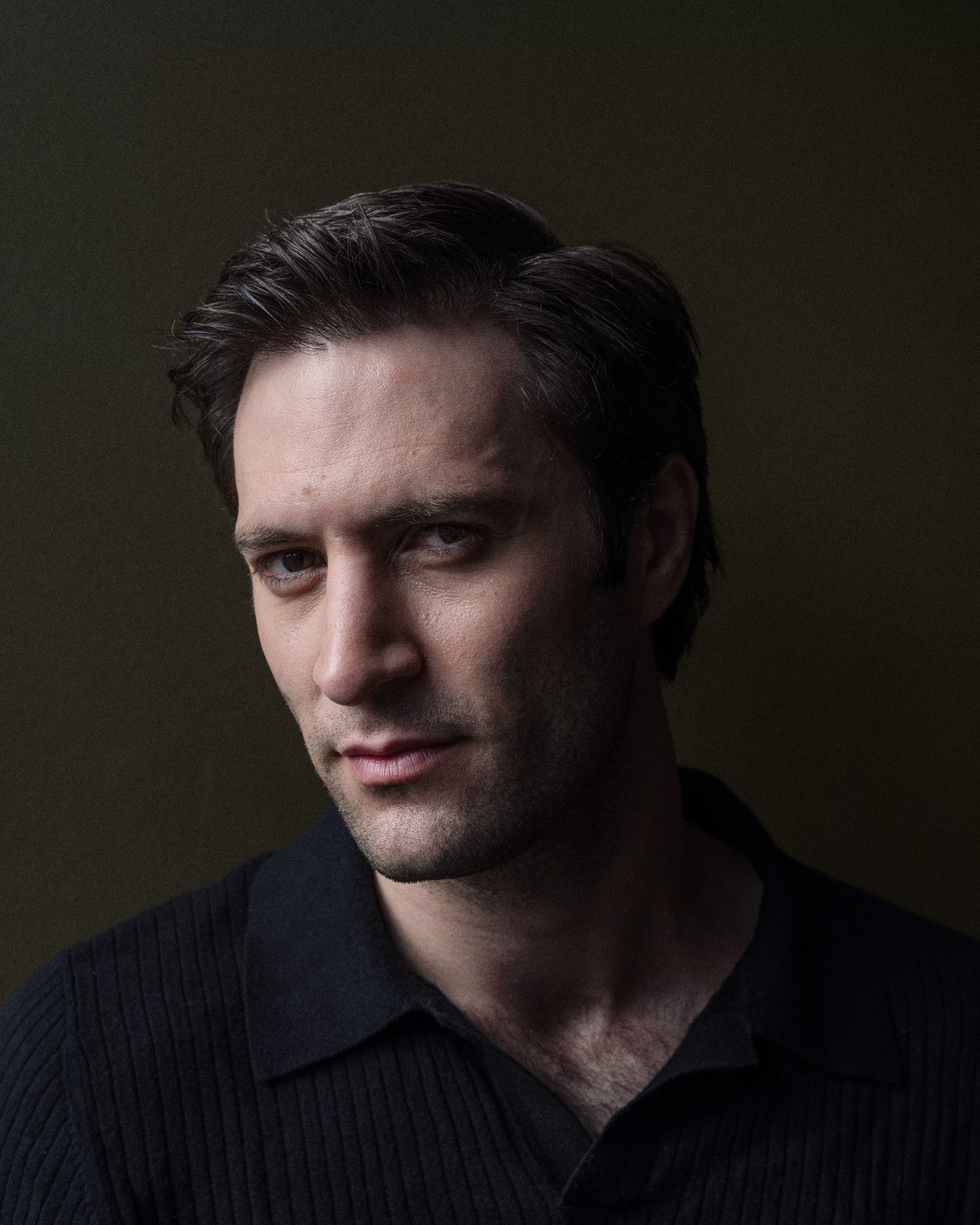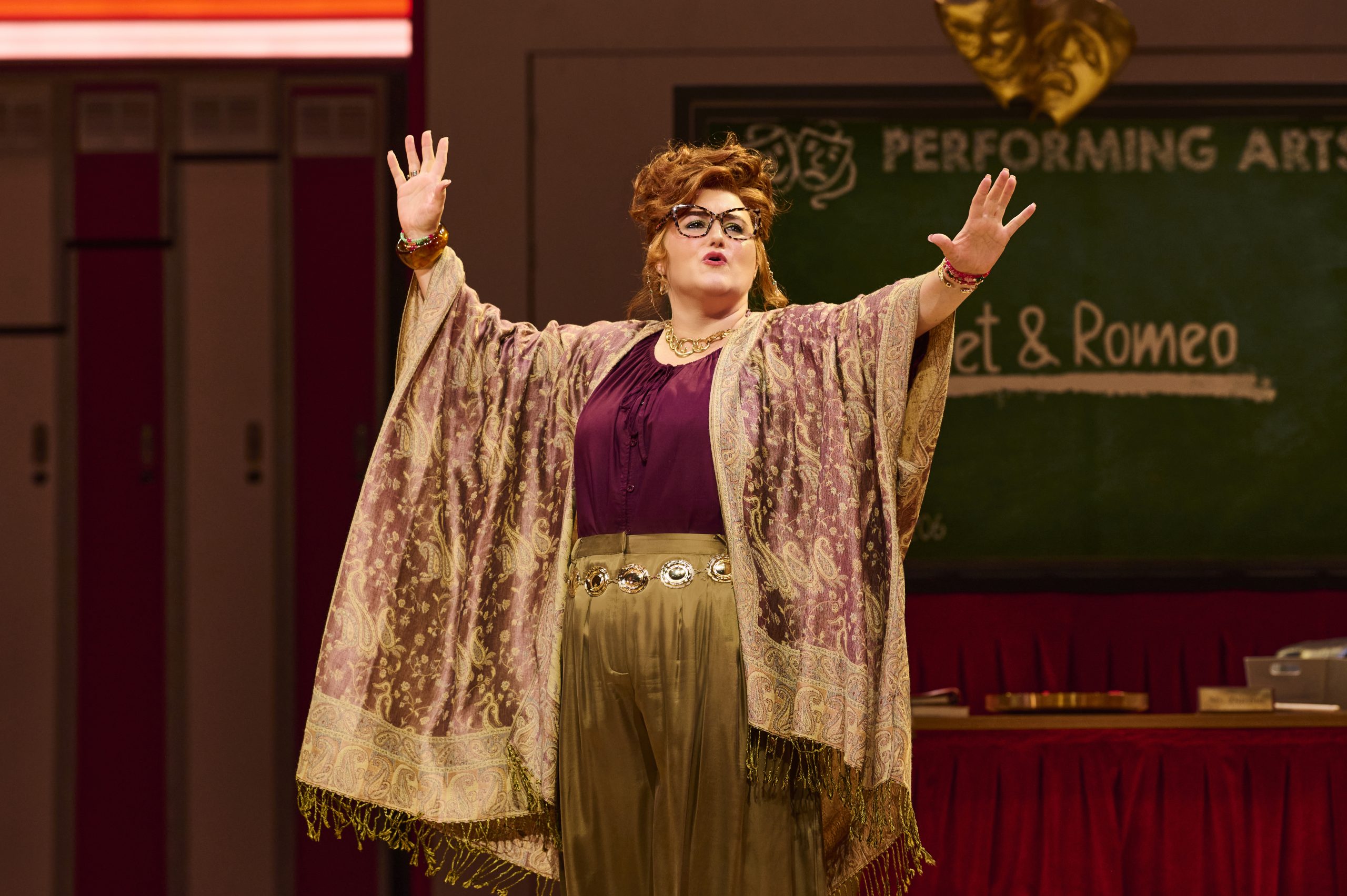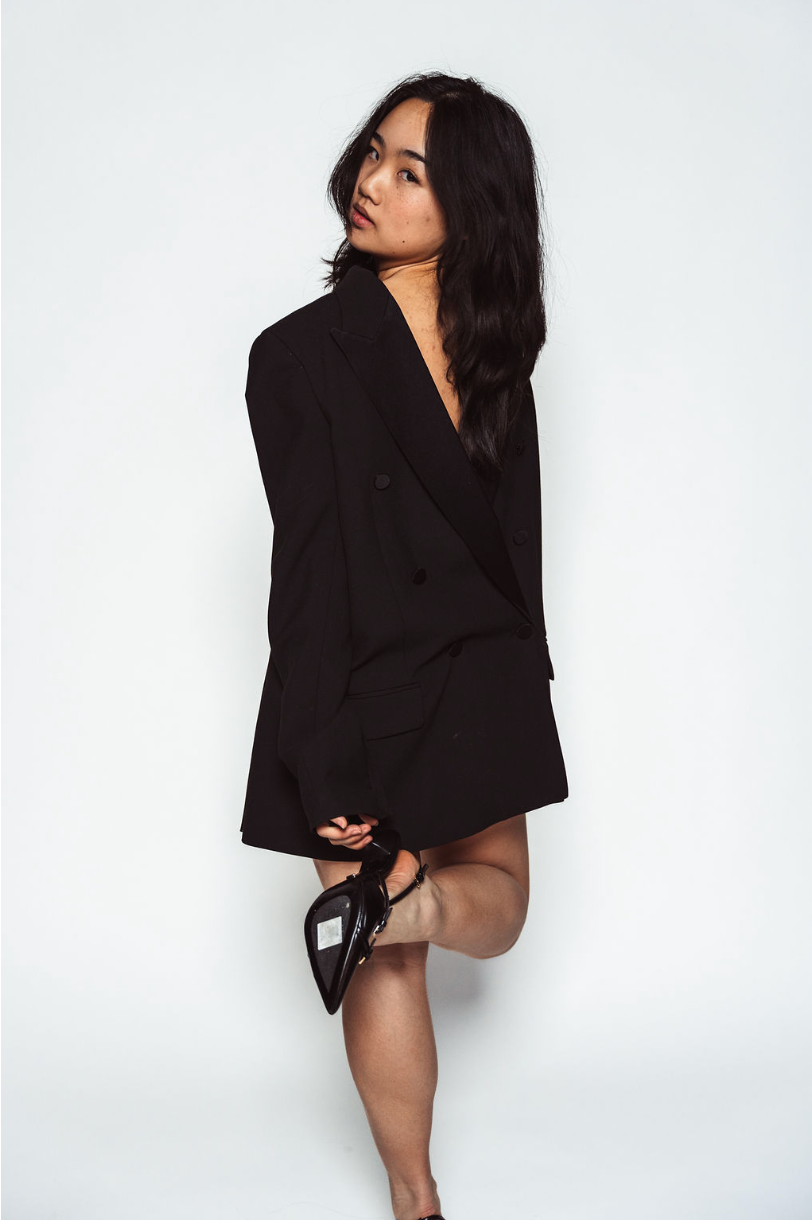
Along with the return of the iconic, star-studded cast, The Devil Wears Prada 2 was in need of fresh actors who could bring new life to the addictively cutthroat world of fashion. Enter: Helen J Shen.
Helen was a couple hundred performances into their Broadway run of Tony Award-winning show Maybe Happy Ending – where she achieved a childhood dream of originating the lead role, Claire – when director David Frankel came to visit. It was the day after their callback, which came after many months of waiting after sending in a self-tape. In confirming she had gotten the role of Jin, Andy Sachs’ assistant, Helen was thrust into a whirlwind summer of continuing her Broadway run while filming their on-camera debut. Sharing scenes and having shared a childhood acting teacher with Anne Hathaway, what a debut it is.
Speaking from her New York home, Helen said if she were in The Devil Wears Prada universe herself she would love to “touch clothes for a living” and be a stylist and cataloguer. Her own style gravitates towards something grungier and edgier, with harder materials and different silhouettes, to “offset her own disposition”, as she puts it. Her focus, dedication and joy as she speaks is captivating. “I have so much to learn and I’m hungry to learn it,” she said. With incredible projects behind and exciting work ahead – we’re looking at vampire comedy Eternally Yours – it’s no wonder Helen is ready to devour the big screen.
In conversation with 1883 Magazine, Helen J Shen discusses The Devil Wears Prada 2, the spontaneity of a live audience, the ‘all-in’ creative approach to film, and giving herself permission to keep dreaming.
It’s so exciting that you’re in The Devil Wears Prada 2! Congratulations. How was your experience being part of the sequel of such an iconic film?
It was so much fun because I loved the first movie so much. And I think so many people of my generation love this movie and have grown up with this movie. So to be a new character in this world that I’ve loved so much was really exciting.
I would go into work, and Anne Hathaway and Meryl Streep and Stanley Tucci were all back in their costumes and their energies and dynamics. So it just felt like I had a front row seat to watch them reunite, and then to add my own fresh energy into the space was really quite exciting.
What was the audition process like?
I think that the beginning part felt quite sparse. I sent in one self-tape audition, and then I didn’t hear back for many months. It all happened that then out of the blue, the casting asked me to hop on a Zoom with the director, David [Frankel]. And I had one call back with him, said the scene with him once, and he was like, ‘Okay, that was great’. And then I didn’t hear anything, which happens often in an actor’s life where you’re like, ‘I can’t read too much into whether or not I get a note’ or anything else.
And then I think it was the next day, I was doing Maybe Happy Ending, the Broadway show at the time. And David came to see the show. And he sort of alluded to the fact that I got the job then. But again, I was still trying to manage my expectations and not read too much into it. And yeah, he basically was like, ‘No, if I’m not being clear, you got the job’. Before I get too excited about anything, I like to always have the offer in the e-mail before I start planning anything fun.
But that was a really exciting time because then I stayed doing the show that whole summer that I was filming The Devil Wears Prada. I was doing double duty that whole summer. It was so crazy.
What was it like, doing both and knowing you were doing both?
With theatre, the theatre role, I had at that point done about 200, 300 performances. So it was something that I knew pretty inherently in my bones. It was in my long-term memory, it was in muscle memory, and it was a comfortable playground for me to play in. Not saying that it was ever the same, but at least with my blocking and my words, that’s something that I felt very comfortable doing. And then I got to inject the repetition with something completely new.
This was my first on-camera experience, and it was something that had scared me up until that point because it was something that I really wanted to do but didn’t know how to get started doing. This is my first experience, but I don’t want anybody else to feel like that I’m like holding anything back. So I really was absorbing so much information at a time.
Speaking of Anne Hathaway, a lot of my scenes are with her and she also comes from a theatre background, and she knows what it’s like to be thrown into a whirlwind process. She was really supportive and patient and just very generous with her energy and her time. And everybody was – David, our writer [Aline Brosh McKenna], everyone was very supportive of even the fact that it’s this huge blockbuster movie and so many moving pieces are happening and there’s so much to think about.
They were all just lovely people to work with. So it was a wonderful, soft place to land. I brought my own anxieties, but they were very quickly assuaged as I kept going.
How does working on camera compare to your theatre and musical work?
I feel like my musical theatre background, I liken it to maybe a marathon as opposed to a sprint, even though movie sets and processes can be months long. At least with in the theatre, there’s so much building the actual piece together. You are your own director, editor, producer – sort of – once the show gets going. You’ll maybe get notes every once in a while to keep it fresh and to keep it working, but there’s so much that you have to think about to tell the story from beginning, middle to the end.
I think from what I have experienced with the film, I got to see a little bit of the movie with doing some ADR [automated dialogue replacement], so I know that the editors are working really hard to tell the story. The director has the big picture in mind, and you can throw a lot of spaghetti at the wall to see what sticks, and then it’s not your job to pick the good pieces of spaghetti, if that makes sense. I just had so much fun doing something completely different, but knowing that I really wanted to develop my comedy chops, I feel like I discovered during Maybe Happy Ending that making people laugh is something that I really, really enjoy doing. I got to flex my muscles in a completely different way and play a person – in Maybe Happy Ending, I was playing a robot. So there was definitely a lot of restraint and nuance in that way. And then I got to play this colourful, vibrant young person, which was a really exciting contrast during that time.
How did you find performing for a live audience verses a camera and crew, especially developing comedy skills without live reactions from an audience?
The theatre audience, you’re reacting so in the moment to the energy of this amorphous blob called the audience. You can kind of understand when the joke lands for everybody or if it’s just a smattering of people, and it’s just a lot of information. You’re taking all of that in, and then you’re moving the train still – there’s one joke landing, there’s one reading of the joke for one night, and you take that as information for the next day and the next day and the next day.
With movies, there’s all these different takes, and you can change the way that you say these jokes in real time. And then the director and the writer are throwing new things at you, and you’re exploring what it feels like in situ. But after, let’s say, an hour or two, that’s it for the scene. That’s it for these jokes, which is an interesting thing to be like, ‘Wow, this is forever, and I don’t get to try again tomorrow because I’ll be a different person tomorrow’. So I need to throw all of my different paints in different colours into these couple of takes that we have.
It kind of frees you up a little bit to be more risky, maybe, than you would think. Because I’m like, well, whatever tells the story the best, somebody in the editing room, somebody who has the big picture in mind is going to have that. So I can kind of be a little bit more free.
I will say that the reactions behind the camera is much quieter because they’re obviously trying to film something. So even when people are laughing, they’re stifling their laughter. I wish I could hear if it was like reading in Video Village, but you have to trust that whatever they come say to you after is true.
What did you love most about Maybe Happy Ending, and what do you love most about theatre in general?
I felt like I gave myself permission to dream more dreams, which is a lovely opportunity that I had. I felt like I was really stretching myself beyond, but in the actual piece and the doing of it, I was really growing up and stepping into what it felt like to lead a space and to lead a room along with my co-star and everyone, but to get to be making this piece together that we believed in so much was such a gift. I’m a theatre person through and through, so to get to like really have that dream come true was perfect.
I have so much love and gratitude for that whole experience. I feel like I’m a different person from when I started doing the show. It was the first time that I had led a Broadway show. It was the first time that this kind of childhood dream came true for me. So a lot of the year was, like, your biggest dream came true. Now what?
I feel like I learned so much about, like I said, comedy, but nuance and storytelling and the slow art of developing something of quality. That was something that I really enjoyed. There were times that it felt like a sprint for sure, but as I look back on it now, it was such a marathon and the growth was so incremental, but so life-changing. I’m such a different person from having done it.
What are the biggest ways you’ve grown and changed that set you up for Devil Wears Prada 2 and future projects?
I actually think it’s about how I feel in myself and in my body, and therefore then step into other rooms to do things that maybe scare me or that are unknowns to me. When I ended, I had done 525 performances – I had done eight shows a week for a year and a half. And that’s an accomplishment and a fact that I can’t deny. I worked really hard and I felt like I was giving my all to that whole process. Now as I look back on it, that is something that nobody can ever take away from me, the fact that I did that. And then I’m on an album and got to perform on so many stages that I had always dreamed about.
But now when I enter a new set or a new process, a new family, those are all things that are under my belt. And I take the lessons of how I brought myself to the piece and Maybe Happy Ending to my new processes. I learned so much about how I work and what kind of art that I really gravitate towards, how my passion wants to come through. All of those things I feel like I’m taking with me in all of these new rooms, which is so exciting.
How would your younger self react knowing you’ve achieved a lot of your biggest dreams, and to everything else you have planned?
My younger self would be freaking out, I think! Just in awe. In my bedroom, I was always making little skits and scenes with my stuffed animals. And I was a very shy kid. I started doing this program called ‘The Paper Mill Playhouse All Stars’. It was our educational program at this regional theatre, and it was a place that I loved acting – I loved being on stage and telling stories.
My younger self would maybe be like, ‘I get to do this and I get paid for it’. I get to do this and people want to want to tune in. It’s always been within me to want to do it, but then to find the validation externally or find that in that myself, it feeds me so much that I feel just so lucky that I get to call this what I do for a living. And I’m also so excited that it can shift and change so drastically, but it all feels like it touches the same initial inner child work.
A lot of your scenes in The Devil Wears Prada 2 are with Anne Hathaway. What were the highlights of being able to work with her and to work opposite Meryl Streep?
They’re both such titans and so hardworking, and they elevate the people around them to their level of professionalism and diligence. I would look over and Anne was looking through her script and really figuring out her arc as a character. I’m like, ‘But you are Andy. You’ve lived 20 years of having had this huge movie blow up and this huge character’. She was still going back to the text and she was still going back to the bare bones of it, which I really admire.
Same with Meryl. She was so… precise, laser-precise and focused about her scene work, her character development. She would walk down the set hallway of the ‘Runway’ offices, and you felt gravity there. She would pull everyone’s attention. It was so fascinating.
Anne Hathaway and I, we bonded over the fact that she knows and she really had a connection with my childhood acting teacher – her childhood acting teacher was the same. Her name was Mickey McNanny, and she inspired countless kids in the New Jersey, Philly area, just making us feel like we could do whatever we set our mind to.
We got to sing the ‘Paper Mill All Stars’ little theme song together. Anne Hathaway knows every single lyric. I know the tune, but I’m remembering the lyrics. And it was just amazing to see this is where she came from too. And it’s also by happenstance where I came from. And you keep being diligent and going back to the script and working with the directors and applying yourself to the moment.
It was a wonderful reconnection to my past to see that it was also in her past, and to see that she has had so much success, and so rightfully so. I feel like every character that she ever tackles, she completely embodies. Talk about throwing spaghetti at the wall – she’s throwing vats of spaghetti at a wall, and it’s so thrilling to get to watch her on screen, and I got to watch her process, which is really, really fascinating.
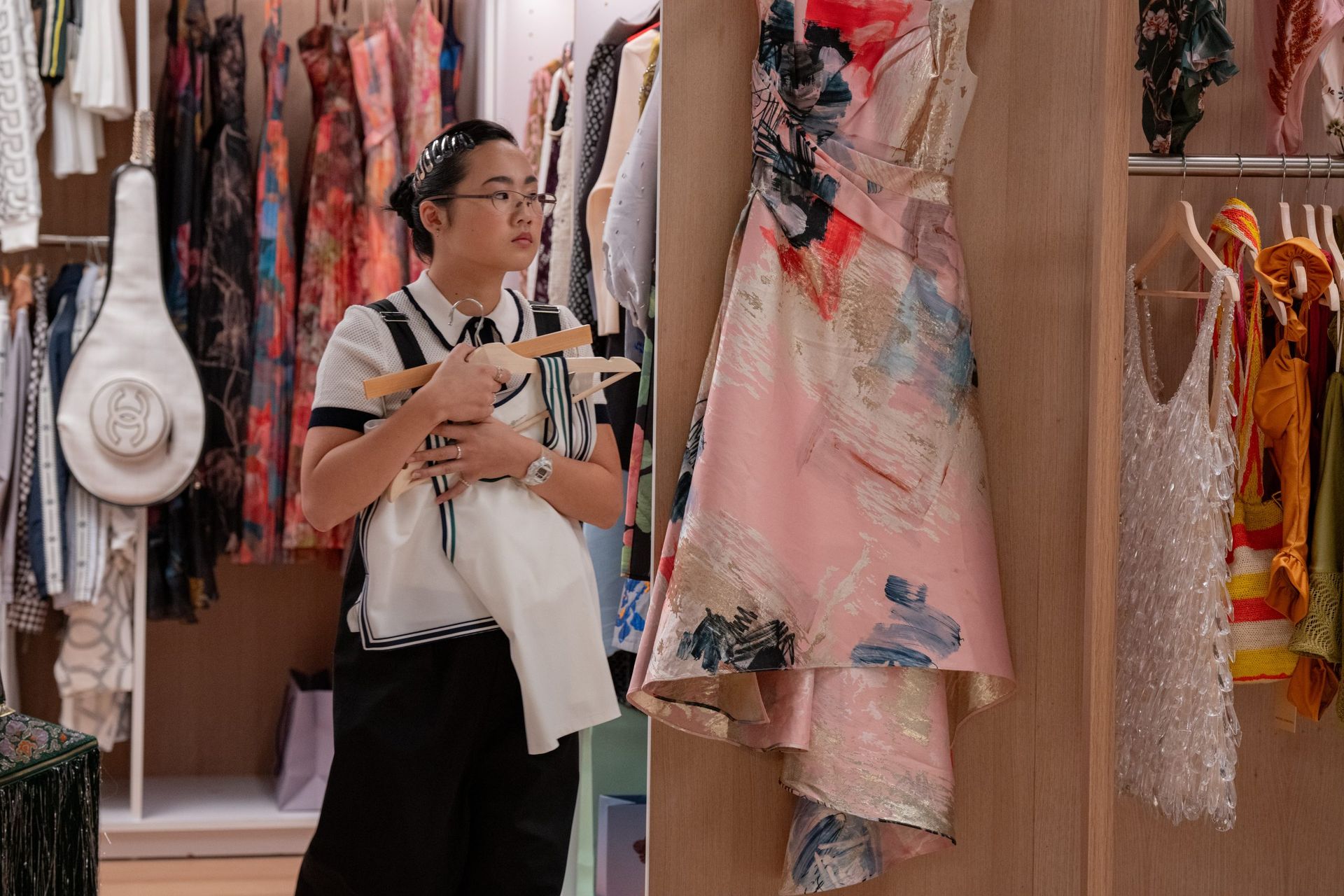
You were saying you’ve been able to add your own elements to the universe of The Devil Wears Prada. How would you describe your character Jin, and what were you wanting to add with her specifically?
From this first script, she’s such an eager person because she has a lot of intelligence and wisdom in her brain, but doesn’t necessarily know how to effectively communicate it. She’s a little bit like, ‘I have so much information, I know so much, and it’s just going to help, and we’re just going to keep going’. She’s a very go, go, go kind of person. She has a different way of looking at problems that I feel like the fact that her perspective is so different from Miranda Priestley or an Andy Sachs. Her perspective actually lends itself to the ever-changing world of print media and fashion.
I think we’re seeing that a new generation of fresh ideas only adds to the reverence of what has come before. All of it scarily parallels my own experience of being on set, ’cause I was looking at these titans and people who have been in this industry for so long, I was like, ‘Wow, I just want to learn so much and I just want to be a fly on the wall, and however I can contribute would be great’.
What do you think were some of the biggest differences between The Devil Wears Prada and this second film? How has the present day influenced the sequel?
The world is such a fast world now. The speed with which we understand information and intake information has vastly changed. So I think that that influenced a lot of the script – you have these people who are calcified in how they see the world and how they have run the world.
Miranda has all this power, and she is experiencing what it means to have to change or have to kind of understand the world in a different way. And we see that all the time. Even last week was different to this week. There’s so much stimulus that you have to adapt to that I think that’s what’s fun about this movie.
To get out of the script and stuff, they know how much people love the first movie, the director and the writer and everybody involved. I don’t think they necessarily knew that it was going to be the blockbuster hit that it was. It blew up the world. People are still thinking about the montages, the cerulean monologue, the quippy one-liners from Emily. It influenced culture so much. And now to get to revisit that world, we knew what people loved about the first movie. We’ll lean in.
There are more monologues for [Stanley] Tucci. There are more quips from Emily. There’s more of those characters and what we love so much about those characters.
So as a fan of the first movie, I was like, ‘Yeah, people are going to love this world for sure’.
I’m excited! You now have so much theatre experience and this incredible debut on camera, and then you have Eternally Yours coming up. What would you most like to be exploring next? What are you most looking forward to?
I would love to explore doing more on-camera work. Even though I have this wonderful film debut and Eternally Yours hopefully coming up, I haven’t logged my 10,000 hours of on-camera practice. I’m excited to really learn about that world because it’s not something that necessarily I felt like I could even do. Now that door has opened for me, I have so much to learn and I’m so hungry to learn it.
I just think in the fact that I’ve been able to subvert my own expectations of myself, that’s what I’m hoping to chase – is just to like not feel tethered to any one thing because I’ve defined myself in the past that way. I’m hoping to subvert expectations.
The Devil Wears Prada 2 is in cinemas now.
Interview Claudia Bradley