The destination used to be the point. Now the whole journey is.
There is a particular kind of restlessness running through modern life, and it does not look like dissatisfaction.
It looks like an intention.
People are moving differently now, through cities, across time zones and between the demands of work and the pull of everything else.
The fixed address, the single career and the clear separation between professional life and personal adventure are all being quietly dismantled. What is emerging in their place is something more fluid, more considered and considerably more interesting to look at.
Mobility is not just a logistical reality anymore. It is a lifestyle position.
The Rise of Flexible Work and Travel
The shift did not happen overnight, but its effects are everywhere.
Remote work opened a door that could not be easily closed again. Once people understood that presence in a physical office was not always the same thing as productivity, the logic of staying put in a single location began to unravel.
The result is a professional class that moves.
Not aimlessly, but with purpose. Long weekends extended into working weeks in other cities. Business trips that became opportunities for deeper immersion rather than quick turnarounds. A whole cultural sensibility around the idea that where you work matters as much as how you work.
This is not the preserve of freelancers or the digitally nomadic. It extends into traditional industries, corporate structures and professional services where mobility has become a competitive necessity rather than a lifestyle preference.
The Australian context adds particular texture to this shift.
A country defined by its distances, its regional centres and its cultural openness has produced a professional population that understands movement intimately. Getting from Sydney to Perth, from Melbourne to Darwin or from a capital city to a regional hub is simply part of how business gets done here.
And how it gets done has never mattered more.
As explored in writing on travel lifestyle, the most compelling version of modern mobility is not about escaping ordinary life but about expanding what ordinary life is allowed to contain.
Business Travel in the Modern Era
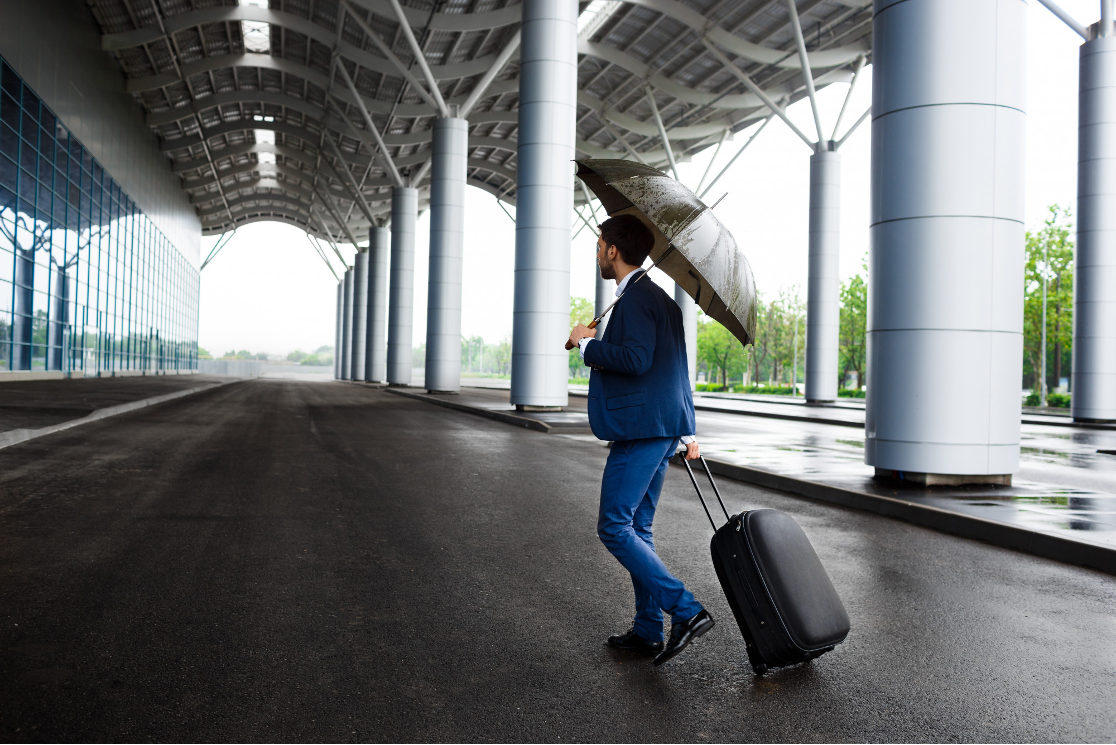
Corporate travel has shed its grey skin.
Where it was once synonymous with economy seats, airport sandwiches and the quiet dread of another identical hotel room, it has been reimagined by a generation that refuses to accept that professional and pleasurable are mutually exclusive.
The architecture of a business trip is being redesigned from the ground up. Itineraries are built around experience as much as obligation. The time between meetings is treated as time worth something. The city a professional travels to is engaged with rather than merely endured.
This redesign has practical implications as much as cultural ones.
Managing corporate travel well requires expertise, local knowledge and the kind of relationships that only come from genuine industry presence. For businesses operating out of South Australia, the rise of specialist corporate travel management reflects this new appetite precisely.
A travel agency Adelaide operation built around modern corporate needs understands that the contemporary business traveller wants more than a booked flight and a printed itinerary. They want itineraries that breathe, contingencies that work and someone who has thought about the whole journey rather than just its logistics.
That shift in expectation is driving a broader evolution in how corporate travel is structured and serviced.
Policy compliance, real-time booking platforms and duty-of-care obligations are the infrastructure. But beneath them runs a more human current: the understanding that how someone travels says something about how a company values their time.
Organisations that get this tend to attract and retain the kind of people who move well through the world. People who are alert, engaged and capable of representing their company with the same quality of attention they bring to everything else.
Business travel, at its best, is not a cost to be managed. It is a culture to be cultivated.
The cities that understand this, the professionals who embody it and the services built to support it are all part of the same evolving landscape.
Design Meets Function in Everyday Mobility
Not all mobility happens in airport terminals or across time zones.
Some of it happens on dirt roads, across open paddocks and between job sites where the vehicle is the office and the landscape is the commute. This is a different kind of movement, equally modern, equally intentional and carrying its own distinct cultural weight.
Australia has always had a complicated and deeply personal relationship with its utility vehicles.
The ute is not simply transport. It is a statement of capability. It signals a life lived with practical demands and the equipment to meet them. As design sensibility has crept into every corner of contemporary life, it has arrived here too, reshaping what utility looks like without compromising what it delivers.
The accessories and modifications people choose for their working vehicles have become as considered as any other element of a curated lifestyle.
Among the most visible of these is the canopy. A well-designed canopy transforms the back of a working ute from an open tray into a structured, weather-protected system of storage and organisation. It speaks to the same logic that drives every considered design choice: that form and function do not need to fight each other.
For those navigating this space, the growing range of ute canopies available reflects precisely this convergence of practicality and considered design. Aluminium construction, customised configurations and weather-sealed compartments are the language of a category that has moved well beyond basic utility into something that treats the working vehicle as a platform for thoughtful design.
This is mobility in its most grounded form.
Not the sleek abstraction of a first-class lounge or a perfectly timed connection, but the tangible reality of a vehicle loaded with purpose and driven through a landscape that demands it perform.
Both forms of mobility, the corporate and the practical, are shaped by the same underlying shift.
People want what surrounds them to work better. They want the things they move through the world to reflect the same level of intention they bring to everything else. Whether that is a travel itinerary or a storage system, the expectation is the same.
The Future of Lifestyle and Movement
What comes next is not a single direction.
It is a broadening of what mobility is allowed to mean. The professional who flies interstate for a client meeting on Tuesday and works remotely from a regional town on Thursday is not an anomaly. They are the new normal.
The tradesperson who has invested in a vehicle setup that is as organised as any city office is participating in the same cultural conversation. Both are asserting that how you move matters. Both are refusing to accept friction as a given.
Cities, employers and service providers are all catching up to this reality.
Infrastructure is being built around it. Products are being designed for it. Cultural narratives are beginning to celebrate it with the same enthusiasm once reserved for the fixed, the rooted and the predictable.
Mobility, in all its forms, has become a genuine expression of contemporary values. Freedom, adaptability and the refusal to accept limitations that no longer need to exist.
Keep Moving
There is something honest about a life in motion.
It demands presence. It requires decisions. It rewards the kind of attention that settles life into focus rather than letting it drift.
Whether the movement is across a continent or across a landscape, whether it is measured in flight hours or kilometres of open road, it carries the same essential quality.
It is a life being actively lived rather than passively occupied.
And that, in the end, is what this cultural moment is really about.