I first encountered Redcliffe at MusicalCon back in 2025, when Jordan Luke Gage performed a song from the show called ‘Void of Love’. By the end of it, I was in floods of tears. It was raw, heartbreaking, and full of longing. I remember turning to my wife afterwards and saying, ‘We have to see this musical.’
Fast forward to now, and Redcliffe has finally arrived at Southwark Playhouse Borough. Somehow, despite all the months of anticipation and all the expectations I had built up in my head, it was everything I had hoped for.
Based on the true story of William Critchard and Richard Arnold, two men convicted of sodomy in Bristol in 1753, Redcliffe tells a fictionalised version of real events. It’s a story about love, community, prejudice, family, and what happens when the people who claim you’ll never be alone suddenly decide you’ve become one of ‘them’.
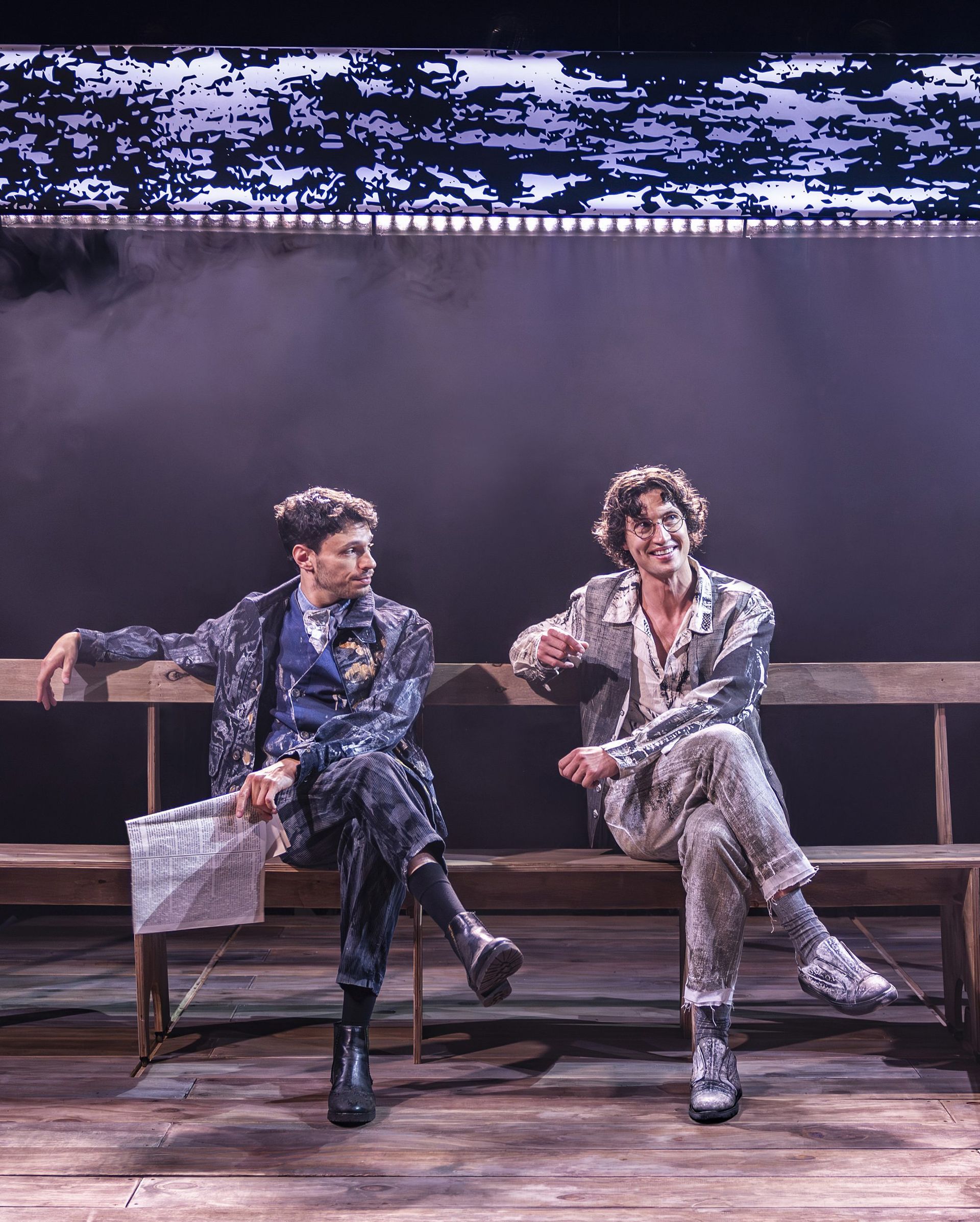
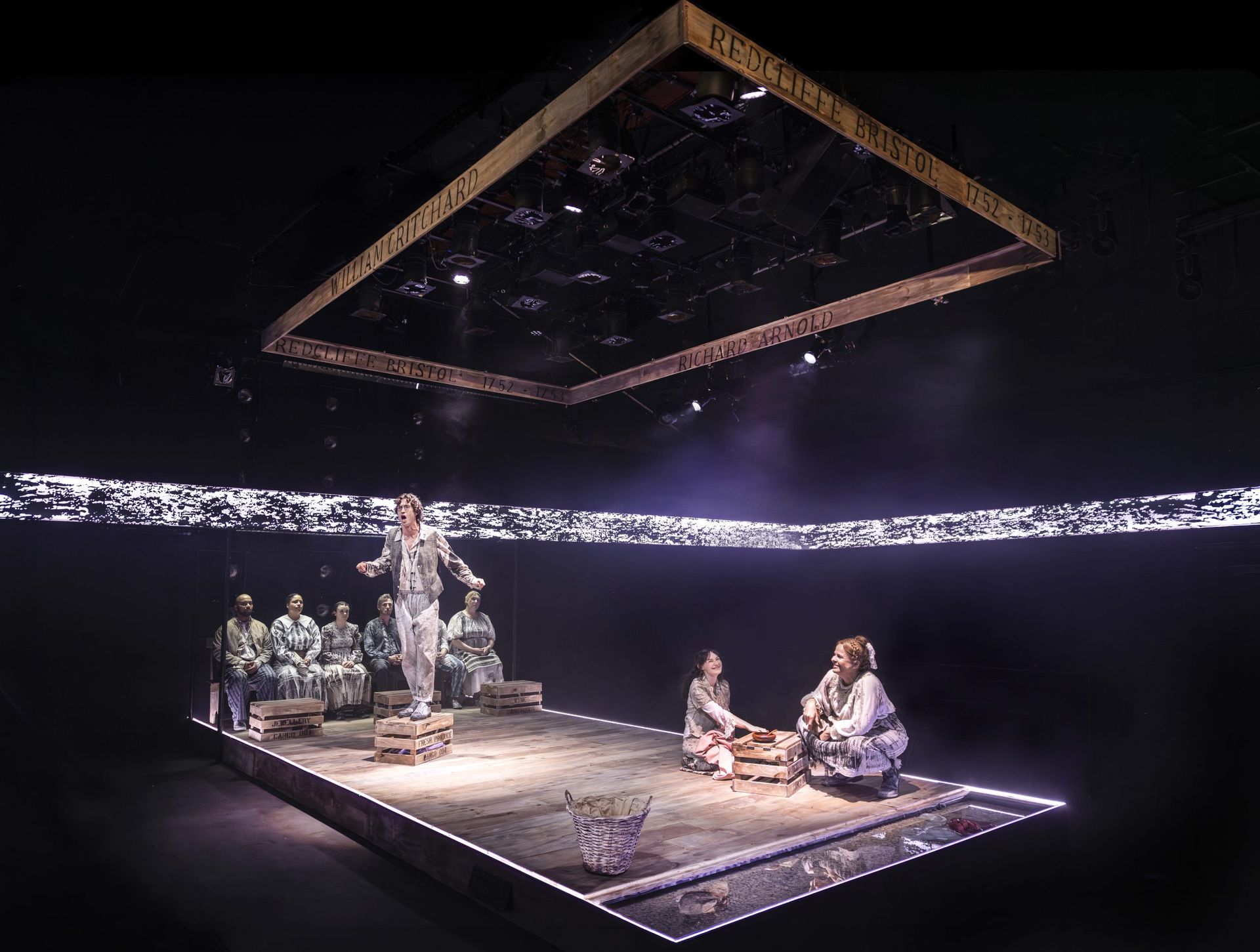
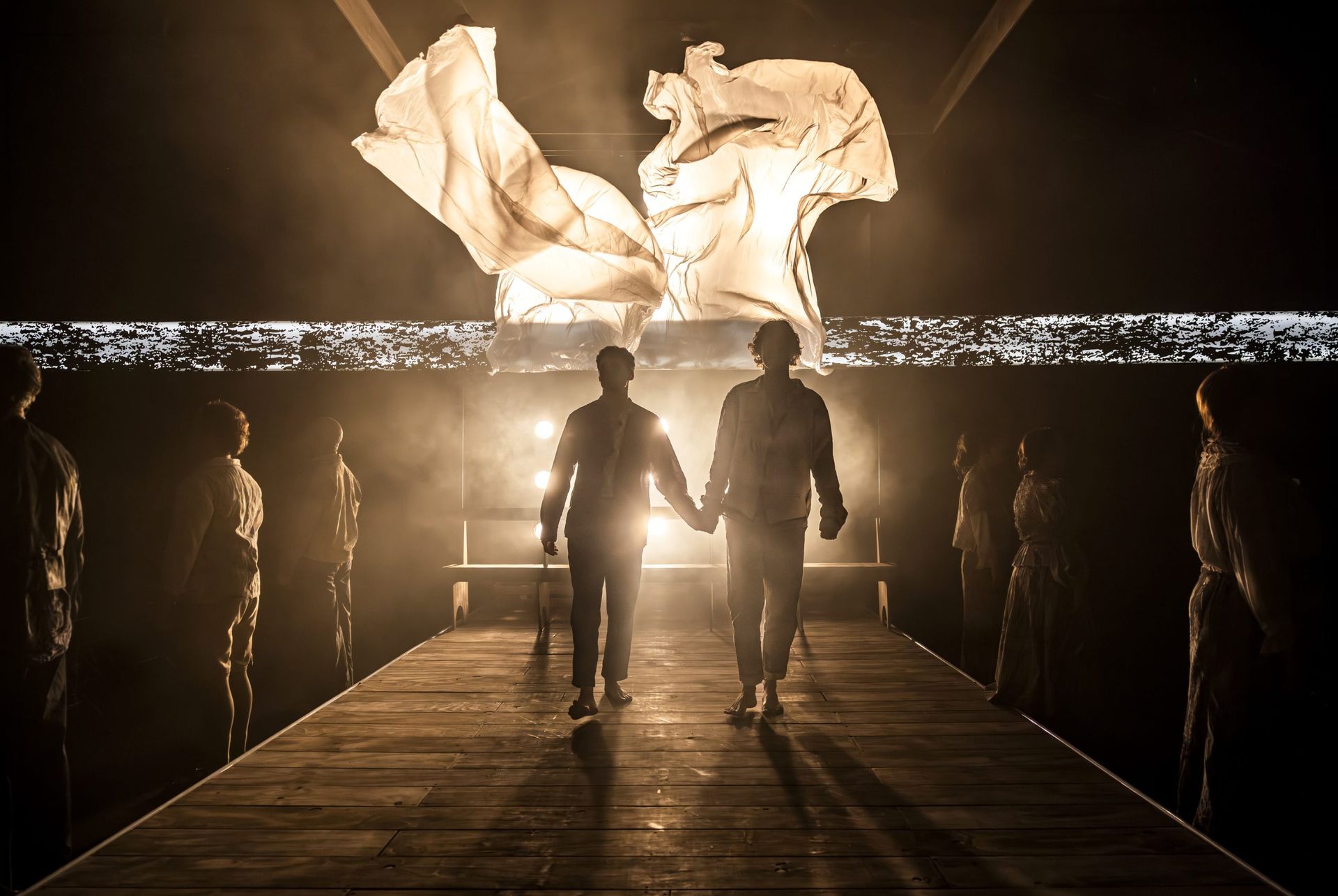
As we enter the auditorium, the staging immediately catches the eye. The thrust stage extends into the audience on three sides, transforming Southwark Playhouse Borough into something more akin to its sister venue, Southwark Playhouse Elephant. A narrow channel of water runs along the front edge of the stage for the first half, reminding us of Bristol’s connection to the sea, while above hangs a large square structure bearing the names William Critchard and Richard Arnold alongside the dates 1752-53. It’s simple and effective.
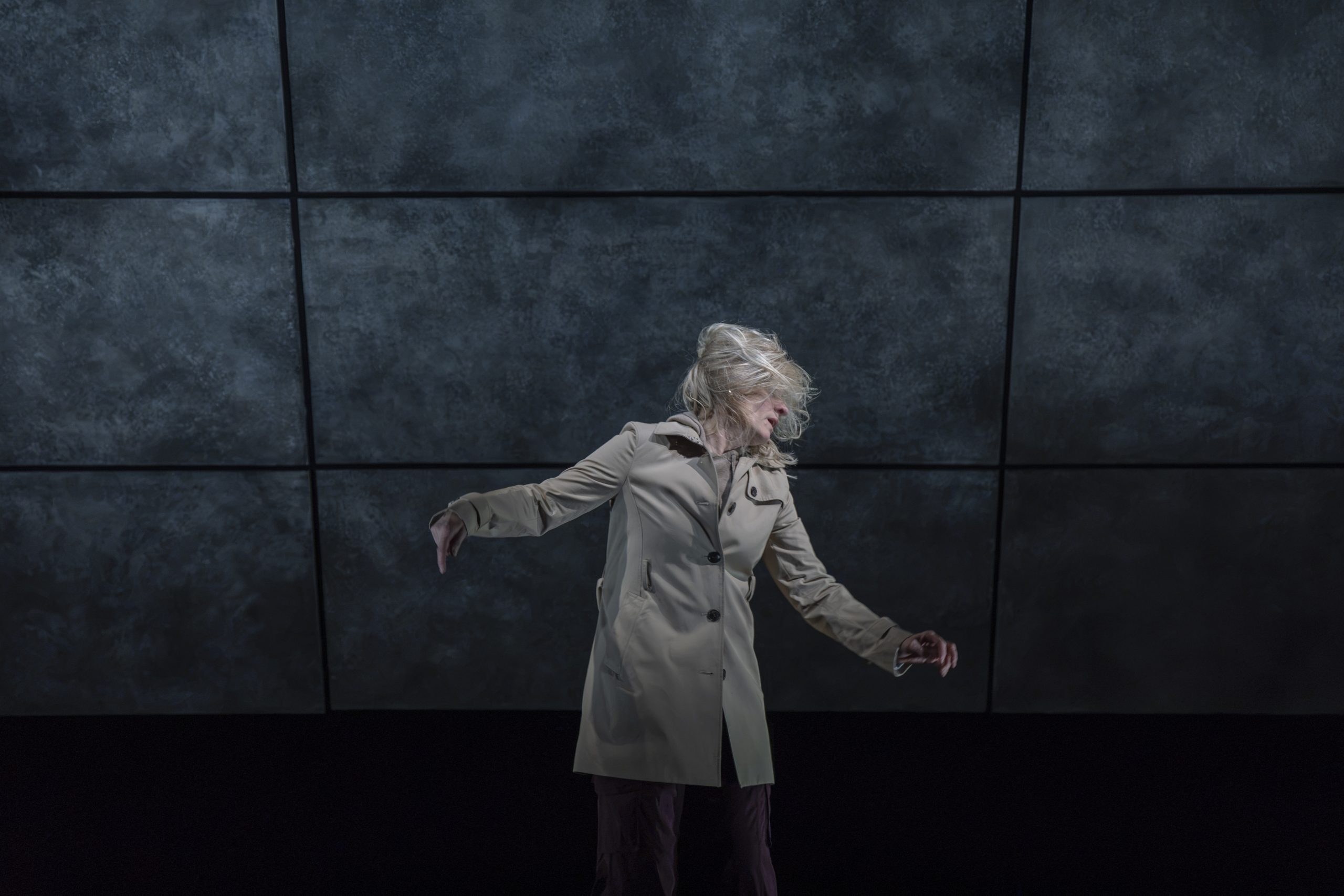
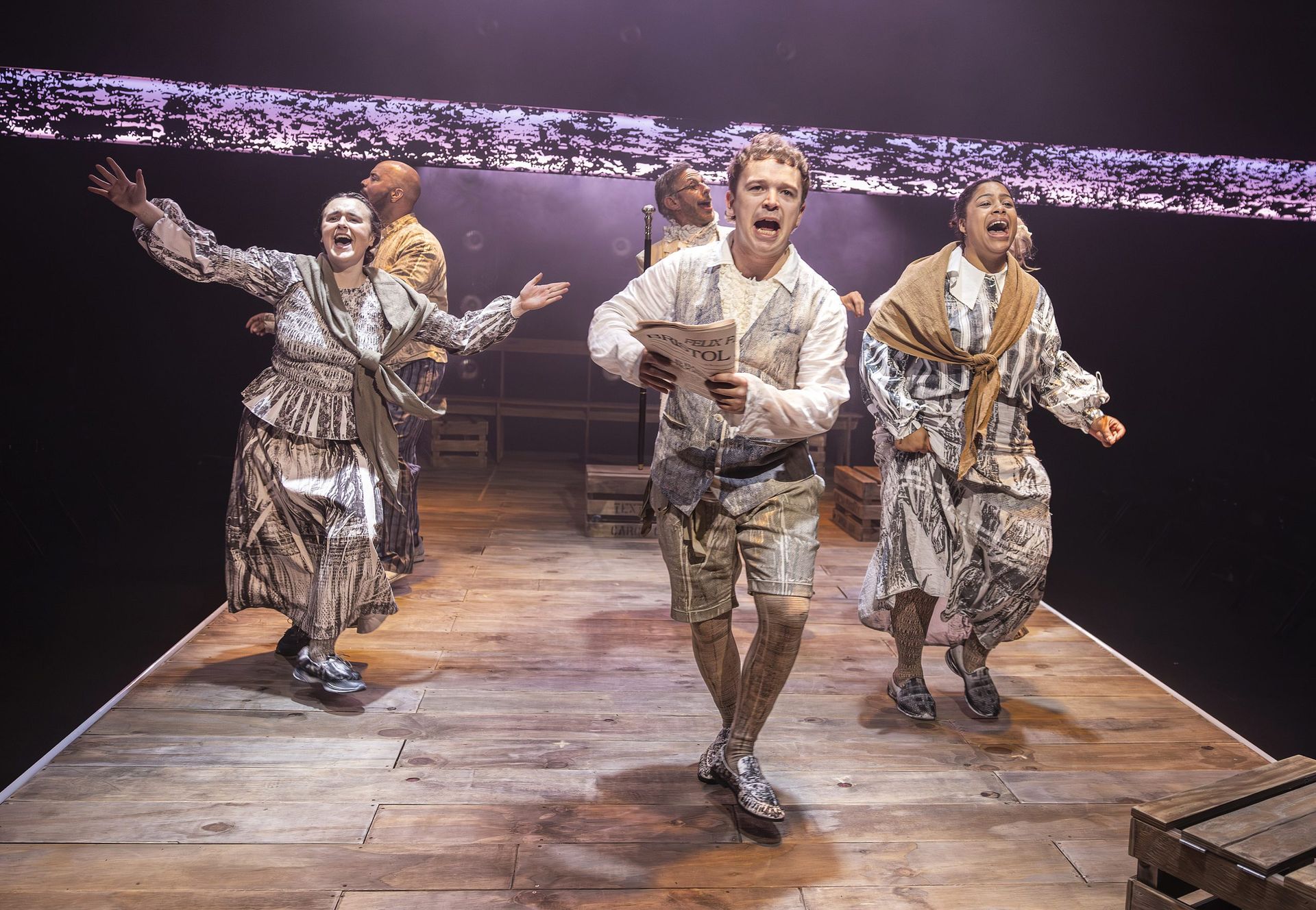
The production opens with the ensemble physically becoming the waves, swaying across the stage while William, played by writer and composer Jordan Luke Gage, contemplates the water. Emma Woods’ choreography is beautiful throughout, frequently allowing emotions to take physical form. During William’s opening number, ‘Pressure Pot’, the ensemble literally surround him, pushing and crowding him as the pressure of being the family’s only son threatens to overwhelm him.
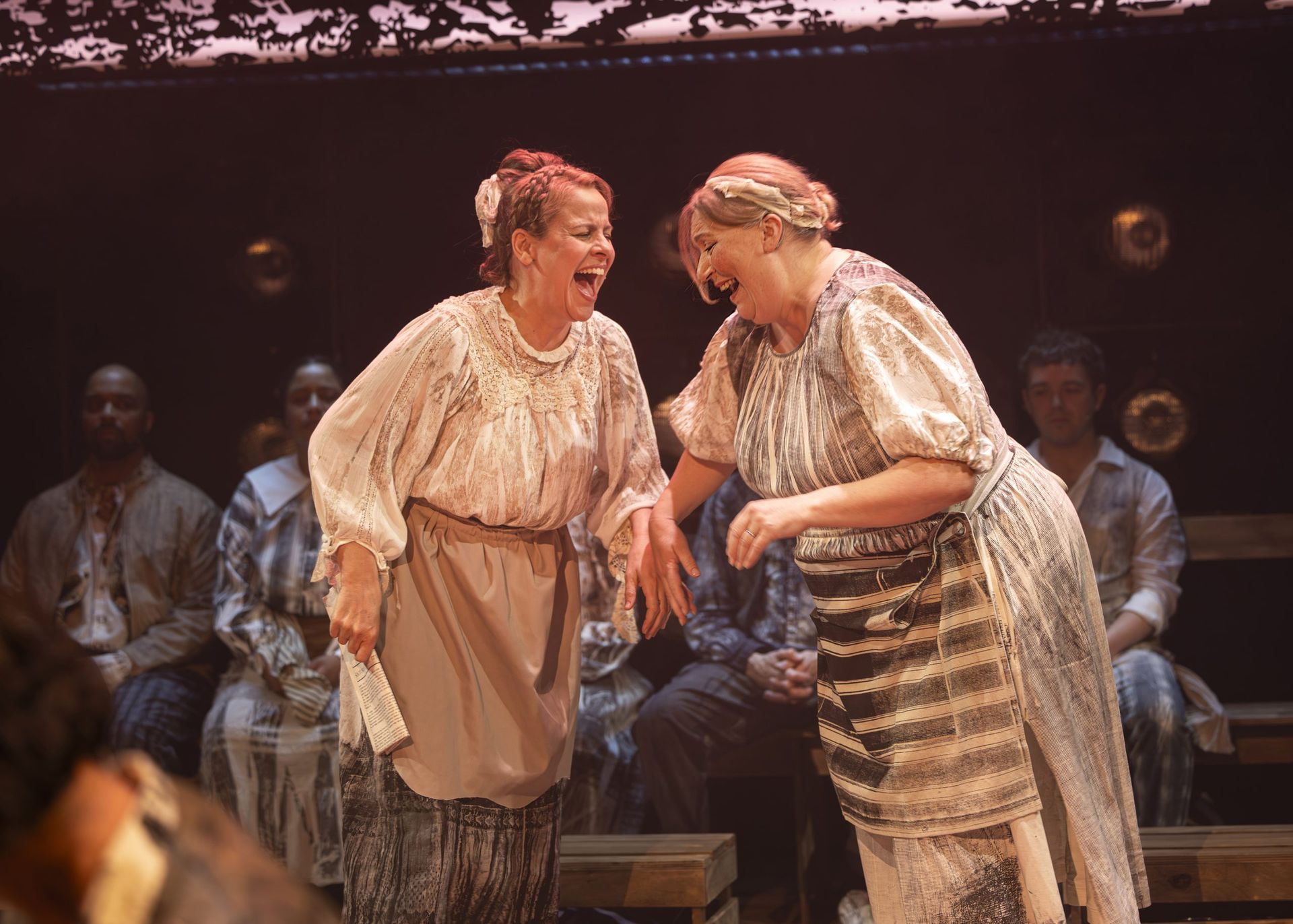
William lives with his mother and sister Abigail in Redcliffe, a close-knit Bristol community where everyone seems to know everyone else. Rebecca Lock is fabulous from the outset as Will’s mother. She is full of excitement for her son’s homecoming, she never stops talking, and never stops dreaming about Will finding a nice girl and settling down. Lock brings enormous warmth and humour to the role, creating a woman whose positivity and infectious enthusiasm during the first act make her an absolute delight to watch.
The community itself is introduced through a pub scene where people are singing songs celebrating the idea that in Redcliffe you’ll never be alone. It’s warm. Friendly. Familiar.
Which makes what comes later so much worse.
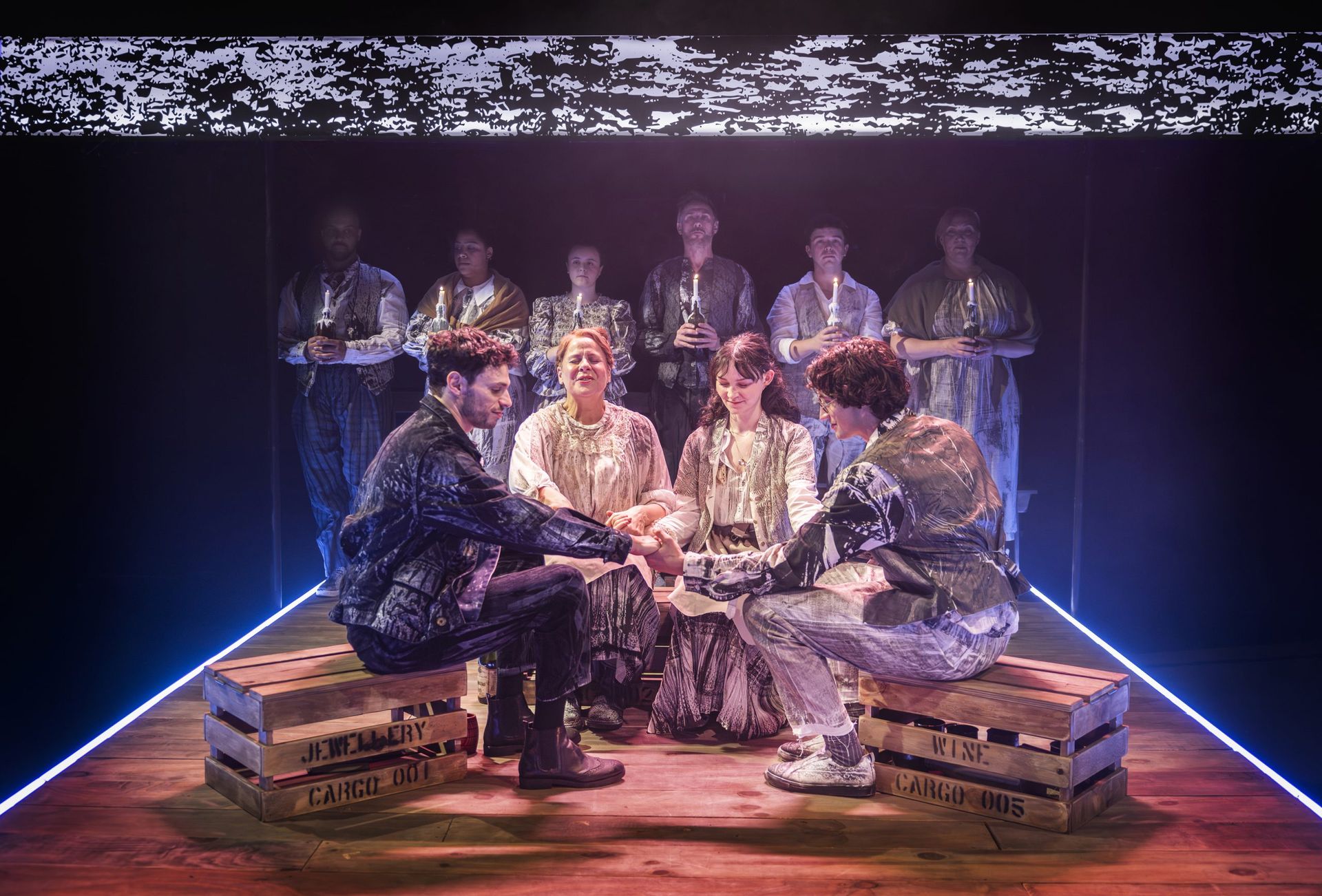
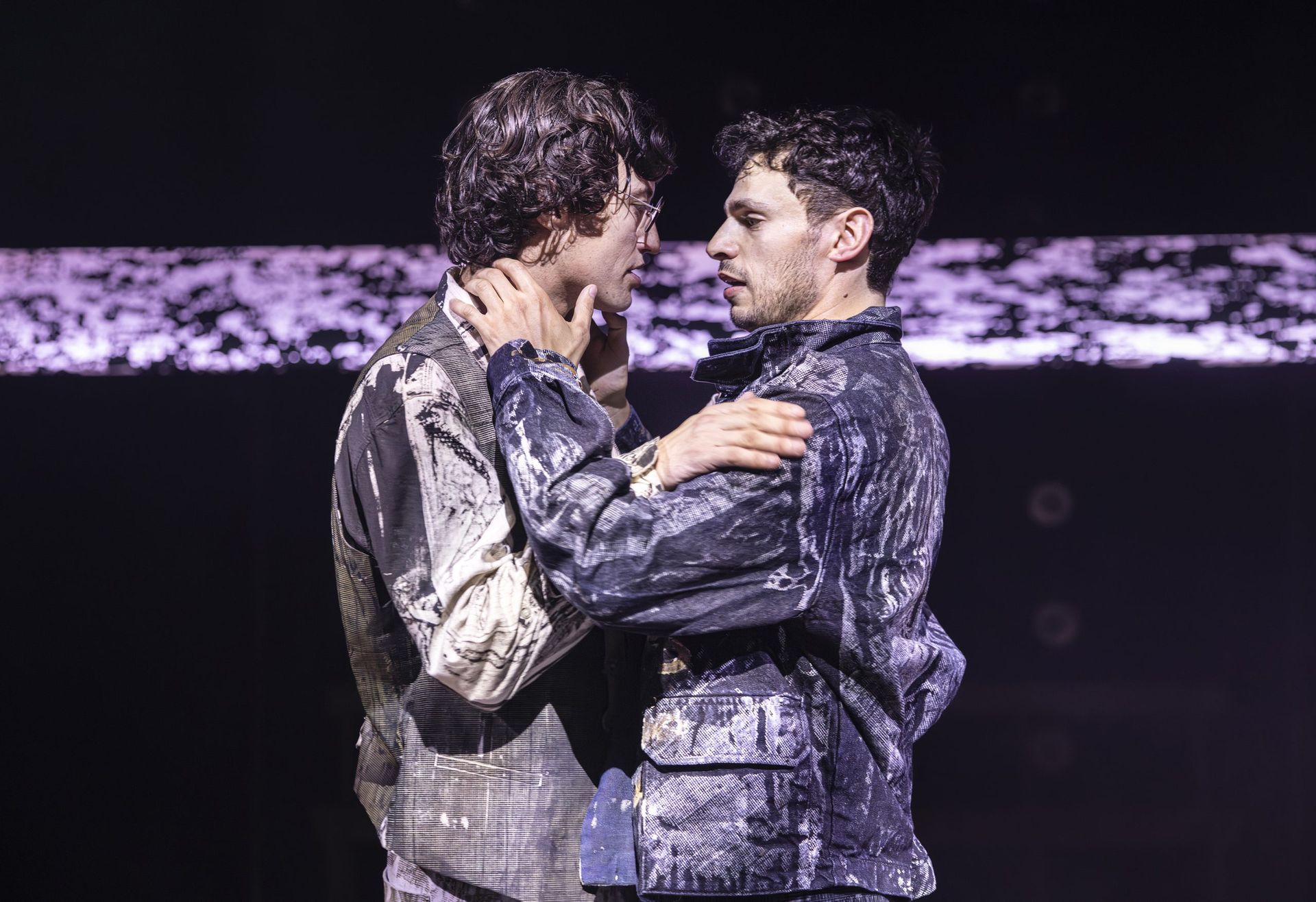
When William meets Richard Arnold (Daniel Krikler), a young naval lieutenant from London, there is an immediate, if somewhat hesitant, connection. The foundation for their relationship is laid with a funny and touching song called ‘There’s A Million Things I Know’, where the pair exchange facts and trivia in what is technically conversation but feels very much like flirting. William gets some of his facts hilariously wrong, Richard corrects him, and the chemistry between them feels natural.
Krikler is excellent as Richard. Both men are shaped by a world that forces them to be cautious, but they approach it from different places. William has been so lonely, not even conceiving of the possibility that there might be other people who feel the way he does, while Richard arrives with a greater awareness of both the possibilities and the dangers. Krikler captures that tension beautifully. Early on, when William tries to kiss him, Richard pulls away and runs off. Later, he explains that it wasn’t rejection but fear – he was frightened by the intimacy of the moment and by the risk of doing something so dangerous in a public place.
It’s an understated performance but a deeply affecting one. Richard is older, more experienced, and more worldly than William. As the story unfolds, we learn he has good reason to fear discovery, which makes him cautious, though he masks it with an air of easy confidence and nonchalance. Once he and William truly open up to one another, those defences fall away, revealing a relationship built on intense passion and vulnerability. Krikler and Gage bring that chemistry to life beautifully.
The supporting cast are equally strong. Jess Douglas-Welsh is wonderful as Abigail, William’s younger sister. Intelligent, determined and endlessly loyal, Abigail dreams of becoming a teacher and refuses to abandon her brother when the town turns against him. Her acceptance feels refreshingly uncomplicated. While others debate morality and religion, Abigail simply loves her brother and struggles to understand why anyone else would make such a fuss over two people in love. In a world where some people still seem to have a problem with queer love, this is far more relevant than we would like it to be.
One of the most interesting things about Redcliffe is how it handles prejudice. The villains are not really villains, at least not at first.
The landlord of the local pub is friendly and welcoming when we meet him. The townsfolk sing together, drink together, celebrate together. Even Will’s doting mother initially reacts to stories of men accused of sodomy with the same horror as everyone else. This is simply the accepted way of thinking.
Then it suddenly becomes personal.
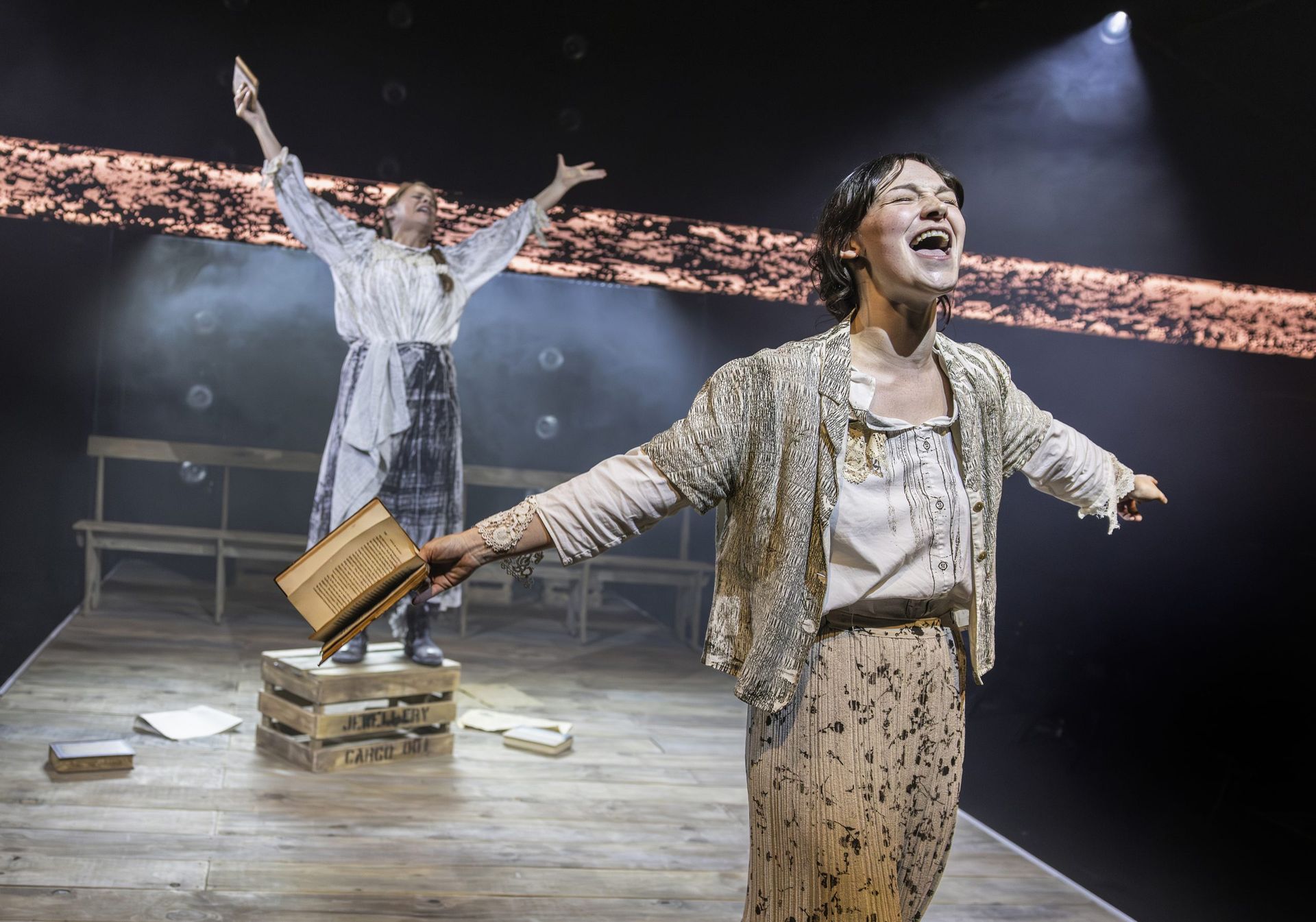
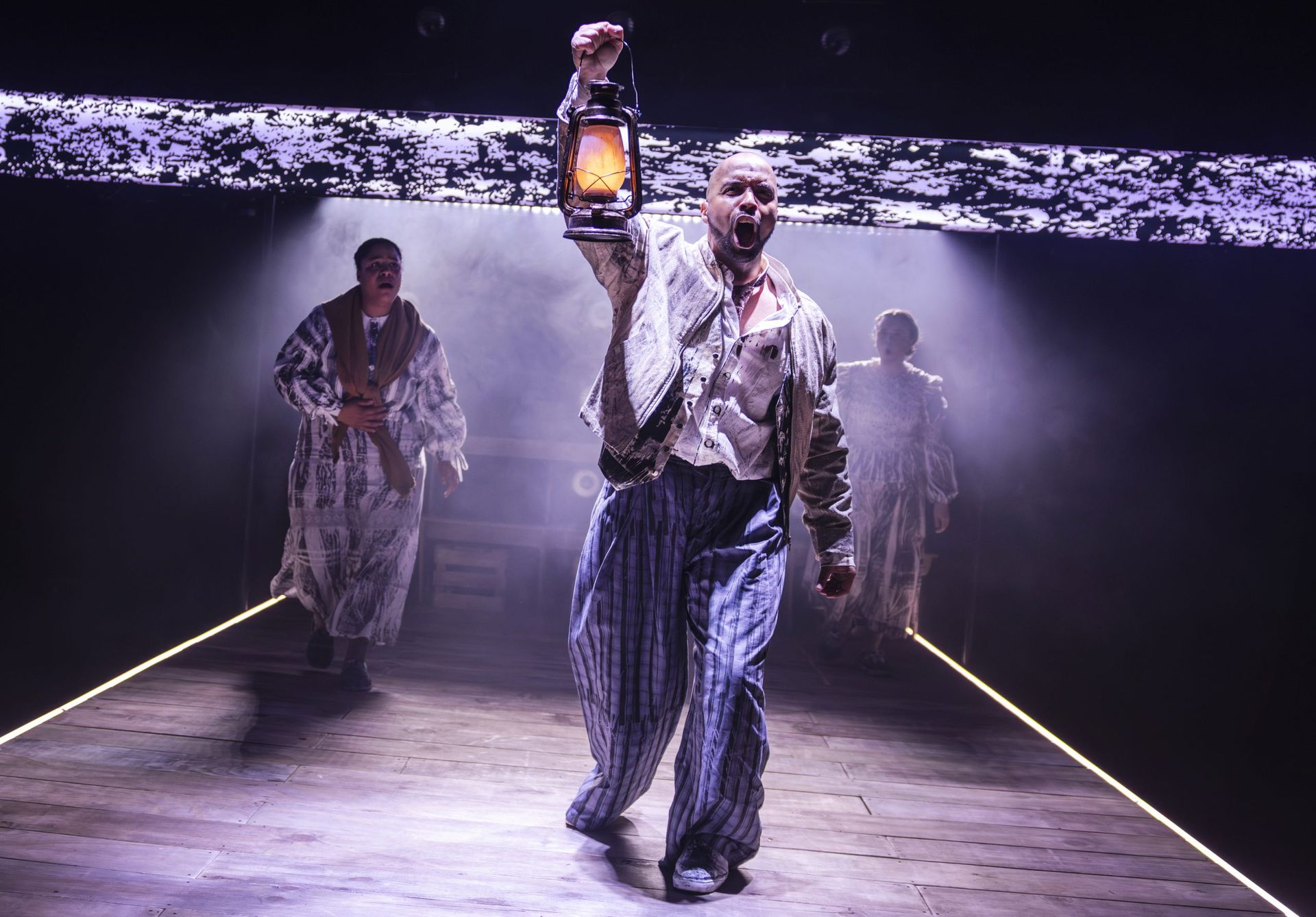
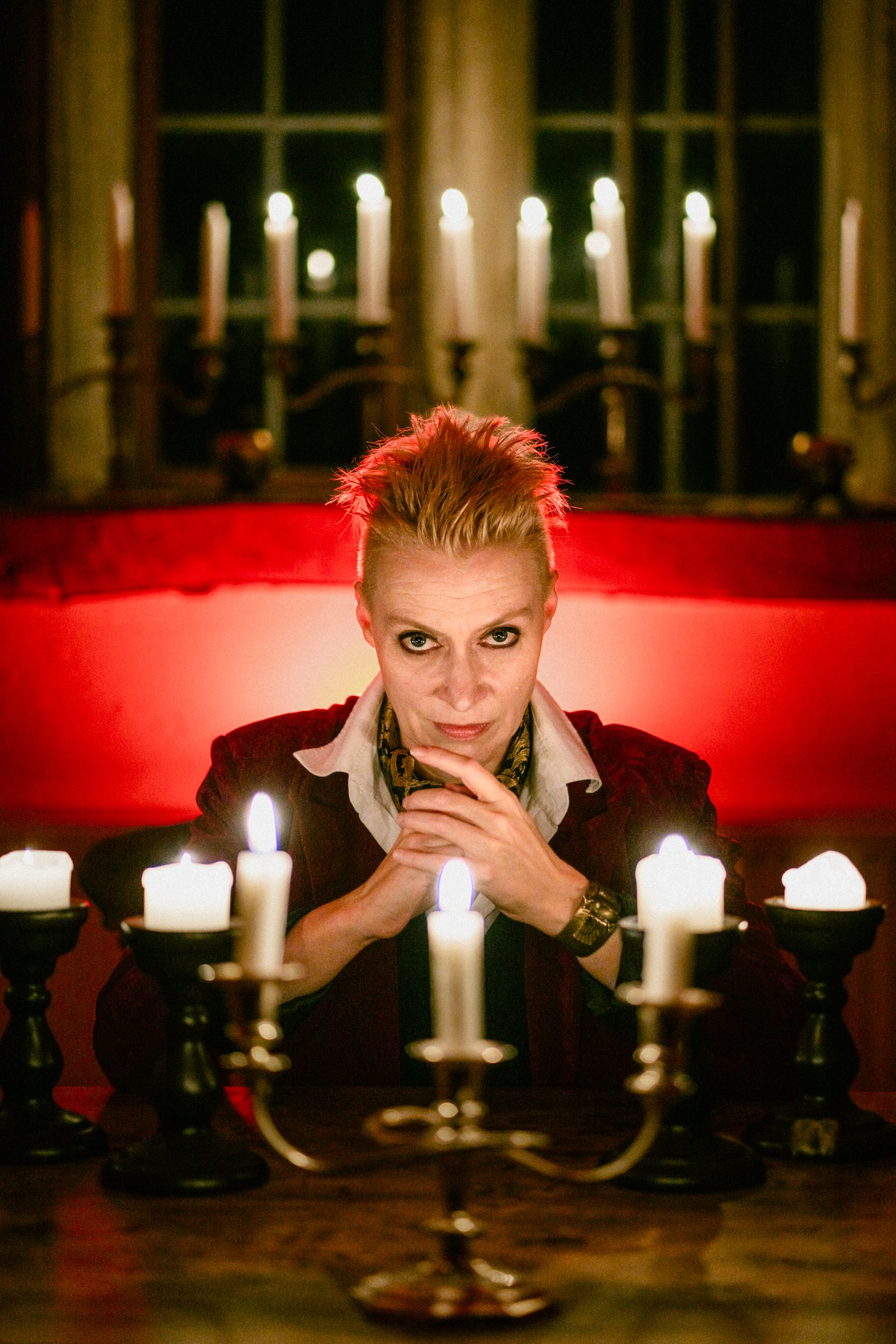
When suspicion falls on William, the transformation is awful. Suddenly the same community that promised nobody would ever be alone begins throwing around words like ‘unnatural’ and ‘disgusting’. Friends become accusers. Neighbours become judges – quite literally, as Melissa Jacques plays both the friendly neighbour Georgie and later the Judge in court. People who seemed perfectly pleasant reveal a cruelty born out of fear and ignorance.
Will’s mother’s journey is particularly moving. She begins exactly where her society expects her to begin, horrified by the very idea of homosexuality. But when that abstract prejudice collides with the reality of her son, everything changes. Rebecca Lock delivers one of the evening’s most powerful moments in the song ‘Hurricane’, a raw explosion of grief, confusion, anger, and love. Her powerful voice fills the intimate space as she desperately tries to understand how to cope with this new world where her son is not who she thought he was. Her passion and pain are palpable throughout, and Lock’s performance is one of the production’s greatest strengths.
The score is beautiful throughout. In fact, I found myself wishing they had already released a full cast recording rather than just the two songs currently available – I briefly spoke with the writer after and he said a recording is planned for release. ‘Void of Love’ remains as devastating as the first time I heard it, while ‘The Most Amazing Wedding’, sung by Abigail and Will’s mother, is a genuine highlight, bringing warmth, humour and joy. The later love songs shared by William and Richard are equally tender and heartbreaking, and throughout the evening the music constantly serves both the story and the emotions with remarkable effectiveness.
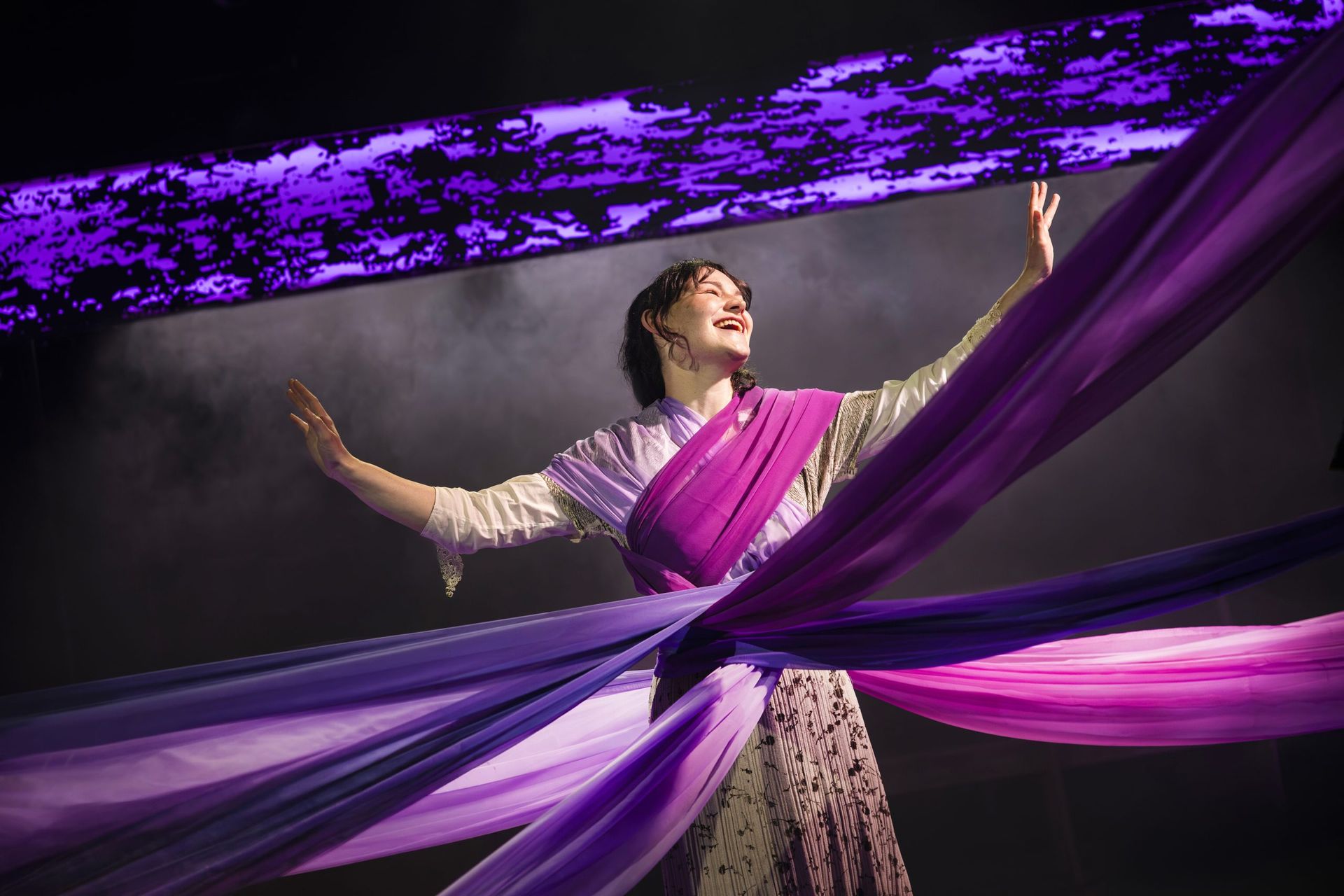
Visually, the production continually finds inventive ways to tell its story. Abigail’s romantic fantasy sequence sees her wrapped in flowing silks by the ensemble, creating a beautiful dreamlike image. Matt Hockley’s lighting design helps shape the atmosphere enormously. A lighting installation that circles the entire auditorium is used to stunning effect throughout, shifting colours and transforming the atmosphere of the space in an instant. During moments when time seems to stop for William, the theatre fills with an almost ethereal blue glow; whereas when he is arrested, it goes dark red, changing the mood in an instant.
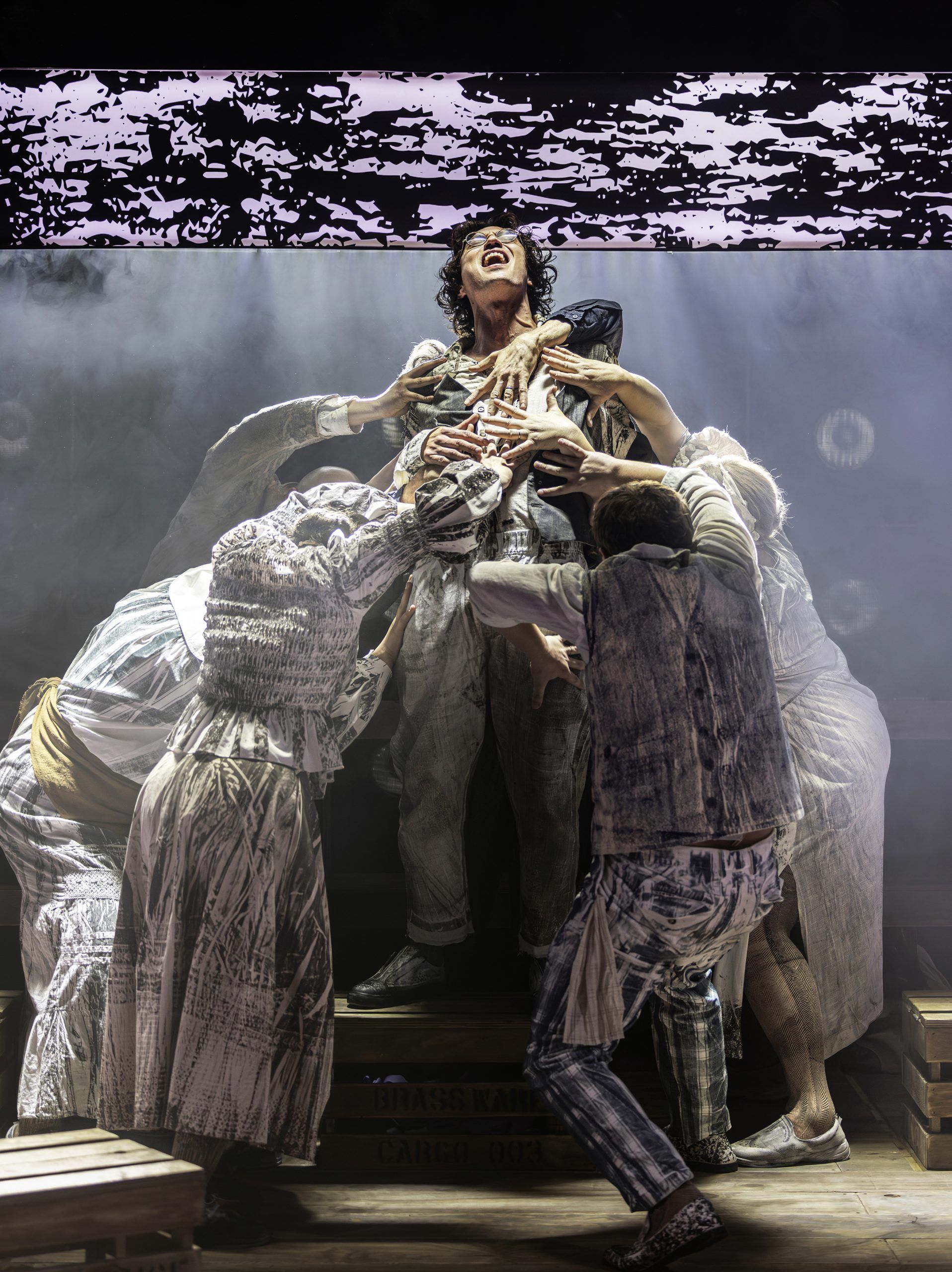
If I have one criticism, it concerns the way the story ultimately gets from suspicion to conviction. Given how carefully the show establishes Richard as intelligent, cautious, and acutely aware of the dangers facing men like him, I struggled to fully believe he would put his feelings down in uncoded writing. Having already experienced the devastating consequences of discovery, he seemed far too careful a character to communicate so openly in letters. The historical outcome is, of course, unavoidable, but I would have liked to see the production arrive there in a way that felt more consistent with the Richard we had met. It’s a small criticism in an otherwise exceptional musical, but it was the one moment where I found myself noticing the hand of the writer nudging events towards their tragic conclusion.
A notable moment happens at the very end of the show, after the story ends, the cast step out of character to remind us that this history is not entirely in the past. They share statistics about countries where same-sex relationships remain criminalised and where people still face the death penalty for who they love.
By this point, I had been crying for a while, but the final moments finished off my wife and many others. I must have looked quite upset because a woman sitting in front of me actually turned around after the lights came up to ask if I was alright.
I was. But I was also heartbroken.
Heartbroken for William and Richard. Heartbroken that stories like theirs really happened. Heartbroken by the reminder that in parts of the world, they still do.
Redcliffe is a beautiful, moving, and important musical. Jordan Luke Gage has achieved something remarkable, not only creating a compelling new musical but also delivering a wonderful central performance. Combined with outstanding work from Rebecca Lock, Daniel Krikler, Jess Douglas-Welsh and the entire company, the result is a production that left me emotionally wrought but satisfied.
There are moments I would tighten, and one or two storytelling choices that didn’t entirely convince me, but the foundations are incredibly strong. This feels like a show with a long future ahead of it, and I’d love to see where that journey takes it next.
I left the theatre thinking about William and Richard, sad that stories like theirs ever happened, but grateful that they are finally being told.
If you’re looking for a brilliant queer musical to see this Pride Month, go and see Redcliffe. Just don’t forget the tissues.
Redcliffe is playing at Southwark Playhouse Borough until 4 July 2026.
Book tickets now at southwarkplayhouse.co.uk
Words by Nick Barr
Photos by Pamela Raith