In tech, the role of User Interface (UI) and User Experience (UX) design is often misunderstood. Frequently relegated to the final stages of development as a “coat of paint,” many stakeholders view design as purely aesthetic. However, Meng Lan, a Web and Digital Interface Designer specializing in Artificial Intelligence-powered products and SaaS platforms, argues that this perspective misses the core value of the discipline.
In a recent discussion, Lan outlined a philosophy that positions UI/UX not as decoration, but as a critical problem-solving framework for complex, workflow-heavy systems. “I don’t see UI/UX as visual design alone,” Lan explains. “To me, it’s a way to make complex and messy product experiences easier to understand and use.”
Lan’s approach is rooted in a multidisciplinary background spanning interior design, visual communication, and digital media. This foundation has instilled in her a rigorous emphasis on structure and functional clarity. She distinguishes between the two pillars of her work: UX as the architectural blueprint and UI as the navigational signage.
“UX focuses on figuring out the process behind the product,” Lan says. “That often means user interviews, usability testing, journey mapping, and analyzing where people get confused, stuck, or slow. A lot of products don’t fail because of bad ideas, but because the flow is unclear or asks users to think too hard.”
Once that structural foundation is established, the visual layer—the UI—comes into play. For Lan, a good UI is defined by subtraction rather than addition. “UI is how those decisions are presented visually, using layout, hierarchy, and interaction patterns to guide users step by step,” she notes. “A good UI doesn’t add decoration, it removes friction.”
While consumer-facing apps often grab headlines, Lan has spent a significant portion of her career designing for Business-to-Business (B2B) and enterprise environments. Her work in this sector, particularly at a fulfillment and logistics company, highlights the necessity of long-term design iteration. She has designed internal platforms used daily by operations teams, including warehouse management tools, CRM-style dashboards, and logistics platforms. One standout project was a Yard Management System (YMS) designed to handle driver profiles, truck and trailer data, and real-time detention status across multiple warehouse yards.
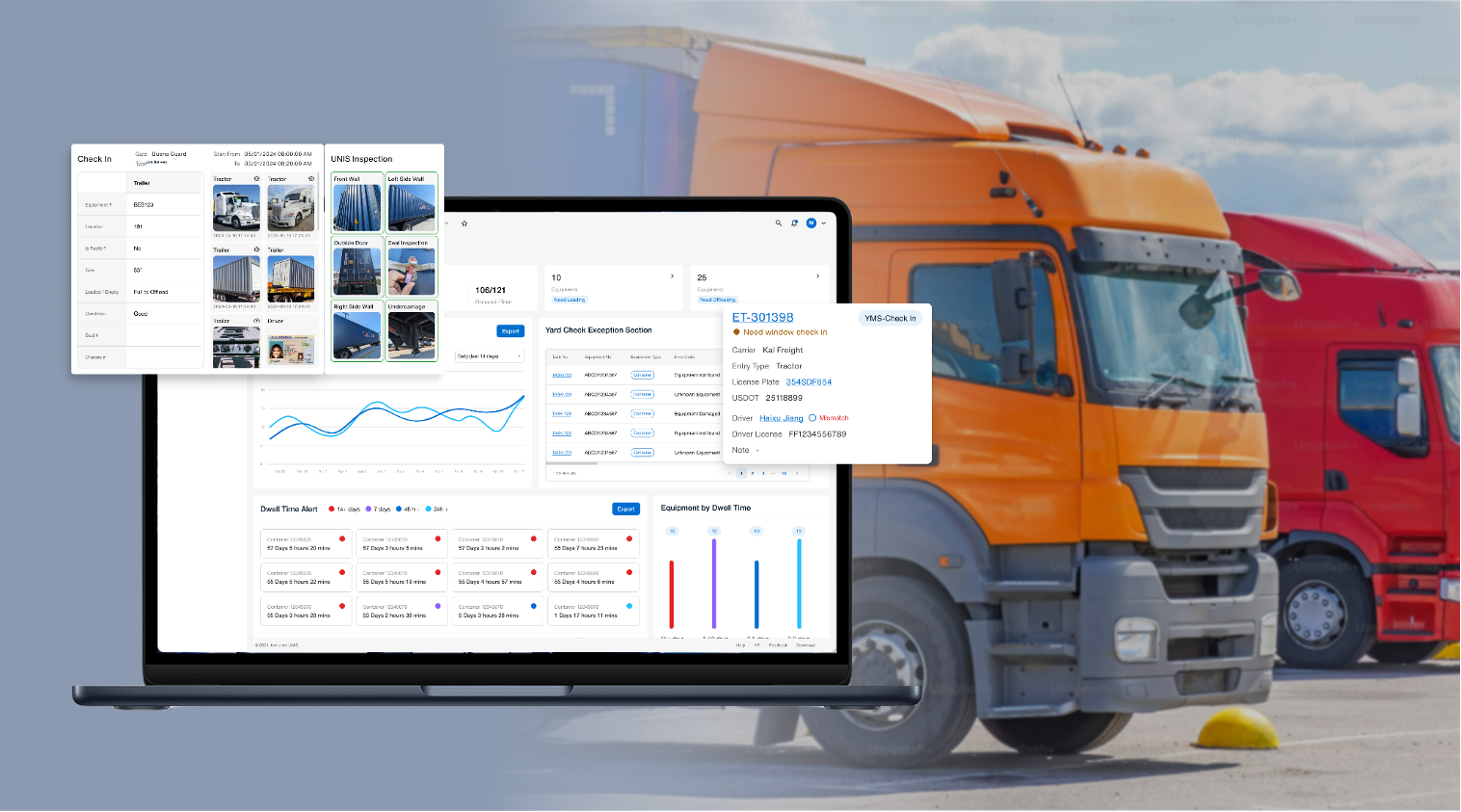
Unlike short-term design tasks, this system required continuous evolution. “After the initial system was launched, the platform continued to evolve as business needs changed and new data requirements emerged,” Lan recalls.
She adopted an agile, quarterly review cycle, working closely with data analysts and operations teams to refine workflows. A key innovation was the introduction of flexible views, allowing users to toggle between visual summaries and detailed tables. This adaptation ensured the system remained usable as it scaled, proving that in B2B environments, design is a living process rather than a one-time deliverable.
In recent years, Lan’s focus has shifted toward the frontier of technology: integrating AI with hardware. She has participated in several projects involving wearable devices and personal AI assistants, moving from pure software design to system-level experiences that connect digital interfaces with physical devices.
One of her current projects involves an AI-powered phone assistant for service-based businesses, such as restaurants and personal care providers. The system combines a physical device with a software platform to automatically answer calls, understand customer intent, and record requests. Lan’s role focuses on the software experience—specifically, call management dashboards and interaction flows that allow business owners to review AI-handled calls with clarity.
She has also worked on a wearable device paired with a mobile app that captures spoken information and uses AI to turn voice input into structured, searchable content. “I was responsible for designing how these AI results are presented so users can quickly understand and use them,” she says.
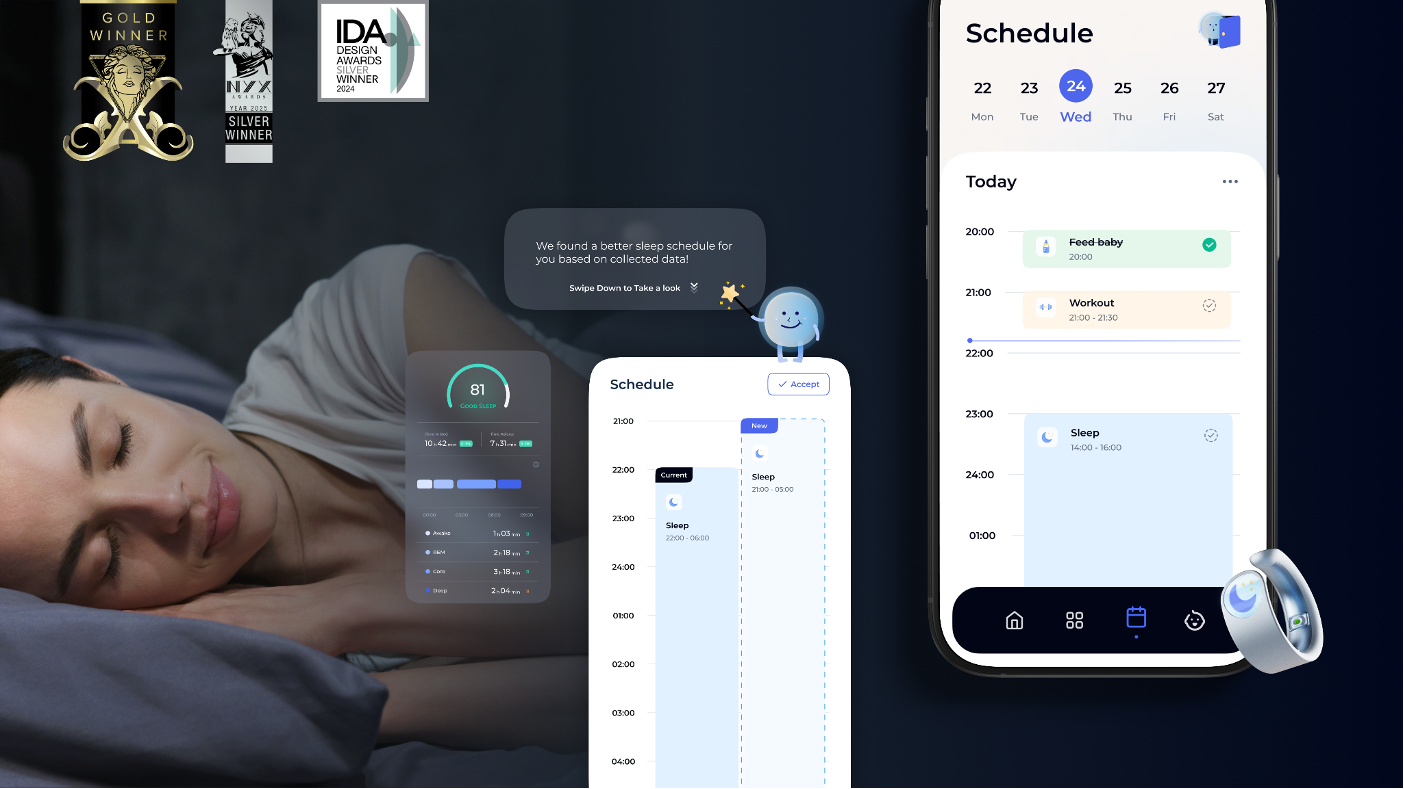
Perhaps the most poignant example of Lan’s evolving design philosophy is her role as the Lead UI Designer for “Mona,” a concept project focused on postpartum wellbeing. Mona combines a wearable device and an app to help new mothers notice mood, stress, and health signals.
The project represents a significant personal and professional milestone for Lan, marking her transition into AI-driven and hardware-integrated experiences. However, the design challenge was unique: how to create a product that supports without demanding.
“What I cared about most was not adding more pressure,” Lan emphasizes. “New moms already deal with too much information every day, so the experience focuses on clarity, calm feedback, and emotional reassurance instead of heavy data or alerts.”
Mona illustrates a growing trend in AI design: the shift from optimization to empathy. Lan notes that while the market is saturated with fitness and sleep trackers, few products address the specific, emotionally vulnerable context of postpartum life. “Mona is not trying to optimize performance or push goals,” she explains. “It focuses on awareness and helping mothers notice small signals before problems grow bigger.”
Lan’s portfolio is diverse, spanning elder care and healthcare solutions for Australian clients, AI-driven legal knowledge systems for clients in China, and large-scale logistics platforms in the United States. The common thread is complexity. In these high-stakes environments, the cost of poor design is not merely frustration but real-world consequences, including operational errors and lost efficiency.
In these high-stakes environments, the cost of poor design is not merely frustration but real-world consequences, including mistakes and lost efficiency. Lan’s work in legal AI, for example, involves designing interfaces that make large language models (LLMs) usable for professionals who need accuracy over novelty.
Reflecting on how these experiences have influenced her current work, Lan notes a profound shift in her approach to AI. “Working on AI inside professional systems changed how I approach design,” she says. “These were not experimental products. AI outputs affected real work, real decisions, and sometimes real business outcomes.”
This realization led her to prioritize judgment over automation. “I spend a lot of time deciding where AI should help, where it should stay quiet, and how much control users need to keep,” Lan explains. “When AI is involved, clarity becomes more important than speed, and trust matters more than automation.”
As technology becomes increasingly intertwined with daily life and professional workflows, the need for designers who can navigate complexity is paramount. Meng Lan’s work demonstrates that UI/UX design is not merely about making products look good; it is about making them work effectively for the humans using them.
Lan’s mission is clear: “I design interfaces that explain AI behavior clearly, handle uncertainty gracefully, and fit naturally into existing workflows,” she said. “My goal is not to make AI feel powerful, but to make it feel reliable and appropriate in everyday use.”
Published on February 24, 2026
By Margaret Wright