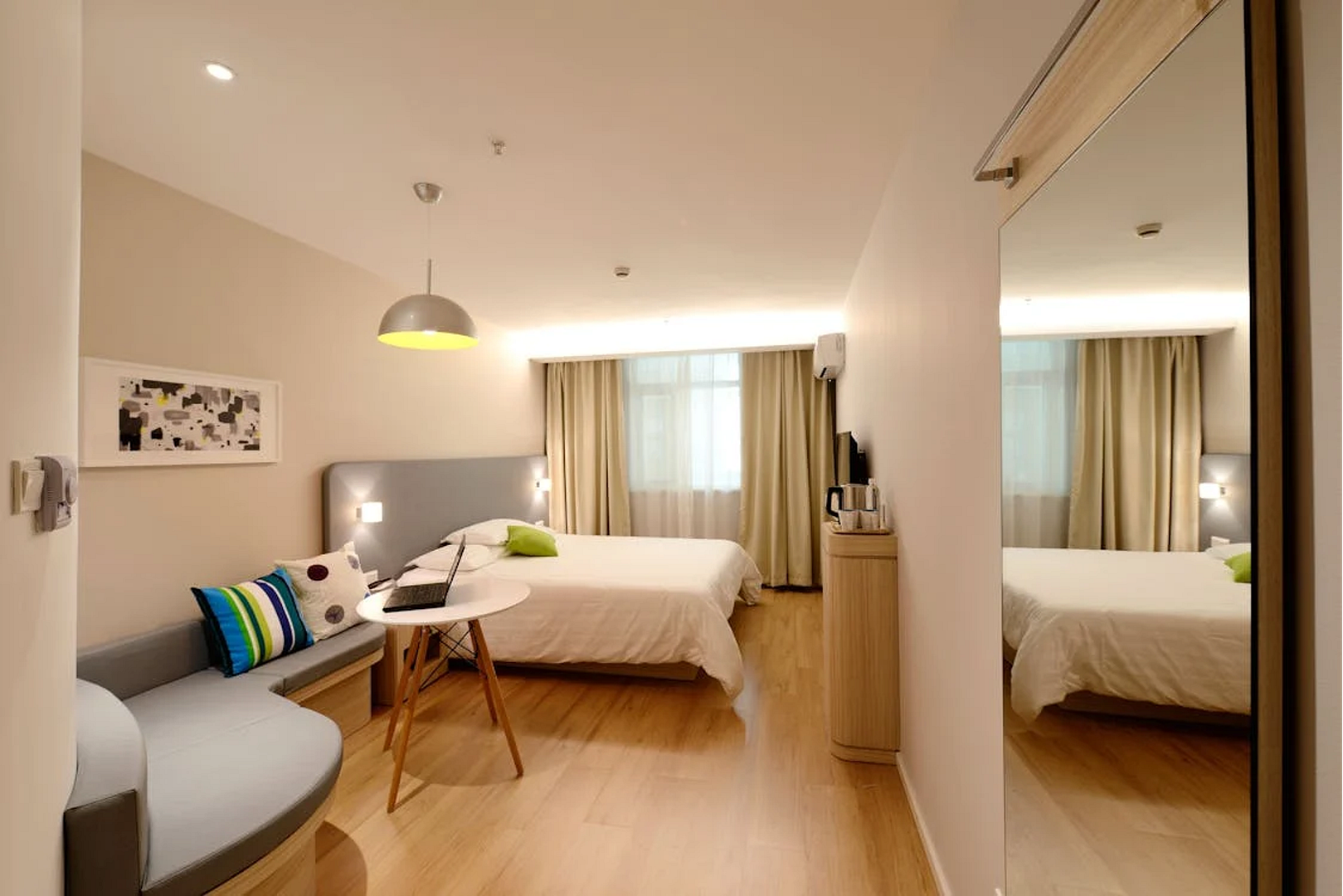
Bedrooms used to have one job. Now they carry three, sometimes five. A morning Zoom call happens six feet from where you slept. A workout lives in the corner. A vanity doubles as a desk. The shift did not come with extra square footage, so the same four walls have to handle everything. What gets lost first is the quiet tone that makes sleep feel natural. The room starts holding unfinished tasks. Papers stack up. Chargers blink. Laundry waits in a chair. Even if the bed is comfortable, the atmosphere feels alert.
Designing a multi-functional bedroom that still protects rest takes intention at a layout level. The bed cannot compete with every other element in the room. Furniture has to know its place. Storage has to work harder than usual. Visual noise has to stay controlled. A bedroom can absolutely hold a workspace, a lounge spot, or light exercise gear. It just cannot let those features overpower the purpose of sleep.
Bed as Anchor
A bedroom that carries multiple responsibilities has to be designed with hierarchy in mind, and that hierarchy starts with the bed. Centering the bed on the most stable wall, allowing space on both sides, and keeping walkways open creates visual authority. Matching bedside tables or balanced lighting reinforces that sense of order. Once the bed feels intentional and grounded, other elements such as a desk or bench feel secondary rather than competitive. Even in compact rooms, resisting the urge to push the bed into a corner preserves that anchored feeling and prevents the layout from looking improvised.
Comfort flexibility can strengthen this central role without turning the mattress into a catchall surface. Many homeowners explore adjustable bases to support upright reading or relaxed lounging before sleep, then return the bed to a flat position at night. This subtle adaptability allows the bed to accommodate evening wind-down time while still signaling that its primary role is rest. The rest of the furniture should visually defer to it, using scale and placement that support rather than distract from the room’s core purpose.
Day Seating
A bedroom without secondary seating quietly invites daytime sprawl across the mattress. Emails get answered in bed. Phone calls stretch out under the covers. As such, this erodes the mental association between the bed and sleep. Introducing a small sofa, loveseat, or built-in window bench creates a physical alternative. A slim bench at the foot of the bed or a compact two-seat sofa along an open wall is enough to redirect daily habits.
Positioning matters here as well. Seating should feel integrated into the layout rather than squeezed in as an afterthought. Upholstery that complements the bedding palette keeps the room cohesive, while scale prevents crowding. Once a separate lounging spot exists, the bed stops absorbing every casual activity.
Zoned with Rugs
Open floor plans can blur functions unless subtle boundaries are introduced. Area rugs serve as quiet dividers that define activity zones without building walls. A plush rug beneath the bed frames the sleeping area, reinforcing its central importance. A flatter weave under a desk or vanity marks a separate functional pocket within the same room.
The visual separation helps the brain categorize the space. Walking from a desk rug onto the softer bed rug feels like entering a different zone, even though no walls exist. Color coordination between rugs keeps the room unified while still clarifying purpose.
Nightstands that Store
In a multi-functional bedroom, bedside clutter can escalate quickly. Books stack up. Chargers coil across surfaces. Notebooks and devices compete for space. Choosing nightstands with deep drawers or hidden compartments changes that dynamic. Storage capacity allows everyday essentials to stay nearby without remaining visible.
Concealed charging stations or built-in cable channels reduce visual noise even further. Clear bedside surfaces support a calmer nighttime atmosphere. Instead of staring at reminders of unfinished tasks, the eye meets a clean, organized setup.
Compact Vanity
Morning routines require space, yet they should not spill into the sleeping zone. A narrow console paired with a mirror and dedicated lighting can function as a vanity without overwhelming the layout. Placing it along a side wall or near natural light keeps grooming tasks separate from the bed. The proportions should feel intentional and scaled to the room.
Organization plays a central role in keeping this area from dominating visually. Drawer dividers, trays, and vertical storage prevent cosmetics and accessories from spreading across surfaces. Once preparation ends for the day, the vanity should return to a tidy state that blends into the overall design.
Foldable Fitness
A bedroom that doubles as a light workout area needs equipment that disappears as easily as it appears. Foldable yoga mats, resistance bands, compact weights, or a collapsible bench can be stored under the bed or inside a closet without altering the room’s layout. Leaving fitness gear out in the open changes the tone of the room, turning it into an active zone long after the workout ends.
Storage strategy makes the difference. A dedicated basket, drawer, or shelf prevents equipment from drifting into walkways or resting against the bed. Once the session is finished, everything returns to its place, and the floor clears.
Calm Color Flow
Color can quietly control how busy or settled a space feels. In a multi-functional bedroom, consistency across all zones keeps the eye from bouncing between competing palettes. Soft neutrals, muted greens, warm grays, or gentle earth tones allow a desk, bench, or vanity to exist within the same visual family as the bed.
Accent pieces should echo rather than dominate. Even a workspace corner can follow the same restrained palette as the bedding. This continuity prevents fragmentation. The room feels cohesive, which supports a sense of order once the lights dim.
Bed Boundaries
Behavior inside the bedroom influences sleep as much as layout. Keeping bedding free from daytime tasks creates a clear psychological boundary. Meals, paperwork, and exercise stay off the mattress. The bed remains reserved for sleep and quiet wind-down time.
Over time, that consistency strengthens the mental association between lying down and resting. A multi-functional room can still honor this boundary. Physical discipline in how the bed is used supports deeper relaxation at night.
Desk Direction
Desk placement has a subtle psychological impact. Positioning the desk to face a wall or window instead of the bed separates work from rest at a visual level. The bed does not sit directly in the line of sight during work hours, which preserves its distinct identity.
At the end of the day, turning away from the desk and toward the bed reinforces that shift in purpose. Orientation alone can strengthen boundaries without adding dividers or screens.
A multi-functional bedroom does not need to sacrifice sleep. The bed remains the anchor, supported by design choices that respect its purpose. With structure and intention, one room can handle multiple demands while still feeling calm at night.