How do we truly become who we are?
While we enter the world with a complete physical presence and a given identity, the process of our formation never genuinely ceases. Family provides our initial language and worldview; culture and history pass memory down through generations; while our environment, experiences, desires, and choices continuously alter our course. We are at once heirs to the past and active interpreters, redefining and creating new paths upon what we have inherited.
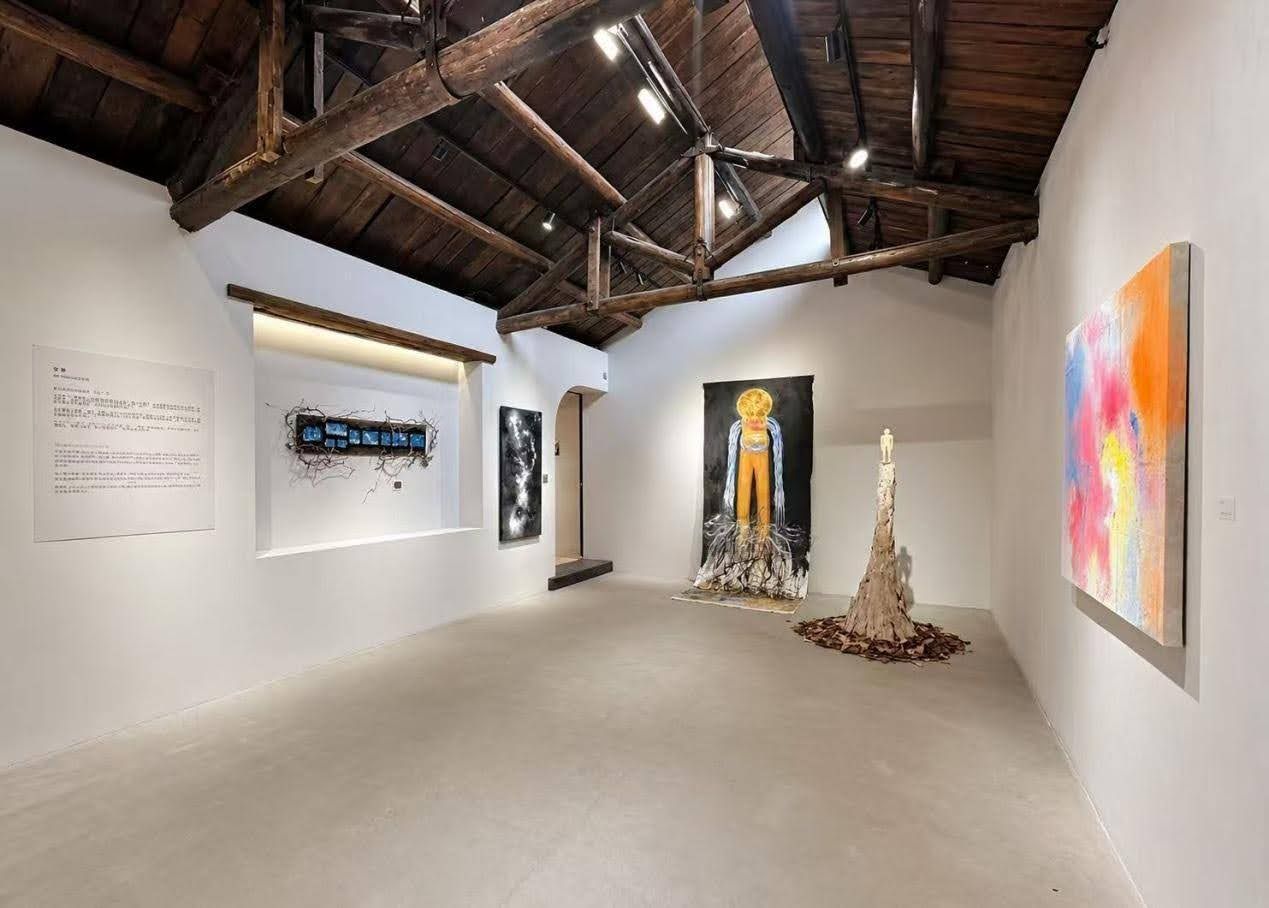
The exhibition “ Dasein” originates from a fundamental question of heritage: Why do humans place such immense weight on continuity, and what is it that we truly pass down? As the creative process unfolded, the artist realized that inheritance is far from a simple linear progression from past to future. Inherited cultures, memories, and concepts enter concrete human bodies and daily lives, interacting with new environments and choices. Heritage thus becomes an entry point, shifting the exhibition’s focus toward a deeper inquiry: How is a human being continuously formed?
“Dasein,” points to a mode of existence embedded within the world. In this exhibition, it does not denote a finished, static self, but rather an ongoing process of continuous becoming. Through a diverse array of media—including Dongba cultural artifacts, the human body, wood carving, abstract painting, Mani stone piles, and photography—the artist observes the evolving relationships between individuals and tradition, material, environment, belief, and desire.
Remnants — Starting from Tradition
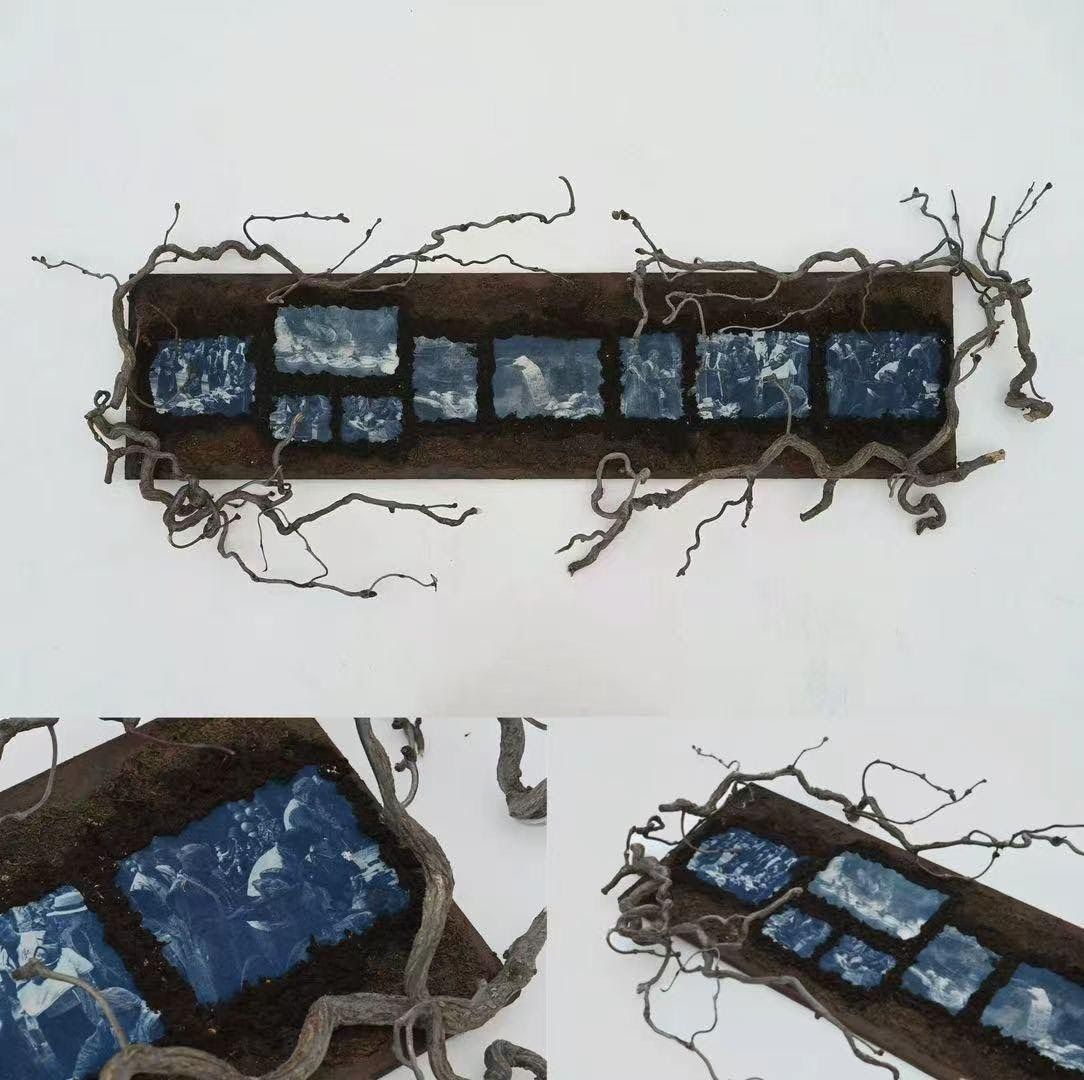
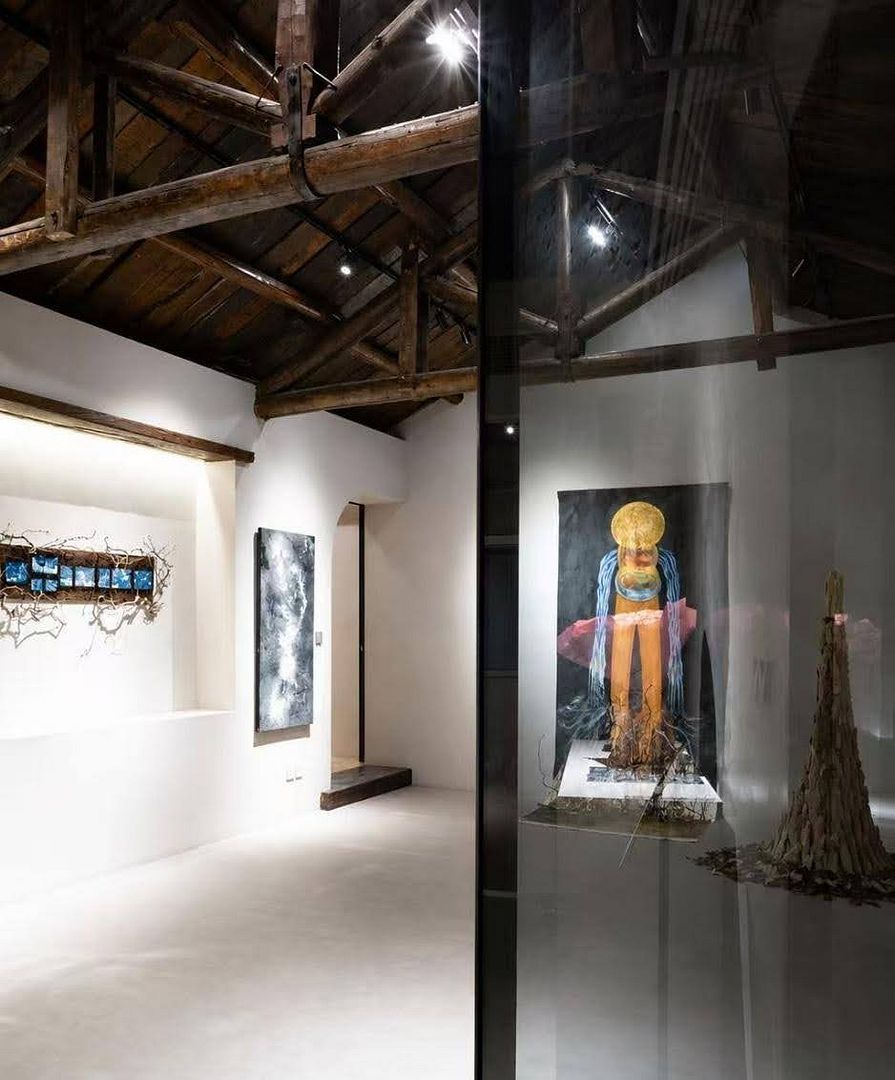
The journey begins with Dongba culture, where rituals, imagery, and natural elements form the artist’s initial observation of heritage. Cyanotype prints capture images that feel like preserved memories and marks left by time upon material, while natural components like tree branches bridge cultural memory with nature itself. Here, heritage transcends the preservation of isolated symbols; it reveals itself as an ongoing act of reinterpretation.
Composition — What Makes a Person?
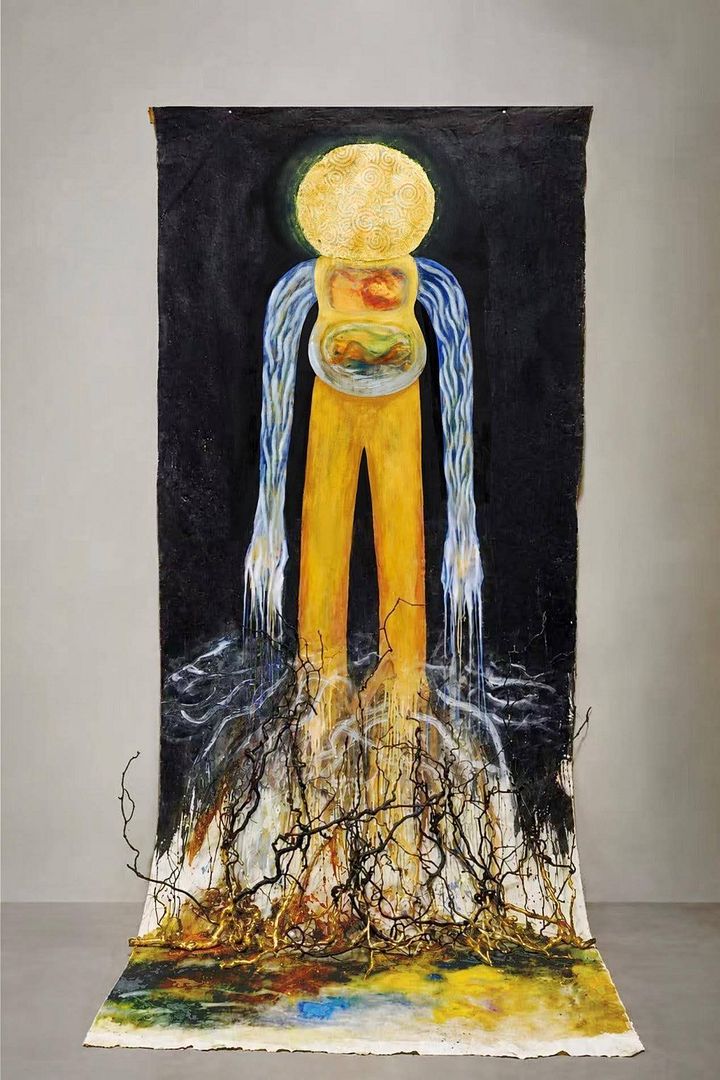
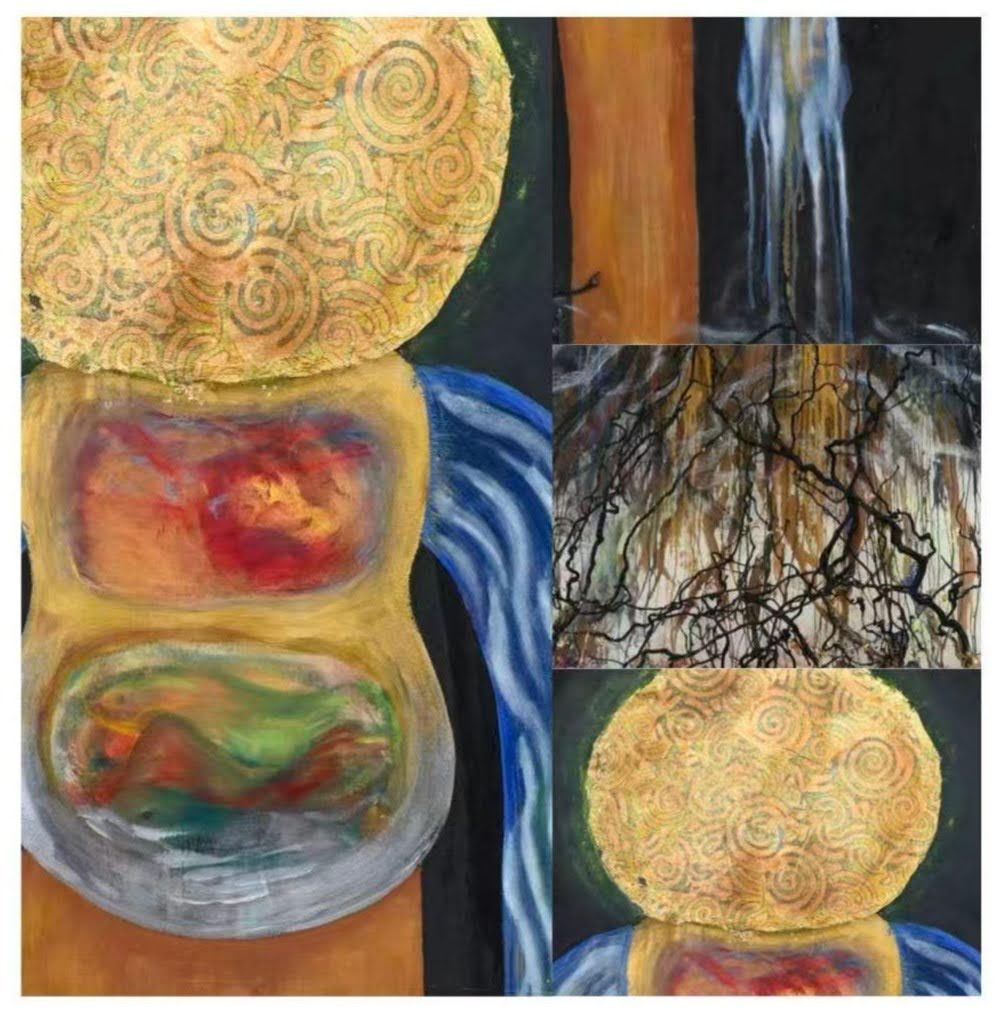
A three-meter-long bodily painting treats the physical frame as an open container. Elements such as food, thought, emotion, money, and desire converge inside the body, interweaving and colliding. Inspired by the Buddhist concept of “dependent origination” (Pratītyasamutpāda), the work suggests that a person—much like a flower dependent on seeds, sunlight, water, and time—is not a fixed entity, but a dynamic synthesis of endless external and internal variables.
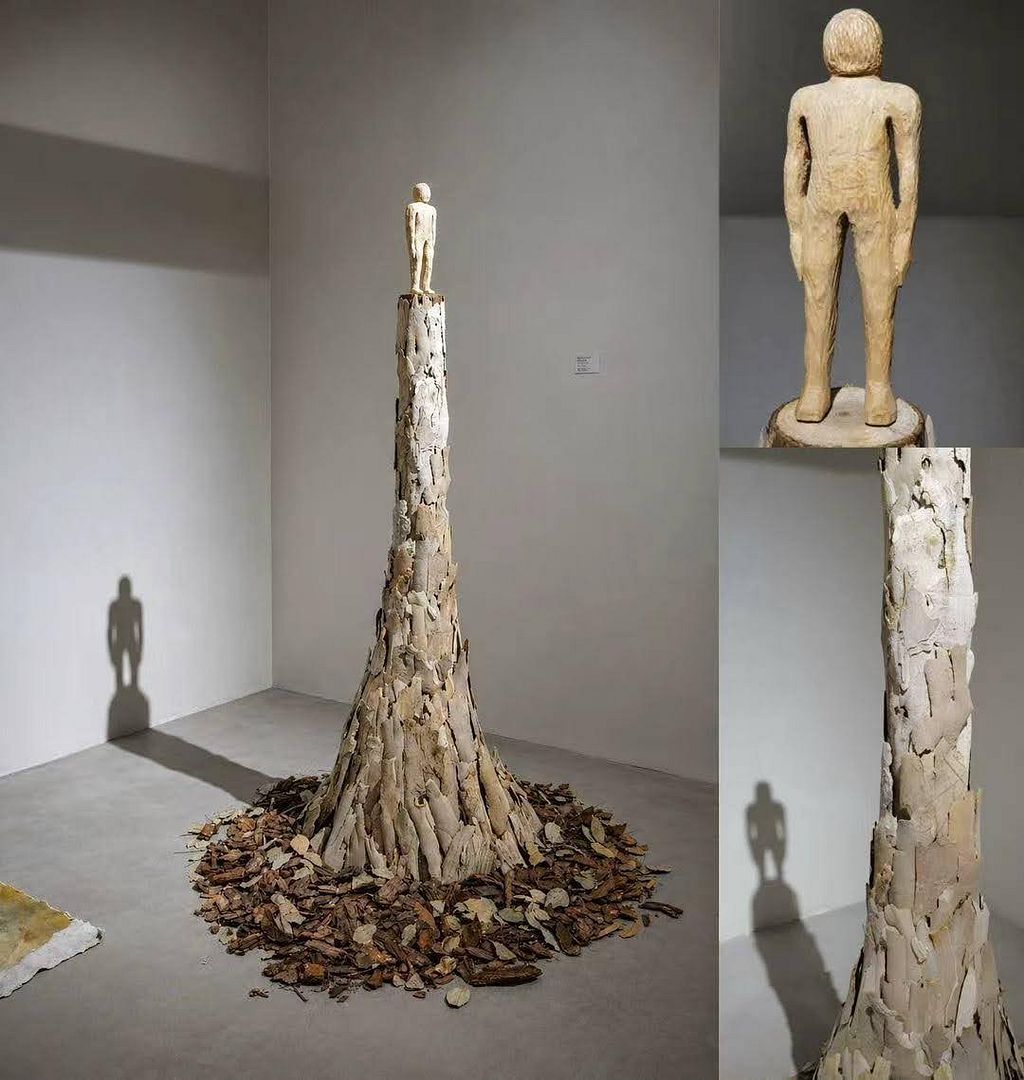
Carved into — How One Is Shaped
Extending these inquiries into physical materiality, wood sculpture becomes a metaphor for human shaping. Working with a square block of wood, the artist engages in cutting, striking, and polishing. Yet, the material asserts its own agency: grain directions, natural resistance, and unrepeatable marks transform the process from “shaping wood into human form” into a reflection on how life, environment, and chance permanently carve their marks onto us.
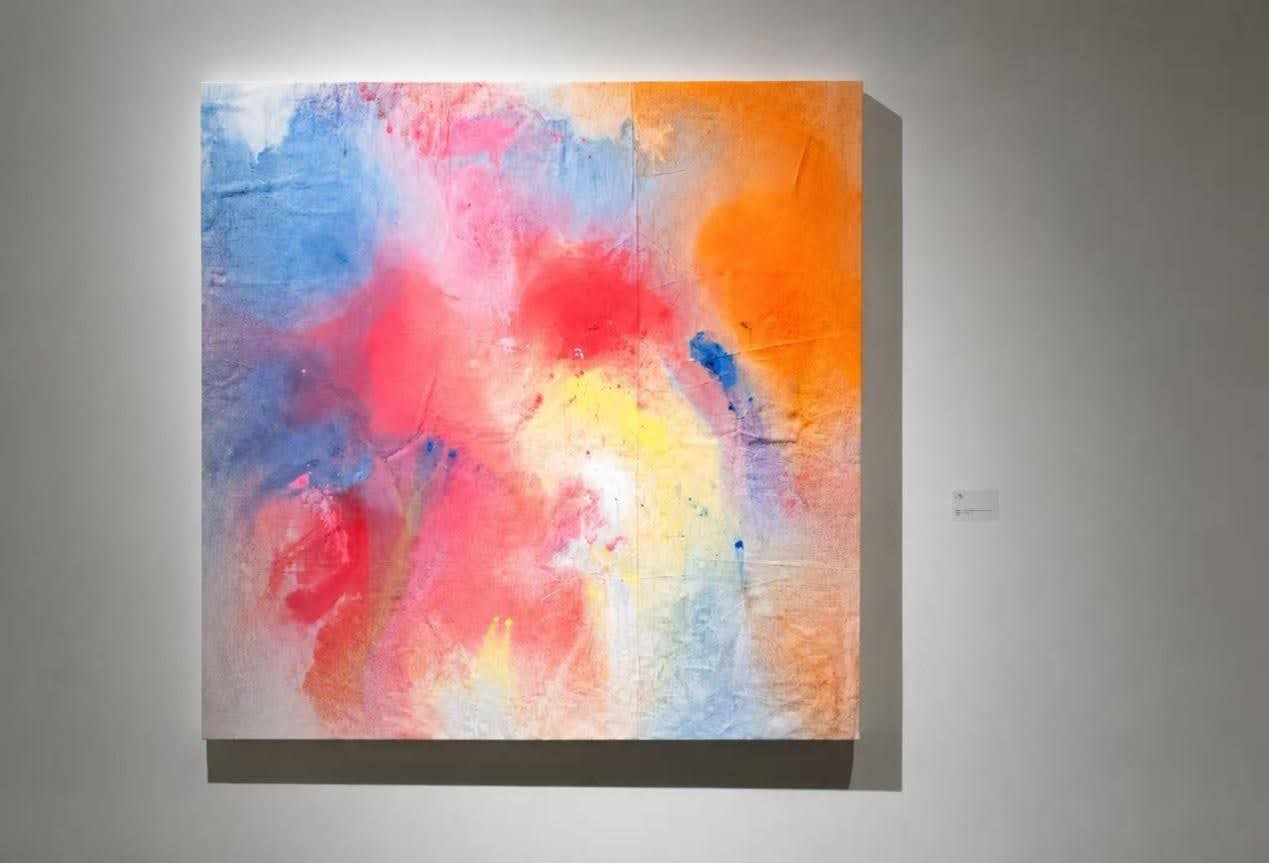
Reaction — The Body in Motion
An abstract painting further explores the internal dynamics of the body. If “Composition” asks what constitutes a person, “Reaction” asks what happens once these elements enter us. Colors, forms, and lines collide and merge on the canvas in continuous flux. Thought alters emotion; desire shifts choice; new choices reshape life. Becoming is never a final result, but an uninterrupted reaction.
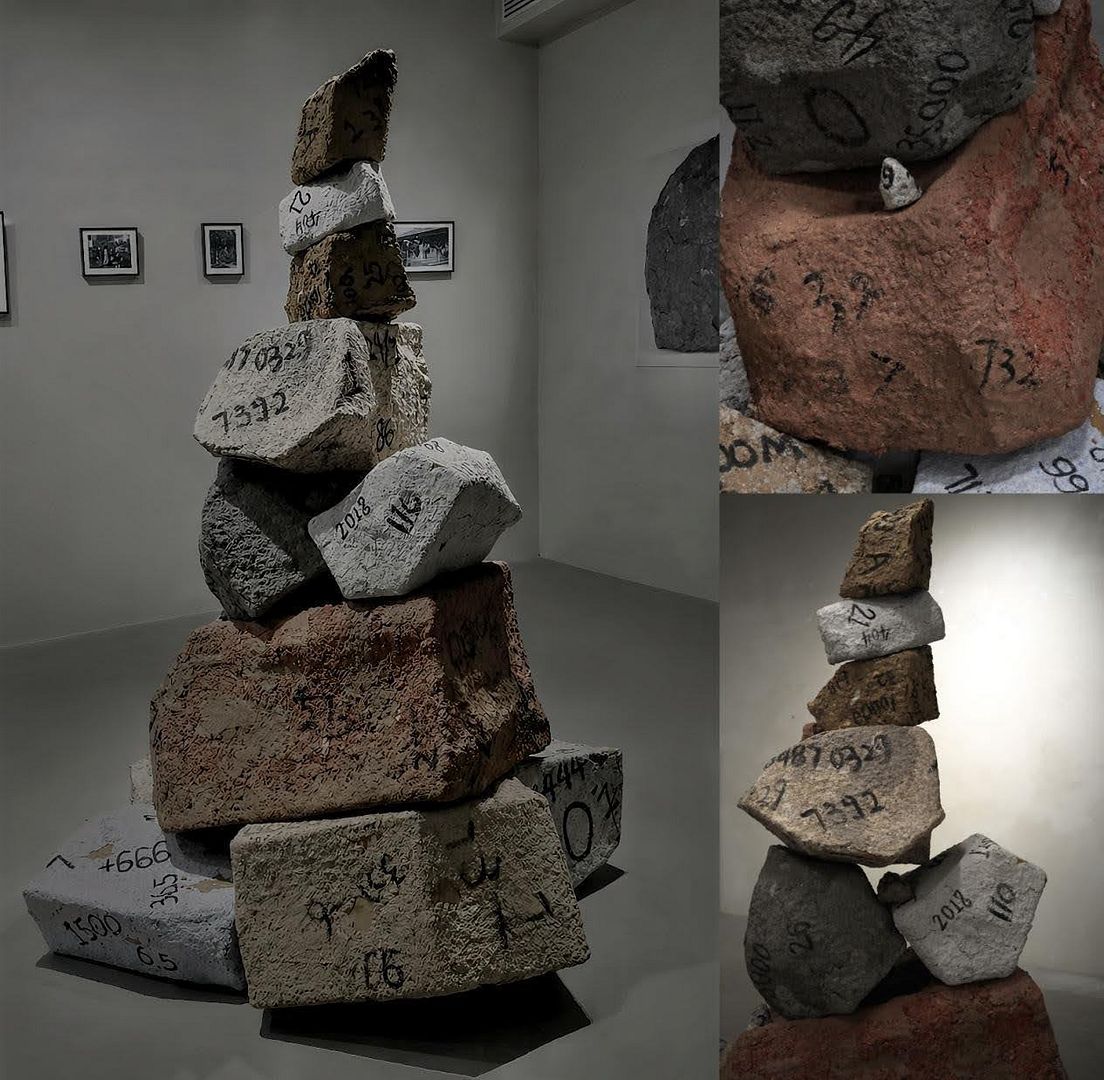
The Wish — Contemporary Translation of Traditional Prayer
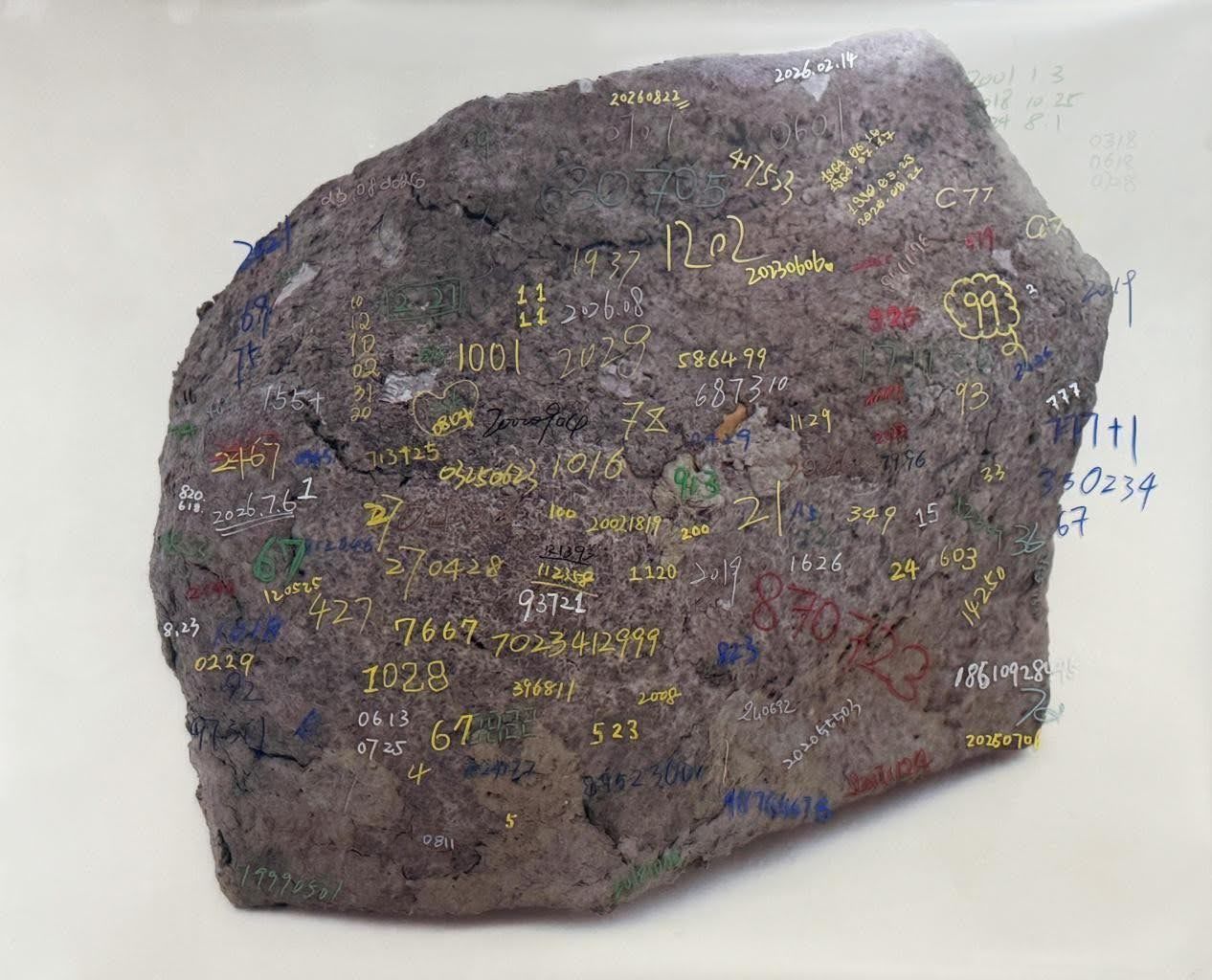
Mani stone piles traditionally hold sacred prayers. The artist retains this classic form while substituting stones with discarded everyday materials like newspapers and delivery boxes, replacing traditional scriptures with numbers. As a universal language of modern society, numbers quantify wealth, achievements, age, and social value. By inviting visitors to write meaningful numbers onto a massive central stone, the work transforms “forming” from a conceptual discussion into a shared, live participatory event.
The Pursuit — Action Beyond Desire
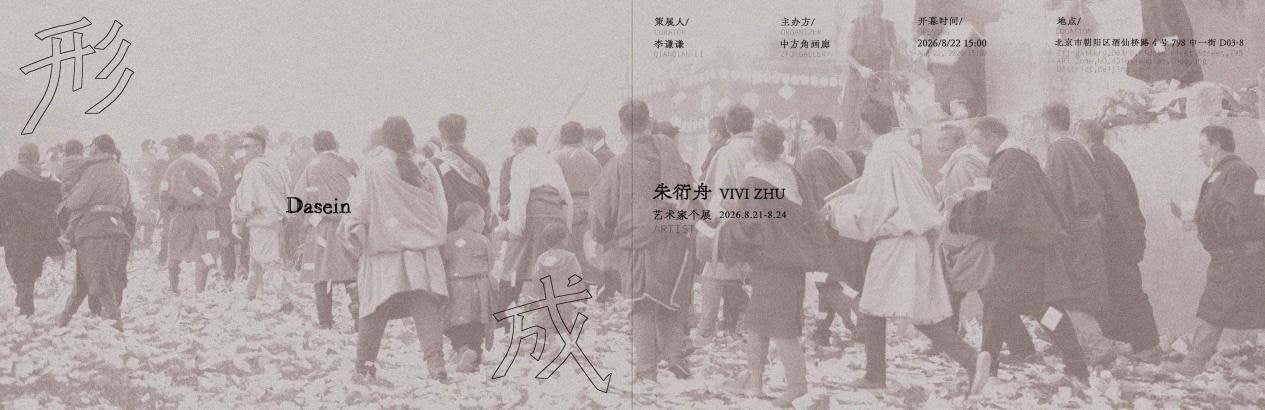
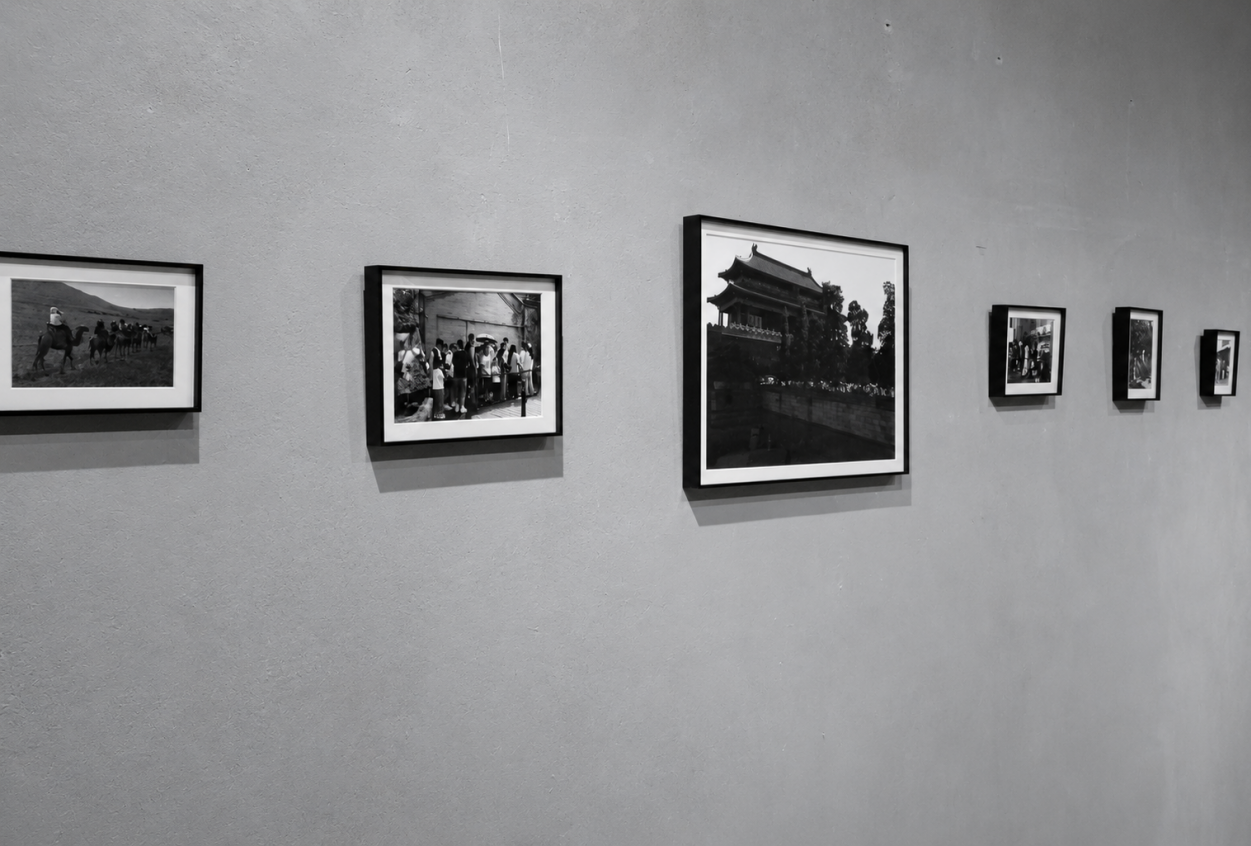
Juxtaposed with the Mani stones, a photographic series documents queues in everyday life—people waiting for food, entering temples, or purchasing consumer goods. This banal act reveals a shared structure: individuals exerting time and effort to attain a desire. It poses an open question to contemporary society: as our means to fulfill desires expand, have we truly become happier?
Intrusion — The World Entering the Self
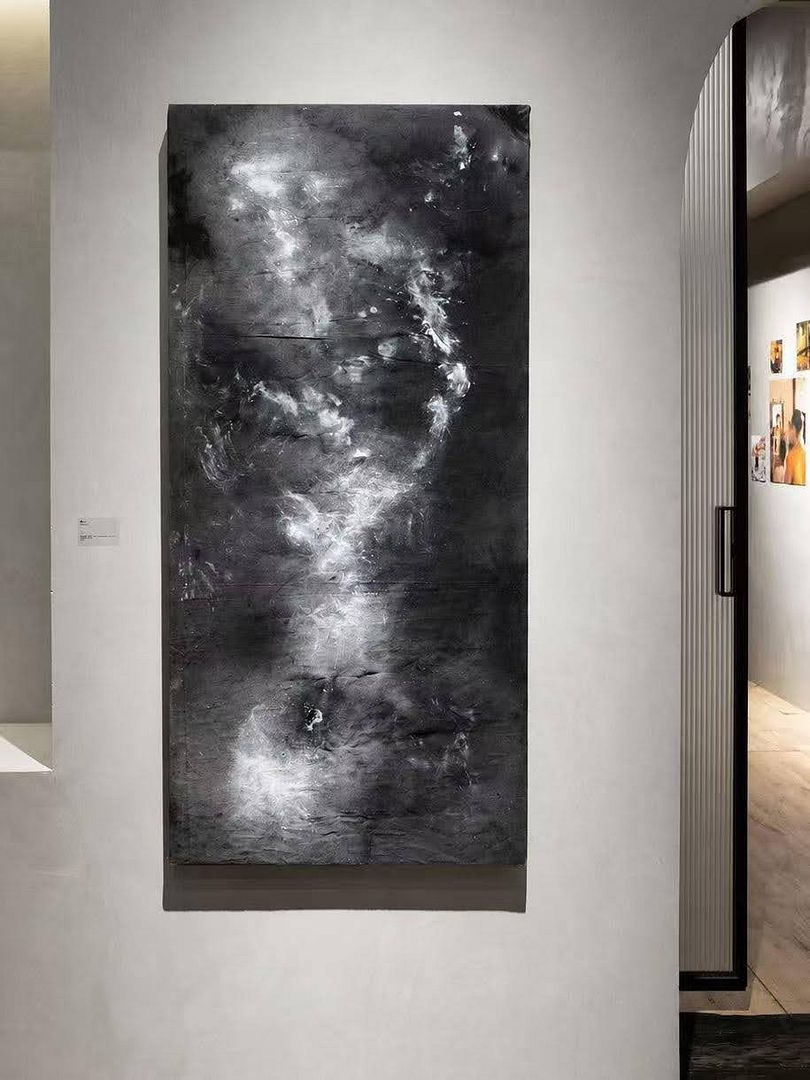
The black-and-white abstract painting “Intrusion” considers how external environments penetrate the individual mind, inspired by observations of children in Tibet encountering global information flows. During installation, hanging the abstract work vertically unexpectedly revealed forms resembling a human face and body—an accidental visual shift that reinforces the exhibition’s core thesis: neither human beings nor artworks exist as static entities; they are constantly reshaped through interaction with their surroundings.
Conclusion
“ Dasein” departs from tradition without remaining tethered to it. We are both the custodians of history and the architects of what comes next. Materials throughout the exhibition mirror this truth: cyanotypes preserve light, wood yields to the chisel, colors collide, and visitor contributions reshape the art. Life offers no final moment of absolute completion. We are perpetually inheriting, changing, being shaped, and shaping in return. We become ourselves precisely within these unending relationships.