A hobby used to need a place. A guitar sat in the corner. A sketchbook lived in a bag. A poker table, chessboard, camera, or record shelf took up real space.
Now many hobbies live on a phone. They sit beside messages, maps, music, and work email. This shift changed more than access. It changed the shape of leisure.
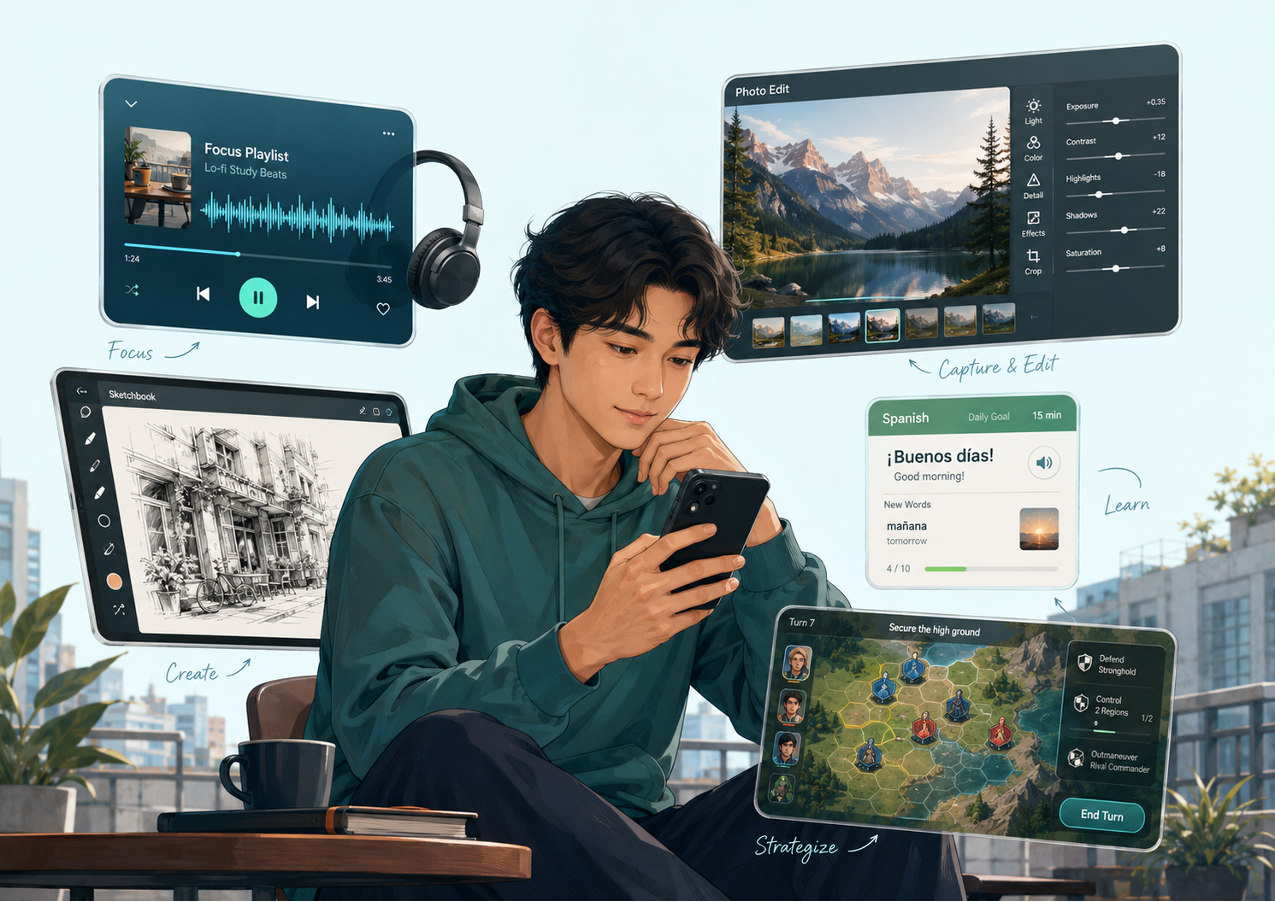
Digital hobbies now fit into small gaps. A person can edit photos on a train, practise a language in bed, build a playlist at lunch, or play a quick strategy game between tasks. The hobby bends around the day, not the other way round.
That makes leisure feel more personal. It follows mood, time, skill, and taste. It no longer waits for a free Saturday.
Hobbies Now Fit The Person, Not The Other Way Around
A digital hobby works like a jacket with many pockets. It can hold tools, progress, settings, notes, and small rewards. The user does not need to start from zero each time. The app remembers the shape of the habit.
This matters because people use free time in uneven pieces. Ten minutes in a café do not feel like two hours at home. A good digital hobby adapts to both. It lets a person read one chapter, tune one photo, finish one lesson, or play one short session without breaking the flow.
Personal choice also runs deeper now. Users pick the pace, format, device, and mood. One person wants calm. Another wants skill. Another wants social contact. Mobile platforms meet these needs in narrow ways. A music app can learn a taste. A fitness app can track a weak point. A strategy app can keep progress close at hand.
That same pattern appears in mobile gaming. Some players want a clear, direct way to reach a familiar card room from their phone. In that context, BC Poker APK fits as part of a wider move toward app-based leisure, where the hobby follows the user instead of staying tied to one screen or one place.
Personalisation Turns Small Habits Into Daily Rituals
Digital hobbies feel personal because they learn from use. Each tap leaves a mark. The app sees what a person repeats, skips, saves, or finishes. Over time, it starts to act like a well-used desk. The tools sit where the hand expects them.
This makes small habits easier to keep. A language app opens at the next lesson. A drawing app keeps the last brush. A music app brings back a half-built playlist. A game keeps the player’s level, table, or saved mode. The hobby waits in the right place.
| Digital Hobby | Personal Feature | Why It Matters |
| Music | Saved playlists and listening history | The app learns the user’s taste. |
| Fitness | Goals, streaks, and progress logs | The user sees effort build over time. |
| Reading | Bookmarks and reading position | The reader returns without friction. |
| Photography | Presets and saved edits | The same style becomes easy to repeat. |
| Gaming | Profiles, progress, and preferred modes | The player keeps a clear sense of place. |
This table shows the main shift. Digital hobbies no longer act like blank tools. They act more like familiar rooms. The chair has the right height. The lamp points at the page. The door opens with one push.
That comfort matters. It lowers the cost of starting. A person does not need to gather gear, reset settings, or rebuild context. They can step back into the hobby at once.
The Phone Has Become A Personal Hobby Shelf
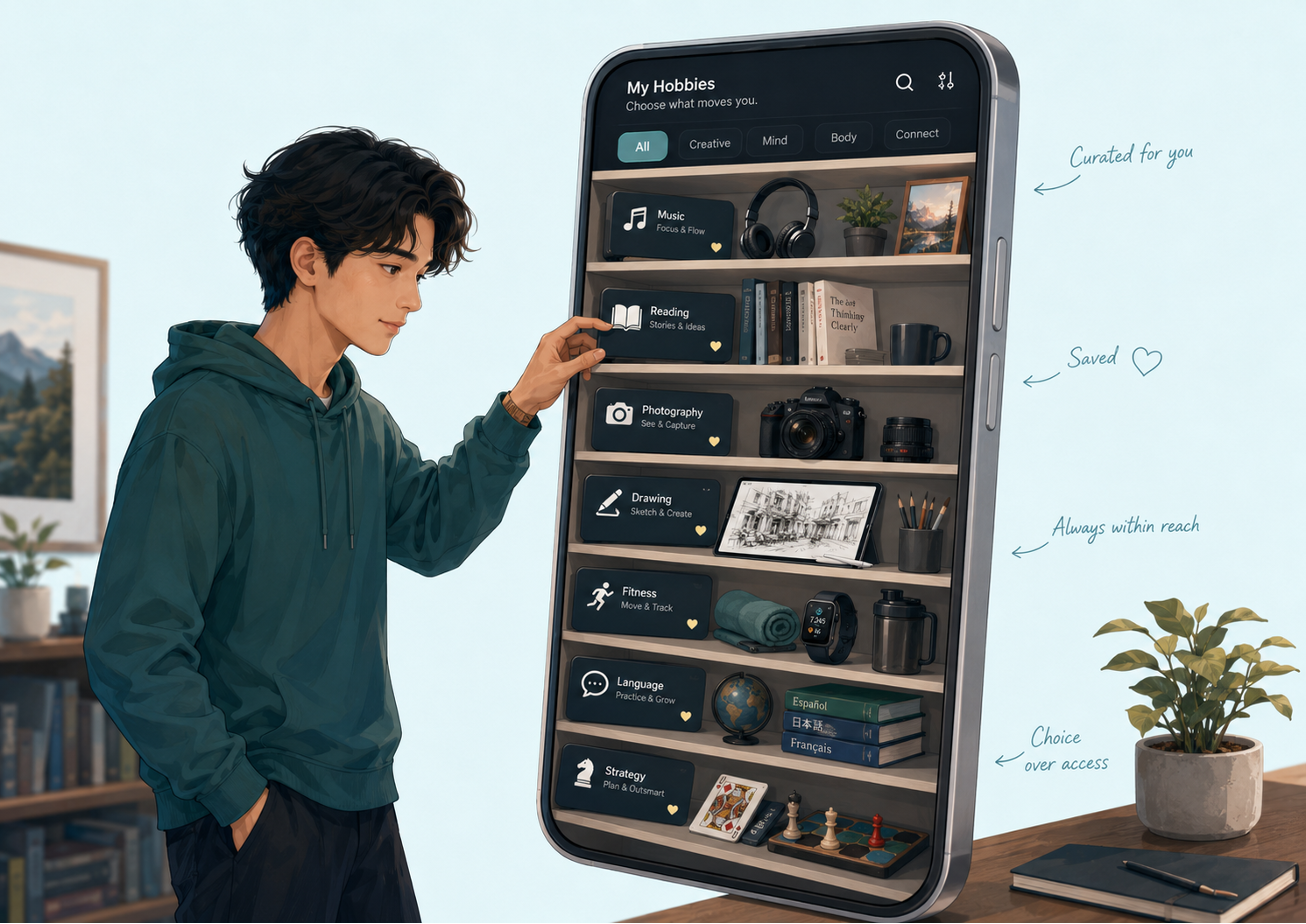
A phone now works like a small shelf in a coat pocket. It holds books, songs, photos, games, notes, and tools. Each app has its own place. Each one opens with a tap.
This makes hobbies easier to reach. A person no longer needs a studio, a club, or a long free evening. They can carry a small part of the hobby all day. That part may be a playlist, a saved photo edit, a chess puzzle, or a card game.
The key point is access. When a hobby sits close, people use it in more personal ways. They match it to a mood, a break, or a quiet moment. They do not need to plan around it.
This explains why narrow hobby apps keep growing. People want tools that feel direct and familiar. A player who prefers mobile card games may save a link such as https://bcpoker-app.com/ for quick access, just as a reader saves a book app or a runner saves a route tracker.
The best digital hobbies do not ask for much space. They wait beside the user. Then they open at the right moment.
Choice Matters More Than Mere Access
Access starts the habit, but choice keeps it alive. A phone can hold a thousand hobbies. Most will stay unused. The ones that last feel useful, clear, and easy to return to.
A personal hobby app gives the user control without noise. It does not force one path. It offers a few clear doors and lets the user pick. That may mean a short lesson, a saved match, a photo preset, or a playlist built for one mood.
Strong digital hobbies often share the same traits:
- Fast Entry: The user can start in seconds.
- Saved Progress: The app remembers the last step.
- Clear Goals: The next action feels obvious.
- Flexible Sessions: The hobby fits five minutes or one hour.
- Personal Settings: The user can shape the tool to taste.
- Low Friction: No long setup blocks the first move.
- A Sense Of Return: The app feels familiar each time.
These traits make digital hobbies feel less like software and more like a worn notebook. The cover may be plain, but the pages know the owner. Marks, folds, and notes give it weight.
That is why personalisation matters. It turns access into attachment. A hobby becomes easier to start, easier to shape, and harder to forget.
Conclusion: The Most Personal Hobbies Are The Easiest To Return To
Digital hobbies have become personal because they now live close to daily life. They fit in pockets, remember progress, and open without ceremony. A person can return to them in a spare minute, then leave without losing the thread.
This does not make every app meaningful. Many tools still add noise. The best ones do the opposite. They remove steps. They protect focus. They give the user a clear place to continue.
A strong digital hobby feels like a familiar object. It may be a marked book, a tuned guitar, or a worn pair of running shoes. It works because the owner has shaped it through use.
That is the real shift. Digital leisure no longer feels separate from routine. It blends into the small spaces of the day. When it respects time, taste, and attention, it becomes more than a pastime. It becomes a habit with a personal shape.