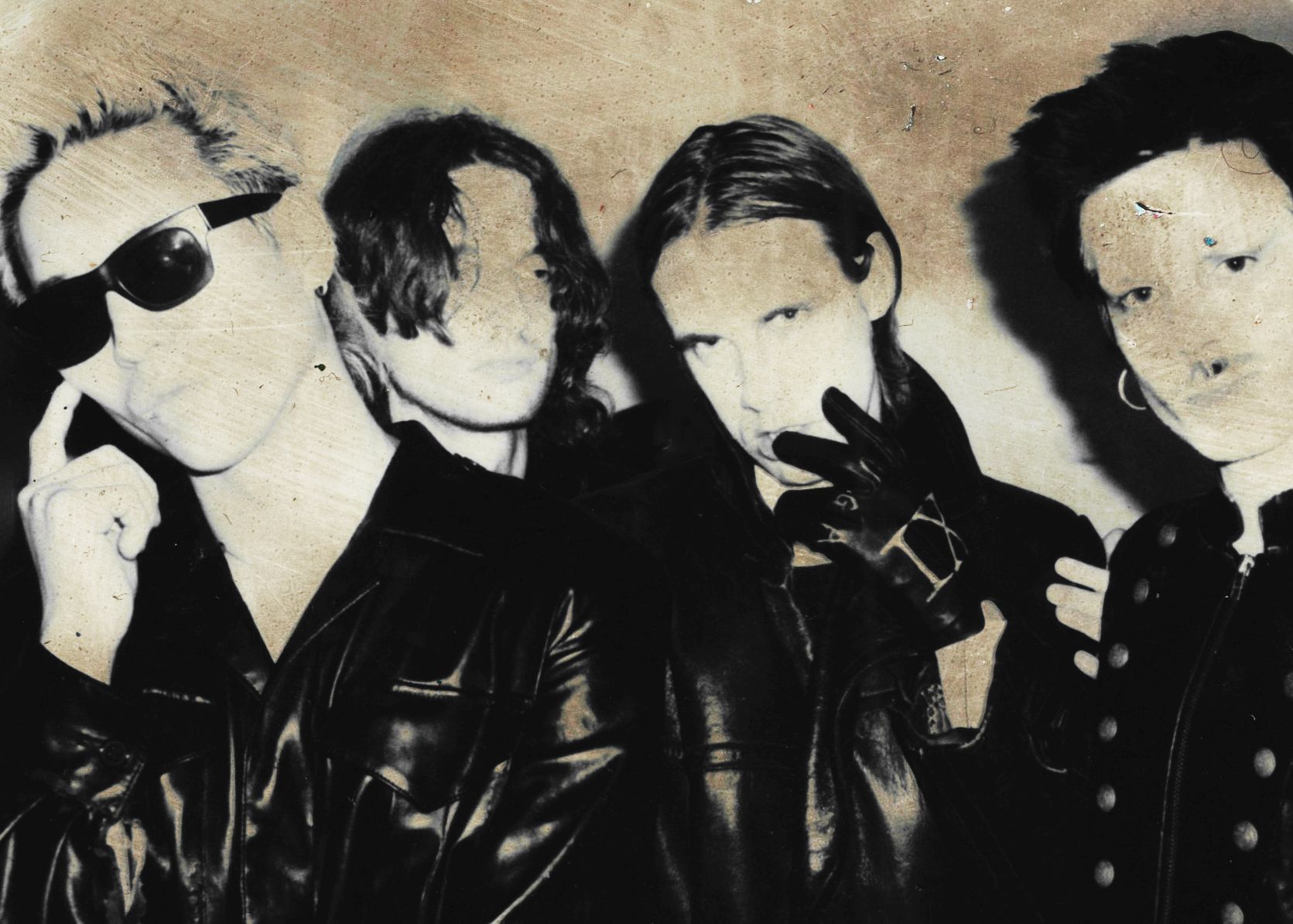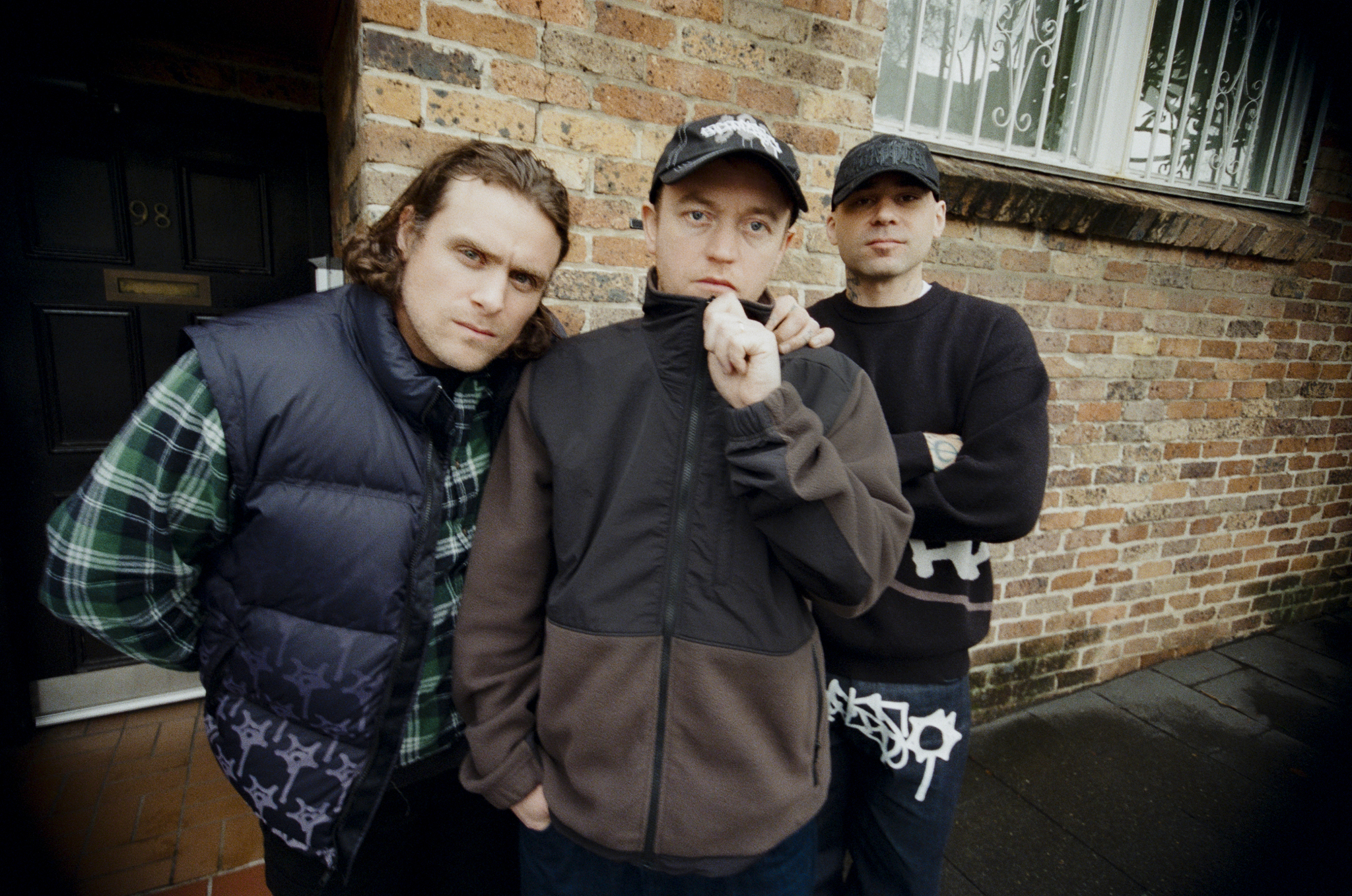
There is something strangely joyous – the kind of surprise that forces an uncontrollable smile – about watching a room full of blokes raise their hands in unison to cry out: “How do I redefine all my love for you? / I guess I look to the sun with you…” Yet at a DMA’S show, this emotional catharsis is undeniably part of the draw. For more than a decade, the Australian trio have offered something close to a safety blanket: their sound soothing, their lyrics beautiful, and their live shows a place where thousands of fans can embrace one another arm in arm while singing their hearts out.
For the Sydney trio, Britain has long felt like a second home, and it’s easy to understand why. Even at the launch show of their newly-released fifth album, DMA’S, frontman Tommy O’Dell is dressed in an almost exclusively British-coded uniform of a raincoat and burberry-looking cap, tugging on his vape before opening his mouth and delivering his unmistakably angelic vocals.
Beyond aesthetics, the band sits somewhere between the Britpop influences that shaped them and the modern indie landscape they have helped to define. They are a collision of the rock, pop and indie sounds that British fans know and love. For fans their sound feels both familiar and distinctly their own, and is elevated by their sincere and poetic lyricism.
Now, with four acclaimed albums behind them; Hills End (2016), For Now (2018), THE GLOW (2020) and How Many Dreams? (2023), and the ten-year anniversary of their debut firmly in the rearview, the three of them – O’Dell, Johnny Took and Matt Mason – have returned to their roots. Yet, as Took puts it, this is a version of the band with a “fresher” sound. Written and recorded between their own studio in Sydney and Los Angeles, the album expands on the sound that first won them such a devoted following, embracing where they have been and where they are going.
Above all, for the band this self-titled album feels like a homecoming. It carries the familiarity of Hills End without attempting to recreate it, viewed instead through the perspective of musicians who have spent the past decade growing, experimenting and figuring out what comes next. It is full of love, storytelling and the kind of sincerity that has kept DMA’S fans returning for more.
In conversation with 1883, DMA’S discuss their new self-titled record, playing live, and more.
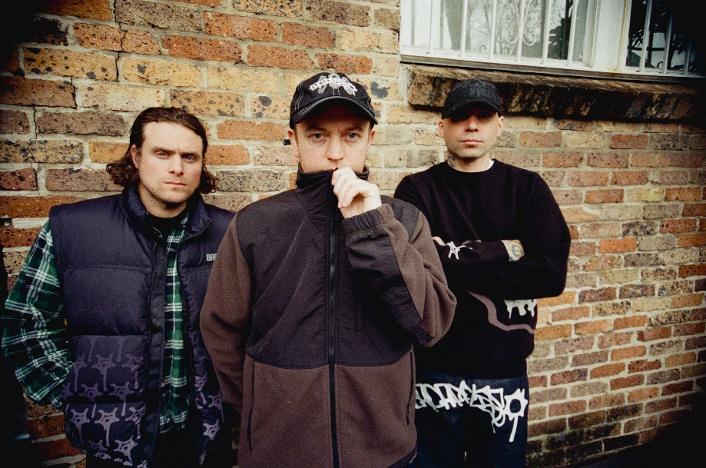
Congratulations on your new album DMA’S! How’s this week been? I imagine it’s been quite hectic with all your launch shows.
Yeah, it’s been good. We’ve been doing these acoustic Q&A performances with a listening party. The response has been great, which is cool. We’re not a chatty band on stage, you know; we kind of just play the songs and get it done, so it was kind of nice to be in a context where we could chat and maybe tell a little bit more about our backstory and have a bit of a laugh and whatnot, and I think the fans appreciated that.
You released four singles before the album came out, were there any that hadn’t been released yet, you were particularly excited for people to hear at these shows?
Do you know what, everyone is appreciative of particular songs for different reasons, but, the general consensus is…what do they say? “All thriller, no filler”…I think it’s actually killer, but I heard someone say thriller the other day and I thought that was good.
No, people are enjoying it; they’re really enjoying it. There’s a track called ‘El Alamein’, which is the opening track, and people are enjoying that. There’s a song called ‘Emailz’, which is becoming quite instant to some people, and then there’s a ballad as well called ‘Dancing Luck’, which has an amazing vocal performance from Tommy.
That’s my favourite one.
Oh, nice! There you go! It’s a crazy vocal melody, because it just feels like every section of the song just keeps going up, and up, and up.
That was one of those ones where we tried to re-record the vocal, but there was just a candor, and a vulnerability in the initial vocal take that just couldn’t be replicated. There was something special about it.
Tell me more about the meaning behind the title of the opening track ‘El Alamein’, what’s the story behind it?
That was a Mason one, but I know what the rough idea is. It’s an interesting one, because El Alamein was a battle in Egypt during World War II, [and] in King’s Cross [Sydney], there’s actually a famous fountain that looks like a dandelion. It’s called the El Alamein Fountain, and I think it’s a memorial kind of fountain thing. Mason lived around that area for a while, and so did I for a bit.
Anyway, I remember Mason kind of noticed the name of the fountain and looked into the history of it. It’s kind of a hard concept to explain, but, he basically tries to think about this guy who’s in this battle in World War II, and then thinking of his bloodline, and the generational kind of processes from there. And then his grandchild or something is, like, hanging out in King’s Cross now, but battling through different things. Most of our songs are more personal relationships – love songs if you will – so it’s kind of nice that Mason was writing about something from a different perspective.
I really love that there’s no build-up to it and it just kicks the album off immediately. Was there any particular reason for not easing people into it?
Yeah, definitely. There’s a few things. So, firstly, I think if you’re making an indie rock album, it’s good to come out of the gates strong. It’s [also] cool to think of songs that would be a good opener for a live show. On our first record, we had ‘Timeless’, and then, on the last one, we had ‘How Many Dreams’, and they’re the kind of songs that could be great openers or the first song of an encore. But another thing is, there’s a special place in people’s hearts for the first track on a record.
We found it really hard to pick all the singles for this record because there were too many that were our favourites. I think they all at one point got the singles chat. That one [El Alamein] was particularly close. So, there’s kind of a spot where you get to make a song an opener on a record, and it kind of has its own special place, without it officially being a single.
This is your fifth album, can you tell me a bit more why it feels like such a homecoming to you.
Yeah, I think the main reason is: we actually tried a couple of producers for this record, and we went over to America at one point. I’m not going to say who the producer was, but it didn’t really work out – they’re an amazing producer in their own right; some of our favourite records – we were just in different head spaces and the production just didn’t really suit where the songs were at, so we actually ate into quite a lot of our budget at that point, and then we were kind of like his are we going to save on that? And we were like, well, Mason and I have been producing music for other people for years now, and we do a lot of it at home, so how about we kind of focus on doing it at our own studio?
There’s something analogous almost to the way we first started. ‘Delete’ and ‘Feels Like 37’ and ‘You’re Low’ and lots of those songs, they were recorded in my scummy bedroom when I was 20, above a shop front in Newtown, where we’d grab my mattress and put it up against the wall and squeeze a guitar amp in there, and it was all very DIY, and people like that sound, you know. I think that sound suits us, because Tommy’s voice is so pristine and so poppy, if the background is kind of indie rock and a little bit sloppy, and lazy, but charismatic, I think that combination works really well.
We almost used our initial sound, or the sound of us in our nascency [as] the inspiration for this record, and so it kind of felt right to self-title it. We’ve got a big group of fans who really love that early material as well, so we kind of wanted to do it for them. It doesn’t sound exactly the same as the first stuff – and we wouldn’t really want it to – but it has that spirit.
Even calling it DMA’S and finally having a self-titled record. I feel you do a self-titled record either at the start, or later in your career, when you kind of want to make a statement. I guess for us, especially going on a tangent for the last couple of records: we did become more produced, we were working with more elite producers, and that was really important for us. I guess after that, we’d kind of taken that as far as we wanted to.
You’ve spoken about the recording process being a bit more raw, a bit more DIY, was it a challenge trying to let go of being so pristine and perfect? Or was it a relief?
I think it was fun. Like, it’s fun going, “oh, that was a bit dodgy, but, maybe I’ll just leave it”, you know? Or, another thing that was really important was there were so many tracks off the demos that we used. There’s this track called ‘One and Only’, which is a real kind of upbeat rock one – I think it’ll be a fun one to play live. The initial demo was a live performance that we did years and years before, and we couldn’t find the stems of it because it was on such an old computer, so what we did is – it’s funny – we used AI to extract stems.
It’s funny because there’s so much talk about AI and music and whatnot, and I was speaking to Mace about it and was kind of saying it’s a bit like fire; You can use it to cook food and sustain yourself, or it could burn down your house, you know? And I think if you use it [AI] in the right way, it can be good. In this way, we extracted this vocal, and then Tommy doubled it and layered it.
I think there’s something, especially in vocal takes, when, say, Tommy doesn’t know the melody as well as he would have if he’s been singing it for a year straight, or something like that. There’s a vulnerability to a vocal take that you get on the demo when you’re not 100% sure of the melody, or you don’t exactly know what you’re doing. There’s a real candor to that that I think’s beautiful.
Do you feel that experimentation, or instinct is more natural as you’ve become more comfortable as musicians and producers? I heard Tommy had a cold at one point when you were recording this album.
Yeah, that’s right. And sometimes it sounds good because of that, you know? There were lots of things like that. In that ‘Dancing Luck’ song, actually, now I think about it, the ending is, like, the drums kind of doing this weird thing with a really loud piano riff and just kind of noise, and fucked up shit in the background. That’s not really something we’d normally do you know, so we were just like let’s go for it.
Tommy has said he can feel and hear how relaxed you guys were when you produced this record when he listens back to it – do you think that’s because you took your time with it?
Looking back on it, it was a good thing. But I’m also glad we have a team around us that can at least try and put deadlines down. They didn’t always stick, but it can be pretty dangerous I think for artists to never have a deadline, because you could go on forever. There’s some quote, it escapes me now, but it’s like; a song’s never finished, it’s just released, or something like that.
I think we found a nice happy medium between allowing creativity to flourish through having more time, and to be able to think deeper on the songs, but not letting it drag out too long, you know?
Yeah definitely. Focusing a bit more on the lyrics, for ‘My Baby’s Place’, I think Mason described the lyrics as more relatable and more literal compared to previous tracks which have perhaps been more metaphorical, was that an intentional shift?
Yeah, that’s true. I’ve actually been trying to write a little differently. Not less…less poetic, but, maybe, more specific? I used to like writing super poetically where stuff didn’t necessarily, like, mean something specific, but it more triggered thoughts and emotions to the listener, and they could apply their own meaning to that. I find that’s a really powerful way of songwriting; feel like [Bob] Dylan does that a lot. It kind of seems like gibberish, a lot of it, but it evokes a tremendous amount of emotion. But recently, I’ve been trying to write more specifically.
Did that translate to this record?
For me, the only song I can think of, in particular, is probably ‘One and Only’. Those lyrics, they were when I decided I was gonna ask my wife to marry me and wanted to lock down into starting a family. Lots of those lyrics are about rainy, cold mornings in Melbourne; frosty mornings in Melbourne, and kind of making those decisions in life.
It was originally called, ‘Big Life’, actually, that song.
It’s funny, because there’s another song that we did, that hasn’t been released – we didn’t end up releasing it yet, but we probably will – but it’s called ‘Best Life’, so there was ‘Big Life’ and ‘Best Life’, and so we decided ‘One and Only’ kind of made sense. And you know, you can imagine people singing the chorus, it’s quite obvious, it’s an obvious song title.
From that then, are there any songs from the album you’re super excited to be playing live?
I think that ‘One and Only’ song will be fun. I think lots of the old school fans will like it. But I think ‘Killing Time’ will be my favourite. I think there’s something really fun we can do with that string sound that’s at the start; maybe something super dramatic that we can use to incorporate into either an encore or a show opener. And also, I get to play electric guitar on that one, which doesn’t happen that often, and so it was pretty fun being able to do that.
When you start playing these new songs live, and you bring out a new record, is there any apprehension about playing them?
Not really. I’m pretty, like, “what will be, will be”, with a lot of things. You can only put in your best effort, and whatever happens, happens, you know? But also, it’s not that scary, it’s kind of like you’re doing a speech where everyone agrees with what you’re saying, or something like that. It’s like if you’re playing at your own gig, everyone’s come [because] they want to. It’d be scary if you rocked up to someone else’s gig or something and started playing. But all in all, our fans are so supportive.
Actually, you know what? I get more excited to play songs live. Like, there’s been songs on previous records, like ‘Life is a Game of Changing’ which was a big dance jump for us on our album, The Glow, but then we started playing it live it was a bit more dance-rocky, and a bit more guitar driven, and I loved it.
Personally, when I see a band, and there’s a song that maybe I skipped, or it wasn’t my favourite on the record, and I see it live and I was like, whoa, then all of a sudden it becomes my new favorite.
That happened to me with The Jesus and Mary Chain when I saw them in Melbourne recently. There was a song, ‘Amputation’, or whatever, and I was like: ‘Oh, that’s really good!’ I had a new appreciation for it after seeing it live.
As an artist, do you feel like you know which tracks will become those types of songs for fans when you’re making an album, or when you’re pulling together a setlist for a show?
It’s a hard one, because every song has its own journey. I remember on that first album, there’s a track called ‘Blown Away’, and that was a really special song for me; it had a very particular meaning and lyrics. We didn’t play it live for nearly ten years, and then when we did play it live, it was really special for people and it meant a lot to them. And you hear people telling you how it was their first dance, how they walked down the aisle to it, or, you know, their baby was born to this song, or something like that, so every song’s kind of got its own journey.
Final couple of questions then. The first one; you’ve all said how extremely proud you are of this record. If you could some it up in one sentence, what would that be?
Um…DIY, original, DMA’S. In all senses of the word, which is cool.
Ok, so then going back to your more experimental albums, you mentioned you might have scared people away, but is there a sound that you feel you still want to experiment with in the future?
Oh, yeah, that’s a good question. Yeah, I have a particular…I feel like music lovers do…have a particular fondness for acoustic records. When I think of Black Rebel Motorcycle Club’s Howl, or even Springsteen’s Nebraska, where they kind of do a more stripped back, acoustic record, I would like to do that at some point — that’s different to our MTV Unplugged record — it’s all original new tracks but, like, super acoustic. Also because a lot of the songs that resonate with people from DMA’s you know, they start off with just acoustic and vocals, like ‘Delete’, the ‘Believe’ cover, ‘Silver’, ‘Windows’, so that would be something I’d like to do, where we kind of just really lean into that acoustic sound.
Well, I can’t wait to hear that one day! Thank you again, congratulations again on the album – like you say, no skips, all thriller.
Interview Lauren Edwards