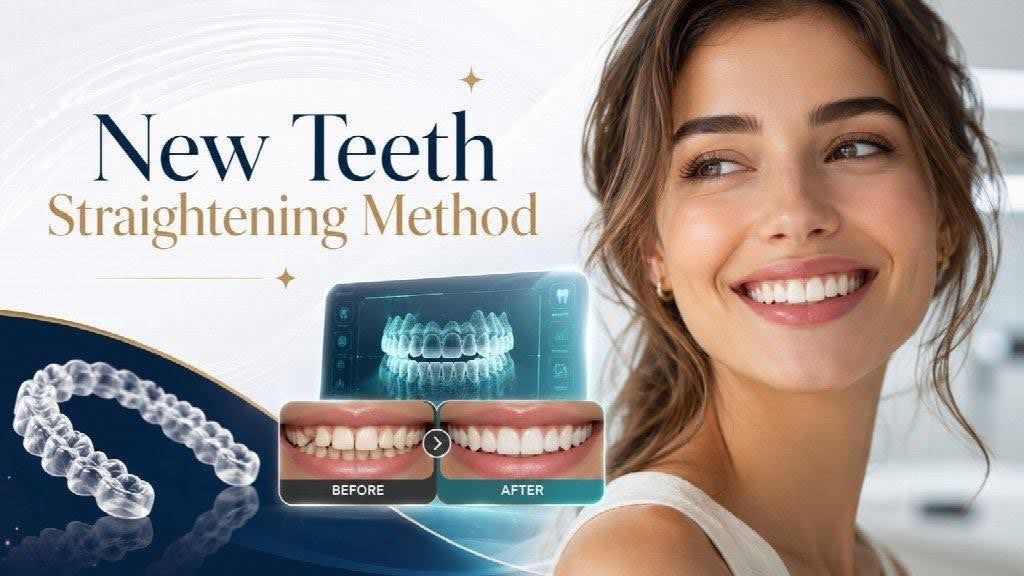
For many years, teeth straightening was strongly associated with fixed metal braces. Brackets, wires and regular adjustments were the standard image most people had in mind when they thought about orthodontic treatment. While fixed braces remain highly effective and are still the right option for many patients, the rise of clear aligners has changed the way adults and teenagers think about improving their smiles.
Invisalign has become one of the best-known clear aligner systems because it offers a more discreet, removable and digitally planned approach to orthodontic treatment. For suitable patients, Invisalign teeth straightening can improve crowded teeth, gaps, rotations and selected bite concerns without using traditional visible metal brackets.
This does not mean Invisalign is suitable for every case or that treatment is effortless. Teeth still move through a biological process, treatment still requires professional planning, and retainers are still needed afterwards. However, clear aligners have made orthodontics feel more accessible for many people who previously delayed treatment because they did not want fixed braces.
Why Teeth Straightening Matters
Teeth straightening is often discussed as a cosmetic treatment, but orthodontics can also support oral health and everyday function in suitable cases.
Crooked, crowded or overlapping teeth may be harder to clean effectively. Food and plaque can collect in areas that are difficult to reach, increasing the risk of tooth decay, gum inflammation and staining. Bite problems may also affect how the teeth meet when chewing.
Orthodontic treatment may be considered for:
- Crowded teeth
- Crooked front teeth
- Gaps between teeth
- Rotated teeth
- Protruding teeth
- Overbite or underbite concerns
- Crossbite or open bite issues
- Relapse after previous braces
- Difficulty cleaning because of tooth position
The best treatment depends on the patient’s teeth, gums, bite, age, oral hygiene and expectations. A qualified teeth straightening dentist should assess all of these factors before recommending Invisalign, fixed braces or another orthodontic option.
What Is Invisalign?
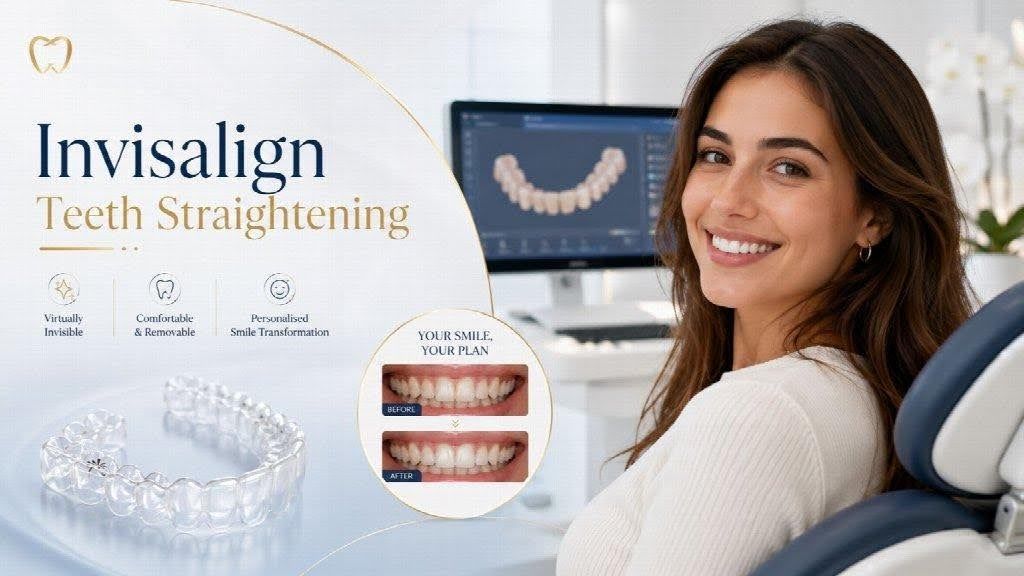
Invisalign is a clear aligner system that uses a series of custom-made, transparent trays to move suitable teeth gradually.
Each aligner is slightly different from the last. As the patient progresses through the sequence, controlled pressure is applied to specific teeth, guiding them towards the positions planned by the dentist.
Unlike fixed braces, Invisalign aligners are removable. Patients take them out for eating, drinking anything other than plain water, brushing and interdental cleaning. This is one reason many adults find them appealing for work, social events and everyday life.
However, removability also creates responsibility. Aligners must be worn consistently for the treatment to work as planned. If they are left out for too long, tooth movement can slow down or become less predictable.
Why Clear Aligners Changed Orthodontics
Clear aligners changed orthodontics by addressing several barriers that stopped people from seeking treatment.
Many adults wanted straighter teeth but felt uncomfortable about wearing visible metal braces. Others worried about food restrictions, cleaning around brackets or the appearance of braces in professional situations. Invisalign gave suitable patients another option.
A More Discreet Appearance
The transparent trays fit closely over the teeth, making them much less noticeable than traditional brackets and wires. They are not completely invisible, especially if tooth-coloured attachments are used, but they are generally subtle enough for daily social and professional life.
Removable for Meals and Cleaning
Fixed braces require patients to avoid certain hard, sticky or chewy foods because these can break brackets or wires. Invisalign aligners are removed before eating, so there are usually fewer food restrictions.
Patients can also brush and clean between their teeth without having to work around fixed metal components. This can make daily oral hygiene more straightforward, although it is still essential to brush before replacing the aligners after meals.
Digital Treatment Planning
Invisalign treatment is planned digitally. A scan or impression of the teeth is used to create a three-dimensional model, and the proposed tooth movements are mapped before aligners are made.
Digital planning can help patients understand the treatment journey more clearly. It can also allow the dentist to explain which movements are realistic and which concerns may require another orthodontic approach.
A More Lifestyle-Friendly Option
Clear aligners can fit more easily into the routines of many adults. Patients can remove them briefly for important meals, photographs or specific occasions, provided they still follow the prescribed daily wear time.
This lifestyle flexibility is one reason patients often search for Invisalign in Bristol when they want a treatment that feels practical as well as clinically appropriate.
How Invisalign Treatment Works
The Invisalign journey usually involves several stages. Exact details vary by patient and practice, but the general process is similar.
1. Initial Consultation
The first step is a consultation with a dentist or orthodontic provider. The clinician will discuss the patient’s concerns, examine the mouth and consider whether clear aligners may be suitable.
This is the time to ask questions about treatment length, Invisalign costs, retainers, whitening, refinement aligners and finance options.
2. Oral Health Assessment
Orthodontic treatment should not begin unless the teeth and gums are healthy enough. Active tooth decay, gum disease or poor oral hygiene may need to be addressed first.
Moving teeth in an unhealthy mouth can increase the risk of complications. A responsible provider will therefore check oral health before focusing on cosmetic alignment.
3. Digital Scan and Treatment Plan
A digital scan records the position and shape of the teeth. The dentist can use this information to plan tooth movement and explain the likely treatment pathway.
Some patients may see a digital smile simulation. This can be motivating and helpful, but it should be understood as a planning preview rather than a guaranteed result.
4. Custom Aligner Production
Once the plan is approved, a sequence of aligners is created. Each aligner is designed to move the teeth a small amount.
Patients are usually instructed when to change from one aligner to the next. The dentist will also explain how many hours per day the aligners should be worn.
5. Progress Reviews
Regular reviews allow the dentist to check that the aligners fit properly and that the teeth are tracking as planned. If tooth movement does not match the digital plan, adjustments or refinement aligners may be needed.
6. Retainers After Treatment
When active tooth movement is complete, retainers are needed to help maintain the new tooth positions. Without retainers, teeth can gradually move back towards their previous positions.
Retention is not an optional extra. It is a key part of successful long-term orthodontic care.
What Problems Can Invisalign Help With?
Invisalign can be used for many mild to moderate orthodontic concerns and some more involved cases where the movements are suitable.
Potential uses include:
- Straightening crowded front teeth
- Closing small gaps
- Improving rotated teeth
- Aligning upper and lower arches
- Correcting orthodontic relapse
- Improving selected bite concerns
- Preparing teeth for composite bonding
- Improving tooth position before whitening or veneers
Some cases remain better suited to fixed braces or specialist orthodontic treatment. Severe crowding, significant jaw discrepancies, complex bite corrections or certain root movements may need a different approach.
This is why a clinical assessment matters. A photograph or online quiz cannot confirm whether Invisalign is the right treatment.
Invisalign vs Traditional Braces
Both Invisalign and fixed braces move teeth. The difference is how the force is applied and how treatment fits into daily life.
| Feature | Invisalign Clear Aligners | Traditional Fixed Braces |
| Appearance | Clear and discreet | More visible, especially metal braces |
| Removability | Removed for food and cleaning | Fixed to the teeth |
| Food restrictions | Usually fewer, because aligners are removed | Hard, sticky foods may need to be avoided |
| Oral hygiene | Easier access to teeth when aligners are removed | Cleaning around brackets requires extra care |
| Discipline needed | High, because aligners must be worn consistently | Less reliant on patient remembering to wear appliance |
| Complex movements | Suitable for many cases, but not all | Often effective for a wide range of complex cases |
| Reviews | Regular checks are still required | Regular adjustments are required |
| Retainers | Required after treatment | Required after treatment |
The right choice is not simply about which appliance looks better. It depends on the clinical problem, expected movements, oral health, cost, lifestyle and patient discipline.
Is Invisalign Really an Easy Teeth Straightening Method?
Invisalign can feel easier than fixed braces for many patients because the aligners are discreet and removable. Eating is generally simpler, cleaning may be more convenient, and the treatment is visually less intrusive.
However, “easy” should not be confused with “automatic.” Patients must wear the aligners as instructed, attend reviews, maintain excellent oral hygiene and use retainers after treatment.
Invisalign may be easier from a lifestyle perspective, but it still requires commitment.
The best candidates are usually patients who:
- Understand the importance of daily wear time
- Can remove aligners only when appropriate
- Brush before replacing aligners after meals
- Attend scheduled reviews
- Follow advice on attachments and elastics if required
- Commit to long-term retainer use
Invisalign and Cosmetic Dentistry
One of the reasons Invisalign has become so popular is that it works well as part of a wider smile-improvement plan.
Straightening the teeth first can sometimes make later cosmetic dental treatments more conservative. For example, if a tooth is rotated or crowded, placing composite bonding without correcting the position first may require more material and create a less natural shape.
Invisalign Before Composite Bonding
Composite bonding can repair small chips, improve worn edges and refine tooth shape. When teeth are uneven because of their position, Invisalign may be used first to move them into better alignment. Bonding can then be used more selectively to improve the final details.
Invisalign Before Teeth Whitening
Some patients choose whitening after Invisalign to brighten the newly aligned smile. Teeth whitening should be planned carefully because crowns, veneers, fillings and bonding do not whiten in the same way as natural enamel.
Invisalign and Dental Implants
Dental implants do not move like natural teeth during orthodontic treatment. If a patient has a missing tooth or may need an implant, the dentist must plan the sequence carefully. In some cases, Invisalign is completed before an implant restoration is finalised.
This is why choosing a practice that understands both orthodontic and cosmetic dentistry can be valuable.
Invisalign in Bristol at Lodge Causeway Dental Centre
Patients considering Invisalign teeth straightening should look for a provider that offers proper assessment, clear treatment planning and ongoing clinical monitoring.
Lodge Causeway Dental Centre provides Invisalign, from its Bristol dental practice. The practice offers a free Invisalign consultation, a digital 3D smile scan, clear aligner treatment planning and regular progress reviews. Its Invisalign packages also currently include whitening and retainers, with finance options available subject to eligibility and applicable terms.
For patients researching teeth straightening in Bristol, the convenience of a local dental team can be important. Treatment usually involves several appointments, and having in-person clinical support can help if aligners are not fitting correctly, attachments need review or questions arise during treatment.
Lodge Causeway Dental Centre also provides general dentistry, dental hygiene, composite bonding, teeth whitening, dental implants and emergency dental care. This wider treatment range can be helpful when Invisalign forms part of a broader smile plan.
What to Ask a Teeth Straightening Dentist
Before starting Invisalign or any orthodontic treatment, it is useful to ask clear questions.
Suitability Questions
Ask:
- Am I suitable for Invisalign?
- Are fixed braces a better option for my case?
- Do I have any gum or dental problems that need treatment first?
- Will I need X-rays, photographs or scans?
- Are my expectations realistic?
Treatment Planning Questions
Ask:
- How long is treatment likely to take?
- Will I need attachments?
- How many hours per day should I wear the aligners?
- What happens if my teeth do not track as planned?
- Are refinement aligners included?
Cost and Aftercare Questions
Ask:
- What is included in the Invisalign cost?
- Are retainers included?
- Is whitening included or separate?
- Are finance options available?
- How often will I need reviews?
- What happens if I lose an aligner or retainer?
The answers should be clear, personal to your case and provided before treatment begins.
How to Care for Teeth During Invisalign
Good habits help protect teeth and gums throughout treatment.
Patients should:
- Remove aligners before eating
- Drink only plain water while wearing aligners
- Brush before putting aligners back in after meals
- Clean between teeth daily
- Keep aligners in their case when not in use
- Avoid leaving aligners wrapped in tissue
- Attend dental and hygiene appointments
- Contact the practice if an aligner cracks, feels loose or stops fitting properly
Because aligners sit closely against the teeth, trapped sugar or food debris can increase the risk of decay and staining. Daily cleaning is therefore essential.
Final Thoughts
Invisalign changed orthodontics because it gave suitable patients a discreet, removable and digitally planned alternative to traditional fixed braces. It made teeth straightening feel more accessible for adults and teenagers who wanted a less visible treatment.
However, the most successful Invisalign outcomes still depend on accurate diagnosis, good oral health, careful planning, patient cooperation and long-term retention.
For anyone considering teeth straightening in Bristol, the first step should be a professional consultation with a qualified provider. A dentist can assess the teeth, gums and bite, explain whether Invisalign is appropriate and outline the treatment process, costs and maintenance involved.
A straighter smile should not be rushed or guessed. It should be planned around the individual patient, with the right balance of health, function, appearance and long-term stability.