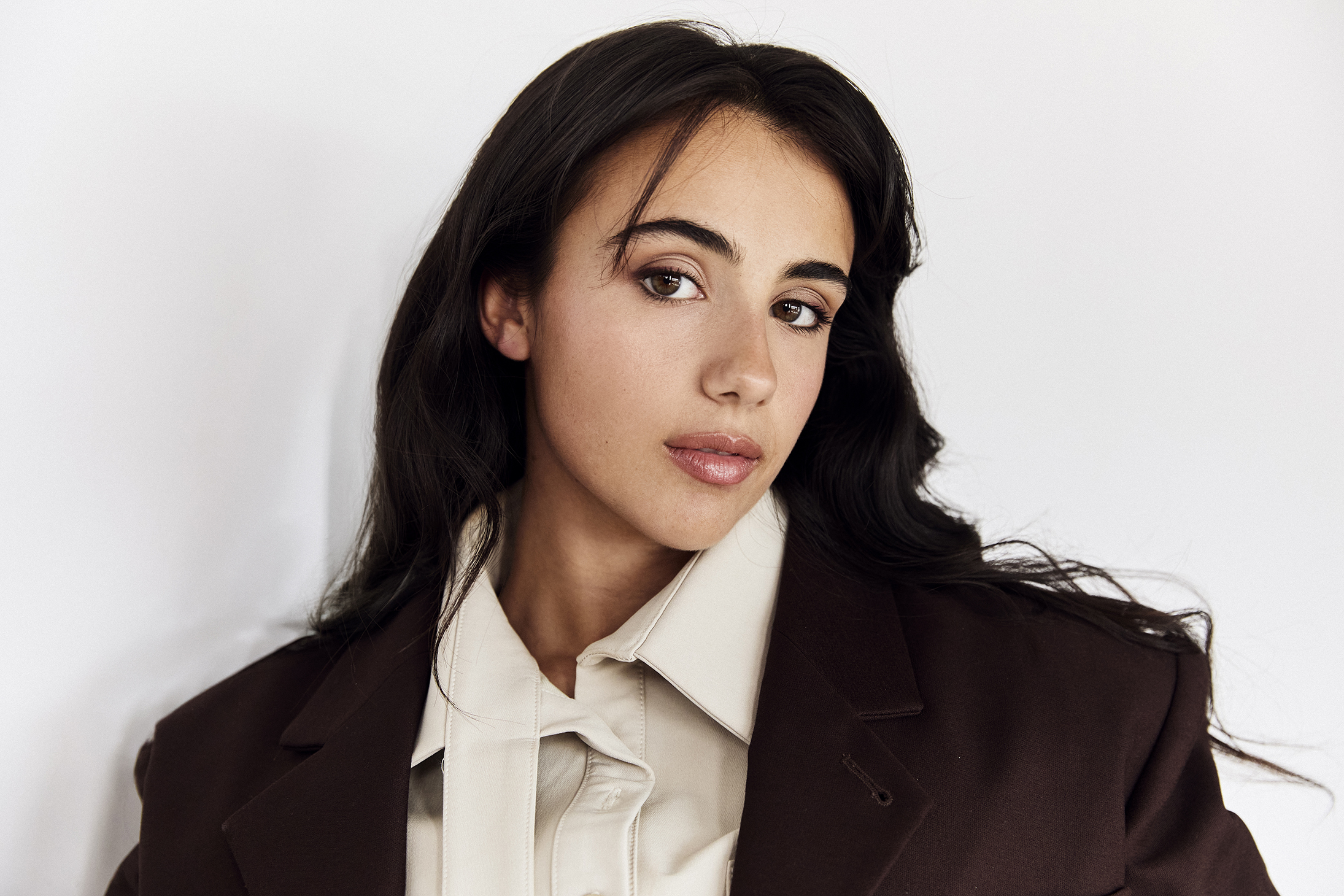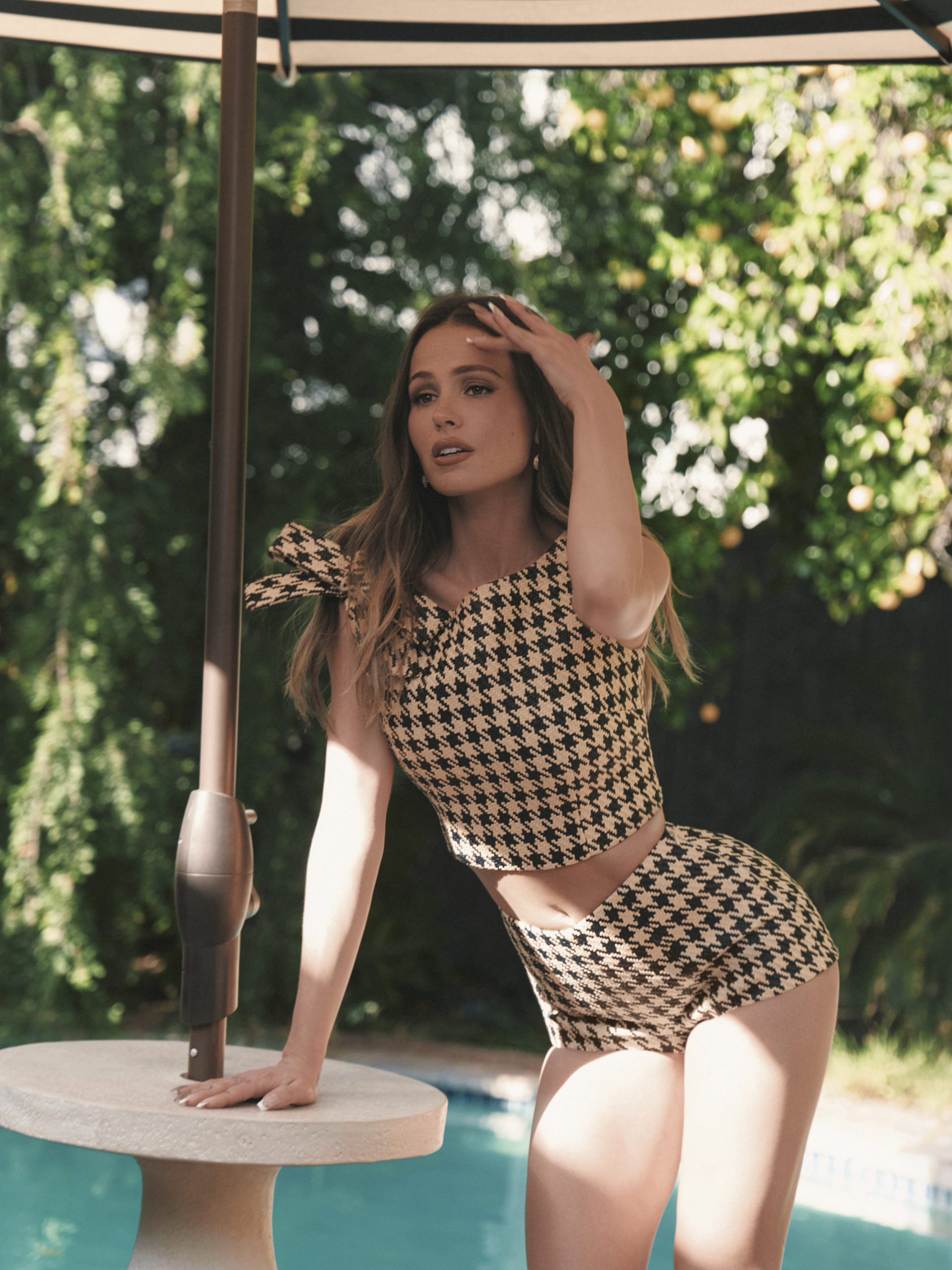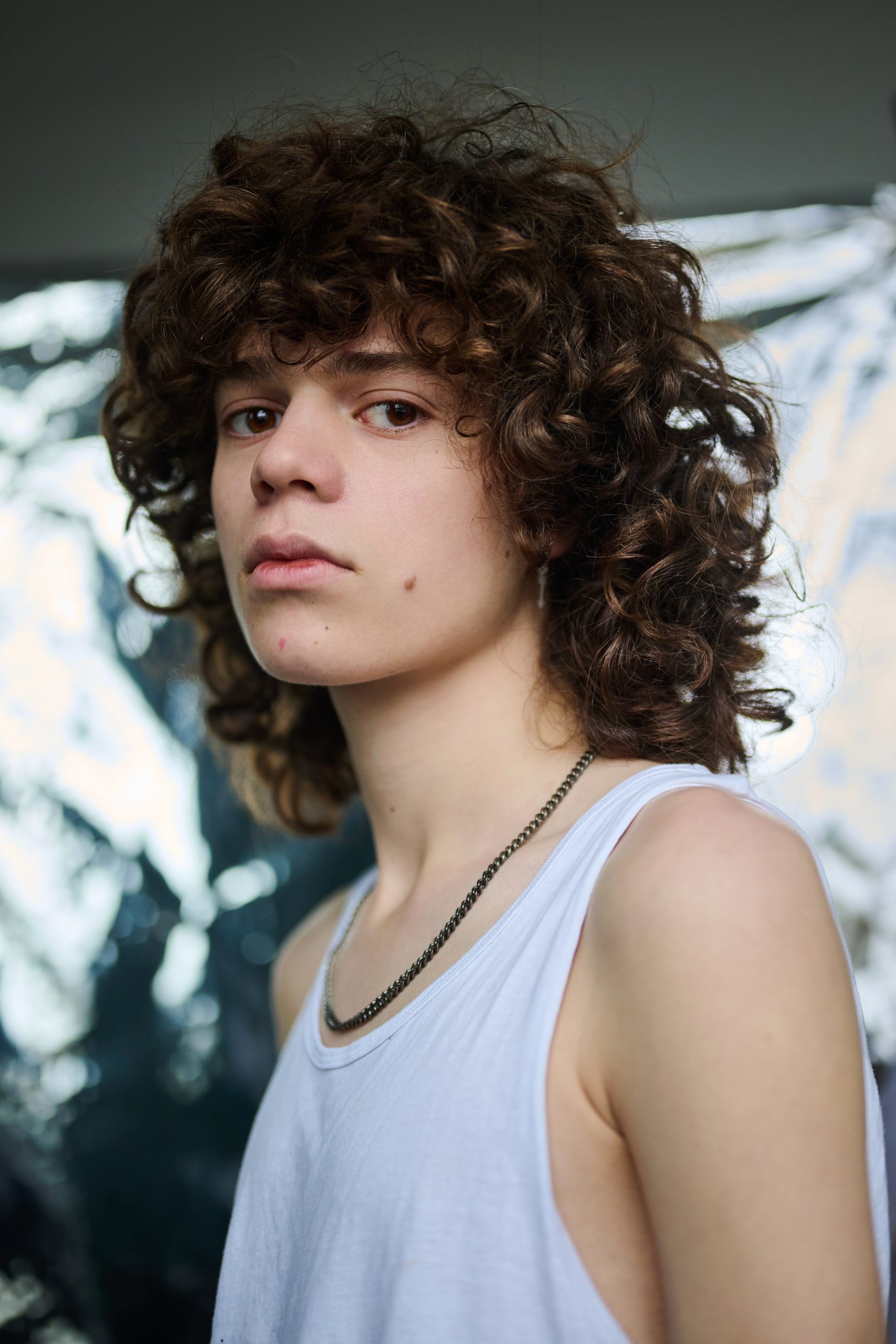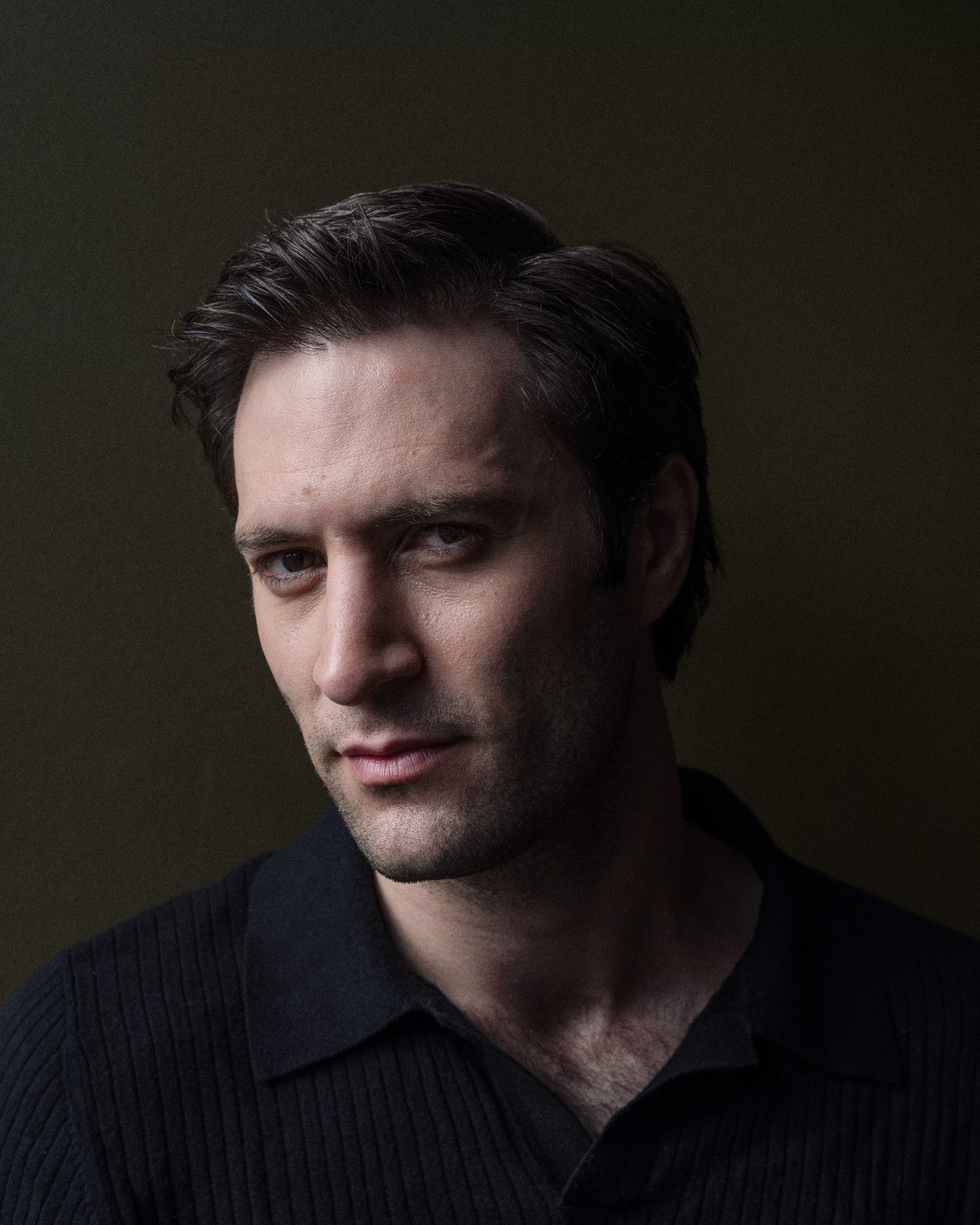
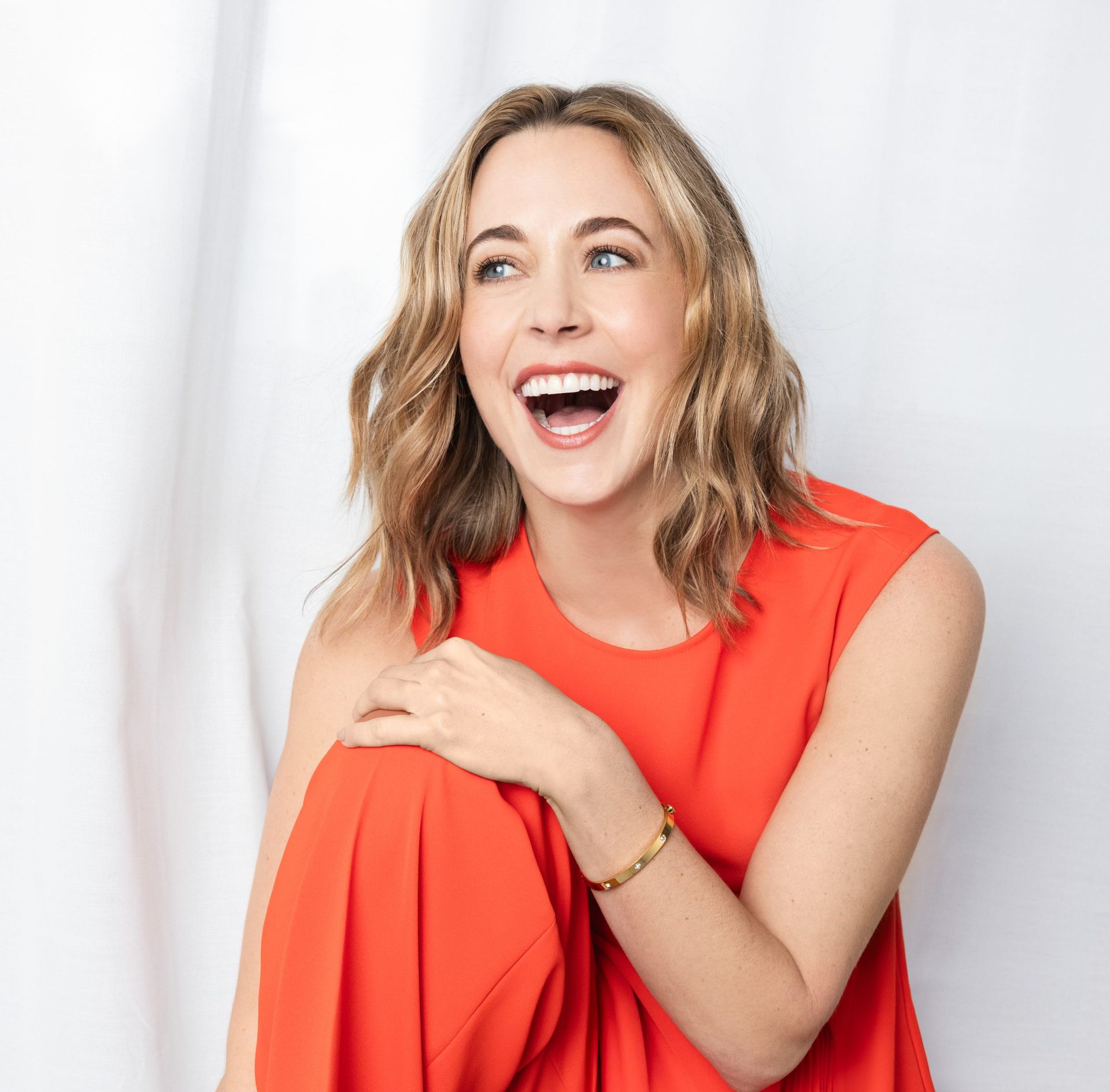
From originating the role of Cady Heron on Broadway, voicing the devil’s daughter in Hazbin Hotel, and now returning for season two of the ensemble Netflix dramedy The Four Seasons, Erika Henningsen has done it all, and then some.
Full-circle moments in this line of work are always unexpected, and for Erika, it came from a role she took on almost 20 years ago. At 14, one of the first musicals she ever performed in was a local production of Grey Gardens: the complicated story of mother and daughter Edith Ewing Bouvier Beale and Edith Bouvier Beale. Nearly two decades later, she’s back playing Ginny in The Four Seasons season two.
In Four Seasons, she plays a single mother whose controversially older boyfriend passes away, leaving her to raise his son alongside his ex-wife, all while struggling to believe she can leave the nest and do it all on her own. The show boasts brilliant performances not only from Henningsen but also from her co-stars Tina Fey, Colman Domingo, Will Forte, Marco Calvani, and Kerri Kenney-Silver.
For all her achievements so far in her career, Erika is incredibly grounded, humble, and warm. We spoke over Zoom after what had been a hectic week of press, including a weekend at MCM London Comic Con, and within minutes, we’d already moved from the Four Seasons to the actual four seasons of London, specifically, the London heat wave, her genuine love of the city, and her dream of one day performing on the West End.
1883 Magazine’s Farah Sadek sits down with Erika Henningsen to talk about her return to Netflix’s The Four Seasons, taking on a different kind of role, her impressive body of work, and much more.
Erika, you’ve got to briefly put the mics down for this project, and I would say this is quite a different role for you. How did you prepare for this role? And what would you say you brought to it from your different roles?
I’ve never played a mum before, so that was really fun. I’m 33, but I continually get cast as the youngin. This was the first time I got to play the youngin but also be an adult, a mother, and not know what I am doing when I am raising a child. I feel like I’m at the age where all my friends are having kids, so my research was just hanging out with them and watching how they deal with their children.
The main thing is, what they all seem to say, you’ll never gonna really know what you’re doing. You just gotta keep one foot in front of the other. And that’s honestly what it was like on set when we had the babies, because they were unpredictable, so you just had to roll with whatever they were giving you.
Did you feel like you had to prepare differently for series one vs series two because of that motherhood aspect?
In season one, Ginny is so eager to be accepted by the group, and she defaults to “I’m not gonna rock the boat, I’m gonna be positive, I’m gonna make this work.” And I had a blind spot for season 2 because I’m not a mom, and Ginny gets in a pretty aggressive fight with Anne, and I remember thinking, “How can I be this mean to her?” Then my friend, who’s a mom, told me, “When you’re nine months pregnant, all you care about is that baby.” So the way I prepared is thinking that I don’t need to be season one Ginny, I am actively trying to create conflict so I can solve this problem for my kid. And that’s the thing, if you haven’t had a kid like me, I don’t think you understand that, so it was helpful to have moms around me who can assure me that you’re allowed to be aggressive at this moment.
This season had its fair share of fun moments in multiple locations. What was your favorite scene to film?
I loved our summer episodes in Jersey Shore because it was the first time that we as the group in the storyline were having fun together, so getting to go to the arcade and boardwalk in Jersey Shore was so fun. We spent our breaks playing Skee-ball, bumper cars, and doing the actual Jersey Shore experience. I think this cast is made up of a lot of people in their fifties, but their resting heart rate is 12 years old. So, they’re always down to hang out, and there’s not a ton of napping in the trailers.
It was quite sweet to see how Ginny got to bond with Anne this season. Can you walk us through that trajectory?
I think for some people watching the show, especially if you were going through something difficult with a spouse, it’s hard to understand how Ginny can be there and to understand her tether. Our writers did a great job in exploring her bond with Anne. Anne doesn’t know what she’s going to do next; she’s an empty nester, and here comes along a tiny creature who needs her help – I’m talking about the baby, not me.
But I’m also a tiny creature who needs her help. It makes so much sense why Anne gives herself over to help Ginny raise this baby. I really loved these scenes with Kerri [Kenny-Silvers] because I feel we got to be friends in this season as opposed to enemies, but we also have this underlying tension of while Anne is helping Ginny, she’s also holding her back from figuring out how to do it on her own.
Ginny and Claude also got to connect this season as they’re both the sort of outsiders of the group.
Marco [Calvani] is really my buddy. When we are on set, we have the same idiosyncrasies: we’re outgoing, and we love talking to people, but we also get very nervous and self-conscious. We’re always thinking, “Oh God, are we doing a good job? We’re on set with Tina and Coleman [Domingo].”
So doing our big scene in the ice cream shop was so relaxing, because similar to how Marco and I feel on set, our characters also want to do a good job and not let anyone down. The trust that we formed to be each other’s confidantes and advocates on set was very present in that scene.
You spoke about Ginny’s tether to the group. We got to see the group’s equilibrium being disrupted after Nick’s death, so what was Ginny’s reason for staying?
I think part of it has to do with Nick. The concept of this show is so helpful because we’re jumping ahead in time, and there are a bunch of gaps and things we don’t answer because we don’t have to. So much of why I think Ginny sticks around is because she loved this person, and this person is no longer there, and his memory is kept alive by hanging out with his friends. The other reason is, and that’s not a scene that happens, but that’s sort of my background research as an actor, we don’t see Ginny’s friends this season.
I know that when my friends have brought their kids to an event, there’s a difference between the families that have kids and those that don’t. If you’re a new parent, sometimes it works better to be with people who are also ready to parent, who have parented, or who understand what it’s like to be in that phase of life. So, when I was imagining what a gap that I need to fill as an actor, I imagined Ginny bringing Gino to her friend’s 31st birthday party on a rooftop in Brooklyn, and someone giving Gino a red cup, and she’s like, “Okay, that doesn’t work for me”.
The show is sort of a love letter to the complications of long-term relationships. But Ginny sort of comes in, and every character reacts to her differently, but then Nick dies, and she gets slowly initiated into their dynamic through grief and parenthood at the same time. What do you think Ginny brings to the dynamic about a kind of love that the media hasn’t explored yet?
I worked in theatre for a long time, so I’ve always had multigenerational friendships, and I cherish them so deeply because they give me perspective and they allow me to not stress about things because I’ve watched people 20, 30 years older than me make it through difficult situations and come out the other side. We see a lot of stories about couples and what they go through, but we see less about the friendships that form when you’re in your fifties, whether they’re new or the new iteration that a long-term friendship takes.
I really loved that the show insisted that Ginny and Anne have a friendship and not just a working partnership as co-parents. It’s why I love that scene where Ginny reminds Anne that she can still be young and wild and spontaneous because Anne gave Ginny so much and taught her so much, and I was so hopeful that Ginny would repay the favour in some way. It’s so easy to get siloed when you’re married with kids within the nuclear family unit, and I think what this show does is show that it’s so important to keep our friendships and to have those multigenerational friendships because we’re able to pull out different parts of each other.
You’ve now worked with Tina Fey across three entirely different projects. Does the way you work together change depending on the project?
Tina has been the book writer, the executive producer, then my castmate, and my director, so her title has changed, but the way she is has not, which is what I love about Tina. She’s consistently who she is in every situation. No matter what hat she’s wearing, she maintains this inner immovable integrity and dedication to what she’s doing. The way it has changed for me, when I was 24, I did not believe that I earned [my roles], and the big thing Tina has tried to instil in me, and I’m still trying to remind myself, is, “you wouldn’t be here if you didn’t deserve to be here. Nobody’s giving out favours in Hollywood.”
She empowers me, not in a mentor way; she just treats me like an equal, and that’s something I’m still trying to get through my head because I still sometimes feel like the 24-year-old I was when I met her. So I’m grateful to her for that.
Ginny’s new venture into parenthood has been a great part of this season, which helps me to segue into another iconic parent-child duo: Lucifer and Charlie from Hazbin Hotel. How would you describe their dynamic in the upcoming season?
Season 3 is a morningstar season for sure. They are both fighting for love and affirmation from the same woman. People will know what I’m referring to. How weird is that? I love it!
Also, Lucifer is played by Jeremy Jordan, who’s a dear friend who’s starring as Bobby Darrin on Just in Time right now, which was the last Broadway show that I did, and if I had stayed on the show long enough, we would’ve played lovers, which would’ve made the Hazbin fandom go like, “what’s happening?” So maybe it was best that I left the show when I did.
Finally, you’ve done Broadway, animation, voice work, drama, so what’s next for Erika?
I really want to produce. I saw John Proctor Is The Villain, and I felt that plays written by women about women are kind of the salve that everybody needs. I’ve been working on a new play with a playwright that I love, although I can’t share details yet.
I really want to be part of the process of making something come to fruition from the jump because, as an actor, you come in at the very back end and execute someone else’s vision, but I really want to be a person who heralds a project from start to finish. I feel like a great way to do that, partially because it’s a world that I know well, is the theatre and plays, especially by women for women, so that’s my next venture.
The Four Seasons season two is streaming on Netflix.
Interview Farah Sadek
Main image photography Victoria Stevens