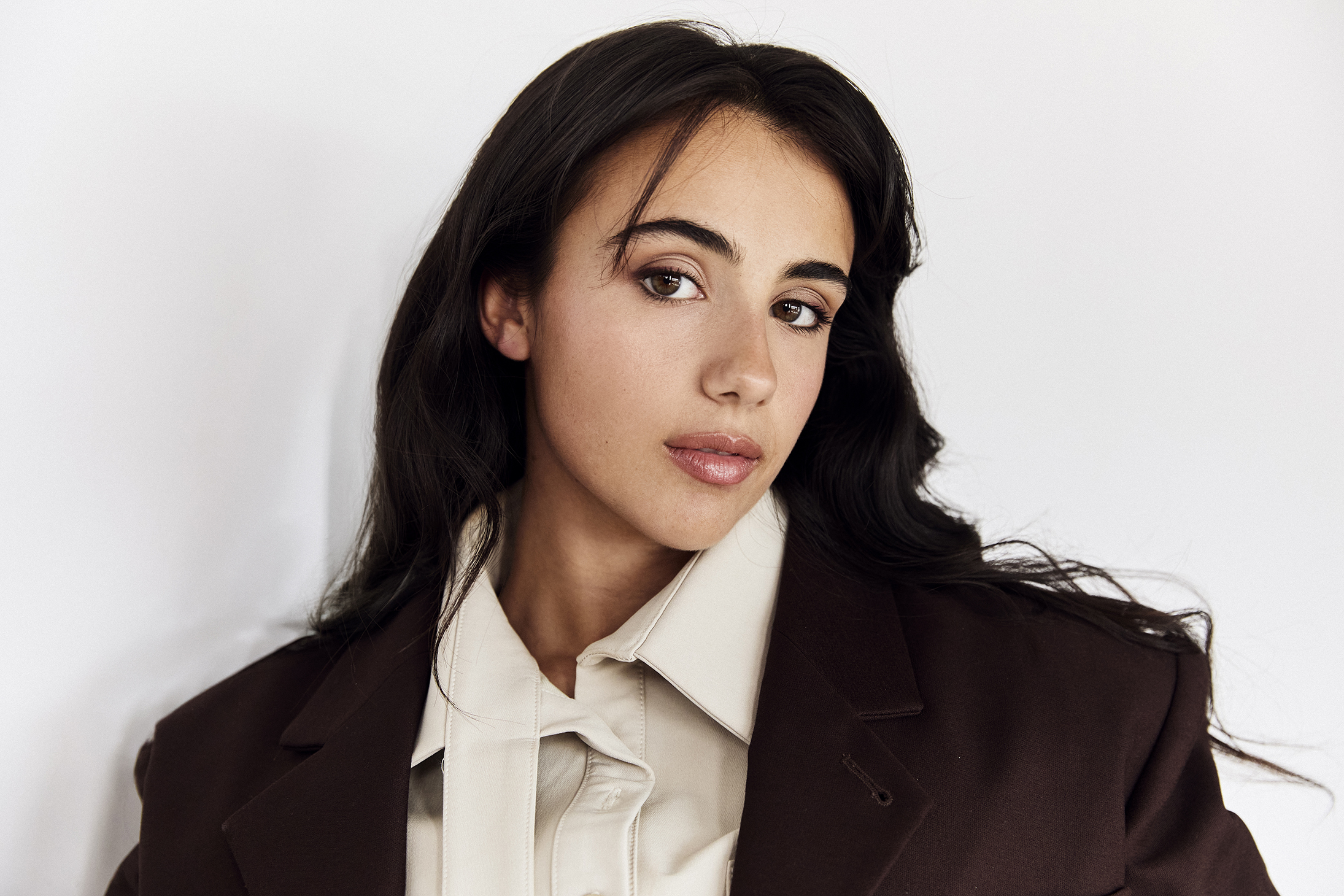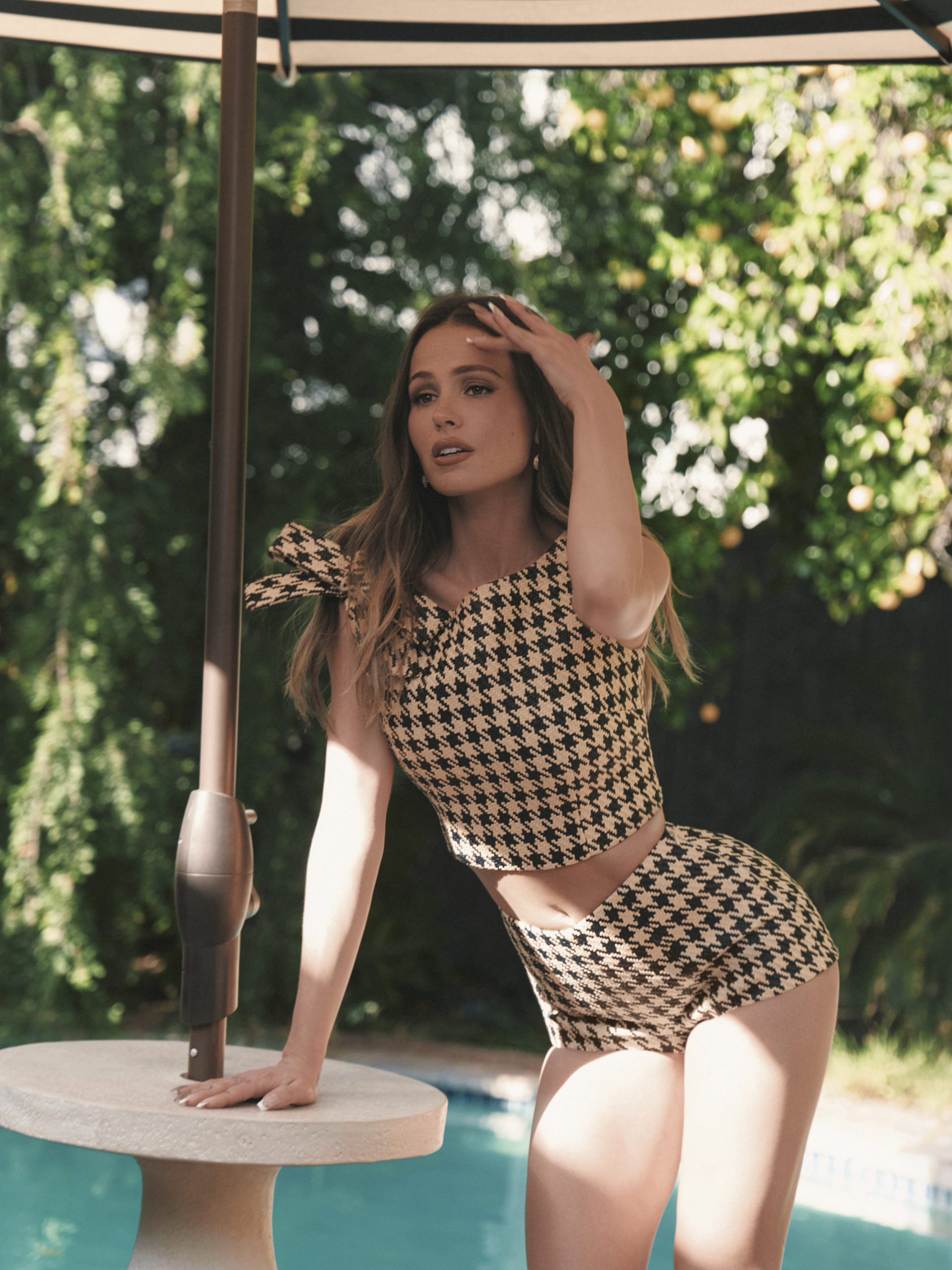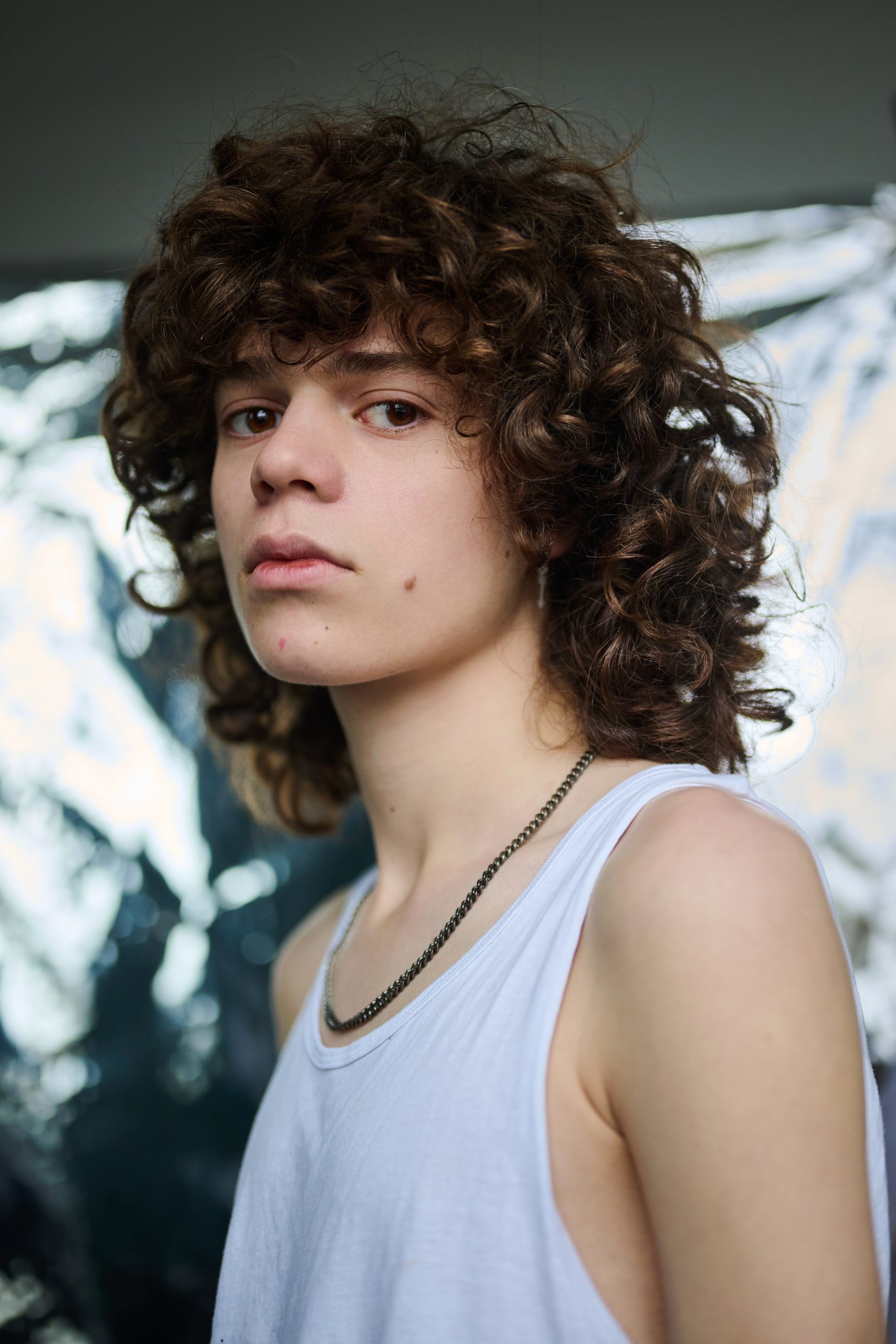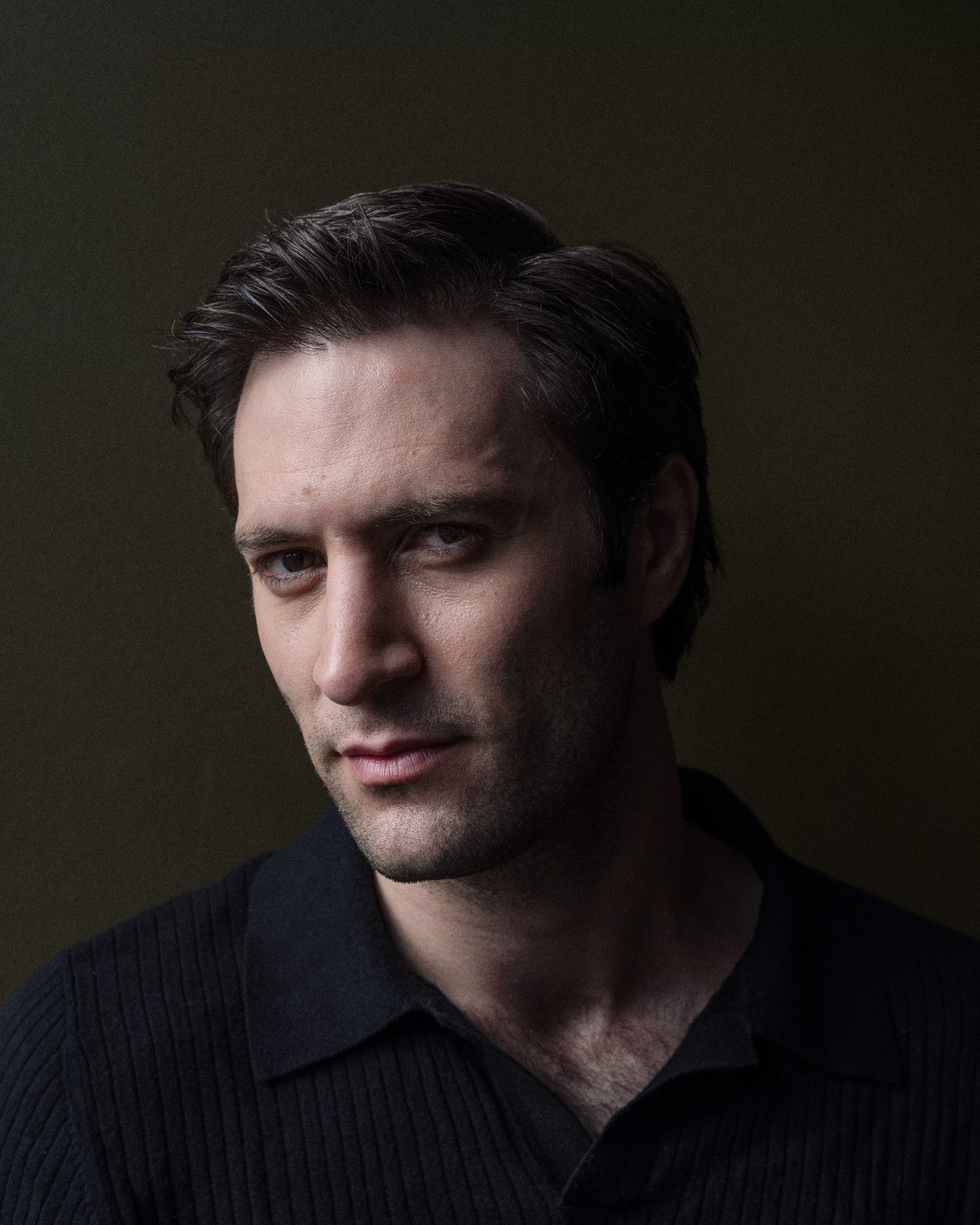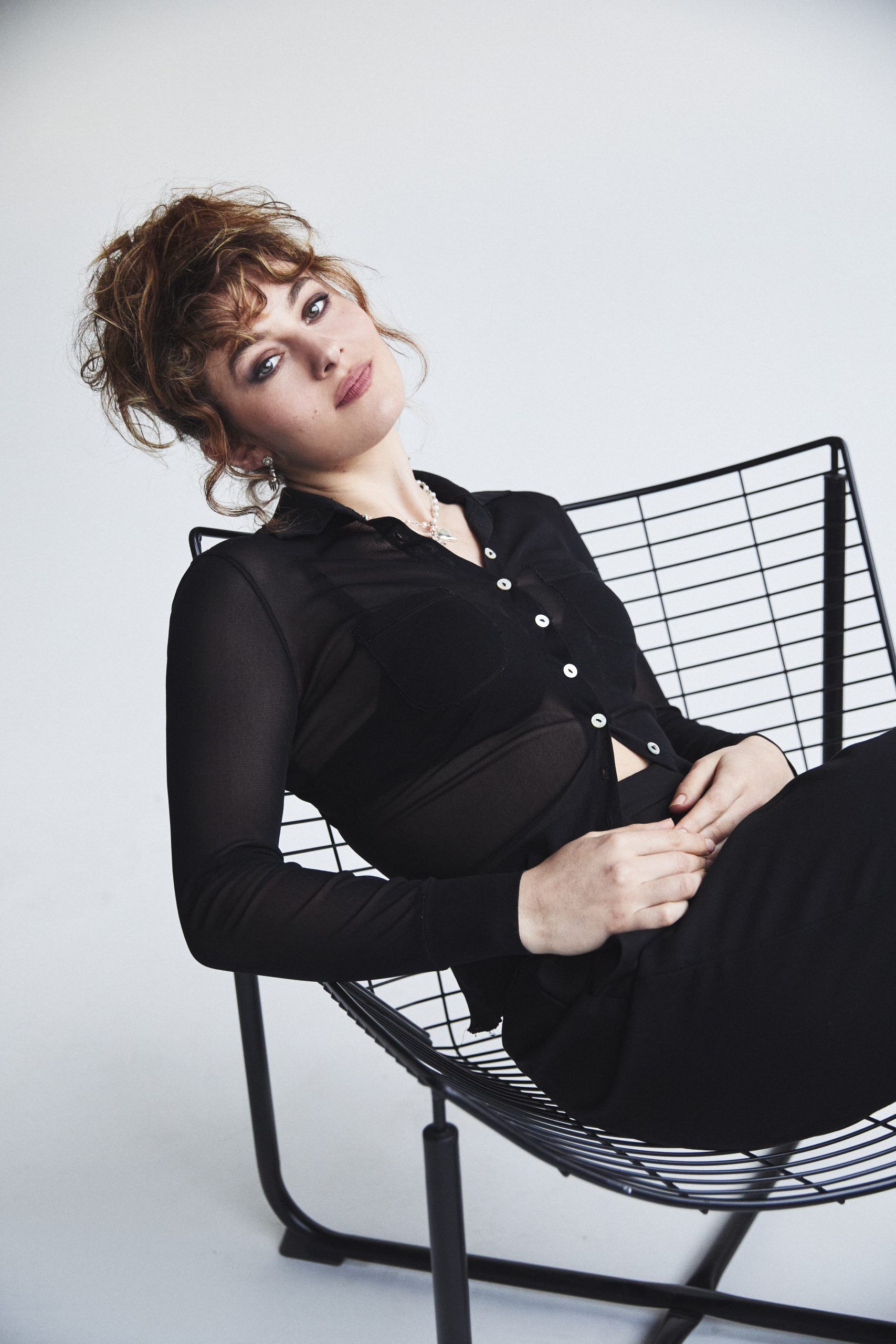
There’s an infectious and immediate warmth to Ruby Ashbourne Serkis, the kind that instantly dissolves any sense of formality. She speaks quickly and excitedly, bouncing between thoughts and topics without ever quite losing her train of thought, though often teetering close to its edges. It’s an energy that is also unmistakable in her approach to performance, speaking about theatre, film, music, and storytelling not as separate disciplines, but as parts of the same creative world she has always longed to inhabit. It’s perhaps why, at such an early stage in her career, she has already moved between theatre and screen with remarkable ease, balancing acclaimed stage performances with increasingly high-profile screen roles.
As her surname suggests, Ashbourne-Serkis is the daughter of Andy Serkis and Lorraine Ashbourne, though any assumptions attached to that legacy quickly fade in the face of her obvious passion for the craft itself. In plays like Indian Ink, Grace Pervades, and now Star City, she has steadily proven herself a performer with both range and instinct, equally at home in intimate theatre spaces as she is in sprawling cinematic worlds.
The upcoming space-and-spy drama Star City, however, may well be the role set to launch her career into an entirely new orbit. The ambitious alternate-history series, set within the universe of For All Mankind but firmly from the Soviet perspective, places Ashbourne Serkis at the centre of a Cold War space race where surveillance, rebellion, and human connection collide somewhere between Earth and the stars. Fittingly, she speaks about the project with the same gravitational pull that defines so much of her work, drawn not just to the scale of the story, but to the quieter emotional constellations underneath it.
In conversation with 1883, the actress reflects on balancing theatre and screen, growing up backstage without becoming consumed by the industry around her, the emotional complexity at the heart of Star City, and why she’s searching for roles that might push her into new creative stratospheres.
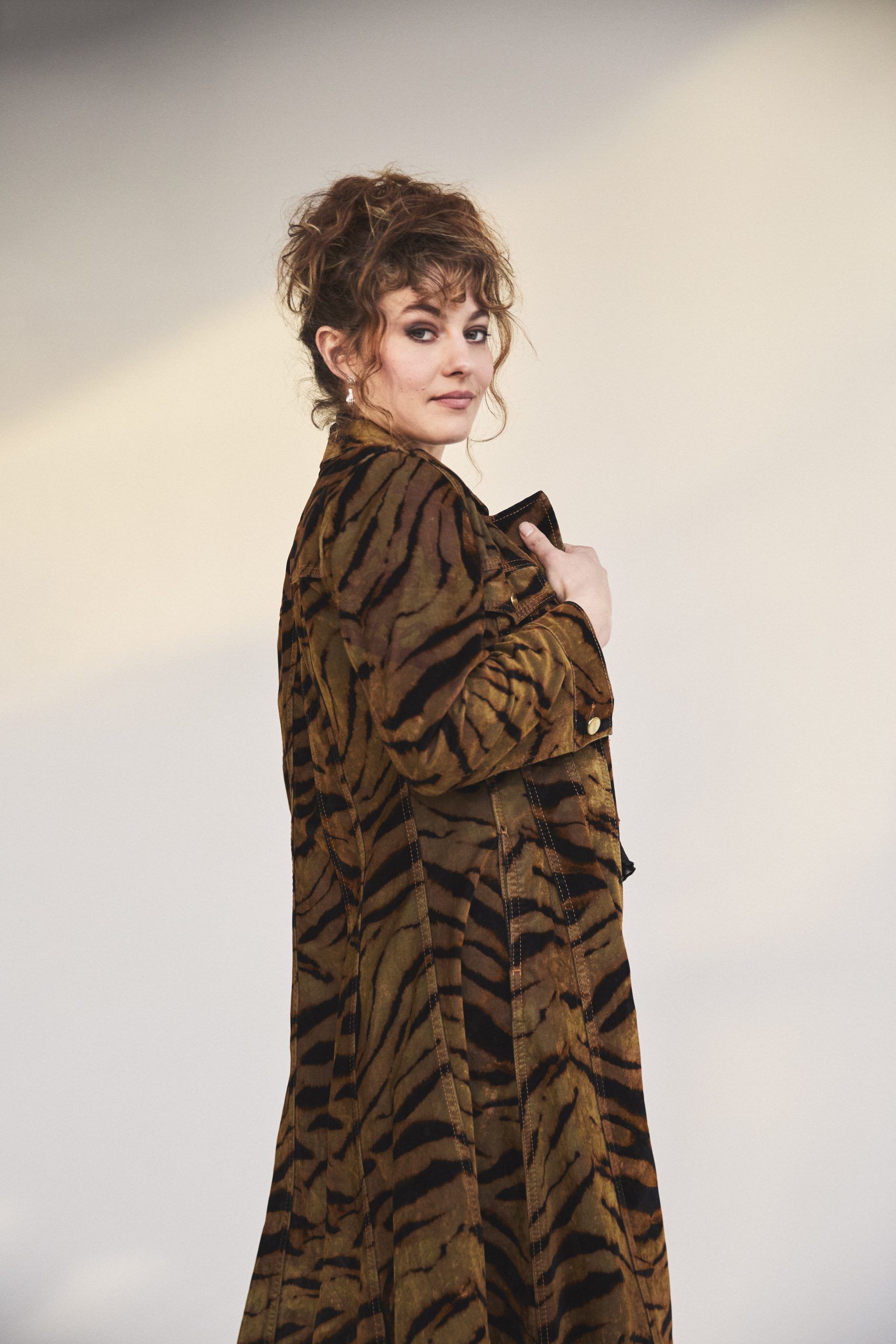
Ruby, first of all, thank you so much for taking the time to talk to me today. I know you’ve been booked and busy, especially with rehearsals your new play.
Yes, I’m doing this play on the West End called Grace Pervades. It’s a David Hare play and it’s about theatrical legends Henry Irving and Ellen Terry. They really changed the face of theatre in the late 1800s, so the show is all about the importance of theatre. It’s a true love letter to it all.
You’ve already brought the play onto stage once at the Theatre Royal Bath opposite Ralph Fiennes, right?
Yeah, when we did it in Bath, it was the first time I was back on stage in a proper play since I was at school. Since then, I have mainly done screen stuff. It was such a perfect way to get back into it, and especially having kind of grown up in dressing rooms, it just felt like a real homecoming in a way. So it’s been a real education and just a really special one to get to experience.
Looking at your credits so far, there’s some incredible movies, and now two incredible plays, the second of which we’ll get to in a moment, but one of my favourites has to be ‘Cute Young Hobbit’ in The Hobbit: An Unexpected Journey.
Oh yes (laughs). That’s a special one.
Jokes aside, you just called it a homecoming to the stage, but how do you balance your screen work and the stage at the moment? It’s rare, especially for a young actor, to get to do both simultaneously the way you seem to be doing right now.
I’ve been so fortunate to have been able to traverse the two, and it has kept things really interesting. It’s a completely different way of working. One of the things I adore about theatre is the rehearsal process, which now, unless you’ve got auteurs making a film, is so rare in screen work.
I also love that you go on an entire journey every night. And while you’re doing the same thing, it’s never ever the same. I love the live aspect of it, and I’ve just been so fortunate to be able to literally go from theatre to filming to theatre lately.
And two such incredible plays. Not just Grace Pervades*, but also your role as Flora Crewe in Tom Stoppard’s Indian Ink, for which you won the Jack Tinker Award for Most Promising Newcomer. Doing that play, one he famously wrote for Felicity Kendal, whom you starred opposite at the Hampstead Theatre, must have felt even more monumental somehow, no?
Oh yes, that was one of the most magical experiences I’ve had. Playing Flora was just a daily dose of joy. Tom Stoppard writes women so brilliantly. And doing it next to Felicity was monumental. One of the fantastic things was that she was really not precious in any way about the role. She was like, “Oh darling, it was 30 years ago, I can’t remember what the *fuck* I did.” And she was very much like, “Look, you do you, and I’ll kind of fit my Mrs Swan and my hair colour and my mannerisms around what you decide to do with Flora.” It was just gorgeous.
We also wanted to make sure it felt like we were sisters, so we took little bits of each other’s physicality and mannerisms. There are a few lines that link them in terms of their framing in the play, but she couldn’t have been more generous or supportive. We shared a dressing room and just had the best time. She’s hilarious and a true delight.
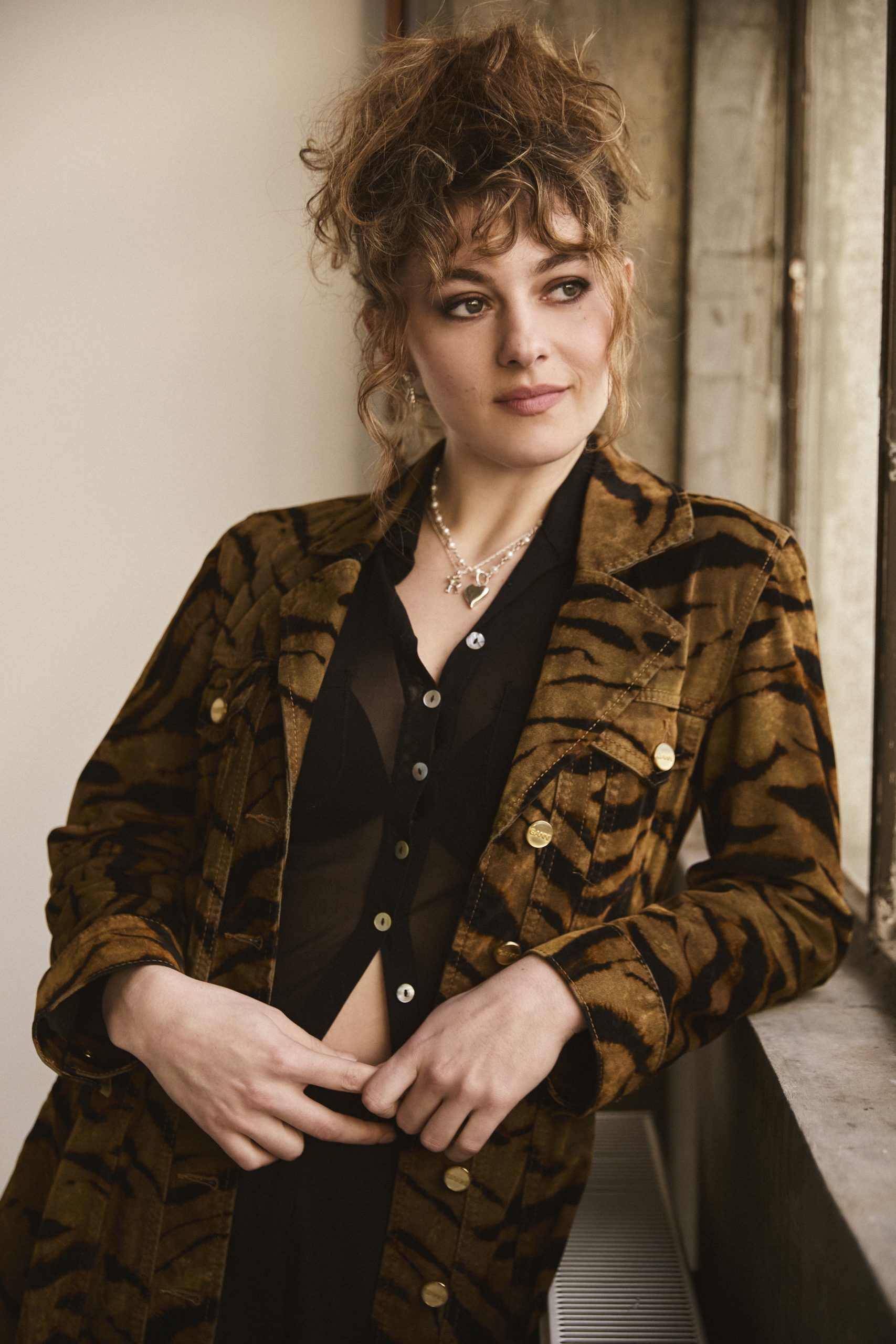
You mentioned earlier that you grew up in dressing rooms, and I was wondering if you still get starstruck meeting someone like Felicity Kendal? Because I imagine growing up you probably got closer to a lot of famous people than most.
I definitely get starstruck. I’m so aware that people are people, but when you meet someone whose work you really respect and admire, it still gets to me. Their presence and energy can be something really special. But Felicity kind of dispelled any of that immediately.
You’re right, we all tend to idolise famous people, and those very recognisable names, which you, for better or worse, also carry with you. It’s interesting that you connect being starstruck to craft rather than just the person.
Totally. But fame is such a funny thing. People can be famous for everything and anything now. I’ve been really fortunate growing up – we’ve had the perks, been able to travel, follow our parents around to amazing places – but without the pressure of paparazzi and all of that.
It must have been lovely to grow up around the perks of the industry through your parents but without the repercussions. You’ll have to explain one thing to me though because I think most people look at their parents and decide to go in the opposite direction, whereas you must have looked at them and thought they had a really cool job and gone into acting quite early yourself?
Oh God, I just always knew. Literally always. Being in dressing rooms, or on set, looking up at actresses wearing big costumes playing princesses, and I just wanted that too. There are so many little home videos of us as kids like, “Okay, hold the camera, I’m going to do it now.” There’s just never been any other world I’ve wanted to be part of.
Knowing what you want to do early on is great, but it’s also a lot of pressure…
Yeah, 100 percent. It’s a really unstable industry, it’s fickle. Sometimes you get jobs for bizarre reasons, or you don’t get them for frustrating ones that are totally out of your hands. But I’ve been really lucky to have had fairly consistent work recently.
Speaking of your work lately, like I said, you’ve really balanced theatre and screen beautifully, with credits in incredible films. How do you tend to choose roles? I assume something like the Peaky Blinders movie would be a no-brainer and you’d probably play just about anything to be part of that?
Yeah, I’d have played Tommy Shelby’s cigarette in that.
Fair, but other than that, is there a type of character you feel drawn to?
I tend to be cast as fairly free-spirited, slightly bolshie characters. I’ve played a lot of strong, empowered women, but I’m reaching a point where I want variety. I really hate the word “stretch,” but for lack of a better one, I want to be stretched. I’m on the hunt for a challenge.
And yet, Tanya, your character in Star City, probably does fall into that category of free-spirited, slightly bolshie women, which I’ve really loved watching. But before I go on, could you introduce us to Tanya and the premise of the show?
I would say Star City is a propulsive spy space thriller set in the Soviet Union in an alternative universe where the Soviets landed on the moon first. The conceit is that, in many ways, it might be safer in space than it is on Earth, despite the fact the Soviets literally sent these cosmonauts up in glorified lawnmowers.
What I really loved about the premise is that some of the most powerful roles are women, and I play Tanya, who is the wife of one of the top cosmonauts. She’s a free spirit, hugely creative and artistic, but somewhat of a caged bird in Star City, struggling with isolation, so she resorts to small acts of rebellion.
Most important question about the show first, were you jealous of not putting on a spacesuit? Because I know I would be…
Oh God, yes. So jealous. Of not getting to wear the suit and not going inside the capsules, because the set was unbelievable. I’m pretty sure they could have taken off. But I also enjoyed being the one representing art and resistance. I liked being the “earther” of the story.
Watching the show it feels incredibly special to have a character to relate to in that way, yes, especially because hopefully not all of us are going to space..
I really hope not. And she kind of reflects the general Soviet population, not just that most people weren’t going to space, but how people dealt with oppression at the time. We project modern judgments onto it, but people just had to get on with life.
They were aware someone might be listening to every conversation, and that shaped how and where they spoke. I think a lot of people engaged in small acts of rebellion, like Tanya does, be that reading banned books or sharing forbidden songs. Even when people are being watched, people still find ways to have conversations. And I think survival instinct is an incredible human thing.
Absolutely, and I won’t lie, the show feels scarily relevant now. Was that something you were aware of while filming, or only looking back on it?
To be honest, not really. We always try to bring a sense of reality to the scene, so you’re not thinking about the wider context while performing, it’s about being present and responding in the moment.
That said, the show deals with huge themes – authoritarianism, surveillance, all of that – which obviously feel relevant now. But at the time I was fully immersed in the world of the story. The world already felt chaotic when we were filming, but since then things have become even stranger. Now there’s this feeling of, “Oh shit, this is actually far more relatable, and more prevalent, than we realised.”
I suppose the sets must have really helped with that also and transported you right into Star City?
Massively. The attention to detail in our flat, in mine and my husband Valya’s, was incredible. Down to the books on the shelves, tiny trinkets, the blanket I would use to bring colour into a grey world. The worn-down piano, the Soviet record player in the living room, it all felt so authentic. Even the kitchen, being in that space as a housewife, it all felt incredibly immersive and very Russian.
We’ve all studied history to some extent, but it’s still hard to imagine what that time felt like. I was curious where you drew from in building these characters, especially given you’re still portraying someone deeply shaped by that world.
There was definitely a sense of responsibility to get it right. It’s such a sensitive period, and people lived through unimaginable fear and brutality. We really wanted to do justice to those experiences.
A huge part of that came from reading firsthand accounts people have worked so hard to preserve. One of the books we were all given was ‘Secondhand Time’ by Svetlana Alexievich, a devastating collection of stories from Soviet Russia. It took all of us ages to get through because it was so harrowing, but also so human. People describe their kitchens, how they made tea, their everyday lives, and through those details you understand the mindset of the time.
What was striking was how poetic everyone sounded. Every story felt beautifully expressed, and that helped access the emotional world. Then stepping onto those recreated sets made it incredibly immersive.
Your character’s flat feels like such a breath of fresh air when we first see it, suddenly there’s warmth and life in the middle of all the bleakness. She also seems incredibly mature for someone around our age, which honestly made me question every decision I’ve ever made.
I know, she has such a grown-up life. It is a bit strange to step into that mindset, especially now. I don’t intend on getting married for a long time, but it was a different time and people did grow up quickly. Still, there were definitely moments where I found it quite funny, playing a little housewife, cooking tea for my husband.
Without spoiling anything beyond the first two episodes, I do think her role as a housewife is particularly interesting because we learn very early on she doesn’t exactly play by the rules. Did you always see her relationship with her husband as rooted in love? Even if it’s complicated or unconventional, I really felt that at least early on, everything she does comes from a desire to be with him in some way.
I’m really glad that comes across, because it was one of the things that drew me to her. It’s easy to judge someone for having an affair, but for her it’s more complicated. It feels like she’s trying to keep her marriage alive, almost a sacrifice she feels she has to make.
We so often see cliché relationships that have gone stale or bitter, where love has disappeared. But I think the love story between Tanya and Valya is much more nuanced than that, and it becomes a significant hinge in the story. It was really interesting to play something with that level of complexity, because in reality it’s never black and white.
It also connects back to what you said earlier about theatre and Tom Stoppard, and the appeal of complex women. In terms of roles, you mentioned wanting to explore more variety, but do you have a dream role in the back of your mind?
Oh my God, I’ve got so many. I love Tennessee Williams and would love to play his women, they’re written so brilliantly. I’d also love to play a character where I have to learn a skill, tile something or box, just really learn something properly.
Did you learn a bit of Russian for this?
Just the smallest amount and I don’t think any of it made it in. So yes, a proper skill would be great. It would be a real luxury to spend a few months learning something.
Is there anything already on the horizon?
In terms of filming, there are things in the works, though I can’t talk about them yet. But something I’m really excited about is music. I’ve always loved singing and writing little songs since I was young, and I’ve recently gone back into it. I’m actually recording an album at the moment.
It’s been a really great creative outlet, something completely different that complements acting. Not that acting isn’t creative, but when your hobby becomes your job, it’s nice to have something alongside it. Hopefully there’ll be something coming out in the summer.
What kind of music are we talking about?
It’s this…I’d say it’s a bit country, a bit folk-rock. I suppose it’s got that 60s, 70s feel – a bit Joni Mitchell, a bit The Grateful Dead.
That feels like two polar opposites and I am so here for it.
It’ll come out and you’ll be like, “It’s so not either of those.”
Which is totally fine, I’ve put you on the spot there. But if you do release an album, would you also want to take it further and maybe do a mini tour, play it live?
I’d love to. I’d love to play little festivals.
And you also have some great venues in London.
Yeah, in a dream scenario, I’d definitely be doing a few little shows there soon.
Interview Jule Scott
Photography David Reiss
Stylist Aldene Johnson
MUA Justine Jenkins
Hair Stylist Nao Kawakami
Thanks Tapestry