I’ve been self-conscious about my under-eye skin for as long as I can remember. The area is darker than the rest of my face, slightly hollowed, and after my first year of parenthood, looking a little more tired than I’d like to admit. It’s not horrible. But it’s there, I noticed it and I would lie if I said it didn’t bothered me.
I’ve had a fair amount of tweakments over the years but I’ve never had filler. It’s not that I’m against it; I’m sure it’s brilliant in the right hands. But the idea of something that might not be fully reversible, or that could migrate over time, has always made me hesitate.
When I started reading more about polynucleotides being used specifically for the eye area, I was genuinely intrigued. The treatment had been on my radar for a while, but I had no idea it’s possible to also treat the eye area. The idea that this same regenerative technology could be applied to one of the most delicate, hard-to-treat areas felt worth investigating properly, so I booked in for three sessions at The Aesthetic Doctor, a clinic in Mayfair with a quietly impressive reputation, and put myself in the hands of Dr. Tejal Patel.
Why I Chose The Aesthetics Doctor in Mayfair
The Aesthetics Doctor sits in the heart of Mayfair, a short walk from Bond Street station, which, if you’ve ever navigated central London post treatment with slightly puffy eyes and inejctions marks, you’ll appreciate. The clinic is part of a trio of UK locations founded by Dr. Ahmed El Muntasar, and the Mayfair outpost was named Best New Clinic at the Safety in Beauty Awards 2025. Not too shabby.
The space itself is exactly what you want from a clinic of this calibre: modern, considered, calm without feeling clinical. It’s a genuinely beautiful space.
I was treated by Dr. Tajel Patel, one of the clinic’s aesthetic doctors, who has a background in both facial aesthetics and advanced injectables. Her approach is precisely what you’d hope for: thorough, not rushed and not remotely pushy. She talked me through the treatment clearly, explained what to expect during and after, and — crucially — was honest about what polynucleotides could and couldn’t do for my specific concerns. The consultation felt like a conversation rather than a pitch, which matters when you’re putting your under-eye area in someone’s hands.
The clinic’s ethos sits firmly in the ‘less is more, do it properly‘ camp — treatment plans are layered and personalised, with a real emphasis on patient safety and natural-looking results. After spending time there, it’s easy to see why it’s built a loyal following.
So What Are Polynucleotides, Exactly?
If you’re not yet across polynucleotides, here’s the short version: they’re fragments of DNA (derived from purified salmon DNA, typically) that, when injected into the skin, stimulate cellular repair and regeneration. Unlike filler, they don’t add volume. They work with the skin’s own biology.
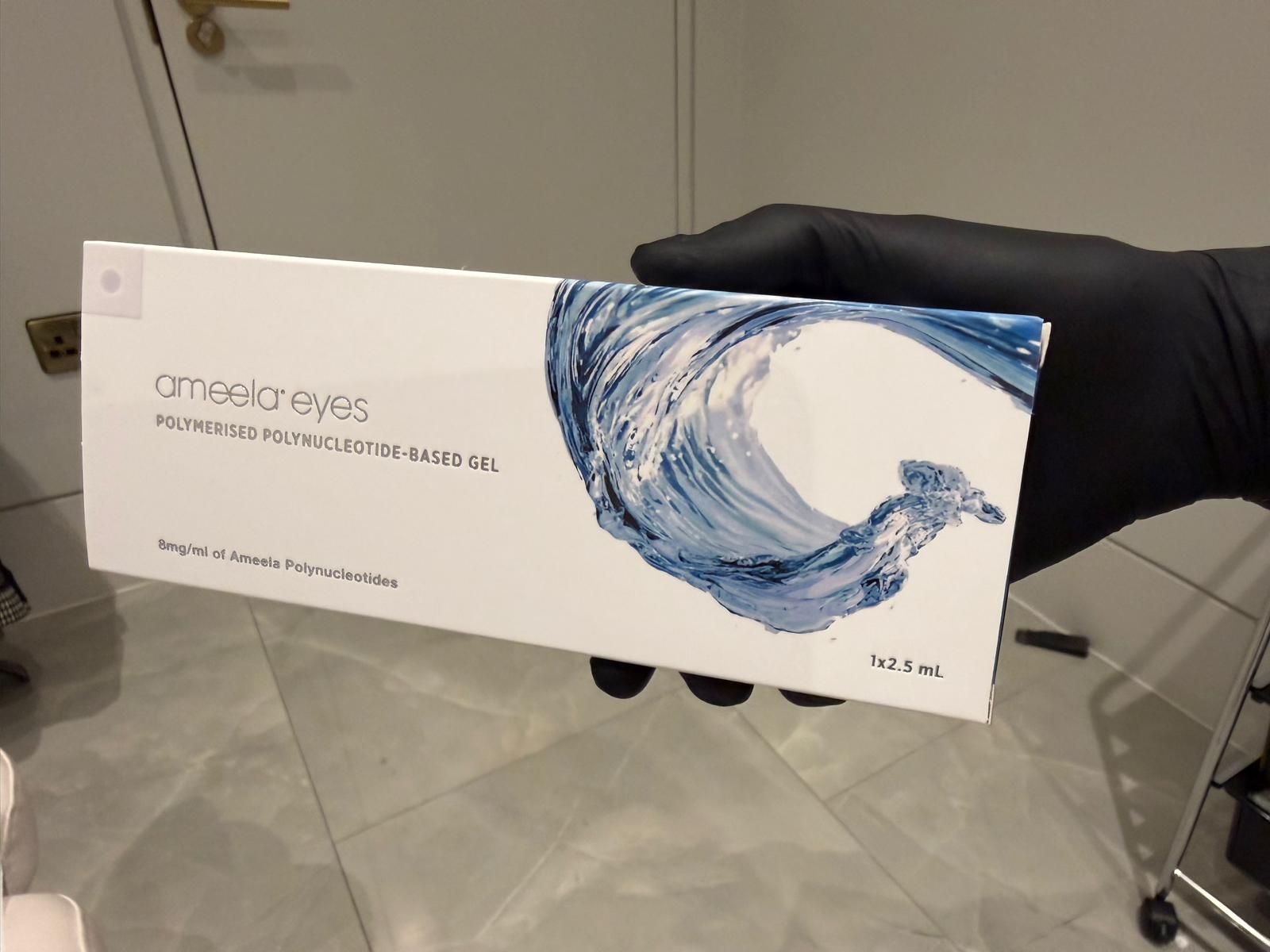
The specific product used at The Aesthetics Doctor is Ameela® , currently considered one of the most premium polynucleotide brands available, and the one you’ll increasingly see name dropped in clinic waiting rooms across London. Formerly known as Nucleadyn, Ameela is manufactured by Amedica and purified to over 95% purity, free from proteins and hormones that could trigger an immune response. It’s not just clean; it’s clinically precise. There’s a specific Ameela Eyes formulation designed for the periocular area, which initiates what the brand describes as a bio-restructuration process, stimulating tissue repair and hydration in one of the most demanding areas to treat.
Dr. Patel explains it well:
“Polynucleotides work by recharging the skin’s own repair system. Once injected, they boost the energy production inside skin cells, particularly the fibroblasts responsible for making collagen. They also activate specific receptors that calm inflammation and trigger the skin’s natural wound-healing response. So rather than adding volume like a filler, polynucleotides are essentially telling your skin cells to behave like younger, healthier versions of themselves — producing more collagen, repairing damage faster, and functioning more efficiently.”
That biological specificity is exactly what makes them interesting for the eye area, where precision matters enormously.
Not All Injectables Are Created Equal, Especially Under the Eye
The under-eye area is notoriously difficult to treat. The skin is thinner, more vascular, and far less forgiving than elsewhere on the face. Heavy or incorrectly placed filler can make the area look puffy or unnatural. So why are polynucleotides a better fit?
“The formulation of polynucleotides is quite light and does not volumise, which is ideal for delicate skin like the under-eye area. Polynucleotides thicken and restructure the tissue around the eyes, resulting in an improvement of superficial wrinkles without the use of fillers. They can also improve skin elasticity and hydration,” says Dr. Patel.
This is also why polynucleotides and tear trough filler are not interchangeable, they address different concerns. As Dr. Patel explains:
“I would recommend polynucleotides for patients who are not suitable for dermal filler under the eye. This tends to occur in patients who do not have true skeletal hollowing (volume loss) and will therefore not benefit from tear trough filler — and can in fact make the area appear worse. Patients who are concerned with eye bags, dark circles, periocular wrinkles, poor circulation, and dehydrated skin will benefit most from this treatment.”
That description was essentially a checklist of my own concerns. Dark circles, some hollowness, dullness, but not the kind of volume loss that filler is designed to correct. I was exactly the right candidate.
The Treatment & What to Expect
Dr. Patel applied numbing cream for a solid 20 minutes before we got started — which made a real difference. The treatment itself took around 10 minutes, and while it’s not entirely comfortable (there are needles involved, after all), it was notably less intense than the facial polynucleotide treatment I’ve also had. The eye area tends to be more sensitive, so the numbing step is worth taking seriously — and at The Aesthetic Doctor, it wasn’t rushed.
One thing to plan around: bruising in this area is essentially expected. I bruised for around four to five days — visible and puffy on day one, significantly better days three and four, and easily covered with concealer by day 4-5. If you have something important coming up, give yourself at least five days of buffer. I’d also recommend avoiding any blood-thinning supplements (fish oil, vitamin E) in the week before, and maybe not scheduling this one the day before your own wedding.
The Results — Subtle, But Real
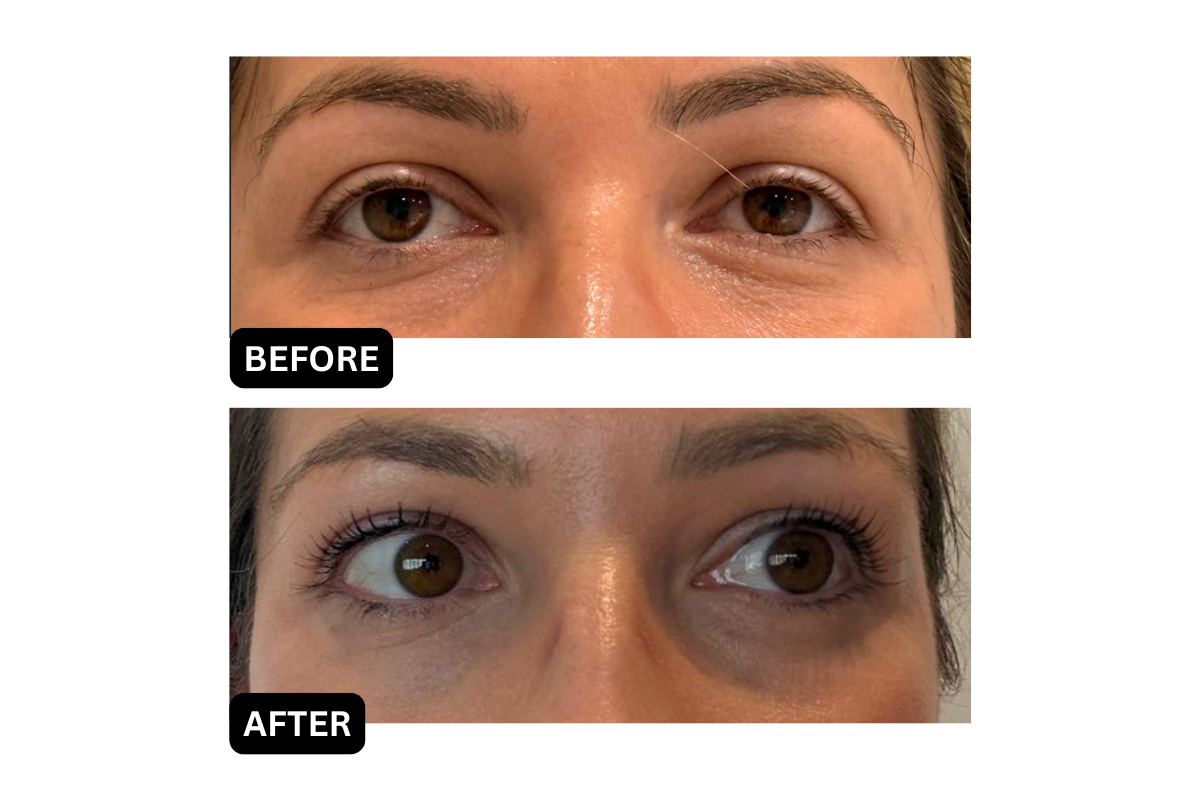
After three sessions, here’s what I noticed: my under-eye skin tone is more even, the texture is smoother, and — this one surprised me, the skin feels noticeably thicker. Not in a heavy way; just more like it has something to it now, rather than that papery thinness that catches shadows and makes pigmentation look worse.
The results are subtle. This is not a treatment that will deliver a dramatic transformation overnight. But that’s also the point, it’s working with your skin rather than imposing something onto it, and the improvements feel natural.
Dr. Patel’s realistic assessment matches what I experienced:
“Patients can expect a more rejuvenated and brighter under-eye area. The under-eye area will appear more hydrated with a reduction of fine lines and wrinkles. Many patients also experience a reduction in the pigmentation of their dark circles and eye bags. An improvement can be seen after one treatment, but the full result is seen after three months.”
How Many Sessions Do You Need?
Dr. Patel recommends two to three sessions, spaced roughly two to three weeks apart, which is exactly the protocol I followed. After that, the results typically last around six months, with a maintenance session recommended every six to nine months to keep things on track.
It’s a longer game than some treatments, but that’s the nature of regenerative work. You’re building something, not borrowing it.
So, Is It Worth It?
If you’ve been looking at your under-eye area and wondering whether there’s something worth doing but have been put off by the idea of filler, or you’ve been told you’re not a good candidate for it, polynucleotides are worth a conversation with your doctor. They’re not a quick fix. But they deliver the kind of slow, cumulative improvement that starts to feel significant when you look back at where you started.
For me, three sessions in, the area is visibly better. Less pigmented, more hydrated, and honestly less of a thing I think about.
You can find out more and reserve a consultation with Dr. Tajel Patel at The Aesthetics Doctor Mayfair via theaestheticsdoctor.com.Polynucleotide treatment starts from £450 per session
To provide the best experiences, we use technologies like cookies to store and/or access device information. Consenting to these technologies will allow us to process data such as browsing behaviour or unique IDs on this site. Not consenting or withdrawing consent, may adversely affect certain features and functions.
Functional
Always active
The technical storage or access is strictly necessary for the legitimate purpose of enabling the use of a specific service explicitly requested by the subscriber or user, or for the sole purpose of carrying out the transmission of a communication over an electronic communications network.
Preferences
The technical storage or access is necessary for the legitimate purpose of storing preferences that are not requested by the subscriber or user.
Statistics
The technical storage or access that is used exclusively for statistical purposes.The technical storage or access that is used exclusively for anonymous statistical purposes. Without a subpoena, voluntary compliance on the part of your Internet Service Provider, or additional records from a third party, information stored or retrieved for this purpose alone cannot usually be used to identify you.
Marketing
The technical storage or access is required to create user profiles to send advertising, or to track the user on a website or across several websites for similar marketing purposes.