
Ten-year-old Gabriella Cilmi had the right idea: sing The Rolling Stones, stomp your feet and enjoy yourself. Years later, watching a video of that performance helped the Australian singer work out what she’d been missing.
Pure Love, her first album in thirteen years, grew from that rediscovery. “It feels more like I’ve come back to myself than a comeback,” she says. “Maybe more like a homecoming.” There’s plenty of life in it. Recorded live to tape with producer Peter Miles in Devon, the album follows her love of soul, blues and classic rock, letting her smoky voice get a little rough around the edges. When she wanted another go at “Love Me Like It’s the End of the World”, exhausted after a long recording day, Miles told her to sleep on it. He was right. The tiredness belonged in the song.
Other moments have more bite. “Too Far Gone” revisits the warnings she heard when she began standing up for herself as a teenager. “YRU Hanging Around” sends someone packing, although she suspects she might be addressing herself.
The girl behind “Sweet About Me” still loves singing it. But she has a different measure of success now: creative fulfilment and some peace of mind. Speaking to 1883, Cilmi talks trusting her instincts, sharing her experience of OCD and why her younger self might have mixed feelings about the new record.


Pure Love is your first album in 13 years. Does “comeback” feel like the right word?
It feels more like I’ve come back to myself than a comeback. Maybe more like a homecoming.
You’ve talked about making songs your ten-year-old self would be proud of. Which track would she play on repeat, and which would she side-eye?
Ooh, I think she would play “YRU Hanging Around” on repeat and side-eye “What We Do”. I think examining relationship dynamics might be a step too far, although she really enjoyed singing along to “Piece of My Heart”, so maybe not!
A lot of people have asked what happened to you after The Sting. What were you doing in those 13 years, and when did music start pulling you back?
I was always making music. I thought I might join a band or maybe write for other people, but I spent a lot of time running away from myself out of fear of failure. It wasn’t until I started connecting with that younger version of myself, after being sent a video of me singing “Jumping Jack Flash” at around ten, that I had a realisation: I had to connect with why I loved making music to begin with.
You left your label and management within a few months around The Sting. What would you tell the person making that call?
I would tell her to trust herself.





You were told as a teenager that girls don’t play instruments. What was it like to build these songs on guitar or piano?
This was something that was said to a songwriter friend of mine, and there was a broader message that girls and women were better at singing and should leave the playing to the boys—which is SO ridiculous! Some of the best pianists and guitarists, not to mention producers, I know are women.
My early experience of writing was toplining over samples and loops, and I was always reluctant to play an instrument—again because of fear of failure (and a piano teacher who told me I had no musicality and to burn my piano book when I was eight).
I’m always guided by my vocal when I write, but I tend to gravitate towards the guitar and use it as a tool to communicate my ideas. For this record, it was important that every song arrangement could work on its own, simply on piano or guitar.
You kept a tired, cracking take of “Love Me Like It’s the End of the World”. Walk us through that moment and what it taught you about perfection.
God, I was so tired when we recorded that take. It was the end of a long day of recording, and I was really feeling it—everything was blurry. When Peter Miles, who produced the record, said we’d got the take, at first I didn’t think we had. I wanted to redo it, but Pete was adamant and asked me to sleep on it. I’m glad he did, because the song is vulnerable, and the vocal take is perfect for it, with all its human imperfection.
Producer Peter Miles loves the crack in a voice. Which flaw did you spend years hiding that you now love?
I spent years hiding that I struggled with OCD. A lot of people believe it’s all to do with cleanliness and order—which, for some, it can be—but for me, it was a lot of magical thinking and scary thoughts.
When I started sharing about it, I found out one of my best friends had it too, but we’d never spoken about it. It helped me realise that being vulnerable is very human and not a flaw. It allows us to connect with others and feel less alone.
You wanted this album filtered through a female gaze and brought in Anna Kranz and Julia Church. What was different in those writing rooms?
It was the shared experience of being a woman in an industry that has historically stereotyped us and put us in boxes. It was healing to exchange tales and also to witness other women in their power—both Anna and Julia are incredible musicians.

“YRU Hanging Around” came from realising you don’t need anyone’s permission. Who were you really singing to?
There was definitely someone in particular I was thinking about when I was writing it, BUT in hindsight, maybe I’m really just singing it to myself, willing myself to move forward.
“Too Far Gone” lists things you were told as a teenager. Is there one line you still hear in your head?
“No one will touch you now that you’re done with me.”
You’re about to play “Sweet About Me” next to brand-new songs on the UK tour. What does it feel like to sing it at 34, and what does success mean now?
I still love to play it. It has a new arrangement now that feels really good alongside the new tracks. Success means being present in the moment, feeling creatively fuelled and fulfilled, and having peace of mind.
You still get messages from mothers whose daughters want to be pop stars. What advice do you give them?
Let your kid be a kid. Give them space to develop their own point of view and hone their musicality. There’s no rush.
Pure Love is out now, follow @gabriellacilmi
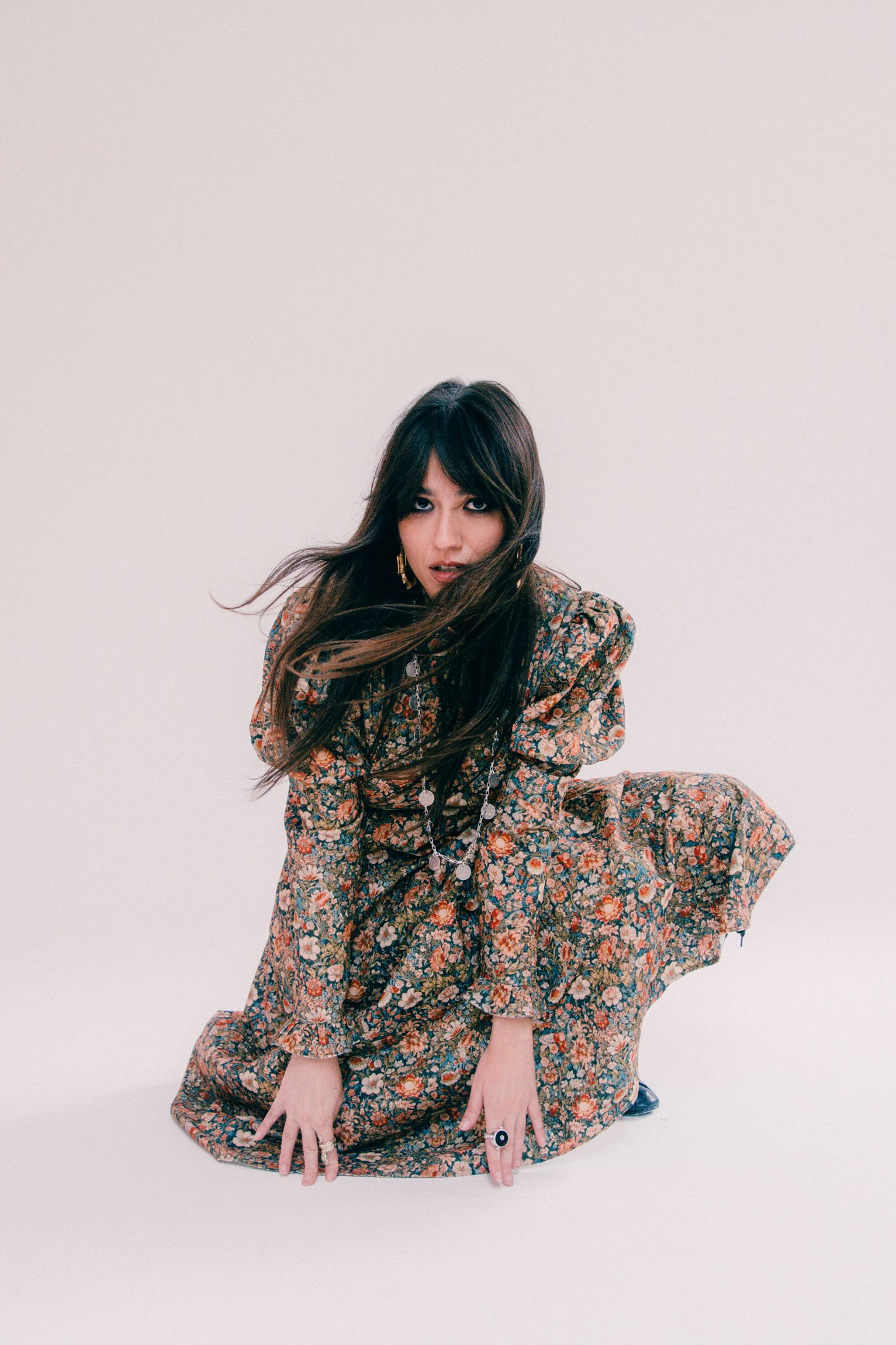
Photography Jack Alexander
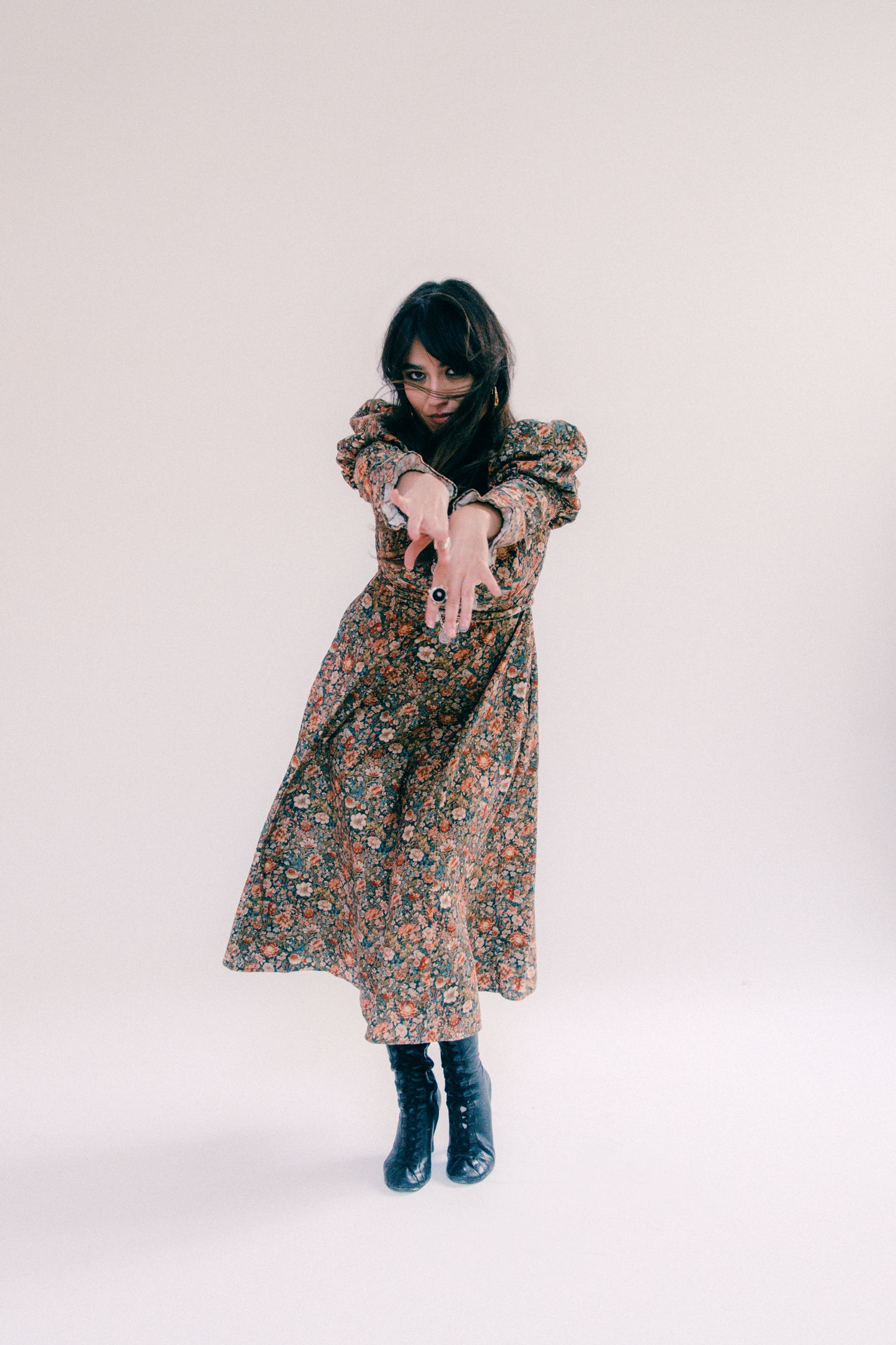
Look 1 – dress Sonnetry
Look 2 plus Top image – coat and hat The Hippie Shake