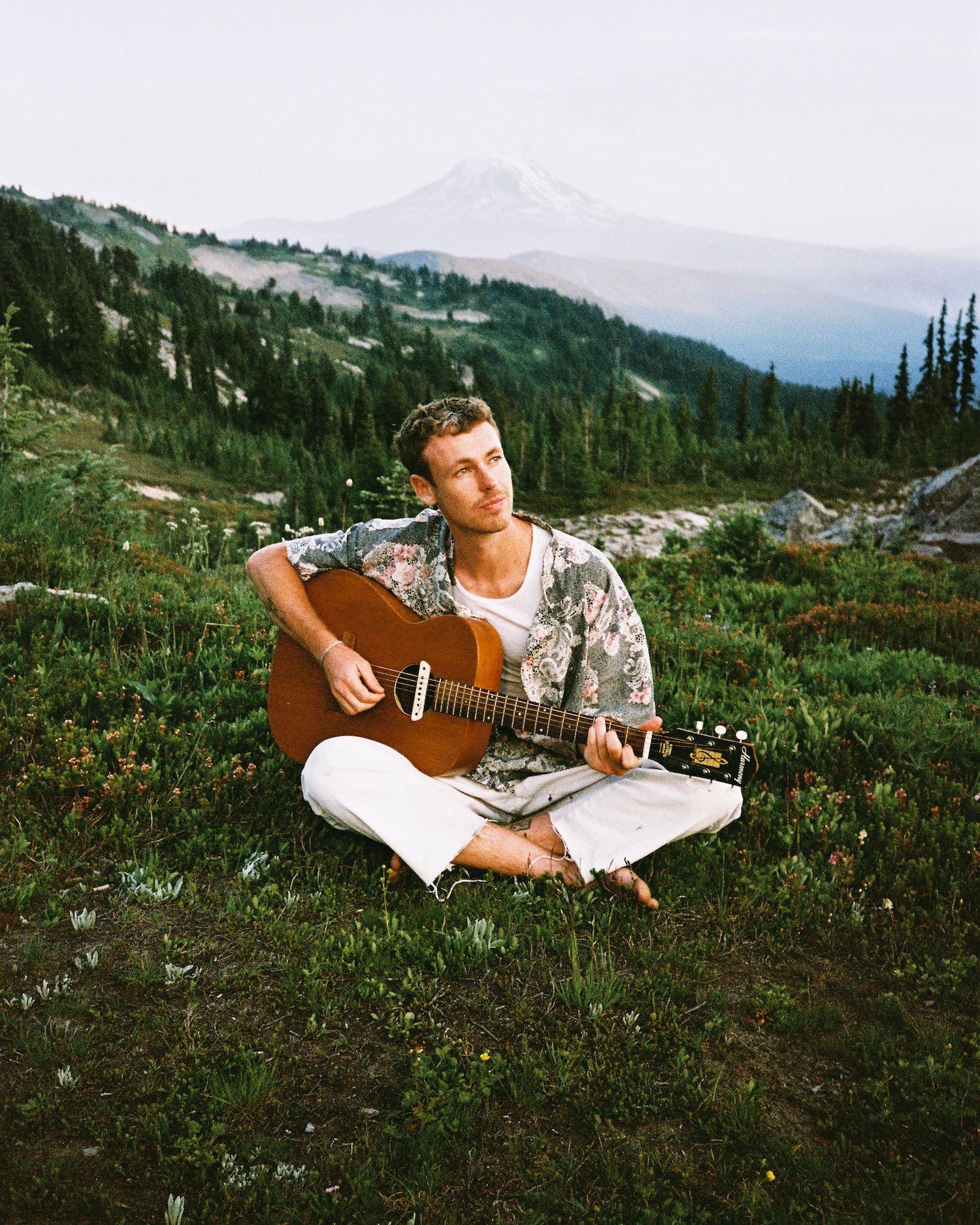
So The Sun Can Pour finds Seattle-based songwriter Hayden Everett leaning into space, patience, and the kind of honesty that comes from letting things unfold as they are. The result is a debut that feels grounded and unforced, shaped as much by where it was made as how.
Recorded at his family’s cabin in Tahoe and written across long stretches of solitude and time outdoors, the album carries a quiet sense of place. You hear it in the air around the vocals, in the looseness of the performances, and in the way the songs take their time. There’s warmth in it, but also a willingness to sit with things that don’t resolve straight away.
For this 18 Questions, Everett talks about writing through feeling, the pull of nature, and why leaving things a little unfinished can sometimes say more than getting them exactly right.
1. What’s the first thing you usually do when you wake up in the morning?
These days, I’ve been trying to remember to not rush out of bed and into the world. I try to sit on my bed for a good moment to take it all in. A new day is an incomprehensibly precious reality, and it’s easy to forget sometimes.
2. Where does your head go creatively first when you pick up a guitar, melody, lyrics, or just a feeling?
I think it really depends on the moment for me. Sometimes a melody pops into my head and that’s the catalyst of a song, sometimes it’s a feeling that doesn’t have words yet but feels best represented on the piano, sometimes it’s a poem that I mull on the words of for weeks. But the central thread with all of those is that there is always a bodily feeling that resonates beyond words or sounds or even thoughts. Those feelings are what I am trying to capture and express with as much honesty and presence as possible.
3. You’ve described So The Sun Can Pour as embracing imperfection, what made you lean into that instead of polishing everything?
It’s so easy to polish and perfect everything nowadays but I started to realize the music that I resonate with the most and that feels most timeless is when it feels the most human, raw, and honest. It’s definitely hard to leave imperfections and messiness in, but the whole point of music to me is to allow people to connect with my experience of being alive, which is messy.
4. There’s so much intimacy in the recordings, you can hear breaths, fingers, small moments, was that intentional from the start or something you discovered along the way?
That was definitely the ethos going in – we wanted to live track everything and create recordings that make you feel like you’re in the room with us as we’re feeding off of each other.
5. The title carries a simple but heavy idea, letting things fall apart so something better can come through, when did that philosophy first click for you?
I think I’ve slowly learned to embrace that philosophy over many years. But that particular line arrived to me as I was solo backpacking in Glacier National Park. I actually vividly remember the exact place and moment (Boulder Pass) when it popped into my head. That moment certainly felt like a breakthrough for myself in my own journey of allowing sadness and pain to flow in order to not block the pipes. We’re one way hoses and I had been pushing down grief and finding myself much farther from joy too, so that line came in tandem with some good freedom.
6. “Taylor” started as a best man’s speech, which is a pretty unique origin, at what point did you realise it needed to become a song?
I kind of always had it in my head that my best man speech for Taylor would include an original song that attempted to capture my love for him. It wasn’t until I started trying to write it that I realized it was an impossible task and horrible idea. The song came to me after I’d given up on trying and sat down separately to journal about what he means to me. That journal entry became the song.
7. That track feels incredibly personal but also universal, how do you find that balance when writing about real people in your life?
I think that the more personal, the more universal. Being alive is such a specific thing and love is the core of our existence, so tapping into an extremely detailed account is the most relatable thing there is. So I don’t think I’m necessarily trying to write things that are universal, I’m just trying to be as honest and expressive as I can.
8. You recorded the album at your family’s cabin in Tahoe, how much did that environment shape the sound and the pace of the record?
Oh so massively. You can hear all the years of game nights and books by the fire and family dinners in the walls and I think that warmth certainly came through in the recordings. Just being there put me at such peace. It’s where I discovered songwriting and poetry and rest in many ways, so the impact that recording the album in that place is incalculable.
9. Being surrounded by close friends while recording, did that make you more vulnerable or more relaxed in the process?
Definitely – there’s such a freedom in playing music with your best buds. We know each other so well, so the musical conversations that happen between our instruments just feels natural and easy. The joy and laughter was overflowing the whole time and that made it such a sweet and freeing experience.
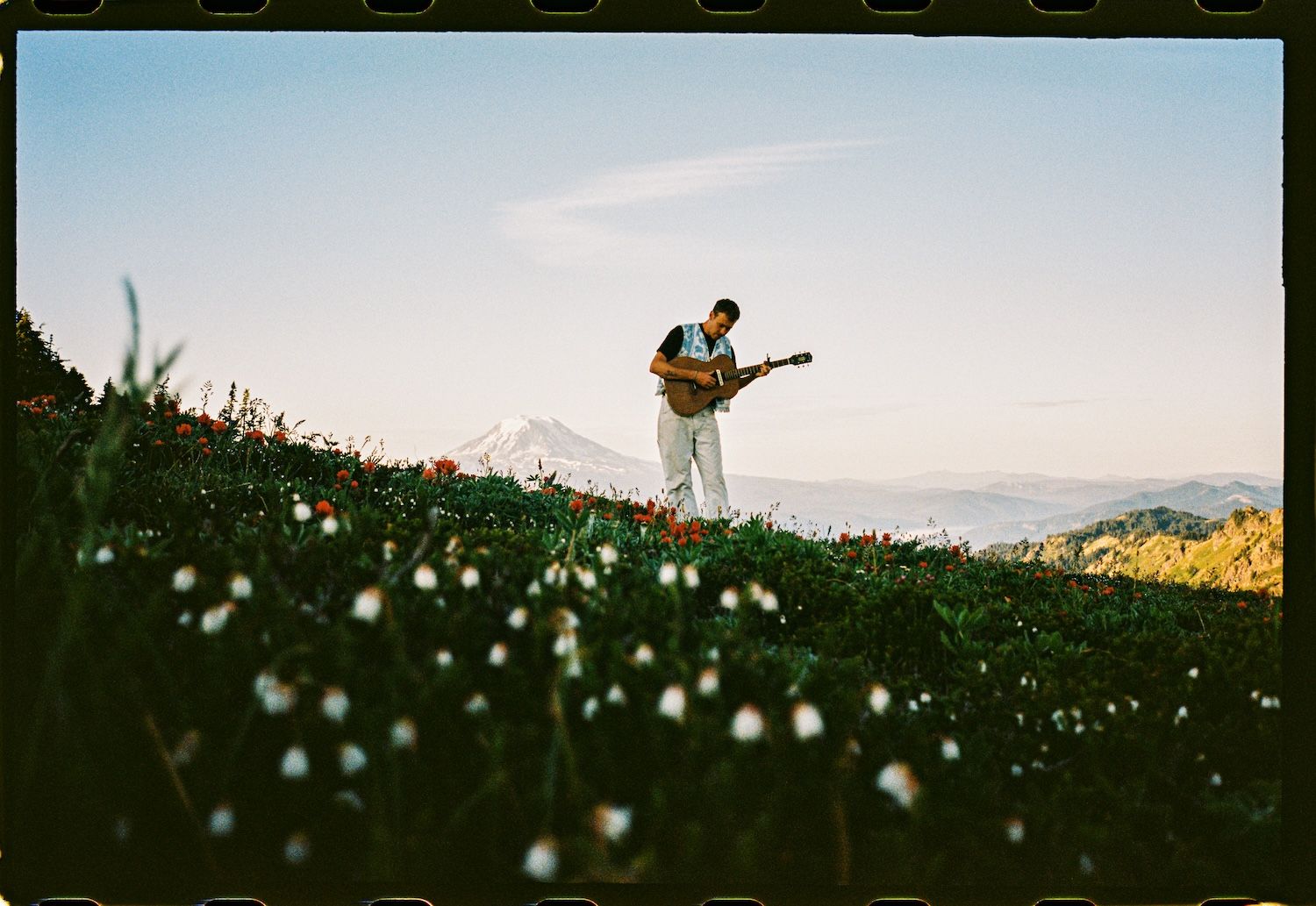
10. A lot of the songs came from your time in Glacier National Park, what does that kind of isolation give you creatively that everyday life doesn’t?
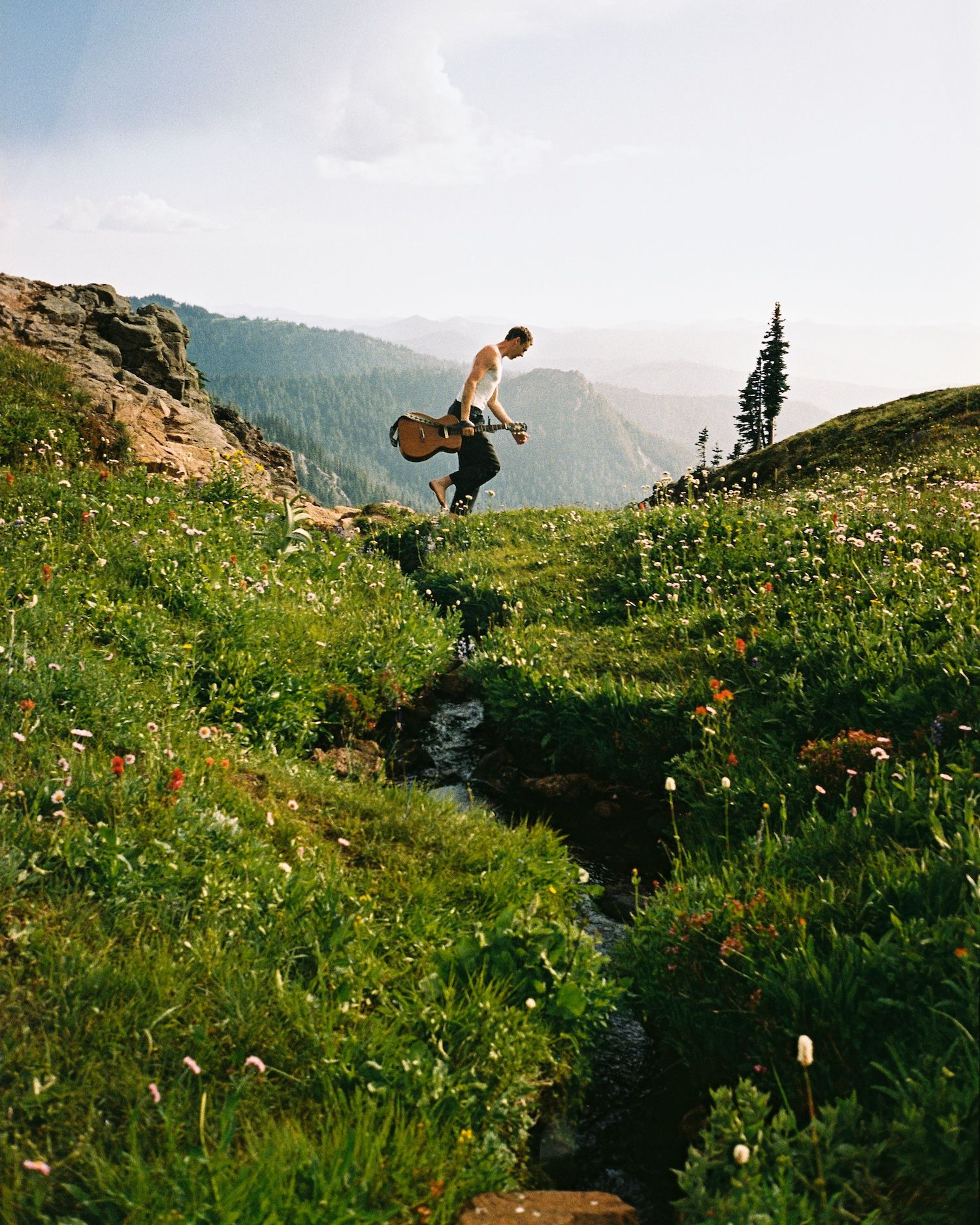
I reach a level of bliss and freedom when I’m solo backpacking where all of the top layers of thoughts and habits and feelings are able to soften and rest. That’s where I’m able to just breathe and walk and observe, and where new thoughts and observations that are a few layers down can begin to surface. Solitude paired with walking and mountain air has become essential for my creative process and self exploration.
11. There’s a strong sense of space in the album, both emotional and physical, do you think landscape directly influences how your songs feel?
Certainly. I always try to make songs that sound like the place I’m in and the open space in the backcountry played a huge role in the melodies and chords and tempos that came to me. I think of melody writing like treasure hunting – nobody is creating original melodies because they all already theoretically exist in nature since they’re just combinations of different vibrations. So I like to think of a certain place having specific melodies more ripe in the air for the finding.
12. You’re jazz-trained, but this record leans very stripped-back and folk-driven, how do those two sides of you meet when you’re writing?
Most of my band is jazz trained, in fact we all went to the same jazz program, and I went into the recording process with the ethos that we were making a folk album played by jazz musicians. I think you can really hear the tastefulness and sensitive listening in the playing, and the melody choices and even instrumentation also feel like a perfect blend of the two genres.
13. Tracks like “Angela” and “Killer Whale” hold both lightness and something heavier underneath, are you consciously writing in that duality or does it just come naturally?
I think a mix of both; what comes out is often not thought and more so just felt. Although I do love the sonic irony of a happy or light sounding song with heavy or darker lyrics. That also definitely fits the album’s central theme of nondualism and light and dark being intertwined.
14. The album feels very patient, it doesn’t rush emotion, was that a deliberate response to how fast everything else moves right now?
Absolutely. Patience and stillness were so essential to the writing process, but also have become extremely essential things for my own personal wellbeing and livelihood. Everything around us is telling us we need more, faster, bigger, next, and the current moment is never enough. This album is a massive rebuttal to those cultural tendencies. Right now is the only thing that’s real.
15. When you’re writing alone, especially on backpacking trips, what tends to unlock a song, is it a specific moment, a line, or just time?
Time is definitely a very important ingredient. But usually it seems to be gratitude that unlocks things. When I respond in accordance to the absurdity of the beauty around me, instead of acting with the loss of novelty and apathy that we so often have, things are put in their proper perspective. And that’s where the amount of songs that need to be written become infinite. Gratitude works in its inverse as well – grief over things lost is a form of the same powerful love that I consider to be the great well.
16. You’ve had songs placed on shows like Grey’s Anatomy, does knowing your music can live in those kinds of spaces change how you approach songwriting at all?
I don’t think so – if anything it drives me to dig even deeper within myself. I’m always honored when people resonate and see my music as a suitable soundtrack to their lives or TV shows.
17. With over 50 million streams already behind you, did making a debut album feel like pressure, or did you treat it as a fresh start?
It wasn’t until I had written the first 6 songs or so over the course of 2 years or so that I realized I was sitting on a chunk of my first album. The songs felt particularly special and intertwined and so I kind of just put them in my back pocket and kept living and writing with that in mind. It felt like a bit of pressure, but I felt so proud and confident in what I was writing that it was mostly excitement and eagerness.
18. You’re celebrating the release with a show at Tractor Tavern, what do you want people to feel walking out of that room after hearing these songs live?
I hope people walk out feeling the whole array of things. There is joy, hope, sadness, wonder, curiosity, love, grief, and everything in between in this album. When you feel all of those things, the result is often just feeling more alive, and more aware of that precious gift. I hope that’s the feeling people walk out with, paired with a desire to love more and live with more presence and gratitude.
So The Sun Can Pour is out now