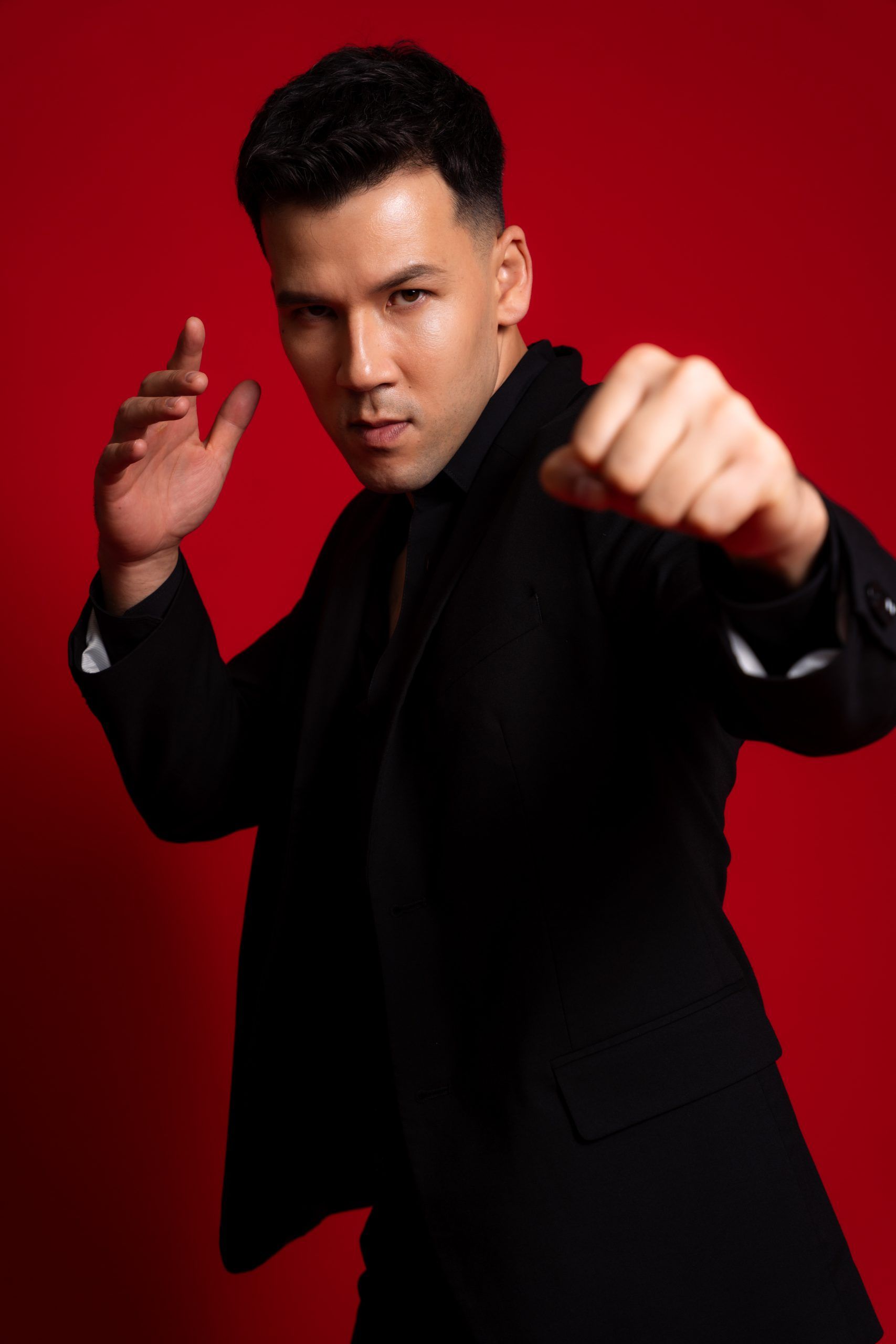
Discipline, courage, and an unwavering sense of self-belief are just some of the skills required in life to find your place, to get to where you want to be. For the German-Indonesian actor and martial artist, Max Huang, he’s demonstrated these skills over the last 25 years. Raised in a classical music family in Germany, it was at age 14 that he was introduced to Shaolin and began formal kung fu training. Later in his teen years, he went on to win gold at the German Wushu National Championships and took part in competitive Chinese kickboxing.
Growing up with a love of action films thanks to the likes of the iconic Jackie Chan and Bruce Lee, he found the industry he wanted to be in, to thrive in. But what do you do when you’re an unknown talent with no major experience yet? Well, you turn up in the crowd of the 2010 Karate Kid premiere and try to give your showreel to Jackie Chan. After managing to give the DVD to Jackie’s younger co-star Jaden Smith, to Huang’s surprise, a month or so later he received an email back from Chan’s team. After years of hard work, he went on to earn Jackie Chan’s trust and officially join his stunt team, spending more than a decade working on films such as Chinese Zodiac, The Foreigner, and Bleeding Steel.
Determined to build a career beyond action work alone, Huang continued to train as an actor, developing his craft, and earned his first major film breakthrough, playing the role of Kung Lao, in the violent, video-game adaptation, Mortal Kombat, in 2021. With the franchise’s loyal fanbase and more than three decades of lore, stepping into the shoes of such a popular character is no easy feat, as it comes with the pressure to deliver upon fan expectations. Ultimately, Huang’s take on the character proved to be the right fit, bringing new life to the role whilst honouring its roots.
As we learn on our Zoom call, a week after the release of its sequel, Mortal Kombat II, in cinemas around the world, Huang doesn’t take any of this for granted. Not willing to rest on his laurels, he now finds himself more creatively fired up than ever, developing his own projects and building his name, as he continues on his journey in showbiz.
In conversation with 1883 Magazine, Max Huang discusses his big fight scene in Mortal Kombat II, his journey with the Jackie Chan Stunt Team, and martial arts.
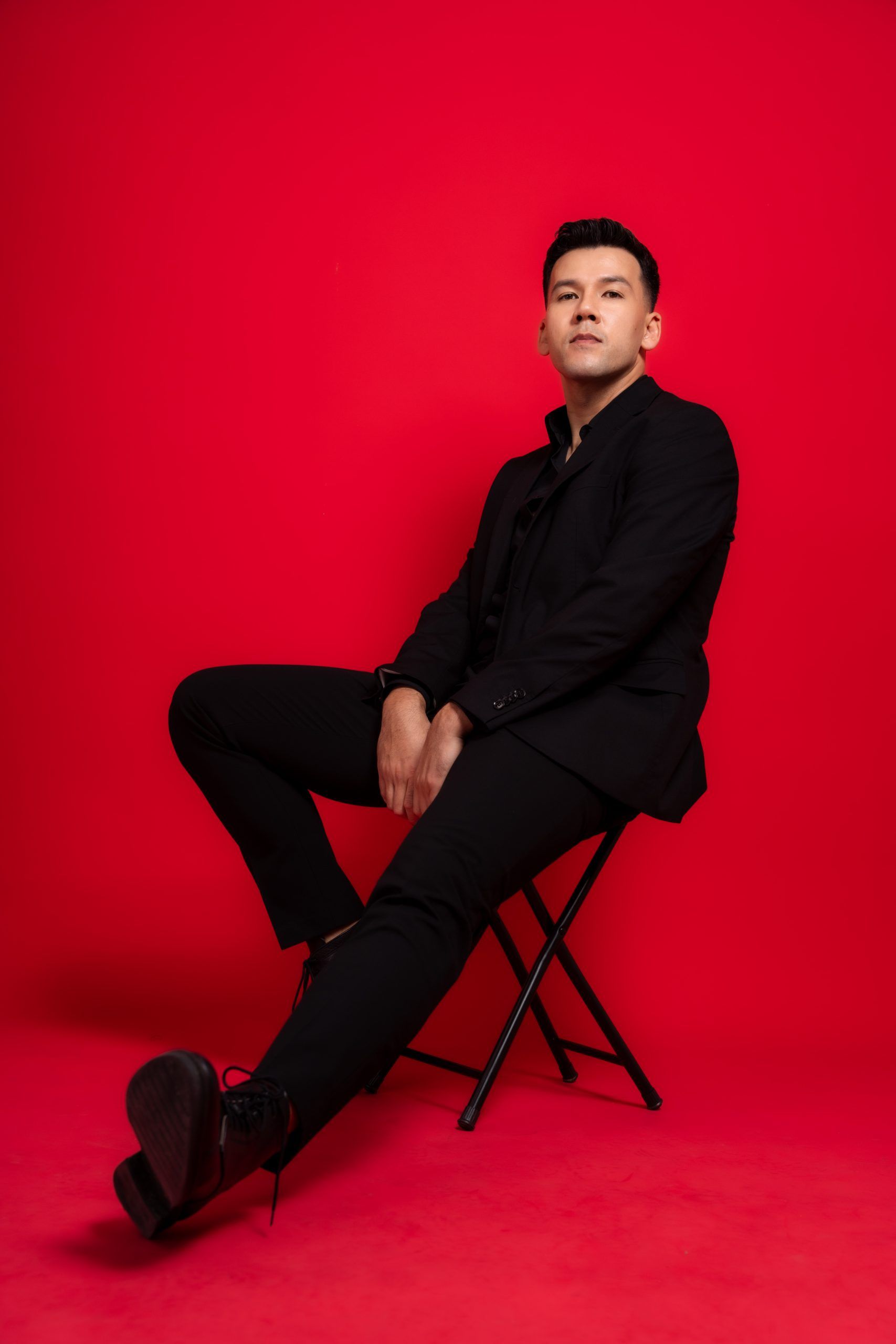
Max, thanks for speaking with 1883 Magazine. In the first Mortal Kombat film, your character Kung Lao is a noble and kind individual – he even helps train Cole before meeting his demise when Shang Tsung takes his soul. So what was it like to step into this twisted and corrupted version of the character for the sequel?
Ooh, good question. Well, I thought that Kung Lao was dead. I thought that was it for him, you know, and when I heard Simon [McQuoid], the director wanted to bring him back, well I was so super excited. At the same time, I was prepared, because I was training already for a potential second film. I looked up a Shaolin monk by the name of Shi Yan Lin in Berlin and he took me under his wings, I trained with him for over a year to prepare physically for the role. For the second film, I wanted to give Kung Lao more depth in terms of the way he moves, the way he behaves. For me, everything relates back to the Shaolin Temple of where Liu Kang and Kung Lao both grew up, so that was very important to me to get that across.
I’m always trying to balance the drama and the action because I believe, especially nowadays, what the audience wants to see is not just actors who do their own fights, but the drama is kind of lacking, or vice versa. Like the drama is good, but then the actor can’t fight. So, with my work, what I’m really trying to accomplish is to merge the two worlds, make them inseparable, and focus on the storytelling and character development.
Movement for me is just an extension of who the character is and what he’s trying to express. Obviously, this was a darker approach to Kung Lao this time. When I was chatting with Simon, he told me that he wanted me to play a version where Kung Lao is almost like the Terminator, and he has no feelings. So, as you said, a corrupted version of himself. He listens to his masters, who are Quan Chi, Shang Tsung, and Shao Kahn.
I thought it was interesting because for me, when you look at the fight scene, the reveal of it is quite surprising. The second death of Kung Lao, for me, at least, felt like a wake-up call for him, as soon as he knows that he’s going to die again, in a way, he realises his soul had been corrupted. But that’s always up to the audience to decide what they want to do with that. I’m just here to deliver the performance, and then they can interpret that.
As we know, the Mortal Kombat franchise has a seriously loyal fanbase ever since the first video game was released in 1992. So stepping into the shoes of this character back in 2021 for the film was no easy feat, a lot of expectations to meet. How did you want to put your stamp on the character from the start?
Mortal Kombat was my first big movie as an actor because prior to that, I had worked as a stuntman, stunt coordinator, and for Jackie Chan’s stunt team. I’ve been on these bigger sets, and I’ve worked with a lot of stars, but this was really the first time that I had to wear the hat like literally. I was really nervous, to be honest, and the way I deal with that nervousness is I try to overprepare. Basically, I was training day and night. I was doing my research on the character. And I have a whole book where I write all my notes, and not failing was my biggest mission for the first one [laughs].
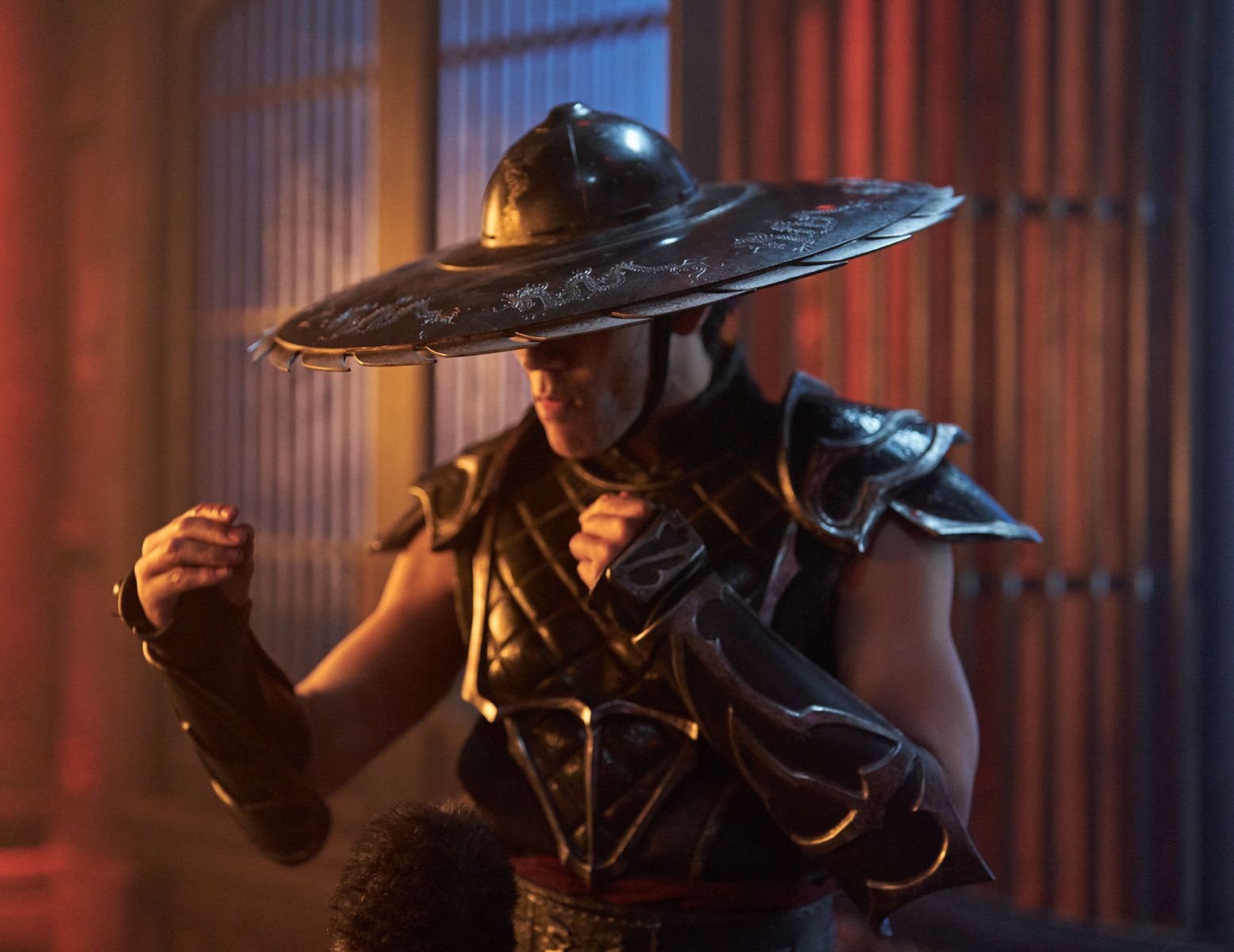
As you said, Mortal Kombat is one of those films where we are really trying to satisfy the audience, because they have such high expectations, and there’s so much pre-existing material, so you have to make sure that you live up to that. I was just looking up footage from the game on YouTube, and then I played the game, and, yeah, it was intense. I think a big part of Kung Lao is obviously his iconic hat.
So I also cut out a version of the hat from cardboard, and I trained with that, and I tried to make the hat become an extension of Kung Lao’s body. I’ve been training in Chinese martial arts, Kung Fu, for 25 years now. And the philosophy with kung fu is, when you train with weapons, that you really try to make that an extension of your body, and so the hat was very important to find that physical language.
As it’s now been a couple of years since the film was released, what’s it been like interacting with fans when you’re out and about in your personal life?
Yeah, the reviews for Kung Lao were extremely positive, and that’s something I’m very grateful for. Whenever I’m interacting with the fans or reading some of their comments, it means a lot to me. With the second film, we went to a premiere in LA and Jakarta. Let me tell you this, the fans are the heart of Mortal Kombat, like it was my first big premiere.
And, man, I can’t even put it into words, because they were coming with so much positivity, it was overwhelming, especially in Jakarta. My dad was born and raised in Indonesia, and so when the people over there heard that I have Chinese and Indonesian blood, they were going crazy. I’ve never experienced something like that.
Just to pivot away from the film for a moment, I just want to commend your hard work and dedication. As you said, you’ve spent the last 25 years studying martial arts. During this time, you’ve not been afraid to go out and create opportunities for yourself – I’m referencing when you made a showreel and waited at a premiere to try to hand it to Jackie Chan. More than a decade later, with different acting roles under your belt, you’re now on the big screen in a prominent role. When you look back at your journey so far, how does it make you feel?
I mean this year I’ve been using the word ‘blessed’ a lot, and that’s probably the best way to describe it. I feel blessed to be in this position and to be living my dream as an artist. I have been asked if I could have ever imagined being in the position that I’m in now, and my honest answer was ‘yes’. Let’s say, ten or 15 years back, when I was heavily into stunt work, and was already trying to get my name out there as an action actor. It felt so far away like you couldn’t even believe it, because here I was on a big set, but you’re standing as a stunt guy opposite the actors, and in your head, that’s what you want, right?
One day, you’re hoping to be there. So we’re in the same room, we’re in the same space, but it felt like such a long way. It takes so much self-belief to kind of project yourself into what could possibly happen in the future. You have to visualise what your future could be like, and I believe that. Since I was a kid, I have always believed this is one of my strengths, to always visualise.
At home. I would carry these small diaries with me, and I was writing ‘okay, one day I want to be here, and I want to work with Jackie, and then one day I want to become an actor, and I want to go to Hollywood’, I want to do all these things. So I feel like, and this is very important, probably also for the younger generations, dreams have to turn into goals, and you have to find a way to realise them by going out into the world and starting to actively do what you want to do.
It can be the smallest thing, but the first step is so important. And the self-belief is what has always been my north star, in a way. I don’t know where it comes from, but as I said, even when I was in a position that was very far away from where I am now, I was already visualising where I wanted to be.
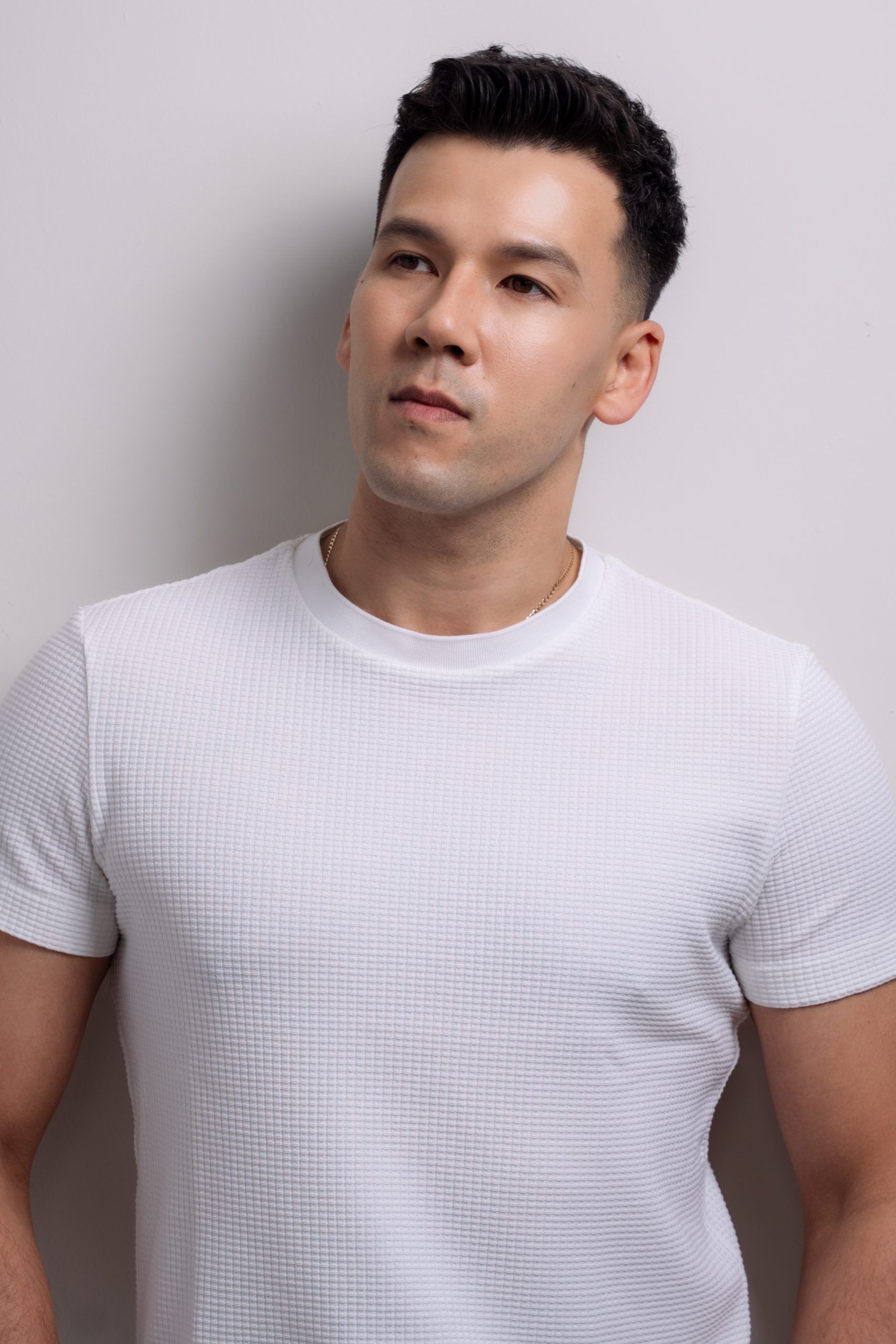
Could you recall that moment when you were able to hand Jaden Smith the showreel, and then a month later getting the email from Jackie’s team, and then what it felt like to join the Jackie Chan Stunt Team?
I’m getting goosebumps again thinking about it. I think one should always remember where they come from. I think that’s also very important because right now, in a position that I am, it’s very easy to get…
An ego [laughs]
Yeah, because you receive so much positive feedback. One of the first reactions I had after the premiere the other week, I was like, ‘I want to just go back into the gym, and I want to keep writing on my projects’. I thought this was all great, but let’s do the next one [laughs]. Let’s keep working.
Anyway, it was pretty crazy. I’m actually producing a mini-documentary for YouTube and other streamers at the moment to retell that story, and we’ve been reshooting some of that stuff. So basically I was just a kid with a dream. I was probably the biggest fanboy in the German hemisphere for Jackie Chan. I had tried to meet him so many times, I’ve taken pictures with with a big crowd where he was, and you could see me in the background. I was already super happy but when Jaden Smith took my DVD with my showreel on it, we had this eye contact for a brief second, then it felt like an eternity, because it was that ticket to something that was so far away.
So when he took it, that came with so much hope for me, and then right after that, me and the other stunt guys who were at the premiere, we got tickets to watch the movie, and I was able to walk on the red carpet, and Jackie was waving to the fans with his back towards me. So as I was passing by, I paused for a second, and I was taking a breath, and I promised myself, I’m gonna make a movie with him. And then, and then that happened, and I went into the cinema. We watched the Karate Kid and it was emotional.
I think a month later or so, then I flew to Shanghai because I was training at the sports university back then, and I was in my small dormitory, and then one day checking my emails, and then I saw the header ‘Jackie Chan stunt team’, and it was the stunt coordinator of the team who wrote to me, asking if I wanted to join the next project with Jackie, because he really liked my show reel. At first, I didn’t dare to open that email because I was thinking it could be a prank, I thought it couldn’t possibly be true.
When I finished reading it, I jumped on my bed. I remember my ex-girlfriend back then, I was jumping, and she was like, ‘Oh my God’. It was crazy. Four days later, I met up with the stunt coordinator from the team, and then the rest is history. I had to wait a year until we actually started filming the movie, Chinese Zodiac, and I was really on my toes for a year, I was just training, preparing and hoping not to fail their expectations.
Yeah, it was a very intense time.
So what was it like actually meeting and working with Jackie then?
From that moment on, when I stepped on set, the first film, Chinese Zodiac, I was there as a trainee of the stunt team. It wasn’t certain then if I would become a member of the team, they were testing me and another German, Vietnamese stunt guy, Andy Long. We were both there the whole time with this uncertainty of whether we can fulfil their expectations, and what are they going to do with us. So when I arrived, I straight away, I met Jackie, he shook my hand, he welcomed me into the production.
And then from then on all the time, I was working as if I was already part of the team. In the stunt team, we basically do everything, everything around stunts in action. Like in the West, they have roles for example, the stunt riggers, the performers, the doubles, and they all don’t really cross over. But with the JC team, we do everything. We even became the bodyguards of Jackie whenever we would go out to a restaurant. So it was the full thing, and I right away got immersed in that world and got to double other actors, got to perform stunts, got to fight Jackie, got to eat with him, got to hang out with him. And then one day, he was shaking my hand and was like, ‘Okay, you’re part of the team. Welcome’.
I teared up and all that after. Then we just continued to make more films. He kept calling me again, again and again. I gained his trust to not only perform stunts, but to become a creative for his choreography. And then I became an assistant stunt coordinator on The Foreigner, the film that we filmed in London. Then right after I showed him some of my work, and he said, ‘Oh, wow, you did that. Okay, you’re gonna be the next stunt coordinator for my next film, which was Bleeding Steel, which we shot in Australia, Taiwan and mainland China.
I remember I was standing on set and showing him some of the previews and explaining to him the next action shots. And I was asking him for his approval, and he was like, ‘Hey, Max, whatever you want me to do, I’ll do it. I trust you. Just let me know’. And I was like ‘oh my god! I am directing Jackie Chan. What is going on?’ [Laughs], no pressure.
Again, with self-belief, you made it happen!
Well, I have to credit so many people.
Of course, teamwork is important.
Martial arts and acting are two very different art forms, but both require discipline. Can you talk about the similarities you draw between the two?
They are different, but then they also have a lot of things in common. I studied two different types of martial arts. One was the actual combat, the fighting stuff, the Chinese kickboxing. And I did a lot of tournaments when I was younger, and you don’t have time to show off or pull off any fancy movements; it’s just directness and effectiveness that count. And then a bit later, I was so fascinated by Chinese Wushu because I’d seen Jet Li’s Shaolin Temple and all of that.
I wanted to learn more about the performance side of martial arts, which features more jumps, kicks and acrobatics. I thought that would help my skill set not only as a stuntman, but also later, if I wanted to become a martial arts actor.
So that was my foundation, both the performing side and the more realistic combat style. I feel acting relates much more to the realistic combat situations because when you are facing someone in a fight, you don’t have time to think about how you look, or you know how you’re going to impress the audience. So it’s really reactive, and you have to really be in the moment. It’s hard to describe it, you have to experience it and with acting, I feel the the biggest similarity is you have to be in the moment.
You have to be reactive, respond to your scene partner, right? In acting, the worst thing I believe you can do is to hold the mirror in front of you and think about how you look when you when you act, when you do a certain scene. So I think listening to your scene partner is key and I feel the less aware you are of yourself, the more of your actual self will actually come out, rather than being too self-focused on your performance. In fighting, it’s kind of similar, because it’s the most honest language between two people, hitting each other [laughs]. How much more honest can you get than this dialogue of fists and feet?
So I see the similarities there, and then with the performance martial arts, it’s the thing that is made for the stage to impress an audience. It is useful, but again, I feel, as actors, we’re trying to be truthful to the stories that we’re trying to tell. So a bit of flashiness here and there, I think is okay. It’s good. But if an action scene purely exists for the sake of wanting to entertain, and the movements become empty movements, because there’s nothing that we are actually getting across aside from the visual beauty that it gives us, then I feel you miss the point of it all.
And I believe that’s why, when you watch Mortal Kombat II, the fight between Liu Kang and Kung Lao, the reason why people respond to it well, is that there’s a meaning behind every move, and there’s a story within the fight that we’re trying to tell.
Speaking about that, what was your initial reaction when you read the script and saw your own fatality backfires at the end of the big fight against Ludi Lin’s Liu Kang?
I thought it was a really great creative idea. I didn’t read about it, I saw the preview which the stunt guys had directed and shown to me. At the moment, I was shocked, I thought that was great, and the audience is going to be shocked.
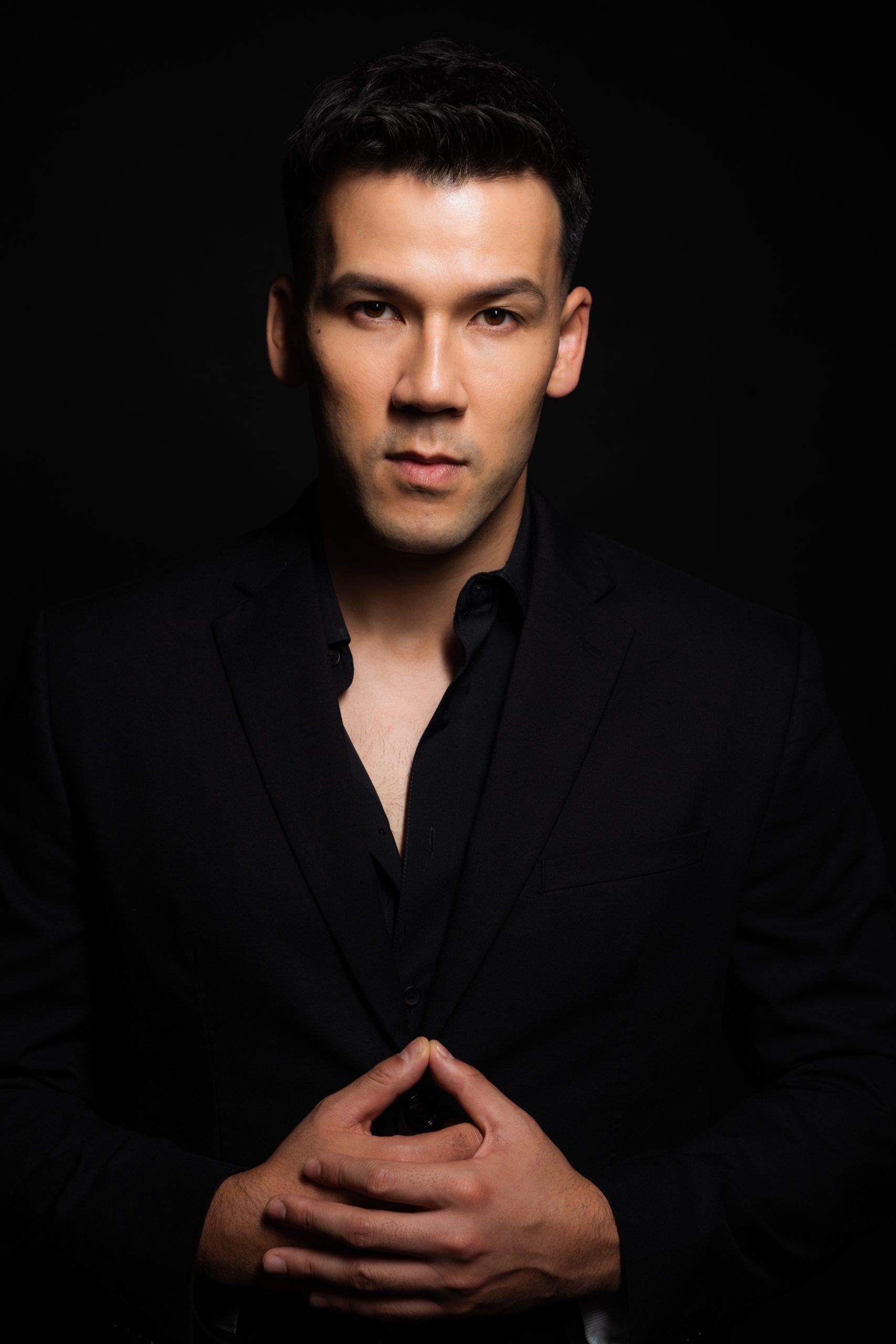
Can you walk me through the prep for the fight, how you actually end up filming a scene like that?
The truth is, it’s all teamwork, and a lot of different departments and elements come into play when creating a fight scene like that. It’s not only two actors and a cameraman; it really requires a whole army. So hats off to Kyle Gardiner, the stunt coordinator, Malay Kim, and Michael lehr, who were the action choreographers. The 25 years of martial arts experience definitely came in handy, but over the years, I’ve come up with my own philosophy called Creating Controlled Chaos.
The reason I came up with that, in order to make a great fight scene, it needs certain elements. So I divided it into four pillars, which are choreography, the performance of the actors, the camera movements, and the editing. If one of them is missing, it all falls apart. We’ve seen it numerous times, the performance can be as great as possible but if the editor doesn’t know what they are doing, the audience is not going to be able to appreciate it.
So creating rhythm in a fight scene, building and releasing tension, are two key elements, besides the storytelling. Rhythm can be created through the performance, choreography, camera work, editing, and the music. As I grew up in a family of musicians, I’m a singer as well, music has played such a huge part of my life so whenever I choreograph something, I first have to envision the rhythm and the music of the scene. I think it’s almost the soul of it.
If you watch Jackie Chan films, Bruce Lee films, they all do it but in a different way. Jackie would do the ‘pow, pow pow’, fast beats, using whatever is around him, and then stop, pause, and continue the fight. It’s the same with Bruce Lee, He was a master of building tension just through his eyes and looks. He would build it until the rubber band snaps and then just explode. So I’ve been influenced and inspired by these icons of action; I’ve been meticulously studying their work frame by frame. I probably watch a Bruce Lee or Jackie Chan fight scene every day just to learn [laughs], it’s crazy.
I feel martial arts action is really an art in itself, and it’s also pretty underrated because sometimes critics or people just say ‘oh, it’s an action movie, It’s this or that’ but the amount of work you have to put behind it is immense.
When it comes to a franchise like this, it must be tricky to split the screen time between so many amazing characters. Yet excitingly, the third film looks like it could focus heavily on Kung Lao and Ludi Lin’s Liu Kang. Where would you like to hypothetically see the story go?
It’s really not my call, I know Jeremy Slater is an amazing writer, and transcribing a game into a movie is a big task. I think he has succeeded with that. I think right now, we have found the right formula for it. The first film, we experimented a lot with it. So here, I feel we have found the right tonality and the right voice.
There are so many ways this franchise can go, we have so many characters we can focus on. I wish to see Shaolin Monks with Liu Kang and Kung Lao, I think that would be something really cool to explore. Aside from the action, I would love if we could also dive a bit deeper into the storytelling and show more dramatic scenes. I think that would do the franchise good. It’s action, but you have to feel for the characters when they are fighting. So the dramatic scenes play a huge part in that.
I would love to do more dialogue, more acting, even in a film like Mortal Kombat.
Finally, looking to the future, 7 Dogs is on the horizon, where you play a villain, but what can you tell us about the original project you’re writing, where you star as the lead actor and action director?
I’m super excited, it’s one of those things where I believe again you have to create your own opportunities, no one is going to hand them to you. So that’s why, out of necessity, I keep writing [laughs] and developing my own stories. As a creative in front of and behind the camera, that is ultimately what I’m trying to do.
If you look at the Jackie Chans, the Bruce Lees, they’ve all done it, found their voice, and a way of portraying their action. It was never just being an actor, it was being a filmmaker which made them great.
I love movie-making, I will keep doing it until the last day, that’s my life [laughs].
Max, thanks for the chat. I appreciate you taking the time.
Of course, thank you, Cameron.
Mortal Kombat II is in cinemas now.
Interview Cameron Poole
Photography Yestia Novira
Thanks to KITE Entertainment
Thanks to SHAFRAN PR