Simon Jones stared at the aftermath of a devastating poaching attack at Kariega Game Reserve in South Africa where he had been studying conservation methods. The year was 2012. The images of slaughtered rhinos, victims of an illegal wildlife trade that showed no signs of slowing, burned into his memory.
“Fuelled by his love of rhinos and outraged at the unprecedented level of rhino poaching, Simon gave up his 25-year corporate career and founded Helping Rhinos,” Olivia Smith, Communications Manager says.
That decision started an international conservation organization that operates in several countries with the aim of saving rhinos through what it calls Rhino Strongholds. Such secured wild areas are not merely a safe haven for endangered animals, they serve as whole ecosystems in which wildlife flourishes, local communities find sustainable opportunities and conservation turns into a communal goal as opposed to a dictum.
The poaching of rhinos is still dire. Illegal trade in wild animals has been fueling poaching, which has been killing populations in Africa. The natural habitat required by the rhinos to survive is gradually being reduced due to human expansion, deforestation and agricultural development. In some cases, local communities, usually in an economically weak position, do not have the means or motivation to conserve. These three issues are a complex crisis that requires an equally complex solution.
Helping Rhinos addresses this reality through three core operating principles. The organization strives to ensure the protection of the wildlife through anti-poaching efforts, surveillance and security. It seeks to conserve their habitats through the enlargement and rehabilitation of wild landscapes. Most importantly, it supports the people by providing local communities with education, sustainable livelihood and conservation-based opportunities. This three-pronged strategy recognizes one of the most basic realities of contemporary conservation efforts: solitary attempts to preserve animals will never be successful without considering the human aspect of the issue.
The organization operates predominantly in South Africa and Kenya, two countries that hold the key to the existence of rhinos. South Africa contains the largest number of rhinos in the world, and thus, the main point of conservation initiatives in both numbers and genetics. Kenya is particularly vital in the recovery of black rhinos, in which it has the largest population of the eastern black rhino in the world.
Supporting Orphans and Building Protection Networks
One of the flagship projects of Helping Rhinos in South Africa is the Zululand Rhino Orphanage. Operating in partnership with the Zululand Conservation Trust, the facility serves as the only dedicated rescue and rehabilitation center in the global epicenter of rhino poaching. Close to 50 rhino orphans who were victims of poaching attacks that killed their mothers have been rescued. The orphanage has already managed to release close to 20 rhinos in the wild which is an indication that even with the current pressure of poaching, rescue and rehabilitation can still be effective.
Each orphan requires intensive care, specialized nutrition and eventual reintroduction to wild habitats. The psychological trauma young rhinos experience after witnessing their mothers killed requires patient, long-term care. The process takes years, but the successful releases demonstrate that these efforts can contribute to wild population recovery.
In South Africa’s Eastern Cape, Helping Rhinos works alongside the Kariega Foundation to strengthen community ties and protect rhino populations. It also collaborates with the African Rhino Conservation Collaboration to provide aerial anti-poaching services, and this makes over 1,000 hours of flights annually. The organization has fitted almost 90 state-of-the-art rhino monitoring devices to animals across the region, creating a network of data that helps conservationists understand population dynamics and respond quickly to threats.
Preserving Critical Habitat and Expanding Wild Spaces
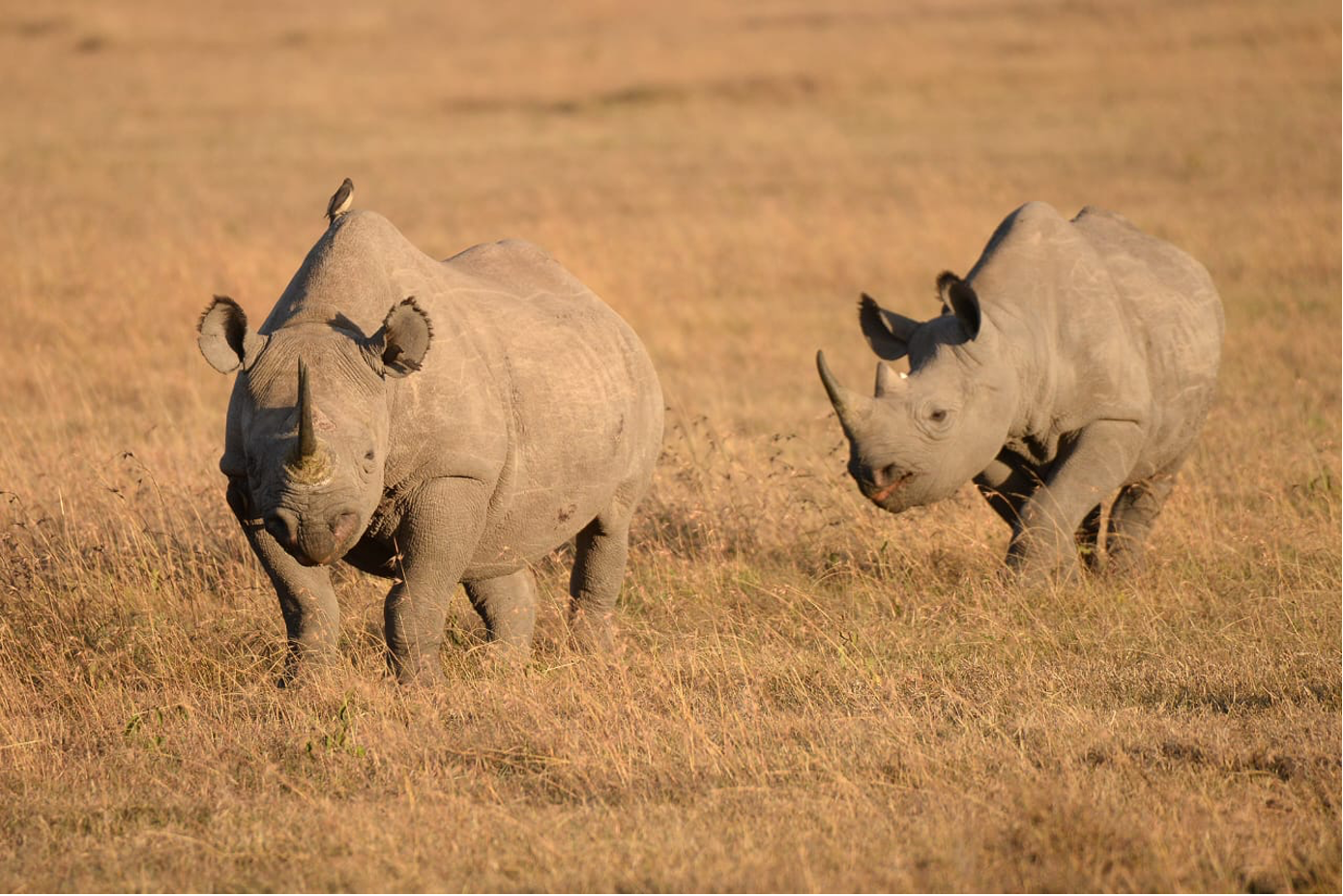
In Kenya, Helping Rhinos collaborates with Ol Pejeta Conservancy where the two surviving northern white rhinos in the world are located. The center is also safeguarding the largest number of eastern black rhinos in the world. The northern white rhinos are one of the most sobering tales of conservation, a subspecies brought to functional extinction. A more positive story is the eastern black rhinos in Ol Pejeta that are increasing in population with strict protection.
The organization has recently made a formal partnership with Tsavo Trust which is a field based conservation outfit that focuses on protecting wildlife and habitats within the region. The strategy focuses on long term relationships as opposed to short-term interventions.
“We believe that by adopting a partner model we will ensure long term results and project sustainability,” the company spokesperson says. “The threats facing our natural world are a global problem and need global support, but we believe it is the people living and working closest to the issues who are best placed to solve them.”
Instead of having outsourced solutions, Helping Rhinos supports and funds the efforts of local organizations and communities. Partner organizations on the ground possess firsthand knowledge of challenges and opportunities that distant headquarters could never fully understand.
The habitat preservation work extends beyond protecting existing reserves. Helping Rhinos seeks to widen and interlink major habitats, which will provide wildlife with wider roaming space. This vision is responding to one of the core challenges of conservation: that detached small reserves can not support healthy populations indefinitely.
Investing in Communities and Education
Liggerman Educational Centre officially opened its doors in 2025 as a source of education to children residing around Kariega Game Reserve in South Africa, Eastern Cape. The facility started as a vision of a group of young local mothers who realized that their community needed quality early education. That dream was made true through collaboration with the Kariega Foundation. It provides 40 children with structured education every day in a secure and warm environment with play space and a flourishing community vegetable garden.
The center represents recognition that effective conservation requires community investment. When local people see tangible benefits from protected areas, conservation shifts from an external imposition to a shared priority. Building on this success, a second school in the area is scheduled to open in 2026.
The education initiatives connect to broader efforts to create sustainable livelihoods within communities near protected areas. Economic opportunities tied to wildlife protection help align community interests with species preservation.
Helping Rhinos Fund Conservation Through Diverse Support
The foundation of the funding model at Helping Rhinos is made up of donations and sponsorships. The 2024 Rhino Champions Matched Giving appeal demonstrated the power of engaged supporters. Over three days, donors helped raise more than 80,000 pounds to support conservation efforts. These funds enabled support for Tsavo Trust’s implementation of the annual Ngulia Rhino Sanctuary night census, helping conservationists track and protect one of the world’s most important black rhino populations.
Restricted funding through adoptions and sponsorships allows donors to directly support specific projects. “If you adopt a rhino orphan, you know that your adoption fee will support the daily care of that orphan and the upkeep of the orphanage facility to ensure the long-term care these vulnerable calves need,” the company spokesperson says.
Rhino poaching rates remain consistently high despite decades of conservation efforts.
“On the ground, the greatest challenges obviously relate to the consistently high rates of rhino poaching that we see, and the increasingly sophisticated tactics of the international poaching syndicates,” the company spokesperson says. “Teamed with a lack of international will at the governmental level, these factors form the greatest barrier to long-term sustainable rhino populations.”
The governmental dimension of conservation presents particular frustration. While many countries have laws protecting endangered species, enforcement varies widely. Political priorities shift, budgets fluctuate and corruption can undermine even well-designed protection systems. International cooperation on wildlife trafficking faces similar challenges as different nations balance conservation concerns against other interests.
Yet hope persists in the form of measurable progress. The rescue and successful release of rhino orphans, the protection of critical populations, the education of thousands of children and the expansion of protected habitats all demonstrate that conservation efforts produce real results.
Facing Persistent Challenges and Planning Ahead
Helping Rhinos plans to keep the Rhino Strongholds initiative at the center of operations. The organization prioritizes expanding the orphanage facility as rising numbers of orphans need care in South Africa. Plans include acquiring new land in key locations to link established protected areas and give wildlife greater room to roam freely.
The organization seeks long-term investment. “We are expanding our corporate and individual donor pipelines, looking to secure long-term high-level investment from philanthropic organisations and individuals who want to contribute to tangible, long-term conservation wins not only for rhinos but for all wildlife, the habitats they live in, the people that live alongside them,” the company spokesperson says.
The story of Helping Rhinos ultimately centers on the connection between wildlife and human welfare. The organization’s three-pillar approach recognizes that protecting animals, preserving habitats and providing for people form inseparable elements of successful conservation.