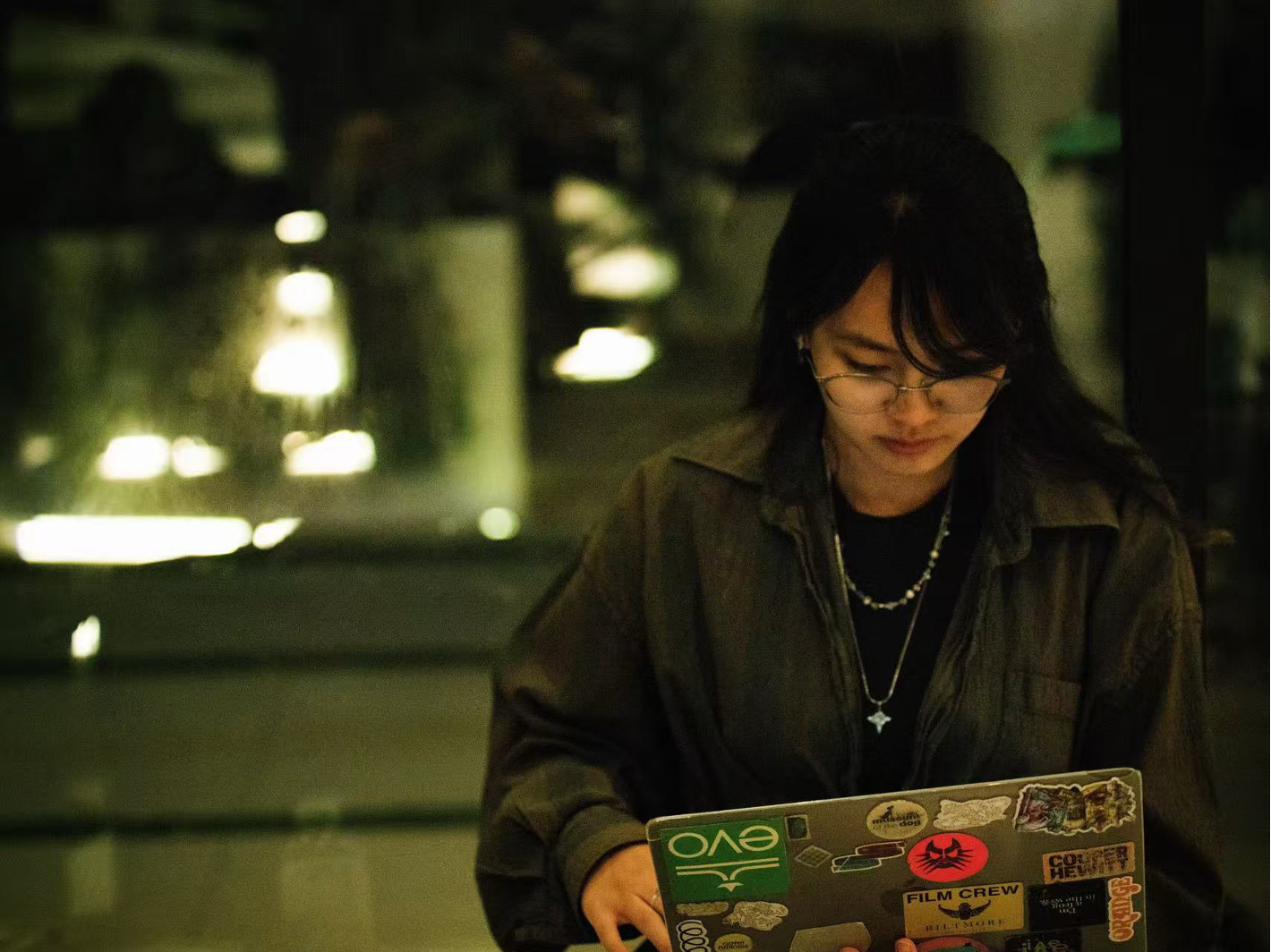
Short films are where crafts tend to get found out. The compressed runtime, the limited resources, and the single-location setups leave nowhere to hide. Every surface, every prop, every shadow either serves the story, or it doesn’t. Jiayun Lucy Zhang has built her reputation in exactly this unforgiving format, and the results have been difficult to ignore. Her art direction on Flashlight and A Call, two shorts that have collectively attracted an unusual volume of festival attention, has distinguished her as one of the most purposeful young art directors working in independent films today. The awards are real, the reason behind each creative choice is specific, and the work holds up.
Zhang’s guiding conviction is straightforward: a set should be able to tell the entire story on its own. Pull the actors out of the frame, and the environment should still communicate who these people are, what they fear, what they’ve lost. That standard is harder to meet than it sounds, and meeting it consistently across two films, totally as different as a psychological thriller and an intimate personal drama, both on shoestring budgets, speaks to something more than technical competence. It speaks to a coherent artistic point of view.
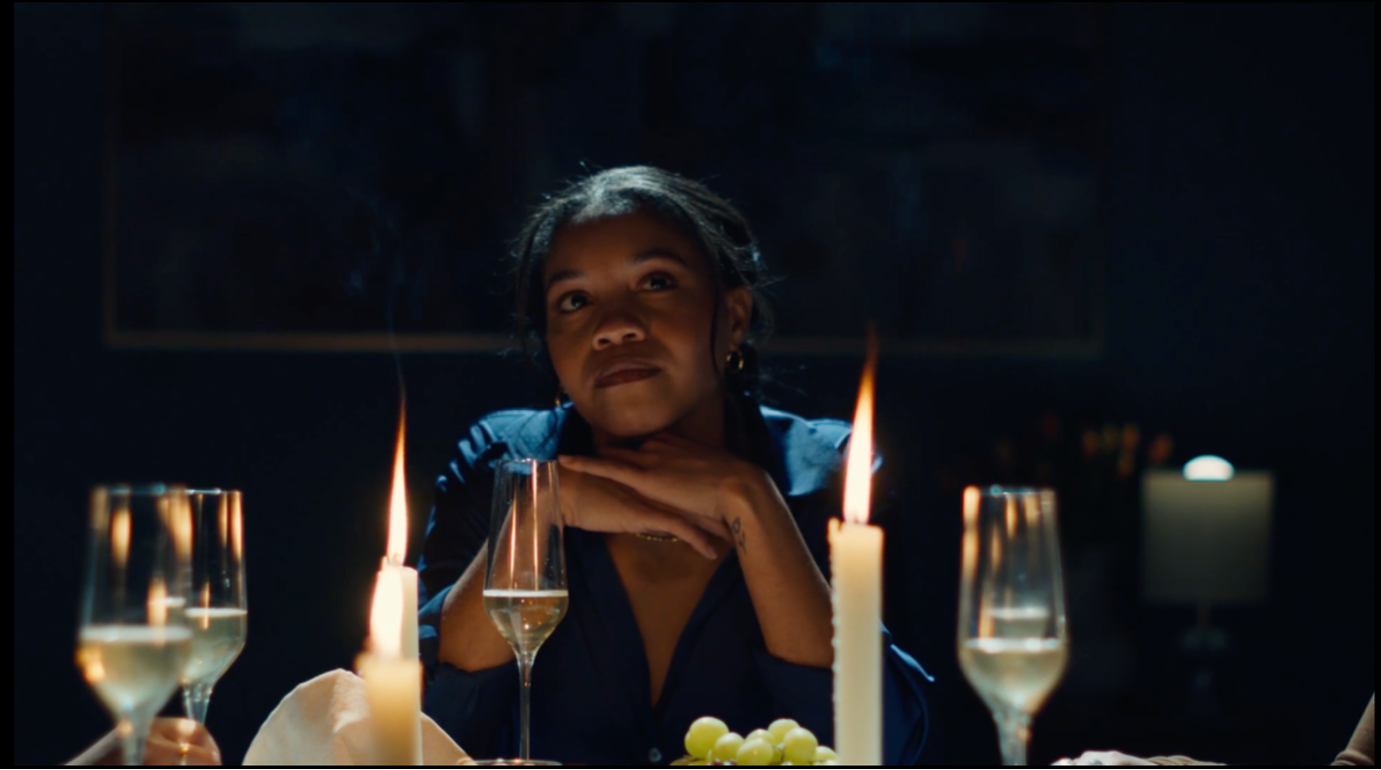
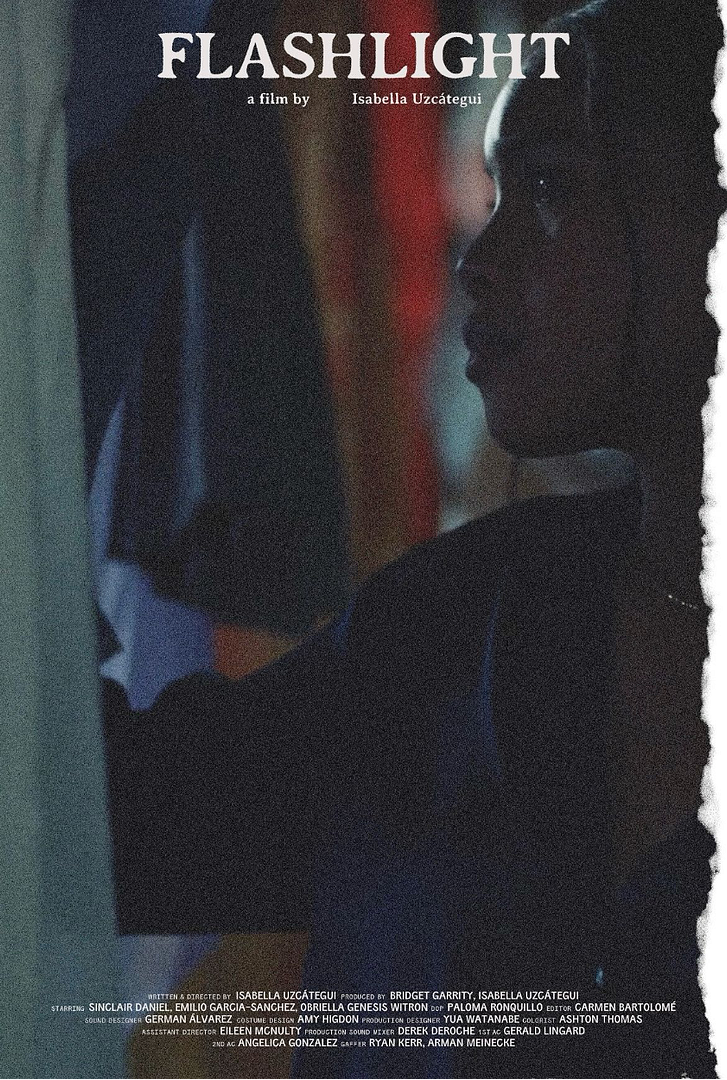
Flashlight, directed by Isabella Uzcátegui, is a film about the cost of leaving the emotional residue of uprooting a life and moving on. It premiered at the Gotham Film Festival in 2023 and has remained in circulation for over two years, most recently taking Best Alumni Director at the Lee Strasberg Institute in 2025. That kind of sustained festival presence is rare in the short term, and Zhang believes the film’s longevity stems from the specificity of its visual world.
The film is set entirely on a soundstage, a choice that could easily tip into cold abstraction if handled without care. Zhang made an early decision to treat the stage-as-home not as a limitation but as the central metaphor. Rather than pretending the theatrical setting wasn’t there, she worked with it. Set pieces were selected for their transitional quality; nothing in the frame looked fully settled or fully gone. Objects existed in a middle state that mirrored the protagonist, Julia’s, psychological position.
The most precise touch was the integration of archival personal items, childhood wallpaper patterns, specific books, and domestic décor that suggested habitation in multiple countries over many years. These objects gave the abstract stage environment a lived-in specificity. The audience may not consciously identify the source of any single item, but, cumulatively, they produce the sensation of a life with history, a life being disassembled. The “dismantling” of Julia’s world, with memories made physical and then physically deconstructed on screen, mirrors something most viewers have felt. That’s not an accident. It’s the result of careful choices about what objects mean and how they behave in space.
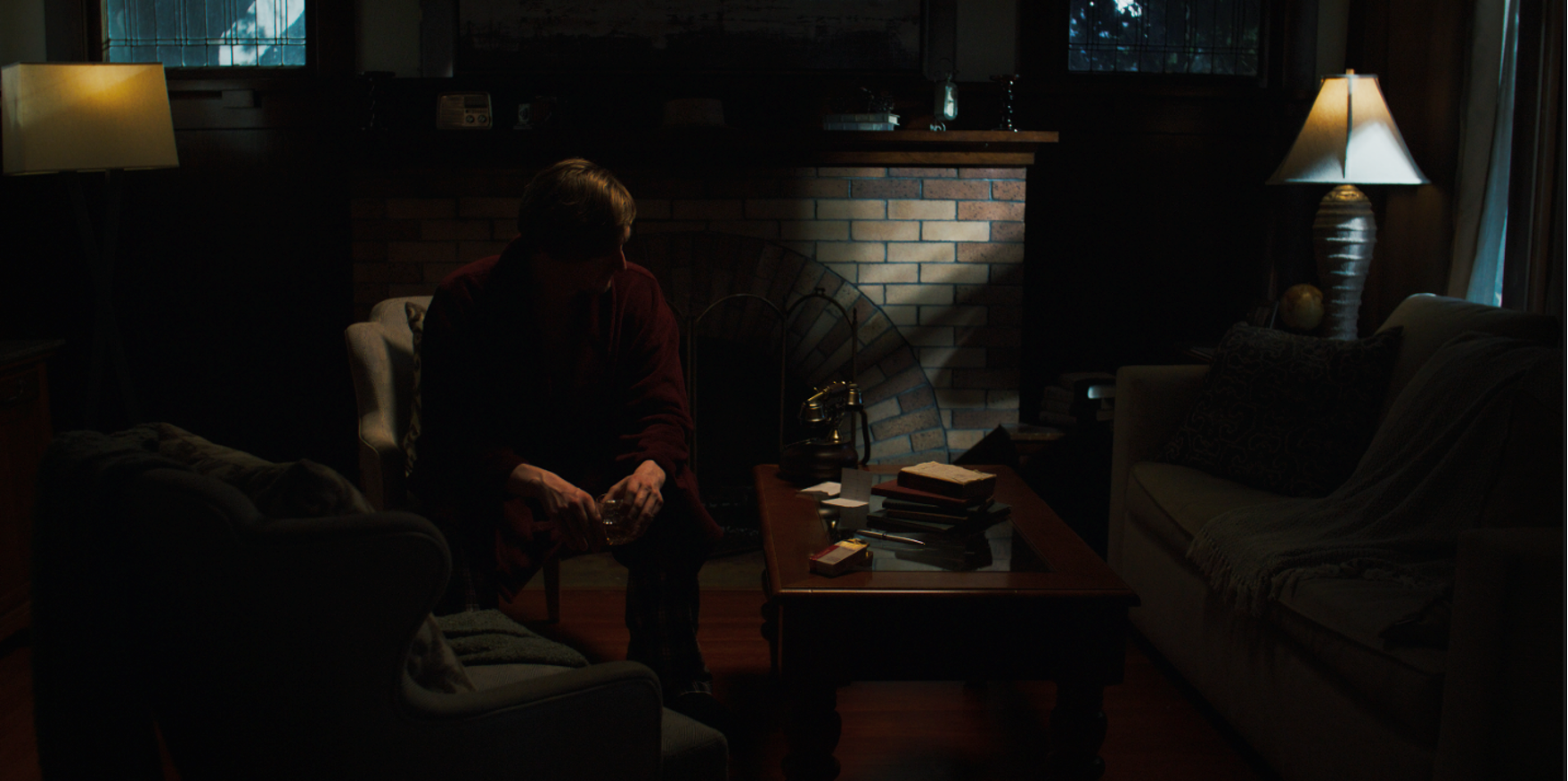
If Flashlight is built on restraint and poetry, A Call is built on pressure. Directed by first-time director Alan Guo, the film won Best Thriller Short at both IndieX and Venice Shorts, Best Drama Film at LACA, and earned a Best Ensemble Cast nomination, a spread of recognition across genre categories that rarely happens, especially for a debut. Zhang’s art direction is a central reason it does.
The film is set in the American Midwest of the 1990s. Getting a period environment right is expensive and time-consuming; getting it wrong breaks the spell of everything else. Zhang approached production with a term she uses herself: “visual claustrophobia.” The goal was to make the environment itself feel like a force acting on the characters. This was achieved through a specific set of interlocking decisions. Practical lighting lamps fitted with specific shades created pockets of darkness within the frame, zones that the eye is drawn toward but that don’t resolve into clarity. The palette leaned on desaturated tones: dark reds, muted greys, a sickly ochre that reads as domestic but wrong. The effect is closer to “bruised” than beautiful.
Props were chosen and positioned to feel weighted with history rather than placed. Leading lines were built into the set dressing to visually compress the space around the protagonist, creating the impression that the room was closing in. These are compositional decisions usually associated with cinematography. Still, Zhang was thinking about them from an art-direction perspective, designing a set that would force certain visual outcomes rather than leave them to chance.
At the same time, the film had to work as a drama. The dual recognition Best Thriller and Best Drama required a set that could carry both registers. The solution was layering. The domestic environment was first established through mundane, functional period objects: analog kitchen appliances, era-correct wallpaper, the kind of unremarkable detail that signals “this is a real house, not a set.” That foundation of ordinariness was then undermined by manipulating the spatial geometry of high-contrast textures, unsettling angles, until the ordinary began to feel predatory. The everyday and the threatening were made to share the same square footage, which is precisely the tension a psychological thriller requires.
The Best Ensemble Cast nomination for A Call highlights a dimension of Zhang’s philosophy that tends to be overlooked when art direction is discussed primarily in visual terms. Her view is that the art department’s job extends to every person on set, including the supporting cast. An actor holding a prop that is 100 percent authentic to the period, custom book covers designed and printed by Zhang, documents that look as though they were actually produced in the 1990s, is an actor who doesn’t have to work to believe in the fiction. The tactile reality of a well-made prop removes a layer of mental effort, freeing performance to happen more naturally.
This is a less glamorous version of art direction than the visual drama of lighting and palette, but it may be the more consequential one. An ensemble that can interact with its environment as though it genuinely belongs there produces a collective authenticity that an audience registers even if they can’t quite name what they’re responding to. Zhang understands this, and she deliberately builds for it.
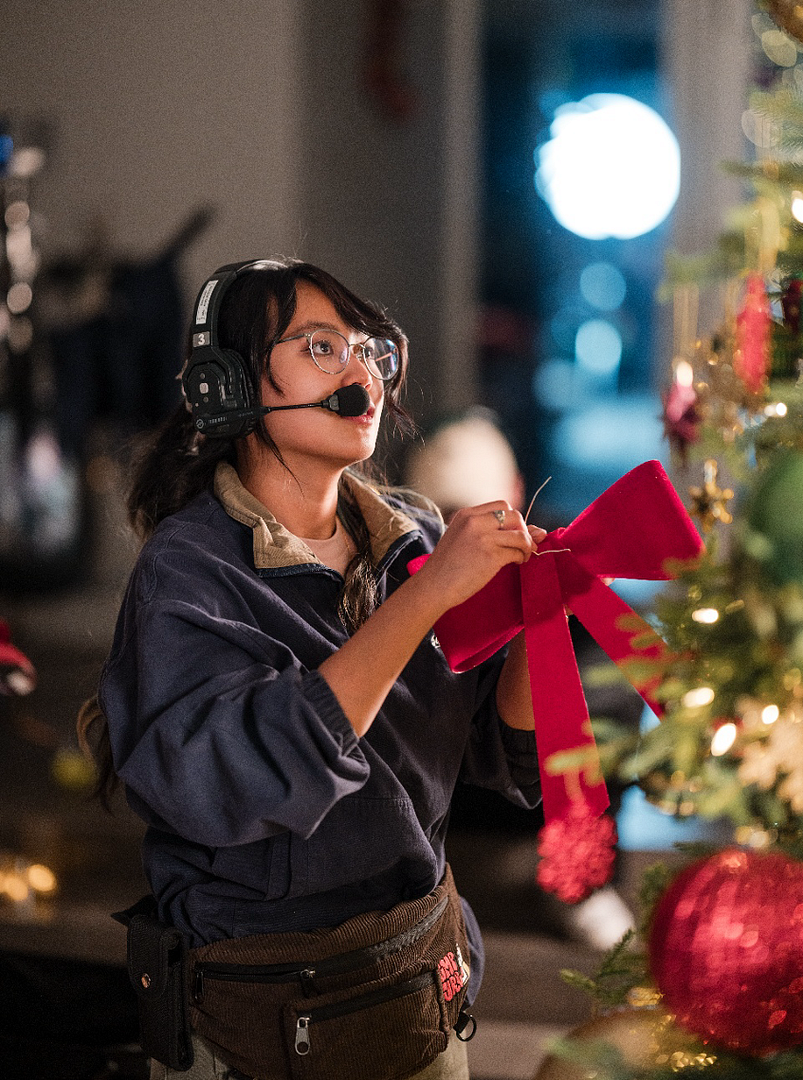
Independent films run on problem-solving, and the problems are usually financial. On A Call, the production shot in a contemporary house, which presented an immediate and obvious issue for a 1990s period piece. Zhang’s approach was characteristically direct: heavy period-style drapes to cover modern window frames, and vintage flea-market hardware to replace contemporary fixtures. The present day was quietly erased. Anyone watching the film without knowing the production circumstances would have no reason to suspect that the set wasn’t purpose-built for the story.
This kind of inventive thrift was supported by two academic awards Zhang received at UCLA: the Florence Theil Herrscher Award and the Dana Lind Memorial Award. Beyond the practical resources they provided, the grants offered something harder to quantify: the confidence to pursue a high standard on a project where cutting corners would have been the easier choice. The independent origins of A Call never show on screen, and that invisibility required both resourcefulness and a refusal to let budget dictate ambition.
Zhang is fluent in Vectorworks, Autodesk Maya, and Unreal Engine. On both Flashlight and A Call, she used 3D pre-visualization not as a formality but as an active, creative tool, specifically to communicate with directors before production began.
For Flashlight, the soundstage’s limited footprint meant that the three distinct vignettes representing different chapters of Julia’s life had to transition cleanly within a constrained space. Virtual drafting let Zhang map those transitions with precision and gave Uzcátegui a concrete sense of how blocking would work in practice. On A Call, rendered previews served a different purpose: to show Guo, a first-time director, exactly how the team planned to mask the modern architectural elements in their location, and to allow creative adjustments before anyone arrived on set. In both cases, technology shortened the gap between intention and execution and reduced the costly misalignment that derails low-budget productions.
Zhang’s artistic formation extends beyond film. As the founder and president of the Cicadas Chinese Calligraphy Club, she has practiced a discipline in which the quality of a single brushstroke matters, where precision is not optional, and every mark is understood as part of a larger compositional intention. She applies the same logic to set dressing. Whether it is the angle of a chair, the placement of a document on a table, or the design of a custom book cover, she treats each element as a deliberate contribution to the frame’s overall visual grammar.
Her background in live theater, including work on a production of Fish in the Tank, gave her early training in spatial storytelling within tight physical constraints, a skill that translated directly to the soundstage work on Flashlight. Time spent on high-volume TV miniseries, meanwhile, trained her in the operational realities of managing a department under strict budgetary and time constraints. She brings both registers to her independent work: the artistic seriousness of theater and the professional efficiency of television.
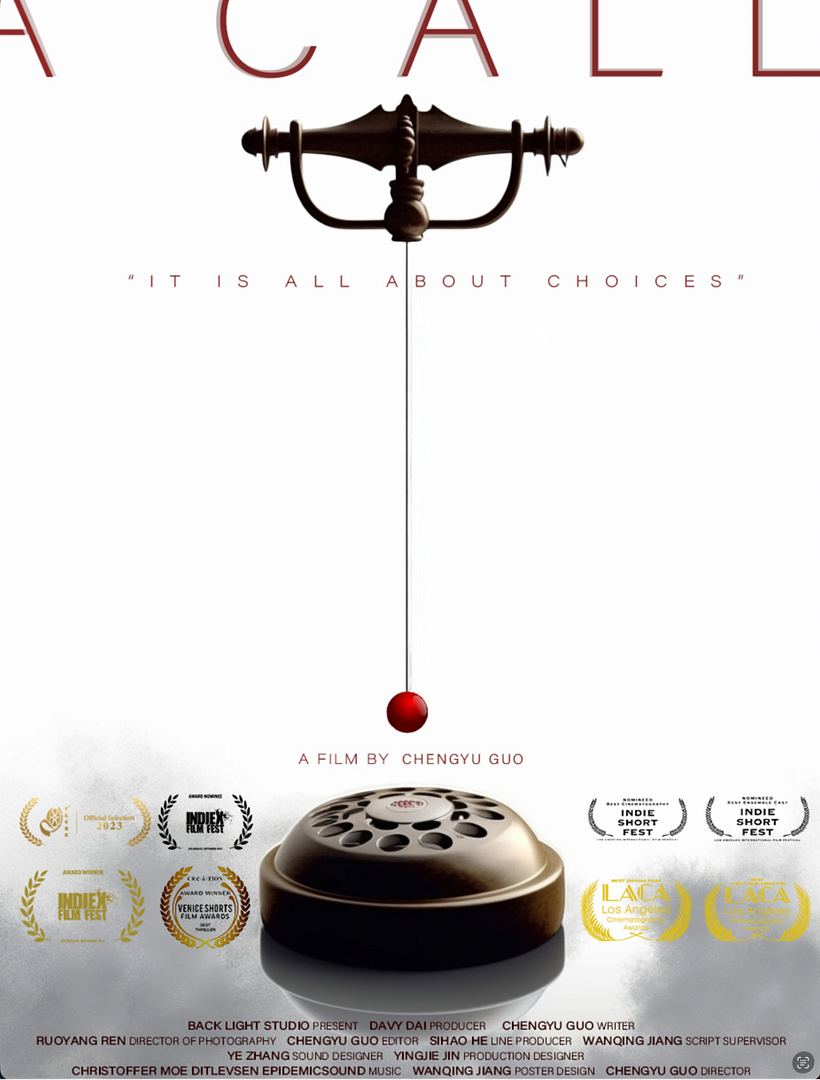
Ask Zhang to describe her approach, and she reaches for a term she coined: narrative texture. She does not use flat surfaces. Every wall, every floor, every major set element has layers of accumulated paint, deliberate distressing, and material depth that exist not for decorative reasons but because they catch light in specific ways. On Flashlight, industrial flooring and textured wallpaper were chosen with direct input from the director of photography. On A Call, materials like velvet and aged wood were selected for how they respond dynamically under the film’s lighting scheme, producing a richness that reads as high-end on screen regardless of what the production actually spent.
It is not coincidental that both films received recognition for their cinematography. When sets are constructed with this kind of depth, the camera has something real to find. The collaboration between Zhang and the respective directors of photography on each film was not incidental to that outcome; it was the point. She designs to be shot, not merely to be seen.
Alan Guo had not directed a feature or short before A Call. The film’s critical reception, multiple awards, and wide festival exposure are a testament to his instincts and to the professional infrastructure Zhang helped build around him. Her role, as she describes it, was to act as a visual translator, using mood boards and physical sketches to bridge the gap between a written script and the 1990s Midwest reality Guo had imagined but had never had to construct.
By taking full command of the period authenticity, the research, sourcing, prop fabrication, and spatial logic, she freed Guo to focus on directing his actors. A first-time director carrying both the visual and performance demands simultaneously is likely to drop one of them. Zhang made sure the visual side was handled so that his creative debut landed with the finish of a much more experienced production.
The success of Flashlight and A Call has not made Zhang cautious; it has made her more specific about what she wants to do. She is drawn now to scripts in which the environment functions as a central dramatic presence rather than background. Historical realism crossed with psychological pressure, or with science fiction’s capacity for world-building from scratch, these are the kinds of projects she is moving toward. Given what she built with a soundstage and a rented modern house on independent budgets, the question of what she might construct with more room to move is one worth asking.
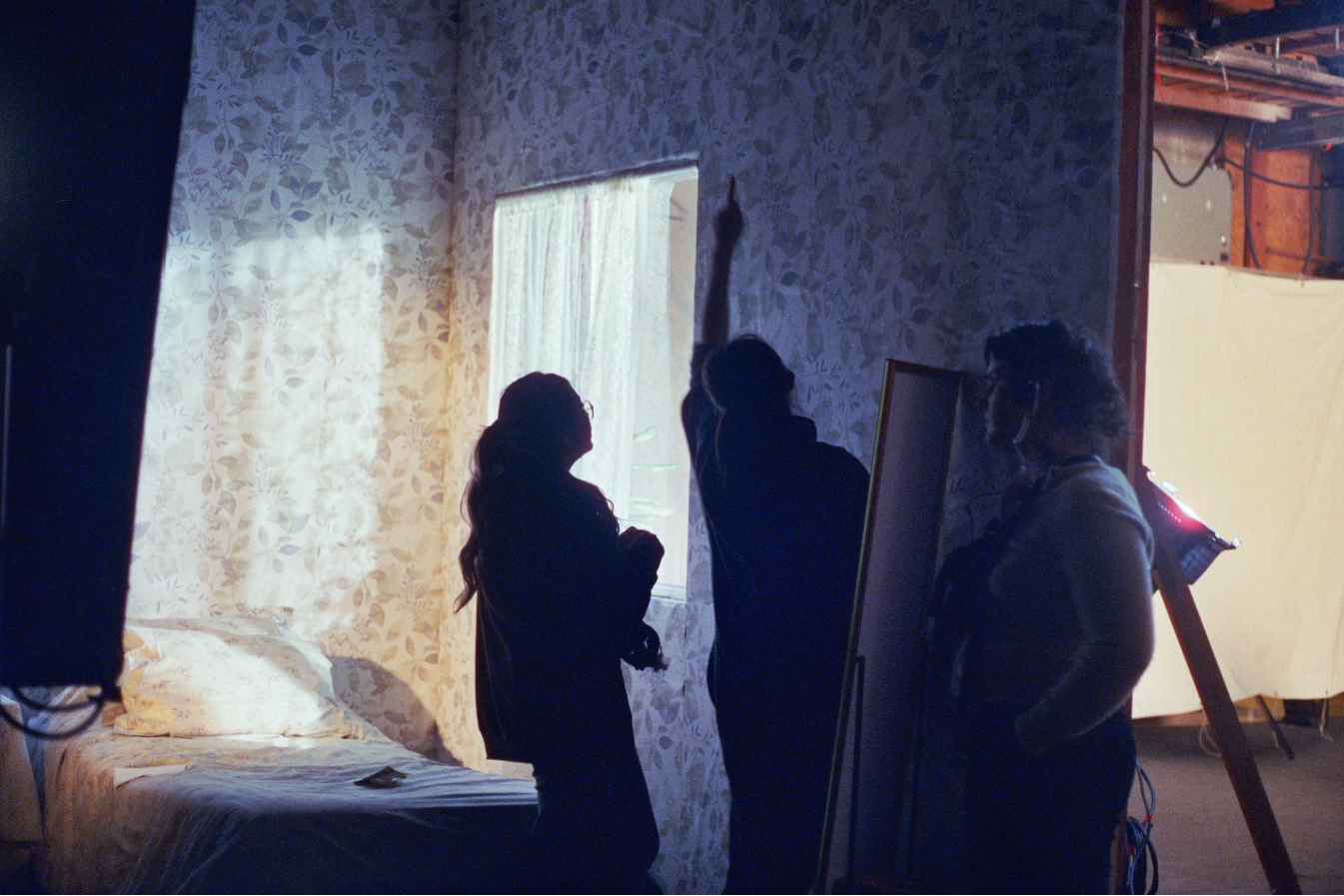
There is a particular kind of craft that operates below the threshold of notice; you feel its presence without knowing exactly where it comes from. The performances seem more grounded. Cinematography finds angles that feel inevitable. The director’s vision arrives on screen without the friction of a world that wasn’t built to hold it. That is what Zhang does, and she does it consistently and intelligently across very different kinds of material. The art department is not a support function in her hands. It is the first language in which the story is written.
Image Credits: Rutvij Reddy