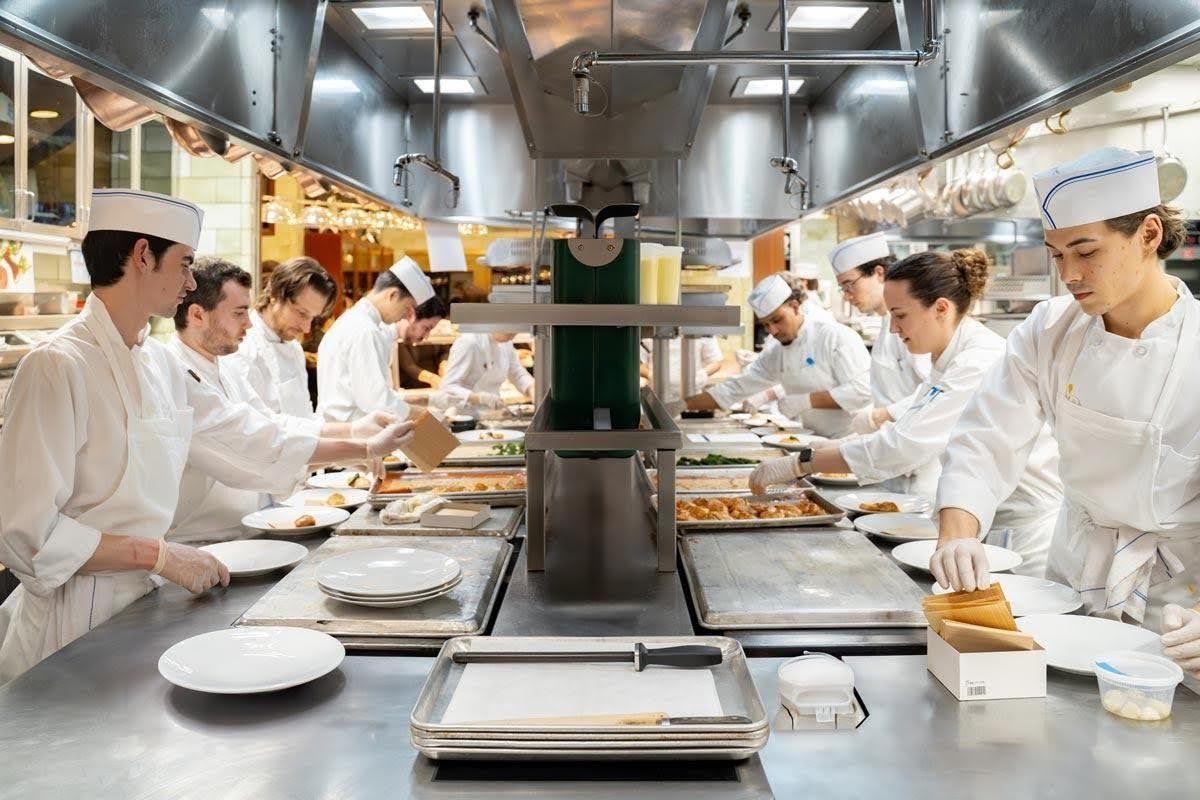
When we think of Scottish cuisine, Haggis comes to mind. But beyond the culinary cliches, there’s much more to the northern country’s cuisine. Chef de Partie Ben Hoyle (pictured above, left) hails from Scotland, and has worked at some of the most renowned Scottish restaurants, and is an expert in fine dining and boutique hospitality work environments across the United Kingdom and the United States.
His resume reads like a curated list of destination restaurants, from Michelin-starred to Michelin Guide restaurants, like Daniel Boulud’s Restaurant Daniel in New York City and Restaurant Martin Wishart, to the triple AA Rosette-awarded Mingary Castle. Hoyle has an expertise in cooking fish as a Poissonier, as an Entremetier (prepping vegetables), sauce work and refined plate techniques, proving that locally-sourced Scottish cuisine is broad and diverse.
“Everyone knows Scottish salmon, but there are over 250 species of fish and shellfish alone in Scottish waters,” explains Hoyle. “I have yet to have a better scallop anywhere in the world, than what I’ve had in Scotland. We are also home to some of the best beef, venison and game birds anywhere around the globe. Seasons where Grouse is available are not to be missed.”
Hoyle has worked as a Chef de Partie, which specializes in station management (running a designated area of a kitchen, like pastry, fish or sauce sections), specializing in food prep, and is responsible for monitoring stock levels, double and triple checking expiration dates and keeping the overall workstations clean.
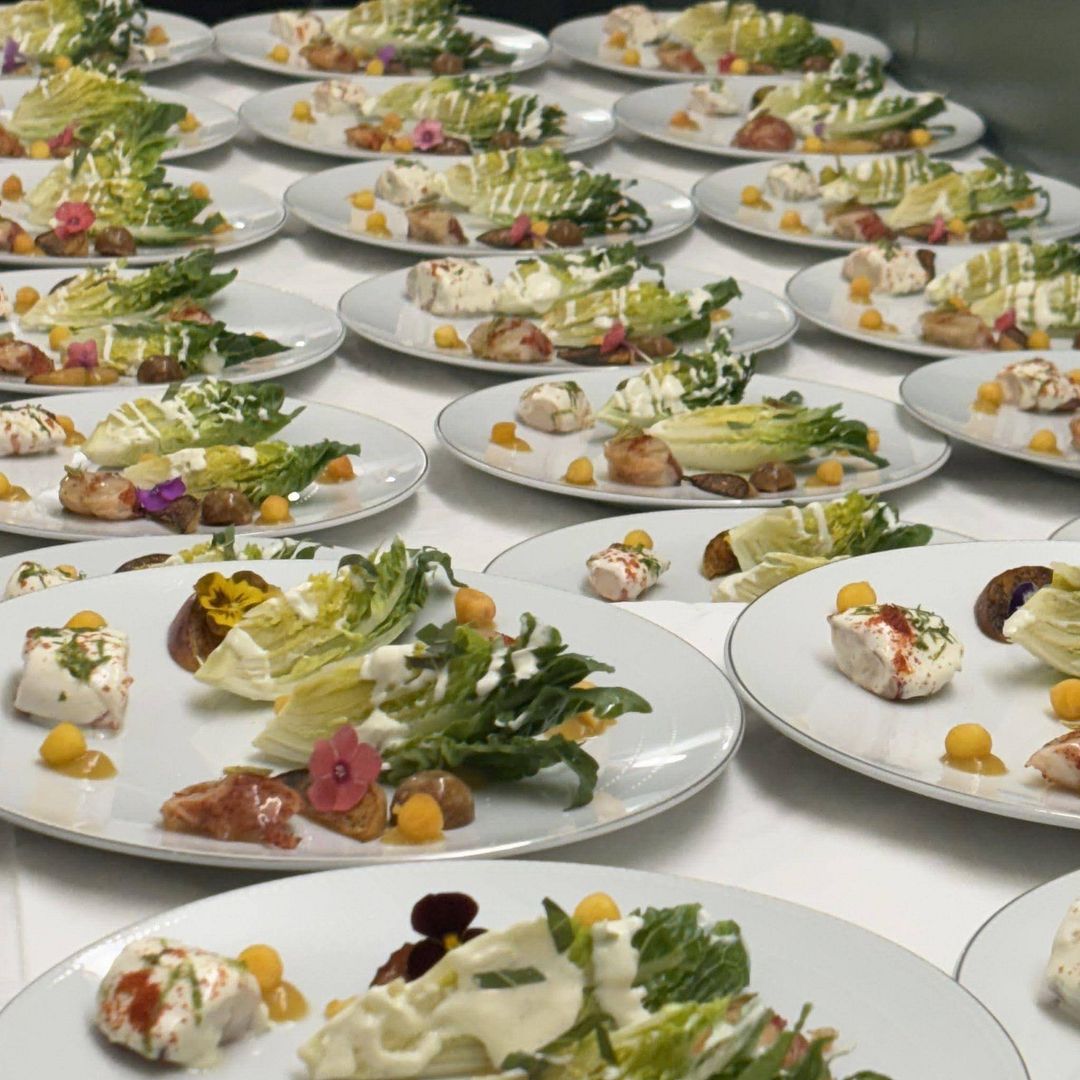
Hoyle worked at Mingary Castle in 2023, a renovated 13th century castle in Kilchoan, Scottish Highlands, where he managed the preparation of poultry, game, lamb, and beef. “The locality and the quality of the produce stood out; we knew exactly where it had come from, and who had reared it, so you had to treat it with the utmost respect; utilising as much as possible,” said Hoyle.
“Mingary Castle sits on an estate where the venison is hunted, so it couldn’t have been any fresher when it arrived to us,” he adds. “The same could be said about the lobsters that were caught in the Sound of Mull, the water in which the castle overlooks, or the mackerel that was brought to us by the local fishermen.”
This is where he commenced his Modern Apprenticeship (SVQ Level 6), earning his degree, while working and studying classical French technique, while working on a small team of three in the kitchen, alongside award-winning Chef Patron, Colin Nicholson.
“With the hyper-local produce, I learned not only animal butchery, seafood preparation and pastry, but how to allow the cuisine to speak for itself,” said Hoyle. “I learned from the Chef Patron the beauty of local produce, and how to use it to create hyper-seasonal and delicious dishes.”
This high standard of quality would stay with him as he worked at Restaurant Martin Wishart, a Michelin-starred restaurant since 2001. “My time at Restaurant Martin Wishart, one of Scotland’s most celebrated restaurants, inspired in me a love of classic French technique and precise execution,” notes Hoyle, who worked as part of a small team of only six working back of house.
Wishart is one of the UK’s most highly respected chefs. Working under him, Hoyle was a key part of the team in the Garnish and Larder sections at this Michelin Star restaurant. “Working at Restaurant Martin Wishart taught me so much, I learned a vast array of skills that have been foundational in my career, so far,” he said. “You had to learn to work quickly while never compromising on quality in your execution.”
As Hoyle explains, he was part of an internationally-recognized kitchen team (The Edinburgh Inquirer said the restaurant “revolutionized Edinburgh dining”). “Year after year, the restaurant has retained its Michelin star awarded status, and its reputation as one of the best restaurants in the UK, so as a chef there you are expected to be working at the highest level of technical skill, organisation and execution. This was encouraged by the fantastic leadership of the Head Chef, who mentored many young cooks who walked through those doors.”
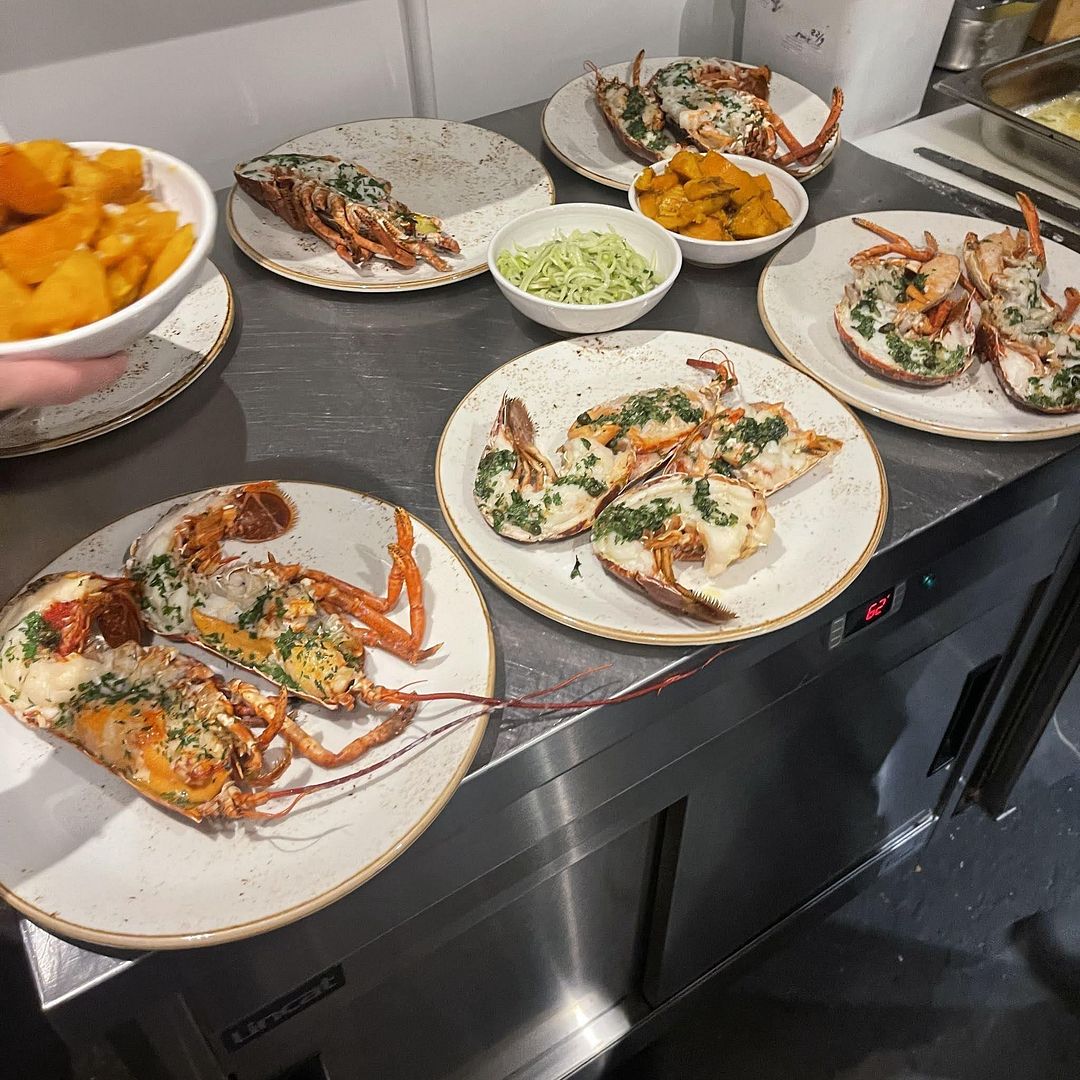
It was here that Hoyle helped anchor the core operations in the kitchen of the Michelin-starred restaurant. He was part of a highly-selective kitchen staff of just six chefs, holding a Chef de Partie title, and was accountable for critical stations; larder and garnish. Hoyle worked at Wishart’s restaurant during their landmark 25th anniversary year (2024), which saw a surge in reservations, and still maintained its 23-year streak of holding a Michelin star, 4 AA rosettes and an 82% score on La Liste. It was at Wishart’s restaurant that Hoyle mastered seasonal Scottish larder (local game, fish and product) and directly managed prep schedules, ordering and consistency across tasting and a la carte menus.In addition to working in Wishart’s high profile kitchen, Hoyle worked under Executive Chef Joe Taggart for exclusive events, like co-developing and producing a bespoke, multi-course pairing menu for a private event held at the Château Le Puy, a 400 year old Bordeaux estate.
Hoyle first got into the kitchen as a preteen. He grew up in a family of cooks who spent much of their time experimenting in the kitchen. “I always loved to cook at home from when I was young, and I come from a lineage of wonderful home cooks, especially my grandmother who inspired me as a child,” explains Hoyle.
His first job was washing dishes at the local pub at 14 years old. “I had my first real taste of a professional kitchen in there, between pot washes the chef would ask to peel potatoes or help plate the desserts, simple tasks, but it really sparked an inspiration to continue working in kitchens,” he explains.
Hoyle set his standards high and turned to fine dining as a career. He took his first position as a Commis in a hotel in Glasgow, and gradually pushed himself further onto the next challenge, “going further than I thought I was capable of,” he said. “And it has led me to work in fantastic restaurants with spectacular chefs.”
By using local Scottish produce to meet the high level of French dining, they are an easy mix, to Hoyle. “Scotland’s meat and fish and produce are some of the best in the world, and they pair so well with French technique,” he said. “Allowing the ingredients to really speak for themselves, I’ve learned how to highlight their natural taste and texture with simple, yet elegant and refined preparation.”
As he explains: “Where Scotland lacks in a rich culinary history, France provides, but we can bring some of the finest ingredients the world has to offer. Whether that is saucisson made from local Scottish pigs, or ravioli with partridge, or a crown of grouse en cocotte there are still endless possibilities still to explore.”
Words: Nadja Sayej
Photos: Courtesy of Ben Hoyle