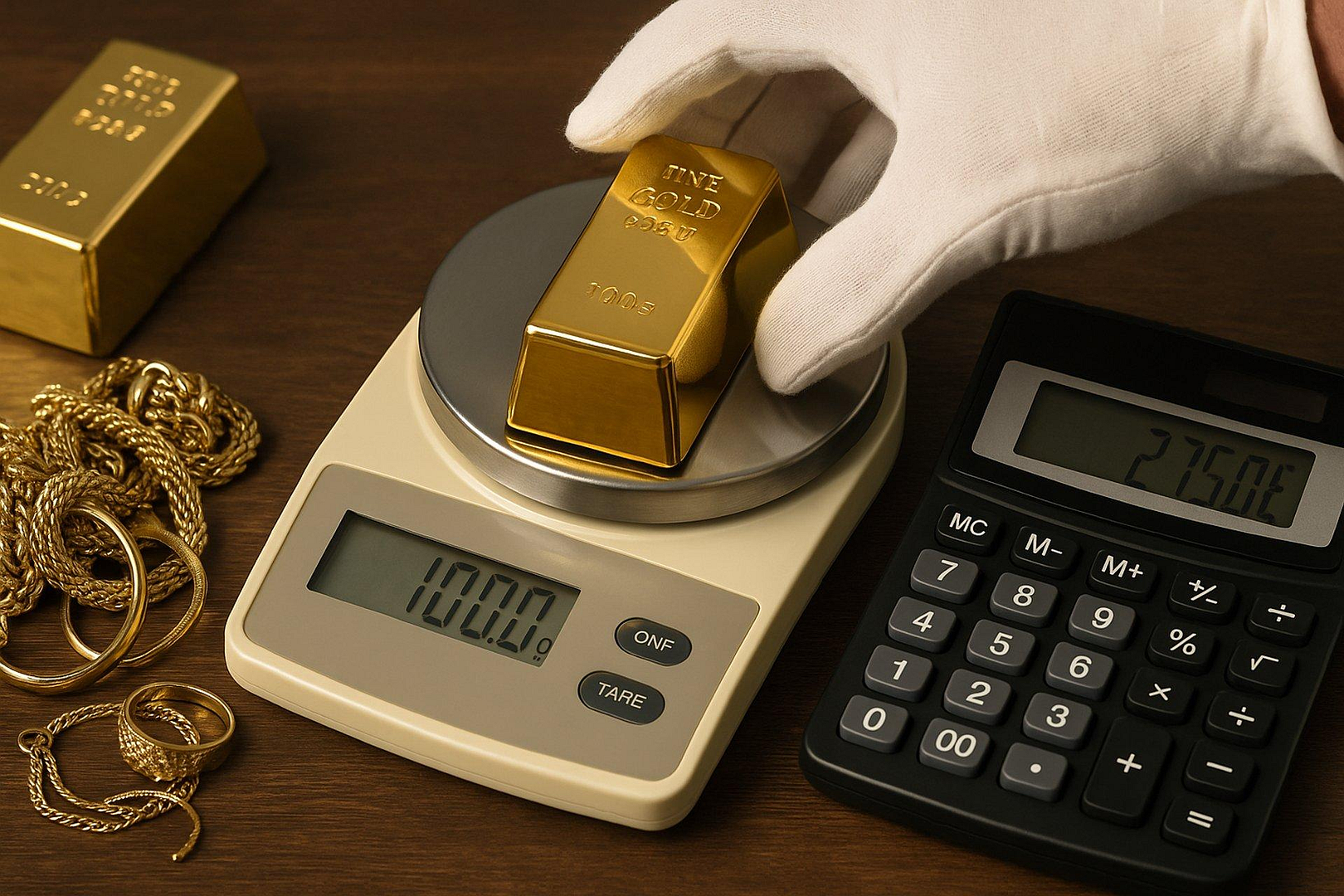
Selling gold bars for the best market price requires more than choosing the first buyer who makes an offer. The amount you receive depends on the current gold price, the purity and weight of your bars, their condition, and the buyer’s fees.
A little preparation can help you understand what your gold is worth and avoid accepting an unnecessarily low price. The goal is to compare offers based on the final amount you will receive, not just the advertised rate.
Check the Current Spot Price
Begin by reviewing the latest market price of gold. This is the market price for one troy ounce of pure gold and serves as the basic reference point used by dealers and buyers.
The spot price can change throughout the day because of market activity, currency movements, and economic news. Check it shortly before requesting offers so you have a realistic benchmark.
Remember that most buyers will not pay the full spot price. They need to cover testing, handling, insurance, and resale costs. However, the offer should still be reasonably close to the market value for recognized, investment-grade bars.
Confirm the Weight and Purity
Gold bars usually have their weight and purity stamped directly on the surface. Common purity markings include 999, 999.9, or 24K, which generally indicate very high gold content.
Before you sell gold bars, record the following information:
- Exact weight
- Purity or fineness
- Refinery or mint name
- Serial number, if available
- Packaging and certificate details
Gold bars produced by reputable refiners often receive better offers because buyers can authenticate and resell them more easily.
Keep Certificates and Packaging
Original packaging, assay cards, receipts, and certificates can make the verification process easier. An assay card confirms details such as weight and purity, while a receipt may help establish where the bar was purchased.
Avoid opening sealed packaging unless a buyer specifically requires it. Although damaged packaging does not remove the gold’s value, an unopened bar may be more attractive to certain dealers.
Compare Several Buyers
Request quotes from multiple reputable gold dealers, precious-metal companies, pawnshops, and online buyers. Ask each buyer how the offer is calculated and whether any charges will be deducted.
Important questions include:
- Is shipping insured?
- Are testing or appraisal fees charged?
- Is the quoted price guaranteed?
- How long does payment take?
- Can you reject the offer without a penalty?
Comparing the final payout makes it easier to identify the most competitive option.
Get an Independent Valuation
An appraisal can be useful when you are selling several bars, inherited assets, or gold combined with other valuables. An online jewelry appraisal may also help you document precious-metal items and understand their estimated value before approaching buyers.
For high-value transactions, consider an in-person evaluation from a qualified professional. This provides another reference point and may help you identify offers well below market value.
Verify the Buyer’s Reputation
Research the buyer before shipping or handing over your gold. Look for a clear business address, transparent terms, secure payment methods, and independent customer feedback.
Online sellers should use insured, trackable shipping and photograph the gold, packaging, and documents before dispatch. Keep copies of all correspondence and transaction records until payment has been completed.