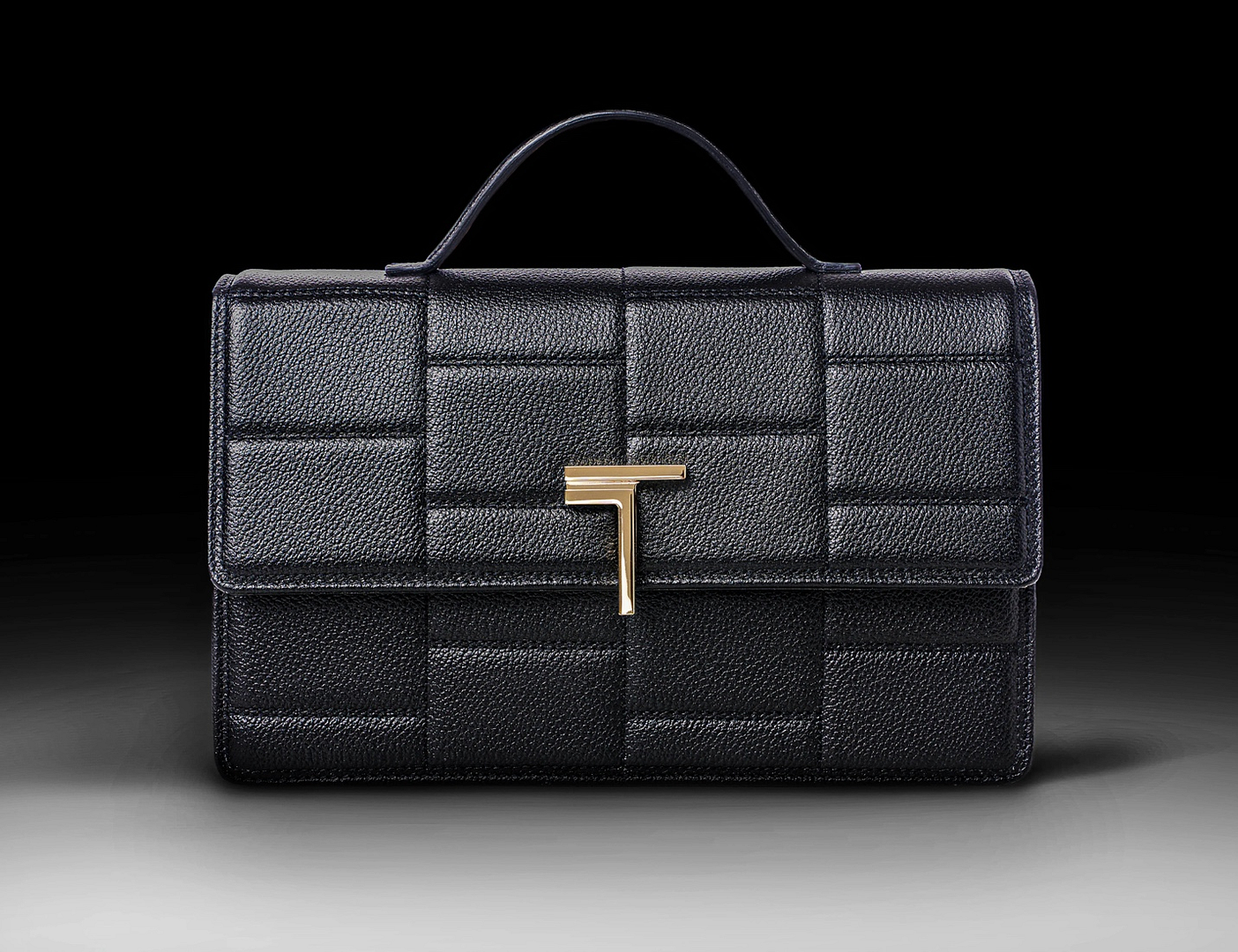
Luxury has become exceptionally good at being recognized. TREVONY is asking a more demanding question: what remains when recognition is taken away?
Luxury has developed one of the most powerful visual languages in the world. A familiar pattern, a piece of hardware or a particular silhouette can communicate a house before a word is spoken. Recognition can be immediate, and everything associated with the name arrives with it: heritage, status, desirability, value.
TREVONY, is interested in what comes before all of that.
Remove the logo. Remove the name. Forget the price tag. What are you left with?
That question sits behind the house’s latest campaign, “If You Noticed the Logo First, We Failed.” Six words that challenge one of luxury’s most valuable currencies: recognition itself.
But the provocation isn’t anti-logo. TREVONY has no interest in pretending that names don’t matter. The world’s great houses have demonstrated precisely how much they can matter. A name can carry decades of design language, craftsmanship and cultural memory.
The question is how that meaning gets there.
“A logo can tell you who made something,” says TREVONY Creative Director Eugene Love. “It shouldn’t have to tell you why it is valuable.”
For Love, luxury begins before the signature: with material, construction, handwork and provenance. The logo does not confer those qualities. It represents them.
That distinction is fundamental to TREVONY.
The house’s pieces are made entirely in Italy, with production centered in Florence, where TREVONY works with a family-operated atelier whose leather-craft heritage extends more than seven decades. Handbags, travel pieces, belts and small leather goods are produced in small batches, allowing the demands of the work to determine the pace rather than treating volume as the measure of success.
In an industry fluent in the language of craftsmanship, TREVONY’s proposition is refreshingly simple: don’t take the word for it.
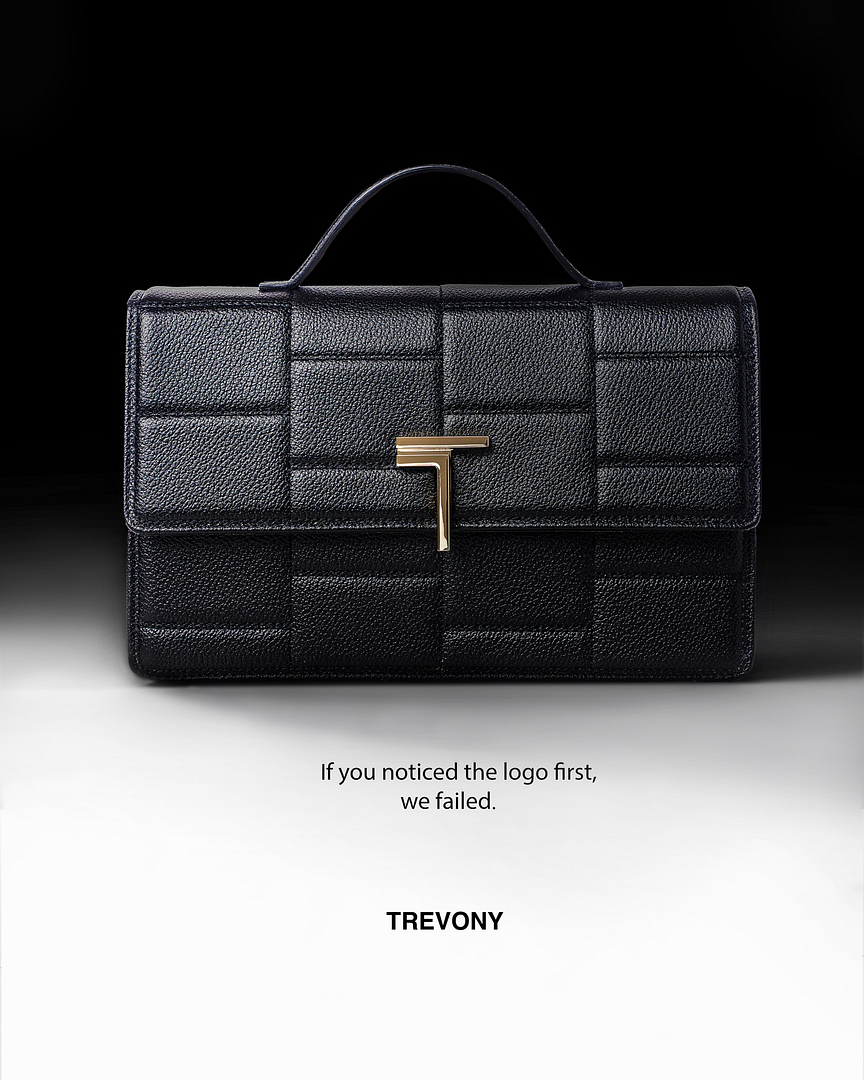
Look closer.
The Minerva handbag makes the argument tangible. Its sculpted silhouette establishes its presence before branding needs to. Textured leather, disciplined proportions and restrained hardware reward a closer view. It does not depend on a field of monograms to establish identity; the intention is for the design itself to do that work.
This is where the campaign becomes more than advertising, because the same test TREVONY proposes for luxury applies to TREVONY itself.
Take away the name.
Does the leather still feel exceptional? Does the construction withstand scrutiny? Are the proportions resolved? Does the piece possess an identity of its own? Would you still want it if nobody across the room could tell you what it was?
“If we’re asking people to look beyond the name, then we have to be comfortable being judged without it,” Love says.
TREVONY is.
And perhaps the clearest expression of the house’s philosophy is also the simplest.
“I don’t want the TREVONY name to make something valuable,” Love says. “I want what we make to make the TREVONY name valuable.”
There is audacity in that statement because luxury has long understood the commercial power of the reverse. A sufficiently powerful name can alter how an object is perceived before it is touched. Branding can communicate status before construction is examined, and recognition can become part of the value being purchased.
TREVONY isn’t denying that power. It is establishing an order.
The work first. The name after.
That order also explains the house’s resistance to ubiquity. TREVONY’s small-batch production is not scarcity engineered as theater. It follows from a preference for controlled production, Italian craftsmanship and a more deliberate relationship between maker and piece.
More is not automatically better. More visible is not automatically more desirable. And more recognizable is not automatically more luxurious.
That last distinction is where “If You Noticed the Logo First, We Failed” becomes particularly pointed.
The campaign asks consumers to separate two ideas that fashion has become extraordinarily good at combining: recognizing value and recognizing a name.
They are not necessarily the same skill.
To recognize a name requires familiarity. To recognize quality requires attention.
The latter asks more of the person looking.
Notice the grain of the leather. The balance of the silhouette. The precision of the construction. Ask where it was made. Consider what has been added because it improves the piece and what has been added simply to make the maker unmistakable.
TREVONY isn’t asking people to stop noticing names.
It is asking them to become harder to impress.
That may be the most audacious part of the campaign. Because once a luxury house tells its audience to look closer, it gives up the privilege of asking to be judged on reputation alone.
TREVONY seems entirely comfortable with the bargain.
The house wants its name to carry weight. But its philosophy reverses the usual assumption about where that weight originates.
The name doesn’t make the work important.
The work makes the name matter.