I first encountered Into the Woods as a teenager, when we did it as a school production. It was my first real experience of Sondheim, and I remember being completely floored by how clever and fun it was. Not clever in a smug way, but clever in how it took stories we already knew, twisted them, and asked what happens after ‘happily ever after’. It felt funny, bold, and emotionally grown-up in a way I hadn’t really experienced before in musical theatre.
So, I was genuinely excited to head to the Bridge Theatre to see Jordan Fein’s new production of Into the Woods. Every show I’ve seen there has completely reshaped the space, and this was my fourth visit after Guys & Dolls, Richard II, and The Lady from the Sea. Once again, the theatre looks totally different.
This time the Bridge is in a more traditional configuration, and it turns out that Into the Woods really benefits from the space.
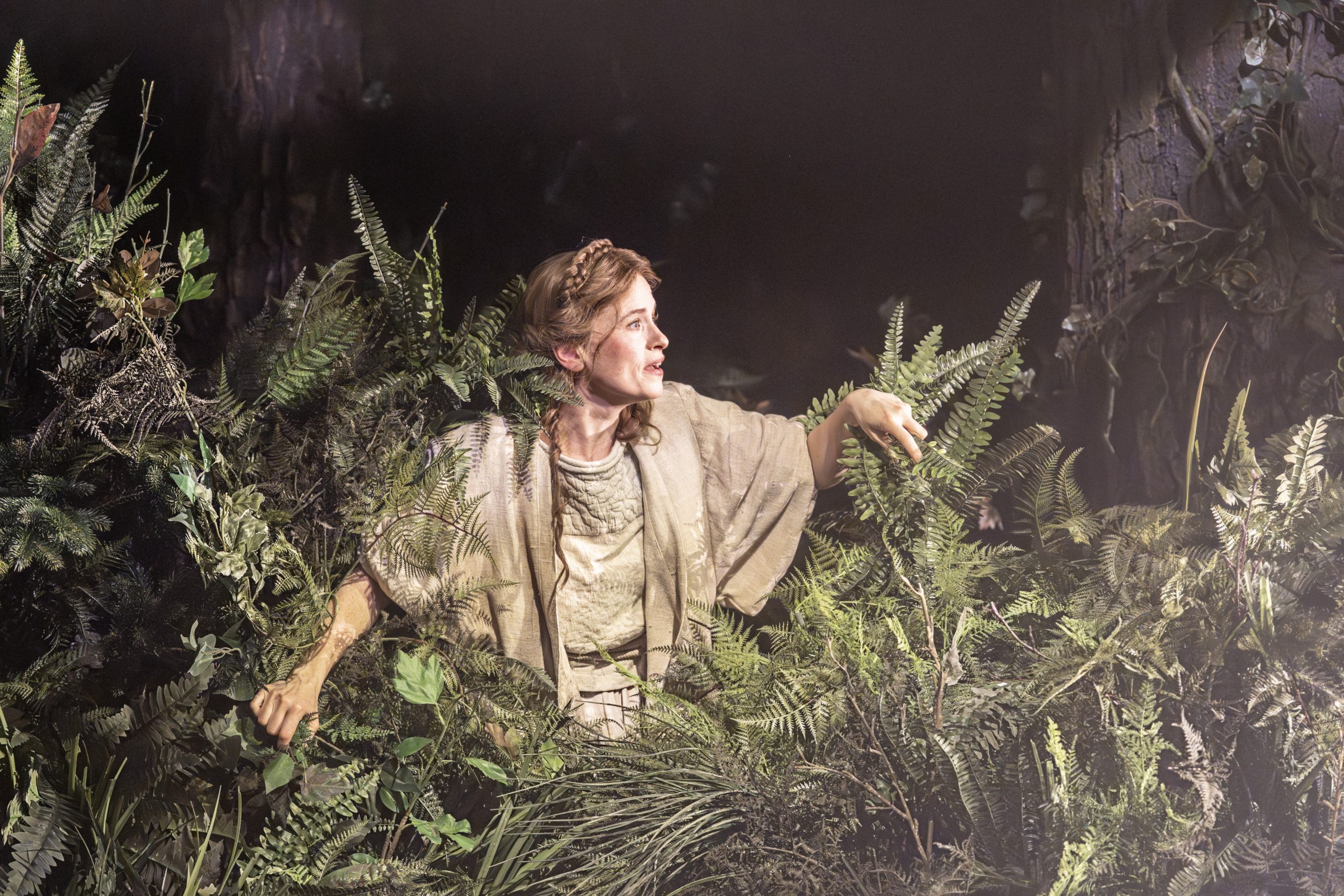
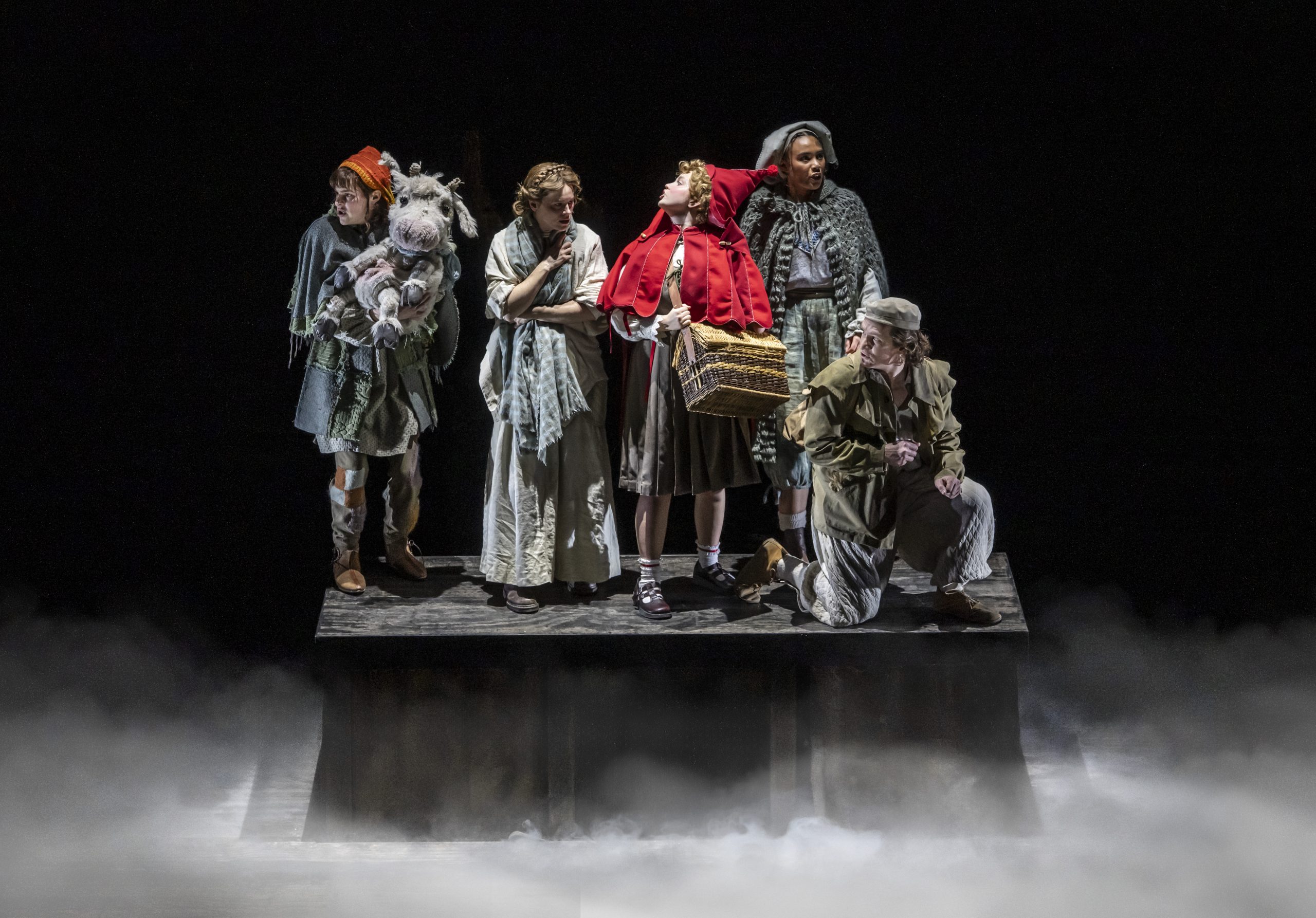
The opening is wonderfully simple. The stage is bare and dark with a plain backdrop. The house lights are still up as performers wander on, looking a bit lost and slightly out of place. Then the lights drop, the music starts, and suddenly we’re off. It’s playful, relaxed, and instantly puts you in good hands.
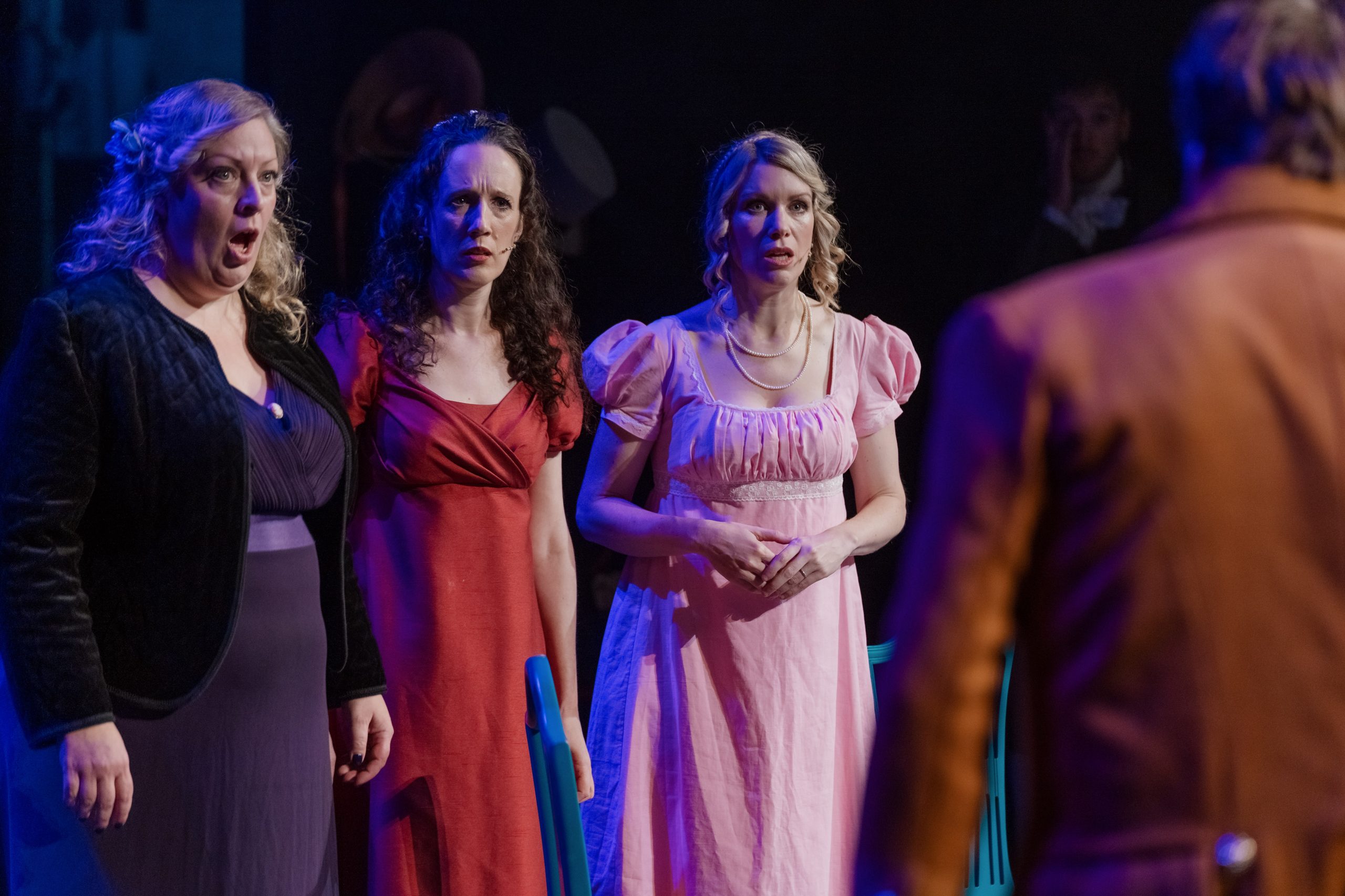
We’re quickly introduced to the familiar characters. Cinderella, her step-mother and stepsisters – described pointedly by the Narrator as very beautiful, which they absolutely are, just rotten on the inside. Jack, clutching his beloved cow Milky White. Little Red Ridinghood, completely fearless and stuffing her face without a hint of concern about heading into the woods alone. The Baker and his Wife, desperate for a child, living next door to a Witch with some very complicated ideas about love and protection.
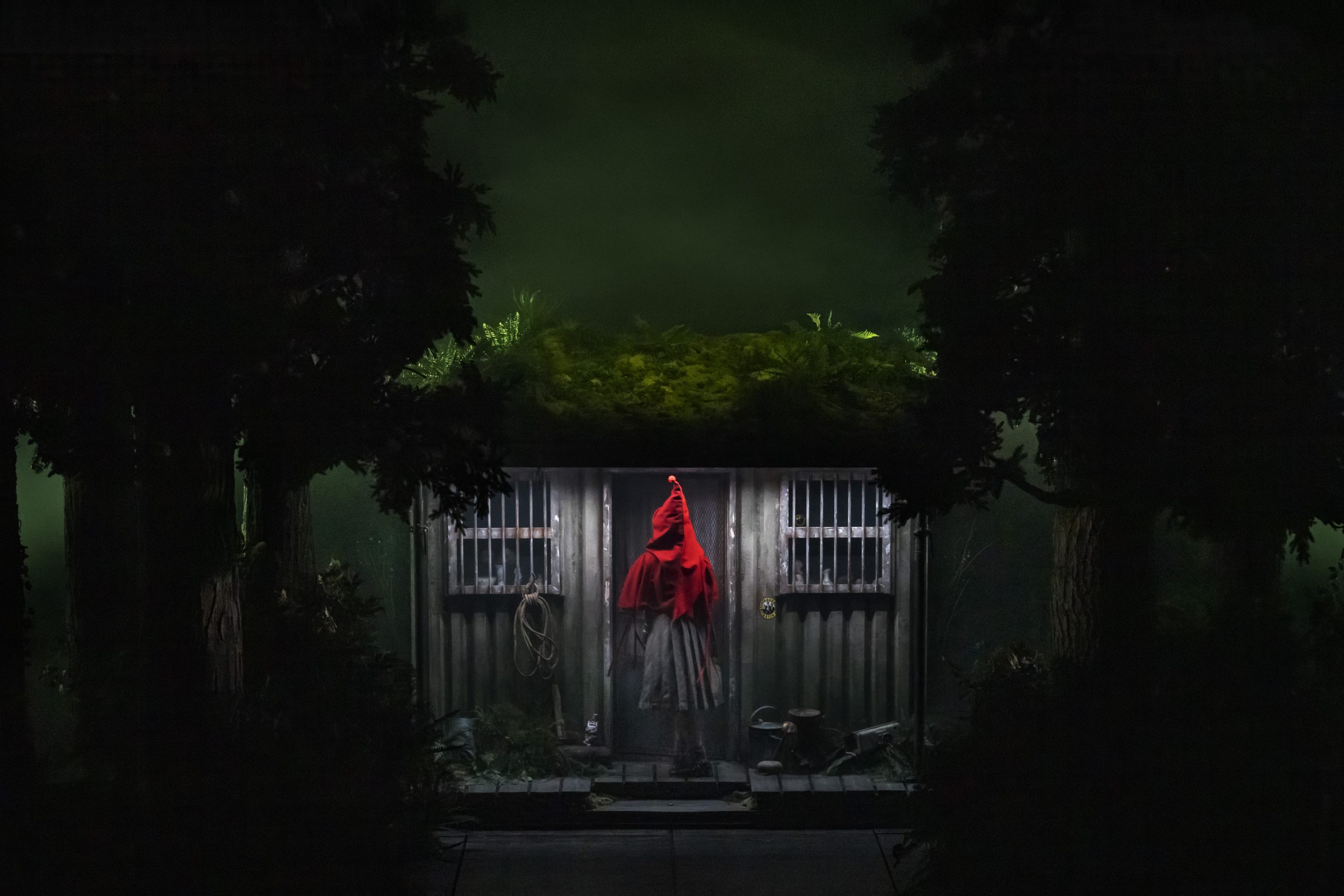
Gracie McGonigal’s Little Red Ridinghood is a joy from the moment she appears. She’s cheeky, brazen, funny, and utterly unafraid. This is a child who genuinely believes the world belongs to her and nothing bad can happen. She’s constantly munching on the snacks she bought for Granny, and does not listen to her mother’s advice to stay on the path! Her performance is so much fun. It’s also worth mentioning that McGonigal is missing the lower part of her left arm, and it’s great to see a disabled actor in a principal part where that isn’t what the casting is about. She’s just excellent, and a perfect fit. I’d love to see that kind of casting become far more normal in the West End.
Jo Foster’s Jack is another highlight. I’d loved them in Why Am I So Single?, and here they bring exactly the right mix of innocence, enthusiasm, and warmth. When Jack comes back from the clouds and delivers that famous line ‘There are giants in the sky!’, I got full-on goosebumps. It’s that rush of discovery, the sense that his world has suddenly exploded outwards, and Foster sells it completely.
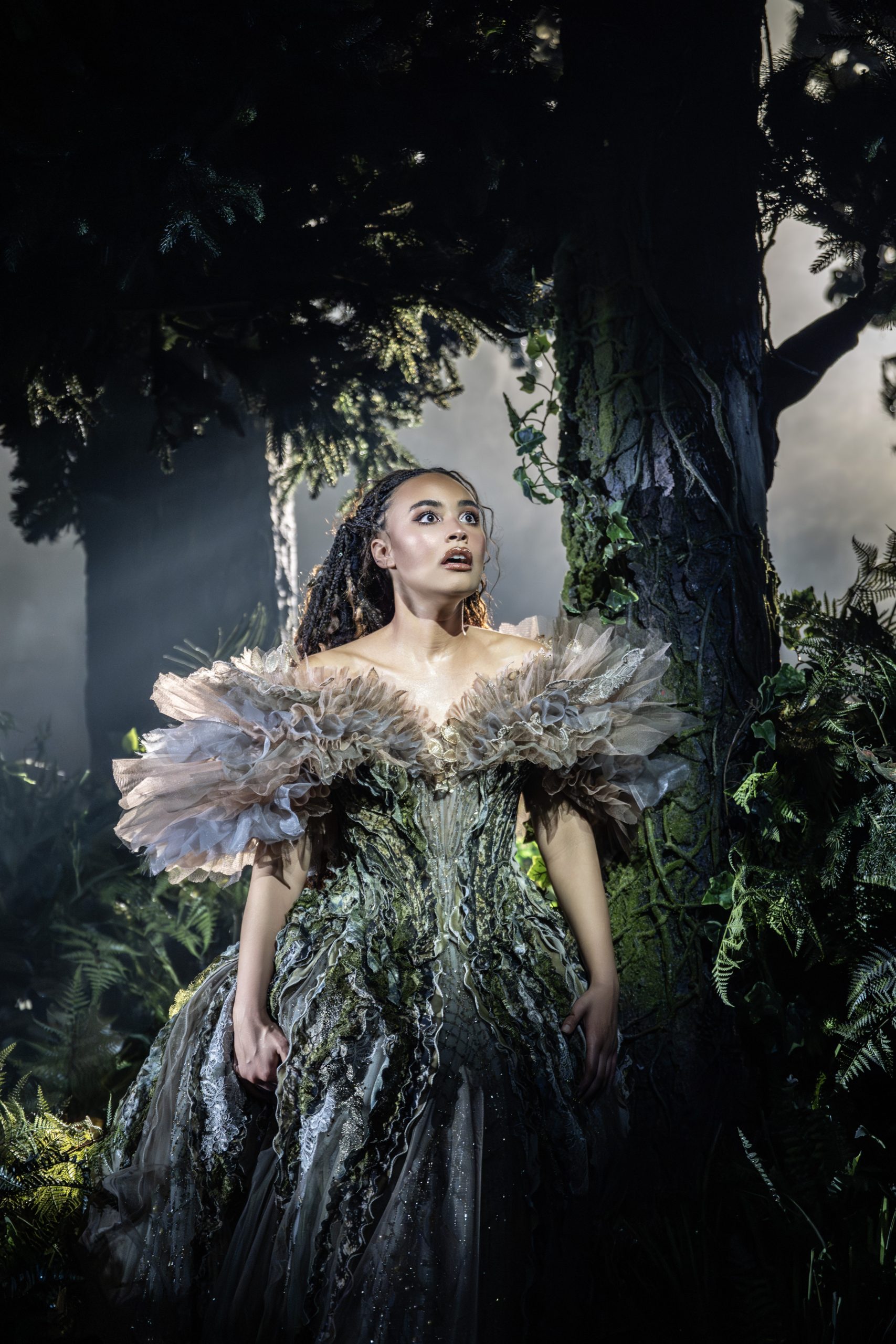
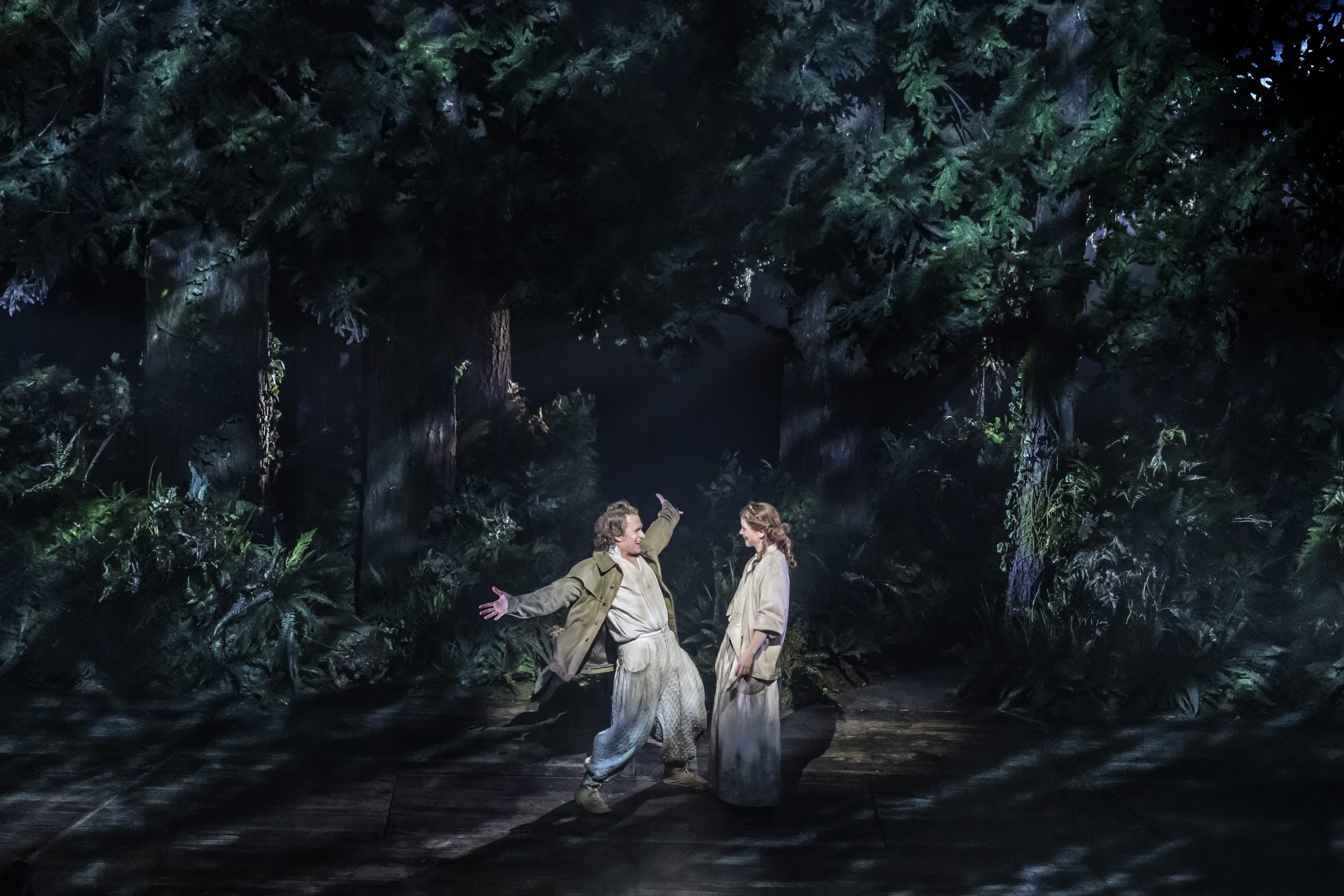
Visually, this production is stunning. Tom Scutt’s set starts out deceptively plain, with a raised block centre stage that acts as a kitchen island for the Baker and his Wife. Then the woods are revealed, and it’s genuinely breathtaking. Tall, shadowy, and layered in a way that gives them real depth, they look like somewhere you could genuinely get lost. Inviting, but also a little unsettling.
The lighting does a huge amount of work here too. Aideen Malone creates the feeling of sunlight filtering through trees in a way that feels completely natural. It shifts subtly as scenes change, and it’s honestly some of the most beautiful stage lighting I’ve seen in a long time.
There’s a lovely early moment when Cinderella is told she has to separate lentils from ashes if she wants to go to the ball. Instead of literal birds, we see their shadows projected onto the backdrop as they ‘help’ her. It’s simple, theatrical, and quietly magical. Roland Horvath’s video design is used sparingly throughout, but when it shows up, it really earns its place.
Michael Gould’s Narrator is a real pleasure. Sometimes he’s guiding us through the story, sometimes he feels like a stand-in for the audience, watching everything unfold with a mixture of delight and disbelief. One of my favourite moments comes at the end of Act One, when he stands in the middle of the action, grinning as the ensemble dances around him. It’s funny, warm, and a really smart directorial choice.
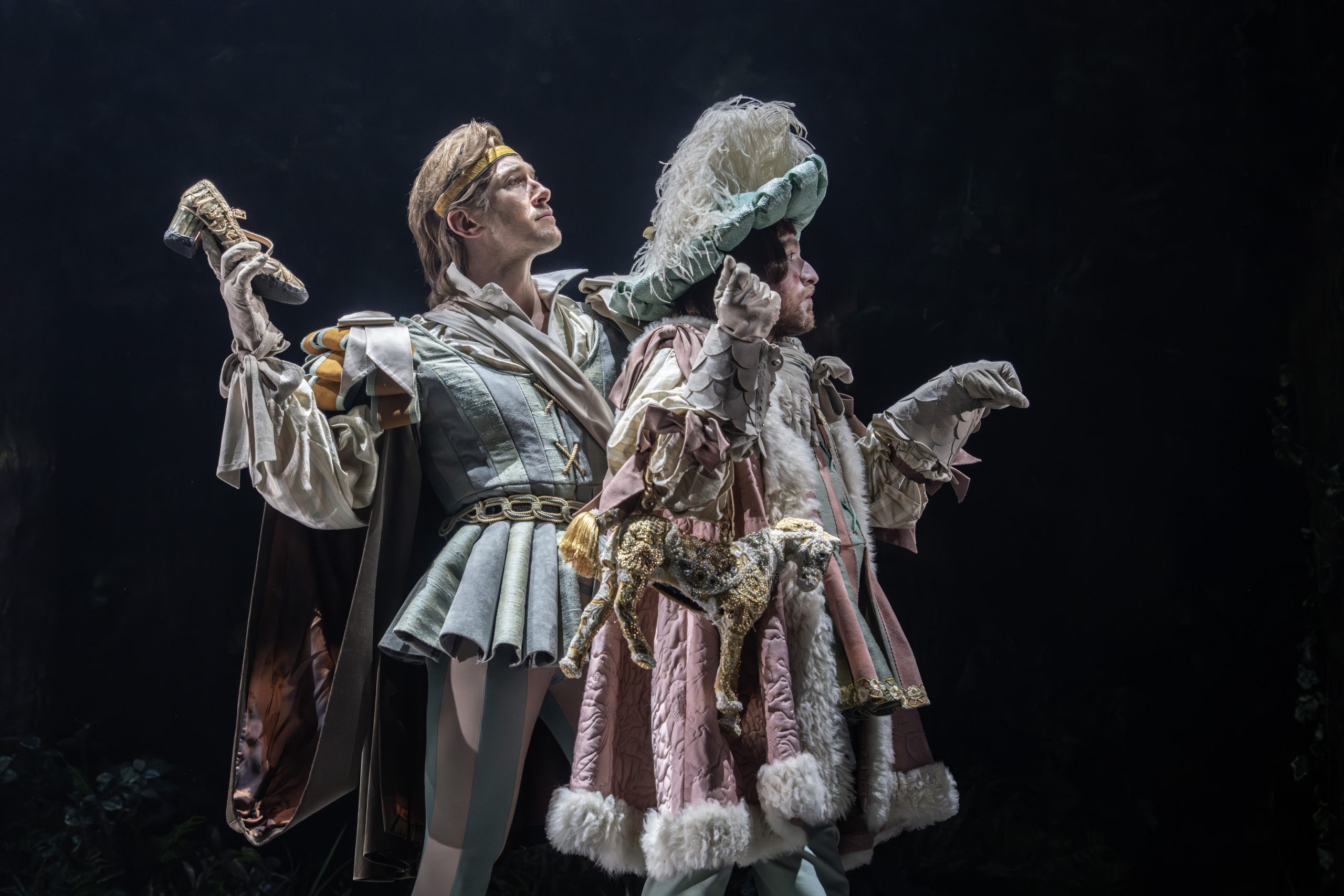
The Princes are royally fun. Oliver Savile and Rhys Whitfield lean fully into how ridiculous these characters are, delivering ‘Agony’ with exactly the right balance of sincerity and silliness. They’re wildly dramatic, deeply competitive, and completely convinced of their own suffering despite having known these women for about five minutes. Savile, in particular, really comes into his own in the second half, showing just how shallow ‘true love’ can be when it’s never been tested.
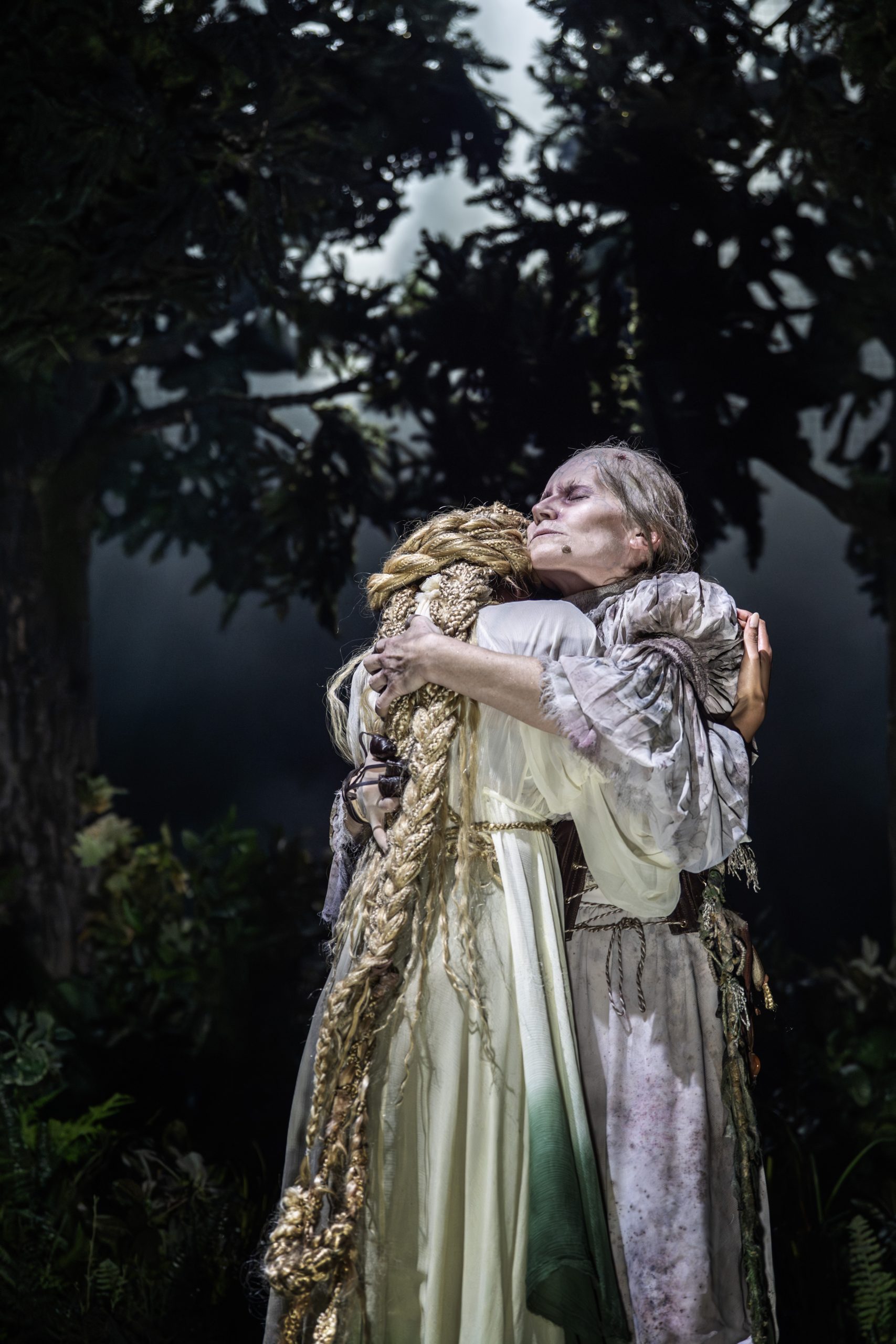
Kate Fleetwood’s Witch is complex, funny, and occasionally unsettling. She arrives as a genuinely intimidating presence, manipulative and angry, using the Baker and his Wife’s longing for a child as leverage. But as the show goes on, you start to see the cracks. Her relationship with Rapunzel is controlling and toxic, but it’s also rooted in real fear and warped love. When she insists she was only trying to be a good mother, it lands uncomfortably close to some very modern conversations about parenting and control. Her transformation when the spell is broken is striking, helped enormously by Sam Cox’s wigs, hair, and make-up. The contrast between the ‘witch’ and the woman underneath is handled with real care.
Katie Brayben’s Baker’s Wife brings warmth, humour, and emotional honesty to the role. Her chemistry with Jamie Parker’s Baker feels completely natural, and ‘It Takes Two’ is a genuine highlight. Brayben especially shines in the second act, where the show allows her character more space, freedom, and complexity.
Chumisa Dornford-May’s Cinderella combines real clarity with a powerful voice. There’s a moment where she realises her father’s house was a nightmare, the palace is a dream, and what she actually wants is something in between. It lands beautifully. We all dream of escape and grandeur, but what Cinderella really longs for is a peaceful, ordinary life that feels safe and chosen, and Dornford-May makes that feel completely earned.
What really makes Into the Woods work, though, is how grounded it all feels. Despite the fairy-tale trappings, giants, witches, and familiar storybook figures, every main character is dealing with something deeply recognisable: grief, fear, regret, ambition, parenthood, responsibility, and the gap between what we want and what we can live with. These aren’t cartoon characters. They feel like people. That’s the genius of Sondheim and Lapine, taking something fantastical and making it quietly, painfully human.
The ensemble work throughout is terrific. Jenny Ogilvie’s movement direction gives the group a shared physical language, especially in the repeated Into the Woods sequences, which feel playful, alive, and full of momentum.
After the interval, the woods are transformed. They’re damaged, broken, and scarred by the arrival of the Giant, and the set mirrors the emotional fallout beautifully. Everything feels unsettled, as it should.
This is where the show really hits home. The jokes are still there, but grief, loss, and responsibility take centre stage. Lines like ‘sometimes people leave you halfway through the woods’ land hard, because they’re true. Life doesn’t stop when something awful happens, and being brave often just means carrying on.
The song ‘No One Is Alone’ builds quietly from a single voice into a shared promise that you don’t have to face things by yourself, and it’s genuinely moving.
Yes, this show is funny. Yes, it’s clever, satirical, and often mischievous. But more than anything, it’s humane. It asks what we owe each other, what stories we tell ourselves, and how we live with the choices we make.
This production really understands Sondheim, and trusts the material completely.
If you think you don’t like musicals, Into the Woods might just be the one that changes your mind. It’s thoughtful, emotionally intelligent, visually beautiful, and full of heart. You might go in expecting fairy tales, but you come out with something far more useful: a reminder that we’re all just muddling through the woods together.
Into the Woods is playing at The Bridge Theatre until 30th May 2026
Tickets and info at bridgetheatre.co.uk
Words by Nick Barr
Photos by Johan Persson