Imagine a home that feels exactly as it should. The morning light moves across an open-plan living room where every detail has been chosen with intention — a linen sofa in a calming neutral tone, a handcrafted ceramic vase, an oak coffee table arranged with a carefully selected stack of books. Nothing feels excessive. Nothing interrupts the balance of the space.
And then a cat jumps onto the kitchen counter, a dog pushes through a bedroom doorway, and the quiet rhythm of the morning changes. Not because anything is wrong, but because the invisible structure of the home has been disrupted.
For a growing number of design-conscious pet owners, this has become one of the overlooked challenges of modern living. The issue is not the presence of pets. It is finding boundaries that protect both the harmony of the home and the relationship between people and animals.
We are living in an era where the aesthetics of domestic life have reached a new level of sophistication. Homeowners carefully consider everything from architectural flow to material choices, from lighting temperature to the way natural textures interact throughout a room. Interiors are no longer simply functional spaces; they reflect personal values, lifestyles, and the desire for everyday comfort.
Yet when it comes to living with pets, many homes still rely on solutions that feel disconnected from this design philosophy. Plastic gates positioned between rooms, temporary barriers placed on furniture, or permanently closed doors often become visual interruptions rather than thoughtful solutions.
These approaches may solve an immediate problem, but they rarely complement the space they are placed in. For homeowners who have invested time creating an intentional environment, these visible obstacles can feel like compromises rather than improvements.
The Quiet Cost of Visible Barriers
Traditional pet gates serve an important purpose, but they were designed primarily for function rather than integration. They interrupt sightlines, affect the openness of a room, and introduce an object that competes with the surrounding design elements.
Over time, these visible boundaries create a subtle sense of friction. A hallway no longer feels completely open. A carefully styled living area becomes partially defined by what has been placed in front of it. The home begins adapting around the barrier rather than the barrier adapting around the home.
There is also a less visible challenge. When boundaries depend entirely on constant human intervention — repeatedly closing doors, redirecting pets, or reminding them where they should not go — daily routines can become more demanding. Pets may receive inconsistent signals, while owners may feel responsible for continuously managing the environment.
A well-designed home should support a calmer relationship between people and pets. The goal is not simply to restrict movement, but to create clear expectations that allow both the homeowner and the animal to feel comfortable within the shared space.
This is where the idea of invisible boundaries becomes increasingly relevant. Rather than adding another physical object to the room, these systems focus on creating structure that exists quietly in the background.
What True Luxury Looks Like
The most refined homes often share a common quality: they work effortlessly. Their design does not demand attention because the systems supporting them are thoughtfully integrated.
Lighting adjusts naturally. Temperature responds to changing conditions. Technology becomes part of the environment rather than something that dominates it. The result is a sense of ease — a home that feels considered without feeling controlled.
This same principle is now influencing the way people approach pet-friendly living.
A thoughtfully designed home does not require choosing between beautiful interiors and the companionship of animals. Instead, it looks for solutions that allow both to coexist. Pets can move confidently through spaces designed for them, while homeowners can maintain the atmosphere they carefully created.
Invisible boundaries represent this shift in thinking. They are not about making a home less welcoming to pets. They are about creating clearer communication between the space, the owner, and the animal.
When boundaries can exist without becoming a visual feature of the room, the home maintains its architectural character while supporting a more peaceful daily routine.
Rethinking the Tools of Coexistence
The move from visible barriers to invisible boundaries reflects a broader shift in modern design: the search for solutions that improve daily life without adding unnecessary visual complexity.
In kitchens, appliances are increasingly integrated behind seamless cabinetry. In entertainment spaces, technology is designed to blend into the background. In lighting, the most sophisticated systems often create atmosphere without becoming the focus.
Pet management is following a similar direction. The future of living well with animals is not necessarily about adding more objects to a home, but about creating smarter systems that support harmony without interrupting the space.
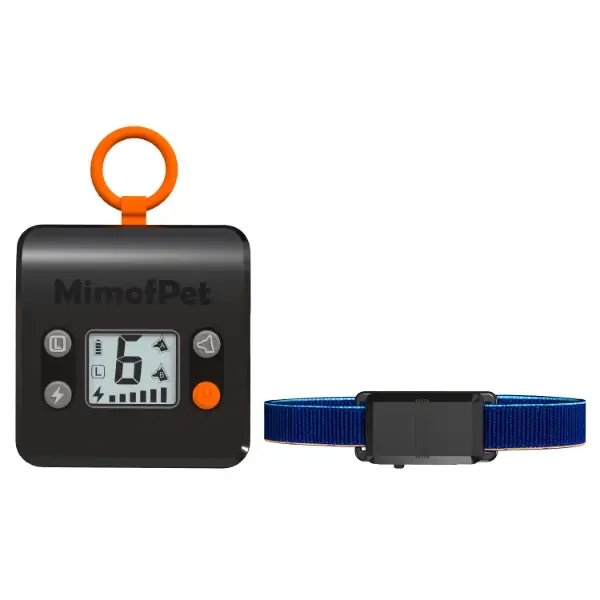
For homeowners looking for a more discreet approach to protecting areas such as sofas, bedrooms, kitchens, or other interior zones, an indoor wireless pet barrier such as the MimofPet B1-S provides an alternative to traditional physical gates.
Instead of placing a visible obstacle within the room, the system creates an invisible boundary that helps pets understand where certain areas begin and end. Through gradual introduction and consistent feedback, pets can learn these boundaries while homeowners maintain the visual flow and atmosphere of their interiors.
The appeal is not simply the technology itself, but the way it fits into a modern lifestyle. A wireless indoor pet boundary system allows homeowners to protect important spaces while preserving the openness and simplicity that define contemporary home design.
The most successful solutions are often the ones that become almost unnoticed. The boundary exists, the home remains visually uninterrupted, and everyday interactions between people and pets become more relaxed.
A New Definition of Living Well
The homes that feel most luxurious are rarely defined by the number of expensive objects they contain. Instead, they are defined by how naturally everything works together.
A well-designed home creates room for comfort, personality, and companionship. It allows people to enjoy their surroundings without constantly managing small disruptions. It allows pets to become part of the environment while still respecting the structure of the space.
Invisible boundaries represent a new way of thinking about pet-friendly living. They reflect a growing understanding that good design is not only about appearance — it is also about creating a better experience for everyone who lives there.
For homeowners who have carefully selected every piece of furniture, considered every material, and shaped every corner of their living space, the ideal boundary is not one that demands attention. It is one that quietly supports the life happening around it.
The future of modern homes will not be defined by separating pets from beautiful spaces. Instead, it will be shaped by solutions that allow design and companionship to exist together.
Not more obstacles, but more thoughtful ones. Not louder rules, but clearer communication. Not a home that constantly manages its pets, but a home where people and animals understand how to share the space naturally.
That is the new luxury of living well with pets: a home where every element has its place, every relationship feels balanced, and the space itself remains exactly as it was intended to be.