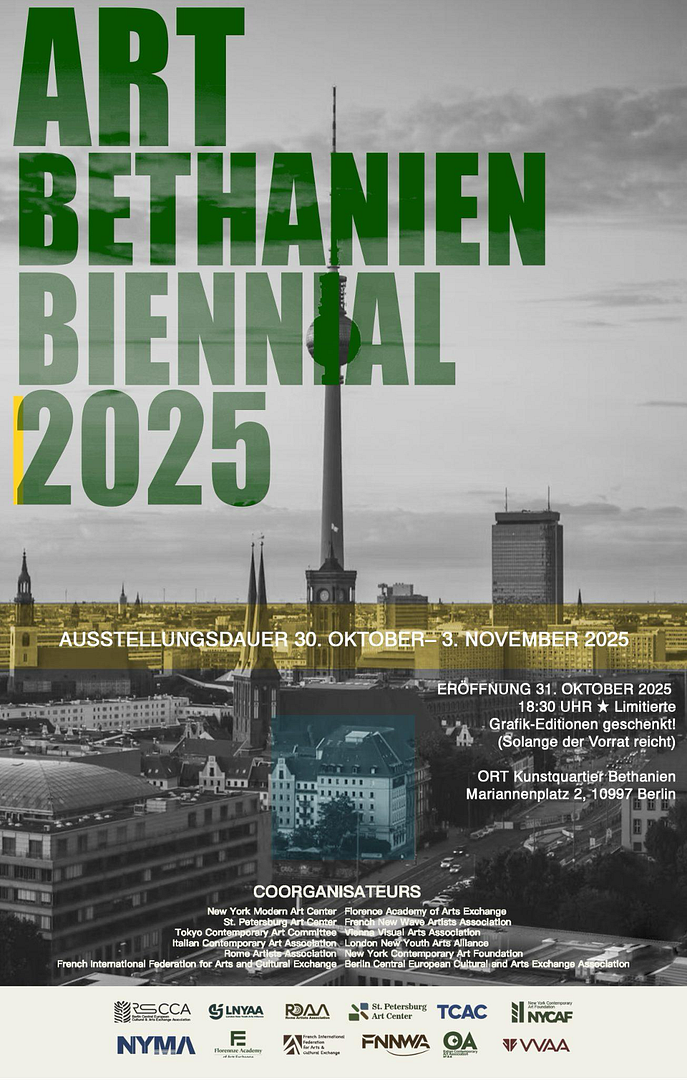
Interview by French Art Journalist Anaïs Tamo-Martane
Anaïs Tamo-Martane (hereafter “A”): Congratulations on winning the Gold Prize at the Berlin Art Biennale. To start, could you tell us a bit about how your practice began, what led you onto the path you’re on today?
Shuning Zheng (hereafter “Z”): My practice grew out of my early training in metalwork and design. I began with jewelry and metal arts and later went on to pursue a master’s degree in industrial design.Through my study of form and structure, I gradually came to realize that experience doesn’t simply exist as something given. It is constantly constructed through perception.It was this curiosity about how understanding takes shape that led me to move beyond design and toward a more open-ended artistic practice, and it remains a starting point for my work today.
A: What led you to develop the Invisible Freedom series? It’s clearly resonated with a wide audience.
Z: This series comes from my long-standing reflections on the relationship between the individual and the family. I grew up in a traditional Chinese household, where there’s always a sense of both connection and boundary, and that relationship keeps shifting over time.Moving to the U.S. made me rethink what “family” means. While adapting to a new environment was challenging, my family’s support became a key source of stability. Over time, I came to see family less as a constraint and more as a form of support. That shift became central to Invisible Freedom. It’s really about how the balance between connection and separation keeps changing.
A: Your work uses a range of materials, like brass and handmade paper in Invisible Freedom. How do you think about the relationship between them, and what role do they play in the work?
Z: Each material has its own qualities. I think of them a bit like differences in language, where even small shifts can change the tone. Paper is often seen as soft, but within certain structures it can also feel quite rigid. That contrast naturally brings out a sense of narrative.
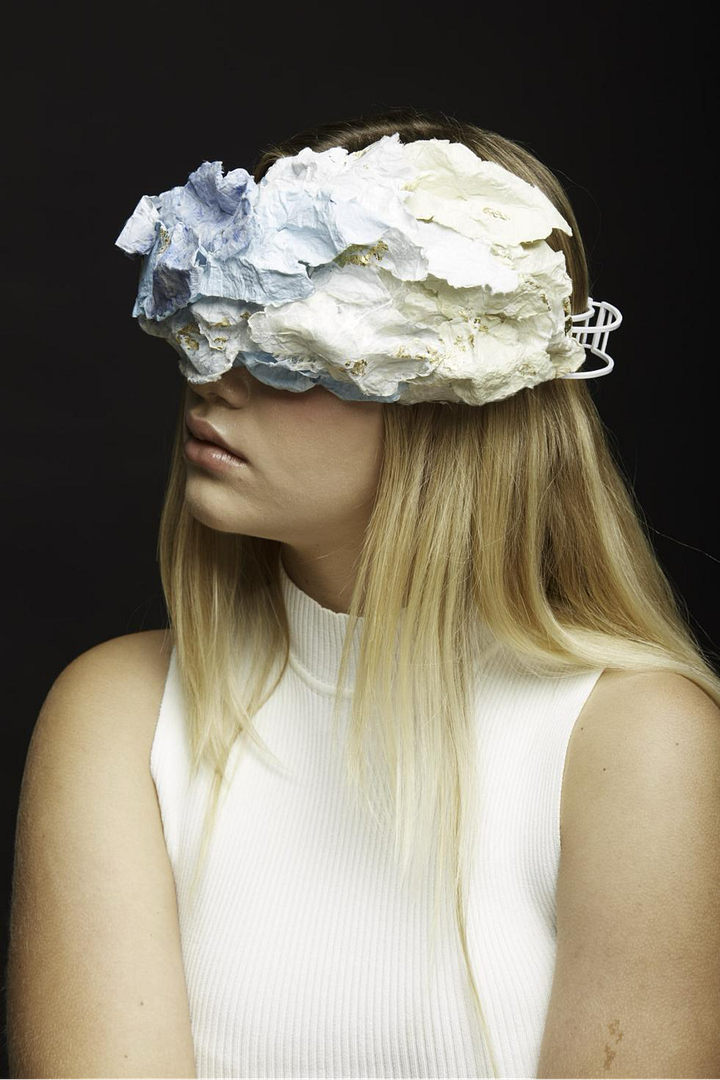
In Invisible Freedom, the brass framework sets a boundary, while the handmade paper creates a sense of space within it. They are not in a hierarchical relationship but define each other through coexistence.
A: At what point in your process do you feel a work is complete?
Z: That’s an interesting question. In the early stages, with all the brainstorming, it’s easy to feel like the work is already “finished” in my mind. That early sense of completion can slow things down. Other times, I keep adjusting details in pursuit of something more complete, and the work can get stuck in that state.So for me, it’s important to treat each work as a defined project with a clear scope. I set stages and a rhythm to keep the process within a relatively clear range. When the work reaches a point where the overall relationship no longer shifts with small adjustments, I consider it complete.
A: Your work centers on material, structure, and personal experience. How did this direction begin?
Z: This direction grew out of my early training in metalwork. For me, structure was a way of understanding the relationship between material, form, and process, and that became the foundation of my work. Over time, I came to realize that work doesn’t exist only on the level of material and technique. The experience behind it matters just as much.So I began to think of the work not just as a display of technique, but to express content. It was through this process that this series gradually took shape.
A: What kind of experience or connection do you hope viewers will have when encountering your work?
Z: I hope viewers can sense that some feelings are not fixed, but shift with different experiences. My work also comes from that kind of change. My understanding of relationships, boundaries, and freedom wasn’t fixed from the start, but has shifted over time.So if someone, while looking at the work, comes to see their own experience a bit differently, or just pauses to feel something more clearly, that’s already enough for me.
A: One last question, what does your practice mean to you?
Z: For me, different artistic forms are all forms of content creation, each expressing something in its own way. We often understand things in fragments, and art becomes a way of organizing and transforming those experiences so they can be made visible.It also offers another perspective, allowing both the viewer and myself to reconsider what might otherwise feel familiar.
(Postscript: Behind the Gold Prize at the Berlin Art Biennale, Shuning Zheng’s work points to a kind of “invisible freedom.” It is not something to be possessed, but something that continually takes shape within the shifting balance of relationships—at once fragile and resilient. )
【About the Artist】
Shuning Zheng holds an M.S. in Industrial Design from the University of Illinois Urbana-Champaign (2022) and a B.F.A. in Jewelry and Metal Arts from the Academy of Art University, San Francisco (2018).Her work has received the Gold Prize at the Berlin Art Biennale (2025), as well as the iF Design Award (Art Concept Design, group category, 2025). More recently, she has been awarded the Gold Prize at the German Art Biennale (2026), along with the A’ Design Award and the New York Art and Design Award (2026),.