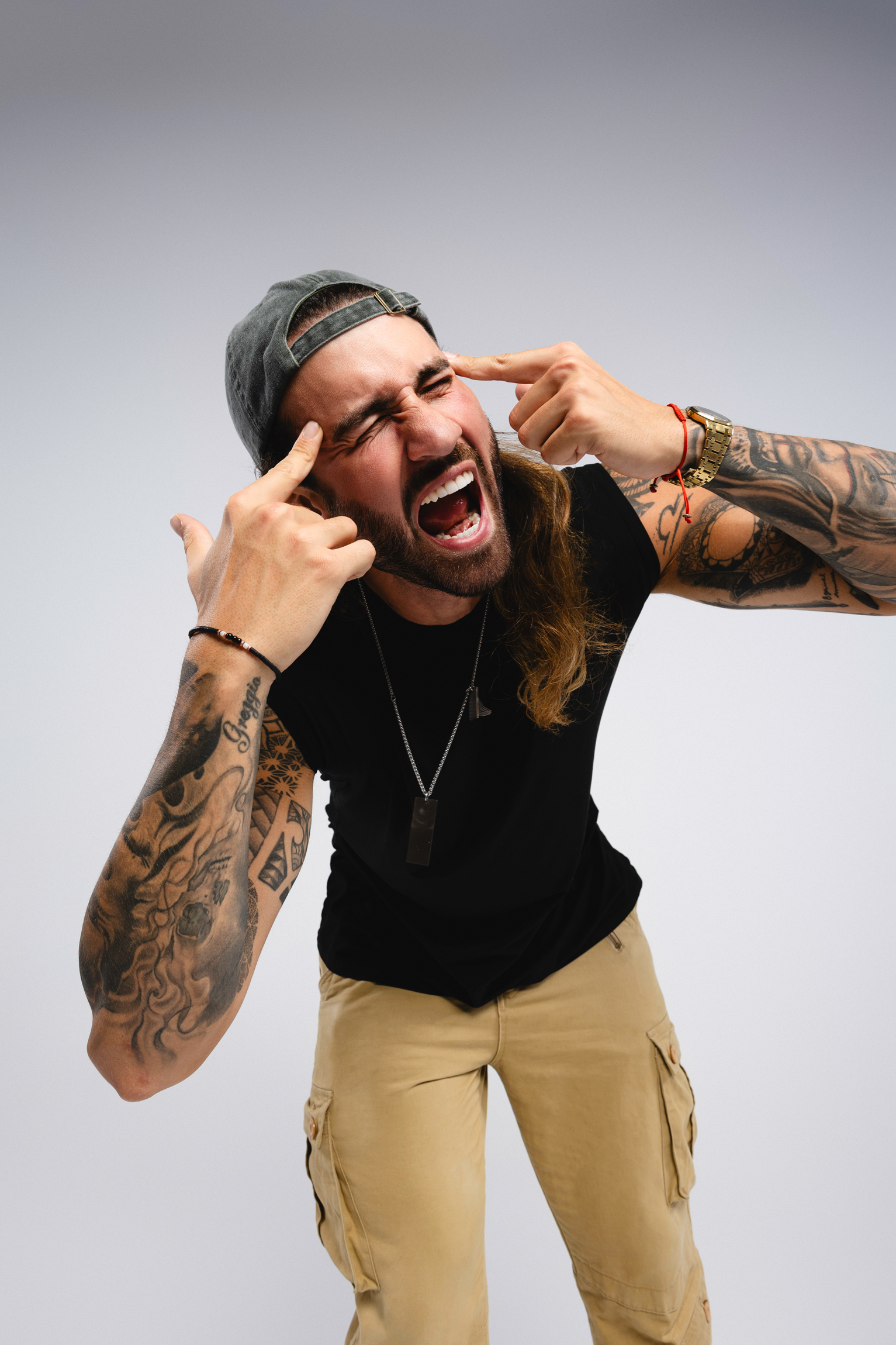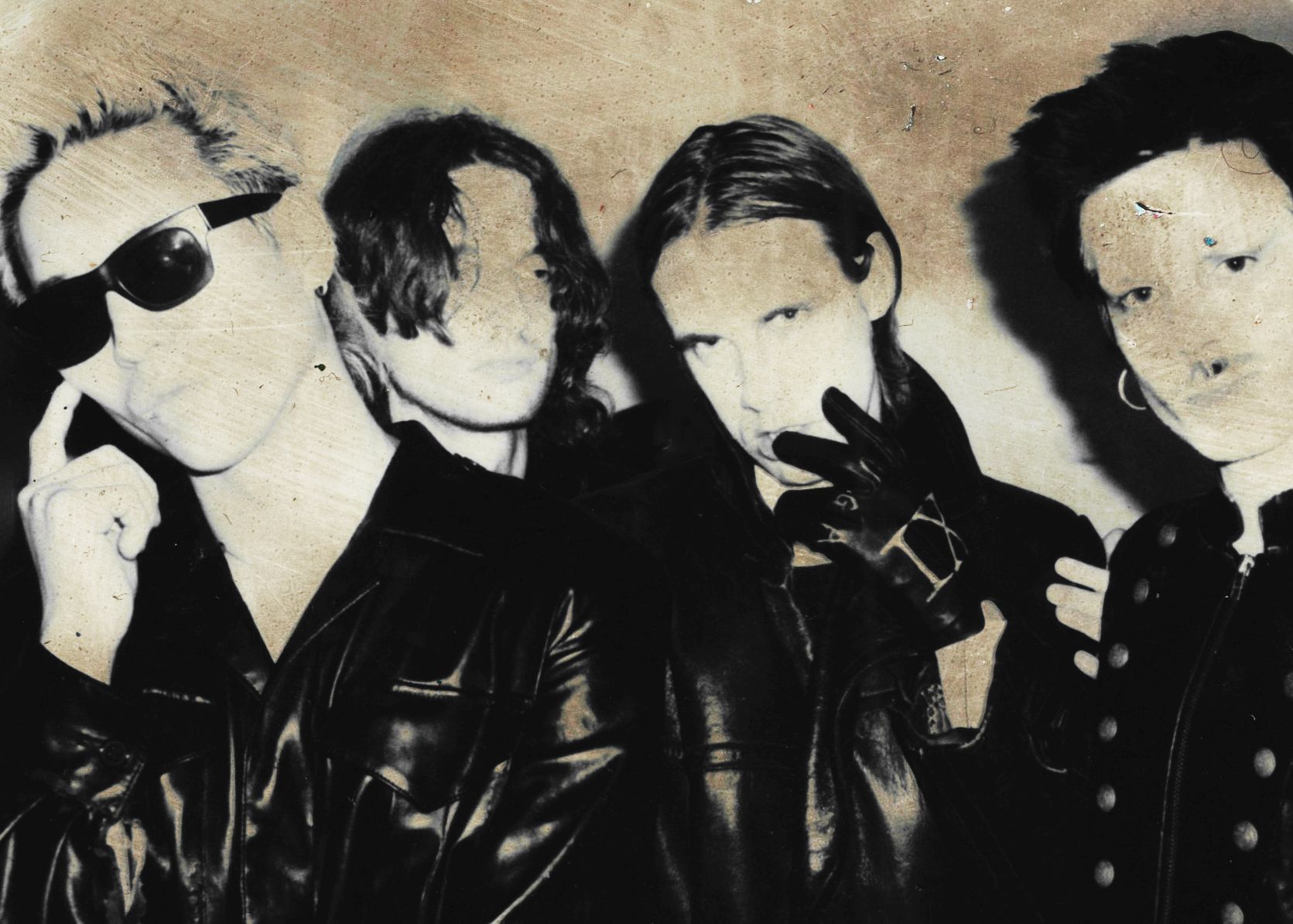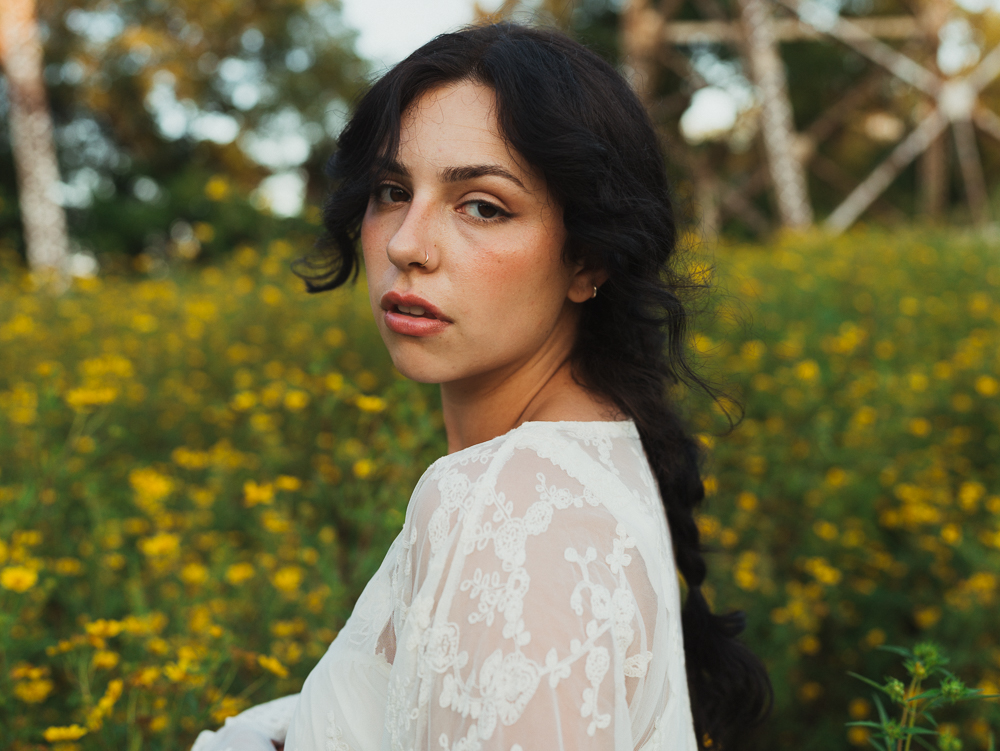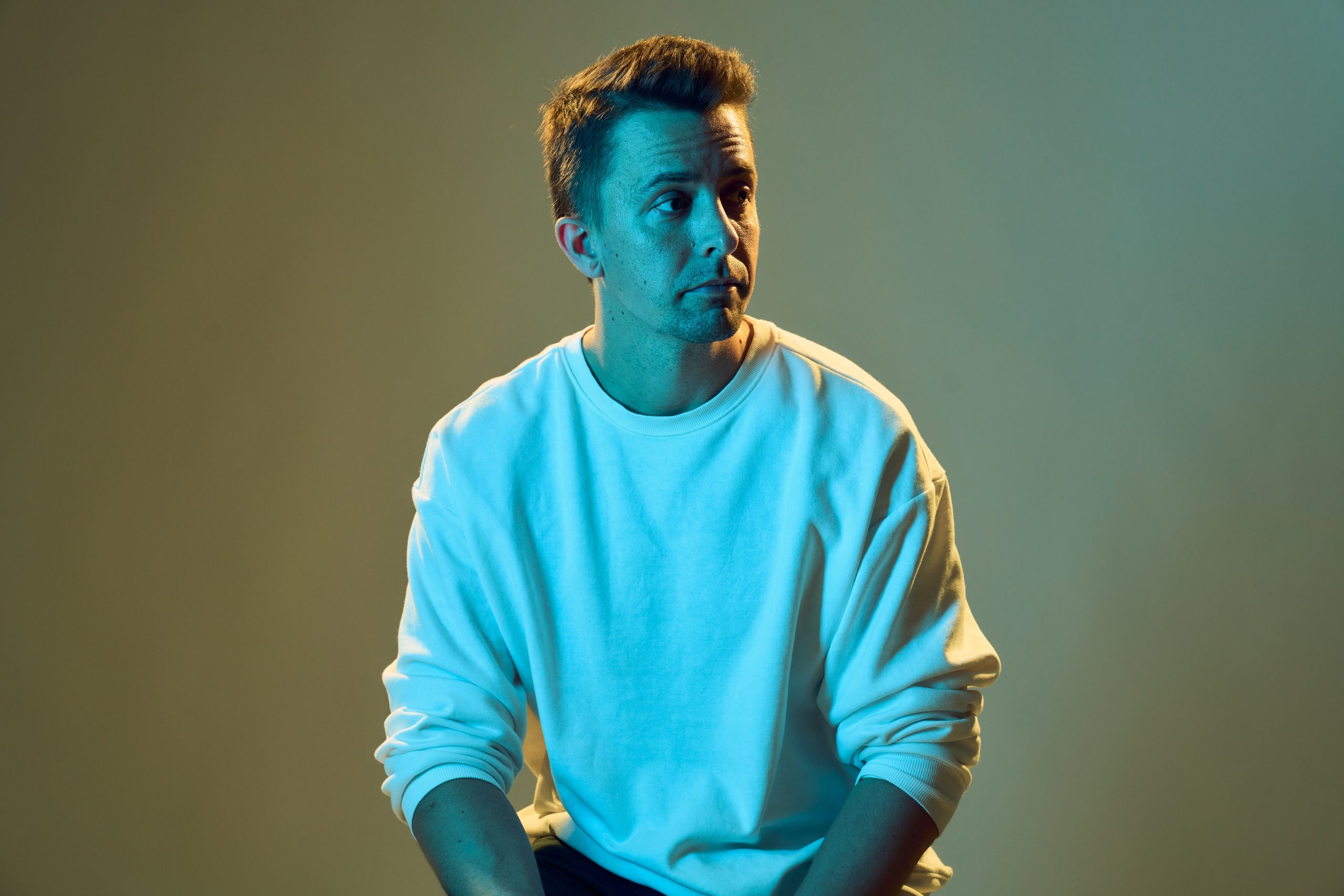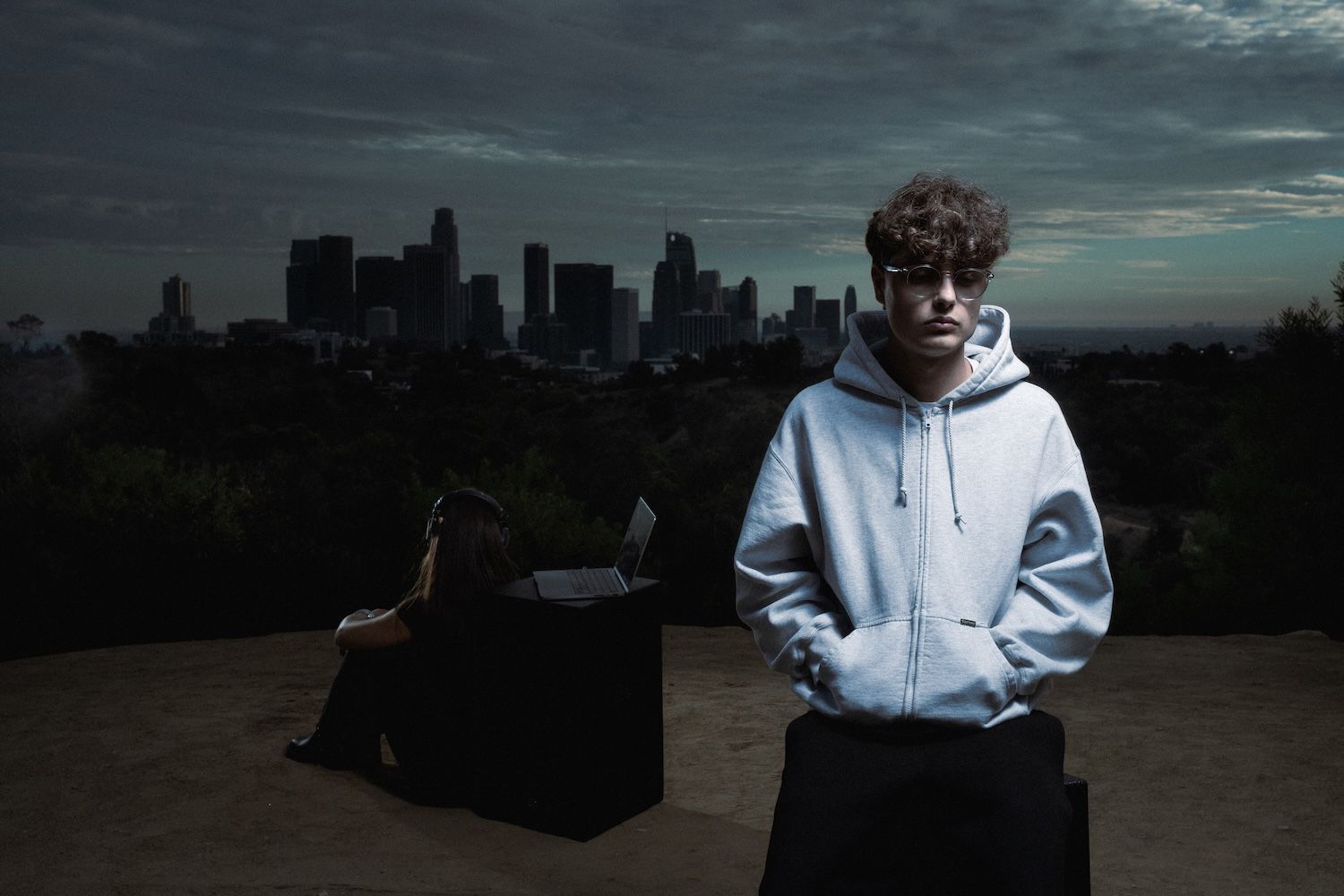
At night, Mulholland Drive becomes a cinematic stretch of winding roads and layered hills glowing beneath the city lights. But for noevdv, Mulholland Drive feels less like a place and more like a mirror. After being in the studio hours on end, noevdv often went there, replaying unfinished tracks, looking out across the iconic horizon, while slowly seeing beyond the fantasy he once chased.
His track “nobody like you” captures the emotional contradiction the artist experienced during those nocturnal drives, reflectively saying ‘There are so many good things there and so much to learn, but there are really bad sides to it.’ The EP also includes “without me” and “want u” – the breakout track that gained wider attention in 2024.
Before this, the Belgium-born producer gained early success on YouTube, releasing beats and online collaborations. He is recognised for his Cl4pers-sampled beat that gained millions of streams when he was only 18. Since then, he has grown as an individual as well as an artist while spending extended periods in LA. His upcoming project is a sonic reflection of his complex experience in LA, drawing inspiration from the city’s nocturnal atmosphere and emotional intensity.
noevdv speaks with 1883 from Belgium about where he is now artistically and his future sonic direction.
After your early viral success as a producer at 18, what made you step away from the momentum and focus on building your own sound instead?
When I had that first success at 18, it was for someone I produced for. It wasn’t for my own sound. It was literally a beat that I made, posted on YouTube, and then somebody used. So there wasn’t a connection between the artist and me. It was more of a random thing that happened.
I’m grateful for having that success when I was young, but I knew what I wanted to be. I knew that I wanted to make music the way I hear it. I knew that I wanted to be able to release it by myself.
For me, it felt natural because I was just going in a different direction. I always knew what I wanted to do, even though it wasn’t clear. Deep down, I always knew. So, I naturally took another path.
That question is really nice because it makes me de-zoom from the situation and think about what happened. I just did whatever felt right at the time.
Did virality ever feel limiting in how people understood you as an artist and an individual?
In the music industry, not really. It was something good because now I had some motion, and people were coming to me for my sound, for what I am. Back then, when I was a producer, I was trying to send beats to whoever was open for it. So, it was the opposite. It was a good thing.
Outside of the music scene, at first, yes. When I started making music, people didn’t understand what I was making. But having that success at 18 did the opposite.
When things started working, people understood what I was doing. It gave me some credit, and they let me do my thing without judging or thinking, “What is he doing?” So, for me, it was more of the opposite.
Building this new project over the last few years, what changed most creatively between who you were when you were 18 and who you are now?
The main thing is that now I see myself as a legitimate artist. Back then, when I was 18, I was sending beats to whoever needed them. I was posting type beats, so I was doing whatever worked – not for money, but to live from it and have success from it.
Now, I see myself as an artist trying to make art. I’m trying to make what I like. I think that’s the main difference. Back then, I would do whatever worked for me, but now I can curate more of what I want. That’s the main difference.
Was the track “nobody like you” rooted in a specific place or person? And why did that contradiction feel important to capture?
I made that song when I was in LA last year. And all that happened after I made a song called want u, which had some success.
It was one of my first times staying in LA for a long period, and I made the song the day before going back to Belgium. I remember being in the studio making the beat with some friends, and I was in a weird state of mind.
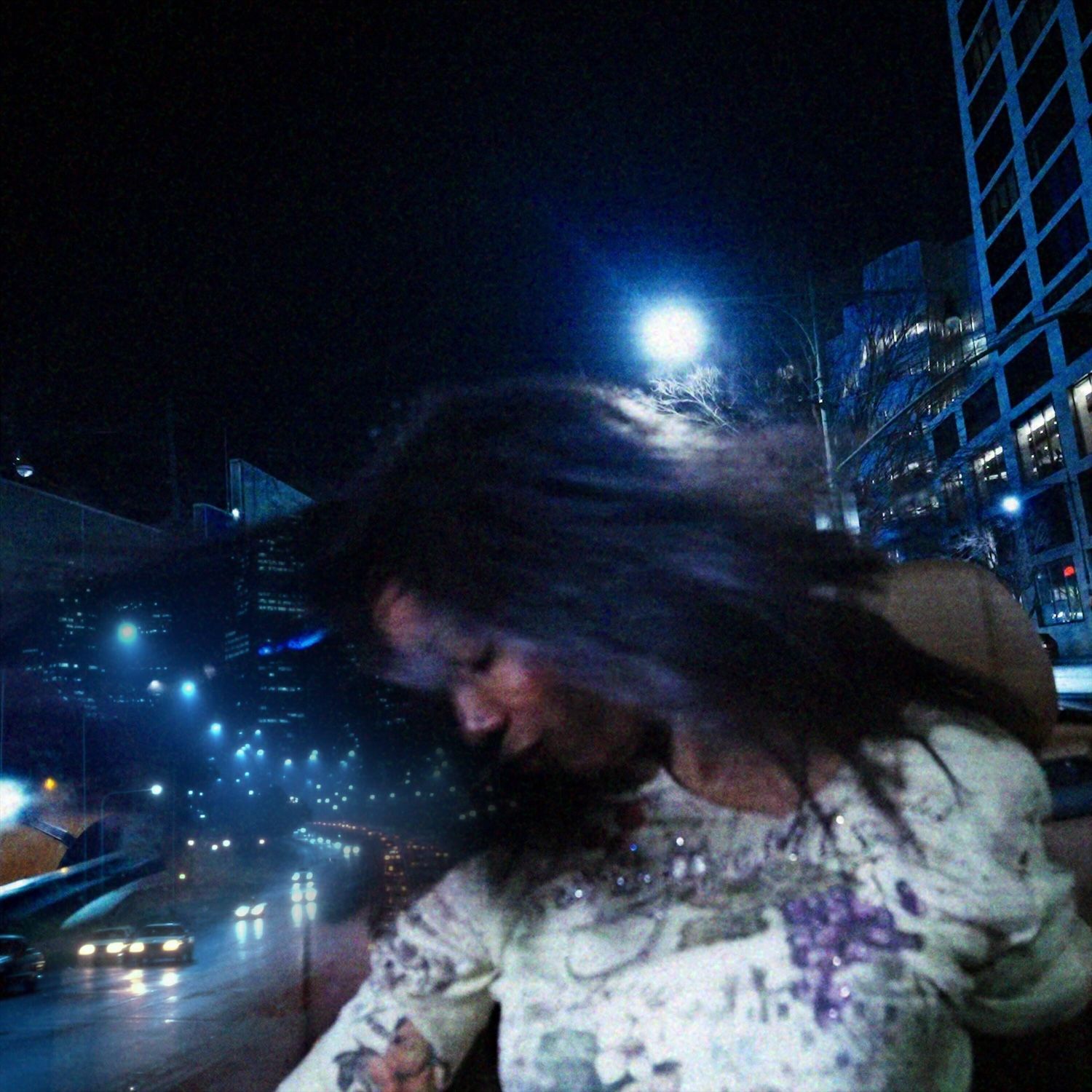
I was thinking about LA – how it sounds, the good things, the bad things. I have a love-hate relationship with the city. There are so many good things there and so much to learn, but there are also bad sides to it. I was in the studio with some songwriters, and I tried to describe LA as a person – personifying LA.
While they were writing it, they didn’t know it, but deep down, I knew, so I could guide it in a way that would fit both meanings. I think the most important thing is that when people listen to my music, they get whatever they get from it. I made the song thinking about that duality – that it could be a person, a girl, a boy, or a city.
But when somebody listens to it, I want them to take whatever they feel from it. That’s what I like about music. I made the song with a certain meaning in mind, but somebody else could listen to it and experience it completely differently. That’s what I love about it.
What was great about LA? But also, what was hard to see in capturing that duality within that track?
On the good side, it was good for me to be there because I’d wanted it my whole life. Since I was a kid, I always wanted to make music, so I knew LA was the place. Before that, I’d gone there for a month or two at a time, but this time I stayed for six months. I was 20 or 21. I still had my family in Belgium, my girlfriend here, and my friends, so I was there alone. But I made some good friends, and it was nice working on music.
At the same time, it was overwhelming. The city itself felt overwhelming. Especially in the US, you see the contrast. You have rich people and poor people – it doesn’t feel like there’s a middle. You really have to work your ass off.
Going to parties was strange, too. I met a lot of people I looked up to growing up, childhood idols. Then you see them in real life and realise there’s no life in their eyes. Things that really made me reflect on both the good and bad sides of it.
Did seeing those things change how you think about yourself as an artist, or make you think about yourself as an artist?
Before going there and living in that system, I don’t know, my main goal was to be in LA and make music. Now that I’ve seen that, I mean, I’m more, I don’t think it’s an end goal. I could be here in Belgium doing music.
It’s the same thing. It was also ego, being in LA, doing the music. It was a lot of ego. But now seeing all this stuff made me reflect and realise that it’s not the end goal.
You’ve said that your music was something you felt during those late-night drives before it was fully formed. Could you expand on that process? What’s it like to produce and have that feeling?
I don’t know. It feels natural to me. But if I had to describe it, when I’m making a song, I always try to find the feeling first. I could make a hundred songs, and they could all be great, but if they don’t have that feeling – if you don’t feel a certain way listening to them – I’ll just skip them.
Production-wise, the chords and melodies are the most important thing. In my opinion, the melody is everything. I see the production – the beat, the instrumental – as the main thing. Nowadays, people treat the vocals as the focus of a song. Most of the time, the vocals are mixed loudly, and the beat sits underneath. I try to reverse that. I want the beat to be the main thing, with the vocals floating on top.
I also don’t like to overproduce. I feel the more you add to an idea, the more the feeling gets lost. So, when I find that feeling, and I connect with what I’m making, I try not to overthink it or add too much. A lot of pop records now feel overproduced and overthought. Sometimes you lose the emotion in that. The feeling is the most important thing you can get from a song.
There’s something very nocturnal in how you describe your EP, Mulholland Drive. Was there a particular late-night drive or moment in LA that shaped the EP?
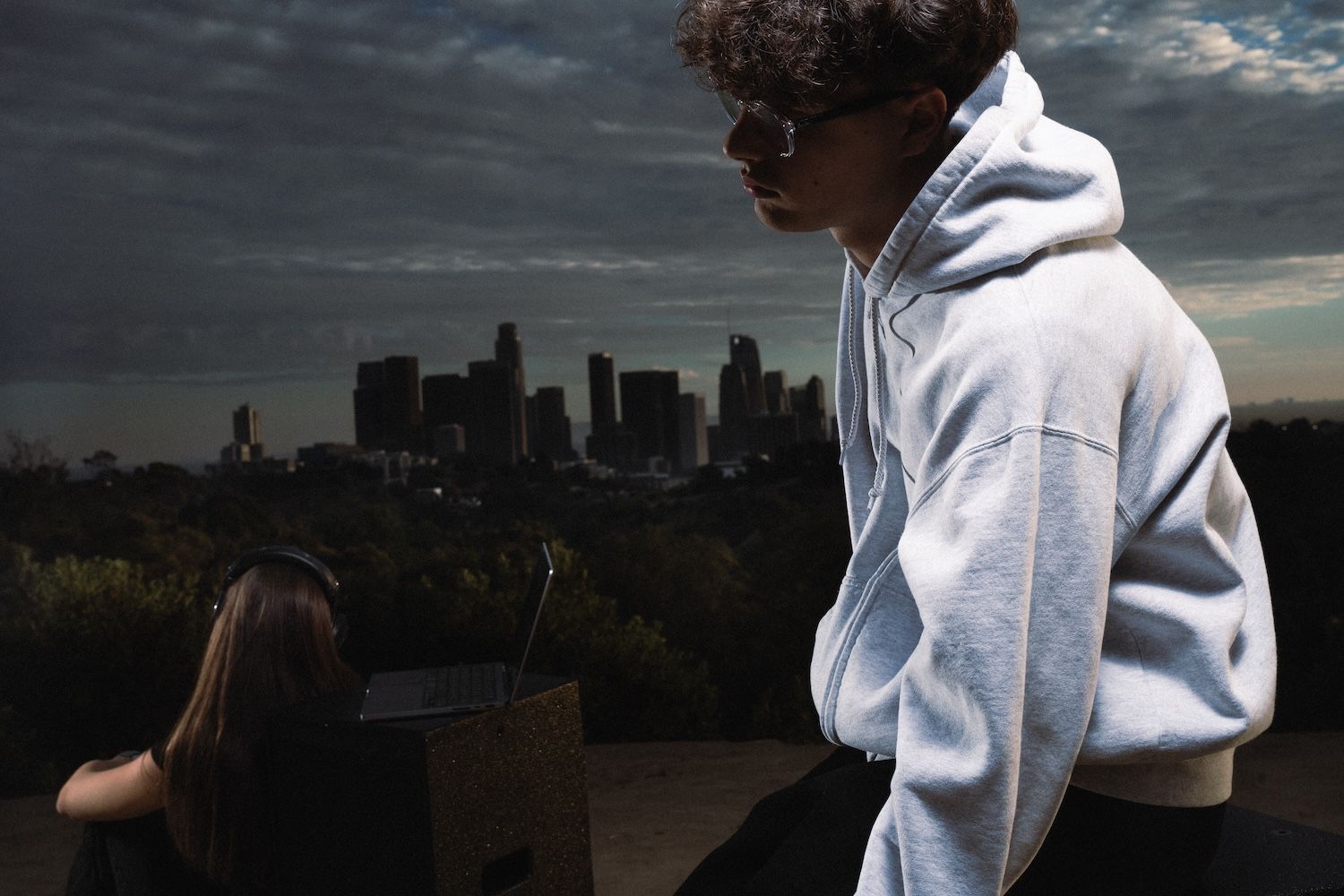
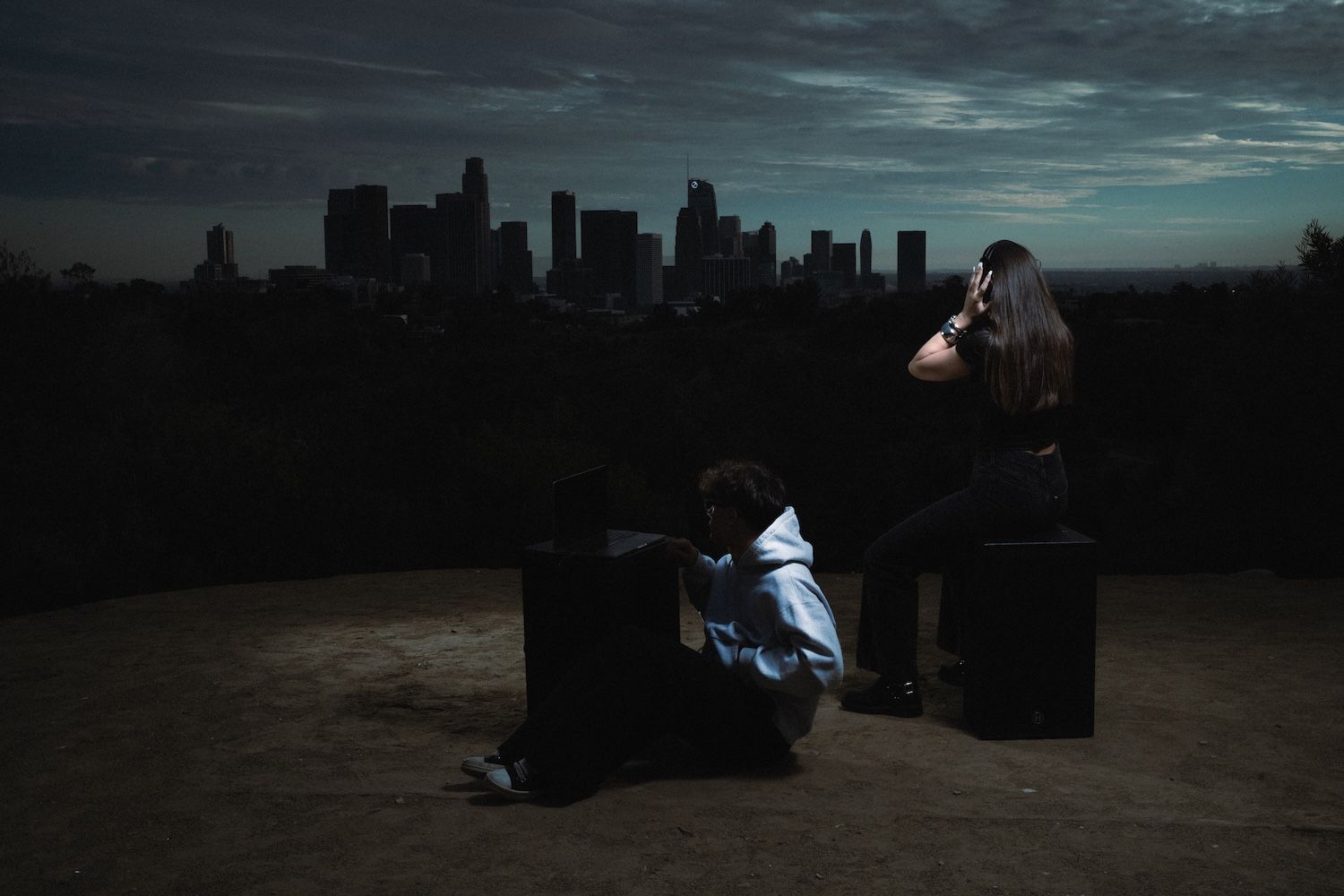
I’ve always liked night music, ambient music. I guess answering that question answers another one, too. When I stayed in LA, I was living at my manager’s place, which was literally five minutes away from Mulholland Drive. It’s this road in LA where you can see the whole city and all the lights in the background. I would stay up all night making music in the studio, then go for a drive listening back to what I’d made while looking out at the view. So that shaped the music. Those drives became part of the process.
What does Brussels give you creatively that LA doesn’t, or vice versa?
That’s a nice question. I’ve never thought about it like that. I don’t think it’s that different because most of the time I produce in my room or in a space that’s made for creating. Usually, I start most of the ideas here in Brussels. I’ll begin something and think, “This could become something,” then leave it for a while.
When I get to LA, I try to live life there and experience different emotions, then come back to those ideas and finish them. So it’s not Brussels versus LA. It’s more that they work together. I start things here, then finish them there when I’m feeling a certain way. I also think that when I’m in LA, I’m far from my family and everything familiar to me, so every emotion feels ten times bigger. If I’m sad, I feel way sadder. If I’m happy, I feel way happier because I’m in a completely different environment. I try to channel those emotions into the music.
Does it ever feel difficult expressing them sonically through production rather than lyrics or vocals?
It’s hard for me to explain because everything happens so naturally. If I’m feeling a certain way, I’m not consciously thinking, “I’m sad, so I’m going to make something sad.” It just comes out naturally. But if I’m sad, I’ll connect more with sad chords or melodies. A certain sound will hit differently depending on how I’m feeling.
I can’t explain it technically. It’s more that – I feel something and then express it. It’s like talking to someone. If you’re happy, you naturally give that person a happy energy, and you want to be good with them. But if you’re sad, maybe you speak a little differently or drier. It’s the same relationship with music. If I’m feeling sad, I’m going to give you sad energy. If I’m happy, I’m going to give you happy energy. It’s really that natural for me.
Looking beyond this EP, do you see yourself staying in this nocturnal, reflective space or moving somewhere new sonically?
I’m evolving into something else. That’s already what I’m doing, to be honest. Right now, I still love making those same ambient, blurry melodies. Not necessarily sad, but emotional and atmospheric. That’s still the core of what I like.
What’s changing is that I’m experimenting more with different rhythms – house beats or Amapiano-inspired drums – while keeping that same feeling underneath it all. Those ambient melodies and chords are part of my identity, so I’m always going to keep making music like that. Even though I’ve already built a project around that sound, it still feels like me.
Is there anything that you’re particularly excited for listeners to hear in this EP?
I’m trying to choose one. I wanted people to hear “never had the time”, but it’s out now, so I guess it doesn’t count anymore.
But I like the track “never had the time”. It’s an interlude, and a girl is talking on the track, saying things that are basically thoughts I already have in my head. I think that’s the track where I felt the most creative. When you’re producing, you can sometimes think too much about whether people are going to like something or not. But with that track, I didn’t think about any of that. I just made what I wanted and what I liked. It was interesting to create a song that way.
Well, thank you so much, noevdv. I look forward to your EP. It was so lovely speaking with you.
It was nice talking. But thank you for your time, too. Thank you so much.
“nobody like you” is out now, follow via @noevdv
Interview Nancy Anekwe
Photography Max Durante