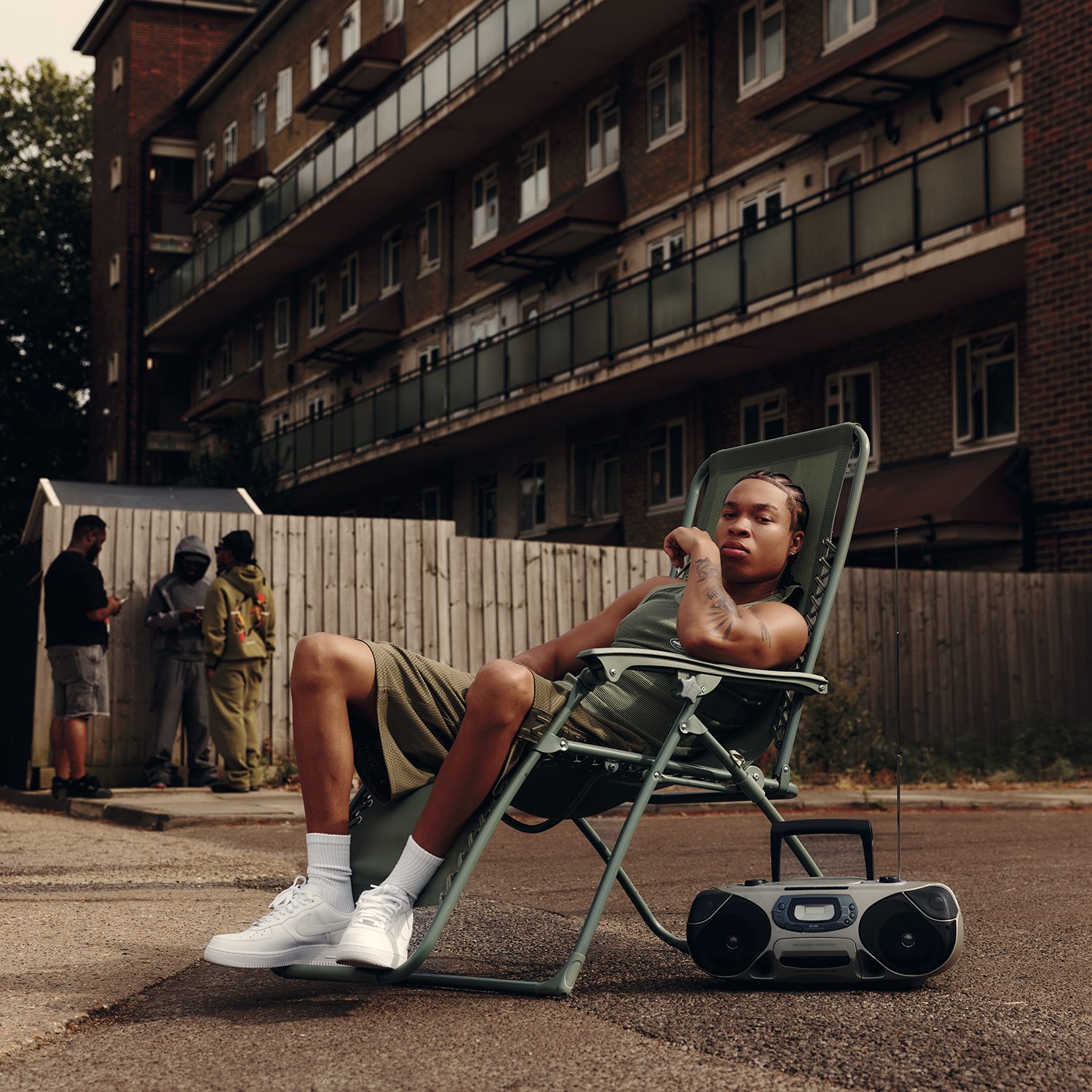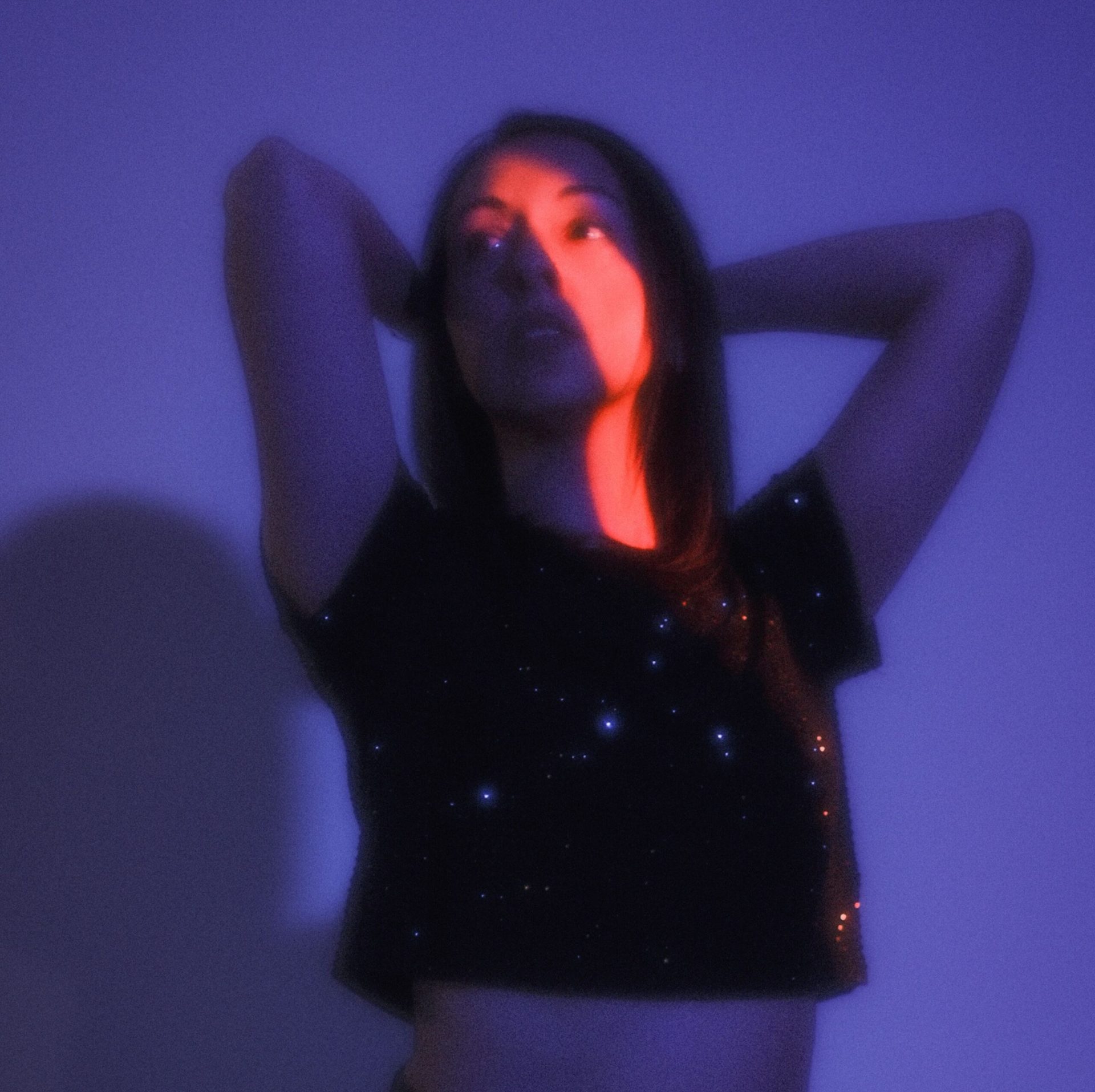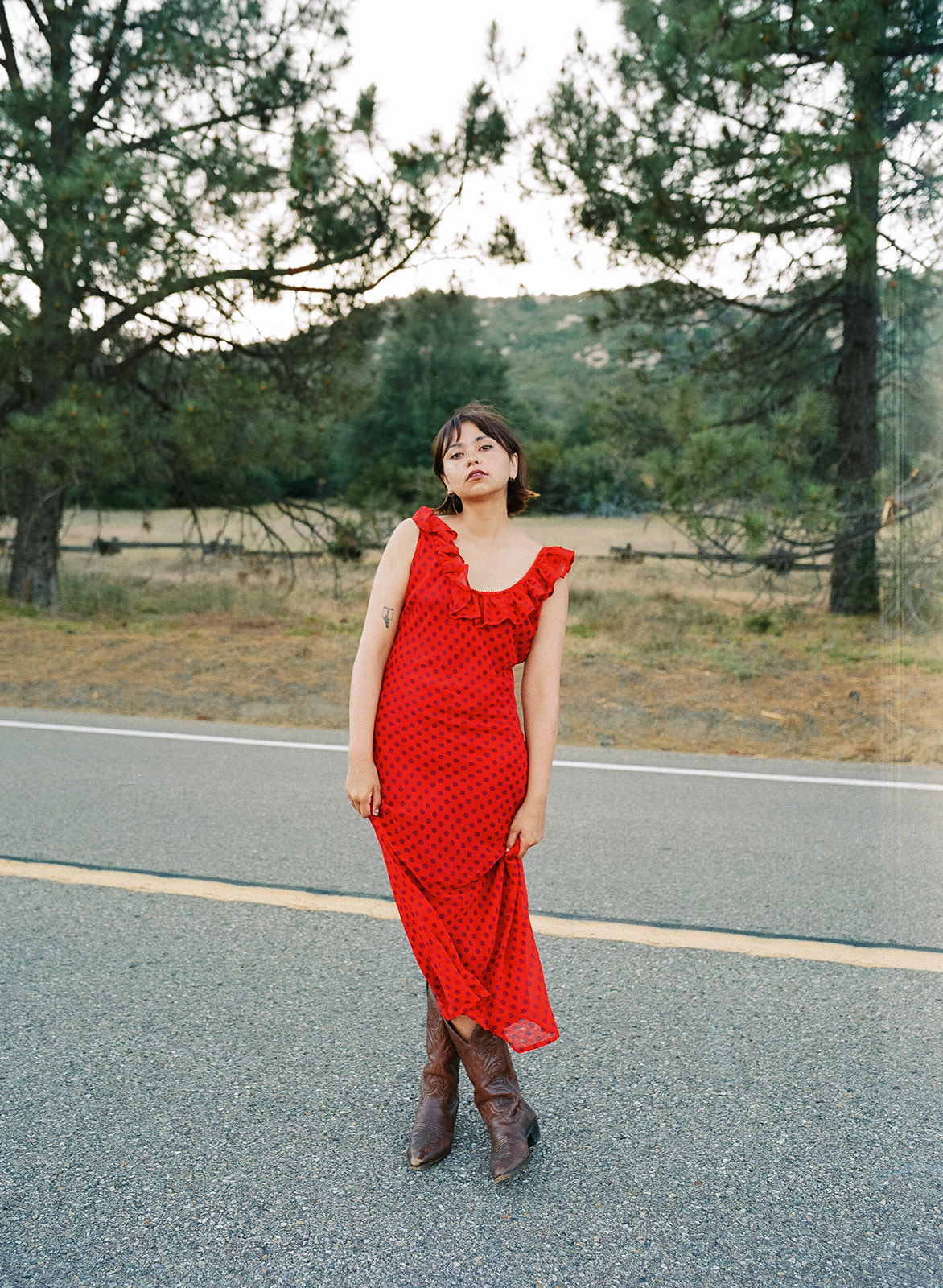
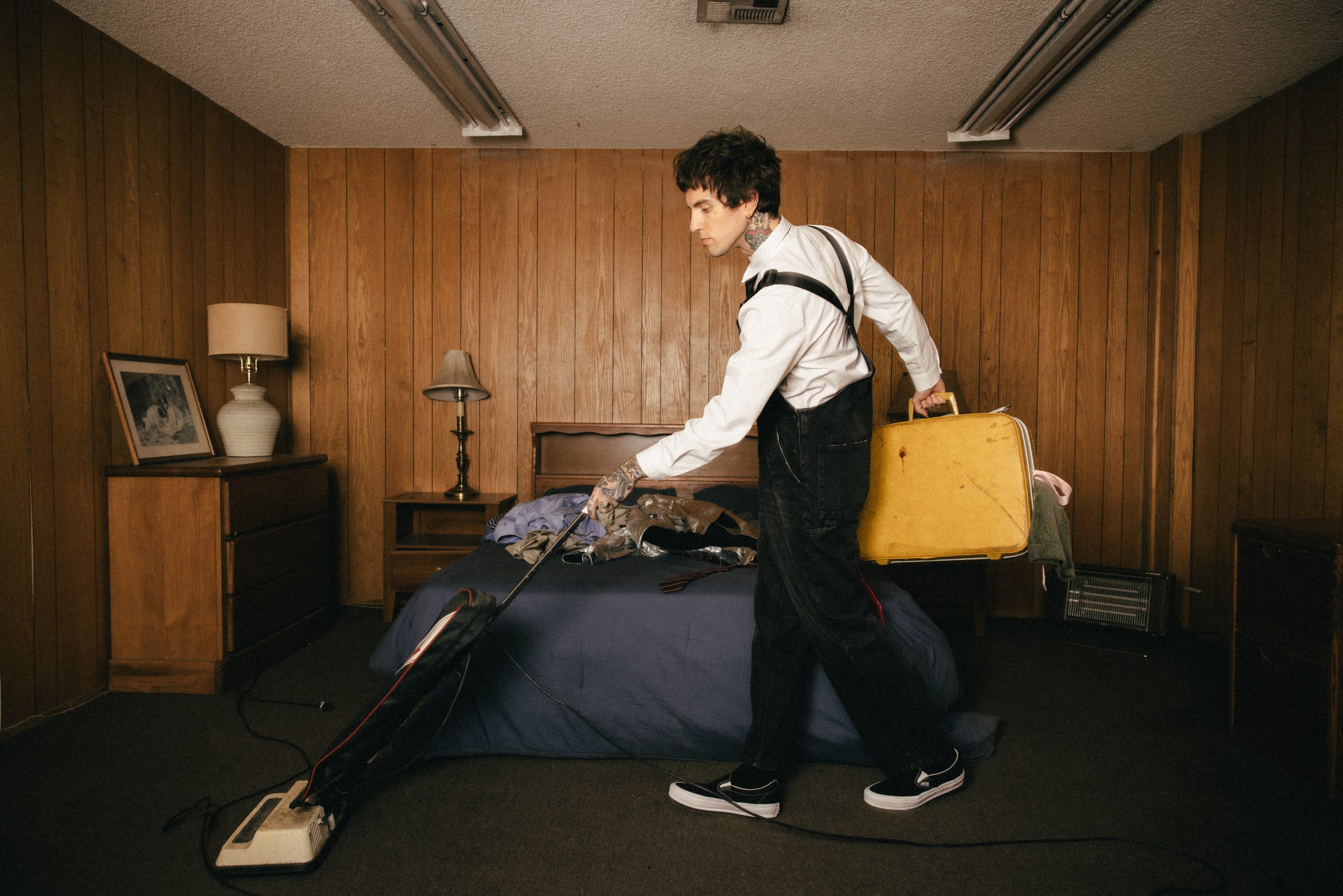
It’s release day for Jutes when he comes on Zoom to chat with me. His new album, Chin Up, Beautiful, has already been making noise with a visually-led rollout, and he’s mid-rehearsals for his upcoming tour. As soon as the camera comes on, he’s standing up, a ball of happy energy.
Chin Up, Beautiful marks his fifth studio album, though he’s been releasing music for far longer than that. By his own admission, he’s lived many lives, from making rap music “as a joke” in his room while at film school in Toronto, to fallen record deals, addiction, and finally finding his stride after sobriety, his marriage to Demi Lovato, and the roaring success of Sleepyhead in 2024.
With this album, he feels, maybe for the first time, that he’s gotten to fully build a creative world: that of a man disillusioned with the state of things, trapped in a simulation that never quite ends. It comes with visuals for every song, each one dotted with surreal imagery that pulls the concept taut across the whole record.
Jutes sits down with 1883 to talk about growing up in rural Ottawa, how sobriety has reshaped his songwriting, the creative process behind the album, and more.
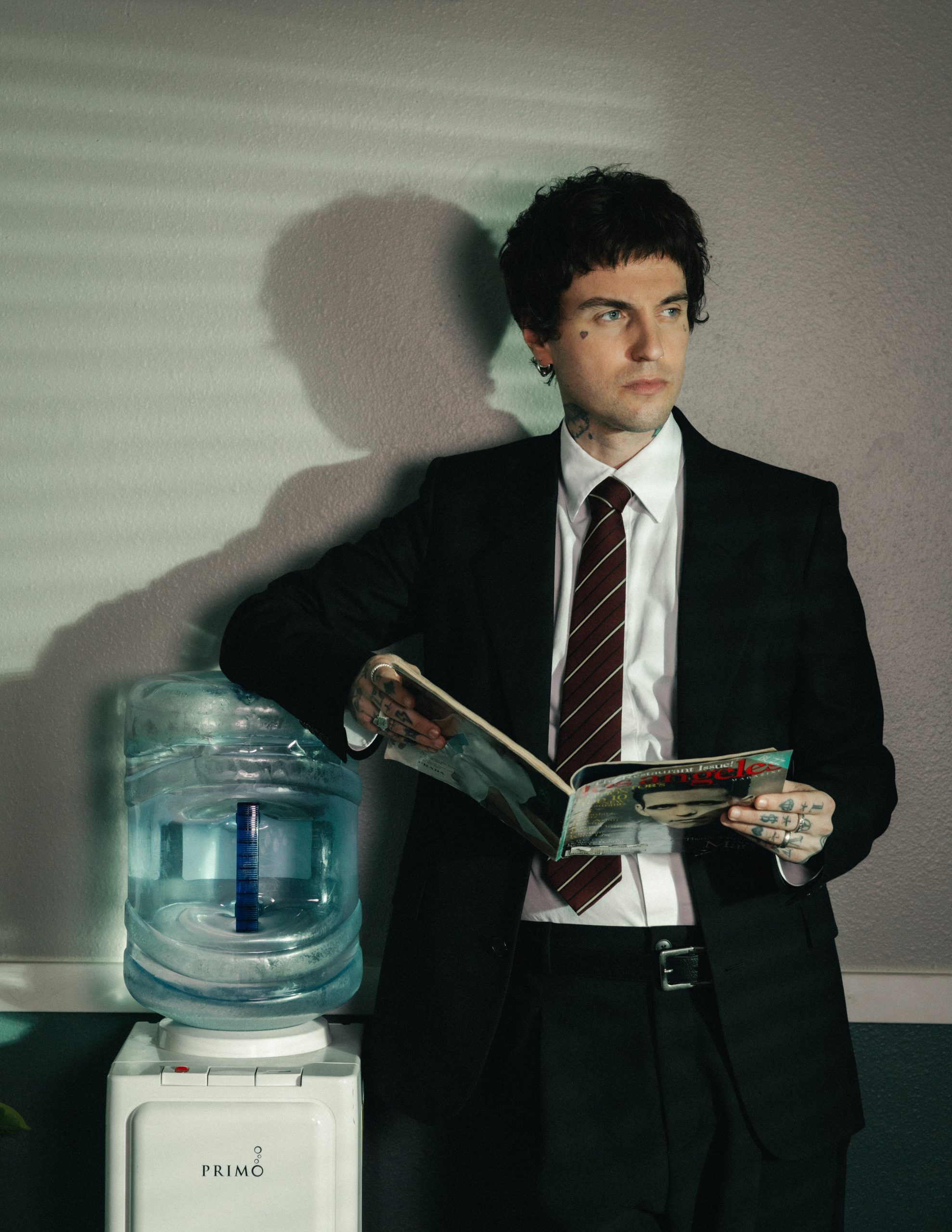
Happy release day! How are you feeling? What does your day look like?
My day is crazy. I have some running around to do. I have a few days before I go on tour, so I’m trying to get everything ready for the tour in the mornings, and then by the afternoon, I’m in rehearsal all day. So it’s just a lot of chaos. But once I get on the road, it’ll actually be time to chill.
I’m gonna go all the way back to the start of your life. What was it like growing up in Ottawa? Do you think that still influences your music?
I grew up on – I mean, technically it wasn’t a farm because we didn’t grow crops, but we called it a ranch. We had horses, we had llamas, we had emus, which are like ostriches. We had all kinds of animals. So as far as the branding of the album, it’s a lot of farm animals and a lot of backwoods vibes. Even the album before this was called Dilworth, which is the street my house was off of. So yeah, I would say the Ottawa small-town stuff is just ingrained in me forever, which I think is kind of nice. I don’t know what I’d be like if I was born and raised in L.A.
I grew up half in a ranch in Mexico, I think it does shape some creativity.
Nice. Yeah. It’s a whole different perspective, you know? I think a lot of people just have no idea what it’s like living in a small town like that, a truly small town.
When you started music, you say you did it “as a joke”. But it wasn’t really a joke to you.
It was like my armor. It was how I could avoid being made fun of, “oh, well I’m making fun of myself so you guys can’t laugh at me for doing this!” It was early days of everyone becoming a rapper, of absolutely every person being like, “I want to make music and be a rapper.” Before that, it was still a strange thing for me. People were like, “What? Who does that?” So it was definitely my way of avoiding the ridicule. I didn’t have confidence in what I was doing.
I think that’s probably what a lot of young artists feel – it’s so vulnerable. How do you get over the fear of being vulnerable in front of people?
I mean, exposure therapy is a start. Before my time, it used to be that you would get good at something in silence, and maybe your best friends would know about it, but you would just be practicing in your bedroom. Maybe you would go play a random open mic or something like that, and no one would even know it was happening. Whereas now, the first song you make, you’re like, “I hope this goes viral. Let’s put it on the internet.” I’ve been releasing music since my very first song, so you kind of just learn as you go. You have a blind confidence when you first start, where you think everything you’re making is way better than it is, and then you start putting it on the internet, and the first time you get hate you’re like, “oh my god, somebody’s being mean to me. I’m used to my friends encouraging me!” And then you get used to that, and it just grows and grows and grows, until the point where you kind of laugh when you get hate. But it’s just from doing it. I’d say it’s nerve-wracking at first, and then it becomes more normal.
How long was it from releasing your first song to Careful What You Wish For, your first full album?
Oh, that was a long time. So technically, I had two EPs before that, but Careful What You Wish For was after my record deal. I was dropping a song every single week, and then I packaged my favorite of those songs into Careful What You Wish For, so that was pretty far into my journey. That was me starting to get recognition, getting calls from labels, moving to LA, finally signing a record deal, losing the record deal, going independent, and then Careful What You Wish For. So, be careful what you wish for. I had already died like three times. Out of my nine lives, probably three or four were gone by that point.
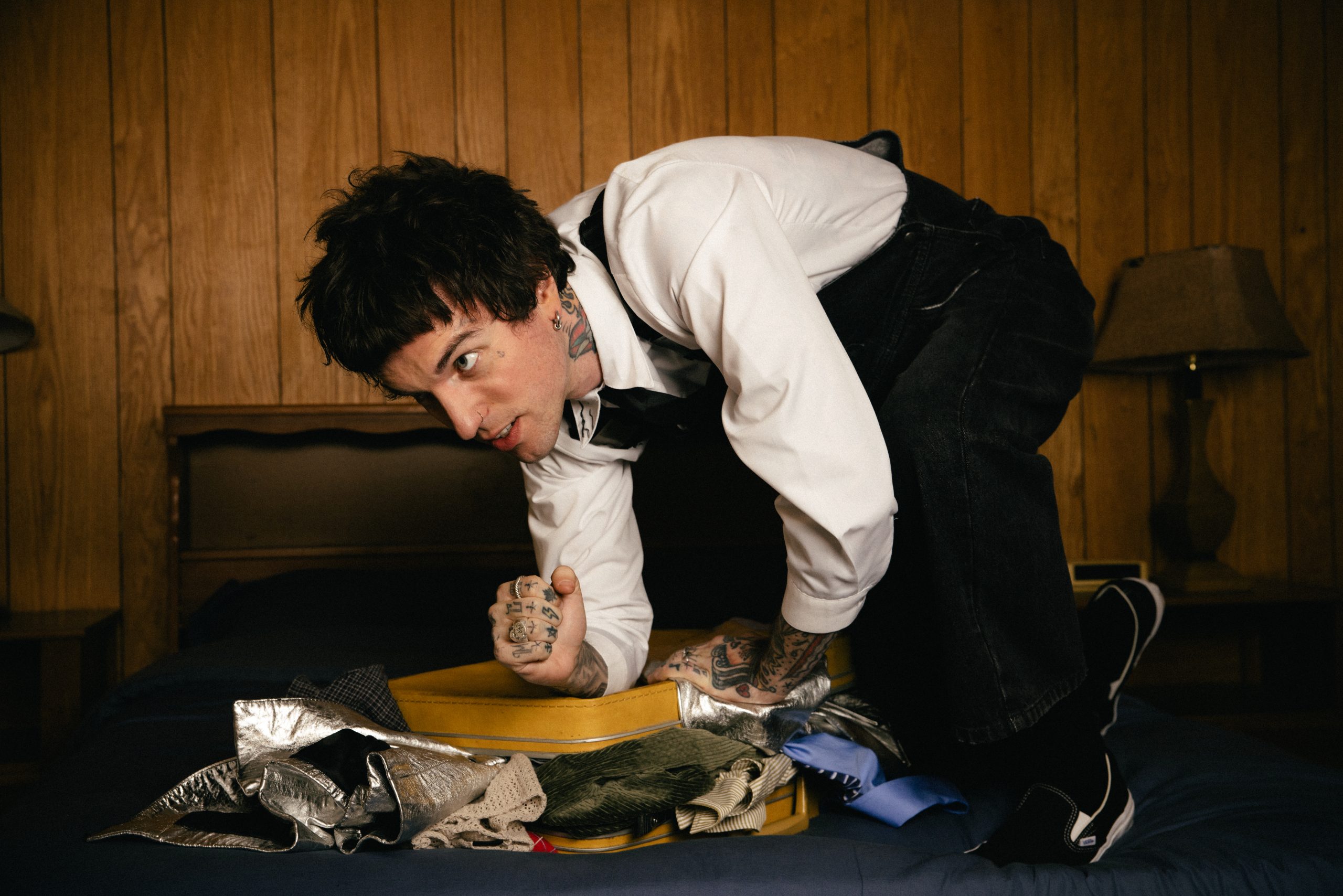
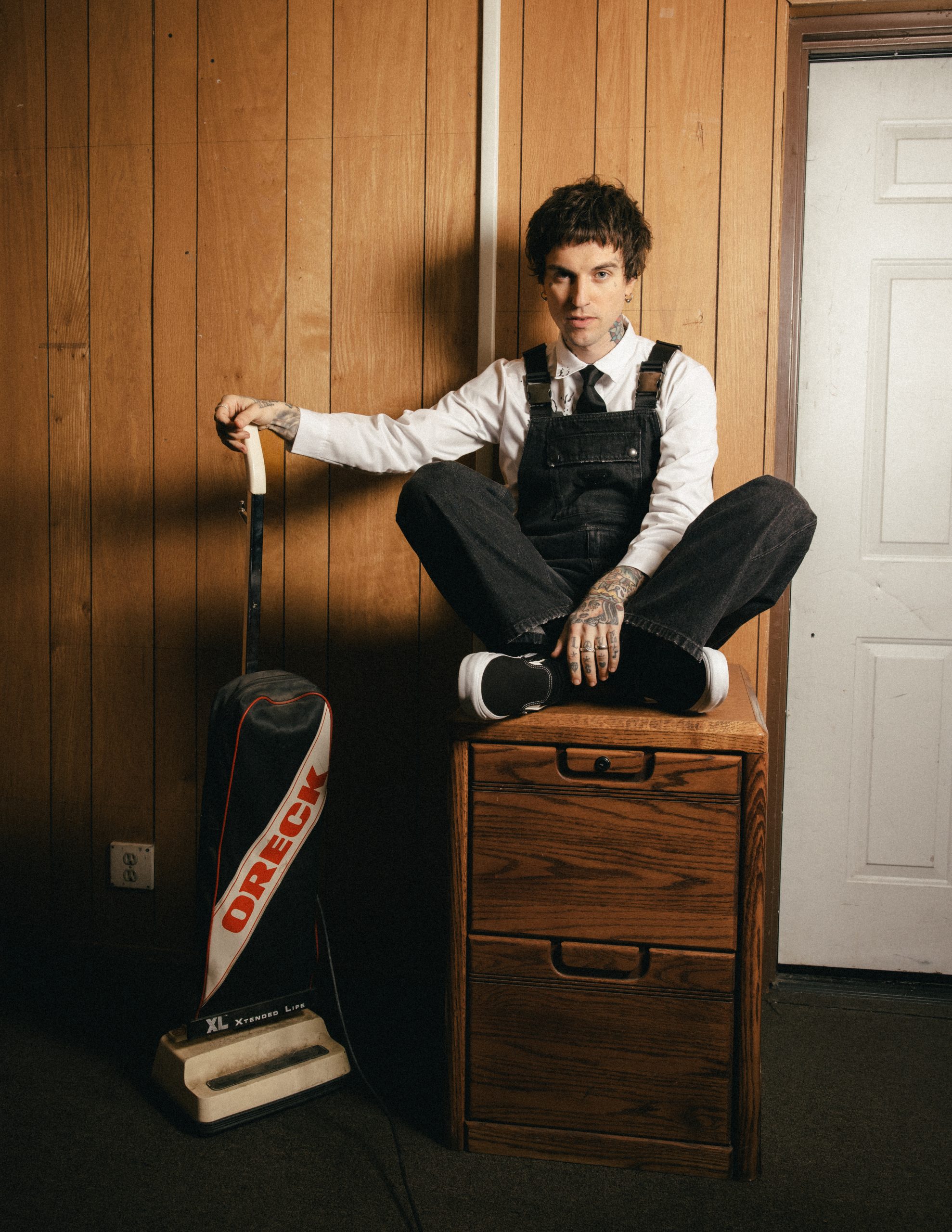
Is that how you think of your career? As a nine-life thing?
Kind of. I’m 35 and just now hitting stride. I always say I’m unkillable because I should be dead. I don’t know. I’ve just been doing this for so long and getting nowhere for so long, and then finally some successes found me. But yeah, I always joke about having nine lives.
Even from Careful What You Wish For to Chin Up, Beautiful, how do you think you’ve grown as an artist? What’s different in your process?
So much. I used to mostly make music in my bedroom by myself. I had friends that were producers send beats, and then I would do the rest alone. Until I finally discovered Keith (“Ten4” Sorrells), who I’ve made the last three albums with. He’s a producer. Something just clicked there. He plays every single instrument, and the possibilities became endless as far as making rock and alternative music.
Collaborating is a whole different approach to me. Even writing songs by myself, I wouldn’t write down lyrics, I would just figure out the song by singing onto the mic, freestyling. But now, I don’t get in the booth and record until the song is completely written. It’s Keith and I bouncing ideas, creating parts, me singing guitar parts to him, and him playing stuff back to me. It’s a whole different process, and I think it makes the music a lot more interesting.
Well, something else that’s different is that for your first album you put together a lot of songs that you liked that were ready, whereas for this one you’ve built a whole world and story for it.
It was nice to be able to do that, because I had success out of nowhere with Sleepyhead, and the nature of things nowadays is that it’s all very fast. A song might live for two weeks, and then you have to do something else. I’ve been playing like this, just trying to snowball it and actually build a fan base and a career. But now, with Chin Up, Beautiful, I was actually able to conceptualize what this world is before even writing any of it. I met with Brendan Barone, who directed all the music videos for it, and Andrew Reid, who helped me creative direct, before even finishing the album. So starting to build out the visual ideas while writing the music was a whole new approach, and it was so fun.
I’ve always been very visual. I went to film school. I would draw as a kid all the time. I was a visual artist. So for me to actually get to build a world that I saw in my head, with the visuals and the music all together, felt really special. I mean, it’s the most proud I’ve ever been of anything, because I feel like I’ve never gotten to be this conceptual.
It’s the way I was feeling about the world. I felt like the world was kind of in a dark place, and maybe it still is. I was feeling pretty hopeless about humanity, and that definitely shaped the world I built with the album. That character, that characterized version of myself, is stuck in this simulation that he wants to get out of and can’t, and it reflects how I feel about some stuff in the world.
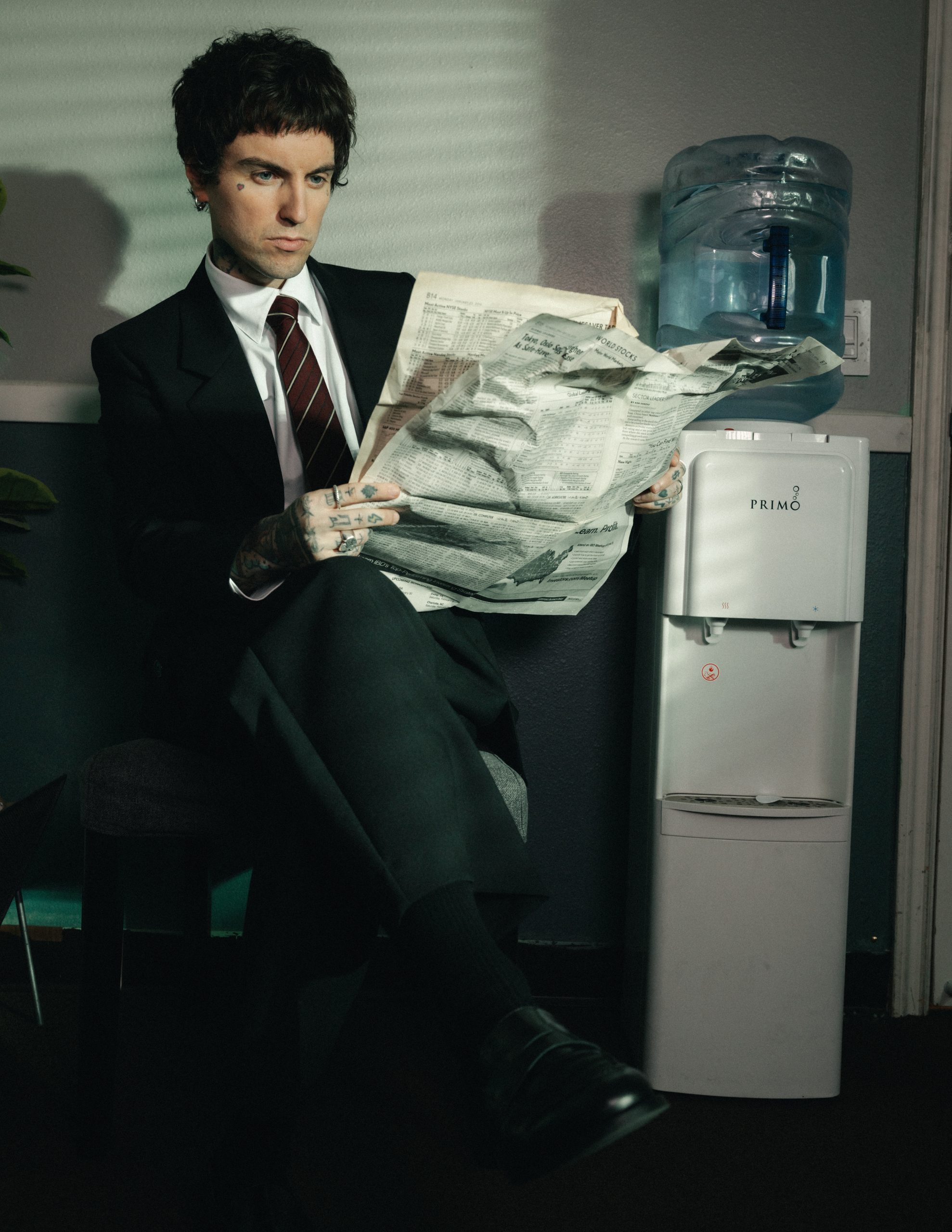
Even beyond the visuals of the album, you have so many visuals within your lyrics. From Icarus to being a mannequin to white butterflies in the sky. Some of the songs you can almost see as a film. Does that come naturally to you, or do you build it like that on purpose after learning it in film school?
I think it’s because I have always been so visual, and that came before the music in my life, music is the last artistic endeavor I’ve discovered. Everything was visual before the music, so I think that helps shape how I write music and how I see things. In the studio while writing, I’m already thinking about what the video is going to look like. I’ve even written songs from the point of view of a movie character. That’s just how my brain works, and it always has. It’s not a conscious thing, but I have to be able to see what I’m saying.
You’ve talked before about having a lot of inspiration from the UK, can you expand on those?
Yeah! Oasis, Radiohead. Growing up it always felt like the coolest. Even as a kid, what I was raised on from my dad is your Ozzy Osbournes and artists like that. I just have always felt like the coolest stuff comes from the UK and Europe.
What do you reference when you’re making music? What feelings are you hoping to evoke?
I reference my past life a lot. For a long time, I wasn’t getting anywhere, wasn’t progressing, so I was turning to other things to hide how I was feeling and suppress it all. I dealt with addiction and a lot of depression and loneliness, so I’m always pulling from that. I’m in a great place in my life now. I’m sober, I’m married, I’m happy. So I often like to pull from the darker times, when I didn’t write a ton because I felt like a failure and was avoiding everything. Now that I’m clear-headed and in a good place, I’m able to go back there and articulate what I was going through.
I feel like music, as a listener and a fan, was the only thing I had back then. It was how I coped, other than alcohol and drugs. I see that in my fans, how much my music is doing that for them, and that’s always the kind of music I wanted to make, the kind of difference I wanted to make. Of course there are the horny songs, and we like to feel sexy and get sexy [laughs]. But I think the core of the fan base, and the reason this has all started to escalate so quickly, is the emotional connection, the fact that it comes from a real place and helps people with real problems.
That’s at the core of my artistry. It’s always what I’m going for: helping people who are struggling.
That’s a really beautiful way to talk about the way sobriety affects artistry, and how it’s more about being clear-headed.
I used to think I had to be completely depressed and messed up to be an interesting artist. I used to think that if I’m happy, I won’t be able to write songs.
I think a lot of people think that. On being happy, a partner can really affect the trajectory of your career. You and your wife do the same thing, you’re both really passionate about music. Has she affected the path your music has gone down?
When I met her, it was to write with her for her rock album, and that was so inspiring to me. It definitely shifted where I was at musically and made me want to go further for the type of rock music that I really love, as opposed to what was popular at the time. So she definitely inspired me to take a leap of faith and trust my gut, which then turned into me making Sleepyhead and discovering this new sound for myself, which has changed my life.
I think she’s always going to be one of the most inspiring people to me because she’s amazing, she’s a world-class talent. She inspires me to actually try to be great. And being in love is the most inspiring thing there is for me.
I always think looking at the first song and the last song of an album gives you a good arc, because it’s like the first and last chapters of a book. How do you think Icarus and Chin Up, Beautiful, speak to each other as songs?
I think Icarus starts out very dramatically. I mean, they’re both very dramatic in their own ways, but the concept of Icarus is someone who didn’t make it, someone standing on the roof of a building who wants to feel known even for a moment, and if he has to jump off the building just for that split second for people to notice him in the sky, he will. That’s really pulling from where I was a long time ago and how I felt. I was that person, doing drugs just to feel something and raise my self-esteem, even momentarily. When you get to Chin Up, Beautiful, you’ve got the things you wanted, but you’re still scared to look outside because you don’t like what you see. None of it mattered. You’re still looking around and not liking it.
“Chin up, beautiful” sounds really sweet and endearing, but there’s a darkness to it. It’s kind of “if you don’t like it, just close your eyes”, which is a horrible thing. Just pretend it’s not there. So it’s a sad ending. But I think some people will probably find hope in that song too. A lot of people I’ve shown it to have been like, “oh, it’s a hopeful ending,” and I’m like, “Sure, if it is for you, then it is.” But for me, it starts off as “I just want to be noticed,” and then it’s “smile, you’re on camera, you’re getting noticed, but you better not show your emotions.” Maybe the thing you wanted isn’t gonna make you happy.
Yeah, that’s how I felt listening to the end of it. Also, particularly being a woman, I think listening to someone say “chin up, beautiful” is so condescending. Don’t tell me what to do.
Exactly! I feel like it’s such a backhanded way to say it. It’s like someone going through something and you being like, “yeah, but it could always be worse.” It’s like, “oh, so then it’s not real, what I’m feeling?” So I just think when the world is ending, which is the theme of this album, the simulation ending, “chin up, beautiful” is the worst thing you could say in a moment like that. So I liked putting that darkness into something that sounds so sweet.
Is there anything else you’d want people to know before diving in to the album?
No, just tell me what you think!
I would recommend people watch the visuals with it.
Yeah, that’s one thing I’m really proud of, the visual storyline through it all. Chin Up, Beautiful being the last video, but it’s actually the prequel to Disassociate, the way it ends is like, “oh, it’s a cycle, it’s a loop that he’s stuck in.” The real fans who really dissect it will get it, and I wanted to leave it a little bit mysterious. But there’s definitely a through line for all of them.
I really like that. I like when people are that intricate in making projects. I’m going to let you get back to rehearsal, thank you for speaking to me on release day! Congratulations!
Thank you, appreciate you!
Jutes’s new album Chin Up, Beautiful is out now.
Interview Natalia Albin
Photography Josh Aikin