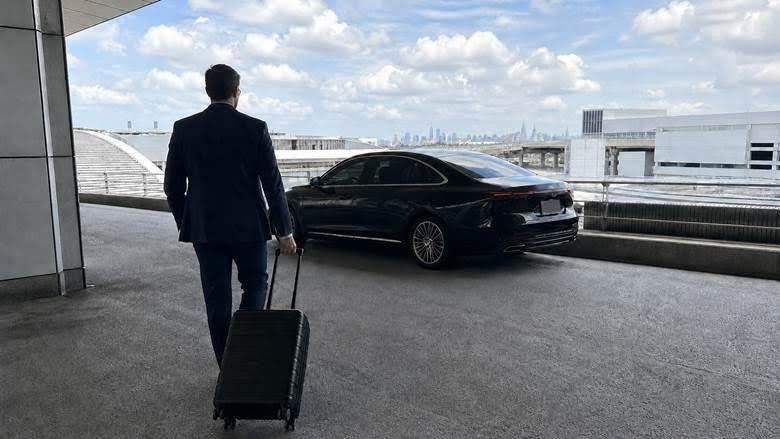
You spent the flight curating the arrival in your head. The dinner you’ll make, the show you’re in town for, the friend you’ll surprise. Then the wheels touch down and the fantasy meets the one part nobody plans, the ninety minutes between the gate and the city, which quietly set the tone for everything after.
First, which New York are you landing in?
There is no single New York airport, and treating three as one is how a good trip starts badly. Check the ticket, because plenty of flights sold as New York land in New Jersey.
· JFK — far out in southern Queens; grand, international, and a long way from most of Manhattan.
· LaGuardia — closest to Midtown and freshly rebuilt, but with no train of its own.
· Newark (EWR) — across the Hudson, with a brand-new Terminal A, and for a large slice of Manhattan closer in time than the map admits.
What an airport transfer even is
An airport transfer is the pre-arranged ride between the airport and your door, booked ahead at a set price rather than improvised on arrival. It might be a shared shuttle, a private sedan, or a chauffeured SUV. The common thread is that the ground leg is planned, not left to whatever the curb offers, which is the entire reason people who travel for a living use one. It is the difference between arriving and simply landing.
For a visiting traveler the practical upshot is that the ground plan is worth deciding before the wheels leave the origin, not after they touch down at the destination. The city rewards the arrival that has already been solved. A pre-booked transfer means the price is known, the car is committed, and the only thing left to do on landing is walk to it. Improvising the same leg from a crowded arrivals hall, in a queue, watching a fare climb, is how a promising first evening in New York quietly loses its first two hours.
Your three ways into the city
· The train — cheapest, around $17, and sometimes fastest in bad traffic, though it usually ends with a subway or cab to your actual address.
· The taxi or rideshare — the default, and where arrivals most often go sideways: surge peaks with every arrival bank, and the walk to the pickup zone is longer than anyone remembers.
· A car booked before you fly — waiting when you land, price fixed, your name on a board. The option frequent flyers quietly settle on.
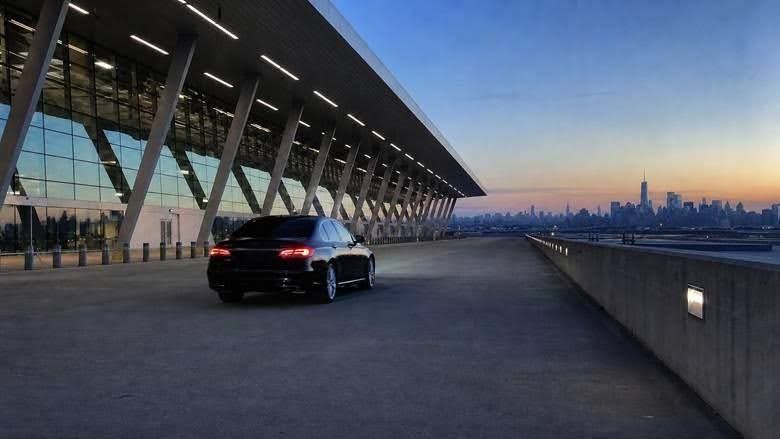
The airport everyone underrates
Here is the twist. If you’re staying on the West Side, in Chelsea, near Hudson Yards, or downtown, Newark is often the smart landing, not the inconvenient one, because the drive avoids the cross-town crawl the Queens airports hand you. The idea that Newark is the airport to dodge is a decade out of date; the terminal that replaced its tired old one is among the newest in the country. For much of Manhattan it is simply the closer airport in the way that counts, which is minutes on the clock, not distance on the map.
That reputation gap is worth a moment, because it costs visitors real time. Newark carries an old story, the inconvenient Jersey airport you accept only when the fare is cheaper, and that story predates the new terminal, the rebuilt roads, and a decade of the Queens airports getting more congested rather than less. Today, for a guest staying anywhere along the Hudson-facing half of Manhattan, landing at Newark and stepping into a waiting car is frequently the fastest, calmest arrival the city offers. The travelers who work this out tend to keep it to themselves. They breeze in from New Jersey while everyone else is still inching along the Van Wyck from JFK, and they reach the dinner, the opening, or the hotel with the evening still ahead of them. It is less a secret than a habit the seasoned pick up: choose the airport the map underrates and the clock rewards.
Arriving for the thing you came for
For anyone in town for a moment rather than a meeting, the arrival is part of the event, not a preamble to it. A stylist landing for a Fashion Week fitting, an artist in for an opening, a musician arriving the afternoon of a show, a writer with a launch that evening, all share the same problem: the schedule starts before the jet lag ends. A blown transfer does not just cost time; it costs the calm you need to walk into the room as yourself. This is where the pre-booked car quietly earns its place. The car tracks the flight, absorbs the delay, and delivers you to the hotel with enough margin to change, breathe, and arrive at the thing looking like you meant to be there. The people who make the night look effortless almost never leave the ground leg to chance.
A word on cost, without the spreadsheet
None of this means the most expensive option is always the right one, and a good operator will say as much. The train is a genuinely smart choice for a solo traveler with a light bag and a loose afternoon; at around $17 it is hard to argue with. A rideshare is fine at a calm midday hour for a short hop. The car earns its premium in specific conditions: an arrival with luggage, a group, a late night, a tight schedule, or the simple wish not to think about any of it after a long flight. Match the spend to the moment, not to a rule, and the choice usually makes itself.
The habit worth keeping is to decide before you fly rather than at the curb, when the surge is highest and the patience is lowest. A ground plan made in advance is cheaper, calmer, and almost always faster than one improvised on arrival.
Arriving like you meant to
A few small habits separate stepping off a plane frazzled from stepping off it ready. Book the ground leg before you fly. Give the transfer the same care you gave the seat. And if you land at Newark, let a flat-rate EWR Car Service handle the part that used to be the gamble, whether you’re heading into Manhattan or out into New Jersey. You chose the better flight. Choose the better landing.