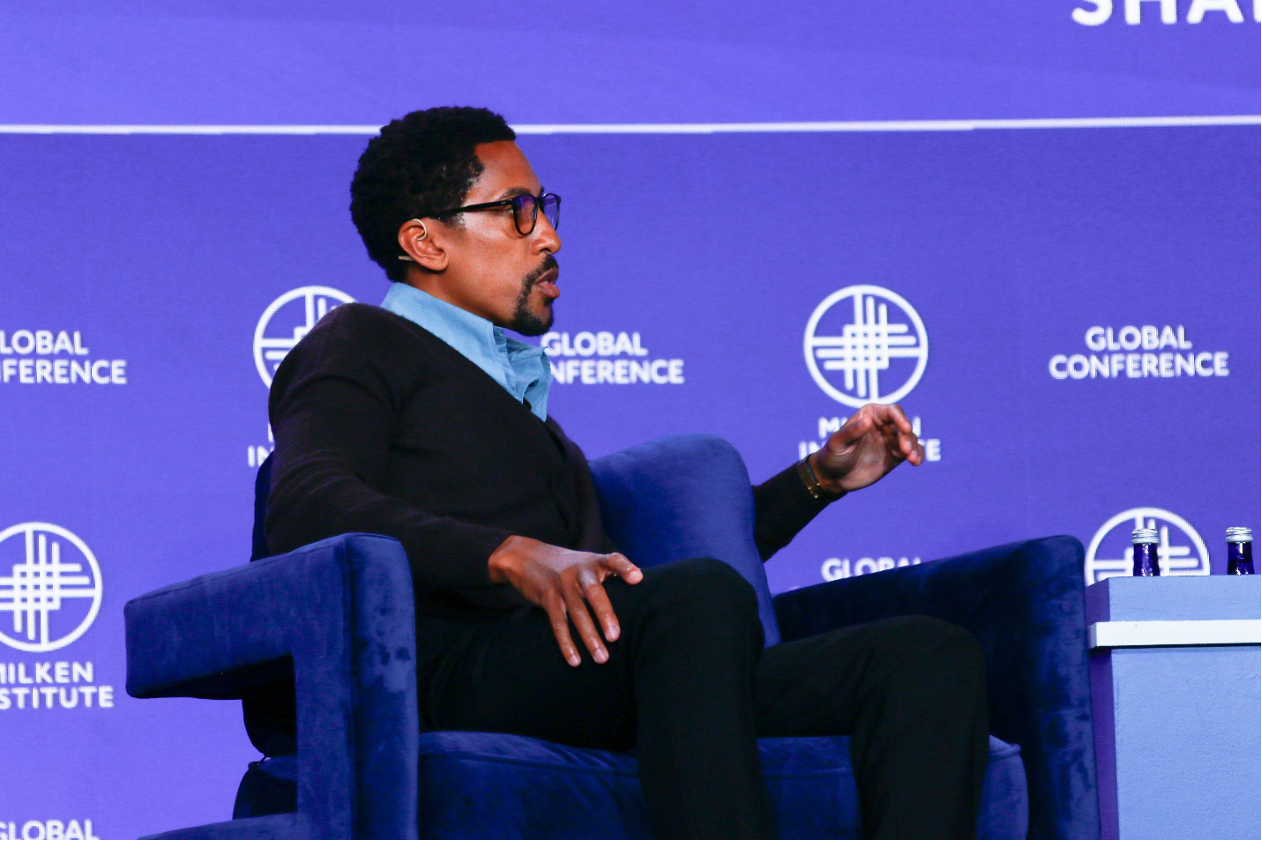
The music industry has always been driven by creativity. Artists write songs that become cultural touchstones, influence fashion and language, and help shape the way generations experience the world around them. Yet for much of the industry’s history, the people creating that value have not always maintained control over the assets they produced.
Few executives have spent more time discussing that reality than Larry Jackson.
Throughout his career, Jackson has become one of the most influential advocates for creator ownership, arguing that the future of music depends not only on artistic success but on economic participation. While many industry leaders focus on streaming numbers, chart positions, or audience growth, Jackson has consistently pushed a broader conversation: how can artists build lasting wealth from the culture they create?
As the music business continues to evolve, his ideas are gaining increasing attention from artists, entrepreneurs, investors, and industry observers alike.
A Career Built Around the Changing Music Business
Jackson’s rise coincided with one of the most transformative periods in music history.
Over the past two decades, the industry has experienced a series of dramatic shifts. Physical album sales declined. Digital downloads emerged and then gave way to streaming. Social media transformed artist marketing. Technology reshaped how music is distributed, discovered, and consumed.
Few executives have had a front-row seat to these changes quite like Jackson.
Through leadership roles at major companies and his work with some of the world’s most influential artists, he developed a deep understanding of both the opportunities and limitations within traditional music business structures.
While technology changed how music reached listeners, Jackson observed that many fundamental questions remained unresolved.
Who owns the music? Who controls the intellectual property? And who benefits most from the long-term value generated by successful creative work?
Those questions would eventually become central to his broader mission.
Why Ownership Matters More Than Ever
For many years, success in the music business was largely defined by visibility.
Artists sought radio airplay, television appearances, magazine covers, and commercial sales. While those goals remain important, Jackson has argued that visibility alone is no longer enough.
In today’s digital economy, ownership often determines who benefits most from success.
A song can generate value far beyond its initial release. Music may be licensed to films, television shows, advertisements, video games, social media campaigns, and emerging digital platforms. Catalogs can continue producing revenue years or even decades after a song first reaches audiences.
Because of this, ownership has become one of the most valuable assets in entertainment.
Jackson has repeatedly emphasized that creators should think beyond immediate earnings and consider how intellectual property can serve as a long-term foundation for financial growth.
The concept is simple but powerful. Instead of focusing exclusively on what a song earns today, artists should also consider what it might be worth ten, twenty, or thirty years from now.
Changing the Conversation Around Artists
One of Jackson’s most significant contributions to the industry may be the way he talks about creators themselves.
Traditionally, artists have often been viewed primarily as performers. Jackson encourages a broader perspective.
He frequently describes artists as entrepreneurs, founders, and business leaders whose work extends far beyond the recording studio.
Modern artists build brands. They influence consumer behavior. They launch businesses. They create intellectual property that can be leveraged across multiple industries.
Viewing creators through that lens changes the conversation.
Instead of focusing solely on entertainment value, the discussion shifts toward asset creation, ownership structures, and long-term wealth building.
This mindset has resonated with many younger artists entering the industry today. Increasingly, creators are looking beyond traditional measures of success and seeking greater control over the businesses surrounding their work.
Jackson has helped popularize the idea that creative talent and business ownership should go hand in hand.
The Importance of Economic Empowerment
The ownership conversation carries particular significance because of the broader history of the music industry.
Many of the most influential cultural movements in modern music were driven by Black artists. From jazz and blues to soul, hip-hop, and R&B, these creators helped define the sound of multiple generations.
Their influence extended well beyond music itself. Entire industries, brands, and cultural trends were shaped by artistic innovation emerging from these communities.
Yet many observers have noted that financial participation did not always reflect that level of cultural impact.
Jackson has frequently highlighted the importance of closing that gap.
Rather than focusing exclusively on recognition, he has advocated for systems that help creators participate more fully in the economic value generated by their work.
His approach reflects a broader understanding that ownership can serve as a powerful mechanism for creating opportunity, stability, and long-term wealth.
For Jackson, empowering artists means more than helping them achieve commercial success. It means helping them build assets that can continue creating value throughout their careers and beyond.
Gamma and a New Approach to Creator Partnerships
Jackson’s philosophy has found a practical home through Gamma, the media and technology company he founded.
The company’s broader mission reflects many of the principles Jackson has championed throughout his career, particularly around creator ownership and intellectual property.
Rather than approaching artists solely as talent to be developed, Gamma has focused on creating partnerships that emphasize collaboration, flexibility, and long-term value creation.
This approach reflects a growing trend across entertainment industries.
Creators increasingly want more control over how their work is distributed, monetized, and expanded into new opportunities. They are seeking relationships that recognize their role not only as artists but as stakeholders in the businesses built around their creativity.
Gamma’s model aligns with those priorities.
While every artist’s situation is unique, the company’s broader philosophy illustrates how industry structures are evolving to meet the demands of a new generation of creators.
Technology Is Creating New Opportunities
Jackson’s optimism about ownership is closely tied to technological change.
The digital era has dramatically lowered barriers to entry for artists. Musicians can now reach global audiences without relying on many of the traditional gatekeepers that once controlled distribution.
Streaming platforms have expanded access. Social media has enabled direct audience engagement. Independent creators have more tools than ever to build sustainable careers.
These developments create new possibilities.
Artists who understand ownership, branding, and intellectual property can increasingly leverage technology to maintain greater control over their careers.
Jackson has consistently encouraged creators to view these technological shifts as opportunities rather than obstacles.
In his view, innovation should not simply make content easier to distribute—it should help creators build stronger economic foundations.
Looking Toward the Future
As the music industry enters its next chapter, debates surrounding ownership, compensation, and creator rights are likely to remain at the forefront.
Artificial intelligence, emerging digital platforms, and new forms of media distribution will continue raising important questions about who controls creative assets and how value is distributed.
Jackson’s work suggests that ownership will become an increasingly important part of those conversations.
The executives, artists, and companies that succeed in the future may not simply be those that generate attention. They may be those that create systems allowing creators to participate meaningfully in the value they produce.
That idea has been central to Jackson’s career for years.
By encouraging artists to think like owners, emphasizing long-term wealth creation, and building businesses designed around creator empowerment, he has helped advance one of the most significant conversations shaping modern entertainment.
For Larry Jackson, success is about more than music. It is about ensuring that creators have the opportunity to own, build, and benefit from the cultural value they bring into the world. As the industry continues to evolve, that vision may prove to be one of his most enduring contributions.