Whitechapel Gallery’s programme for 7 February 2026 includes “Community Darkrooms and DIY Cultures with Four Corners”, described as a free, open access drop in where you can try analogue activities with no experience required.
That listing lands at a moment when “anti AI” talk is everywhere in photography. But London’s darkroom return is not really about banning tools. It is about restoring a visible chain of making, and doing it with other people in the room.
What does a “community darkroom” actually mean in 2026?
Whitechapel’s framing is social and practical: it links DIY culture to self organising histories, and it points back to the Half Moon Photography Workshop, formed in East London in 1975, which treated photography as a tool for social change and ran a community darkroom.
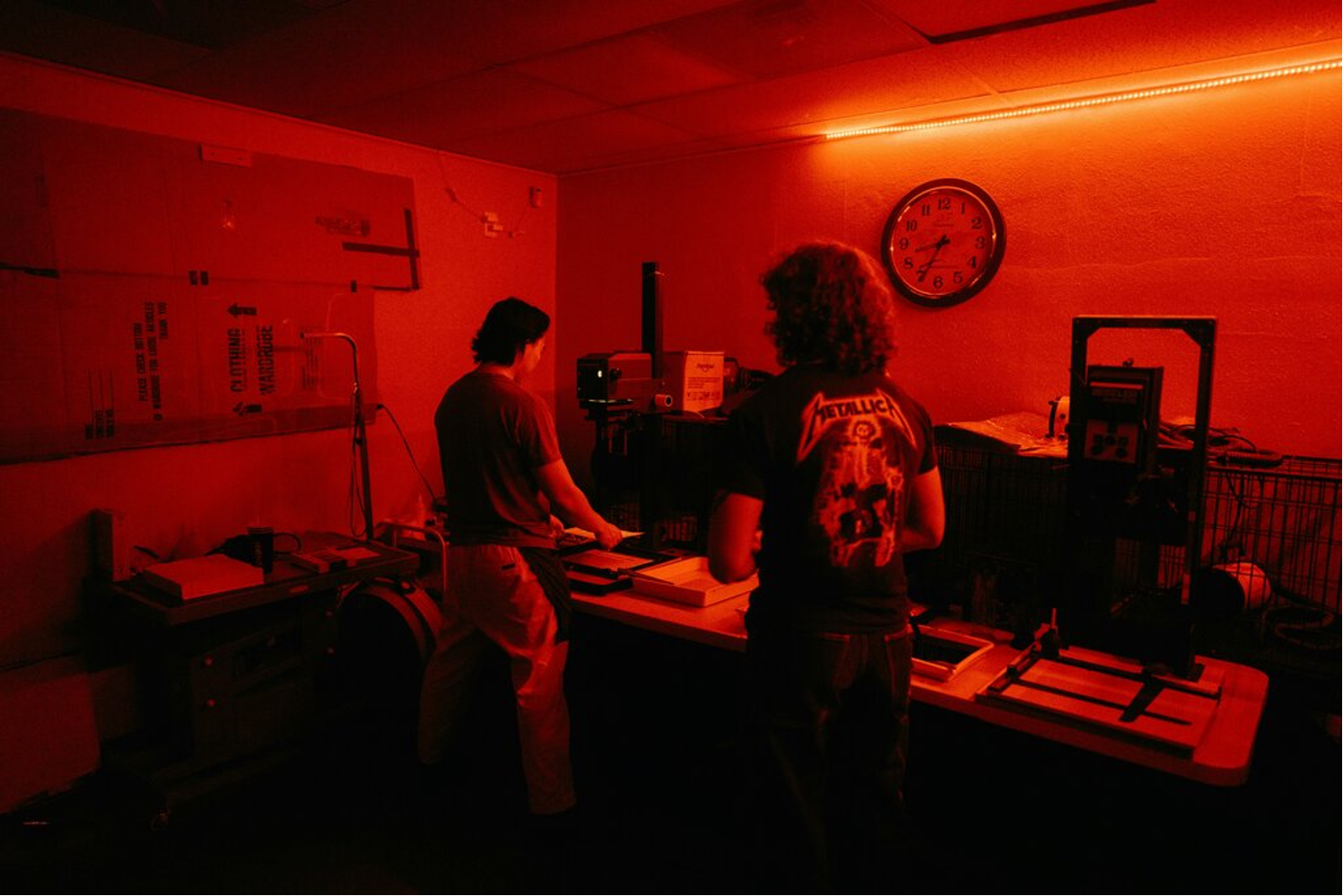
A community darkroom, today, is shared infrastructure plus shared habits. You get enlargers, sinks and safelights, but also the routines that keep the space usable: booking systems, inductions, cleaning, and basic chemical safety. Four Corners says its darkrooms first opened in 1978 and lists facilities including traditional black and white darkrooms, a 32 inch RA4 colour print processor, and 10 DeVere enlargers covering formats from 35mm up to 10×8.
The point is not to be “pure”. It is to get better at decisions: exposure, contrast, paper choice, and when to stop. In a shared space, those decisions are discussable, and that is where learning accelerates.
In brief: A community darkroom is shared kit plus shared discipline. The value is repeatable process, guidance, and access that stays affordable because it is organised.
Where in London can you learn by doing, not by scrolling?
Photofusion in Brixton publishes the basics that matter: sessions are six hours (Tuesday to Saturday, 11am to 5pm), and booking rates differ for members and non members, with maximum print sizes set by each room.
Darkroom London in NW5 offers priced access sessions across weekdays and weekends (four hour and seven hour slots), plus guided access and one to one sessions, which can be a sensible first step if you want help before you burn through paper.
Four Corners in Bethnal Green publishes annual membership (£50, or £30 concession) and member booking rates (£25 per four hours for black and white, £30 for colour), with a short induction required.
- Choose by the learning ladder: induction first, then supervised access if you need it, then independent sessions.
- Budget for paper before gear: room hire is fixed, test prints are not.
- Check colour capability early: not every venue supports it.
- Bring what is personal: negatives, paper, and notes on what you want to try.
One modern pressure point is documentation. Your print may start in a tray, but it often ends up in a PDF or on a website. Even in an analogue story, free photo filters can help match exposure in documentation shots so the process reads clearly online.
In brief: Pick a venue by session length and support, then plan how you will show your prints and working notes clearly, without over polishing them.
Is the darkroom really the “anti AI” of photography?
Only if you define “anti AI” as “pro judgement”. A darkroom does not guarantee honesty, but it does force you to work with constraints. Test strips, contact sheets and repeat prints make your choices visible, and that visibility is part of why people find the process calming.
Participation and supply both hint at a real analogue uptick. Ilford Photo’s film photographers survey reports over 14,000 respondents from more than 110 countries, and says 71% shot more film than the previous year. It also reports that 90% shot some black and white film, which is the format most closely tied to community darkrooms.
On the manufacturing side, The Verge reported that Kodak has more than doubled its still photography film production since 2015, according to its CEO, amid renewed demand. That does not predict the future, but it does suggest the ecosystem is not being left to decay.
There is also a quiet, practical reason the darkroom feels contemporary: it produces artefacts you can show, from contact sheets to test strips. When you photograph those steps for a project page, free photo filters can help keep lighting consistent, so the viewer focuses on your decisions, not your room’s colour cast.
When you share your results online, the goal is legibility, not a makeover. A small, consistent edit is often enough, and free photo filters can help you keep lighting and tone stable across a set of prints, so viewers can read the differences you made in the darkroom itself.
- Calibration beats presets: test strips teach you to change one variable at a time.
- Feedback speeds learning: printing beside others gives you a second pair of eyes.
- Limits sharpen taste: you stop chasing “more” and start choosing “right”.
- Process builds trust: you can show the work, not only the outcome.
Whitechapel’s event language keeps the focus on networks and access, not on purity. That is the most useful takeaway: the counterpoint to AI is not nostalgia, it is literacy and community infrastructure.
In brief: The darkroom is “anti AI” when it trains judgement and shared literacy. The craft matters, but the social layer is what makes it durable.
How do you start without wasting money, chemistry, or patience?
If you have never printed, start with instruction. Photofusion states that first time printers need to take a course, and it also encourages new users to add an induction when booking so they learn the space and kit.
Then keep your first month deliberately repetitive. Print one negative three times across two or three sessions, with the same paper, and record your exposures. Consistency is the skill that makes projects possible, and it is also the quickest way to stop wasting paper.
Pricing can be used strategically. Darkroom London lists one to one guided sessions from £150, which can be less expensive than a session that produces nothing usable because you were guessing.
- Before you book: confirm your negative size and whether colour printing is available.
- Bring the basics: negatives, paper, a notebook, and a clean sleeve for prints.
- Leave time to wash and clean: do not turn the last ten minutes into a scramble.
- Write everything down: exposures, filters, and what you would change next time.
- Be a good neighbour: reset the enlarger, wipe surfaces, and label your trays.
Four Corners notes that it supplies chemistry for traditional black and white printing (included in the session fee) and supplies everything except negatives and paper, which is typical of well run community spaces.
In brief: Start with guidance, then practise consistency. You save money by saving paper, and you protect the community by treating clean up and etiquette as part of the craft.
Conclusion
London’s community darkrooms are returning as an answer to a modern itch: too many images, too little shared understanding of how images are made. Whitechapel’s February event with Four Corners makes the access and DIY culture side of that story explicit.
Book one induction, print one negative, and leave with notes you can use next time. The “anti AI” part is not a slogan, it is the habit of making decisions you can explain.
FAQ
Do I need prior experience to attend Whitechapel’s event?
The listing describes it as a free, open access drop in with no photography experience required, and it is marked for ages 16+.
How long is a typical darkroom session?
It depends on the venue. Photofusion states its sessions are six hours, while Darkroom London offers shorter and longer slots.
Can I print colour in community darkrooms?
Some spaces support both. Photofusion describes colour and black and white options, and Four Corners lists colour booking rates and an RA4 processor.
What should I budget for beyond the room hire?
Paper is the big variable, because test prints add up. A course or guided session can reduce waste early, and most venues ask you to bring paper and negatives.