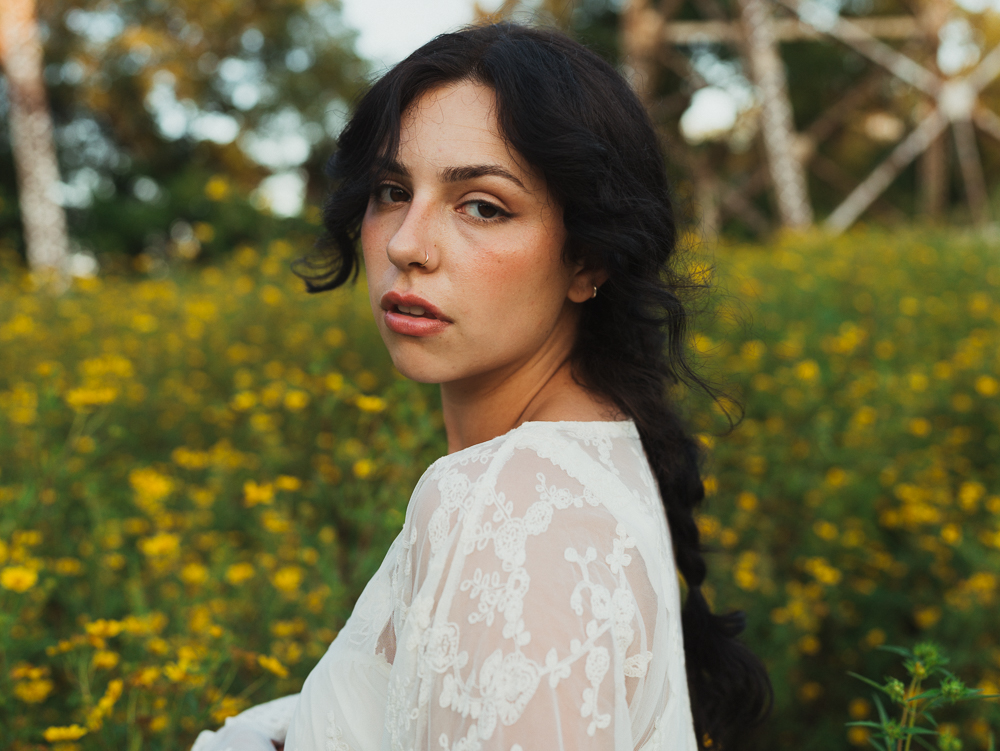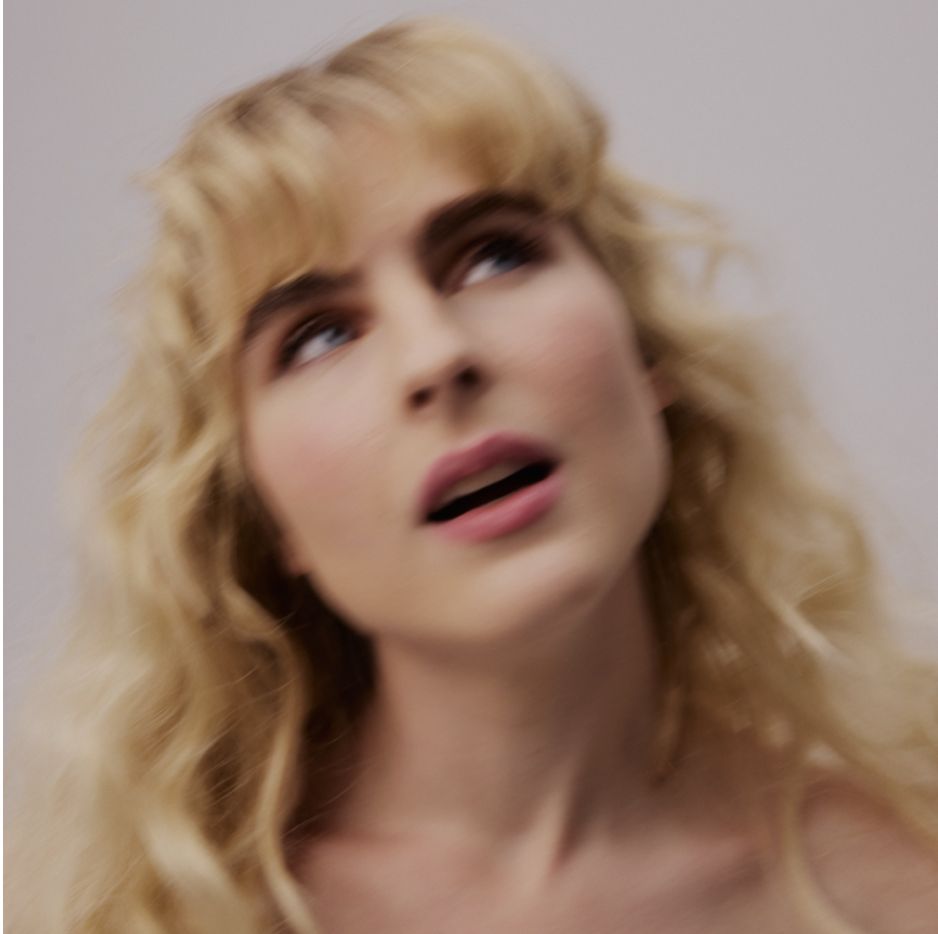
Just two years after performing at Glastonbury, Montreux Jazz Festival and the Paris Olympics, Swiss indie-rock artist Mary Middlefield returns with her second studio album, Will You Take Me as I Am? Across the record, Middlefield confronts questions of identity, self-acceptance and vulnerability, pairing orchestral strings with driving indie-rock arrangements and earnest lyricism.
The album opens with the gentle warmth of ‘Ladida’ before shifting into the more forceful energy of tracks like ‘Take Me As I Am’, ‘Will You Read My Mind’ and ‘Wake Up’. Through this record, Mary captures spectrums of emotions – from intimacy and longing to anger and self-assertion.
1883 Magazine caught up with Mary to discuss the emotional threads running through the album, the evolution of her sound and experiences that shaped her artistry and record.
The title Will you take me as I am? Feels like a very direct question and emotional thread running through the record. What made you frame the album around that question?
I even ask myself that question. I like that at the end of the track, you can hear that sentence repeated. Then I started looking at the common thread of the record, and I thought it really made sense. I had to write a few more tracks for the record. I think I had like five or six tracks at that point, and it started making more sense for me to leave it like this. I also like that we had like “take me as I am” in the track list, which was left without the question, but “will you read my mind” was left with the question. I thought that would go hand in hand as well.
So, there were a lot of questions, like a lot of things I left on purpose in there.
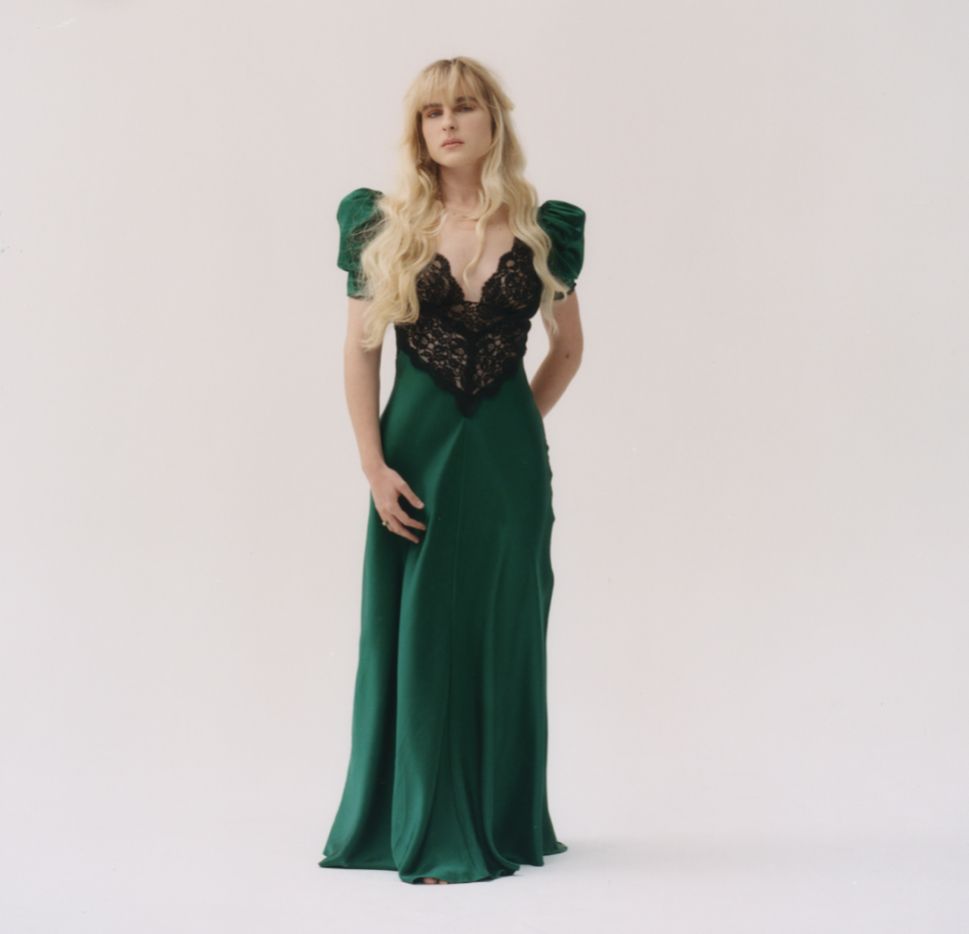
When did you realise you were writing an album, rather than just individual songs? And was there a particular moment where the project began to take shape?
It was about two years ago, maybe. I wrote the first song for the record – It was two and a half years ago.
It was summer 2023, and then I started writing more in August – I had three or four songs by September of 2023, and by the end of 2023 or the start of 2024, I was okay, well, I have like five or six songs, I think we’re making an album out of this.
Every artist goes through a process of discovering their own sound. Was there a moment where you felt you found yours, or did it come through challenges or moments of doubt along the way in your career?
It came with experimentation and seeing what worked and listening to a lot of music and figuring out what I wanted to say, lyrically and musically. We very quickly landed on this rock, opera, landscape, where changes happen every single minute, the dynamics are always shifting, and you never really know what to expect.
So, through looking and listening, I was wondering, what do I enjoy? What do I want to feel myself? And I just wanted to be back in a theatre.
Your background in classical violin subtly appears throughout the record. How does that training influence the way you write songs?
I think it influences everything. I don’t think I could write a melody without that background. The melodies I heard all my life – those hundred, 200, 400, 500-year-old melodies influenced how I hear and write music. Those were the first sounds I ever heard in my life, classical pieces, and they were played the most. I have listened to Bach more than I have played Radiohead in my life. Those melodies are really ingrained in me, and I always have the urge to go classical in some bits, and I love it.
When did you first hear classical music? You mentioned that it was the first kind of music you were exposed to – do you remember if there was a specific piece or moment?
I don’t know when I first heard it. I have no clue, I just remember it always being in my life because my parents love it. My dad used to watch a French TV channel called Mezzo, and he always had it on. My parents also started taking me to the theatre and the opera when I was about two or three years old because I was a really quiet kid.
So, I don’t remember hearing it for the first time. I just remember it always being there.
Milk has a very striking metaphor at its centre. What does the image represent for you emotionally?
A really good friend of mine – my neighbour – once said something that stuck with me. She’s married and has a kid, so her dating life is very much settled. We were talking about mine at the time. I was kind of talking to someone, but not really.
She said at one point years ago, “Well, they’ve put you in the fridge. They don’t need you right now, but they’ll come back when it’s convenient”.
I thought that was a really funny metaphor. She didn’t mention milk specifically, but when she said, “you’re in the fridge,” the only thing I could associate with that was milk because it’s such a banal kitchen item.
When I was writing ‘Milk’, I had huge doubts about my place in the music industry, and about how I saw myself as a writer. I kept thinking about that metaphor. I thought: I can write as much as I want and release as many songs as I like, but will I still be useful to people by the time they finally like what I do? Or will I have already burnt myself out – spoiled, so to speak.
I really admire the lyrics in Milk. When you repeat the line “milk, milk, milk, I’m your bitch,” it feels very direct and honest. It’s such a striking metaphor, and I think that’s what makes the record feel so relatable.
I actually love that line. I almost didn’t keep it because I was worried it might sound too harsh for people to hear.
But I think it’s important. That feeling is something women especially understand – not just because people might call us that word, but because we’re often put in a position where we’re expected to wait. Whether it’s by society or by old social standards, we’re told to be quieter, to wait for someone to choose us, or to wait for the right opportunity.
For me, it was about working towards something and waiting to be accepted. At one point, I really did feel like a dog – like I was waiting around for approval. That’s why the dog image also made sense to me as a metaphor.
In the track, ‘Take Me as I Am,’ there’s a feeling of wanting to be accepted without needing to prove yourself. Was that song written from a place of seeking validation, or was it more about self-acceptance?
At first, I was really just writing random words. I wrote those lyrics about two and a half years ago, around September 2023, in a little makeshift studio that some friends and I were sharing at the time. A colleague of mine sent me a guitar line. I had sent him a riff about three years earlier, and he sent it back slightly modified over an instrumental with guitar, drums, and bass. I sat with that instrumental for a few days and just listened to it.
Then I went into the studio and started writing whatever came to mind. Those verses are basically pure ADHD brain malfunction, I would say. I was just writing things down without thinking too much. Very quickly, I landed on the phrase “will you take me as I am,” almost by coincidence. At one point, there was a lyric that said, “Will you take me as I am, I’ll always be your little lamp,” which I thought was funny, but I didn’t keep it because it felt a bit cringey.
All the lyrics were written in one afternoon. I didn’t feel like I was trying to express something specific at the time – I was just writing.
Then, a couple of months later, I listened to Blue by Joni Mitchell, and I think in the song ‘California’ she repeats that same phrase. At first, I thought, “Oh, great, I used the same line in my song.” But then I liked the idea that maybe I had Joni Mitchell somewhere in my mind while writing it.
Some of your lyrics in ‘Wake Up’, especially the chorus, feel very unapologetically raw and unfiltered. Do you ever hesitate before putting those emotions into your music?
So, I don’t hesitate when I put them into the music. I don’t even really think about them that much until the song is almost finished – usually when it’s about to be mastered.
I feel like when I write, I don’t really think about the consequences of what’s going to happen once the song is released. The track actually used to have a different title, which, to me, still feels like the more logical title.
What was the title?
The title used to be “Die Die Die”, and all my set lists are still written that way because I call it that every day.
But my team and I agreed to change the title. It wasn’t about censorship – it was more about acknowledging what’s going on in the world and knowing that we are living in a sensitive time. Naming a track with three aggressive words like that didn’t feel right anymore.
This song is an image of me looking straight in the mirror and nobody else. It’s deeply personal, and it’s that anger and that frustration I used to have with myself, which took me to very dark places. I didn’t think about the consequences of that song at all until it was mastered.
What’s difficult to admit in a song?
Nothing to me. I am somebody who is pretty earnest and sincere in real life. I don’t like to hide things; I don’t like to lie to anybody. Crafting a lie takes more effort than just telling the truth. Because of that, I wouldn’t really know how to lie in a song. If I’m not being truthful, I don’t see the point of writing it.
That honesty really comes across. Do you think authenticity in music is becoming harder to protect with things like AI?
That’s another scary development. Some artists are really pushing back against it. I keep seeing Paris Paloma on my TikTok feed – she has a song called ‘Miyazaki’ coming out that touches on this.
With music, we’re not safe either, obviously. But one thing AI can’t really replace is the connection between an artist and their audience. People still want to show up to concerts.
I went to see ABBA Voyage a couple of years ago, and I found it uncanny – almost creepy. Hopefully, that kind of thing doesn’t become the norm. I feel like the whole AI thing is scary. It’s taking over phones, social media, and even people’s homes. When ChatGPT first came out, I was fascinated by it like everyone else. But over time, you start to see the broader consequences, and it becomes a lot more complicated.
I saw on social media that you really enjoy knitting, and I saw that you made a sweater with ants on it. Were they printed ants or actual ants?
They’re knitted into the pattern – not real ants. There’s a designer I follow named Meredith Wilmot from Arizona. She’s an entomologist, so she studies insects, and that’s a big part of her work. She creates knitting patterns that feature insects.
Most of her designs include bugs, which I love because they’re quirky and unexpected. I actually have two insect sweaters now – one with ants and another with beetles. People are always surprised when they see them because you don’t usually see someone walking around wearing a sweater covered in insects. I think it’s funny, and I like that it’s unusual.
Do you see any similarities between knitting something piece by piece and composing a song?
I don’t know about that because making a song doesn’t take me as long as knitting a sweater. I use knitting as a tool; as a form of meditation, a way to pass time or to focus on something else whilst on tour and when I’m feeling a little emotionally distressed. I really like to knit to calm down for a little bit.
Over time, I realised how satisfying making your own clothing is, how much more durable it is and how much fun it is to choose your own materials and yarn. I think it’s the same as with music, you choose your lines, you choose your musicians, you choose how you want to make your production, and it all comes together gradually.
After playing events as large as Glastonbury and the Paris Olympics, has your definition of success changed at all?
No. But I think success is different for everyone. My definition of success might not align with someone else’s. But I think I’m just a very driven person. I always want more from life. I want to see more places, play to bigger crowds, and connect with more people. For me, that connection is the real goal.
Other things come along with that, of course, but they’re not my main focus. What matters most to me is reaching people and putting out artistically cohesive, meaningful projects. But even now, I’m already thinking about how to do something even better next time and continuing to work on my craft. Looking at the journey and looking at the progress, statistically, is more important than just achieving a certain milestone.
The album balances vulnerability with a sense of defiance. Was that a contrast you were trying to capture intentionally?
Not really, I wrote from the heart and wrote what I thought would be fun and funny. I do think at times this record is funny or really random. I love a good random moment where you think, “Why did she think of that precisely at that moment?” I just thought it works with the album, it works with the fact that this is the record. The record is a question.
After completing such a personal record, what do you feel you discovered about yourself as an artist or personally?
I discovered that I’m really confident in my work and artistry, which is the first time that has happened. I discovered that I love playing that record live. Thinking about how the songs would sound live was immediately like a huge priority, which I never really did before. I feel a lot more confident in what I want for my future records.
In the future, what would you like to do next sonically, for your next project? Is there anything you’re excited to explore?
I’m still figuring out how it will sound sonically. I really like the ‘rock opera feeling’ in this record, where you feel constant shifts, and it’s very theatrical – that is something I will keep with me.
Thank you for taking the time to speak to me today!
Thank you so much, have a lovely day!
Mary Middlefield’s new album, Will You Take Me As I Am? is out now. Tickets for her show at Edge of the Wedge are on sale now at marymiddlefield.com.
Interview Nancy Anekwe