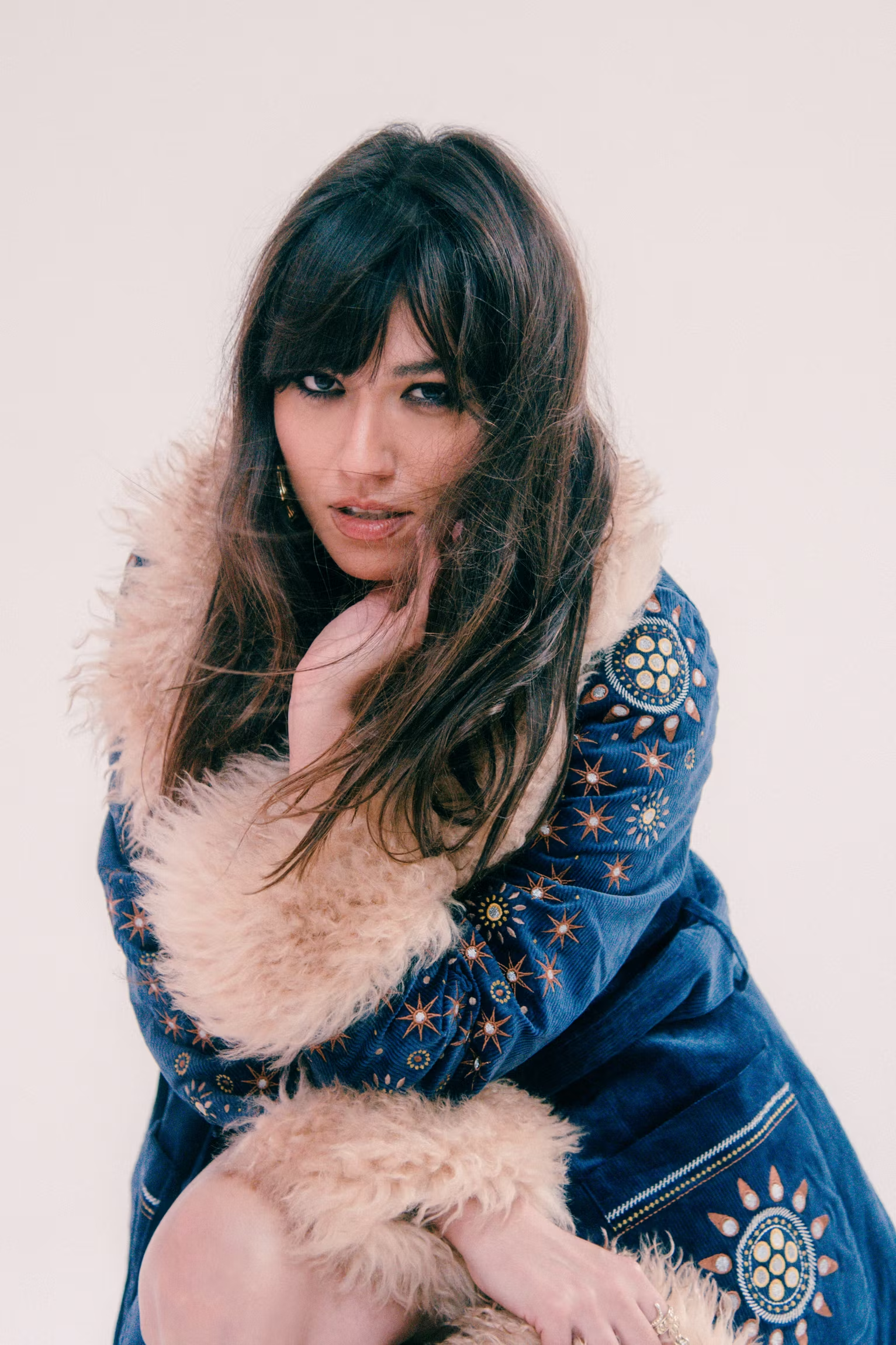
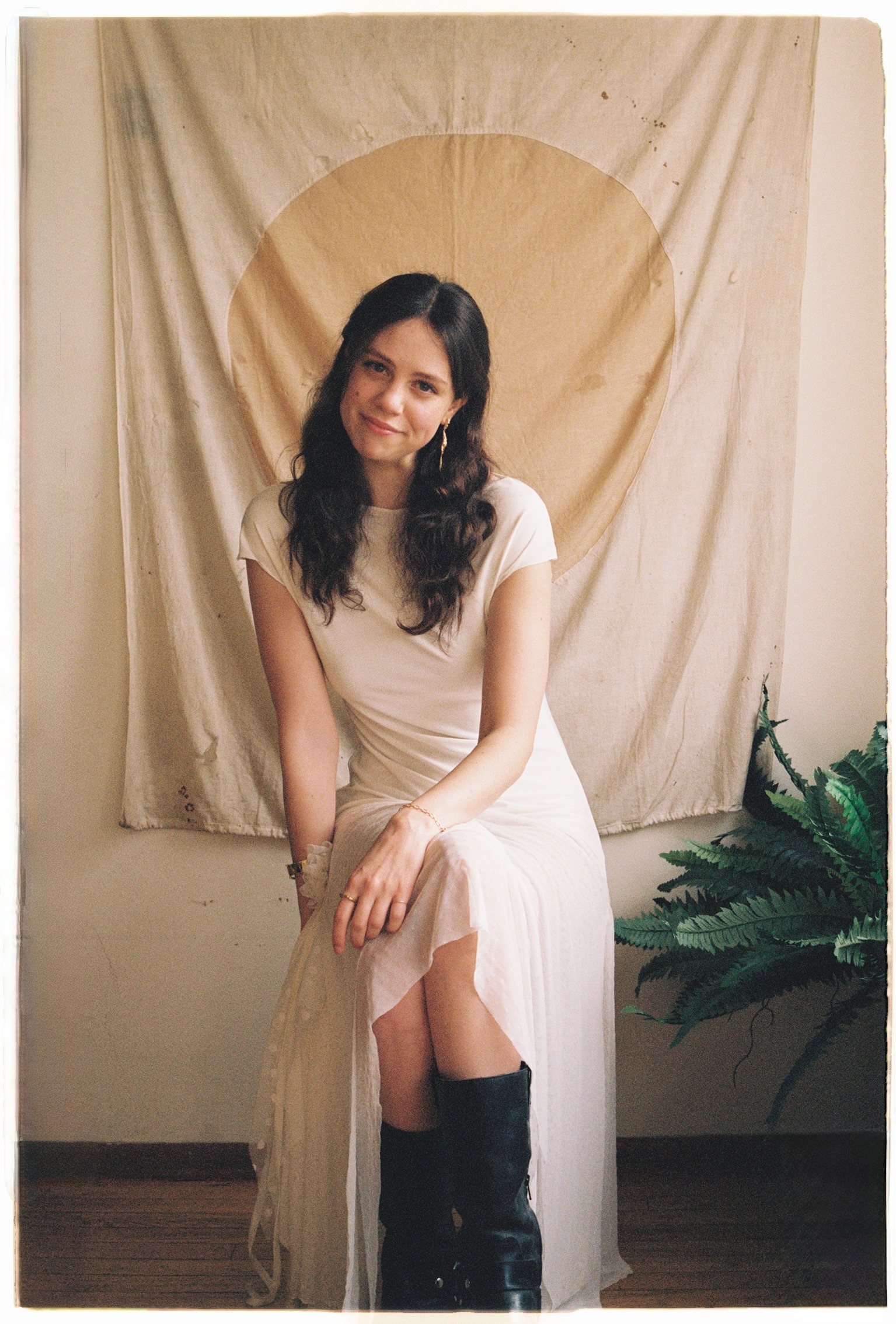
Matilda Mann always saw herself as a bit of an optimist. Someone who believes in manifesting and making things happen. Her journey through her late teens and throughout her twenties, doing gigs at pubs in the evening while practising and writing during the day, even working at a garden centre, has made her one of the most exciting independent musicians. Her debut album Roxwell revealed a side of her vulnerability and how she is still trying to make sense of the world and her music.
It was that raw honesty and youthfulness that naturally evolved into her recently released sophomore album, Kismet. A collection of songs that reflect her growth thus far, and how falling in love has changed the trajectory of her life. Kismet could be aptly described as Matilda carving her own path to the point of inevitability with her newfound confidence and faith that things are meant to happen for her as long as she works hard to earn it. Both albums reflect an emotional rollercoaster at different stages of her life, as she prepares for the next chapter in what almost feels like fate, but a clear choice she has made to give music and love her all.
1883 Magazine sits down with Matilda Mann to discuss her new album Kismet, her ongoing UK tour and what it is like to be in love and happy.
Who is Matilda Mann?
I’m from Shepherd’s Bush, and I’m a singer-songwriter. I’ve been doing music for a while now, and Kismet is my second album.
Why did you choose Kismet as the name of the album?
We were looking for words that have quite a deep meaning that you can really dive into. We found Kismet, which means fate and destiny. Believing that there’s a reason or a path for everybody. I think it’s a lovely way to look at life and love, and to try to figure everything out. So it felt like a positive way to go about life. This is a very optimistic, happy album. It’s one of those things where the moment we came across the word, we knew that’s the album title.
Fate is often seen as a doomed inevitability, feared even yet you manage to spin it into a positive direction. How did you find that perspective and feel comfortable enough to share that message?
I don’t know. I’ve always been quite an optimistic person. When bad things happen, I don’t think they have to happen to learn things, or you have to move on from them, but I think it gets to a certain point where either you can do something about it, and if you can’t, then it’s probably best for yourself, actually, if you learn to move on from it or learn how to challenge it into something better, or that can help you in some way or another. It’s much easier said than done. Of course, everyone has lots of different problems. But I think it’s more about when you’re ready to feel differently. It’s a good way to manoeuvre yourself there. No one wants to live sad. People obviously don’t have control over it at all sometimes, but if you did want to, if you are able to, and if you wanted to, there are ways to go about it. It’s more like, if you’re in a rut, I would say, and I want to get out of this. I know I want my life to look different. How do I start that? I’m not saying this album is going to change your life. But listening to positive music has always helped me in the past. It really helps me remember that there are good things in the world and that there’s a reason for living.
When you have that agency to choose your own happiness, how do you go about your day-to-day life and make that a reality for you?
A really big part of it is that I remember that I’ve been sad before. I’ve had days, sometimes weeks and months, where I felt really down or confused about how on earth I’m going to get out of it. It’s nice to remember that I was once sad before and I got out of it before. So life is like a seesaw of emotions. That is something I always remember. Things always do get better, and there’s always a calm before the storm, and the storm before the calm. There’s always a way out, and you are going to feel sad again. Bad things will happen, but there’s no point in waiting for them to happen or inviting them to happen. Cross that bridge when you get there. Believing that when difficulties and problems come up, you can handle them and it’ll be okay.
Your debut album, Roxwell, was an emotional journey that comes from a place of struggle and confusion, in contrast to Kismet, which has clarity. How did you fit that into the mental map of your growth and recovery, considering where you are now is in a different direction?
One thing I would love to have changed about Roxwell is that I wish I’d put the first song last. Because that song is very much about deciding to let something go. That album was a combination of still feeling it because it was many years after my 20s. A lot of songs on that album were written when I was 19 or 20, and up to 24. I just had a range of emotions and probably was still coming to terms with how to deal with anything. I wish I’d put that last because I felt that album was actually the end of me holding onto a lot of stuff that I didn’t need to hold onto anymore. It shows in this album that I am in love, and I decided not to dig into it and take it at face value, that it’s really lovely to be in love, and that’s a nice thing. As an artist, sometimes I think I need to cater to everybody’s emotions and thoughts. So, this is more of me deciding that they’re going to be happy.
Could you explain the order for Chain Reaction being the first song and Haunt Me as the last for Kismet?
Haunt Me was the last song that I wrote for the album, and I don’t know. It feels like the last song. I really like them as pillars of the album. I’m not a religious person, but I like to talk about religion. It’s very interesting, a lovely concept. It’s silly to think that there’s absolutely nothing else to this world other than our planet, because it’s never-ending. It’s really lovely to believe; it’s a nice way of being, of talking about love as well. That we’re together in other lifetimes. I just always knew I’d meet you. Of course I met you.
Those are such strong ways of saying that you didn’t really have a worry, and you believed that when it was going to be the right time, it would just come into your life. Chain Reaction is a hardcore love song, to be honest, and I really like the very first line saying heaven is a concept, but then following it with I’m closer to believing in it, and I really like doing that at the start of the album.
Haunt Me is about if people die, which I’m always scared people in my life are gonna die, but again I have no control over that. It used to really debilitate me, trusting that people would be okay if they went on flights or if they were in cars, and there’s nothing I can do to stop that and stuff like that. Haunt Me is a spin on: if the plane does go down, can you come back and haunt me in some form or another? It’s silly not to acknowledge that bad things can happen in life, but I think it’s more about how you’d like to handle them in the long run. That’s why they are pillars.
Are you into movies?
Yes, I’m a big movie lady.
Have you managed to see Past Lives?
I haven’t, and I don’t know why I’m putting it off because I kind of like to imagine it. Then I think one day when everyone tells you to watch a film, and you don’t want to watch it, I think one day I’ll be on a plane, and I’ll be like, oh, I’ll pass out. I’ll probably cry. That’d be fun.
Kismet immediately reminded me of the film. Thinking about what you were in another life, what animal would you want to be?
That’s so fun cause I also really like the idea of reincarnation. It’s a really cool thing, especially if you’re nice; you can come back as something nice. If you’re evil, then you’re a mosquito because who likes mosquitoes, and you can’t make up for that. What would I be? Probably a cat because I really think they’ve figured it out. We don’t have to do anything for them, but we do, and we feed them, and we pet them, and then they get to come and go as they please. Or maybe a monkey, because they’re really cute and they seem to get along.
What was your childhood dream, and what is your dream now?
My childhood dream was to live in New York. I remember my dad being like, “That’s so expensive. You can’t do that.” Being like, well, how much did I have to earn? At the time, he was like, “You could maybe scrape by on like 400 a week.” I was like, I can do that. And I did. I started working in a pet shop or something. And maybe work at a zoo. My dream now is to tour a lot of really cool places like Asia. I’ve never been to Japan, and I’ve never been to Australia. There are so many places I haven’t been that I’d really like to perform at as well. I’d also love to go back touring in the States. I’d also love to play at Glastonbury. That would be important.
What makes you happy?
My friends. I love to see my friends. They’re always very funny. I’m a very lucky lady. My job is kind of my favourite thing ever. I’m lucky that I enjoy my job. I enjoy all aspects of it. I think music, and as I’ve gotten older, I’ve really started to appreciate the countryside and the sea. I’ve always loved the sea, and I do think my happiest place on earth is probably in the sea. Not a lake. Too many things in there. But definitely some moving water. Probably not freezing.
What do you like to do in your downtime?
I love watching movies and TV shows. Apple TV has got some great shows at the moment. I’ve been watching those. I’m quite a little ADHD, I think. I usually have to do a task in my house, and I end up doing so many other unnecessary things before I do that. That’s usually how I spend my time. I learn a lot of covers as well on my guitar because I really like analysing songs without hearing them. To see what they look like on paper. Sometimes cooking.
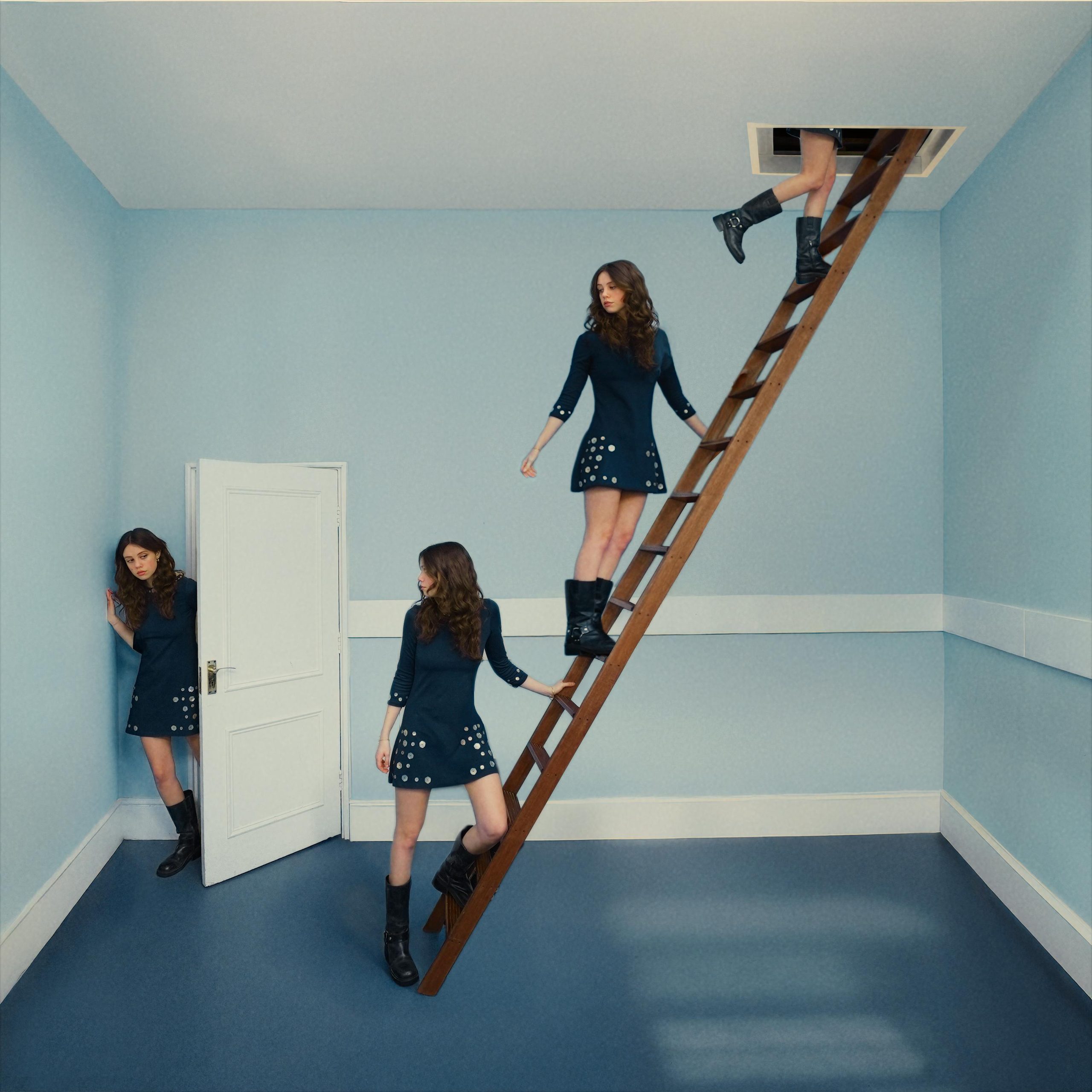
The album cover looks like a stairway to heaven or some journey through fate. A bit of David Lynch vibes. What feeling were you hoping to convey through the art direction?
We wanted it to feel playful and joyful, but also something you can look at for a while and wander through. That’s why I’m going up into somewhere, and you have no idea where. I hope you don’t think it’s an attic because it’s probably not. It was shot in my mum’s school that she works in, in the boys’ changing room, without any boys there. We just got a ladder. We like the idea of there being lots of me. I wanted it to be like 11 of me, one for each track. But that was just crazy and too crowded. We learned that with inventing. I really love the inventing cover, but I think there are a little bit too many of me there. So, I really wanted to space it out to four. I like the placement of when and where they all are. I like that they’re interacting with each other, and it’s really fun. We’re doing something silly and random, but we look quite serious. Kind of sums up the album.
How do you compare Roxwell and Kismet?
They’re like night and day. Roxwell is a lot of figuring things out, and it’s my first album. I’d never done an album before. I was learning a lot doing that album and all of the things that come with it. I was very much still figuring myself out as an artist. There’s a lot of pressure around releasing your first album, and if it doesn’t take off, then your career is doomed, and you’ll never be successful. I still really love that album, but I think this one is so much more. I wrote it recently. They’re all written when I’m like 25-26, and I’m still 26. It’s very much like the world that I live in right now. Believing in faith that things will go the way that they’re meant to. I believe in manifesting that good things will come if you think about them. So, it’s very much an optimistic album, I’d say. I feel so comfortable in this world, and I don’t really want to leave it.
What is your star sign?
I’m a Pisces.
How was it like to work with Jonah Summerfield, and what did they bring to the table when recording this album?
He’s a nightmare. No, I’m just kidding. He is like my brother. I’ve been working with him since I was about 19. He’s a little bit older than me, but by a few years; he would laugh at that. He and his girlfriend are such pillars in my life emotionally. I have the best time writing and recording with him. He’s such a talented musician and producer. I have never thought of myself as much of a musician or a producer, but I think he has really given me the confidence by always listening to any suggestion I have. Even when I’m not suggesting something, I’m subconsciously humming something, and he’s listening to it, and he is like, ” Let’s put that in; that sounds great.”
But he would also say that’s a shit line and come up with something better. I really like that because I know that he’s really honest. He’s pushing me to do bigger and better things. He can see me as a bigger artist than I am. I really need people around me to help me be more confident. This is good, and it’s going to get better and stuff like that. He’s like a rock in my musical career, and I really love working with him.
How do you juggle the responsibilities of a singer, songwriter, director and so on as a musician?
It’s different now to be an artist than it was probably a while ago. People want to be singers or musicians or artists, and now you have to do photo shoots and influencing in some sense or another. You have to learn to market your own brand and everything. You can definitely hire people to do that, but that’s a lot further down the line when you have a lot more money. It’s really good to work with people who are close to you and know you really well. I have an amazing creative director called Ben, and he does all my music videos. He’s so good at leaning into the world that I’ve started musically, and he helps bring that to life visually. Same with my stylist Tegan; she’s the one who’s designed the merch, decides what to pick out and works with me on what I wear. That helps a lot with me getting into character and actually immersing myself in this world, which is so important because it’s like when you’re going to a gig, you want to dress up in that world and that vibe. Both of them have really helped me create a solid world. And what that looks like. This is my first independent release, so it’s been really nice for my incredible manager and me, and I’ve been with him since I was about 18. We’ve been able to bring on people individually that we think are really good at what they do.
What did you do to get by to facilitate your creative path and eventually be able to make music your main thing and your way of living?
I got a publishing deal and a record deal when I was 20. I was working at a garden centre, and then the lockdown happened like a week later. I’m from London, so I’m privileged that I have always been able to be in London. Even if it wasn’t my full-time job yet, I would work on the weekends and in the evenings in pubs. Then I had sessions during the day. I would play a lot of gigs. I first signed with a major label, and that was a really great way to introduce me to touring. They gave me a visa, so I was able to tour in America. I got to choose how I wanted to save and spend that money, or keep it to invest later on in my career, which I’m literally doing now. A lot of it was every way that I’ve been given an opportunity; I’ve envisioned how to make it last.
Do you have any favourite songs?
Probably Chain Reaction or Haunt Me. Even The Fig Tree.
There’s 70s soft rock, soul and even country at one point. How did experimenting with different genres and influences help you find your identity through your music?
We really wanted it to be something that feels like you already know it in a way. We listened to a lot of iconic songs and albums that have stood the test of time. We looked at why, and I think specifically with artists like Al Green and The Carpenters, there’s such a romantic, soft feel to them. A lot of the lyrics are so simple in the best way, and they just say I’m in love with you; whatever you want to do is all right with me. I think really leaning into things like that and trying to find the best way to speak about something as important as love, and then picking the right instruments to highlight things you want. We did a lot of research, and I learnt that I really like writing happy songs.
What did you learn from your first album that you took onto your second?
I learnt that I wanted to write it in a short space of time, and that I really wanted it to feel like a cohesive world. Last time it was very much a mishmash of things that I love, which I’m also really happy that I did, especially for my first album. But going forward, I really like an album to have a bit more of a cohesive feel and more of a whole feeling in one album.
You mentioned ADHD earlier.
I don’t know if I have ADHD. I’ve never been tested for it. I think that probably only comes into my life when I have to do something like packing or tidying. Or I have to fetch something or do an errand. That’s when I think it comes into my life, where I really can’t focus on one task. With music, there isn’t really a path. So it makes it a lot easier to bring a lot of things out and play any random chord you like that sounds nice. Then it’s looping that for ages until you finish. I know a song is done when I stop listening to it. So we have to listen to loads of mixes. We have to listen to loads of production ideas. I know it’s finished being mixed and mastered when I’m not listening to it anymore, and I’m daydreaming because nothing is sticking out to me anymore.
Does music bring you clarity or is it a distraction?
I think it’s a bit of a distraction, to be honest. If music’s playing, I can’t really listen to anything else. I was never that person who could study while listening to music. It would have to be whale noises. And I always have a song playing in my head, which I didn’t realise that it is actually constant, and it’s always a different song, but it’s like a radio in my head. Probably because the radio is constantly playing in my house, but everywhere I go it’s just very faintly on, so I do think of it more as a distraction. But I learn a lot from it and about it, so I will say I love it.
Do you see fate as a matter of uncertainty or certainty now?
Both? Because I’m certain you’re not going to be certain. It’s enjoying and being okay with not knowing. You can’t do much about it, but the things that you can do, you should do. Don’t blame other people for that aspect of it. But there are things that are out of your control. If you think it’s something that’s going to come up eventually, wait for that. Don’t stew and panic for it to come. Learn to live life and take things one day at a time, and not panic that you haven’t got your pension. It’ll work itself out, things like that. That’s a really random worry, if people are going to die. Yes, everyone dies, so one day we’re going to have to cross that really horrible bridge, but there’s no point in worrying about it while everyone is young and healthy.
Are you okay with not knowing?
I guess you have to be, because there’s no way you can find out.
Are there any artists currently that you would like to work with or feature?
So many. I love Ryan Beatty, love Phoebe Bridgers, Paolo Nutini. I love Adrianne Lenker. I can’t think of anyone else right now; there are not many people I’d say no to. I like Gregory Alan Isakov. I like people who have really lovely voices.
What is the feeling like for your album and the release?
I’m just excited, to be honest. Because they’re still pretty new songs to me, so I’m still in love with them. I’m really proud of them. It’s been really fulfilling that this is my first independent release, but it’s the best my music has been, so that’s really encouraging and nice that I took a big leap of faith and it’s gone well.
What are your plans for the tour?
We’re doing a UK tour, and I’m playing a hometown show at Shepherd’s Bush Empire [tonight, October 16]. So I’m very excited about that. At the moment, that’s my only plan. I did a Europe tour earlier this year in February, which was so cold. Hopefully I do a lot more. I would like to do a lot of festivals next year because I took a very specific hiatus so that I could play loads of summer festivals this year.
Matilda’s new album is out now.
Interview Zakariya Ahmed
Photography Caity Krone
Stylist Tegan Astani