Some exhibitions begin with a clear statement. Meeting You began more with a feeling — a recurring sense, found across different artists and materials, that identity today no longer behaves as something fixed or singular. Instead, it appears unstable, fragmented, constantly shaped through relationships, memory, technology, and perception.
Organized by SIURUEI ART and Shetalksart, lead curated by Xiaohui Wu and co- curated by Yilin Xiao, with media support from Plus Ou Moins Association, the exhibition brings together works across painting, ceramics, jewellery, textile, installation, and animation. Rather than separating these practices into strict categories, the exhibition allows them to exist alongside one another in a fluid and sometimes uncertain dialogue. Walking through the space, boundaries between mediums begin to soften: sound quietly leaks into visual environments, delicate materials coexist with heavier sculptural forms, and narrative dissolves into atmosphere.
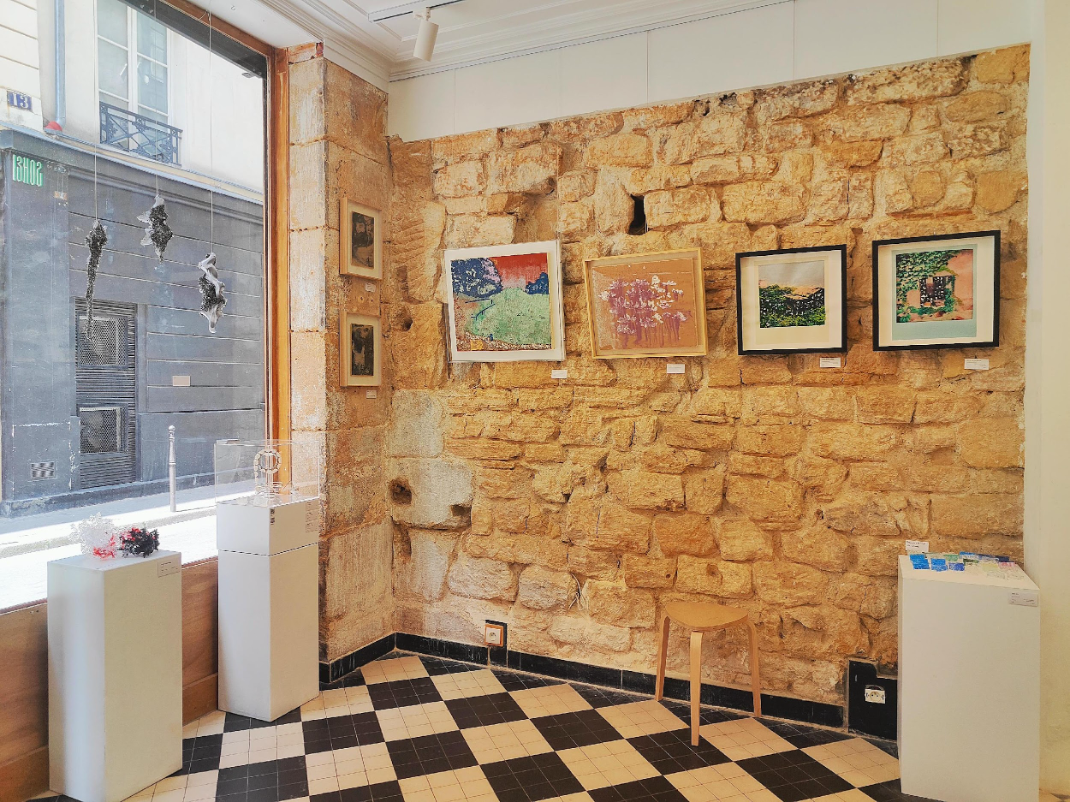
This approach reflects SIURUEI ART’s ongoing interest in questions of identity, belonging, and social positioning. Yet Meeting You moves away from identity as a stable representation of the self. Instead, identity emerges here as a process —something shaped by time, material conditions, emotional states, and external systems that are often beyond our control.
What makes the exhibition compelling is that it avoids offering a single answer. The works do not attempt to define identity clearly; if anything, they resist clarity altogether.
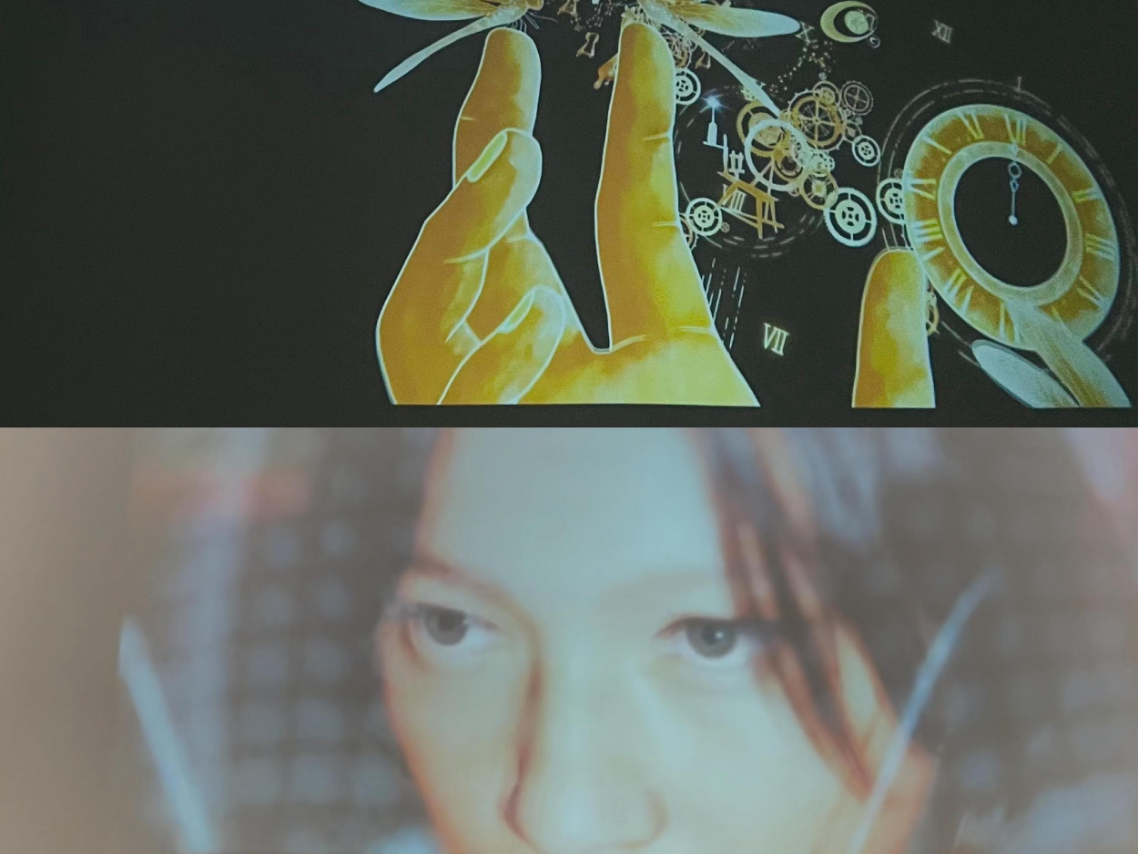
Junying Jiang’s animated work Once Upon a Time, drawing from the visual language of Western fairy tales and childhood animation, Jiang reconstructs familiar symbols — poisoned apples, glass slippers, spinning wheels — only to fragment them. At first glance, the work feels nostalgic and accessible, influenced by the polished aesthetics of Disney and Pixar. Yet beneath that familiarity lies something more unsettling. The narratives that once appeared innocent begin to reveal themselves as systems of expectation and conditioning. Childhood fantasy becomes inseparable from the social structures that shape identity from an early age.
Questions of time and transformation also run strongly through the exhibition.
In Jaime Ekkens’s exploration of the abandoned villages on Gouqi Island, nature gradually reclaims spaces once occupied by human life. Vegetation spreads across buildings, walls disappear beneath layers of green, and architecture slowly loses its authority. Importantly, the work avoids romantic nostalgia. What emerges instead is an awareness of impermanence — not as tragedy, but as a natural redistribution of presence and absence. Human identity no longer stands at the centre of the landscape; it becomes only one temporary element within a larger ecological cycle.
This sense of dissolution takes on a more speculative form in Melody Ma’s Moksha, which imagines consciousness within systems of digital immortality. Referencing Buddhist ideas of purification and rebirth while simultaneously drawing from technological imaginaries, the work occupies an uneasy space between spirituality and simulation. Rather than resolving the tension between the two, Moksha suggests that both systems destabilise the idea of a coherent and continuous self. The work leaves open a difficult question: if memory, consciousness, and emotion can all be reproduced technologically, what remains of the self?
Elsewhere, material itself becomes a central agent within the exhibition.
In Xuke Lin’s installation MUTUAL / HARMONY, materials such as sand, enamel, ceramic, and glass are allowed to interact in ways that resist total control. The work feels less like a fixed composition and more like an ongoing negotiation between forces. Influenced loosely by Daoist ideas of wu wei, the installation embraces contingency and unpredictability. Form emerges through interaction rather than domination.
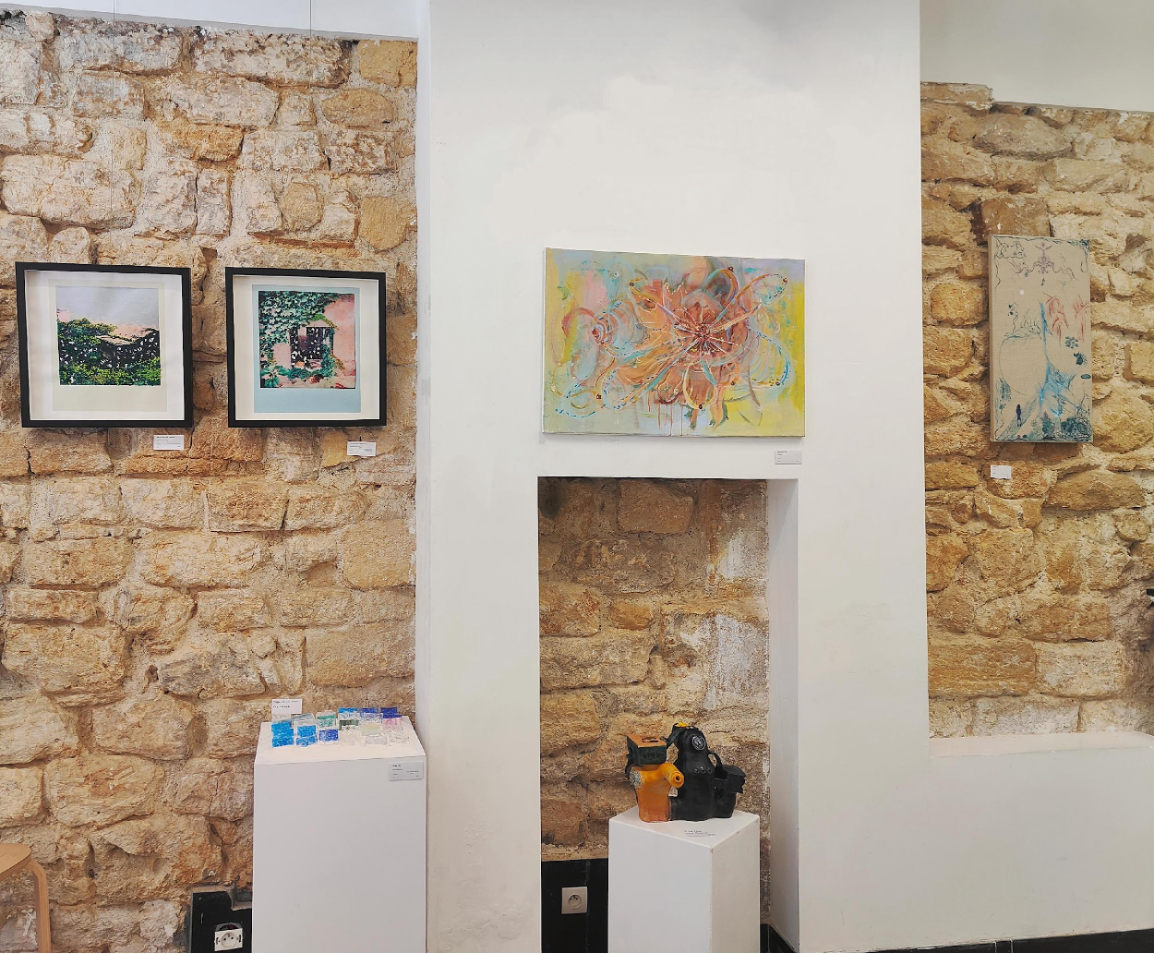
A similar questioning of structure appears in Estelle Simpson’s engagement with mythology, where inherited narratives are dismantled and reconfigured. Her work quietly exposes how identity is often built through stories that appear timeless or natural, despite being historically constructed.
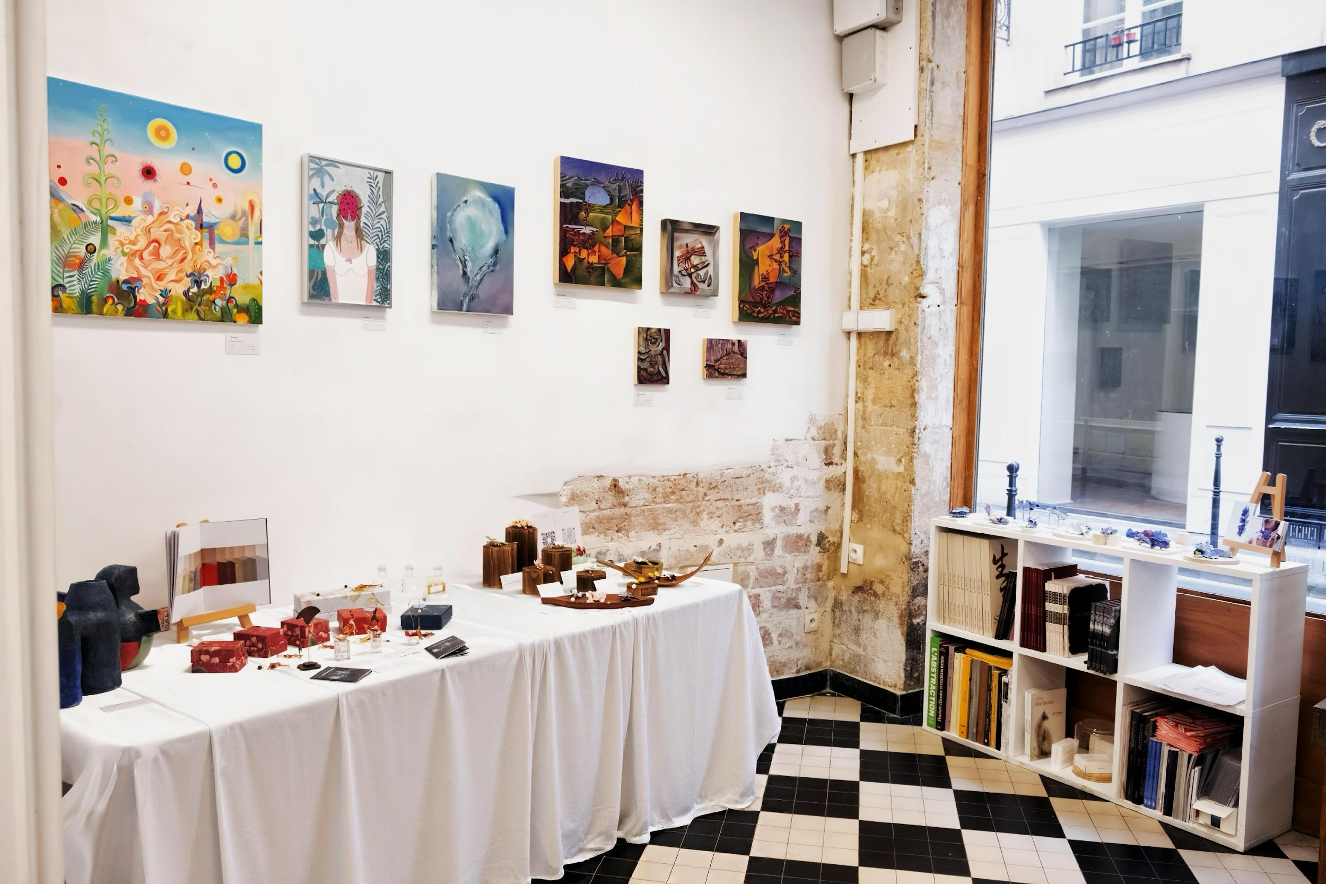
Meanwhile, Nikita Andrejev’s paintings shift attention toward non-human systems altogether. Drawing inspiration from bark, fungi, bone, and organic textures, his works move between abstraction and biology without settling fully into either. The images feel simultaneously familiar and alien, suggesting patterns of existence that extend beyond human-centred ways of understanding the world.
Yang Liu’s Ripple of Change reflects on her journey from her hometown to Jingdezhen, tracing the subtle emotional shift between familiarity and uncertainty. Through ceramic material and personal memory, the work quietly attends to the small transformations that often shape a person over time.
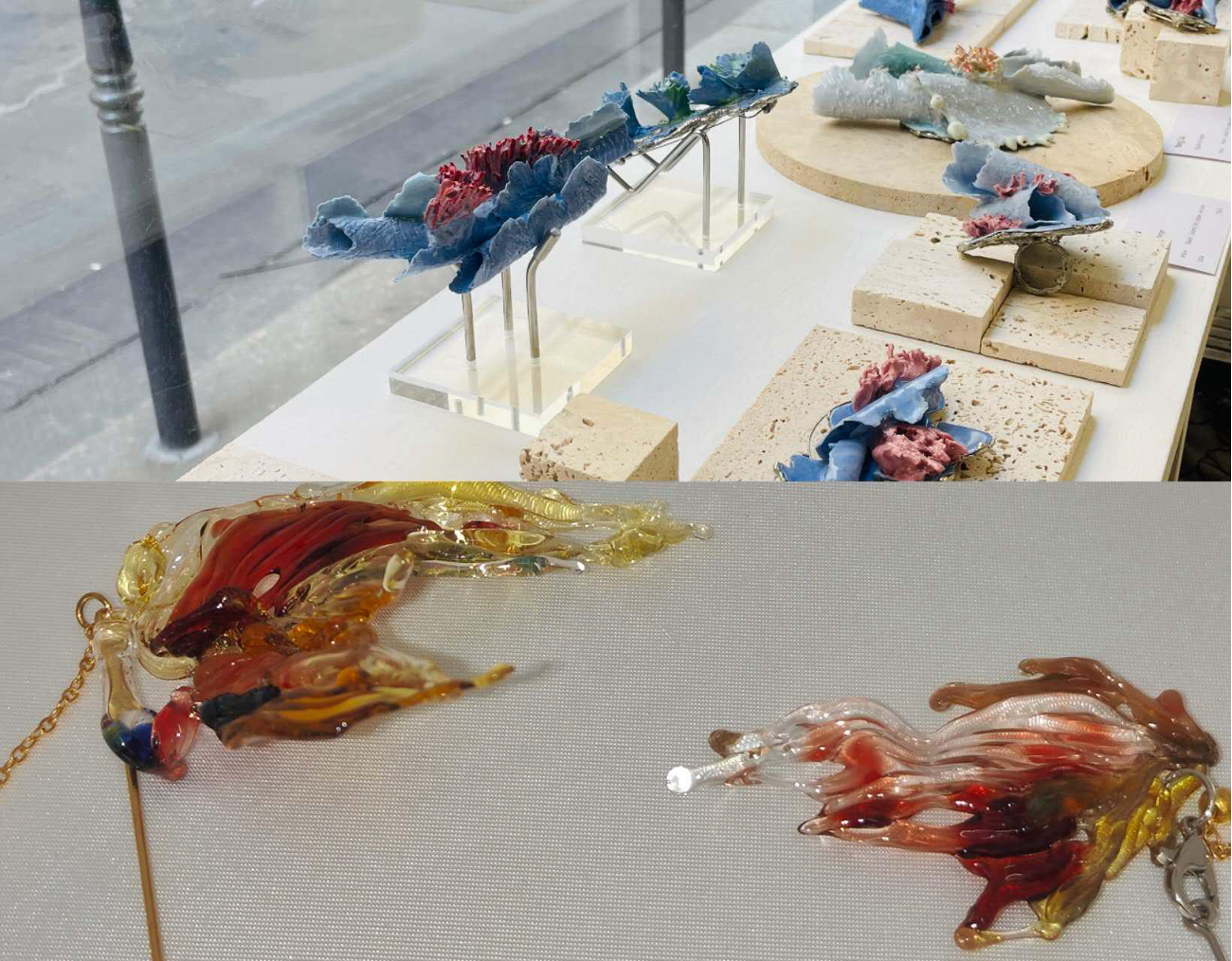
The exhibition never fully settles into a single language. What connects the works is perhaps less a shared theme than a shared discomfort with certainty itself. Across the exhibition, identity is never presented as fixed or complete, but as something constantly negotiated — between body and system, memory and projection, material and imagination.
In a cultural moment where identity is often expected to be declared, categorised, and made legible, Meeting You offers a quieter and more unresolved proposition. To encounter another person, another image, or even oneself may not always lead to clarity. Sometimes the encounter simply leaves us inside uncertainty.
And perhaps that is where the exhibition feels most honest.
Exhibition name: Meeting You
Exhibition date: 22-24 May 2026
Exhibition Address: LooLooLook Gallery. 12 rue de la Sourdière, 75001 Paris.
Curated by SIURUEI ART & SheTalksArt
Lead Curator: Xiaohui Wu
Co-Curator: Yilin Xiao
Media Support: Plus Ou Moins Association
Curator assistants: Xiangyu Zhang&Minyue Hu&Wanxin Pang
Intern: Qian Luo
Exhibited Artists:Jaime Ekkens, Estelle Simpson, Qinglai Tom, Ouyi-Joy Jin, Jiaqi Lyu, Nikita Andrejev, Zhifang Tang, SOEY, Xuke Lin, Yaxuan Li, Jinhai Li, Melody Ma, Junying Jiang, Sirui Zhao, Yang Liu, Siya Zhang, Jia Wang, Liang Zhang, Rongfei Zhai, Qianwei Ye, Yiyuan Zhang, Xin Yue, Yuhe Luo, Sicen Kuang, Yujie Yang