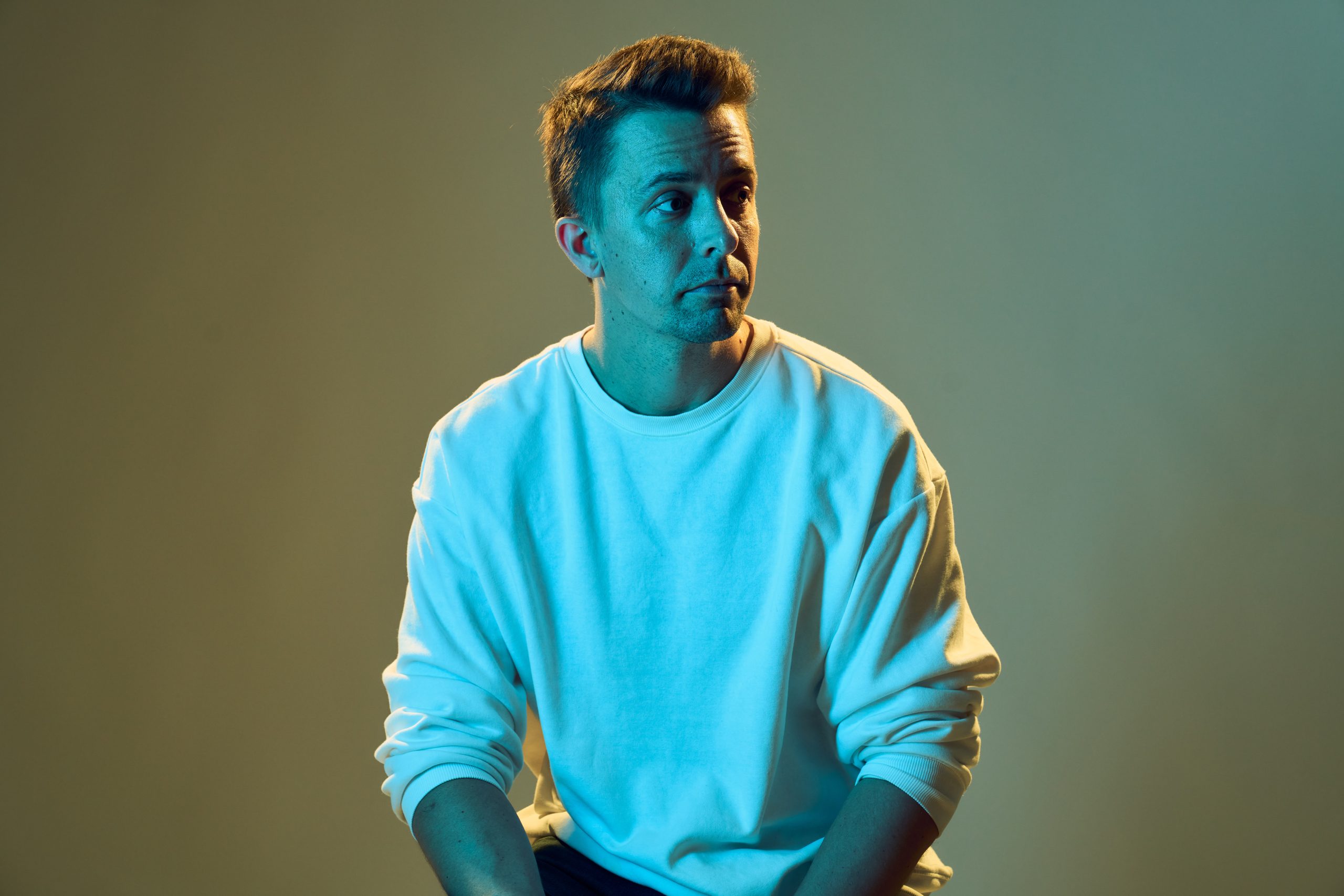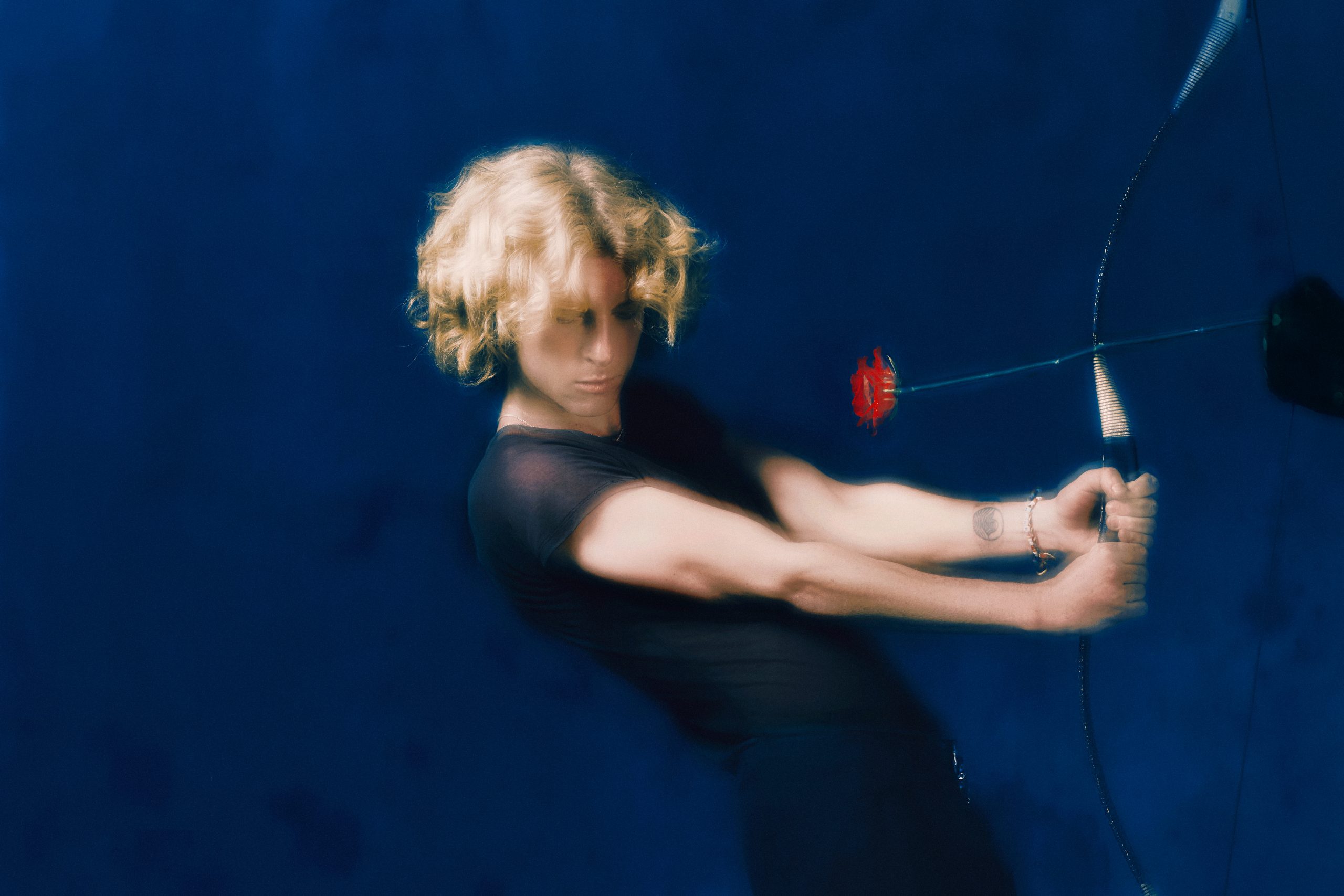
Australian musician Noah Hill has been crafting distinctly euphoric and dance-worthy tracks as part of the quintet, Parcels, for more than a decade now. Since the band’s formation as teenagers in Byron Bay back in 2014, Louie Swain, Patrick Hetherington, Hill, Anatole Serret, and Jules Crommelin have proved to be indie-pop mainstays. Now following a Daft Punk collaboration, more than a billion streams, and many headline shows across the globe, Noah is now venturing into new territory with his debut solo project.
Ok ok now is a gorgeous body of work via Because Music and sees Hill verges into a more introspective area. Across the album, he explores heartbreak, the breakdown of a relationship, all in a playful, non-linear manner. For someone who’s found a home with rose-tinted sonics, this version of the songwriter offers more folk and acoustic-pop elements. Here, he showcases plenty of lush vocals and disarmingly emotive lyricism. Impressively, Hill was effectively a one-man band on the project, playing every instrument himself and even mixed the LP itself. At its core, its the sound of a musician singing their truth, line by line.
In conversation with 1883 Magazine, Noah Hill discusses Ok ok now, going from playing Wembley Arena with Parcels to small intimate shows, and more.

Hi Noah, congratulations on the release of your debut album. How did you want to make it a clear departure from your work with your main creative project, Parcels?
Stylistically and energetically, it’s quite different. Parcels has often had an outward trajectory—it’s about movement, connection and dancing—whereas this album turns much further inward. It’s about sitting with some difficult emotions rather than escaping them.
These songs felt too personal and earnest to fit naturally on a Parcels record. They needed more space and a different kind of vulnerability. Once I realised they weren’t going to find a place within the constellation of the band, I decided to create a new avenue for them.
I didn’t set out to make something deliberately opposite to Parcels, though. This is simply the kind of music that came out when I was working alone and following my own instincts.
Tell us about the making of your favourite song on the record.
Choosing a favourite is almost impossible because every song represents a different part of you. It doesn’t feel natural to place one above another. But I probably feel most strongly about “It’s All in My Head” and “Like You Do” because they were the hardest to finish.
Some songs seem to fall out of you almost fully formed, while others have to be battled through. With those two, I always felt there was something worth fighting for, even when I couldn’t quite work out how to get them where they needed to go. When you stay with a song through all that uncertainty and eventually make it work, it creates a special attachment. You don’t only hear the finished song; you hear everything it took to get there.
What reactions have you received from your bandmates, friends and family?
My mum is the biggest supporter—but most mums are. She has been such an important and supportive figure throughout this process. I’m not sure I would have made the album without her, really.
I didn’t show the music to many other people while I was making it. I wanted to protect the intimacy of it and avoid letting too many outside opinions into the process. Since finishing it, the guys in the band have been incredibly supportive, complementary and encouraging, which has meant the world to me. My close friends and collaborators have responded in the same way.
No matter how long you’ve been making music or how much success you’ve had, I don’t think the need for affirmation from the people closest to you ever disappears. When you’ve made something this personal, their response carries a different kind of weight.


From playing Wembley Arena with Parcels to your first UK headline solo show at London’s Lower Third, how are you feeling about performing in such an intimate space? Do you find it more or less daunting?
The solo shows I’ve already played have been far more daunting than the big shows with the band. This is new, it’s more personal, and it reveals much more of my personality than I’ve ever put onstage before. Somehow, that’s more frightening than the size of the crowd.
With Parcels, there are five of us sharing the attention, the energy and the responsibility. Alone, there’s nowhere to hide. Even in a small room, that can feel enormous.
Going back to small venues and experiencing that closeness again was something I wanted, but I hadn’t imagined quite how nervous it would make me. That’s also the beauty of creating new experiences and overcoming new obstacles. You have to keep moving towards the things that frighten you a little.
What will the live show look like as your solo career develops?
At the moment, it looks like me singing my heart out for 45 minutes. I put absolutely everything into it until I’m emotionally spent.
I come offstage in a very strange mood because I’ve essentially relieved a large part of my past over the course of the set. When I made the songs, I was alone and able to disappear into my own world. Performing them means opening that world up and going back into those emotions in front of a room full of people.
I hope the show creates a space where people can feel the story of the album rather than simply hear the songs. More than anything, I’d like them to leave feeling that they know me a little better.
Does it feel cathartic to release the project, given its subject matter?
Making it was cathartic. Releasing it feels like something slightly different.
The writing and recording gave me a way to understand what had happened—or at least to give shape to feelings I couldn’t make sense of at the time. By the time an album finally comes out, though, you’re often in a very different place. You’ve lived with the songs for years, processed a lot of what they contain and, to some extent, moved on.
Releasing it feels more like handing it over. Something that was once completely private now belongs to whoever hears themselves in it. There’s exposure in that, which can be uncomfortable, but there’s also relief. I don’t have to carry the songs entirely on my own anymore.

Where would you like to take your solo career, and where would you like Parcels to go next?
With the solo project, I want to keep following the energy it has created. Making the album gave me a confidence and creative independence that I didn’t know I needed. I’d like to make more music, develop the live show and keep discovering what the project can become without defining it too rigidly.
Parcels is still a huge part of my life and creative identity. I don’t see the two projects as being in opposition or competing for space. They satisfy very different parts of me. Parcels is about five people combining their instincts and becoming something larger together; the solo project gives me room to follow an idea without translating it through anybody else.
Ideally, they can continue alongside each other and keep feeding each other. I think returning to Parcels with everything I’ve learned from working alone can only make me a stronger contributor to the band—and working with the band will continue to challenge the instincts I develop on my own.
Noah Hill’s debut record Ok ok now is available from today.
Interview Cameron Poole
Photography Macami