For Saint Micah, The Grind isn’t simply about hustle and the pursuit of ambition or success: it’s about learning to leave behind titles and the versions of yourself that exist for everyone else. Conversing with the classically trained virtuoso pianist turned pop star, I expected the theatricality of his visuals to be matched by an equally larger-than-life personality. Instead, I found someone relaxed and quietly thoughtful, whose reflections on identity, perfection and self-expression carried far more weight than his softly spoken delivery first suggested.
After years immersed in the precision of classical music, Saint Micah has stepped into a world where fashion, pop and performance are no longer separate disciplines but different ways of telling the same story. His latest single, The Grind, produced by Fernando Garibay and co-written with Simon Wilcox and Ramiro Padilla, marks that shift. Built around electrifying dance pop production, the track explores the transformative tension between who society says you need to be and who you are at your core, embracing imperfection and existing beyond the roles society asks you to play.
What emerged over the course of our conversation was an artist less interested in perfection than freedom. Saint Micah talks with 1883 about leaving classical music behind, using fashion as a form of self-expression and why your work should never become your identity.
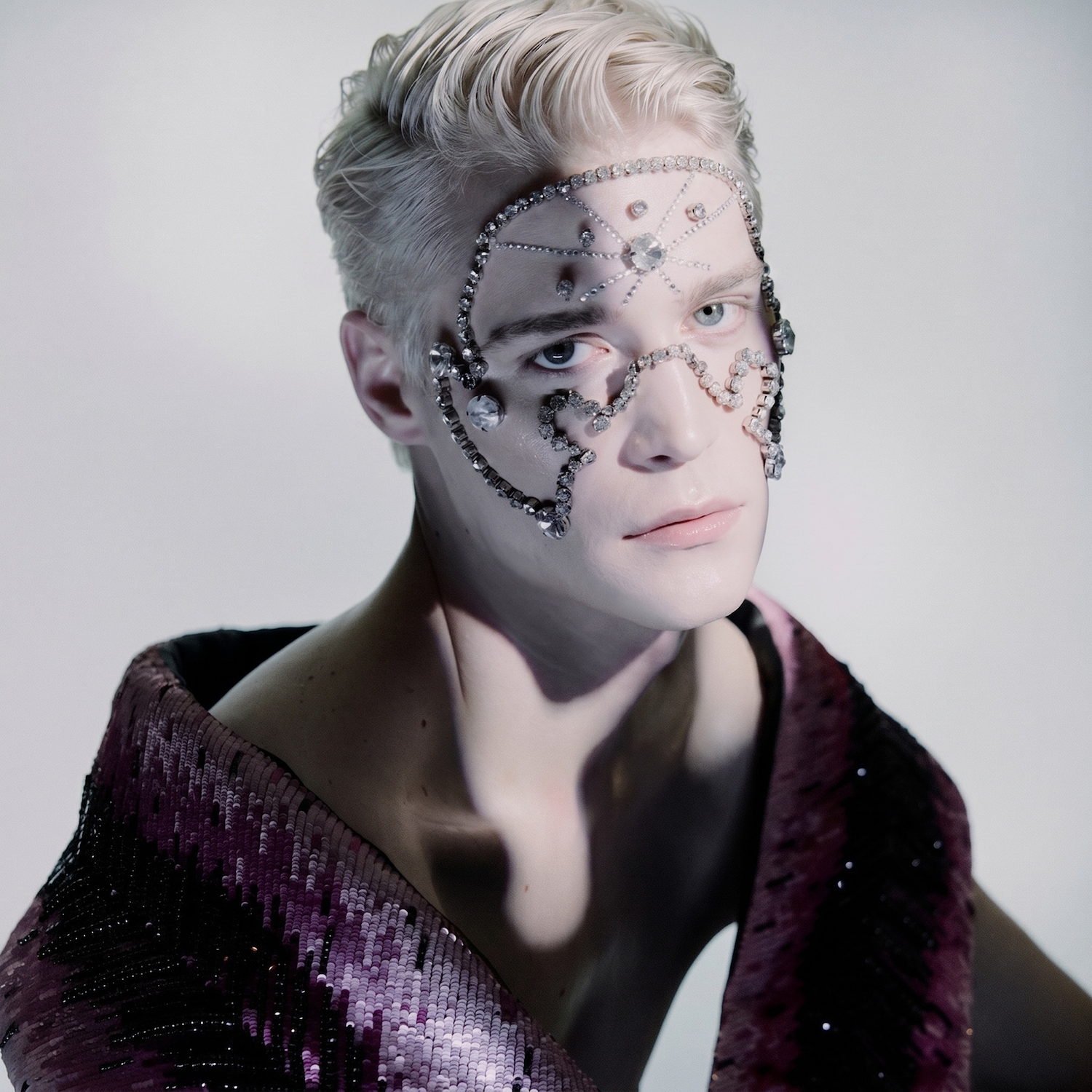
The Grind is about leaving behind a version of yourself that the world expects. Was there a specific moment when Micah McLaren stopped being enough, and Saint Micah had to exist?
I think it’s been under development. I think that Saint Micah started developing when I moved to New York, and I started to experience life. I started going out, I went to parties, and I met all kinds of people – doctors, lawyers, creatives, people with all kinds of jobs. And then they would go to the parties, and you would have no idea what they do for a living, and you wouldn’t care. So, I thought that was really cool because for my whole life, it was, ‘Hi, I’m Micah, I’m the pianist’, so everyone would know me first as the pianist, and then I would get to know people in the moment for who I was, instead of for what I do.
And the same, it went the other way too. I would meet people for who they are, not for what they do. The Grind is about leaving behind your public image and just existing in the club or on the dance floor for yourself, not for what you have to offer.
I like the two concepts: your work life is not your identity. And we’re all the same.
There’s corporate work talk, and there are even jokes about it on TikTok, so people definitely have two personas.
I like the idea that when we’re all having fun, like, none of that other stuff kind of matters, if that makes sense.
It feels relieving to go somewhere and meet people and not have it be like, ‘Hey, what are you? How are you? What do you do?’ Like, a networking thing where it’s like, what can I get from you? It feels far away from that. That’s what The Grind is supposed to be.
You spent years performing classical music, where perfection is often the goal. Pop music seems to allow more freedom and imperfection. Was that difficult to unlearn?
Totally. I think it actually is. People keep having to tell me it’s not about perfection.
You don’t have to be a perfectionist. Even my voice coach says when I’m warming up, ‘you need to be easy on yourself’. This is not about perfection. And the voice is not perfect. It’s different day to day. But classical music is very severe, and they expect no mistakes, no wrong notes, um, extreme precision.
It’s very not human in that way because it’s just, how can you not make mistakes? And then the expectation is so heavy in terms of the technical precision and the amount of practise and hours that you have to do to execute a performance in the way that’s demanded today, which is perfection. It does take the life of the music. It makes it more like a sport rather than an art.
Do you feel a bit lighter making that transition from classical music to pop? Where you can go in the way you want to, make the mistakes and make music in the way you want to see it in your vision and style.
Yeah, definitely. Cause with classical music, you’re always serving the composer. You’re always expected to be, ‘Oh, what was Chopin feeling when he was sick in Majorca writing his preludes?’ So you’re trying to get inside the head of the composer. And then also you have thousands and thousands of people playing the same pieces, and then an audience that is familiar with the music already.
So, everybody feels they own a part of it or they know how it should go, or these are the rules, or the composer wrote it to be pianissimo here. So why are you playing forte? So, you have to follow a lot of rules. And then some teachers were like, ‘So why do you play it this way?’ And I would say I feel it that way. He was like, ‘That’s the wrong answer. You can’t play it because you feel it that way’. I thought, what’s the point if I can’t play how I feel – to me defeated the purpose.
And so, doing pop music gave me the freedom to express my gut, not to have to express Chopin – who I love very much – but to sit down and play and sing what I feel and put into lyrics, my own story.
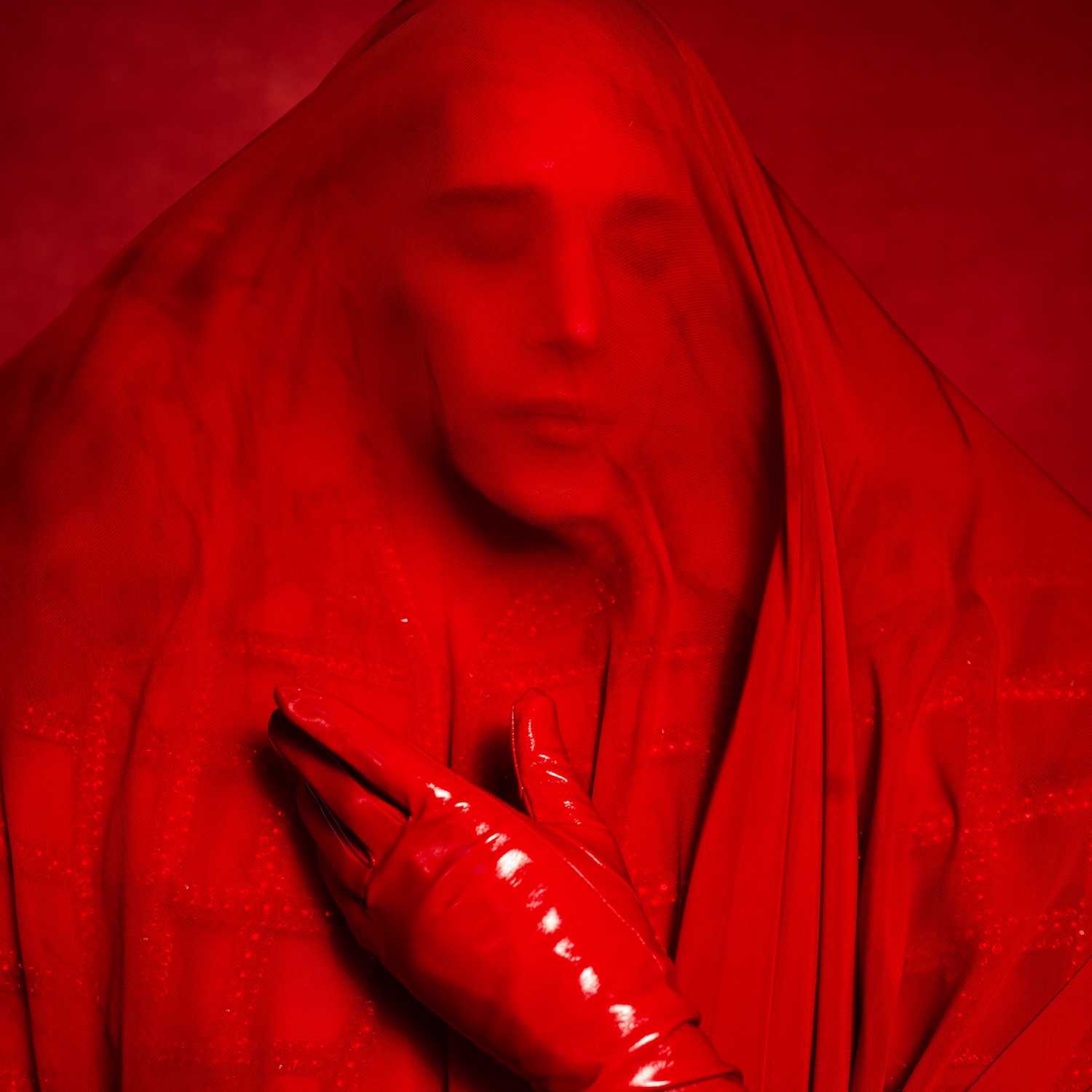
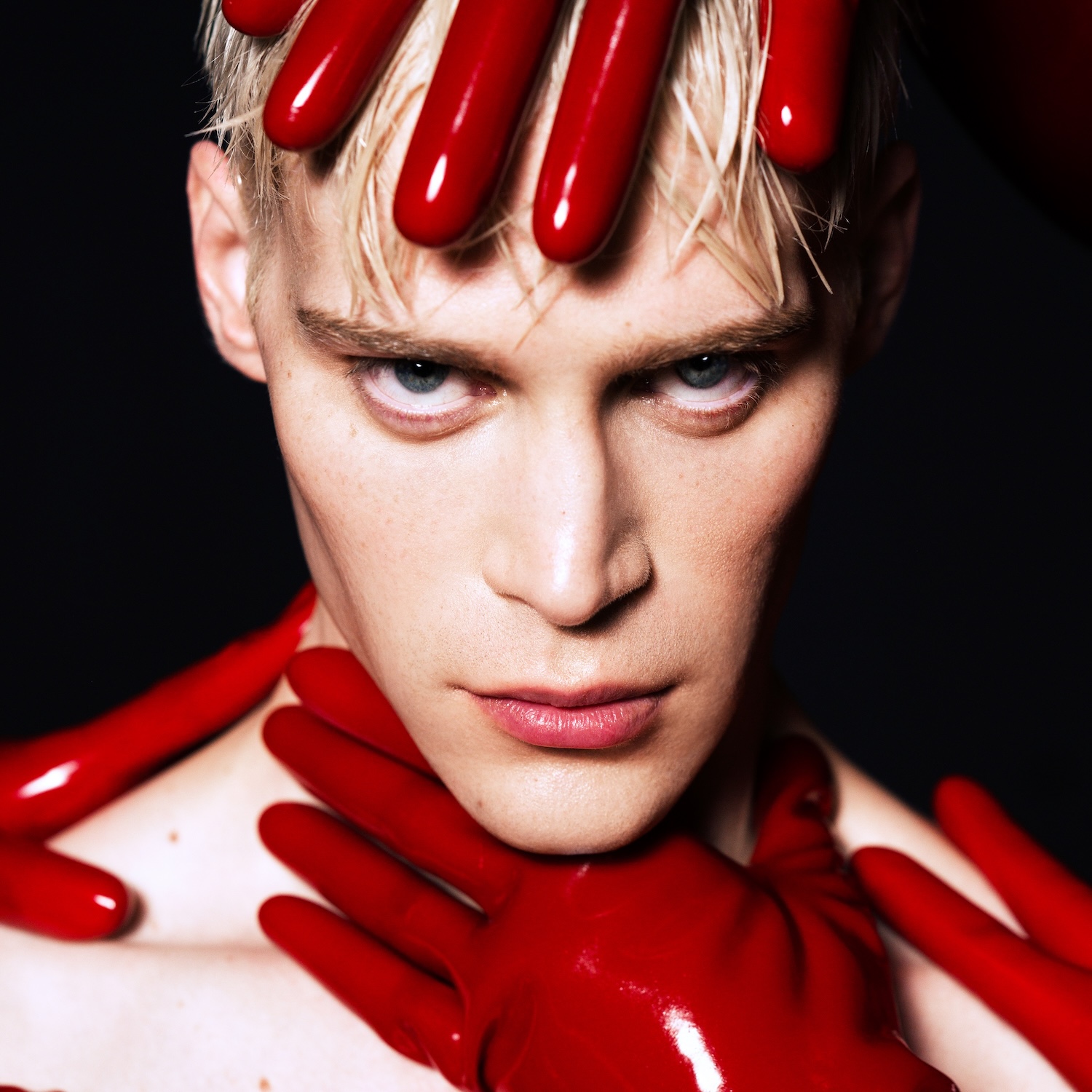
In The Grind for the visuals, we see veils, covered faces and hands over your eyes and the sculptural-like looks. Your music feels very revealing, but your visuals often hide parts of you. Why is concealment such an important part of your visual world?
With The Grind, there are a couple of meanings, but the veils and the coverings- a lot of it is about suppression and having to suppress parts of yourself for the world, fulfilling the world’s expectations of, maybe it’s masculinity or having to suppress and hide parts of yourself. That’s why in The Grind, there are veils, because in my story, I had to go through a lot of suppression, but The Grind is about getting over that and coming out of it. The weekend is when you can shed all of that and let it go, versus being behind a veil, being suppressed, fulfilling others’ expectations.
You’ve worked with some of the biggest names in fashion. Has fashion changed the way you think about making music, performance or even yourself as an artist?
Yeah, definitely. Fashion is a big part of my development and my artistry, and it was one of the first ways in which I started to explore expressing myself without using words. First, I was using music and piano, which have no words, as a way to express how I felt, and then I was little by little discovering fashion like Versace. I bought a Versace sparkly t-shirt, and I was so euphoric about it because I just love the sparkles, and I still do.
And I still have that t-shirt, but that was a moment for me when I bought my first piece of clothing that I felt was expressive and more out there than what was allowed or what was typical for anyone that I was around or anyone growing up. So, it really has given me an outlet for expression, and I do find that sometimes the visuals will inspire a song before, rather than the other way around, doing the song and then getting the visuals. Sometimes I get inspiration from a visual, and then I’ll feel, oh, a song would go with this. So yeah, the music doesn’t always come first.
A number of my songs on the album were, I would say, visually inspired. They’re a picture; the words could paint a picture. Or I could see the song visually as we were writing it.
Wow. I think I might be wrong, but isn’t there a name for that?
Well, that’s synaesthesia, that’s when you see colours with music.
Okay, my apologies haha.
I don’t have that. I don’t know what it’d be like to have that. Synaesthesia, I think it’s called.
Is there a look you’ve worn that’s made you feel the most like Saint Micah?
I would say definitely the Dolce & Gabbana performance I did for their jewellery couture in Sardinia. So that was quintessential Saint Micah.
I love that.
I had an enormous cape with a train, and the dancers had to set it. It was draped over the steps, and the dancers had to set it up before it played. Then they did two reveals, so the pants were Velcroed, and they tore off the pants and took off the cape. Then I was in a lingerie look. But I was in a gorgeous, completely crystal body chain. That was divine for me. It was so beautiful.
I hope you still have it, right?
I don’t have it. It’s in their archive. I want to go visit it. I actually asked them, ” Can I come visit it one day?” After the performance, they came to my dressing room, and I was like, where is it going? And they said that it’s going to archive.
Oh, drats.
I know, I know. I was going to make them pry it from my hands, but I think they already thought that I would do that, so they were careful to undress me themselves.
Oh man. But I saw that video on your social media. And I was just like, wow, this is incredible.
They really created magic with that performance.
What was it like performing that day?
I mean, it was incredible. They had a cage, and the piano was inside the cage, and it was revolving. It was a huge birdcage. Then there were 50 dancers, and these two guys were escorting me to the stage, and there was entrance music, which was baroque and very dramatic. And I played for 25 minutes, and it was three acts in one. So in between the acts, the dancers would undress me and gradually reveal the last outfit. So, it was a production, and it was really special. It was one of the highlights of my career in life.
There are moments where one day you’re playing the piano and the next you’re in a fashion show in Paris. Did those two worlds ever feel strange to balance?
No, I think that they inspire each other. For example, when I was at Paris Fashion Week, I went to the salon where Chopin had his first public performance. And some of the looks that I wore in the shows, I went there, wore them, played the piano and did some videos in that salon where Chopin had his first public performance.
And it was very inspiring because when you put on the clothes and the outfits, they make you feel something different from what you do in your everyday life. So, it just elevates everything for me. When I play the piano, I feel like it’s not me at home practising; I just feel this sense of inspiration and beauty. And it’s just really wonderful. I think that they work well together for me.
Which version do your friends see the most?
When I’m in New York, they see the boring version. Me in a t-shirt, jeans and sneakers. But when I’m in Paris, they see the couture version. So, it depends- I guess there’s a different me for every city.
I get that. But something tells me you’re far from boring. I feel like you seem really nice and chill. But I feel there’s a whole – like confetti – the thing you hit, and all the colours come out. I feel there’s a whole bunch of energy in you.
That is true. Yeah. People are surprised. I do come across as shy, but then when they get to know me, they’re surprised by my sass and humour.
When you’re stressed or overwhelmed, do you still sit down and play classical music for yourself? Or does that feel too much like work now?
That sometimes can feel stressful and overwhelming in itself, because it’s very difficult. But sometimes it’s relaxing. I like to play slow pieces and music.
For me, singing a ballad, or a ballad version of one of my songs, or playing Chopin Nocturnes, that feels more stress-relieving and relaxing than something like Fast and Furious. Because then I’m all perfectionist and worried about the technique.
Are there other things that you might do when you’re stressed or overwhelmed that are separate from music?
Yeah. Well, I love, I love trying on clothes. I love to go shopping; retail therapy does work. I would have said something like, oh, I take deep breaths, which sometimes I do. You know, I do love to go shopping. I love to try on looks. I love that.
Well, you’re successful in classical music, fashion, and now pop. What ambition do you still have that would surprise people?
I have this curiosity about acting, which is funny, because it’s the thing that has terrified me the most my entire life. When I would imagine becoming an actor or being on camera or on stage acting, I thought it was the scariest thing in the world. Now I find myself very curious about it. But I also love luxury hotels.
I think one day I would like to do a hotel and hopefully build it from there. I don’t think I’d have a makeup line, but maybe a hotel line.
What would you call it?
I’m not sure yet. But it would be around my visual world. Yeah, it would be exciting. Because when I go to hotels, I’m an inspector, I could work for Forbes and rate the hotels.
I love that. Well, but thank you so much, Micah. That’s all my questions for today. But it was so lovely to meet you.
You too. I’m excited to see the article.
The Grind is out now, follow via @stmicah
Interview Nancy Anekwe
Photography Domen and Van De Velde