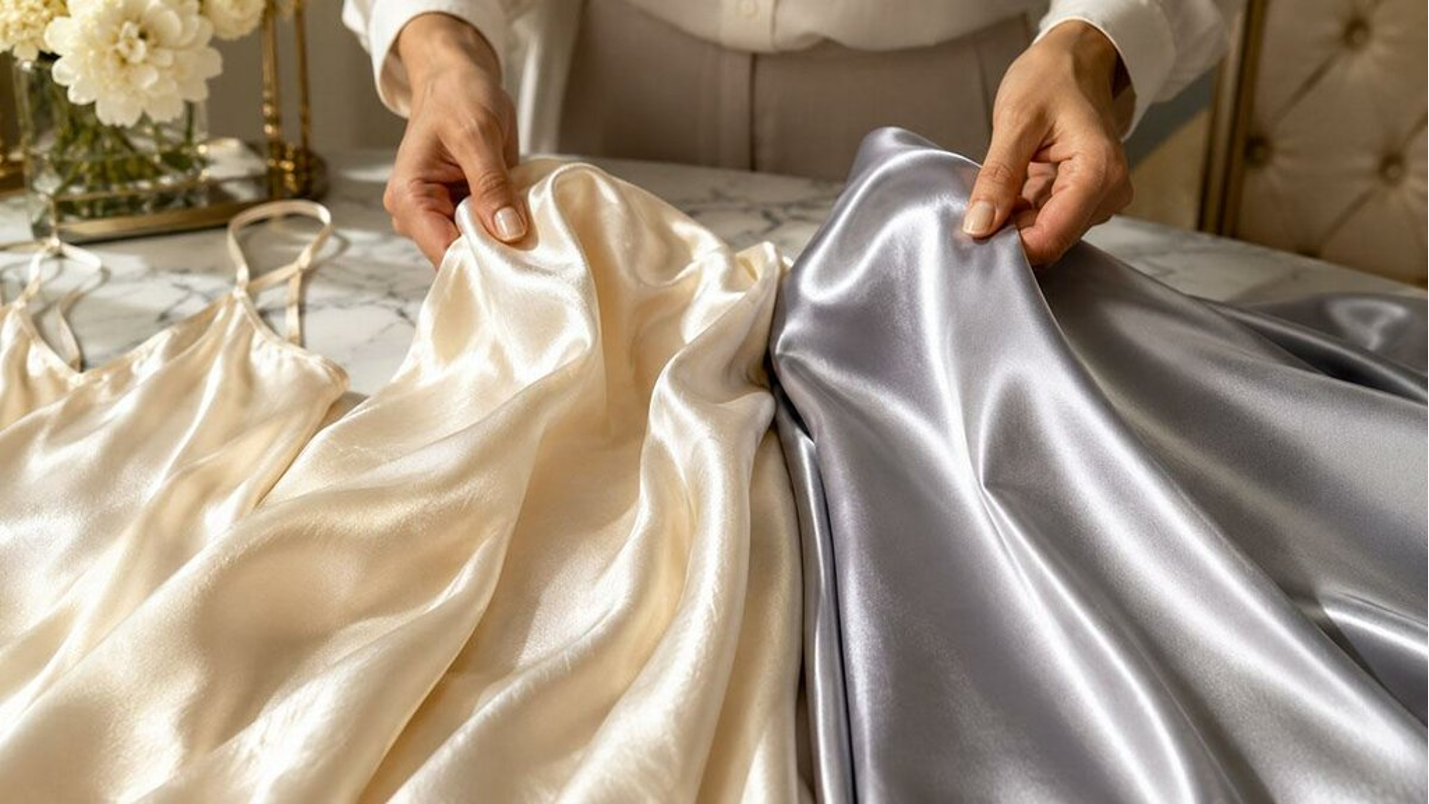
Walk into any bedding or fashion store and you’ll inevitably encounter the terms “silk” and “satin” used in ways that suggest they are interchangeable — or at least closely related. They are not. Silk and satin are fundamentally different things, and confusing the two can lead to significant disappointment and, frankly, overpaying for something far inferior to what you thought you were buying. Understanding the distinction is one of the most important pieces of knowledge any discerning fabric buyer can have — and once you understand it, you’ll never look at the “satin finish” label on a pillowcase quite the same way again.
The Core Distinction: Fiber vs Weave
This is the most fundamental point, and it’s one that the industry frequently obscures: silk is a fiber; satin is a weave. Silk refers to the natural protein fiber produced by the Bombyx mori silkworm. Satin refers to a specific type of weave structure — one that creates a smooth, glossy surface by having threads float over multiple crossing threads before interlacing.
This distinction means that satin can be made from almost any fiber — polyester, nylon, rayon, acetate, and yes, silk. When you see “satin” without further specification of fiber content, you are almost certainly looking at a synthetic fabric — usually polyester — woven in a satin pattern to mimic the appearance of silk. When you see “silk satin,” you are looking at genuine silk woven using the satin weave structure, which is indeed one of the most luxurious textile products in the world.
The vast majority of “satin” products sold in mainstream markets are polyester satin — a petroleum-derived synthetic that mimics silk’s visual appearance but shares none of its genuine beneficial properties. Understanding this distinction is the first step to making truly informed purchases.
Why Satin Looks Like Silk But Isn’t
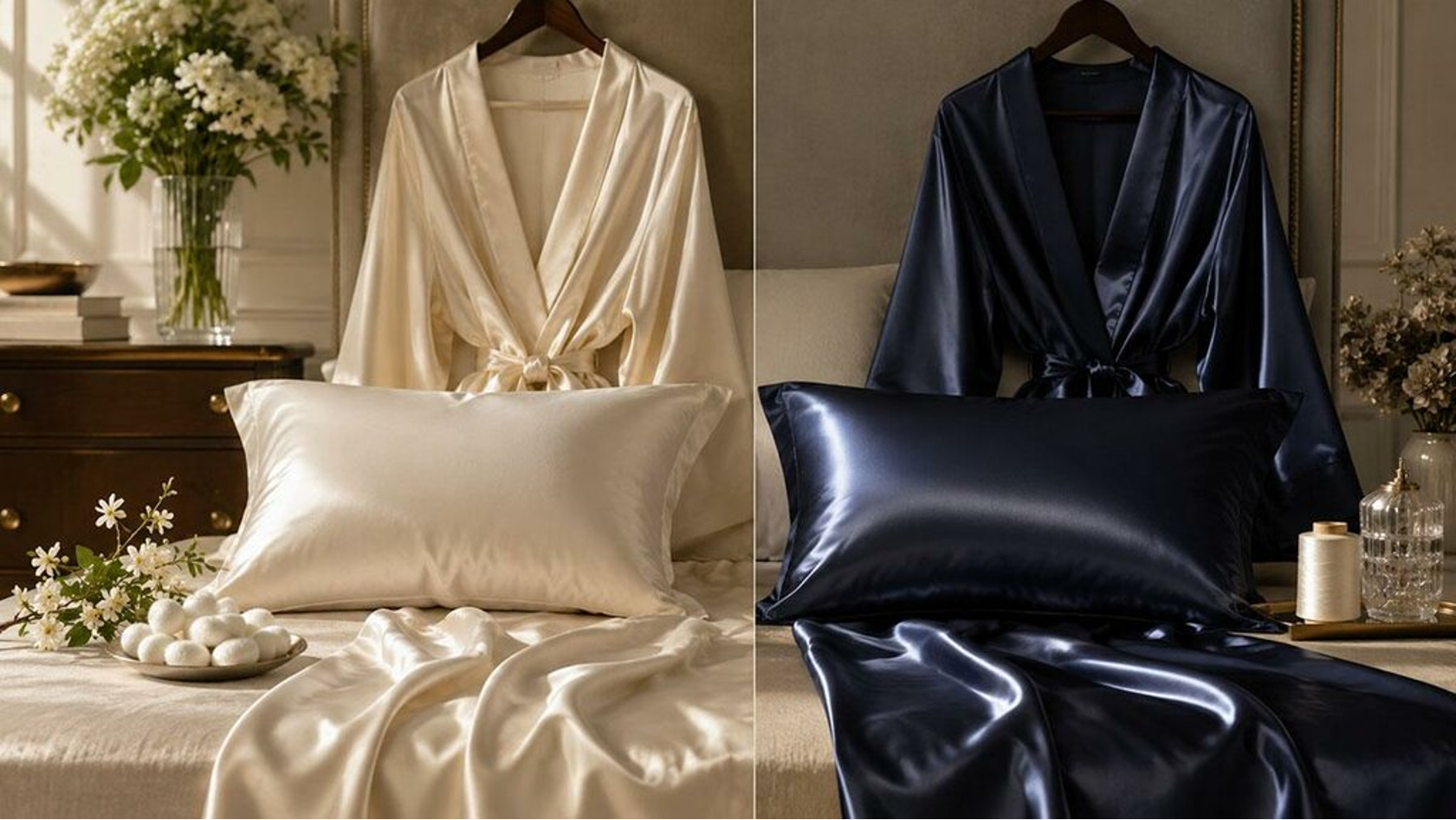
The visual similarity between silk and polyester satin is real and intentional — it is, in fact, the entire commercial premise of the synthetic satin market. Both have a smooth, reflective surface with a glossy sheen. But the similarity ends there. Look closely at the sheen of each in different lights: silk’s light reflection is multi-dimensional and shifts subtly as the fabric moves, a consequence of its triangular fiber cross-section. Polyester satin’s sheen is flat and uniform, reflecting light in a single direction without depth or variation. The difference becomes immediately apparent once you know to look for it.
The Performance Gap: Where Silk and Satin Diverge
Beyond appearance, the performance differences between genuine silk and synthetic satin are substantial. Temperature regulation is perhaps the most practically significant difference. Silk’s protein fiber structure thermoregulates actively — cooling in warm conditions, warming in cool ones. Polyester satin does neither; it traps heat in warm conditions (making you hot and sweaty) and provides no meaningful insulation in cool ones. For sleepwear and bedding, this difference is immediately and dramatically noticeable.
The moisture management properties also diverge entirely. Silk can absorb up to 30% of its weight in moisture while remaining comfortable, then releases it back to the environment as conditions change. Polyester is hydrophobic — it repels moisture, causing it to sit on the fabric surface rather than being absorbed, which creates an uncomfortable, clammy sensation that silk never produces.
For skin and hair health, the gap is even more significant. Both silk and satin have smooth surfaces that reduce friction compared to cotton, but the fiber composition matters enormously. Silk’s protein amino acids are biocompatible with human skin; polyester is entirely inert at best and mildly irritating at worst. For anyone with sensitive skin, the choice is straightforward.
Longevity and Value: The Long-Term Calculation
Synthetic satin is typically priced well below genuine silk, and many buyers interpret this as good value. But value in textiles, as in most things, is a function of cost per wear rather than purchase price. High-quality silk garments and bedding, properly cared for, can remain beautiful and functional for a decade or more. Polyester satin typically begins to pill, develop static, and lose its luster within months of regular use.
When you calculate the genuine cost per use of a quality silk pillowcase versus a synthetic satin alternative, the difference in purchase price dissolves entirely — and often reverses, with silk emerging as the genuinely better value over any honest time horizon. This is before accounting for the very real benefits to skin and hair that silk provides and satin cannot, which represent additional value that is difficult to price but genuinely significant.
How to Identify Genuine Silk
Given the prevalence of silk imitations in the marketplace, knowing how to identify genuine silk is a practical skill worth developing. The most reliable tests are straightforward. The burn test: genuine silk burns slowly, self-extinguishes when the flame is removed, produces a smell similar to burning hair, and leaves a crushable ash. Synthetics burn rapidly, melt, continue burning after the flame is removed, and produce black smoke and a hard plastic residue.
The ring test: genuine silk, being a natural fiber with natural variation, has a subtle texture when rubbed between fingers and pulled through a ring — a slight, natural resistance. Polyester satin slips through perfectly uniformly, because its perfectly circular fiber cross-section is entirely consistent. Price and labeling are also indicators: genuine grade 6A mulberry silk will always be priced at a point that reflects the extraordinary production process involved. Any “silk” item priced at commodity levels is almost certainly synthetic.
When You Need the Real Thing
If your goal is visual appearance only — a tablecloth that photographs well, for instance — synthetic satin may serve adequately. For every other application, genuine silk is the only logical choice. For sleepwear where thermoregulation and skin comfort matter. For pillowcases where genuine benefits for skin and hair are the point. For garments that need to perform beautifully, move naturally, and last for years. In all of these contexts, The Silk Avenue‘s commitment to genuine grade 6A mulberry silk ensures you’re getting the authentic material whose extraordinary properties justify every element of its premium status.