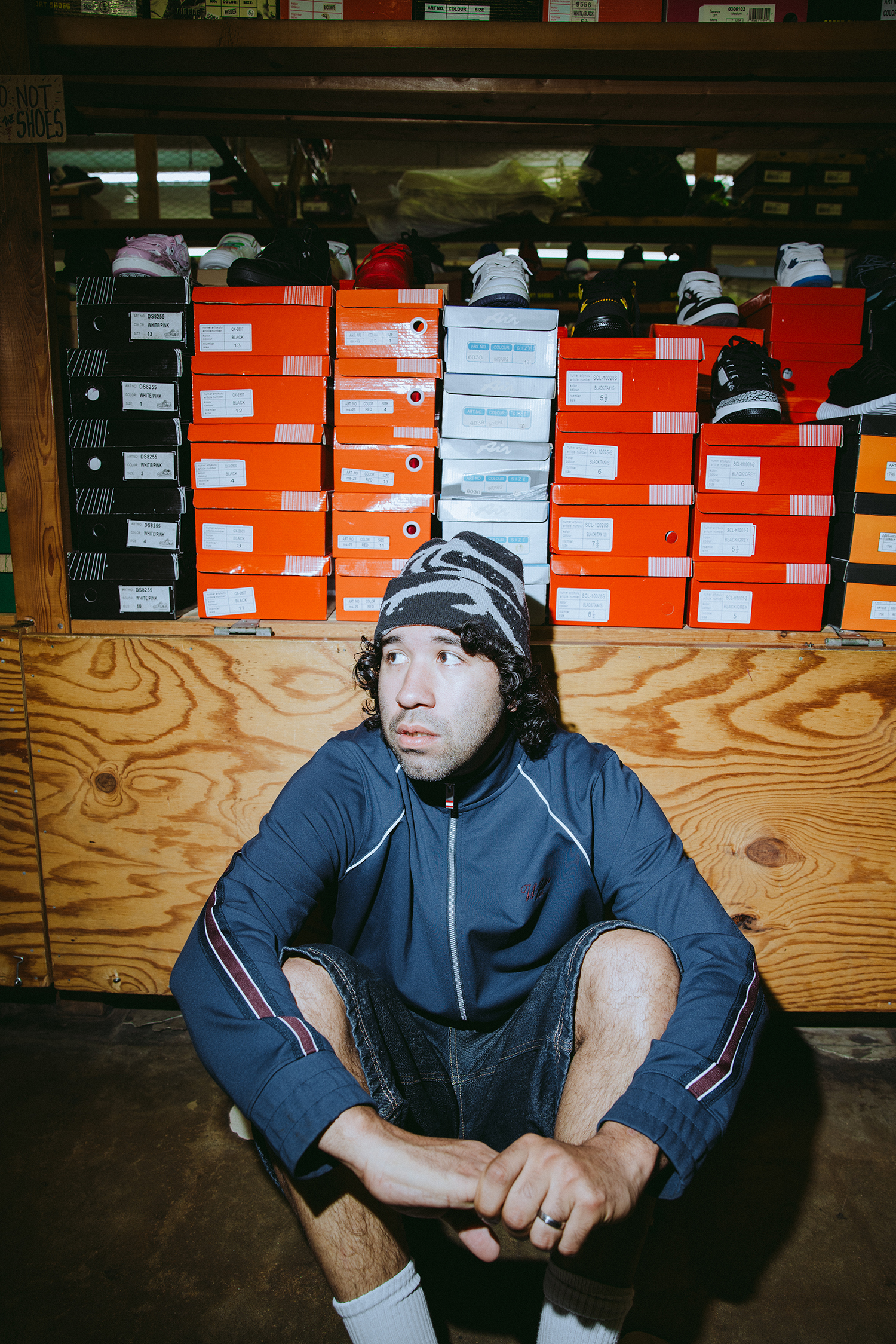
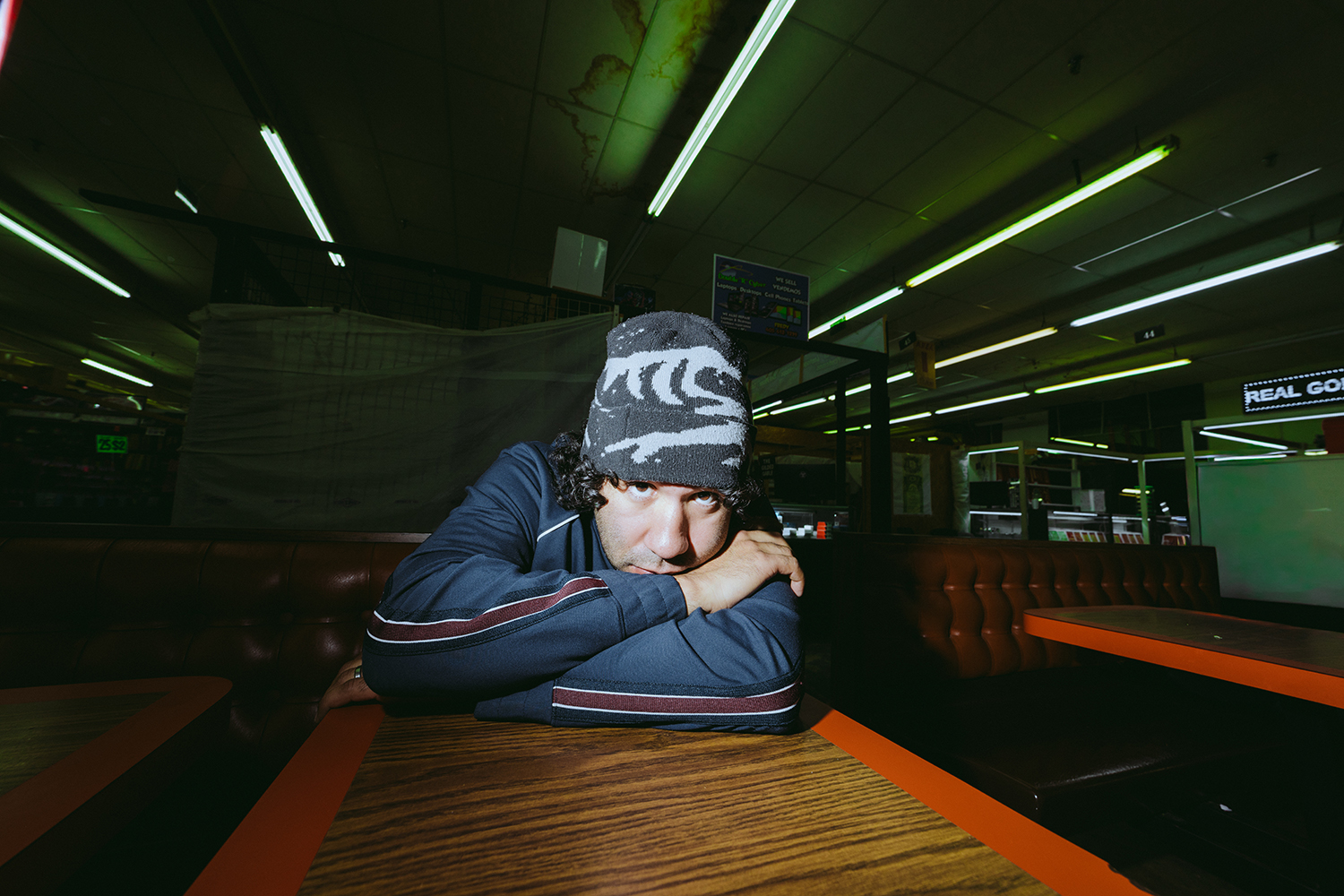
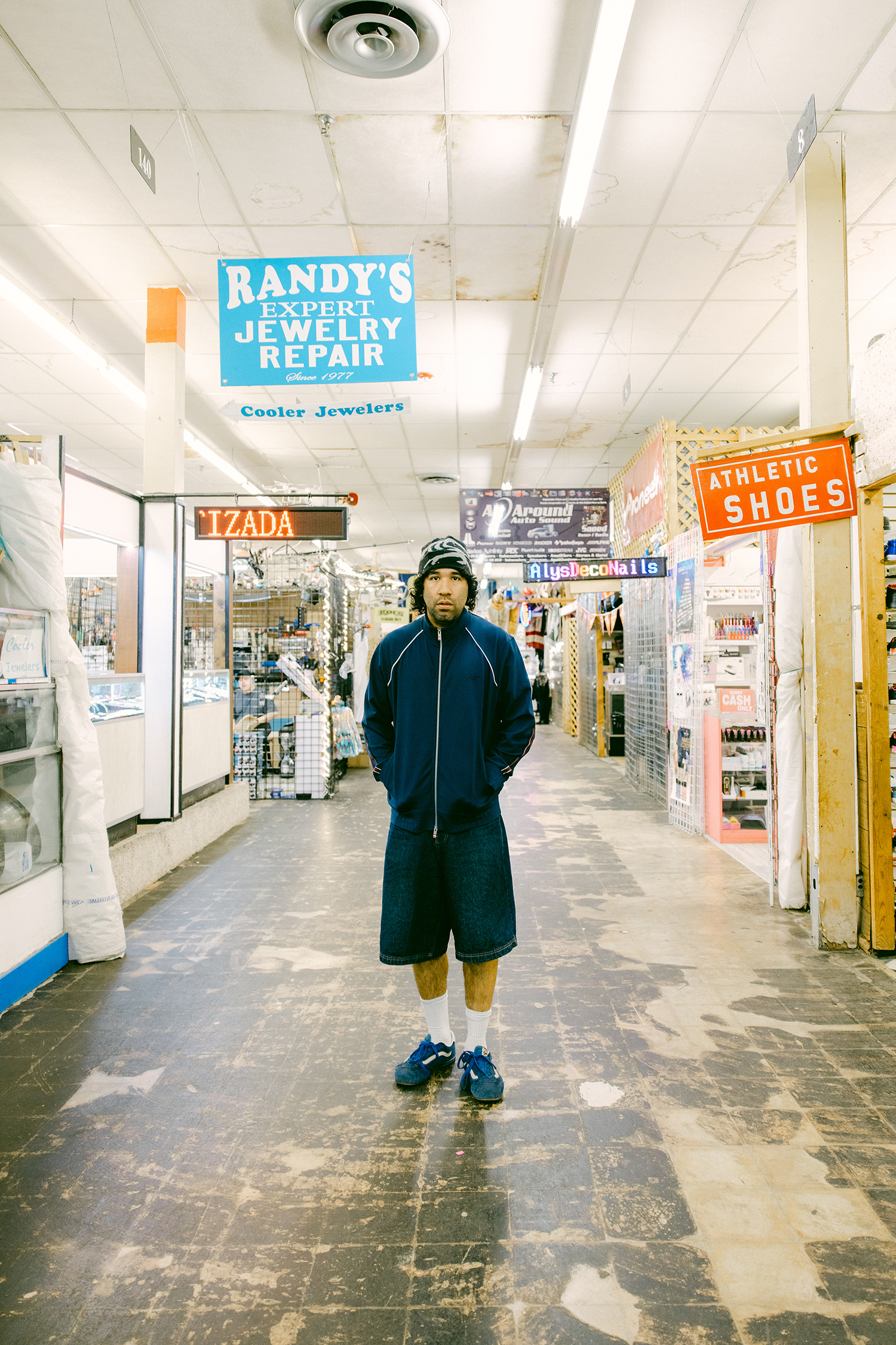
Esteban Flores spends almost every waking hour doubting himself. His solution is not to conquer it. He is learning to live alongside it.
That uneasy coexistence sits at the centre of Slow Joy, the alternative rock project Flores created to process grief. Since then, it has grown into two albums, sold-out shows and a devoted audience drawn to the honesty beneath its crushing guitars and hazy distortion.
Flores still regularly calls his wife before shows convinced nobody will turn up.
His sophomore album, Esteban Flores, feels like a decisive step forward. Released via MDDN Records, the 11-track record explores growing older, relinquishing control and accepting that life rarely offers neat resolutions. It is also the first Slow Joy album Flores made entirely for himself, without chasing anyone else’s approval.
Naming it after himself was partly an act of ownership and partly a joke aimed at those who still think Slow Joy is a band. That humour runs throughout the album. Titles such as “SLC Punk on an SSRI” and “Do Not Give Me a Cigarette No Matter How Much I Beg” sit alongside songs shaped by grief, broken friendships, love and the fear of never quite belonging.
Flores wanted the record to feel unmistakably human. Digital plugins were abandoned in favour of physical hardware, found sounds and happy accidents. A voicemail from his sister became part of the album, while Christine Goodwyne of Pool Kids took over a verse on “I Lied (When I Said I’m Alright)” because Flores felt her voice could deliver it better.
Despite the risk and stress involved in making Esteban Flores, there is a new clarity underneath it.
In this 18 Questions interview, Flores discusses creative imperfection, self-doubt, financing the album himself and the emotional moment his father watched Slow Joy perform for the first time.
1. What is the first thing you do when you need to quiet your mind?
A good friend once told me, “If you work with your mind, rest with your hands. If you work with your hands, rest with your mind.”
Most of what I do is mentally taxing, so I try to do something physical to rest my mind. Usually, it is one of the many hobbies I might be a little too old for, like skateboarding or MMA.
2. What is something you understand about yourself now that you completely misunderstood in your twenties?
The good shit is the mundane shit! I thought I thrived in chaos, but a lot of the time that just steals from future happiness. I try not to mistake peace for boredom anymore.
3. Which song by another artist do you wish you could hear again for the first time?
“Come on Over” by Nancy and the Jam Fancys.
I just got into that song recently. I’m a big fan of a hard band doing a soft song. It lands so much better, in my opinion.
4. What is the strangest or most unexpected sound you have ever wanted to build a song around?
A voicemail from my sister.
5. When does self-doubt tend to hit you hardest, and what have you learned to say back to it?
Twenty-two to 23 hours of the day. Honestly, I’m starting to realise it’s more about living with it than conquering it. I think confidence might be a lie we tell enough to believe it.
6. What is one part of being a touring musician that nobody could have prepared you for?
It’s a lot more gas station bathrooms than you’d ever expect. So much so that you’ll start having favourite chains to stop at.
7. Which emotion do you find easiest to express through music but hardest to articulate in everyday life?
I’m pretty emotionally perceptive generally. It’s not hard for me to articulate an emotion. It’s harder for me not to.
8. If you could preserve one moment from this chapter of Slow Joy forever, what would it be?
The way my dad looked when he saw the show for the first time. Damn, I get teary just thinking about it.
9. You have described Esteban Flores as the album you would be proud to leave behind if it were your last. What did you finally manage to say on this record that you had previously struggled to express?
I think it’s less about what was said and more about how it was said. This is an album that was entirely for me. I didn’t chase the affection of others at all.
10. Naming the album after yourself feels like a decisive act of self-ownership. Did making it bring Esteban Flores and Slow Joy closer together, or help you understand the distinction between them?
It was a bit. People tend to get mad at me online because they think I’m a band. Naming it after myself was a funny way to say I’m just a dude.
11. Your debut was shaped by grief, while Esteban Flores explores growing up, surrender and living with what cannot be controlled. What have you had to stop fighting in order to move forward?
Control, mostly. I think life is about learning to live with the things we have no control over as honestly as we can.
12. You have called your thirties the “Tony Hawk years,” when you are finally capable of landing the difficult creative tricks. What is the artistic 900 you feel you landed on this album?
Far be it from me to compare anything I’ve ever done to a trick that changed the face of skateboarding. I’m just some jackass with a guitar talking about things that make him sad.
13. The record contains personal voice notes and found sounds, including recordings of your sister. How do you decide which private moments can become part of the music without losing what made them intimate?
My family is about as open and welcoming as they come. I always ask for permission, but more as a formality because I know no one cares.
14. You deliberately brought “the mush” back into the Slow Joy sound through distortion, atmosphere and physical hardware. What does that imperfection communicate that a cleaner recording cannot?
Humanity. AI can make a rock song. It can’t make the organic sounds that human mistakes make.
15. You banned digital plugins from the studio and manually shaped the record using hardware effects. Did imposing those limitations make you more inventive, or simply more emotionally connected to what you were creating?
It just opened the door to happy accidents. I wanted the record to sound unique. Happy accidents made that the case.
16. “I Lied (When I Said I’m Alright)” required you to recognise that Christine Goodwyne of Pool Kids could give the song something your own voice could not. How difficult is it to relinquish control when the music is this personal?
Not hard at all. The art isn’t my own when I’m done making it. It belongs to everyone.
I wanted to hear a better voice on the verse than my own. Christine definitely has a better voice!
17. You and your manager personally financed the album, leaving you with what you described as a daily lump of panic in your chest. When did belief in the record outweigh the fear of what you were risking?
It depended on the hour. Jon never lost hope, so he was a pretty good person to call every time I was freaking out. I’m mostly a bundle of stress, so I just had to live with the stress and make something that I felt was worth enduring the chaos.
18. You still convince yourself that nobody will attend your shows, even as rooms sell out and your audience grows. What would have to happen for you to finally believe that you belong here, or are you beginning to accept that the doubt may always come with you?
You ever see those movies where characters get hit in the head so hard they become different people? That may be my only hope.