If you feel like you’ve suddenly started hearing the word tazarotene everywhere, you’re not imagining it.
The prescription retinoid has been around for years, but it’s having a very 2026 moment. Social media has made us much more ingredient-savvy, and skincare obsessives are increasingly looking beyond OTC retinol and asking what comes next.
Enter tazarotene.
So, what actually is tazarotene?
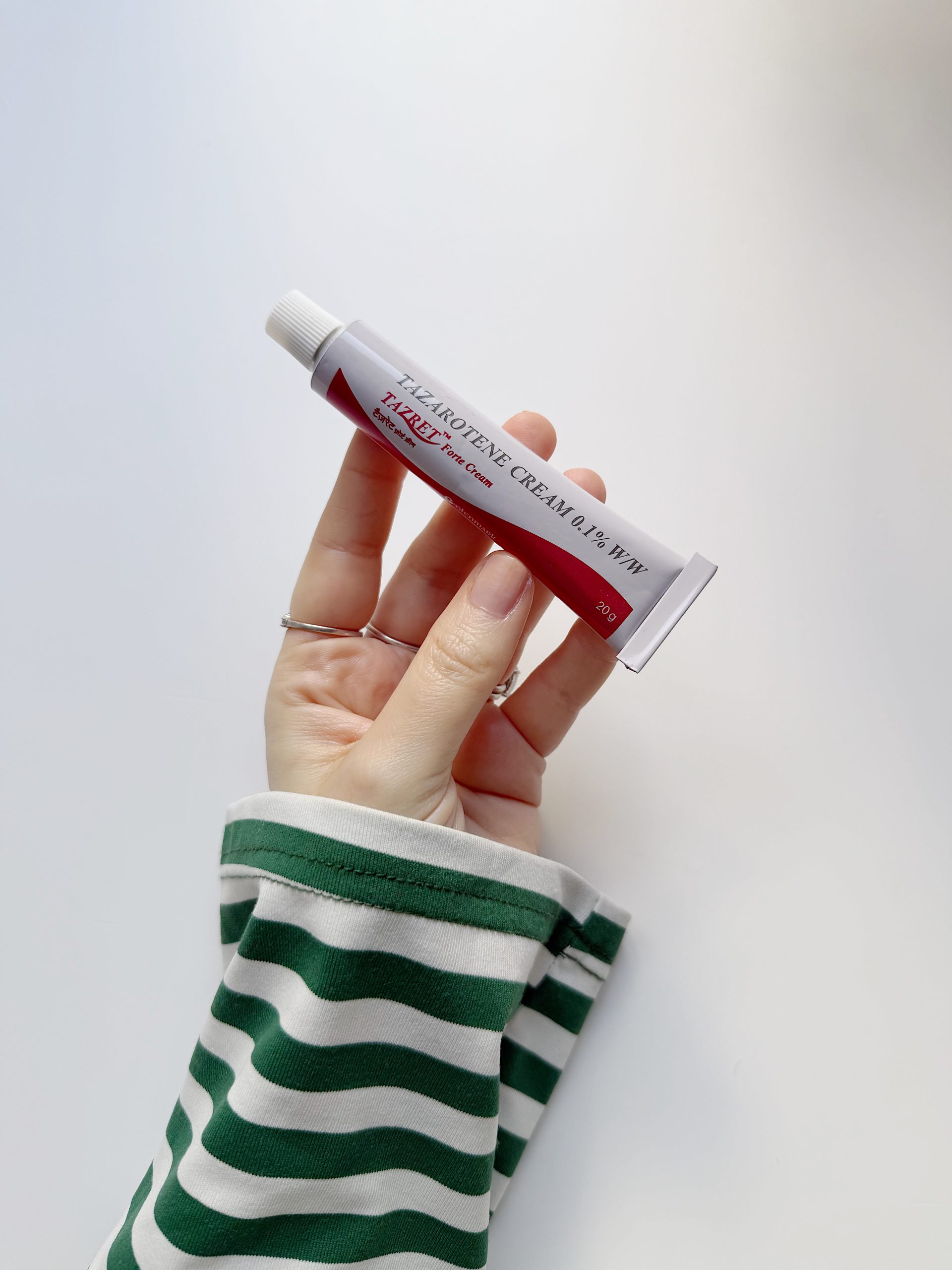
Tazarotene is a topical retinoid derived from vitamin A. Unlike the retinol you can pick up from a beauty retailer, it’s a prescription medication primarily used in the treatment of acne and psoriasis. It has also been studied for concerns associated with photoageing, including uneven pigmentation, rough texture and fine lines.
The important bit? It isn’t simply “stronger retinol”.
Retinol has to undergo several conversion steps in the skin before becoming biologically active. Tazarotene, meanwhile, is converted into tazarotenic acid, which acts on retinoid receptors in the skin. This helps explain why prescription retinoids can have a more noticeable effect, but also why they can demand considerably more from your skin barrier.
Why is everyone suddenly talking about it?
Part of the answer is social media. We’re no longer just being told to “use a retinol”. People want to know which retinoid, what percentage, which formulation and whether there is something that could give them better results. Dermatologists are reporting more patients arriving already familiar with prescription retinoids, and even asking about specific formulations they’ve seen online.
And tazarotene has an appeal that makes sense for the current skincare climate: it sits firmly in the medical meets anti ageing space. For someone dealing with acne alongside concerns such as uneven texture or visible sun damage, a prescription retinoid can potentially address several concerns within one treatment rather than building a routine around multiple different actives.
But as Dr Sonia Sharma, UK Consultant Dermatologist, points out, growing popularity doesn’t necessarily mean a treatment is suitable for everyone.
“Tazarotene is having a bit of a moment on social media but this does not necessarily mean it is right for you.”
But here’s the catch: stronger isn’t automatically better
This is where I think skincare TikTok can sometimes make prescription retinoids sound a little too good to be true. Tazarotene can be highly effective, but that doesn’t mean everyone should be rushing to get it.
Dryness, redness, peeling and irritation are possible, particularly when starting treatment. And if your skin barrier is already struggling, adding a potent retinoid isn’t necessarily the answer. Dermatologists recommend extra caution for people with very sensitive or compromised skin.
Dr Sharma also highlights the possibility of an initial adjustment period, with side effects including “peeling, flaking and ‘the uglies’ where skin can ‘purge’ and breakouts become more common when you first start to use it.”
There’s also a reason your dermatologist may want to start you slowly rather than telling you to apply it every night from day one.
With prescription retinoids, more isn’t necessarily more. Consistency and tolerability are what ultimately matter.
What about tazarotene versus retinol?
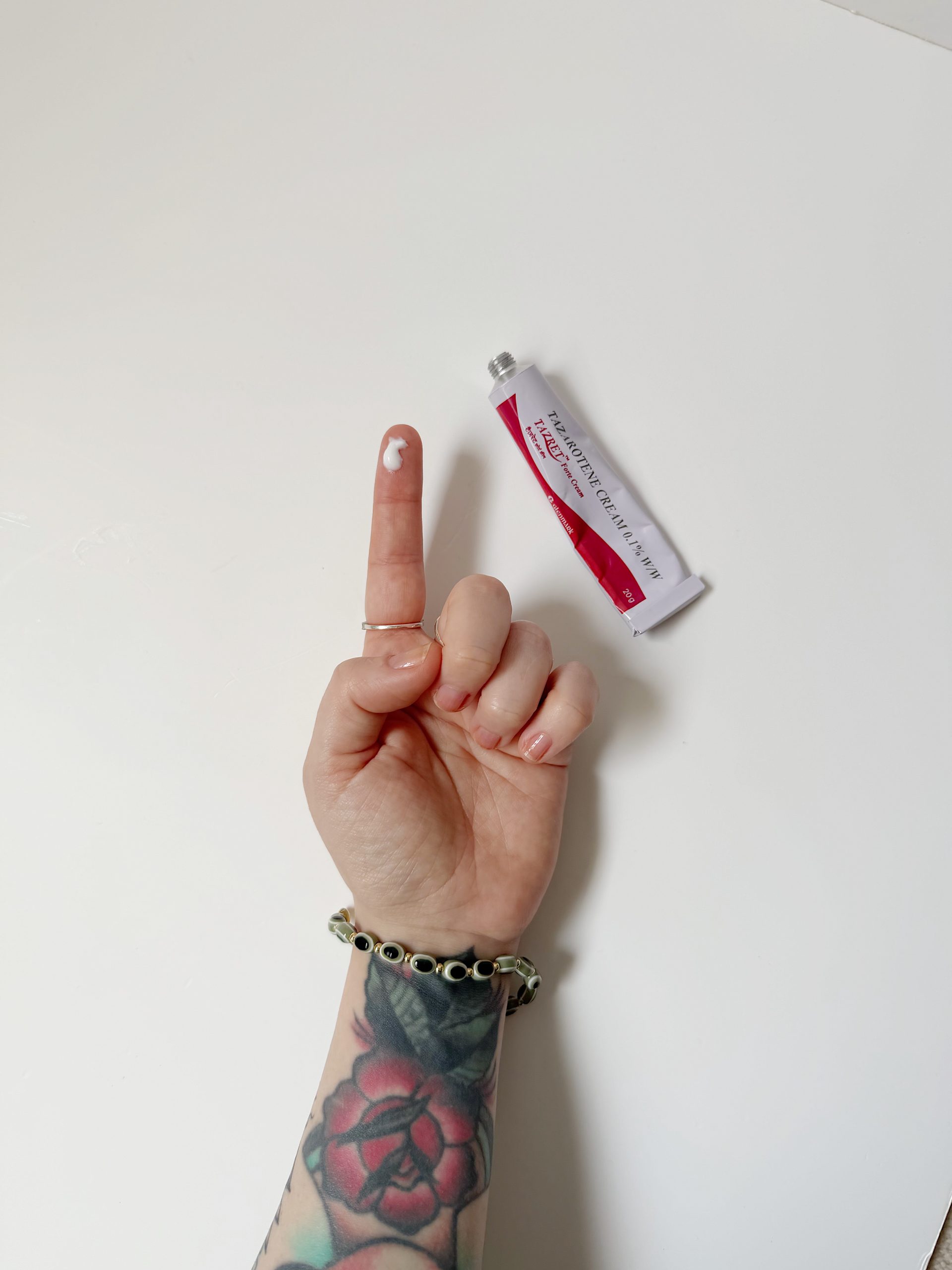
This is probably the comparison most people want to know about. Retinol is available without a prescription and is generally considered a more accessible starting point. Tazarotene is a prescription medication and works through a different, more direct pathway in the skin. That difference helps explain why tazarotene can produce more pronounced effects, but also why irritation can be more of an issue.
And there are plenty of people for whom a well-formulated retinol, retinal or another retinoid is more than enough. You don’t get bonus points for using the strongest active on the shelf.
If you’re using tazarotene, think “support”, not “more actives”
One of the biggest mistakes with a prescription retinoid is treating it like just another serum.
Your supporting routine suddenly becomes much more important.
Think gentle cleansing, plenty of hydration, barrier-supporting ingredients such as ceramides and niacinamide, and absolutely, non-negotiably, your daily broad-spectrum sunscreen.
What you don’t necessarily need is a bathroom shelf full of acids, scrubs and other potentially irritating actives competing for attention. If you’re introducing tazarotene, keeping the rest of your routine relatively uncomplicated can make it much easier to work out what your skin actually tolerates.
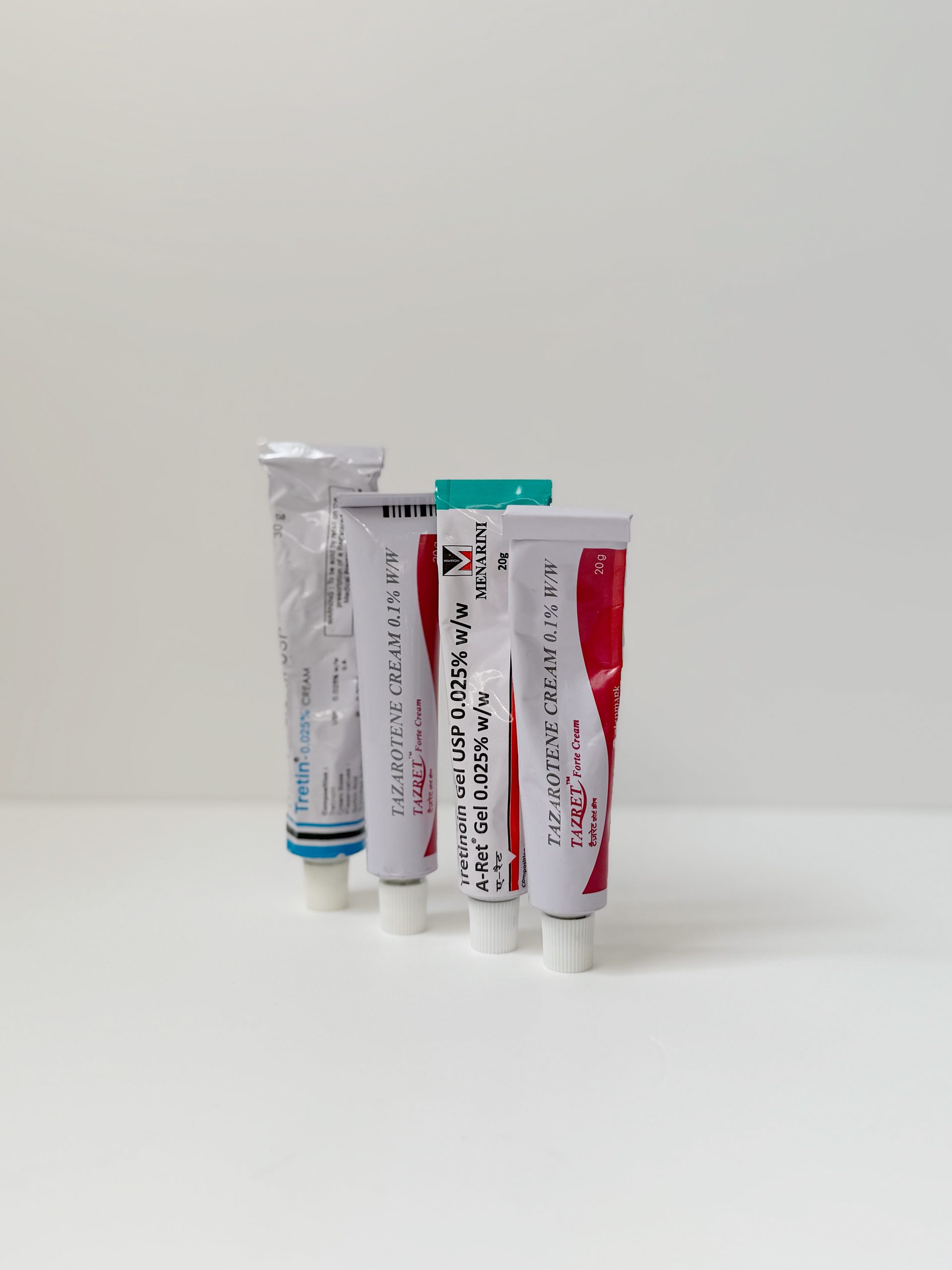
So, should you ask your dermatologist about it?
If you’re dealing with acne, photoageing concerns or persistent texture and pigmentation issues and feel like you’ve reached the limits of your current routine, it may be a conversation worth having. But tazarotene isn’t an internet skincare hack. It’s a prescription treatment, and the appropriate strength, formulation and frequency depend on the individual.
Dr Sharma’s advice is to understand why you want to use a retinoid in the first place, and then “start at low doses and go slow!”
And if you’re pregnant or trying to become pregnant, topical retinoids such as tazarotene should be avoided.
The bigger takeaway? We’re moving beyond the idea that retinoid = retinol. There is a whole family of vitamin A-derived ingredients, and tazarotene is one of the more potent prescription options. It might not be new, but thanks to a very ingredient-obsessed internet, it’s definitely having its moment. And if that means we’re getting smarter about what we put on our skin, I’m all for it!